
This Kubota RTV-X900, RTV-X1120D Operator Manual (OEM #K7421-7121-7) runs 114 pages with a single goal: keeping your utility vehicle running safely and by the numbers. Eleven pages handle safe operation alone, from slope work and cargo hauling to operating hydraulic outlet equipment, followed by an instrument panel walkthrough that explains what every indicator and gauge reads before you turn the key. The daily pre-operation checklist moves through engine oil, transmission fluid, brake fluid, hydraulic tank level, coolant, tire pressure, and ROPS condition in one structured walk-around. Capacities are spelled out: 30L fuel tank, 6.1L coolant system, 3.1L engine oil on the X900, 4.1L on the X1120D. Steel wheels torque to 108-130 N-m, aluminum to 90-110 N-m. Section bookmarks let you jump to a spec, read it, and get back to the machine.
What's Inside This Kubota RTV-X900, RTV-X1120D Operator Manual
| System | Pages | Key Topics |
|---|---|---|
| Universal Symbols | 3 | Safety Alert Symbol, Seat Belt Symbols, Diesel Fuel and Fuel Level, Hourmeter and Engine Temperature, Brake Fluid and Parking Brake, Battery Charging and Engine Oil Pressure |
| Safe Operation | 11-22 | Before Operating the Vehicle, Hauling Loads in the Cargo Bed, Operating Hydraulic Outlet Driven Equipment, Parking the Vehicle, Transporting, Servicing the Vehicle, Danger |
| Servicing of Vehicle | 23-24 | Recording Serial Numbers (Vehicle Identification Plate, Product Identification Number, ROPS Serial Number), Warranty Information |
| Specifications | 25-26 | Specification Table (Engine, Transmission, Brakes, Steering, Suspension, Dimensions, Max Rolling Weight, Payload Capacity, Weight, Gross Vehicle Weight Rating, Cargo Bed Dimensions, Sound Level, Operator Ear, Tires, Tilt Steering Wheel, Seat Belt, Front Deluxe Guard, Body Color, Bed Lift, Speedometer, Door, Seat Slide) |
| Vehicle Limitations | 27 | Max Cargo Loading Weight, Payload Capacity Table, Rolling Weight |
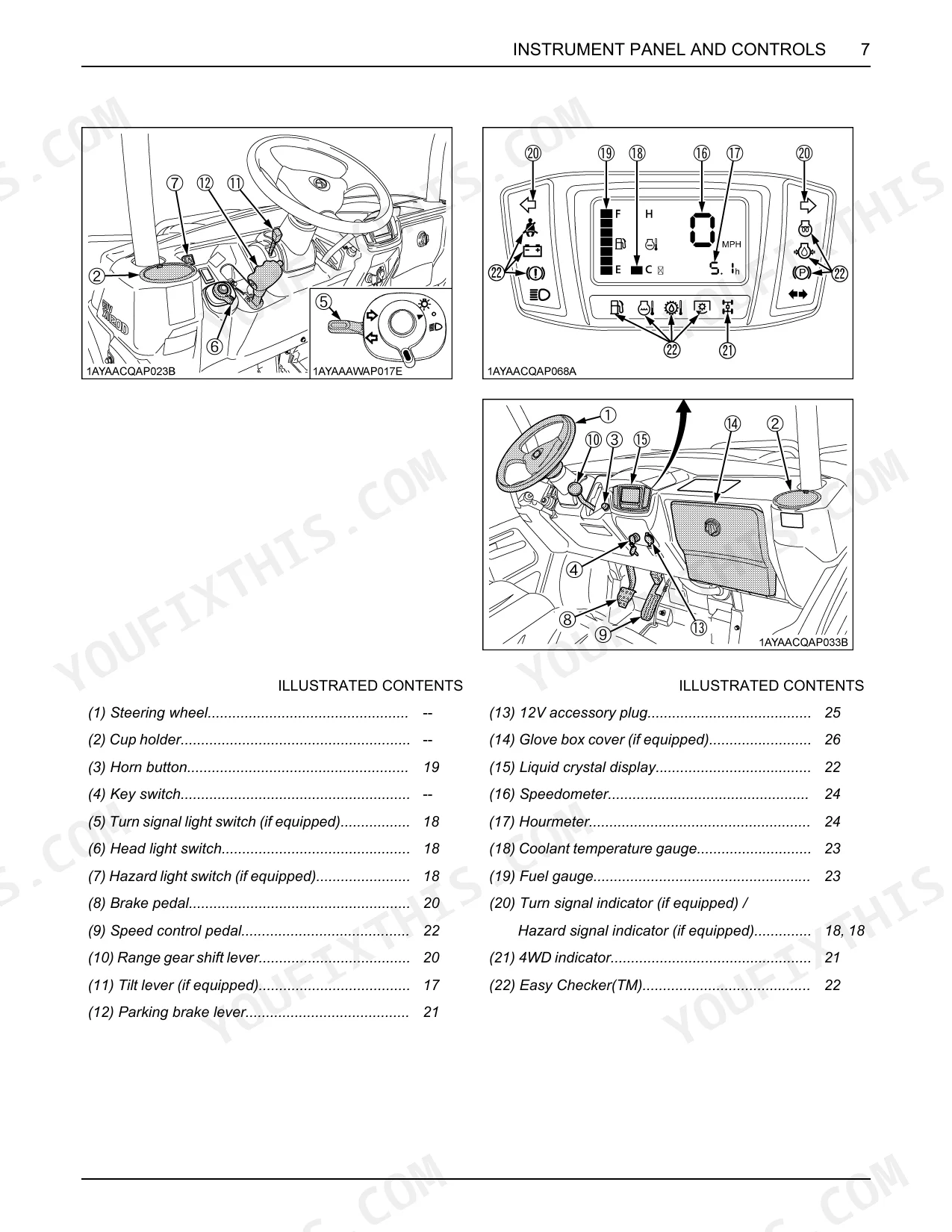
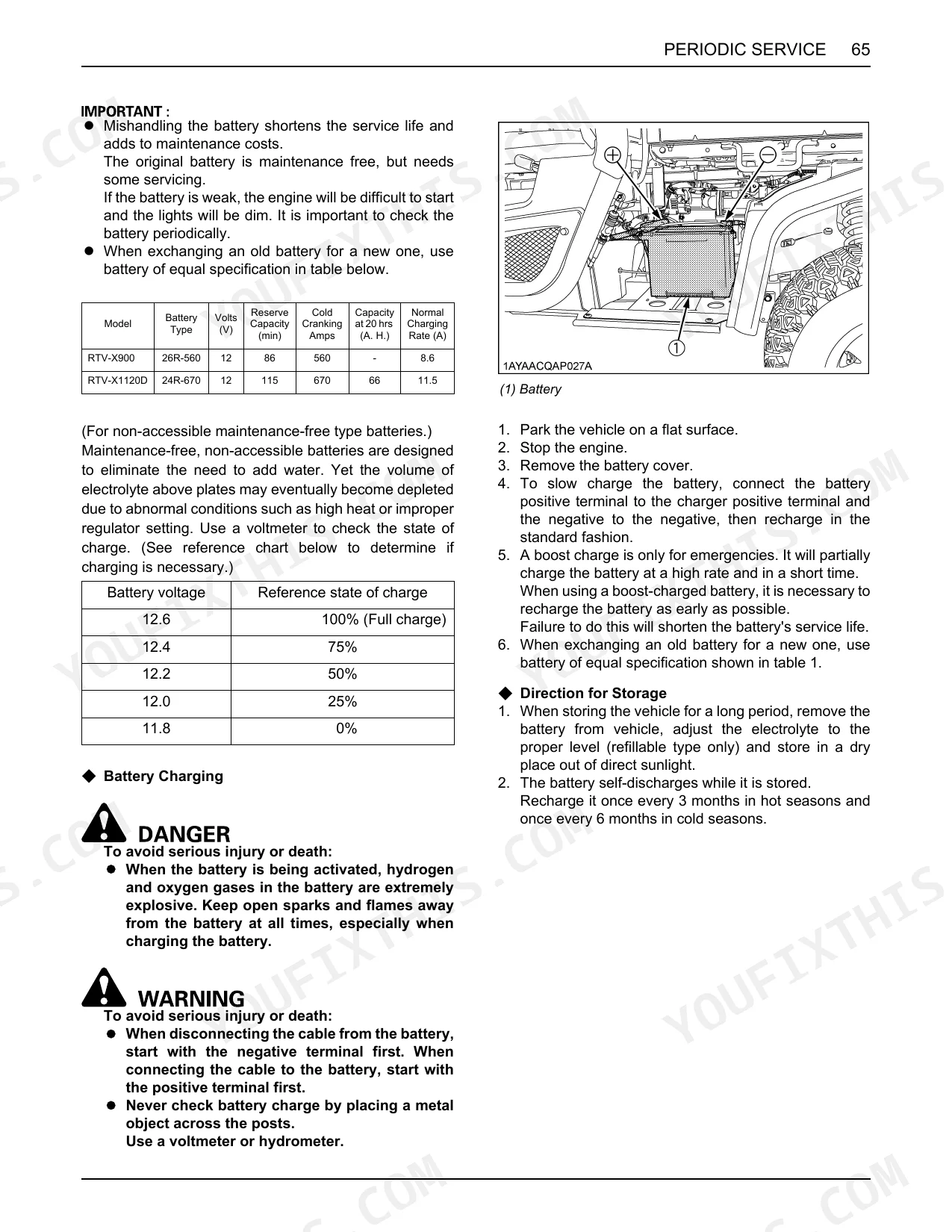
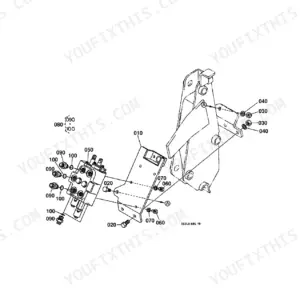
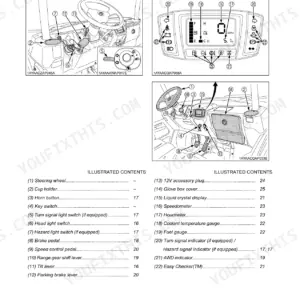
| Instrument Panel and Controls | 28-31 | Location of External Parts (Front Work Light, ROPS, Hazard / Turn Signal Light, Front Hood, Headlights, Winch Mount Bracket, Front Trailer Hitch Bracket, Battery, Front Guard, Door, Front Trailer Hitch) |
| Pre-Operation Check | 32 | Daily Check (Walk Around Inspection, Check Engine Oil Level, Check Transmission Fluid Level, Check Brake Fluid Level, Check Hydraulic Tank Oil Level, Clean Hydraulic Oil Cooler Net, Check Coolant Level, Clean Grill, Radiator Screen, Check Brake Pedal, Check Parking Brake, Check Indicators, Gauges and Meters, Check Lights, Check Seat Belt and ROPS, Check Joint Boots, Check Tire Inflation Pressure, Check Backup Beeper, Refuel, Care of Danger, Warning and Caution Labels) |
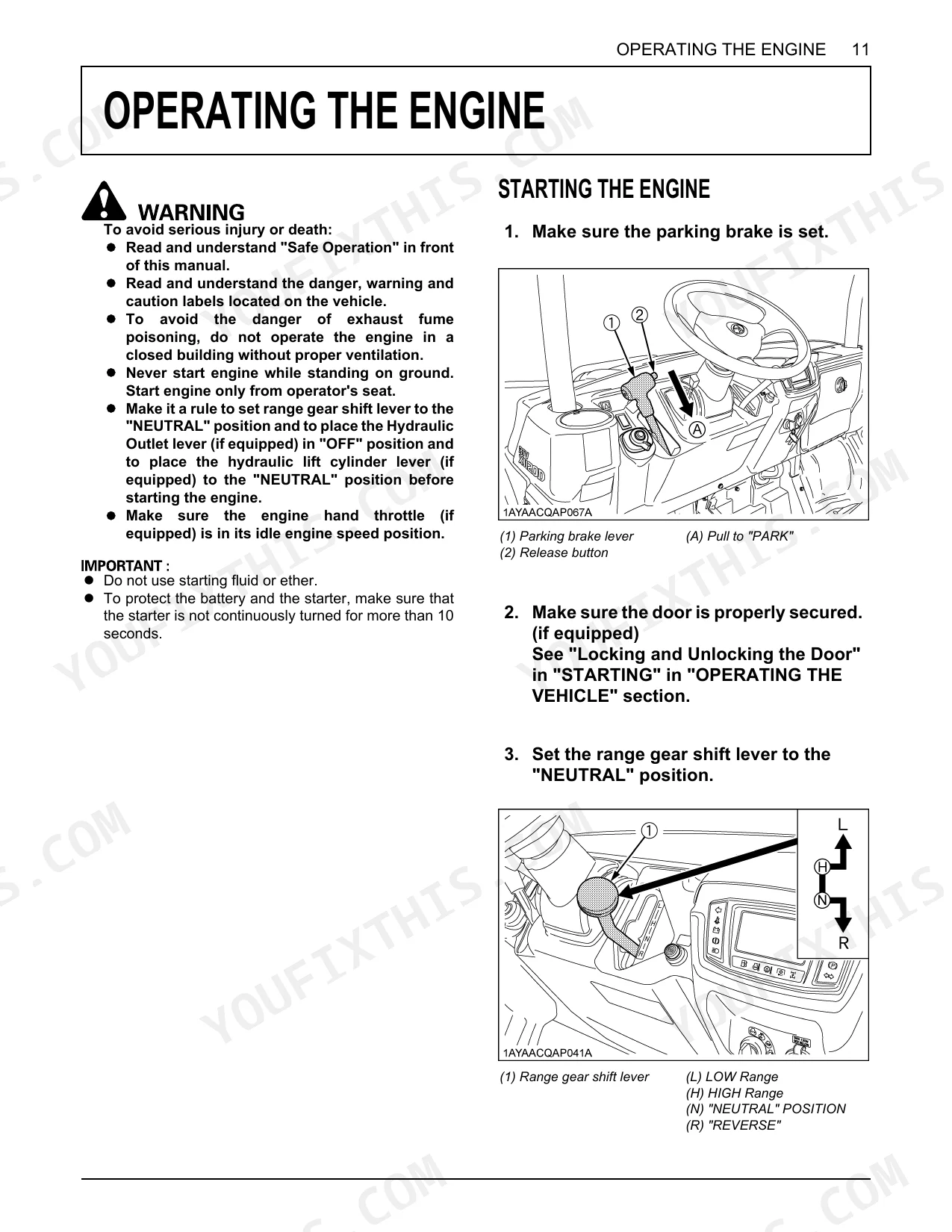
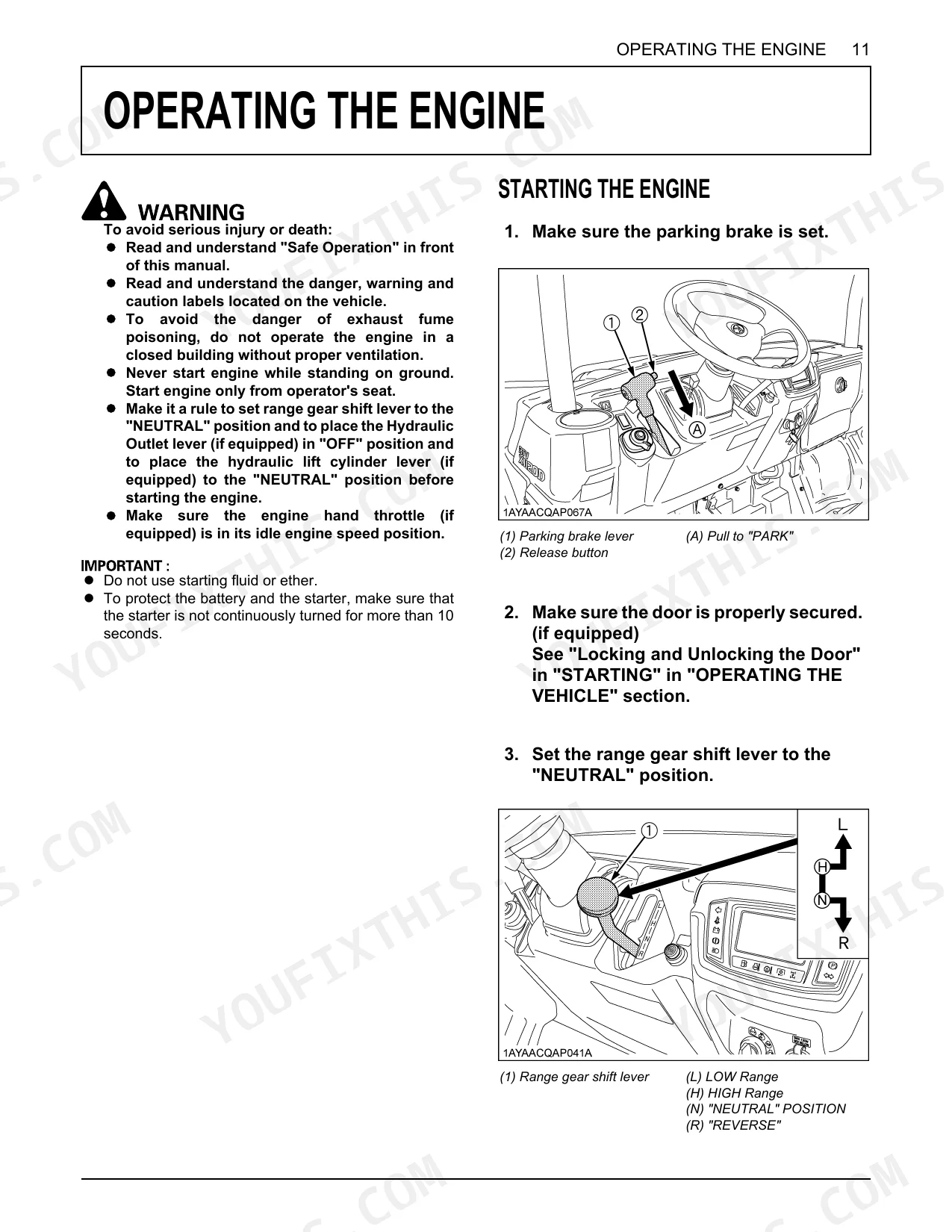
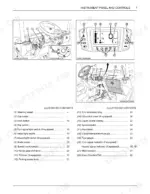
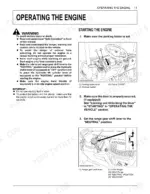
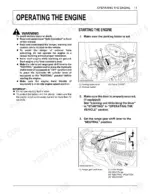
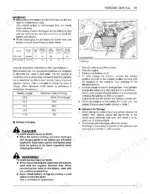
| Operating the Engine | 33-37 | Starting the Engine, Stopping the Engine, Warming Up, Jump Starting |
| Operating the Vehicle | 38-52 | Operating New Vehicle (Do Not Operate the Vehicle at Full Speed for the First 50 Hours, Changing Lubricating Oil for New Vehicles) |
| Cargo Bed | 53-57 | Cargo Bed Tailgate, Raising and Lowering Cargo Bed (No Hydraulic Dump) |
| Hydraulic Outlet | 58-59 | Hydraulic Outlet Lever (Steps for Operation), Hydraulic Outlet Valve Coupler Connecting and Disconnecting |
| Tires and Wheels | 60 | Tires (Inflation Pressure, Tire Type and Use, Heavy Duty Work Site Tire, Turf Tire, All Terrain Vehicle Tire), Wheels |
| Shock Absorbers | 61 | Shock Absorber Spring Adjustment, for Riding and Loading Condition, Shock Absorber Position Table |
| Towing and Transporting | 62-63 | Transport the Vehicle Safely |
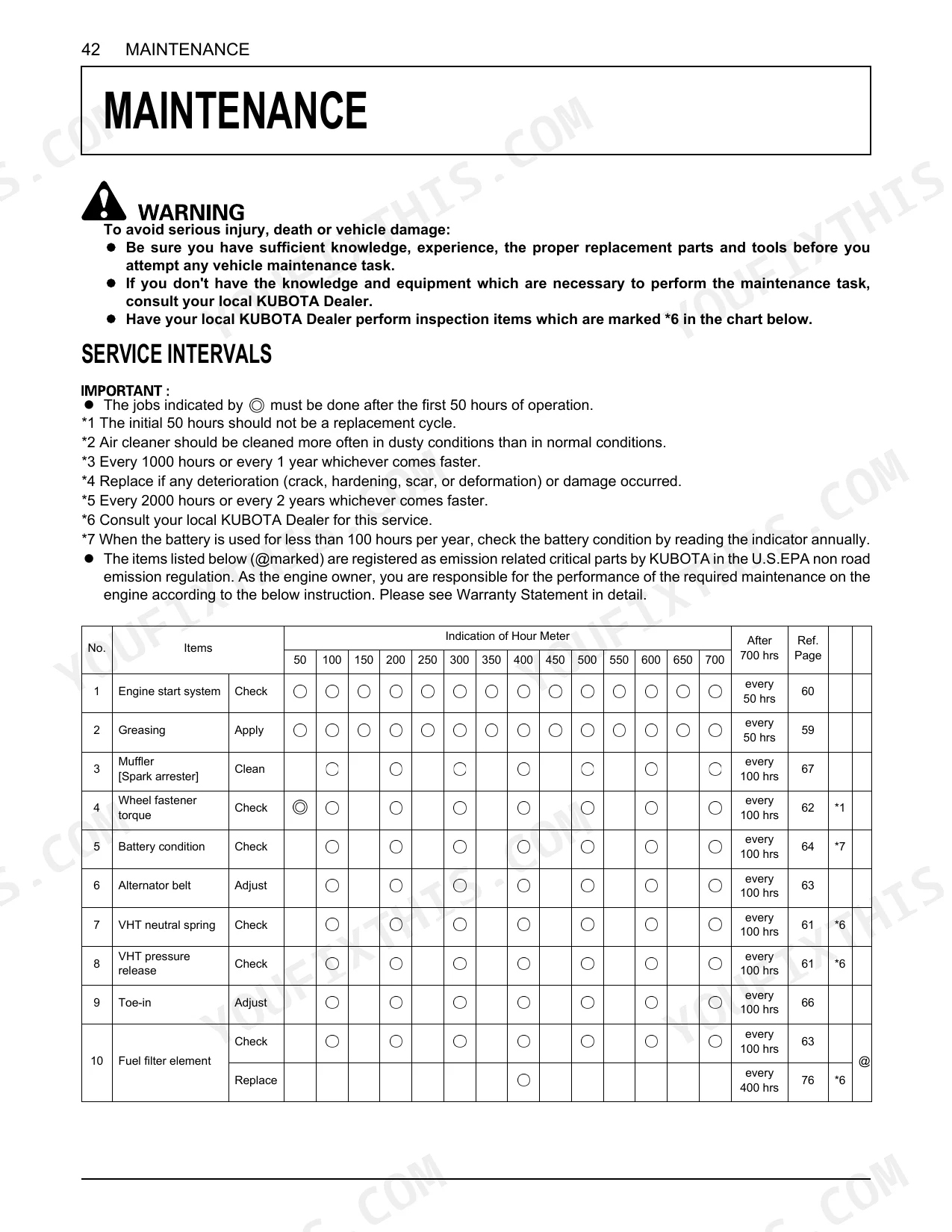
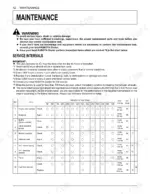
| Maintenance | 64-70 | Service Intervals, Lubricants, Fuel and Coolant |
| Periodic Service | 71-107 | How to Open the Hood and Tilt the Seat, How to Raise the Cargo Bed (Raising Lowering: [If Equipped with Hydraulic Dump], [Without Hydraulic Dump]) |
| Storage | 108 | Vehicle Storage Procedures (Check Bolts and Nuts, Apply Grease, Unload Cargo Bed, Inflate Tires, Change Engine Oil, Coat Hydraulic Cylinder Piston Rods, Remove Battery, Store Vehicle in Dry Place) |
| Troubleshooting | 109-111 | Engine Troubleshooting, Battery Troubleshooting, Machine Troubleshooting |
| Options | 112 | Available Options (Backup Beeper, Bed Liner, Fabric Cover, Front Mud Guard, Front Trailer Hitch & Pin, Front Work Light, Rear Trailer Hitch & Pin, Rear Work Light, Front Blade, Strobe Light, Tail Lamp Guards, Turn Signal / Hazard Light Kit, Winch Kit) |
Quick Reference Specifications
| Specification | Value | Page |
|---|---|---|
| All Models | ||
| Wheel fastener torque (Aluminum wheel) | 90 to 110 N-m (9.2 to 11.2 kgf-m) (66.4 to 81.1 lbf-ft) | p. 61 |
| Wheel fastener torque (Steel wheel) | 108 to 130 N-m (11.1 to 13.2 kgf-m) (79.7 to 95.8 lbf-ft) | p. 61 |
| Fuel Capacity | 30 L (7.9 U.S.gals) | p. 25 |
| Hydraulic Tank Oil Capacity | 18.0 L (19.0 U.S.qts.) | p. 67 |
| Brake Fluid Capacity | 0.4 L (0.4 U.S.qts.) | p. 67 |
| Tire Inflation Pressure (HDWS, ATV, Turf) | 140 kPa (1.4 kgf/cm², 20 psi) | p. 60 |
| Max. Cargo Load Capacity | 500 kg (1100 lbs.) | p. 27 |
| Alternator Belt Tension (deflection) | 7 to 9 mm (0.28 to 0.34 in.) | p. 85 |
| Proper Toe-in | 5 to 15 mm (0.2 to 0.59 in.) | p. 88 |
| Parking Brake Lever Free Play | 1 notch | p. 90 |
| RTV-X900 | ||
| Engine Oil Capacity (filter exchanged) | 3.1 L (3.3 U.S.qts.) | p. 67 |
| RTV-X1120D | ||
| Engine Oil Capacity (filter exchanged) | 4.1 L (4.3 U.S.qts.) | p. 67 |
Kubota RTV-X900, RTV-X1120D Common Problems This Manual Covers
Engine won't start or cranks slowly in cold weather p. 109
Inspect the battery connections for corroded terminals using the troubleshooting guide on page 109. Check the alternator belt tension on page 85 and verify deflection sits between 7 to 9 mm (0.28 to 0.34 in.) when pressed. Replace the battery if the plates look whitish.
Manual Section: TroubleshootingSteering feels loose and front tires show uneven wear on the inside edges p. 88
Measure the front wheel alignment and confirm toe-in falls within 5 to 15 mm (0.2 to 0.59 in.) per page 88. Check tire inflation pressure on page 60 so every heavy-duty work site tire reads 140 kPa (20 psi).
Manual Section: Periodic ServiceParking brake fails to hold the utility vehicle completely stationary on steep inclines p. 90
Adjust the parking brake lever free play to 1 notch as detailed on page 90. Confirm the brake fluid reservoir level before topping up to the maximum 0.4 L (0.4 U.S. qts.) capacity listed on page 67.
Manual Section: Periodic ServiceDashboard oil pressure warning light remains illuminated after completing a routine fluid change p. 64
Verify the engine crankcase holds the required 3.1 L (3.3 U.S. qts.) for the RTV-X900. Review the maintenance schedule on page 64 to confirm the oil filter was replaced, which the manual specifies every 200 hours. Inspect the sensor connection for loose wiring.
Manual Section: MaintenanceFrequently Asked Questions
What are the recommended service intervals?
Intervals depend on the component. The engine start system gets a check every 50 hours, and greasing happens every 50 hours. The muffler spark arrester needs cleaning every 100 hours, while the air cleaner primary element is cleaned every 100 hours and replaced every 1000 hours or 1 year.
What fluids and capacities does this machine require?
The machine requires No. 2-D diesel fuel with a capacity of 30 L (7.9 U.S.gals.). The coolant capacity is 6.1 L (6.4 U.S.qts.) of fresh clean water with anti-freeze. Engine oil (API Service Classification CF or higher) capacity is 3.1 L (3.3 U.S.qts.) for RTV-X900 with filter exchanged, and 4.1 L (4.3 U.S.qts.) for RTV-X1120D. The transmission case uses 7.0 L (1.8 U.S.gals.) of KUBOTA SUPER UDT2 fluid, and the hydraulic tank requires 18.0 L (19.0 U.S.qts.) of KUBOTA UDT or SUPER UDT fluid. Brake fluid capacity is 0.4 L (0.4 U.S.qts.) of KUBOTA DOT3 GENUINE BRAKE FLUID.
How to troubleshoot engine won't start?
If the engine is difficult to start or won't start, common causes include no fuel flow, air or water in the fuel system, increased oil viscosity in winter, or a weak battery. Countermeasures involve checking the fuel tank and filter, ensuring fuel line coupler bolts and nuts are tight, bleeding the fuel system (refer to "Bleeding Fuel System" in "SERVICE AS REQUIRED" section), using appropriate viscosity oils, cleaning battery cables and terminals, and charging the battery.
What are the hydraulic system specifications?
The hydraulic system requires 18.0 L (19.0 U.S.qts.) of KUBOTA UDT or SUPER UDT fluid for the hydraulic tank. To ensure proper operation, a multi-grade transmission fluid is important for the hydraulic and VHT system. The manual does not provide detailed specifications such as hydraulic pressure or flow rates.
What torque specifications are listed?
The manual lists specific torque specifications for wheel fasteners and toe-in lock nuts. For aluminum wheels, the tightening torque is 90 to 110 N-m (66.4 to 81.1 lbf-ft), and for steel wheels, it is 108 to 130 N-m (79.7 to 95.8 lbf-ft). The tightening torque for the toe-in lock nut is 74 to 84 N-m (55 to 61 lbf-ft).
What format is this Kubota RTV-X900, RTV-X1120D manual in?
Immediate download of the complete 114-page searchable Operator Manual. Access it on any device — laptop at your desk or phone in the field.
Document Quality
This document is a scanned PDF with an OCR text layer, allowing you to search and copy the full text content. The text is crisp and clear throughout, making it easy to read. Diagrams and illustrations are raster images, but their labels are generally readable. Pages are clean with no noticeable scan artifacts, stains, or skewed content. There are no significant blank or filler pages in this manual.


Reviews
There are no reviews yet.