
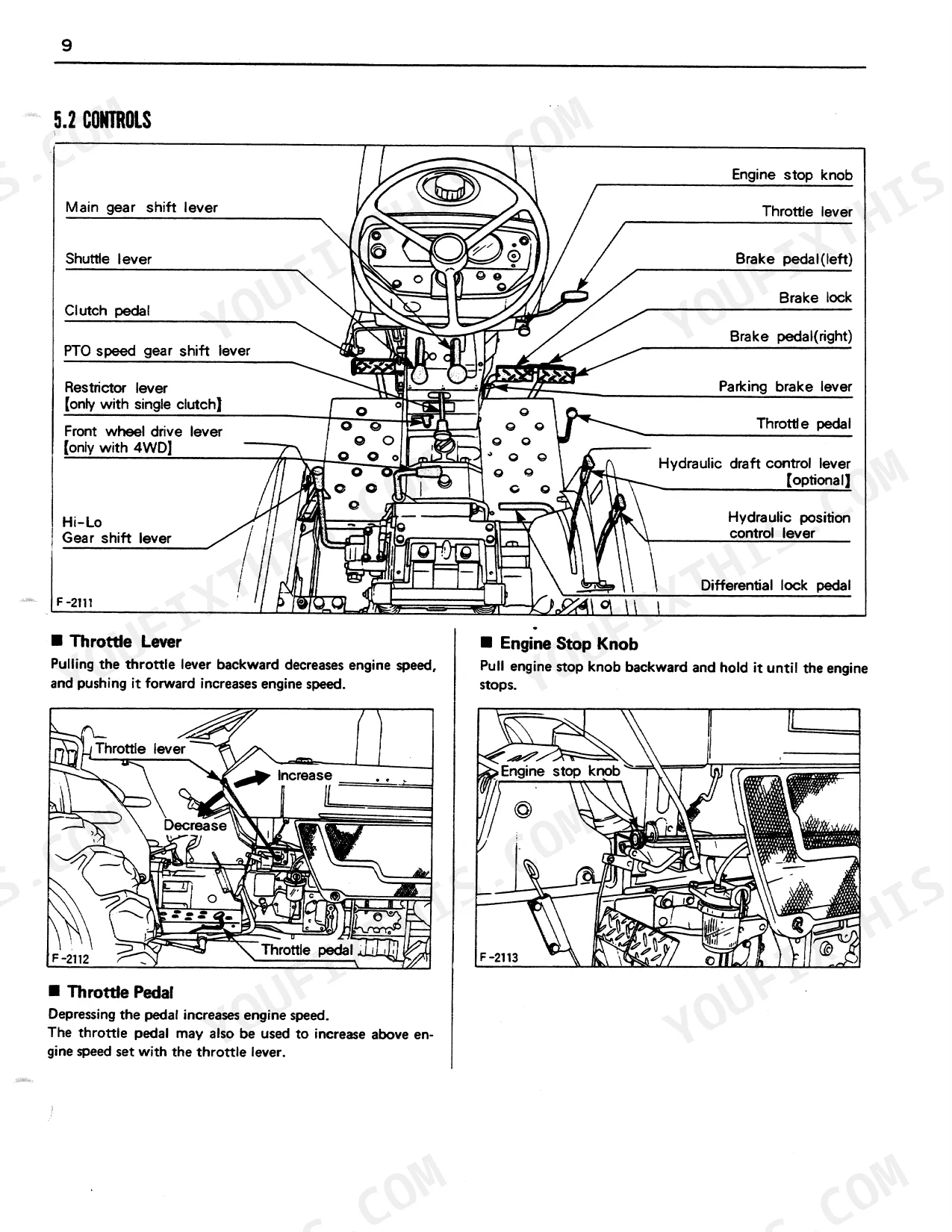
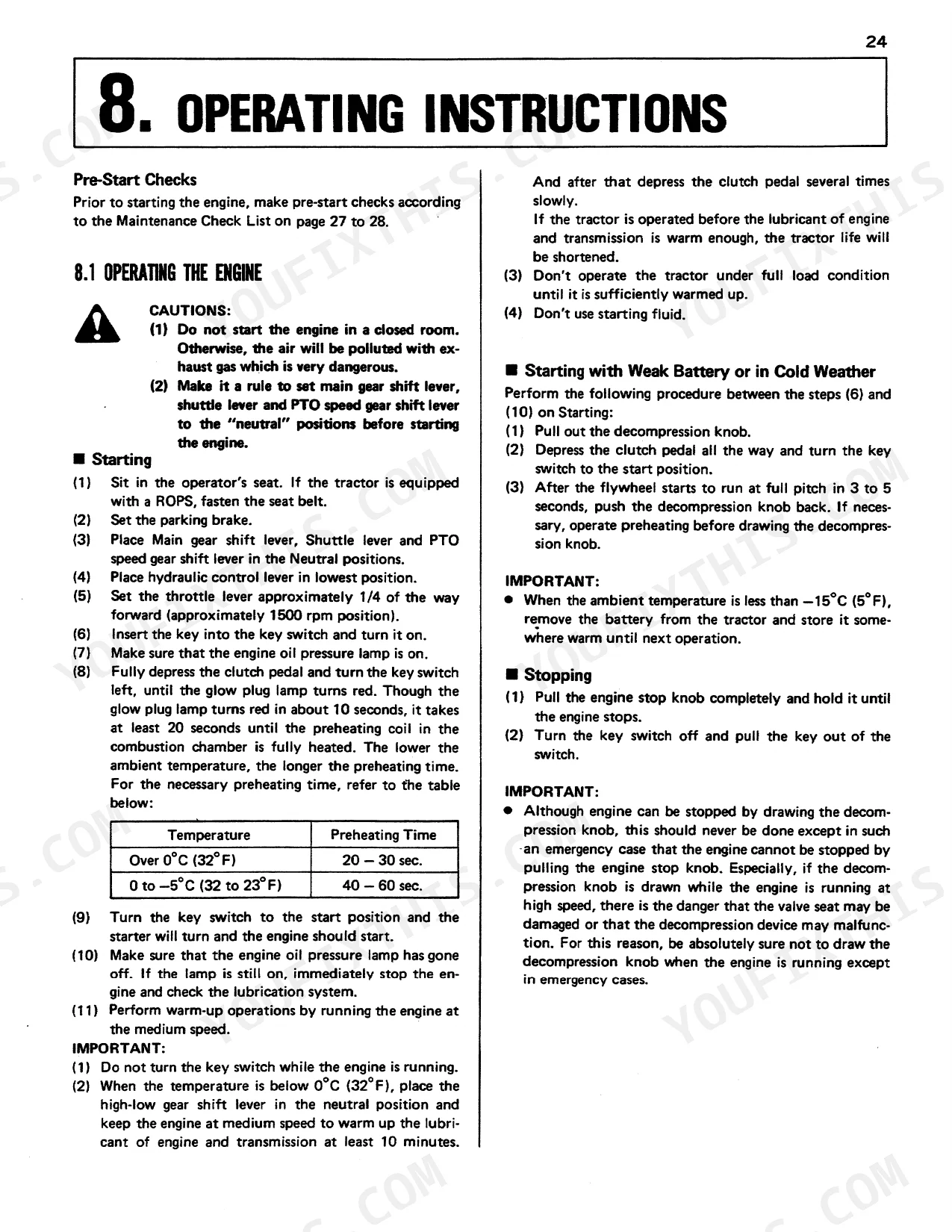
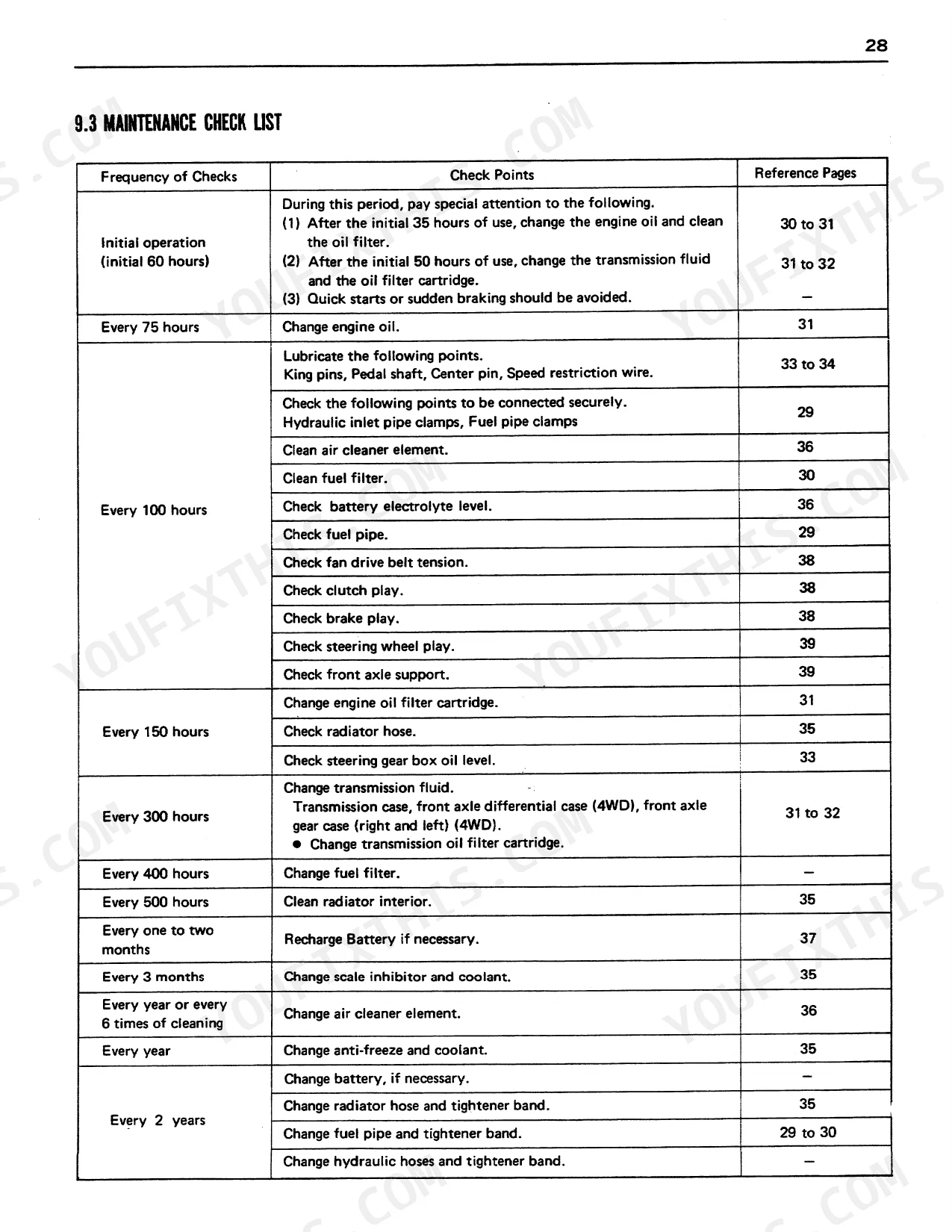
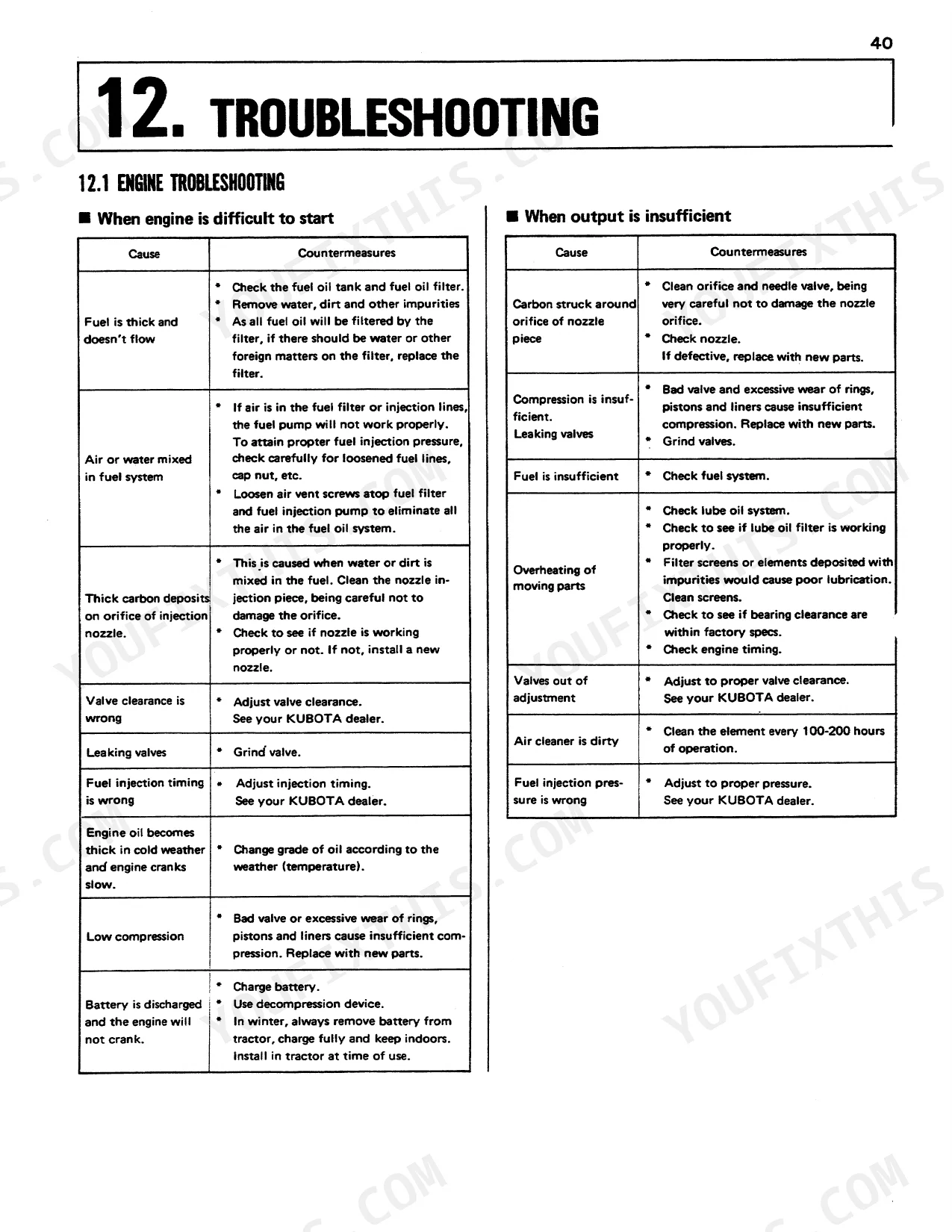
Four variants run off this one book: the L235, L235DT, L275, and L275DT (OEM #35260-19717). Ten pages on the instrument panel and controls name every switch, lamp, and lever, from the key switch and glow plug indicator to the hydraulic control lever, draft control, and differential lock. The maintenance schedule breaks out by interval: a 60-hour break-in first, then service points at 75, 100, 150, and 300 hours, on through the annual and biennial jobs. A separate troubleshooting section diagnoses hard starts, insufficient output, sudden engine stops, and 3-point hitch faults. Torque the front wheel bolts to 9-11 kgf·m (65-80 ft-lbs.) and change the 10-micron transmission filter every 300 service hours. Skip the forum guesswork and check the factory figure before you pick up a wrench.
What's Inside This Kubota L235–L275 Series Operator Manual
| System | Pages | Key Topics |
|---|---|---|
| For Safe Operation | 5 | Fuel Supply And Starting Engine, Operation, Loading And Unloading, Traveling, Operating With Implement, Other Operating Cautions |
| Servicing of Tractor | 7 | Identification plate, Tractor serial number, Engine serial number |
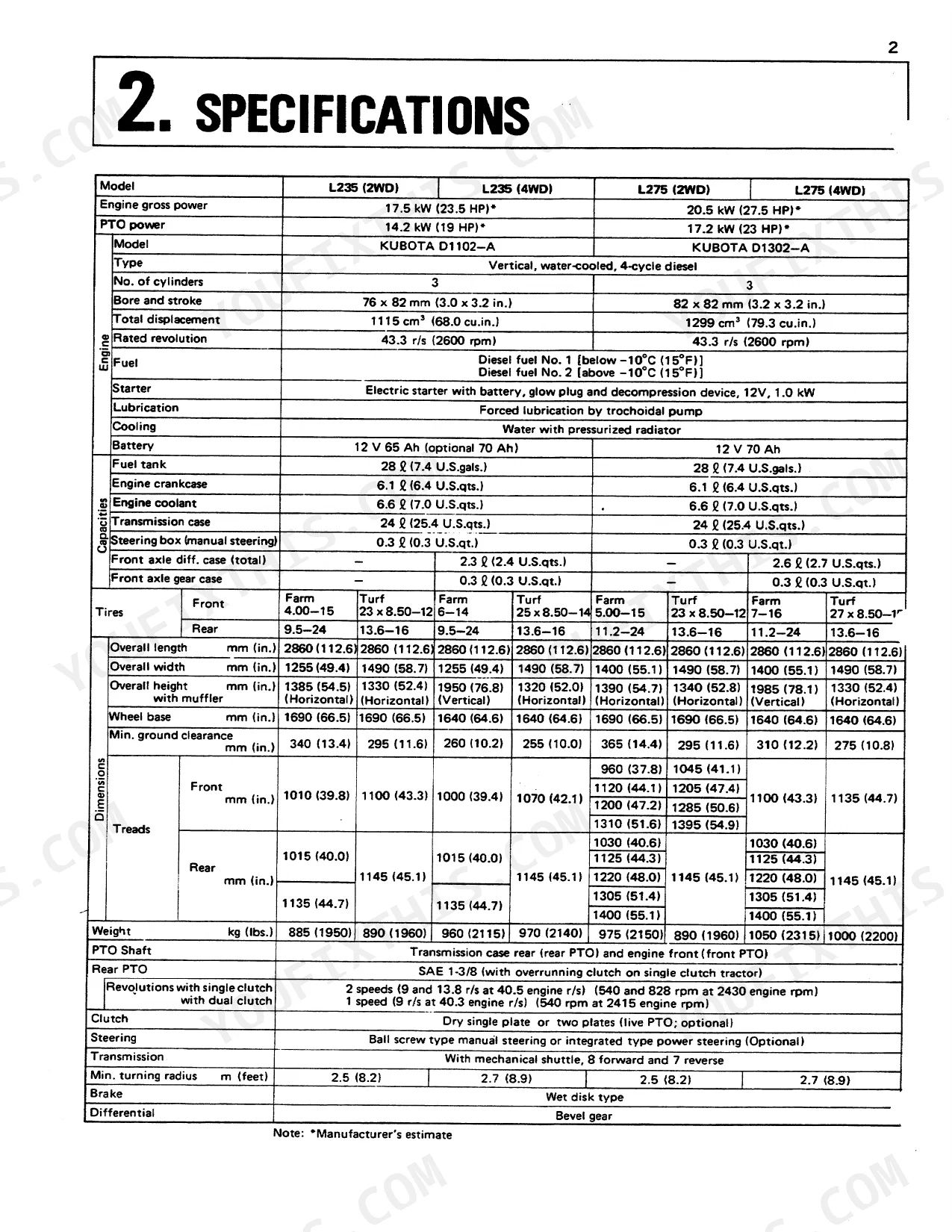
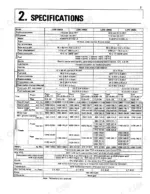
| Specifications | 8-9 | Model, Engine Gross Power, PTO Power, Engine, Capacities, Dimensions, Weight, PTO Shaft |
| Specifications of Implement Limitations | 10-11 | Implement Limitations, Tread with farm tires, Lower link end max. loading weight |
| Handling New Tractor | 12 | Operating Precautions for First 100 Hours, Changing Lubricating Oil for New Tractors, Read For Safe Operation |
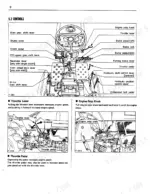
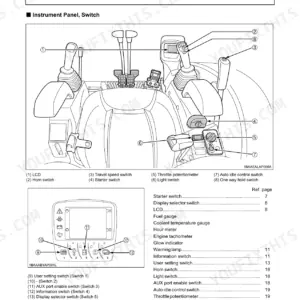
| Instrument Panel and Controls | 13-22 | Switches, Key Switch, Light Switch, Hazard Lamp Switch, Glow Plug Indicator, Horn Button, Hour Meter, Engine Oil Pressure Lamp |
| Three-point Hitch & Drawbar | 23-24 | Top Link, Lifting Rod, Check Chains |
| Wheels, Tires and Tread | 25-29 | Tread (L235), Tread (L275), Tires |
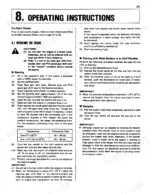
| Operating Instructions | 30-32 | Operating The Engine, Starting, Starting With Weak Battery Or In Cold Weather, Stopping, Operating The Tractor, Parking, Pulling, Check During Driving |
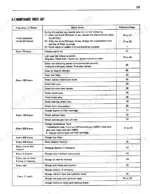
| Maintenance | 33-34 | Daily Check, Lubricants, Maintenance Check List, Initial Operation, Every 75 Hours, Every 100 Hours, Every 150 Hours, Every 300 Hours |
| Check and Maintenance | 35-43 | Fuel, Checking And Refueling, Bleeding The Fuel Line, Checking Fuel Pipe, Engine Oil, Oil Level Check And Replenishment, Cleaning The Fuel Filter Pot, Engine Oil Change |
| Adjustments | 44-45 | Fan Drive Belt Tention, Clutch, Brake, Steering Wheel, Front Axle Support, Speed Restriction Wire |
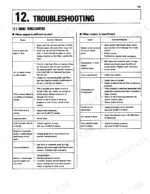
| Troubleshooting | 46-48 | Engine Troubleshooting, When Engine Is Difficult To Start, When Output Is Insufficient, Tractor Troubleshooting, When Color Of Exhaust Is Specially Bad, When Engine Suddenly Stops |
| Long-Term Storage | 49 | Storage Procedures, Clutch Pedal Lock for Storage, Cleaning the Tractor |
| Wiring Diagram | 50-54 | Color of Wire Harness, Publication Information, Safety Information |
Quick Reference Specifications
| Specification | Value | Page |
|---|---|---|
| All Models | ||
| Front wheel bolt torque | 20-23 kgf·m (145-165 ft-lbs.) | p. 25 |
| Transmission oil filter cartridge change interval | every 300 service hours | p. 38 |
| Transmission oil filter efficiency | 10 µm filter | p. 38 |
| Fuel filter cleaning interval | approx. 100 hours | p. 36 |
| Air cleaner element cleaning interval (normal conditions) | once a week | p. 42 |
| Air cleaner element replacement interval | once yearly or every time the air cleaner is rinsed with water (6 times a year) | p. 42 |
| Radiator interior cleaning interval | every 500 service hours | p. 34 |
| Radiator net and core cleaning interval | Daily or every 5 hours of operation | p. 41 |
| Fan drive belt tension (deflection) | approx. 10 mm (0.4 in.) | p. 44 |
| Fan drive belt tension (finger pressure) | 98 N (10 kgf, 22 lbs.) | p. 44 |
| L235 | ||
| Battery capacity | 12 V 65 Ah (optional 70 Ah) | p. 8 |
| L275 | ||
| Battery capacity | 12 V 70 Ah | p. 8 |
Kubota L235–L275 Series Common Problems This Manual Covers
Kubota L235 or L275 loader lift is slow or won't raise a full load p. 47
Check the transmission oil level first. Fill to the mark if it reads low; total capacity is 24 L (25.4 U.S.qts.). Make sure the hydraulic control grip isn't set to its lowest position. If the hitch still crawls, the transmission oil filter cartridge is due; it gets replaced every 300 service hours per the maintenance schedule on page 38.
Manual Section: Tractor Troubleshooting (3-Point Hitch Does Not Move)Engine cranks slowly or won't fire on cold mornings after sitting overnight p. 46
Verify the glow plug indicator glows fully before cranking; hold the key in preheat, then start. Clean corrosion off the battery terminals. Walk through the cold-weather starting steps on page 30. If it still cranks sluggishly, test the battery electrolyte: specific gravity should read 1.260 below 20°C (68°F) in temperate climates.
Manual Section: Engine Troubleshooting (Difficult to Start)Engine temperature gauge climbs into the red or warning lamp illuminates under load p. 47
Stop and let the engine cool before you open the hood. Inspect the radiator net and core for packed debris; clear it every 5 hours of operation per page 41. Top up the coolant if low; total system capacity is 6.6 L (7.0 U.S.qts.). The fan drive belt should give about 10 mm (0.4 in.) of deflection under finger pressure.
Manual Section: Engine Troubleshooting (Immediate Stop Required)Tractor will not move in any gear even when speed lever is shifted p. 47
Confirm the parking brake is fully released before you try to move. Make sure the speed change lever isn't parked in the neutral detent between gears. Work through the tractor movement checklist on page 47. If it still won't pull, inspect the brake adjustment on page 44 to check the brakes are releasing fully.
Manual Section: Tractor Troubleshooting (Tractor Does Not Move)Battery goes dead after use or starter clicks but engine won't crank p. 48
Inspect the battery terminals for corrosion and brush them clean if coated. Check the electrolyte in each cell; top up with distilled water if the plates are exposed. Review battery troubleshooting on page 48. If it won't hold a charge, the normal charging rate is 7 A, with a target specific gravity of 1.260 to 1.275 in temperate climates.
Manual Section: Battery TroubleshootingEngine runs but feels sluggish, lacks power, and exhaust smoke looks dark p. 46
Remove the air cleaner element and inspect it; under normal use, clean it weekly. Blow it out from the inside with compressed air, keeping pressure below 0.69 MPa (100 psi) so you don't tear the paper element. Replace it yearly or after 6 water rinses. If power still feels flat, check the insufficient output chart on page 46.
Manual Section: Engine Troubleshooting (Insufficient Output)Frequently Asked Questions
What does the CHG light mean on a Kubota L235?
The CHG light, called the Battery Charge Lamp in the manual, glows red when the main switch turns on and should go out as the engine starts. If it stays lit above idle, the battery is discharging and the electrical system needs checking. In plain terms, the alternator isn't charging the battery.
How do I fix a Kubota L235 or L275 that won’t start?
When your Kubota L235 or L275 won't start, check the fuel system for thick fuel, air, or water, and clean the fuel oil tank and filter. Make sure the injection nozzle orifice is clean, then check valve clearance and fuel injection timing. Slow cranking in cold weather calls for engine oil matched to the ambient temperature. A discharged battery needs charging, or use the decompression device; in winter, remove the battery and store it indoors.
What are the torque specs for Kubota L235/L275 wheel or engine bolts?
Front wheel bolts on the L235/L275 retighten to 9-11 kgf·m (65-80 ft-lbs.), and rear wheel bolts to 20-23 kgf·m (145-165 ft-lbs.). The manual stresses checking all bolts often and keeping them tight, but it gives no torque figure for engine bolts.
What error codes or indicator lights do Kubota L235/L275 tractors have?
Rather than error codes, the L235/L275 uses indicator lights and an alarm: a Battery charge lamp, Engine oil pressure lamp, Glow plug indicator, and Hazard pilot lamp. An overheat alarm whistles if the cooling water climbs above 100°C (212°F). The manual lists no specific alphanumeric codes.
What are the replacement specifications for hydraulic filter/suction screen?
On the hydraulic side, the transmission oil filter cartridge must be changed every 300 service hours. The replacement has to be a high-efficiency, 10 µm filter, and only a KUBOTA genuine filter or its equivalent should go in, since the wrong one can cause serious damage to the hydraulic system.
Is this Kubota L235–L275 Series Operator Manual a digital download?
Yes, it's an instant PDF download. The full 54-page searchable Operator Manual lands in your hands right after payment, ready to open on a laptop, tablet, or phone in the shop.
Can I print specific sections of this Kubota L235–L275 Series Operator Manual?
No restrictions at all. Print individual pages, full chapters, or the entire manual. The PDF is completely unlocked.
Document Quality
This document is a scanned PDF, not a native digital file, but it includes an OCR layer, so you can search and copy the full text content. The text quality is generally crisp and easy to read throughout the manual. Diagrams and illustrations are primarily raster images (photos), with labels that are clear and readable. The pages are clean with no notable scan artifacts, stains, or skewed content, maintaining a consistent presentation. There is one blank filler page (page 2) present in the document.


Reviews
There are no reviews yet.