
Two compact tractors, one factory reference: these 139 pages give L3301 and L3901 owners the operating and maintenance data Kubota built around them. Eighteen pages cover tractor operation for both Manual Transmission and HST types, while 13 pages map the instrument panel and controls down to each switch, gauge, and Easy Checker lamp. A dedicated section walks through the 3-point hitch, PTO, and drawbar. Periodic service runs from daily walk-arounds out to the 3000-hour interval, with fluid capacities, schedules, and a troubleshooting chart covering engine error codes and powertrain faults. Torque the front wheel bolts to 137 N·m (100 ft·lbs) and the rears to 215 N·m (160 ft·lbs); clean the air element at 100 hours, swap the fuel filter at 400. Bookmarked sections let you pull a spec up on your phone and get back to the field.
What's Inside This Kubota L3301, L3901 Operator Manual
| System | Pages | Key Topics |
|---|---|---|
| Safe Operation | 11-22 | General precautions, Precautions for CAB and ROPS, Precautions for operating the tractor on slopes, Precautions for driving the tractor on the road |
| Servicing of the Tractor | 23-24 | Dealer service, Warranty of the tractor, Scrapping the tractor and its procedure |
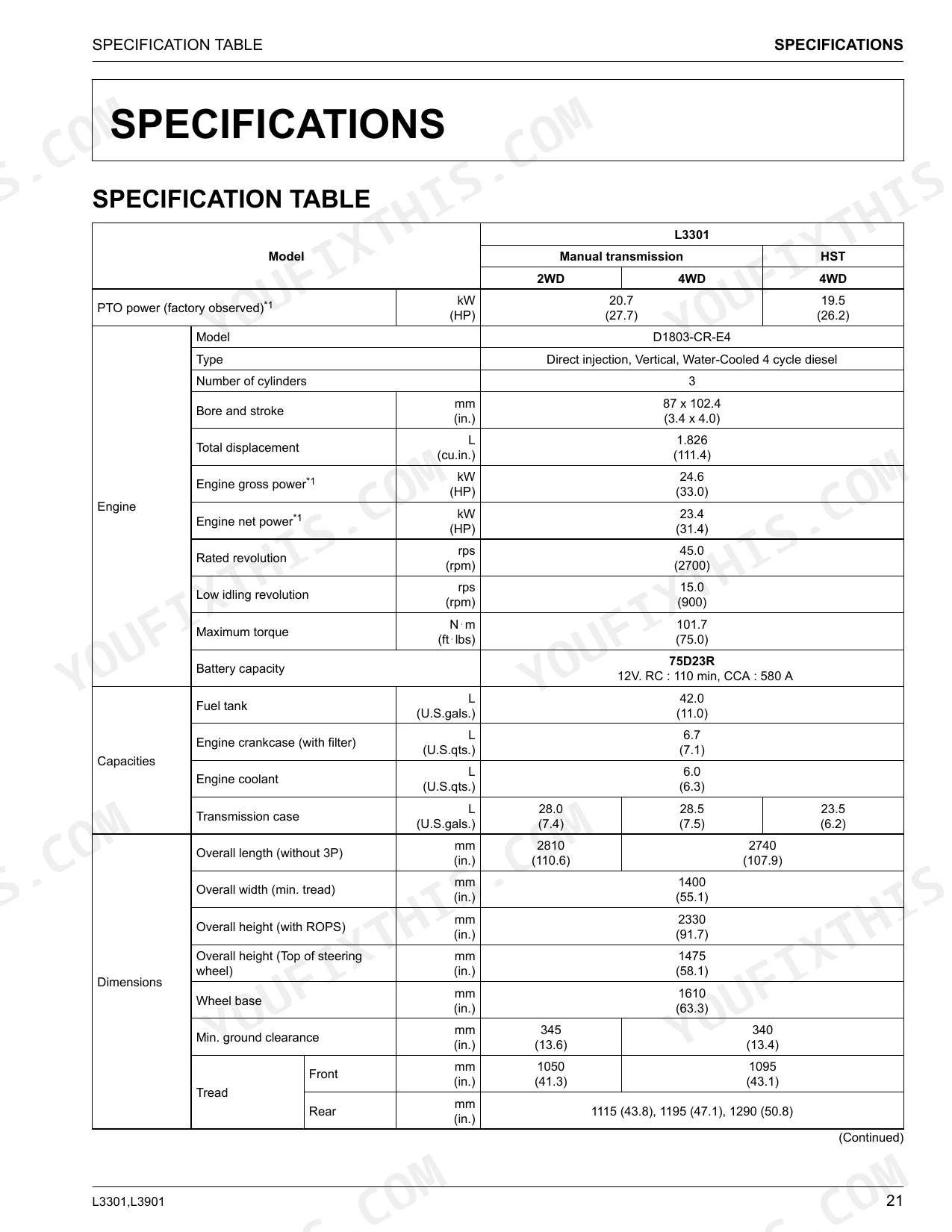
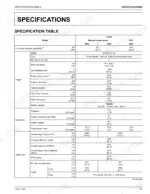
| Specifications | 25-29 | Specification table, Traveling speeds table, Engine specifications, Hydraulic unit specifications, PTO specifications, Dimensions and weight |
| Implement Limitations | 30-33 | Implement limitation tables, Implement weight list, Lower link end max. lifting weight, Max. drawbar load, Trailer loading weight |
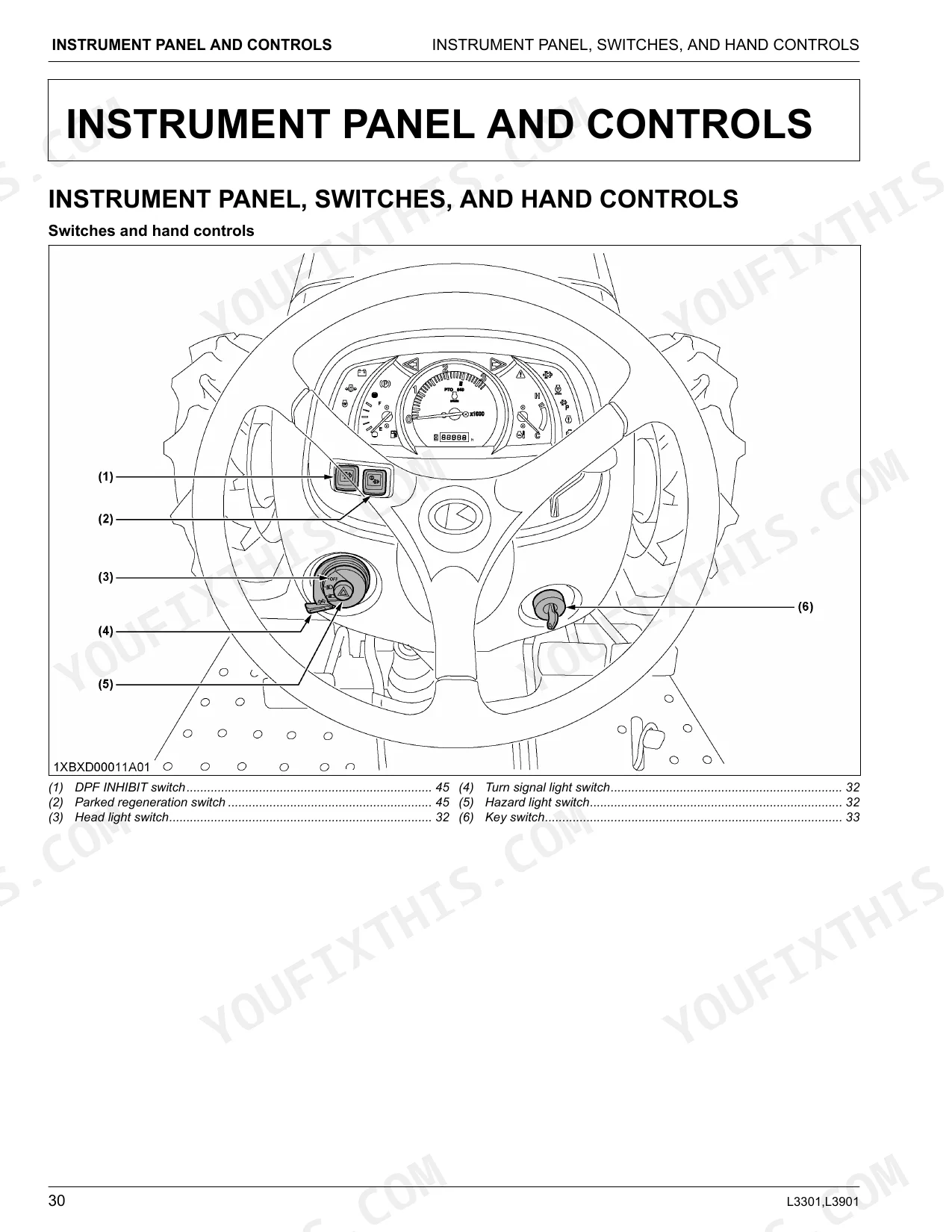
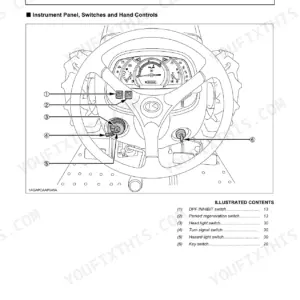
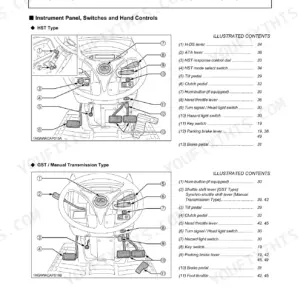
| Instrument Panel and Controls | 34-46 | Instrument Panel, Switches, And Hand Controls (Head Light Switch, Turn Signal Light Switch, Hazard Light Switch, Key Switch, Easy Checker™ Lamps) |
| Pre-Operation Check | 47 | Walk-around inspection, Checking the fuel tank and refueling, Checking the engine oil level, Checking the transmission fluid level, Checking the coolant level |
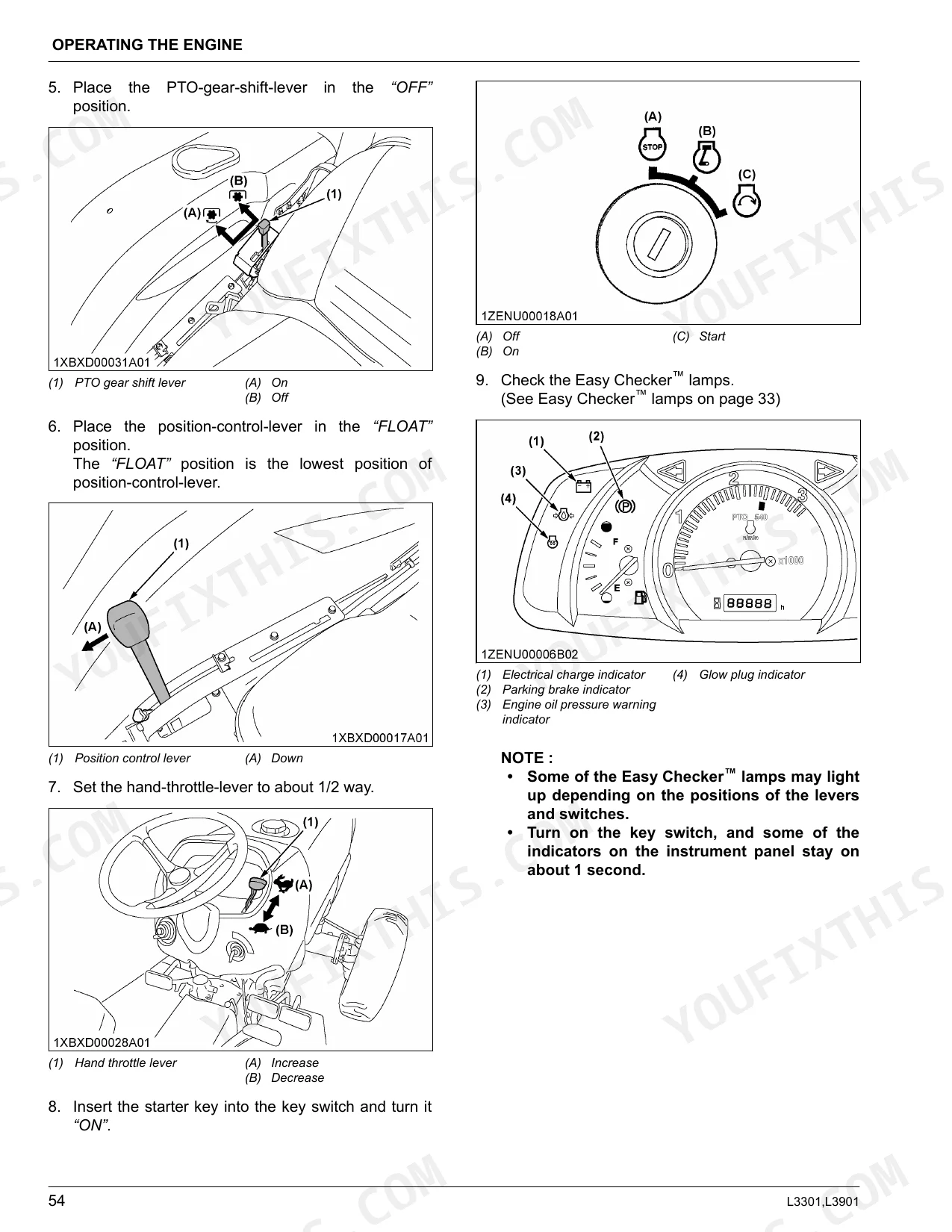
| Operating the Engine | 48-61 | Precautions for operating the engine, Exhaust aftertreatment devices, DPF regeneration process, Starting the engine, Stopping the engine, Warming up of the engine |
| Operating the Tractor | 62-77 | Operation Of New Tractor, Operation Of The Foldable Rops (Folding The Rops, Raising The Rops To Upright Position), Starting The Tractor [Manual Transmission Type] |
| Power Take-Off (PTO) | 78-79 | PTO operation, PTO gear shift lever, Stationary PTO, PTO shaft cover and cap |
| 3-Point Hitch and Drawbar | 80-82 | Overview Of The 3-Point Hitch And Drawbar, 3-Point Hitch (Preparations For Attaching The 3-Point Hitch Implement, Attaching Methods Of 3-Point Hitch Implement), Drawbar (Length) |
| Hydraulic Unit | 83-85 | 3-point hitch control system, Position control, Float control, Auxiliary hydraulics |
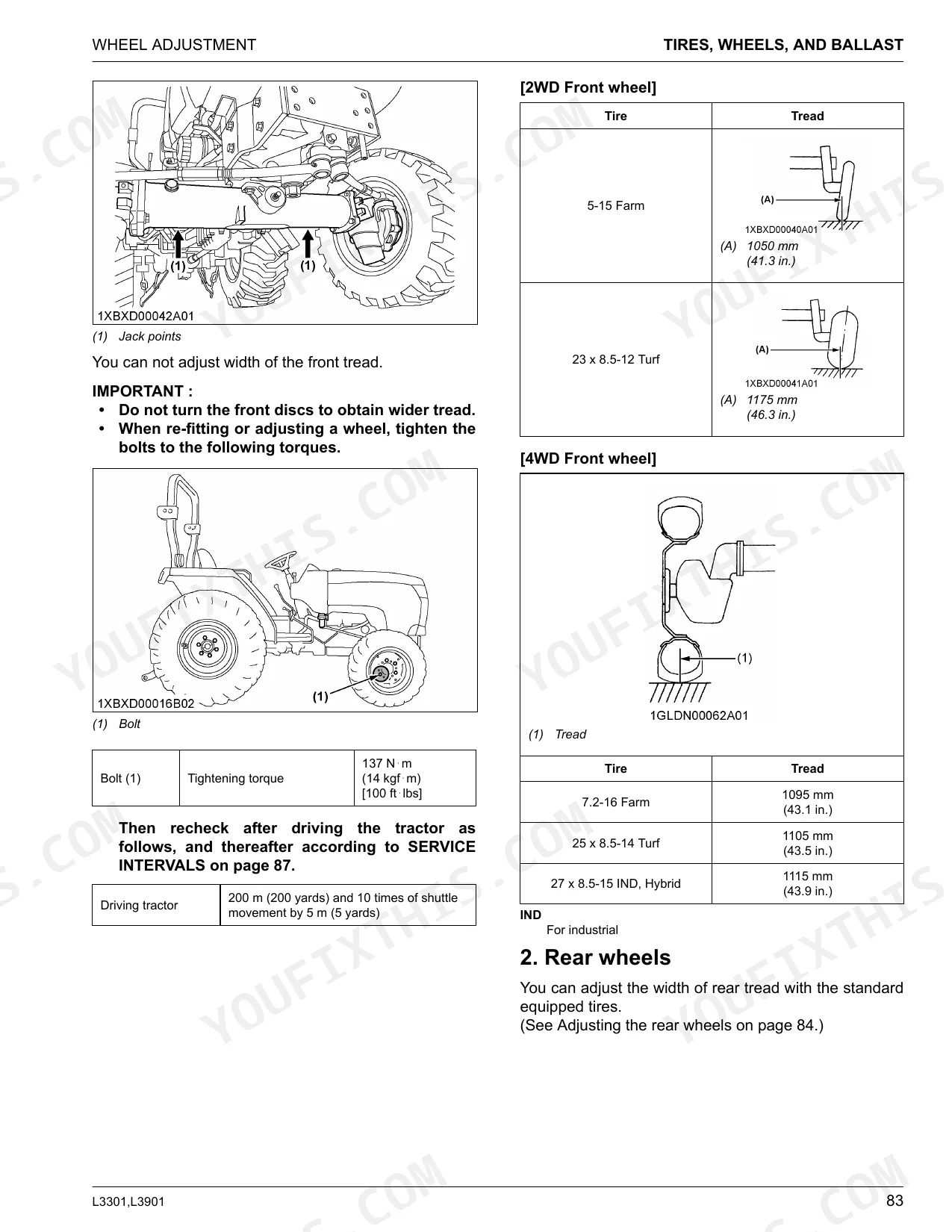
| Tires, Wheels, and Ballast | 86-90 | Tires (Inflation Pressure Of Tires, Rear Wheels), Ballast (Front Ballast, Rear Ballast, Liquid Ballast In Rear Tires, Dual Tires), Wheel Adjustment (Front Wheels) |
| Maintenance | 91-97 | Engine oil, Engine oil filter, Fuel filter, Transmission fluid, DPF muffler, Battery condition |
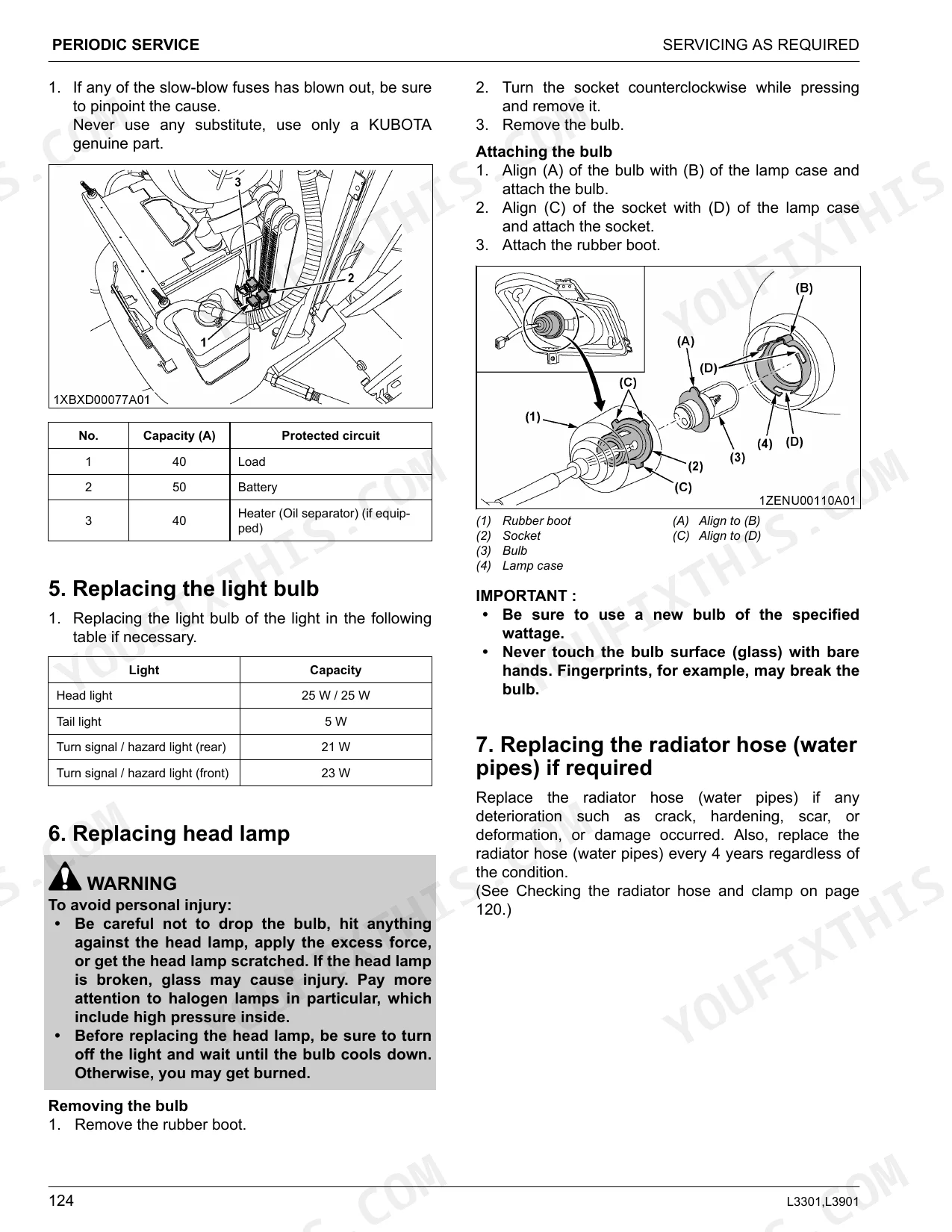
| Periodic Service | 98-129 | Waste Disposal, Hood And Engine Side Cover |
| Storage of the Tractor | 130-131 | Bolts and Nuts, Grease, Tires Pressure, Engine Oil, Clutch, Battery |
| Troubleshooting | 132-133 | Engine Troubleshooting, Engine Error Code, Power Train Trouble Shooting |
| Options | 134 | Engine block heater, Front end weights, Rear wheel weights, Cruise control, Double acting remote hydraulic control valve, Stabilizer kit (for lower link) |
Quick Reference Specifications
| Specification | Value | Page |
|---|---|---|
| Front wheel bolt tightening torque | 137 N⋅m (14 kgf⋅m) [100 ft⋅lbs] | p. 87 |
| Rear wheel bolt tightening torque | 215 N⋅m (22 kgf⋅m) [160 ft⋅lbs] | p. 88 |
| Air cleaner element cleaning compressed air pressure | 205 kPa (2.1 kgf/cm2) [30 psi] | p. 109 |
| Air cleaner element cleaning interval | every 100 Hr | p. 91 |
| Fuel filter replacement interval | every 400 Hr | p. 91 |
| Fuel filter tightening | tighten by hand an additional 1/2 turn only | p. 117 |
| Engine crankcase (with filter) capacity | 6.7 L (7.1 U.S.qts.) | p. 90 |
| Engine oil type | CJ-4 (DPF type engine) | p. 90 |
| Transmission case capacity [Manual transmission 2WD] | 28.0 L (7.4 U.S. gals.) | p. 90 |
| Transmission case capacity [Manual transmission 4WD] | 28.5 L (7.5 U.S. gals.) | p. 90 |
| Engine coolant capacity | 6.0 L (6.3 U.S.qts.) | p. 90 |
| Coolant type | Fresh clean soft water with antifreeze | p. 90 |
Kubota L3301, L3901 Common Problems This Manual Covers
Power fades and the engine cuts out mid-cycle during active DPF regeneration p. 132
Start with the engine troubleshooting guide on page 132. Check the Engine ECU Fuse No. 1 on page 127 and replace it if the 5 A element has blown. Confirm the fuel level, and bleed air from the lines if the tank ran completely dry.
Manual Section: Engine TroubleshootingFront loader cylinders creep or move erratically under a heavy lift p. 97
Pull the dipstick shown on page 97 and confirm the transmission fluid sits between the 2 notches. If it reads low, top off with KUBOTA SUPER UDT-2 fluid. The main hydraulic pump should deliver its rated 23.9 L/min.
Manual Section: MaintenanceEngine won't crank after clutch or transmission work p. 109
Measure the clutch pedal free travel and adjust the linkage to 20 mm to 30 mm of deflection, per page 109. Clean the battery terminals and grease them every 50 hours so voltage doesn't drop at the starter.
Manual Section: Periodic ServiceBraking feels uneven or the tractor pulls to one side on the road p. 110
Adjust the brake linkage turnbuckles to set pedal free travel between 15 mm to 20 mm, as specified on page 110. Torque the rear wheel bolts to 215 N·m with a calibrated wrench for proper seating.
Manual Section: Periodic ServiceFrequently Asked Questions
How do I reset the DPF regeneration on a Kubota L3301 or L3901?
When the parked-regeneration-indicator starts flashing, press the parked-regeneration-switch to start the cycle. Engine RPM rises automatically and regeneration begins, with both the regeneration indicator and the engine RPM increase indicator holding "ON" throughout. The cycle usually takes 15-20 minutes to complete.
How do I clear a check engine or error code on a Kubota L3301/L3901?
Operators cannot clear these error codes. The manual states plainly that the code will not disappear even after the warning indicator is reset. Once a code shows up, the fix is to contact your local KUBOTA Dealer for repairs.
What does error code mean on a Kubota L3301 or L3901?
A reference table lists each code and what it means. E-20 points to a "Communication trouble", E-31 to a "Meter's part code and ECU model setting not compatible", and E-93 to a "Relay for engine-starter-motor is in trouble". Whichever code appears, contact your local KUBOTA Dealer for repairs.
How do I reset the PTO safety switch or interlock on a Kubota L3301/L3901?
There's no "reset" for the PTO safety switch or interlock; it works off conditions, not a button. The engine only starts with the PTO-gear-shift-lever in the "OFF" position. And if the PTO is engaged when you stand up from the seat, the engine shuts off on its own.
How to reset DPF regen on Kubota L3301
A DPF reset is really a parked regeneration cycle. Park in a safe, open area and set the parking brake. Move the synchro-shuttle shift lever (manual transmission) or speed-control-pedal (HST type) to neutral, turn the PTO-gear-shift-lever "OFF", and drop the engine rpm to idle. Then press the parked-regeneration-switch to start; it typically runs 15-20 minutes.
What format is this Kubota L3301, L3901 manual in?
A 139-page searchable PDF downloads the moment you check out. Open it on a laptop, tablet, or phone and take it straight to the shop floor.
Can I print this Kubota L3301, L3901 manual?
Yes. The PDF carries no DRM, so print any page or section you need. It works with any standard printer.
Document Quality
This document is a scanned version of an original manual, equipped with an optical character recognition (OCR) layer, which enables full text searchability and copying. The text throughout the manual is consistently crisp and easy to read, showing no signs of blurriness or fading. Diagrams and illustrations are raster images, meaning they may pixelate slightly at high zoom levels, but all labels and details within them are clearly legible. The pages are clean, free from scan artifacts, stains, or skewed content, with the exception of page 10 which serves as a blank filler page.


Reviews
There are no reviews yet.