
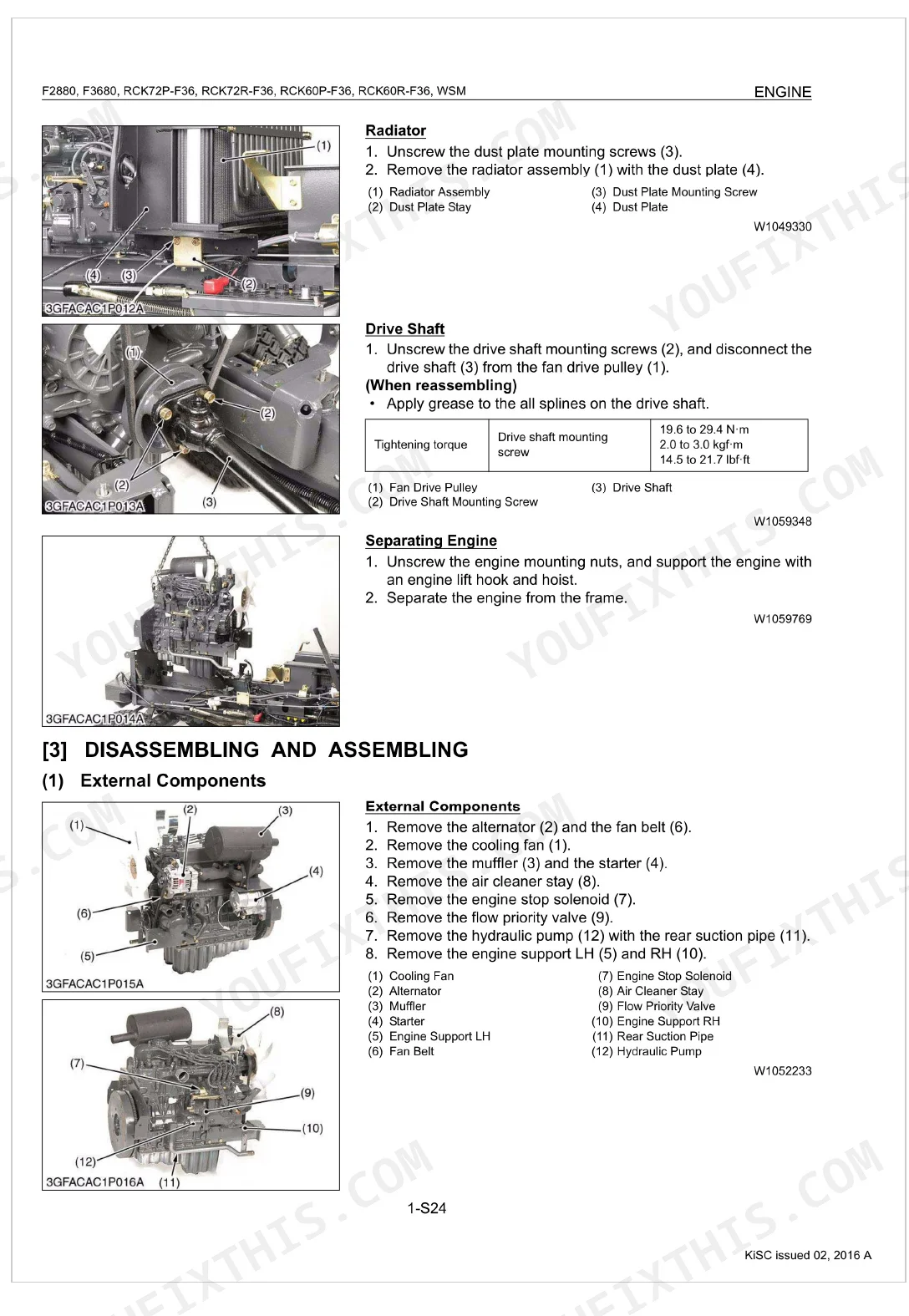
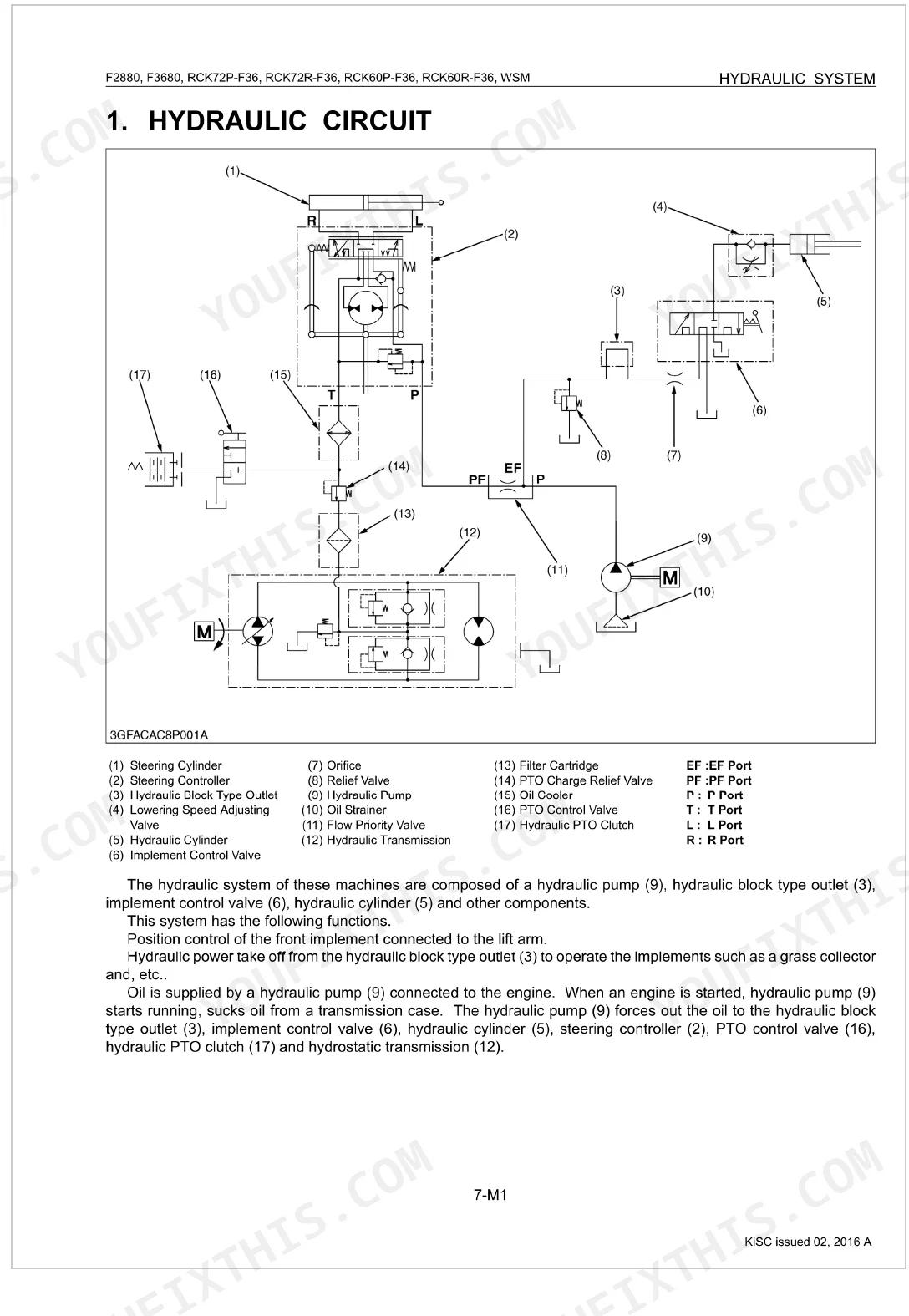
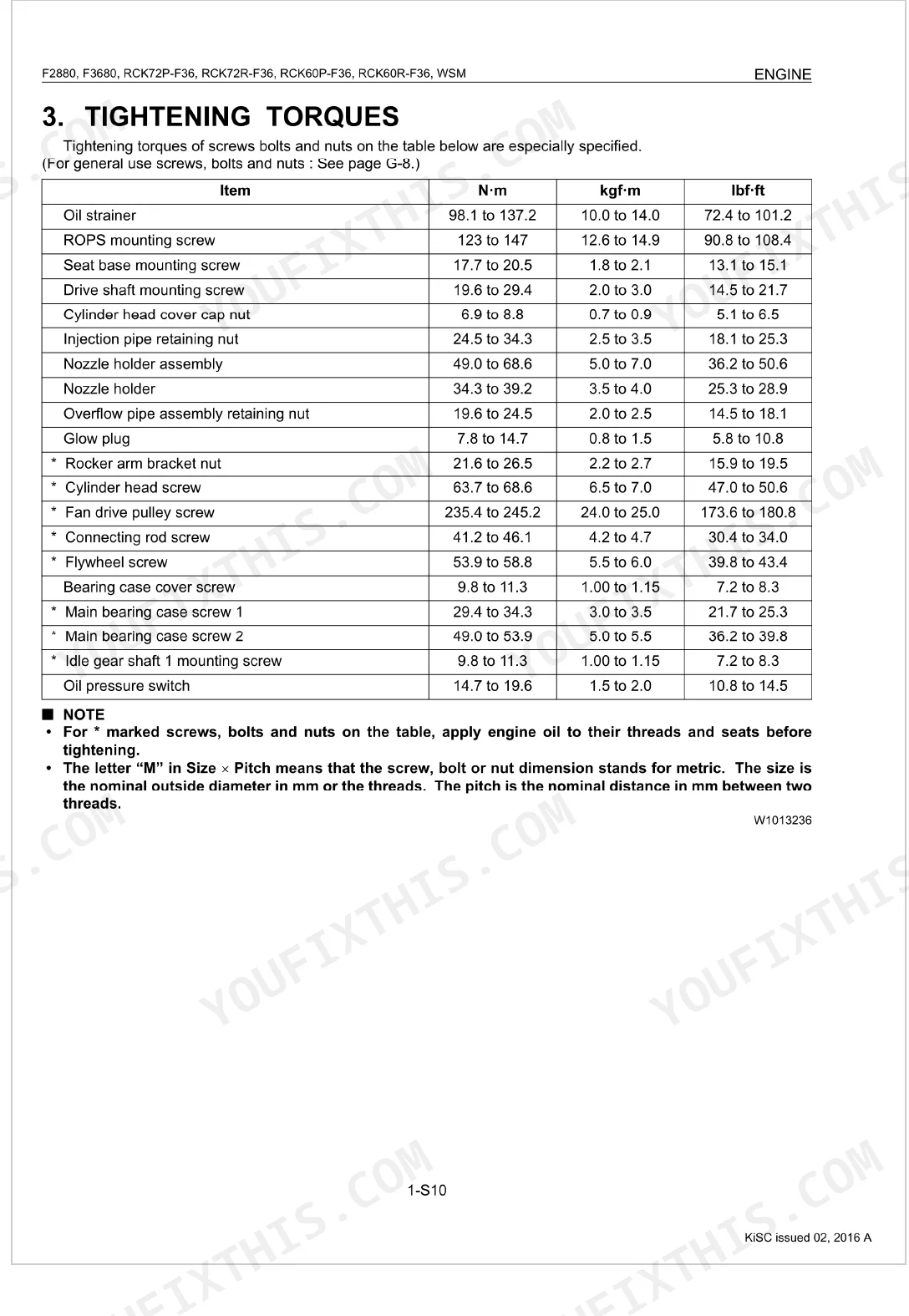
Kubota built this manual (OEM #9Y011-15552) for factory-level service on the F2880, F3680, and their paired RCK60/RCK72 mower decks. The wiring diagrams cover the Operator Presence Control system plus every charging and starting circuit; the hydraulic schematics trace fluid through the HST, flow priority valve, implement control valve, and steering controller. You'll work from 150 step-by-step procedures, full torque tables, and 15 troubleshooting charts that span the engine, transmission, brakes, rear axle, and mower deck. Fill the transmission to 14.0 L before buttoning it up, and check that the F3680 crankcase holds 5.3 L at each oil change. Bookmarked by system and keyword-searchable, it opens on a tablet at the machine so you can read a spec and turn a wrench in the same minute.
What's Inside This Kubota F2880 & variants Manual
| System | Pages | Key Topics |
|---|---|---|
| Record of Revisions | 3 | Main Revised Point and Corrective Measures |
| Safety Instructions | 4-9 | Safety First, Before Servicing and Repairing, Safety Starting, Safety Working, Avoid Fires, Ventilate Work Area, Prevent Acid Burns, Dispose of Fluids Properly |
| Dimensions | 12 | Overall Length, Overall Width, Overall Height |
| General | 13-56 | Mower Identification, Lubricants, Tightening Torques, Metric Screws, Bolts And Nuts, American Standard Screws, Bolts And Nuts With Unc Or Unf Threads, Plugs |
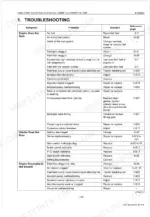
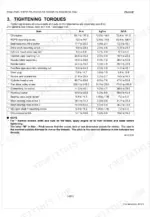
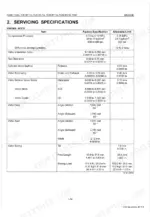
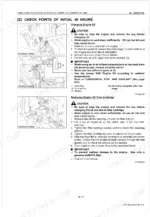
| Engine | 57-118 | Engine Body, Lubricating System, Cooling System, Fuel System (Governor), Troubleshooting, Servicing Specifications, Tightening Torques, Checking |
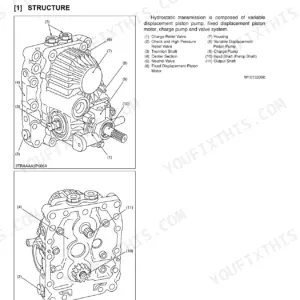
| Transmission | 119-174 | Structure, Power Train (Hydrostatic Transmission, Oil Flow, Operation, Charge Relief Valve, Check And High Pressure Relief Valve, Control Linkage) |
| Front Axle | 175-182 | Structure, Troubleshooting, Tightening Torques, Checking, Disassembling And Servicing (Preparation, Disassembling And Assembling) |
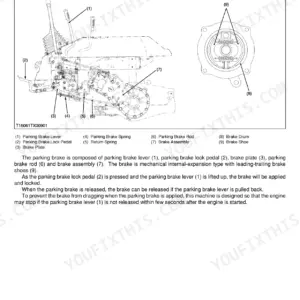
| Brakes | 183-196 | Features, Operation, Troubleshooting, Servicing Specifications, Tightening Torques, Checking |
| Rear Axle | 197-215 | Structure, Troubleshooting, Servicing Specifications, Tightening Torques, Checking |
| Steering | 216-228 | Structure, Steering Controller, Troubleshooting, Servicing Specifications, Tightening Torques, Checking |
| Hydraulic System | 229-250 | Hydraulic Circuit, Hydraulic Pump, Flow Priority Valve, Relief Valve, Implement Control Valve, Feedback Linkage, Hydraulic Cylinder, Troubleshooting |
| Electrical System | 251-282 | Wiring Diagram, Starting System (Operator Presence Control System, Related Switches And Controller, Operation), Troubleshooting, Servicing Specifications, Tightening Torques |
| Mower | 283-313 | Power Transmission, Troubleshooting, Servicing Specifications, Tightening Torques, Checking |
| Editor | 314 | Kubota Farm & Industrial Machinery Service, Ltd., KUBOTA Corporation |
Quick Reference Specifications
| Specification | Value | Page |
|---|---|---|
| F2880, F3680 | ||
| Fuel tank capacity | 61 L (16.1 U.S.gals, 13.4 Imp.gals) | p. 10 |
| F2880 | ||
| Engine crankcase capacity (F2880) | 3.8 L (4.0 U.S.qts., 3.3 Imp.qts) | p. 10 |
| Engine Oil Capacity | 3.8 L | p. 10 |
| F3680 | ||
| Engine Oil Capacity | 5.3 L | p. 10 |
| All Models | ||
| Transmission Fluid Capacity | 14.0 L | p. 10 |
| Engine Coolant Capacity | 4.6 L | p. 10 |
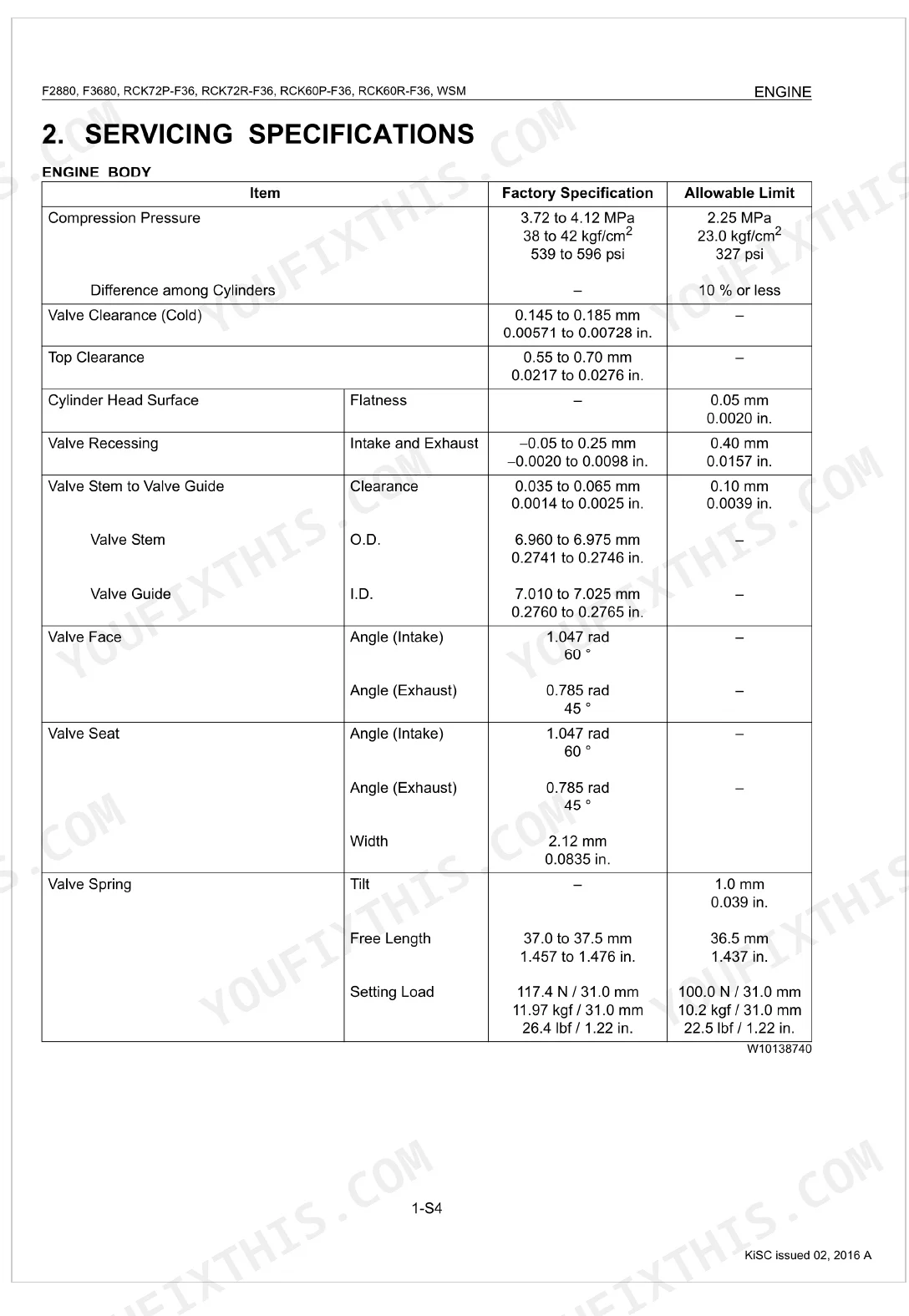
| Engine Valve Clearance (Cold) | 0.145 to 0.185 mm | p. 69 |
| Engine Cylinder Head Screw Torque | 63.7 to 68.6 N·m | p. 75 |
| Fan Belt Deflection | 7.0 to 9.0 mm | p. 73 |
| Fuel Injection Pressure | 13.73 to 14.71 MPa | p. 74 |
| Mower Blade Mounting Screw Torque | 98.1 to 117.7 N·m | p. 302 |
| Front Gauge Wheel Tire Pressure (Recommended) | 196 kPa | p. 301 |
Kubota F2880 & variants Common Problems This Manual Covers
Kubota F2880 diesel turns over slowly and won't fire in cold weather, glow plugs suspected
Check each glow plug for continuity; replace any that read open and torque replacements to 7.8 to 14.7 N·m (page 75). If the engine still cranks sluggishly after new plugs, load-test the battery, as voltage below 9.5V during cranking points to a weak battery rather than a fuel problem. Work through the complete cold-start sequence.
Manual Section: Engine TroubleshootingHydrostatic transmission runs hot, machine loses drive power progressively during extended use
Confirm the transmission fluid level first; the system holds 14.0 L (page 10), and low fluid starves the HST of both power and cooling. Inspect the oil cooler for plugged fins and flush with compressed air. Make sure the charge relief valve is not stuck open. See the hydrostatic troubleshooting procedures in the Transmission section starting at page 119.
Manual Section: Hydrostatic Transmission Section TroubleshootingMower leaves ragged or uneven strips despite full blade speed on level ground p. 302
Inspect each blade for dullness, bends, or a missing sail section. Remove and sharpen or replace, then torque the blade mounting screws to 98.1 to 117.7 N·m (page 302). Set front gauge wheel tire pressure to 196 kPa (page 301). Confirm the deck sits level side to side; an unlevel deck is the most common cause of stripe patterns.
Manual Section: Mower TroubleshootingSteering requires excessive effort at slow speeds or when turning on slopes p. 222
Verify the transmission fluid level is correct; the power steering system draws from the shared transmission case (14.0 L total capacity, page 10). Test the steering relief valve pressure, which should read 10.8 to 11.3 MPa (page 222). Pressure below this range points to a worn or contaminated relief valve. Inspect the steering controller for internal bypass before condemning the pump.
Manual Section: Steering TroubleshootingBrakes drag or pull to one side when pedals are released, machine veers p. 183
Measure brake pedal free travel on both sides; allowable limit is 20 to 30 mm (page 189). Travel out of spec means the brake is not fully releasing. Look for pad oil contamination from a leaking axle seal, the most common dragging cause. Adjust the linkage and inspect wear components per the Brakes service procedures on page 183.
Manual Section: Brakes TroubleshootingFrequently Asked Questions
What are the recommended service intervals?
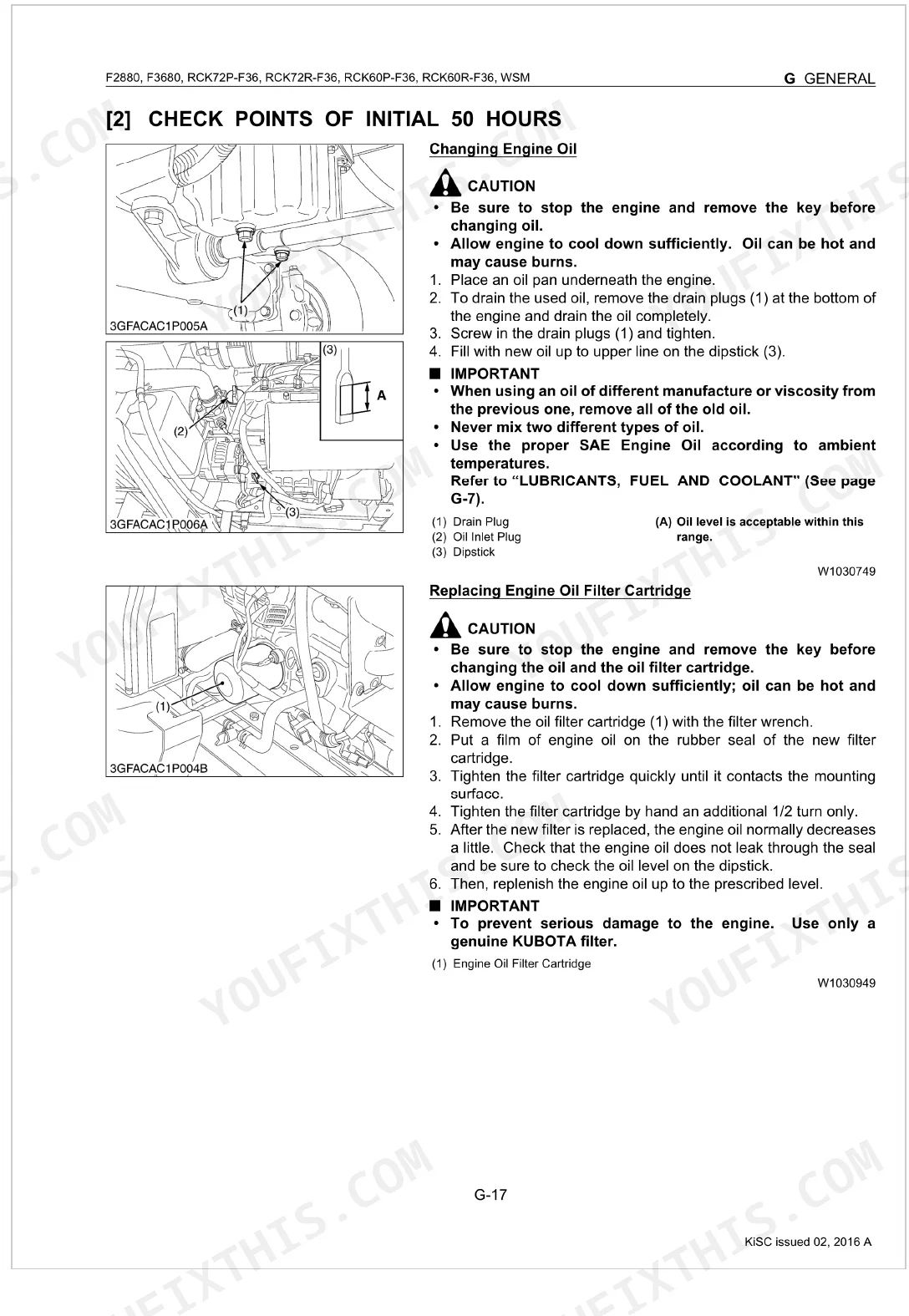
A maintenance check list lays out the recommended interval for each item. Inspect the safety device every 50 hours, change the engine oil every 200 hours, and replace the air cleaner element every 4 years. Greasing also comes due every 50 hours, while the fan belt should be adjusted every 100 hours.
What fluids and capacities does this machine require?
The fuel tank takes No. 2-D diesel (61 L / 16.1 U.S.gals); the cooling system holds fresh clean water with anti-freeze (4.6 L / 4.9 U.S.qts); the transmission case uses KUBOTA UDT or SUPER UDT fluid (14.0 L / 14.8 U.S.qts). Crankcase capacity runs 3.8 L (4.0 U.S.qts) on the F2880 and 5.3 L (5.6 U.S.qts) on the F3680, with API Service Classification CD, CE or CF engine oil.
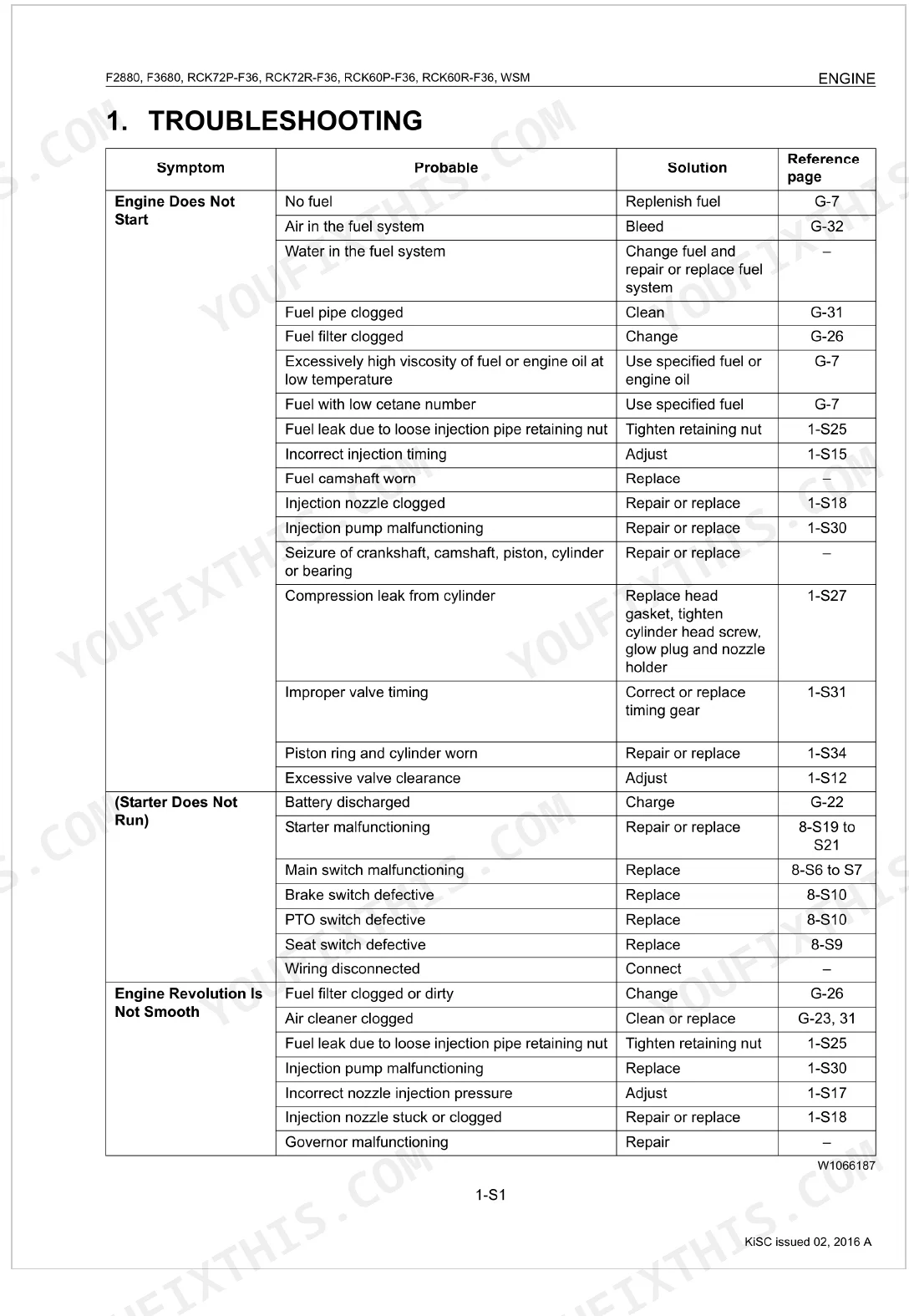
How to troubleshoot engine won't start?
When the engine won't fire, start with fuel: no fuel means replenish it (page G-7), air in the fuel system needs bleeding (page G-32), and a clogged fuel filter calls for a change (page G-26). Past the fuel side, check for a discharged battery (charge, page G-22) or a failing starter (repair or replace, page 8-S19 to S21).
What are the hydraulic system specifications?
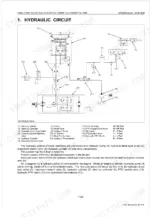
At no pressure the hydraulic pump delivers 29.0 L/min (above 7.6 U.S.GPM); at rated pressure (9.8 MPa) that drops to 24.0 L/min (above 6.3 U.S.GPM). Relief valve setting pressure runs 13.8 to 14.2 MPa (140 to 145 kgf/cm²), and the hydraulic cylinder I.D. measures 70.05 to 70.10 mm (2.7579 to 2.7598 in.)
How quickly can I access this Kubota F2880 & variants manual after buying?
A 314-page Workshop Manual in searchable PDF format, ready the moment you complete checkout. View it on a computer, tablet, or phone, with no shipping wait.
Can I print this Kubota F2880 & variants manual?
Yes. The PDF carries no DRM restrictions, so you can print any page or section you need for the shop. It works with any standard printer.
Does this Kubota F2880 & variants manual include wiring diagrams?
Included. The Kubota F2880 & variants Workshop Manual covers full wiring harness diagrams, electrical circuits, and connector pinouts.
Document Quality
This document is a scanned PDF with an accurate OCR layer, allowing you to search and copy the full text. The text quality is crisp and consistently easy to read throughout. Diagrams and illustrations are clear raster images, and all labels are easily readable. The pages are clean, free from scan artifacts, stains, or skewed content. There are no notable blank or filler pages present in this manual.


Reviews
There are no reviews yet.