
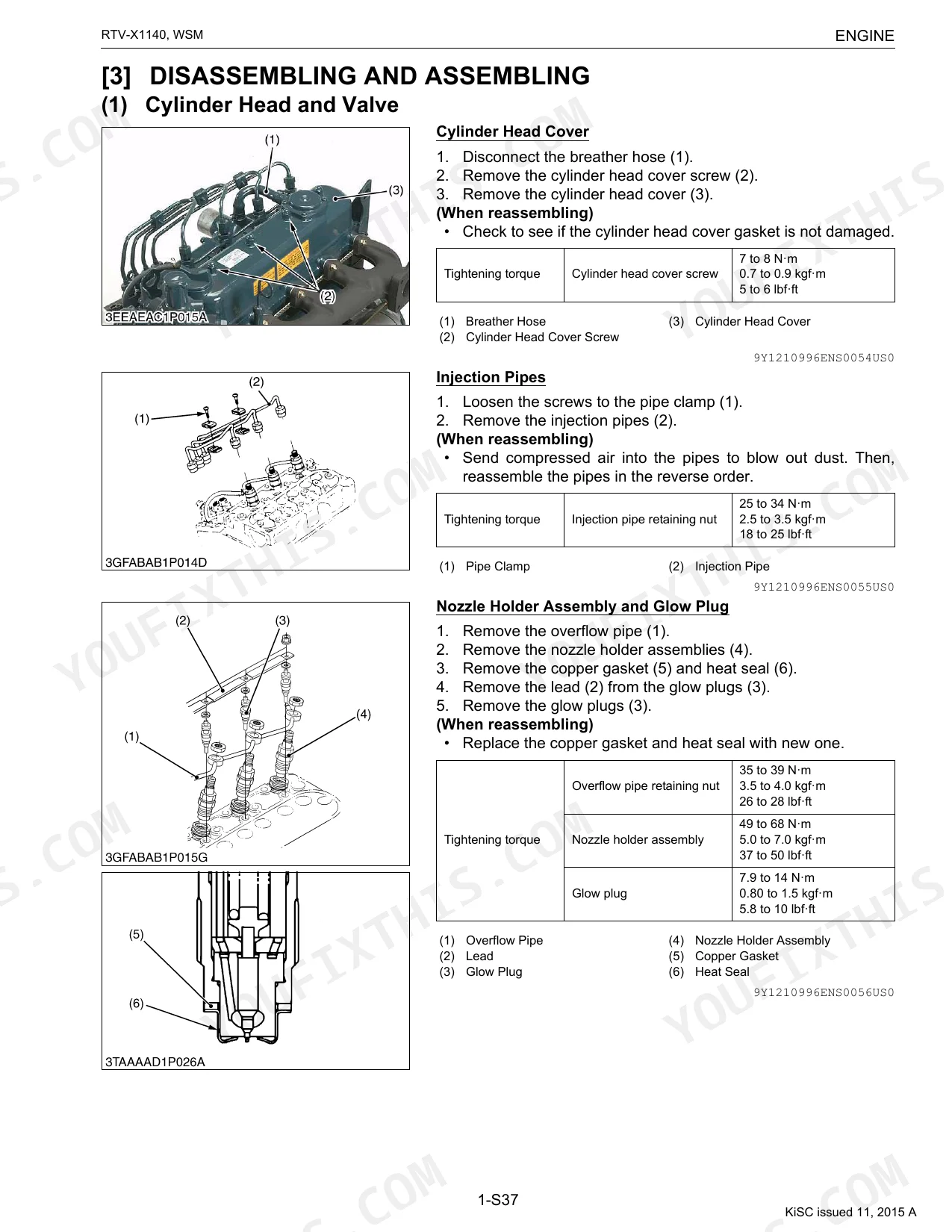
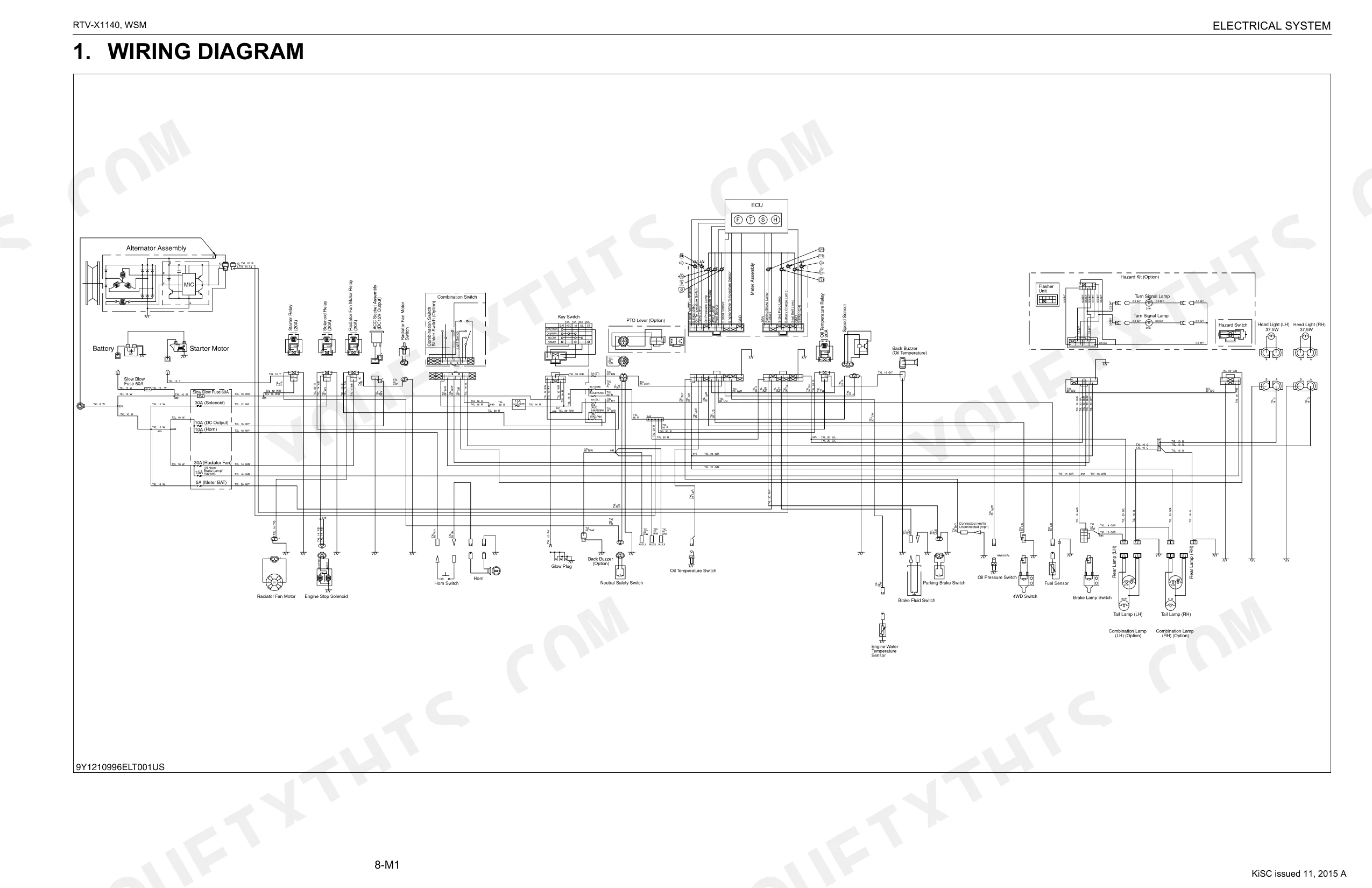
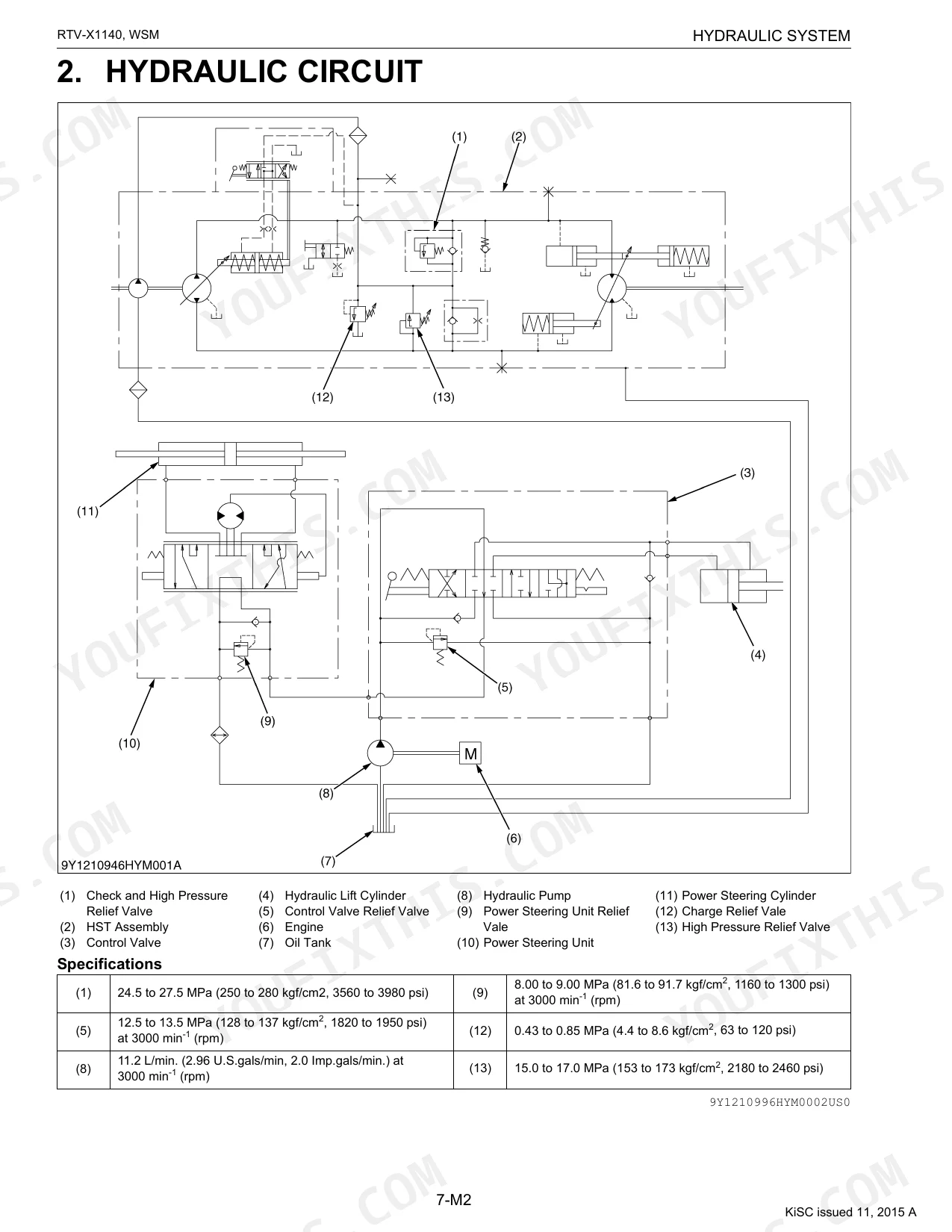
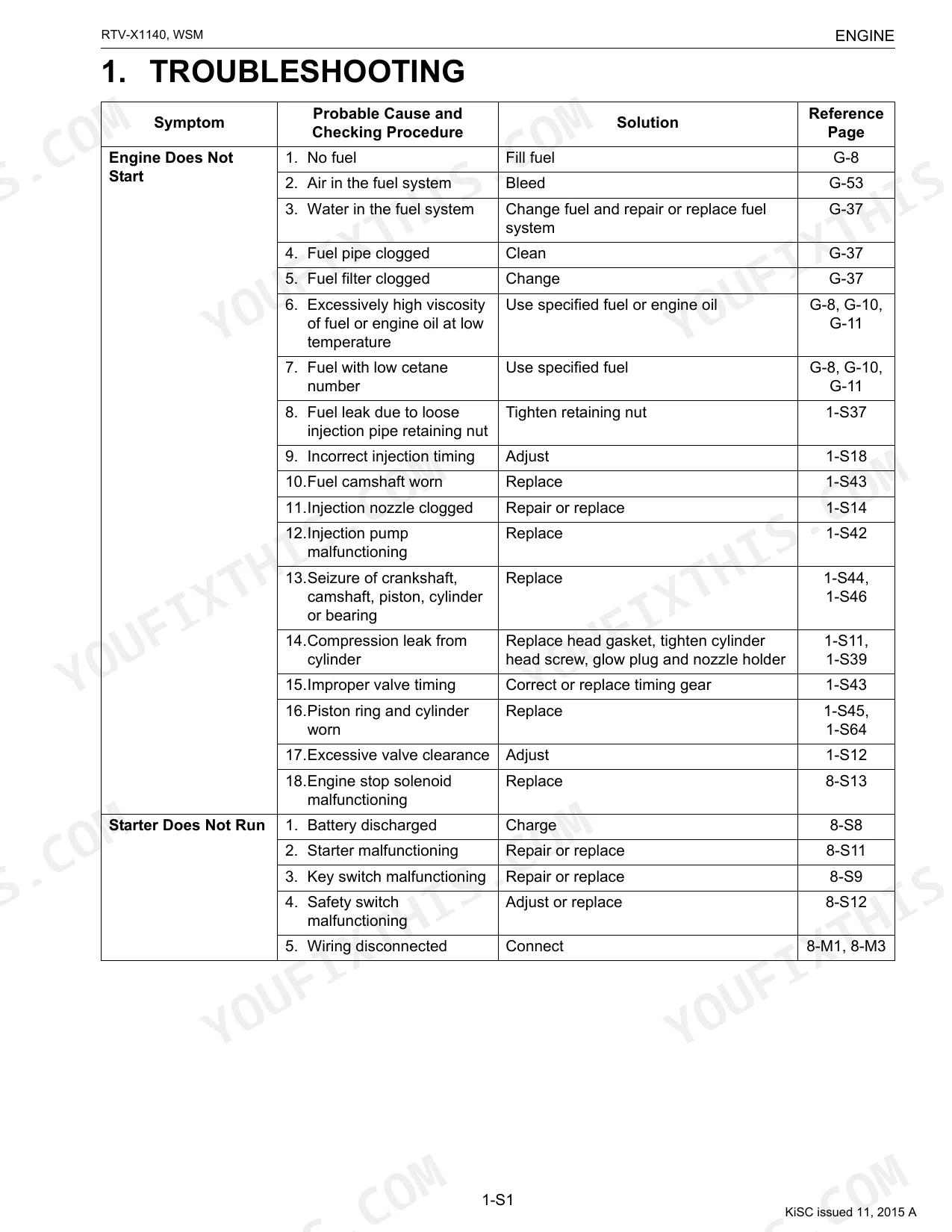
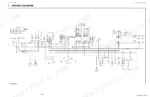
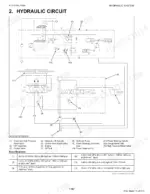
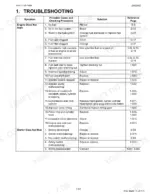
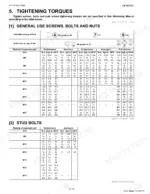
The factory Service Manual for the RTV-X1140 (OEM #9Y111-09960) runs 417 pages, built around one machine from engine teardown to electrical diagnosis. The breakdown: 100 pages of step-by-step service procedures, 11 pages of torque tables, 12 pages of troubleshooting charts, and 30 pages of exploded-view diagrams for the hydrostatic transmission, front axle with limited slip differential, steering hydraulics, and brake system. Full electrical and fluid circuits are documented in the wiring diagrams and hydraulic schematics. When you reassemble, fill the engine with 4.1 L of oil after a filter change, top the coolant to 6.1 L, and confirm transmission case fluid at 7.0 L. Every section is bookmarked and the text is keyword-searchable, so you can pull it up on a phone at the machine instead of digging through forum threads for a spec that may be wrong.
What's Inside This Kubota RTV-X1140 Manual
| System | Pages | Key Topics |
|---|---|---|
| I Information | 3-15 | Safety First, Safety Decals, Specifications, Travelling Speeds, Dimensions |
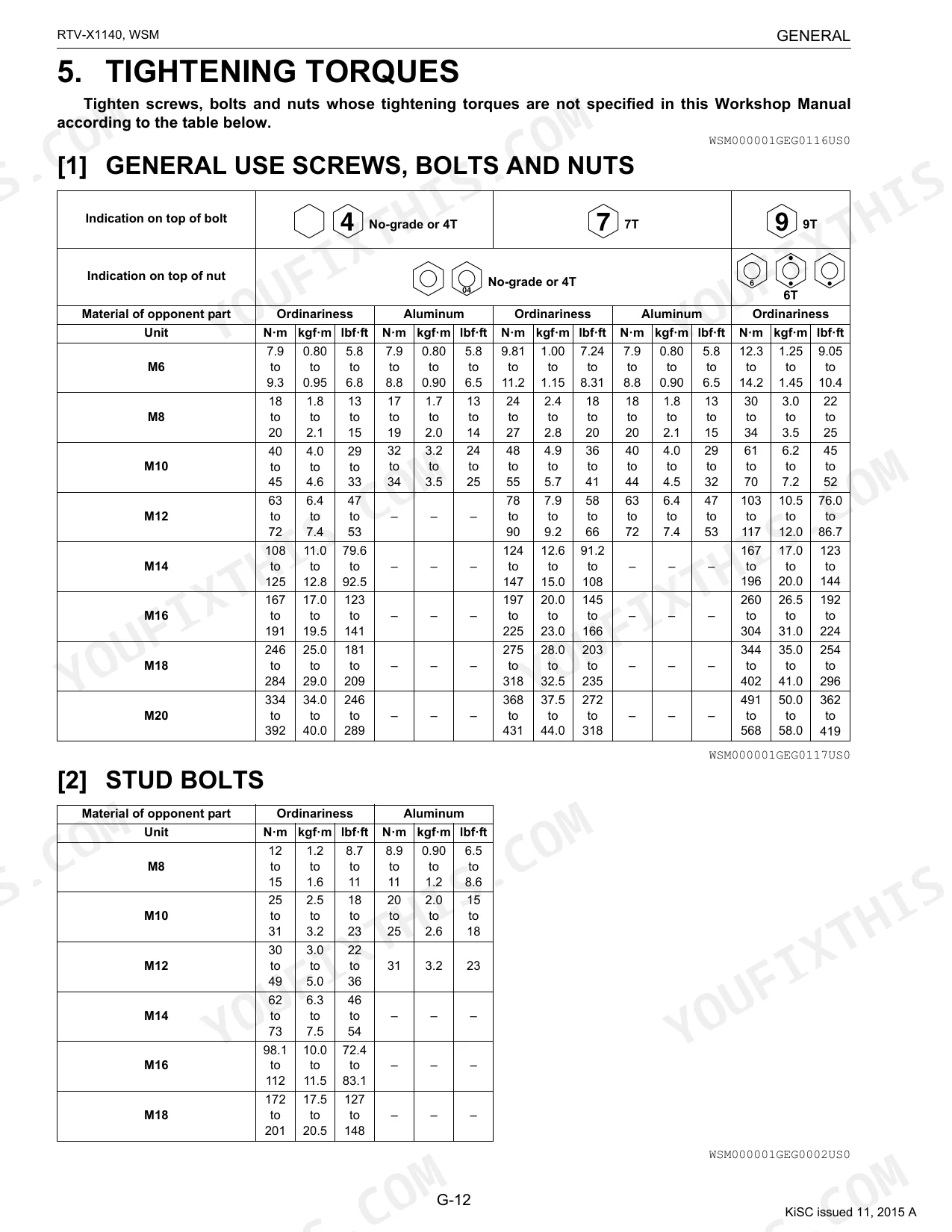
| G General | 16-89 | Product Identification, General Precautions, Handling Precautions for Electrical Parts and Wiring, Lubricants, Fuel and Coolant, Tightening Torques |
| 1 Engine | 90-163 | Engine Body, Lubricating System, Cooling System, Fuel System |
| 2 Transmission | 164-245 | Structure, Power Train, Hydrostatic Transmission (HST), Range Gear Shift Section and Front Wheel Drive Section |
| 3 Rear Axle | 246-257 | Shock Absorber, Upper Arm, Lower Arm, Stabilizer |
| 4 Brakes | 258-283 | General Outline, Knuckle (Front Brake), Rear Brake, Master Cylinder, Brake Oil, Parking Brake |
| 5 Front Axle | 284-316 | Structure, Front Axle, Front Suspension, Limited Slip Differential (LSD) |
| 6 Steering | 317-341 | Structure, Hydraulic Circuit, Steering Controller, Steering Cylinder |
| 7 Hydraulic System | 342-362 | Structure, Hydraulic Circuit, Hydraulic Pump, Hydraulic Lift Cylinder, Control Valve |
| 8 Electrical System | 363-417 | Wiring Diagram, Electrical Circuit, Starting System, Charging System, Lighting System, Cooling System |
Quick Reference Specifications
| Specification | Value | Page |
|---|---|---|
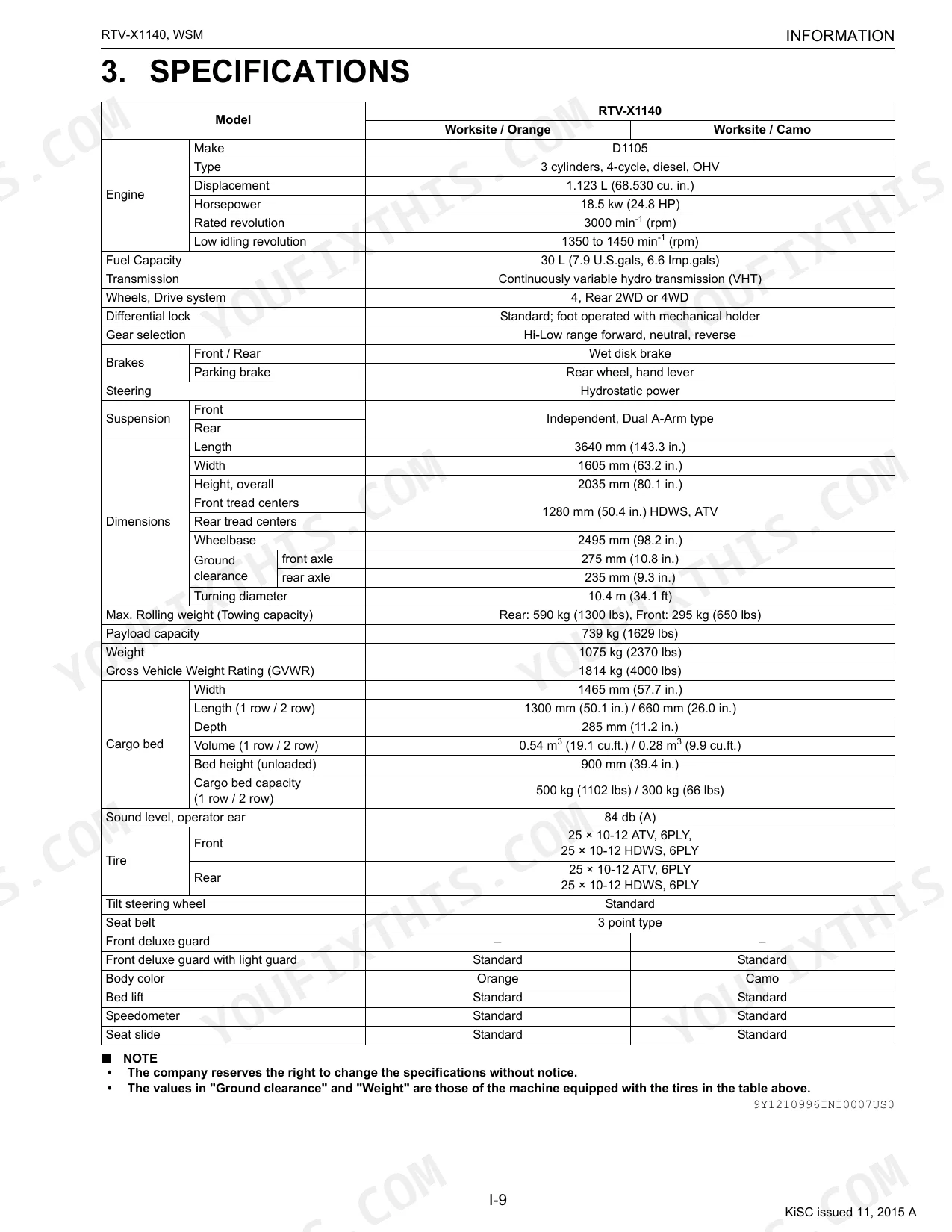
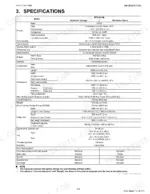
| Fuel Capacity | 30 L (7.9 U.S.gals, 6.6 Imp.gals) | p. 13 |
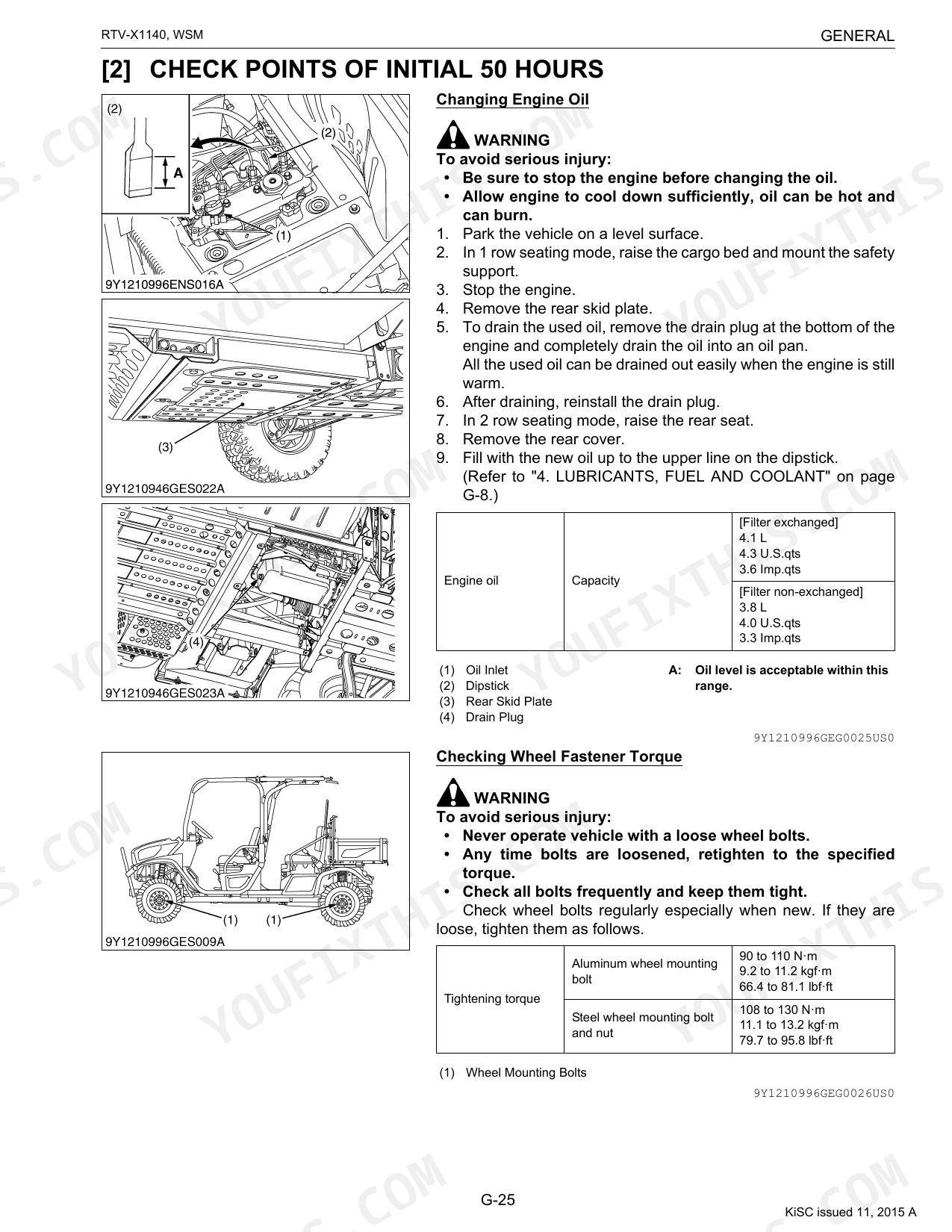
| Engine Oil Capacity (Filter exchanged) | 4.1 L (4.3 U.S.qts, 3.6 Imp.qts) | p. 13 |
| Coolant Capacity (with reserve tank) | 6.1 L | p. 25 |
| Engine Horsepower | 18.5 kW | p. 13 |
| Engine Rated Revolution | 3000 min⁻¹ (rpm) | p. 13 |
| General Use Screws, Bolts and Nuts (M8, Ordinariness) | 18 to 20 N·m | p. 29 |
| Engine Compression Pressure (Factory Spec) | 3.73 to 4.11 MPa | p. 102 |
| Engine Valve Clearance (Cold) | 0.145 to 0.185 mm | p. 102 |
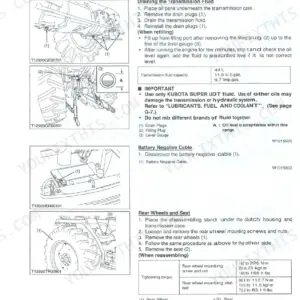
| Transmission Oil Capacity | 7.0 L | p. 25 |
| HST Assembly Mounting Nut Torque | 39 to 44 N·m | p. 193 |
| Brake Pedal Free Travel | 8 to 18 mm | p. 268 |
| Steering Wheel Mounting Nut Torque | 29 to 49 N·m | p. 327 |
Kubota RTV-X1140 Common Problems This Manual Covers
Kubota RTV-X1140 HST transmission won't move forward or reverse, pedal has no response p. 193
Start with the transmission oil level: the system holds 7.0 L and low fluid is the most common no-drive condition. Inspect the HST control linkage and cable for damage or disconnection at the pedal. With fluid full and linkage moving freely, move to charge pressure and the high-pressure relief valve. Torque the mounting nuts to 39 to 44 N·m (page 193) on reassembly.
Manual Section: Hydrostatic Transmission System Will Not Operate in Both DirectionEngine won't start, turns over slowly, or cranks but no fire in cold weather
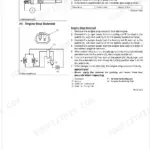
Confirm fuel level (30 L capacity) and bleed air from the system if the machine has been sitting or the lines ran dry. Test the engine stop solenoid and make sure battery terminals are clean and tight. In cold conditions, match oil viscosity to the temperature. Work through the full no-start sequence.
Manual Section: Engine Does Not StartEngine overheating on hills or under load, temperature gauge pinned, coolant loss evident p. 102
Verify engine oil (4.1 L with filter change) and coolant (6.1 L total with reserve tank) first. Clear the radiator fins and screen of mud or debris. Check fan belt tension and look for damaged hose connections. If those hold up, measure compression against the factory spec of 3.73 to 4.11 MPa (page 102).
Manual Section: Engine OverheatedEngine revolution surging or hunting at idle, cuts out under load, runs rough
Service the air cleaner element first (every 100 hours, page 32). Check the fuel filter condition; inspect at 100-hour intervals and replace every 400 hours. Purge air from the fuel system if the lines were run dry. If surging continues, suspect the injection pump governor or a stuck injection nozzle, both covered in engine troubleshooting.
Manual Section: Engine Revolution Is Not SmoothBrake pedal soft or going to floor, poor stopping power on grades p. 268
Measure brake pedal free travel first; spec is 8 to 18 mm (page 268). Travel outside that range points to worn discs or an adjustment issue. Inspect brake fluid level and condition; change the fluid every 2 years. Look for leaks at the master cylinder and line connections. Bleed the system if the fluid looks dark or aerated.
Manual Section: Brakes Poor Braking ForceSteering pulls hard to one side or feels stiff, especially at low speed p. 327
Inspect the power steering fluid type and level; the wrong fluid is a top cause of stiff steering here. Check for air in the power steering circuit, which causes wander and inconsistent feel. Test the hydraulic pump for proper output pressure. If the steering wheel was removed, retorque the mounting nut to 29 to 49 N·m (page 327).
Manual Section: Steering Hard SteeringFrequently Asked Questions
What are the recommended service intervals?
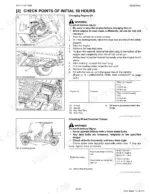
The maintenance check list lays out service intervals by component. The engine start system gets checked every 50 hours, greasing (except the DT shaft bearing) every 50 hours, and engine oil every 200 hours. Fuel lines should be checked every 1 year and replaced every 4 years.
What fluids and capacities does this machine require?
The RTV-X1140 requires No. 2-D diesel fuel with a capacity of 30 L (7.9 U.S.gals). The coolant system (with reserve tank) needs 6.1 L of fresh clean water with anti-freeze. The engine crankcase, when the filter is exchanged, requires 4.1 L of API Service Classification CF or higher engine oil.
How to troubleshoot engine won't start?
Start with fuel: no fuel means fill up (page G-8), and air in the fuel system needs bleeding (page G-53). A malfunctioning injection pump calls for replacement (page 1-S42). Compression leaks from the cylinder also block starting, so replace the head gasket or tighten the cylinder head screws (page 1-S39).
What are the hydraulic system specifications?
Relief valve setting pressure runs 12.5 to 13.5 MPa (1820 to 1950 psi). At 3000 min-1 (rpm), the hydraulic pump (8) delivers 11.2 L/min (2.96 U.S.gals/min).
What do I get after purchasing this Kubota RTV-X1140 manual?
Immediate download of the complete 417-page searchable Service Manual. Open it on any device, whether that's the laptop at your desk or a phone in the field.
Can I print specific sections of this Kubota RTV-X1140 Service Manual?
Yes. The PDF carries no DRM restrictions, so you can print any page or section you need for the shop. Works with any standard printer.
Are electrical wiring diagrams included in this Kubota RTV-X1140 Service Manual?
Yes, this Kubota RTV-X1140 Service Manual includes complete electrical wiring diagrams, wire routing, and connector pinouts.
Document Quality
This document is a scanned PDF with an OCR text layer, allowing you to search and copy text. The text is crisp and consistently readable throughout. Diagrams and illustrations are clear raster images, with all labels easily legible. Pages are clean, free from scan artifacts, stains, or skewed content. You will find several notable blank pages that serve as chapter dividers.

Reviews
There are no reviews yet.