
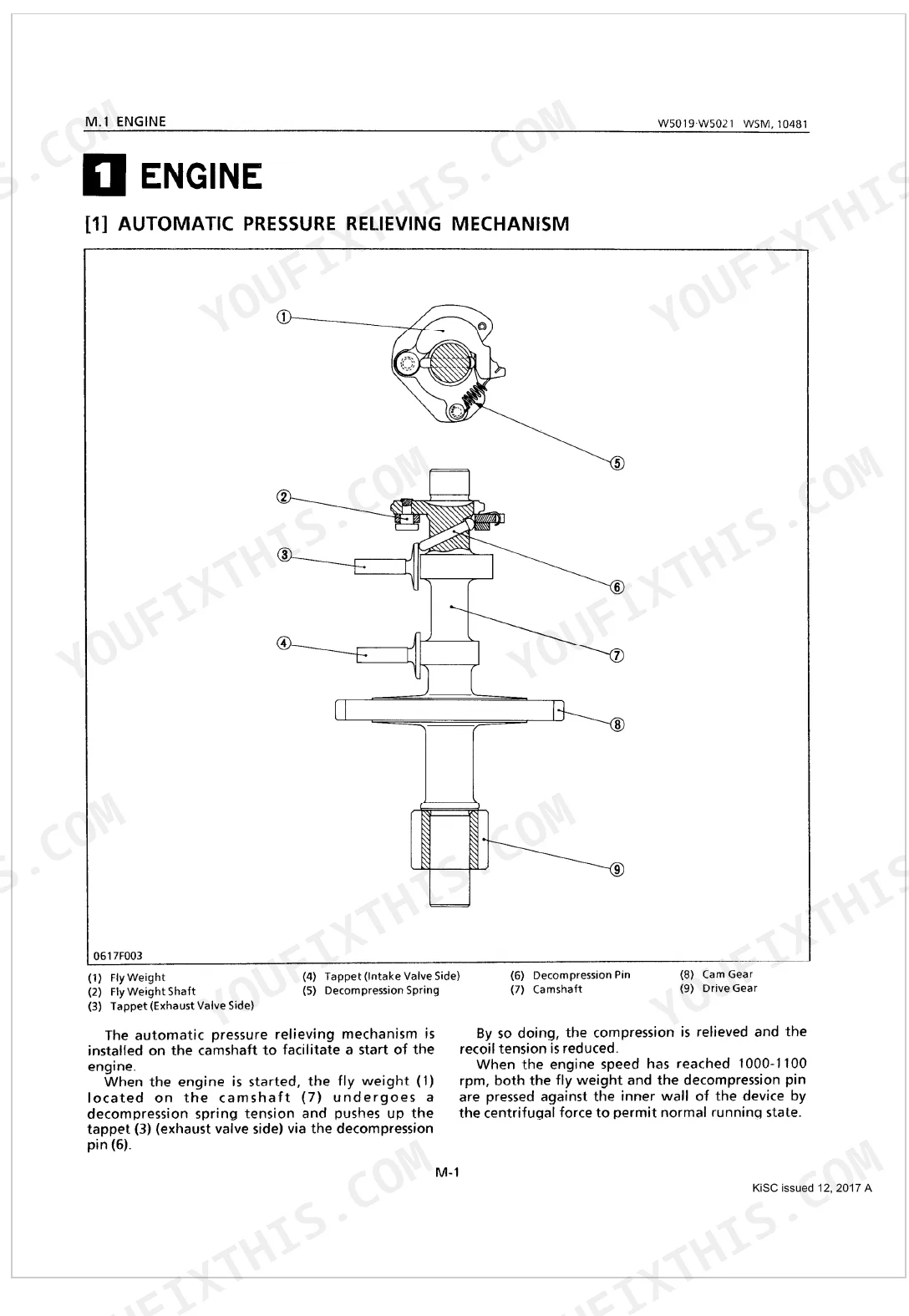
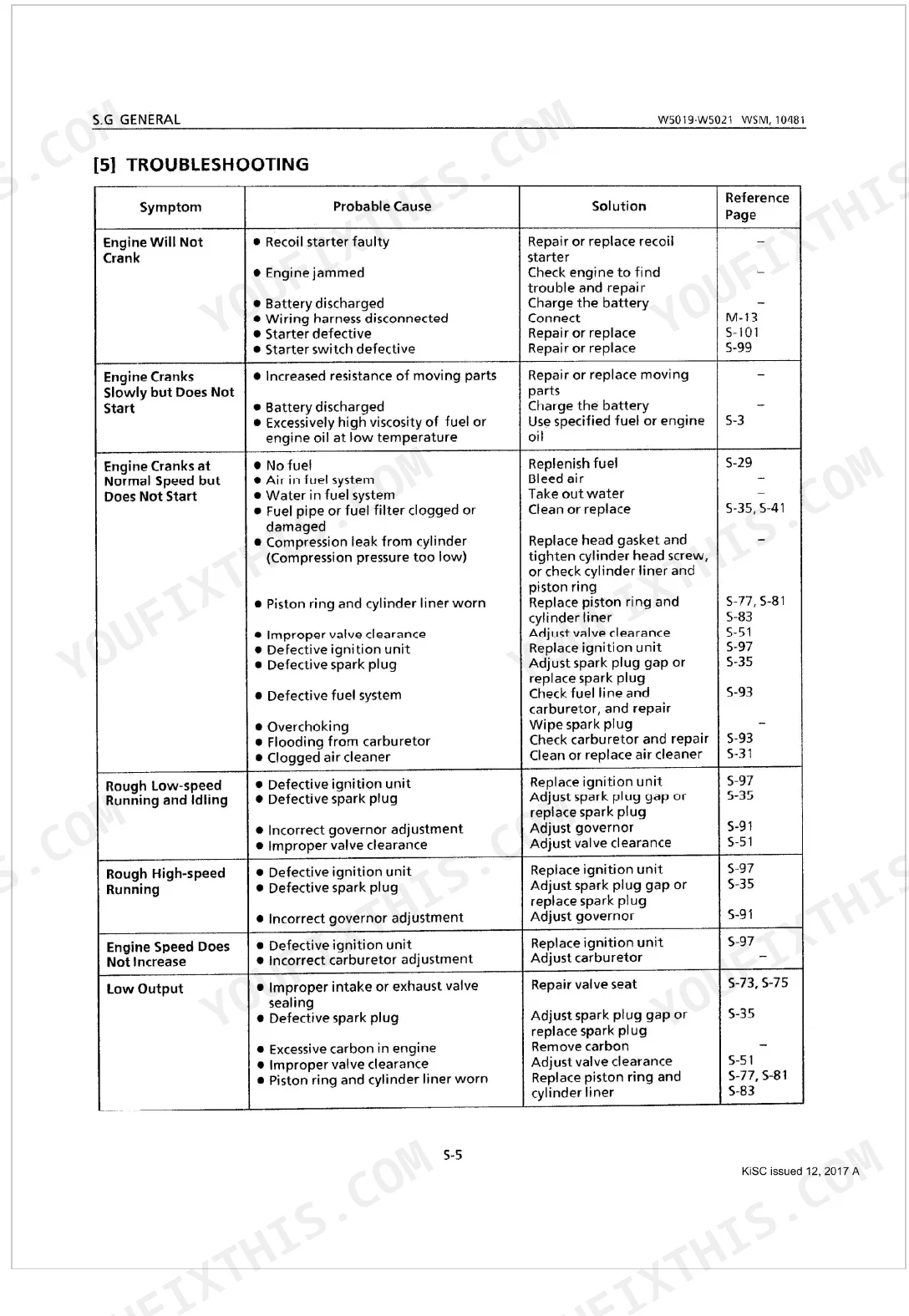
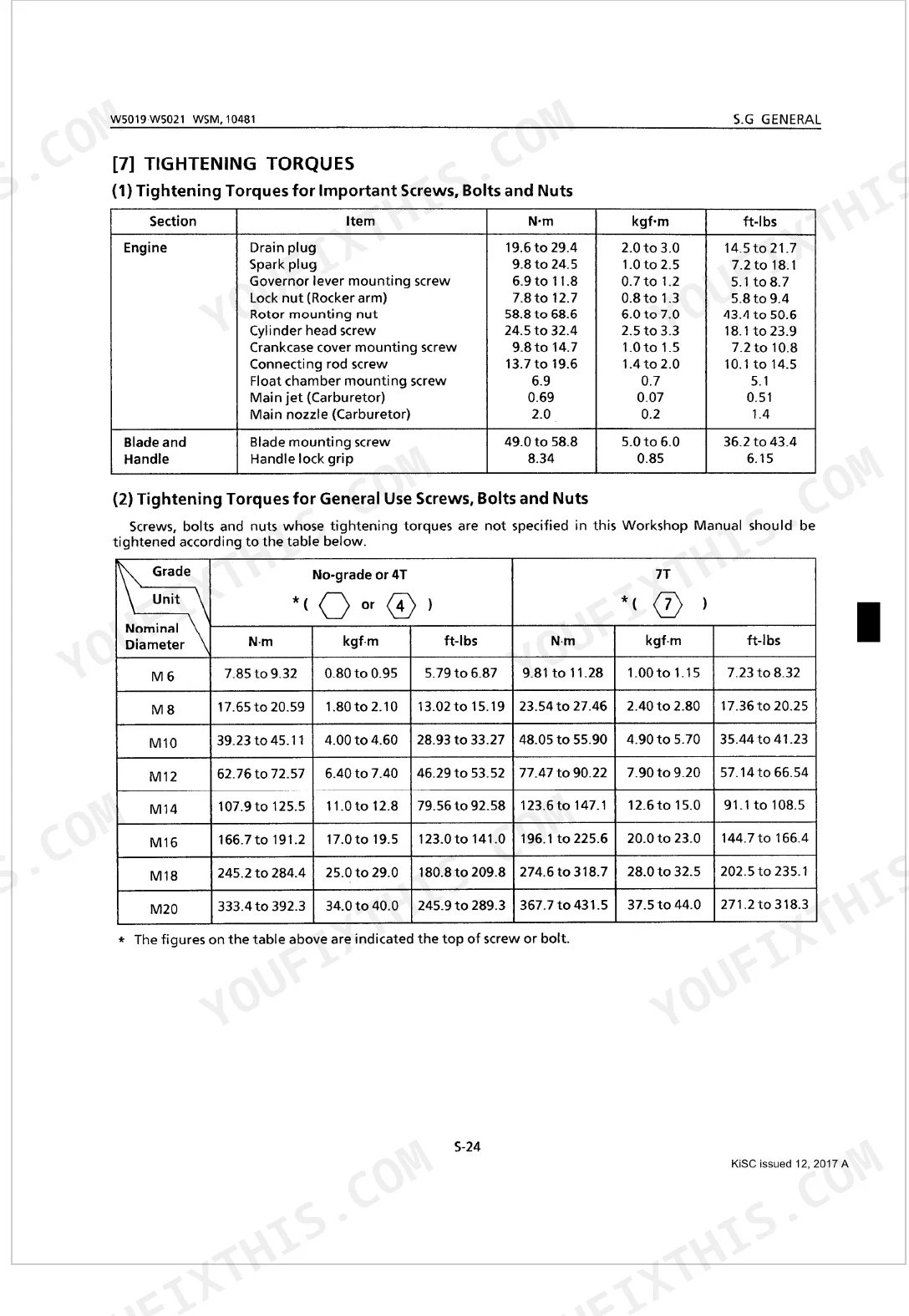
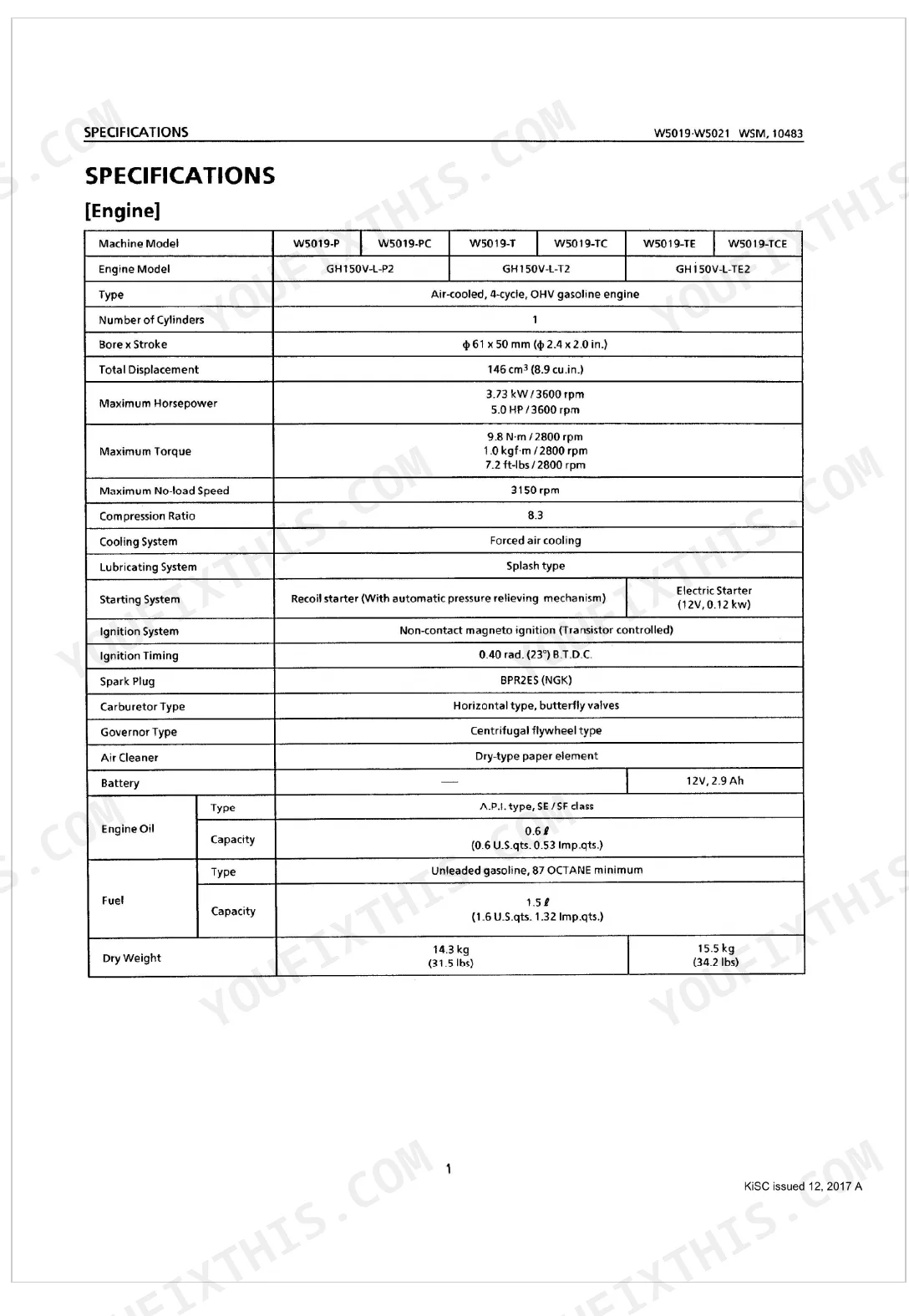
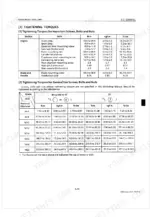
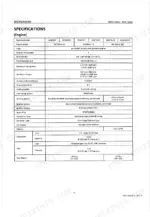
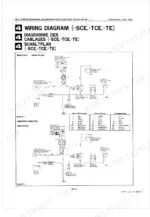
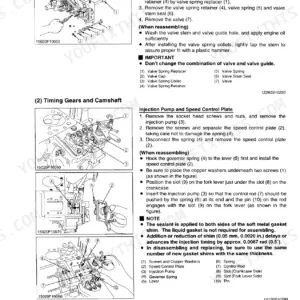
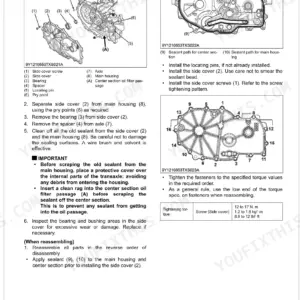
This Kubota W5019 manual keeps every walk-behind variant at factory spec, from the push-only W5019-P to the electric-start W5021-SCE and the self-propelled W5021-TC. Electric-start models (-SCE, -TCE, -TE) get a full wiring diagram. Thirty pages of exploded-view drawings break down the engine, transmission, blade clutch, and wheel assemblies, backed by 6 pages of troubleshooting for carburetor, ignition, and drive clutch faults. Fluid capacities run 3 pages; machine specifications span 12 pages across all model variations; tightening torque tables cover the full engine rebuild. Run the cylinder head screws to 24.5-32.4 N-m and seat the rotor mounting nut at 58.8-68.6 N-m. Stop hunting forum threads for a number that may not match your machine. Everything is bookmarked and keyword-searchable, so you can pull it up on any device and get to work.
What's Inside This Kubota W5019–W5021 Series Manual
| System | Pages | Key Topics |
|---|---|---|
| Workshop Manual | 1-2 | Manuel D'Atelier, Werkstattanleitung, W5019, W5021 |
| Record of Revisions | 3-8 | Record of Revisions Table (Last Digit of the Code No., Issue Month, Main Revised Point and Corrective Measures, Reference Page), Avant-Propos (Mécanismes, Démontage et Entretien) |
| Specifications | 9-22 | Engine Specifications, Engine Model Variations, Walk Behind Mower Specifications, Walk Behind Mower Model Variations |
| Mechanism | 23-36 | Engine (Automatic Pressure Relieving Mechanism, Carburetor, Sub Pto Shaft), Transmission (Power Train), Mower Blade Clutch, Wiring Diagram |
| Supplement | 169-190 | Dimensions, M. Mechanism (Flywheel Brake) |
Quick Reference Specifications
| Specification | Value | Page |
|---|---|---|
| All Models | ||
| Engine Drain Plug Tightening Torque | 19.6 to 29.4 N-m (2.0 to 3.0 kgf·m, 14.5 to 21.7 ft-lbs) | p. 60 |
| Spark Plug Tightening Torque | 9.8 to 24.5 N-m (1.0 to 2.5 kgf·m, 7.2 to 18.1 ft-lbs) | p. 60 |
| Rotor Mounting Nut Tightening Torque | 58.8 to 68.6 N-m (6.0 to 7.0 kgf·m, 43.4 to 50.6 ft-lbs) | p. 60 |
| Cylinder Head Screw Tightening Torque | 24.5 to 32.4 N-m (2.5 to 3.3 kgf·m, 18.1 to 23.9 ft-lbs) | p. 60 |
| Connecting Rod Screw Tightening Torque | 13.7 to 19.6 N-m (1.4 to 2.0 kgf·m, 10.1 to 14.5 ft-lbs) | p. 60 |
| Blade Mounting Screw Tightening Torque | 49.0 to 58.8 N-m (5.0 to 6.0 kgf·m, 36.2 to 43.4 ft-lbs) | p. 60 |
| Engine Oil Capacity | 0.6 l (0.6 U.S.qts. 0.53 Imp.qts.) | p. 9 |
| Engine Oil Change Interval | First month or initial 20 hours, then every 6 months or 100 hours | p. 63 |
| W5019-P, W5019-PC, W5019-T, W5019-TC, W5019-TE, W5019-TCE | ||
| Fuel Capacity | 1.5 l (1.6 U.S.qts. 1.32 Imp.qts.) | p. 9 |
| Transmission Oil Capacity | 0.1 l (0.1 U.S.qts., 0.09 Imp.qts.) | p. 11 |
| W5021-PC, W5021-PCC, W5021-TC, SC, W5021-HT, CT, W5021-SCC, HTC | ||
| Fuel Capacity | 3.5 l (3.7 U.S.qts. 3.08 Imp.qts.) | p. 10 |
| W5021-PC, W5021-PCC, W5021-T, W5021-TE, W5021-SCE, TCE | ||
| Transmission Oil Capacity | 0.1 l (0.1 U.S.qts., 0.09 Imp.qts.) | p. 12 |
Kubota W5019–W5021 Series Common Problems This Manual Covers
Kubota W5019 or W5021 engine cranks but won't start, no spark at plug
Measure the spark plug gap with a feeler gauge and adjust it to 0.7 to 0.8 mm (page 49). Pull the plug and inspect for fouling; replace it if the electrode is worn or cracked. With good spark, work through the no-start flowchart. Confirm engine oil sits at the 0.6 l capacity before more restart attempts.
Manual Section: Engine TroubleshootingEngine surges or hunts at idle, won't hold steady speed between cuts p. 47
Clean the air cleaner element, inspecting it before each use and cleaning every 50 hours (page 63). Check the fuel filter on the same 100-hour interval. Set valve clearance cold: intake and exhaust both run 0.02 to 0.08 mm (page 47). Tight valves are the main cause of rough low-speed running on this engine family.
Manual Section: Engine TroubleshootingMower blade won't rotate after engaging clutch lever, deck turns freely by hand
Inspect the blade clutch spring free length; the service limit is 28.0 mm (page 49). A stretched spring can't clamp hard enough to lock the blade hub. Walk the blade-not-rotating checklist. Confirm engine oil is at the 0.6 l level (page 9), since low oil pressure trips the shutdown circuit before the clutch engages.
Manual Section: Mower Blade TroubleshootingExcessive vibration felt through handlebars during mowing, intensifies at higher throttle settings p. 60
Torque the blade mounting bolts to 49.0 to 58.8 N-m (page 60). A loose or unbalanced blade is the most common source of handlebar shake. Look the blade over for bends, chips, or missing cutting-edge material. Run the vibration checklist to spot worn spindle bearings or damaged deck mounts.
Manual Section: Mower Blade TroubleshootingTransmission won't drive forward or reverse, drive clutch lever has no effect
Verify the transmission oil level: W5019 models hold 0.1 l, while the W5021-TC, SC, HT, CT, SCC, and HTC variants hold 0.17 l (page 12). Drain and refill if the oil looks milky or contaminated. Trace the Transmission Troubleshooting flowchart to isolate whether the fault sits in the clutch, shift linkage, or internal gears.
Manual Section: Transmission TroubleshootingFrequently Asked Questions
What are the recommended service intervals?
The maintenance check list sets clear service intervals. Daily checks cover fuel and engine oil levels, the air cleaner element, grass catcher bag, blade mounting screw, and mower blade. After the first month or initial 20 hours, change the engine oil. At every 3 months or 50 hours, clean the air cleaner element. Every 6 months or 100 hours, change the engine oil, clean and readjust the spark plug, clean the fuel filter, and adjust the throttle and mower/drive clutch levers. Annually or every 300 hours, clean the fuel tank, replace the fuel pipe, check valve clearance, check the mower blade clutch, and lubricate the crankshaft spline.
What fluids and capacities does this machine require?
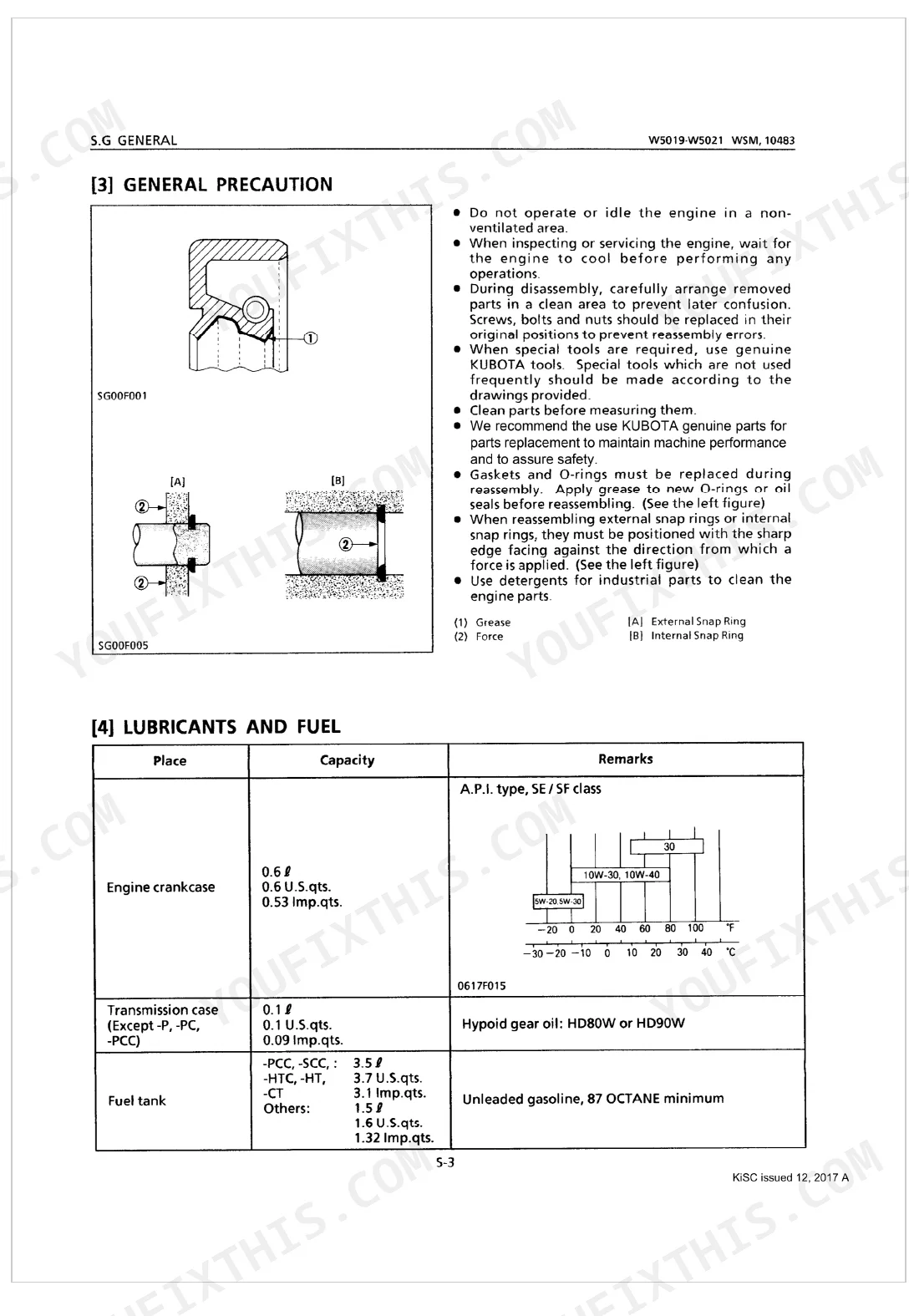
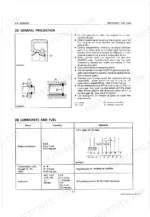
Each system takes a specific fluid and capacity. The engine crankcase uses A.P.I. SE/SF class oil, 0.6 L (0.6 U.S.qts.). The transmission case (except -P, -PC, -PCC models) takes Hypoid gear oil, HD80W or HD90W, 0.1 L (0.1 U.S.qts.). The fuel tank needs unleaded gasoline of at least 87 OCTANE; capacity varies by model, with -PCC, -SCC, -HTC, -HT, and -CT models holding 3.5 L (3.7 U.S.qts.) and the others 1.5 L (1.6 U.S.qts.).
How to troubleshoot engine won't start?
Several faults can stop a start. If the engine won't crank, suspect a faulty recoil starter (repair or replace) or a jammed engine (check and repair). Cranking slowly without starting points to a discharged battery (charge it). Cranking at normal speed without starting means no fuel (replenish) or a defective ignition unit (replace it, see page S-97).
What torque specifications are listed?
Tightening torques are spelled out for the key fasteners. The drain plug takes 19.6 to 29.4 N-m (14.5 to 21.7 ft-lbs), the spark plug 9.8 to 24.5 N-m (7.2 to 18.1 ft-lbs), and the rotor mounting nut 58.8 to 68.6 N-m (43.4 to 50.6 ft-lbs). Cylinder head screws call for 24.5 to 32.4 N-m (18.1 to 23.9 ft-lbs), and blade mounting screws 49.0 to 58.8 N-m (36.2 to 43.4 ft-lbs).
What do I get after purchasing this Kubota W5019–W5021 Series manual?
A 190-page searchable PDF downloads the moment checkout completes. Open it on a laptop, tablet, or phone and bring it straight to the shop floor.
Is this Kubota W5019–W5021 Series Workshop Manual printable?
No restrictions at all. Print individual pages, full chapters, or the entire manual. The PDF is completely unlocked.
Are there wiring harness diagrams in this Kubota W5019–W5021 Series manual?
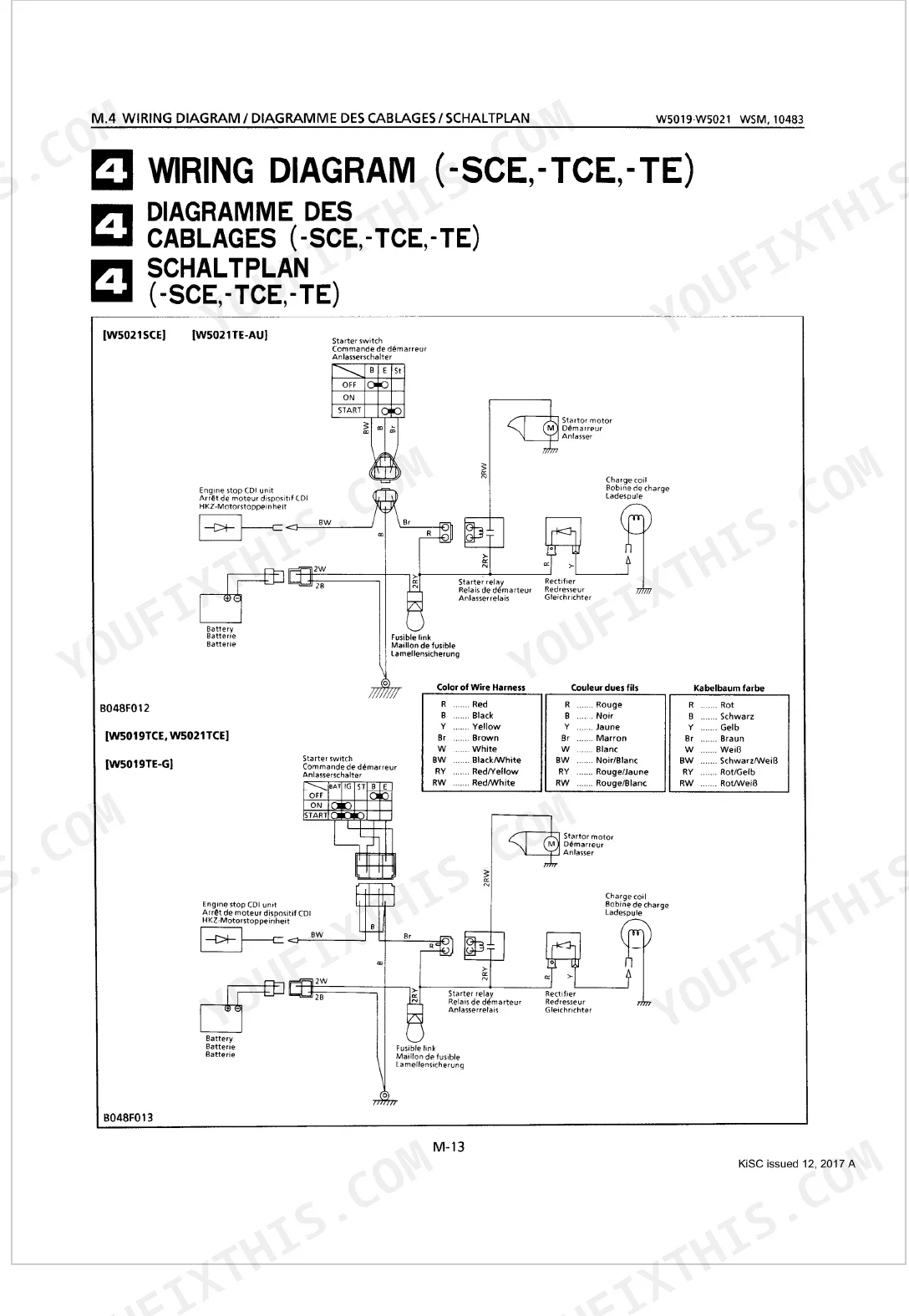
Yes. Full electrical schematics are included, with wire colors, connector locations, and circuit descriptions.
Document Quality
This document is a scanned PDF with an OCR layer, allowing you to search and copy text throughout. The text quality is consistently crisp and easy to read across all pages. Diagrams and illustrations are raster images, but they are clear, and all labels are perfectly readable. The pages are clean with no noticeable scan artifacts, stains, or skewed content. There are no notable blank or filler pages beyond standard section dividers.


Reviews
There are no reviews yet.