
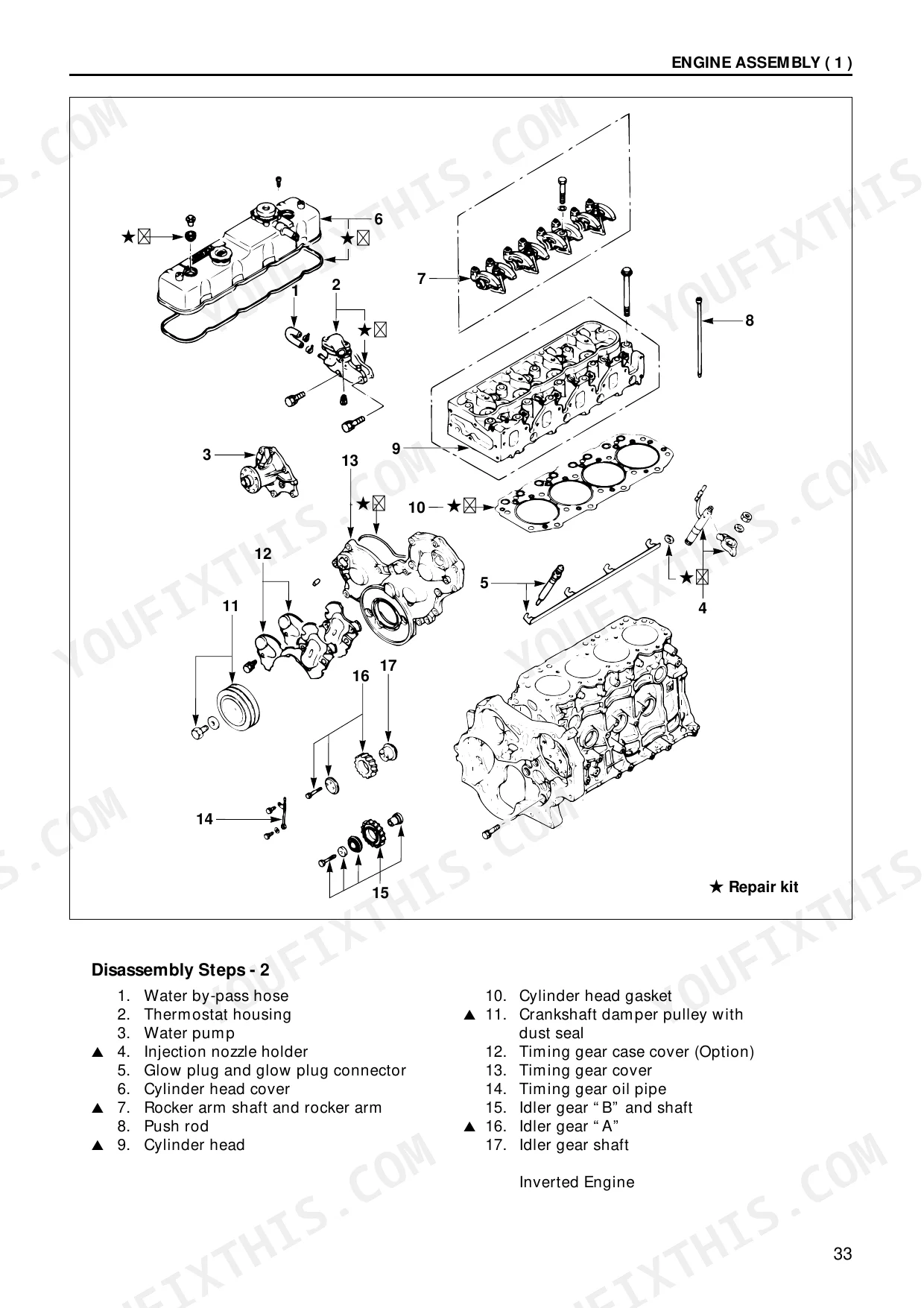
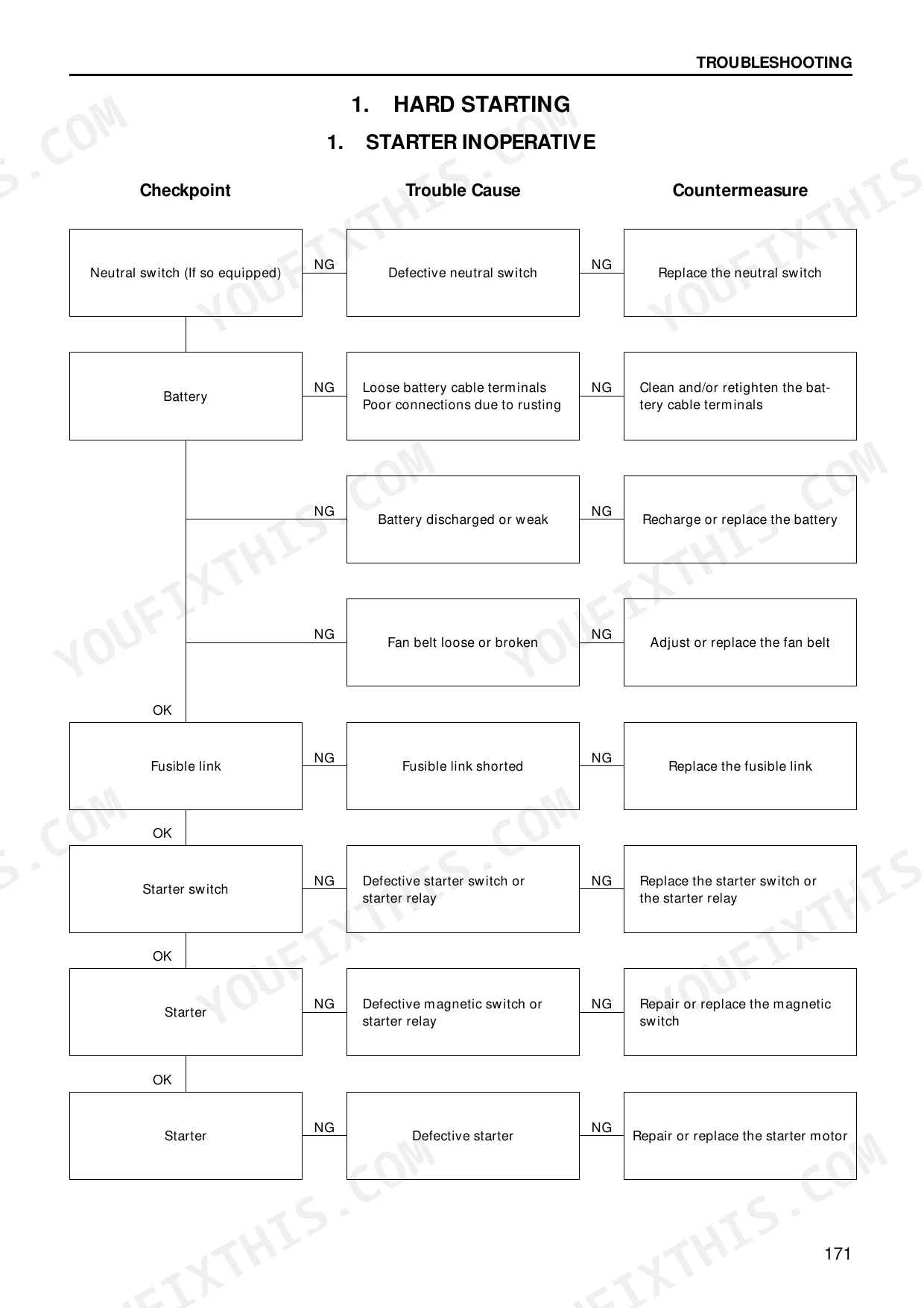
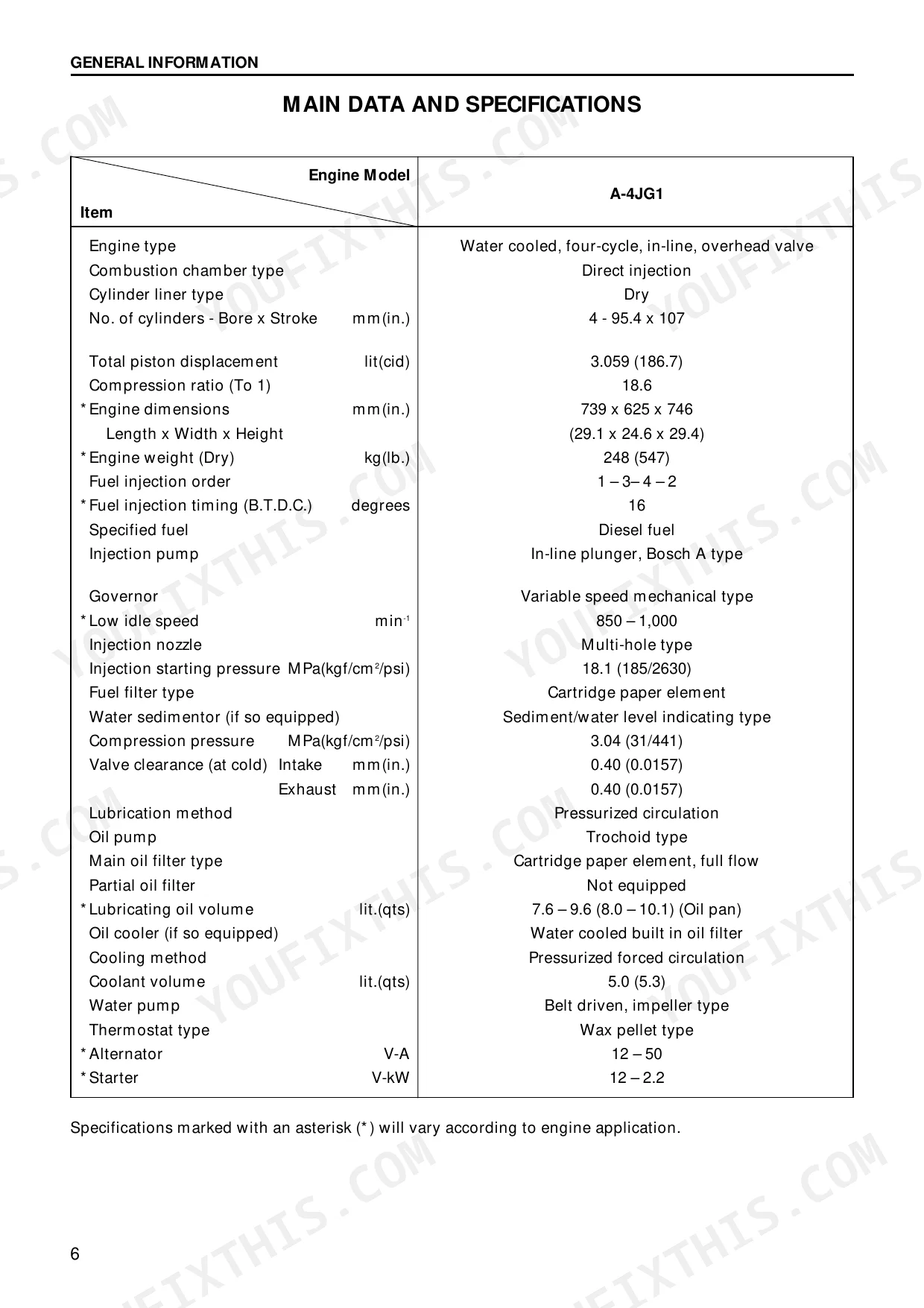
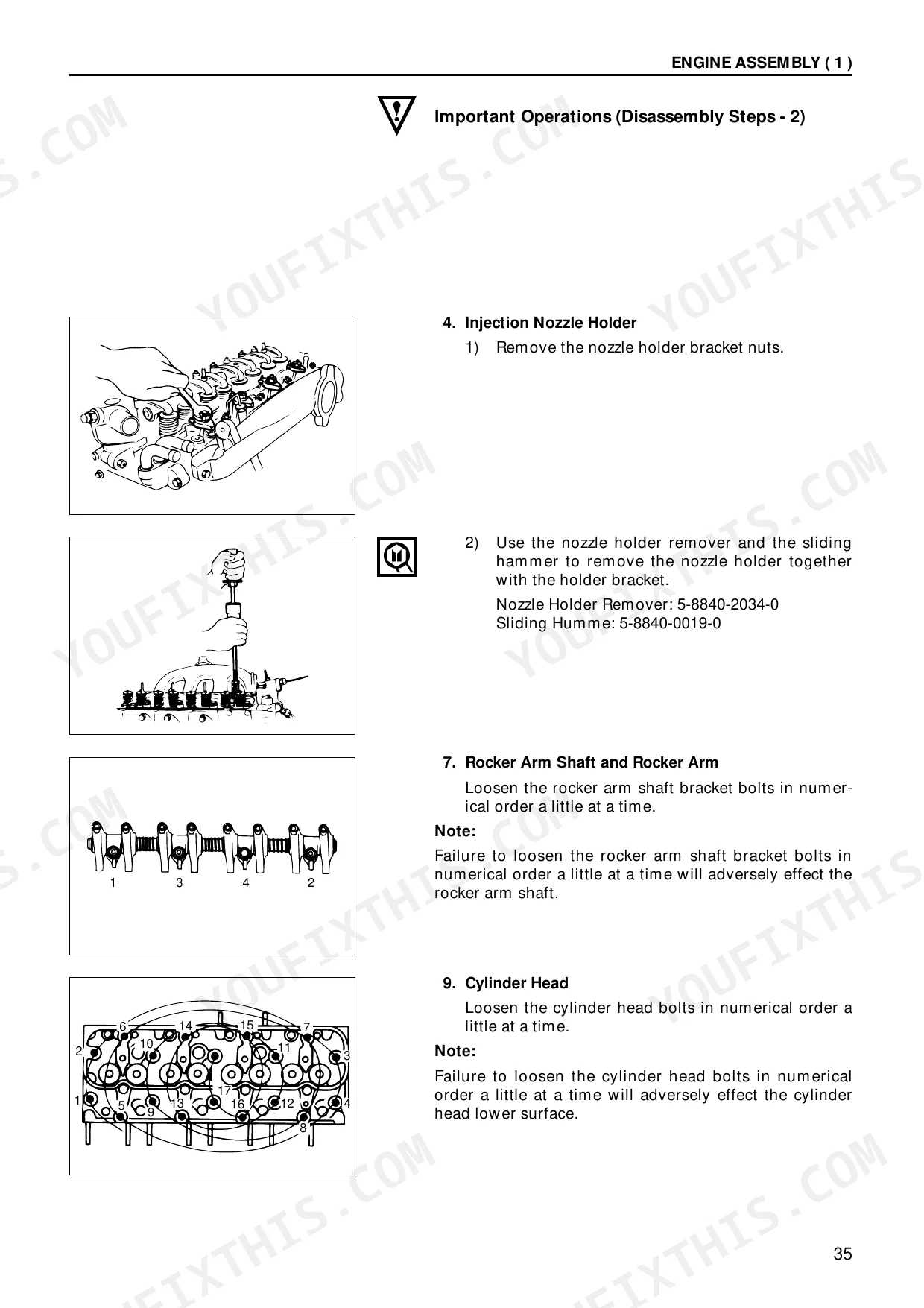
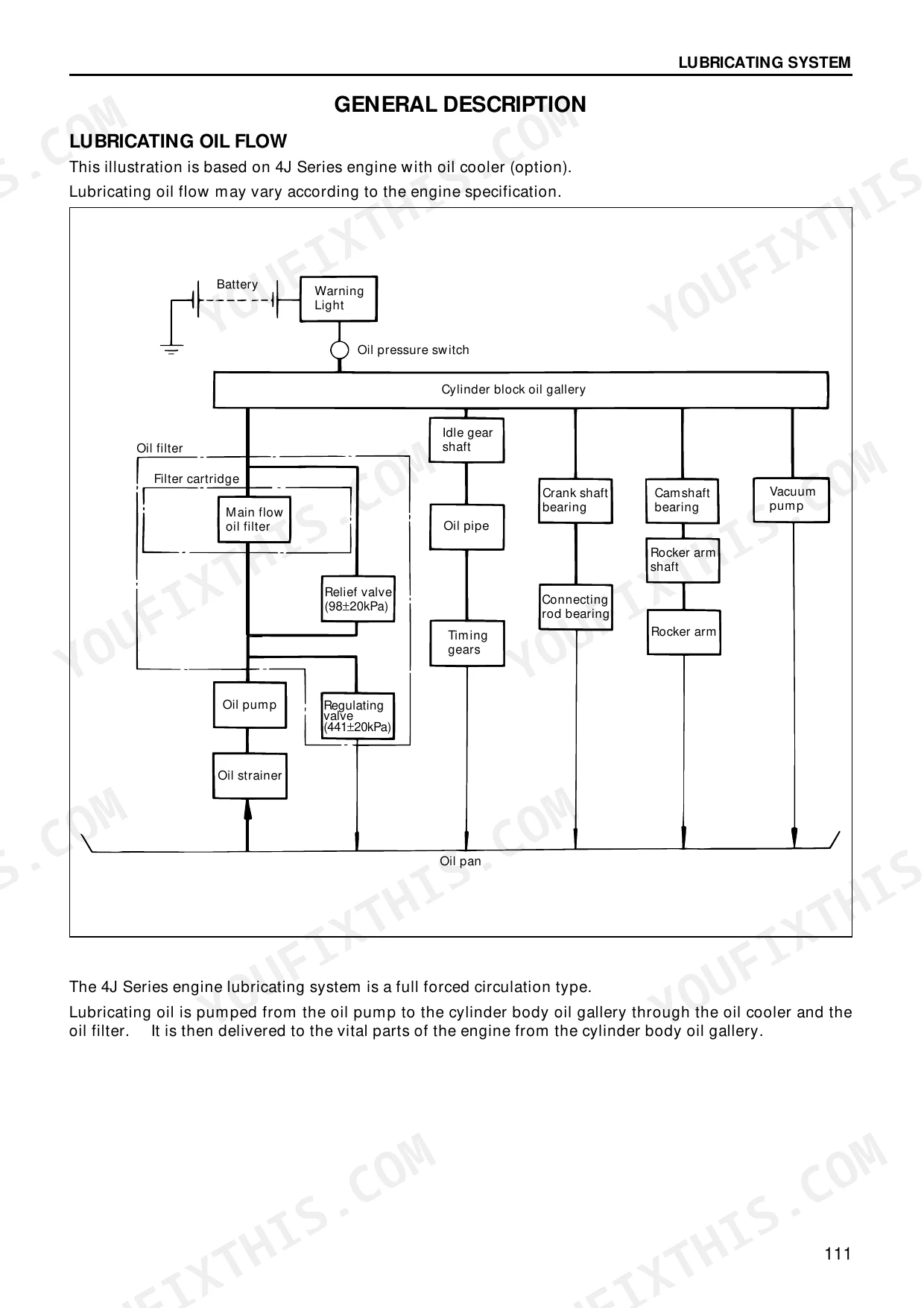
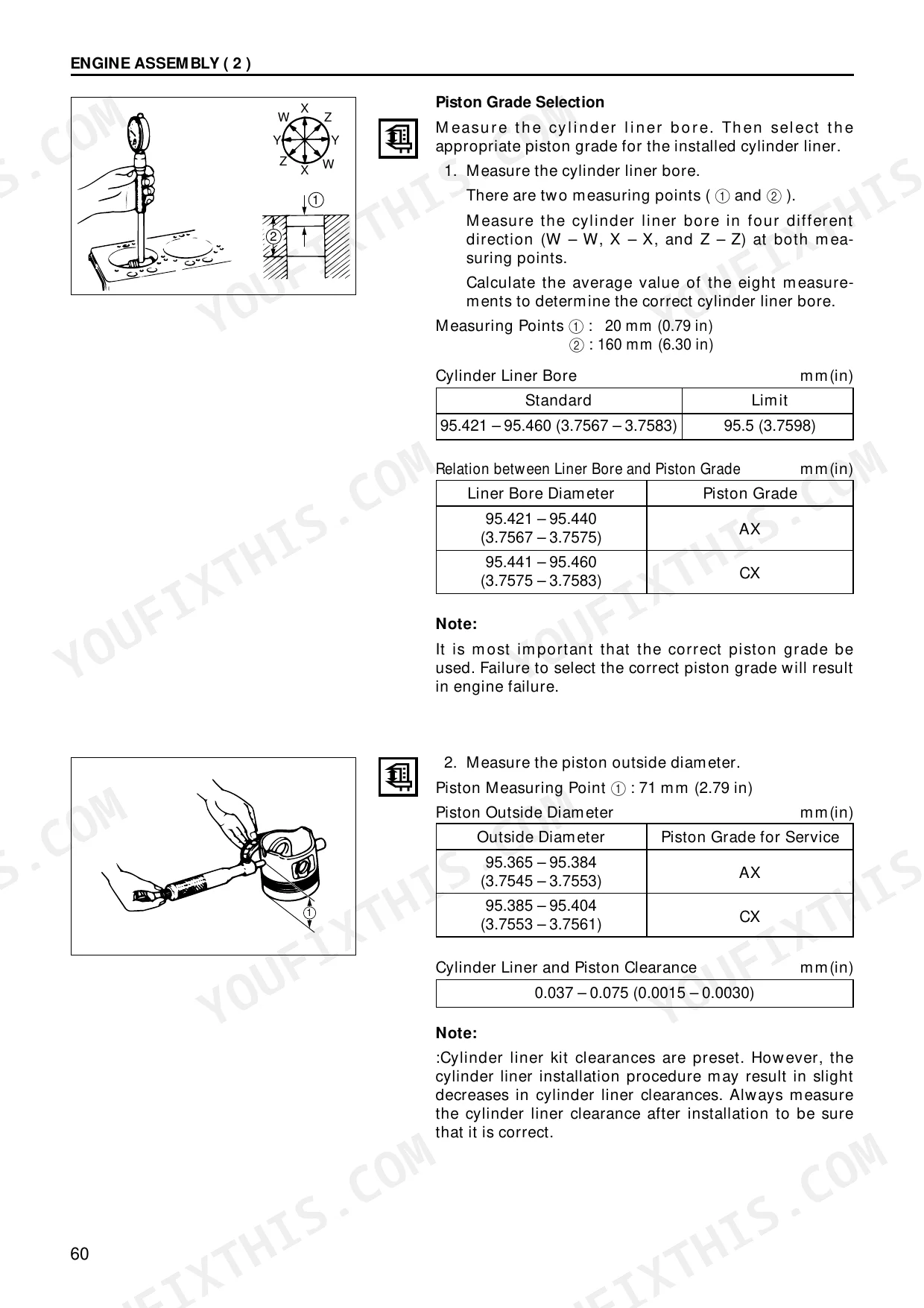
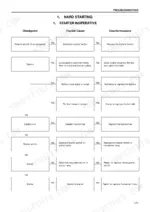
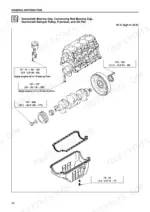
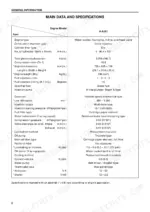
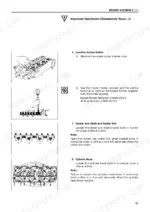
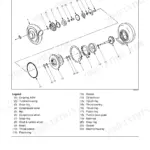
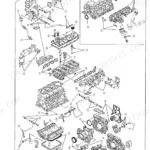
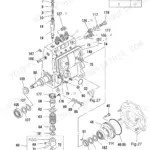
Got a 1999 4JG1 series industrial diesel on the bench? This 223-page workshop manual (OEM #IDE-2320) is the factory source for that 3.059 L engine. Sixty pages walk you through teardown and reassembly, from piston rings to camshaft timing gears. Twenty-five exploded-view diagrams show every component relationship, and the troubleshooting section covers hard starting, unstable idle, insufficient power, and excessive fuel consumption. Nine pages of torque tables and ten pages of clearance data pin down every critical fastener and wear limit. Main bearing caps: 157-177 N·m. Standard compression: 3.04 MPa at 200 rpm. Static injection timing: 16° BTDC. The PDF is bookmarked and keyword-searchable, so you can pull the spec you need on a phone or tablet mid-job.
What's Inside This Isuzu A-4JG1 Manual
| System | Pages | Key Topics |
|---|---|---|
| Maintenance | 19-30 | Model And Injection Pump Identification, Fuel System, Cooling System, Valve Clearance Adjustment |
| Engine Assembly (Disassembly) | 31-48 | General Description, Main Component Disassembly, Cylinder Head And Timing Gear Disassembly, Internal Component Disassembly |
| Engine Assembly (Inspection and Repair) | 49-82 | Cylinder Head, Valve Guide, Valve And Valve Seat Insert, Valve Spring |
| Engine Assembly (Reassembly) | 83-110 | Rocker Arm Shaft and Rocker Arm, Cylinder Head, Piston and Connecting Rod, Camshaft and Timing Gear |
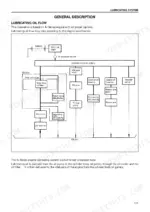
| Lubricating System | 111-122 | Main Data And Specifications, General Description, Oil Pump, Oil Pump Disassembly |
| Cooling System | 123-128 | Main Data And Specifications, General Description, Thermostat |
| Fuel System | 129-142 | Main Data And Specifications, General Description, Injection Nozzle, Fuel Filter And Water Separator |
| Engine Electricals | 143-170 | Starter, Alternator |
| Troubleshooting | 171-196 | Hard Starting, Unstable Idling, Insufficient Power, Excessive Fuel Consumption |
| Special Tool List | 197-200 | - |
| Repair Standards | 201-214 | General Rules, Engine Body, Main Operating Parts, Valve System |
| Conversion Table | 215-223 | Length, Area, Mass, Pressure |
Quick Reference Specifications
| Specification | Value | Page |
|---|---|---|
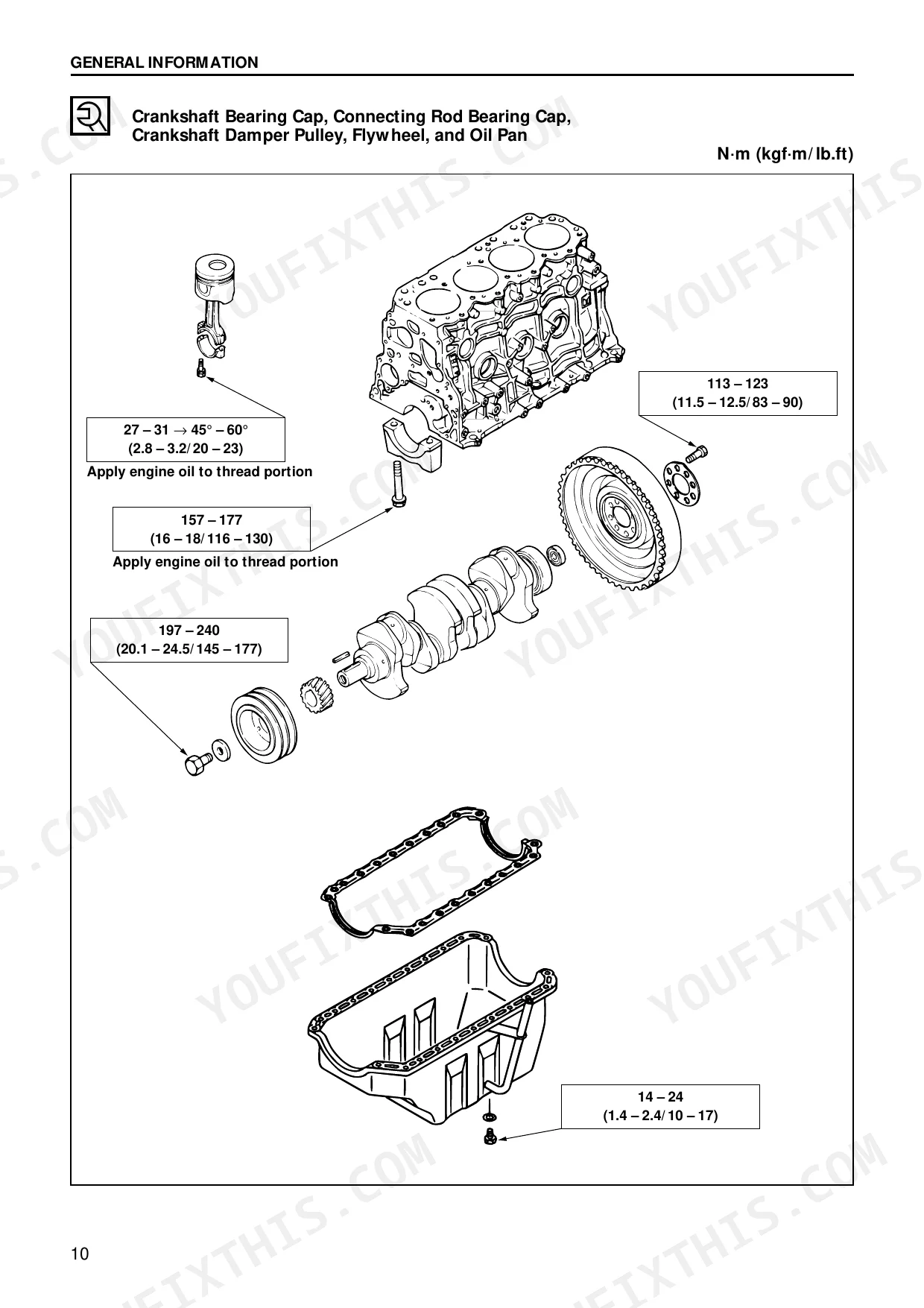
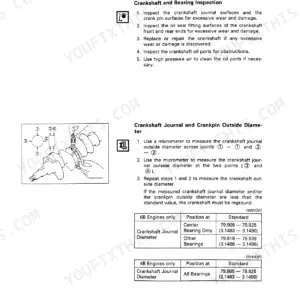
| Crankshaft Bearing Cap Torque | 157 – 177 N·m(kgf·m/lb.ft) | p. 97 |
| Thermostat Initial Opening Temperature | 82 (180) °C(°F) | p. 24 |
| Compression Pressure (Standard) | 3.04 (31/441) MPa (kgf/cm²/psi) at 200 rpm | p. 28 |
| Water Separator Drain Plug Torque | 9 – 15 (0.9 – 1.5/7 – 11) N·m (kgf·m/lb.ft) | p. 22 |
| Injection Timing (Static BTDC) | 16° | p. 26 |
| Engine Displacement | 3.059 L (186.7 cid) | p. 8 |
| Compression Ratio | 18.6 To 1 | p. 8 |
| Fuel Injection Order | 1 – 3– 4 – 2 | p. 8 |
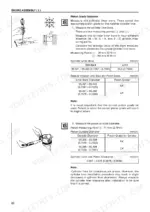
| Valve Clearance (Cold) | 0.40 mm (0.0157 in) | p. 8 |
| Cylinder Head Bolt Torque (1st Step) | 44 - 54 N·m | p. 11 |
| Connecting Rod Bearing Cap Torque | 27 - 31 N·m → 45° - 60° | p. 12 |
| Injection Nozzle Opening Pressure | 18.1 MPa (185/2,630 psi) | p. 23 |
Isuzu A-4JG1 Common Problems This Manual Covers
Isuzu A-4JG1 engine turns over but won't start, no fuel reaching injectors p. 173
Start with the fuel system troubleshooting flowchart on page 173. Drain the water separator and torque its plug to 9-15 N·m (7-11 lb.ft) per page 22. Bleed air from fuel lines at each injector connection, then inspect the lift pump filter screen for debris. If fuel delivery checks out, test compression; standard pressure should read 3.04 MPa (441 psi) at 200 rpm as listed on page 28.
Manual Section: TroubleshootingRough idle with engine hunting or surging, rpm won't stabilize p. 177
Inspect all fuel lines and fittings for air ingestion; even a hairline crack on the suction side causes hunting. Test injection nozzle opening pressure against the 18.1 MPa (2,630 psi) spec on page 23. Pull each nozzle and check spray pattern, since a dribbling nozzle kills idle quality. Confirm valve clearance sits at 0.40 mm (0.0157 in) cold; tight valves on this engine mimic fuel system faults.
Manual Section: TroubleshootingRod knock or heavy knocking noise from lower engine under load p. 193
Measure oil pressure first with a mechanical gauge at the block port to rule out bearing starvation. Follow the abnormal noise diagnosis on page 193. If bearing wear is confirmed, drop the oil pan and look for copper showing through on the connecting rod bearings. Torque replacement rod caps to 27-31 N·m, then angle-tighten 45-60 degrees per page 12.
Manual Section: TroubleshootingEngine overheating, temperature climbs past normal operating range p. 187
Look at fan belt condition first: glazing, cracks, or loose tension. Check coolant level and watch for combustion gas bubbles in the overflow tank. Pull the thermostat and bench-test it; initial opening should occur at 82°C (180°F) with full opening at 95°C (203°F) per page 24. Flush the radiator core and examine the water pump impeller for erosion per the cooling system section starting on page 123.
Manual Section: TroubleshootingBlack or dark exhaust smoke with noticeable power loss during operation p. 188
Pull the air cleaner element first; a plugged filter on this 3.059 L engine produces smoke before you notice much power loss. Confirm static injection timing against the 16° BTDC spec on page 26. Test each nozzle for opening pressure at 18.1 MPa (2,630 psi) per page 23; a stuck-open nozzle dumps raw fuel. Refer to the smoke diagnosis chart on page 188 for turbocharger boost leak checks.
Manual Section: TroubleshootingOil pressure gauge reads low or zero at idle, warning light stays on p. 191
Confirm with a known-good mechanical gauge before condemning the pump; factory senders on these engines fail often. Rule out incorrect oil level or viscosity, as the wrong weight reads low when hot. Examine the oil filter for collapse or bypass valve damage per the lubrication section starting on page 111. If pressure is genuinely below spec, pull the oil pump and check gear clearances against repair standards on page 201. Torque crankshaft bearing caps to 157-177 N·m on reassembly per page 97.
Manual Section: TroubleshootingFrequently Asked Questions
What are the torque specifications for the Isuzu 4JG1 cylinder head bolts?
Tighten in three steps following the numbered sequence in the manual. First step: torque all bolts to 44-54 N·m (33-40 lb.ft). Second step: turn each bolt an additional 60-75 degrees. Third step: another 60-75 degrees of rotation.
What are the torque specifications for the Isuzu 4JG1 main bearings?
Torque the crankshaft bearing cap bolts (main bearings) to 157-177 N·m (116-130 lb.ft). Apply engine oil to the bolt threads and tighten gradually in the sequence shown in the manual's diagram.
How will I receive this Isuzu A-4JG1 Workshop Manual?
Instant PDF download. The full 223-page searchable Workshop Manual is available immediately after payment. Open it on your laptop, tablet, or phone right in the shop.
Can I print this Isuzu A-4JG1 manual?
Yes. The PDF has no DRM restrictions. Print any page or section you need for the shop. Works with any standard printer.
Document Quality
This is a native digital PDF, not a scan, so the full text is searchable and you can copy-paste content directly from the document. The text is crisp and easy to read, and all diagrams, illustrations, and tables are sharp and clear with legible labels. The pages are clean and free of any marks or artifacts, though you will find several blank "MEMO" pages intended for user notes throughout the manual.
Reviews
There are no reviews yet.