
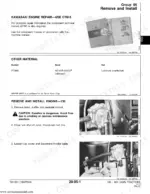
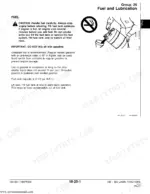
This John Deere 130/160/165/175/180/185 Technical Manual (OEM #TM1351) is the factory-spec book dealers ran in the shop for the 1986-1990 lineup, all 292 pages of it. Troubleshooting covers the hydrostatic and gear power train systems thoroughly, with full electrical diagnosis down to component-level tests and theory of operation, plus wiring diagrams for every circuit. Exploded views cover mower spindles, transaxle assemblies, and the Eaton and Sundstrand hydrostatic transmissions. Specifics matter when you're chasing a fault: the battery has to deliver at least 255 cold cranking amps, starter draw tops out at 150 amps, and traction drive clutch belt clearance runs 94 mm (3.70 in.). Guessing at a no-start or a soft hydrostatic drive burns an afternoon. Bookmarks and full-text search drop you straight onto the page you need.
What's Inside This John Deere 130–185 Manual
| System | Pages | Key Topics |
|---|---|---|
| Section 10 General Information | 9-28 | Group 05 Safety, Group 10 General Specifications, Group 15 Cap Screw Torque, Group 20 Tune-Up, Group 25 Fuel and Lubrication, Group 30 Serial Numbers |
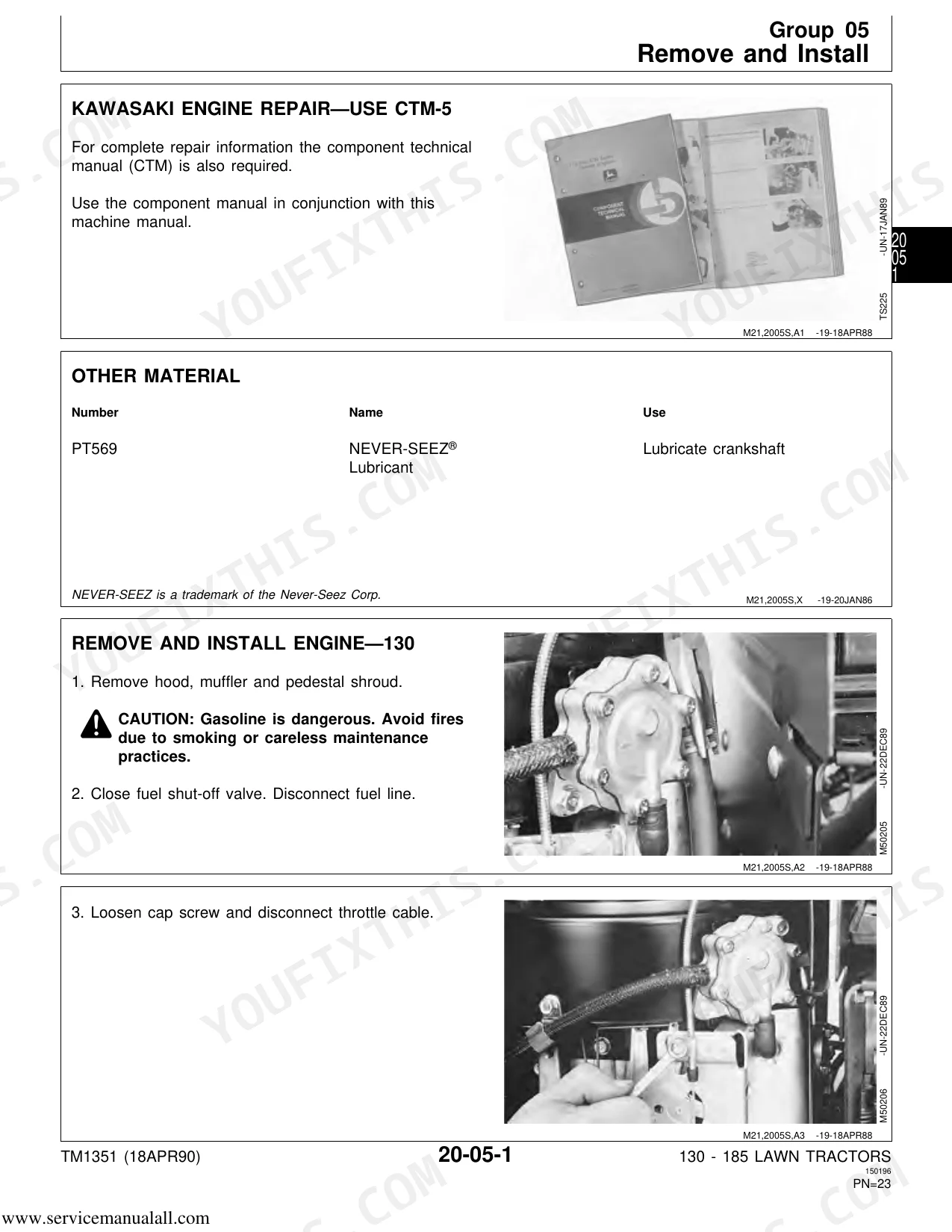
| Section 20 Engine | 29-42 | Group 05 Remove and Install, Group 10 Muffler |
| Section 30 Fuel and Air System | 43-50 | Group 05 Fuel Pump and Fuel Tank |
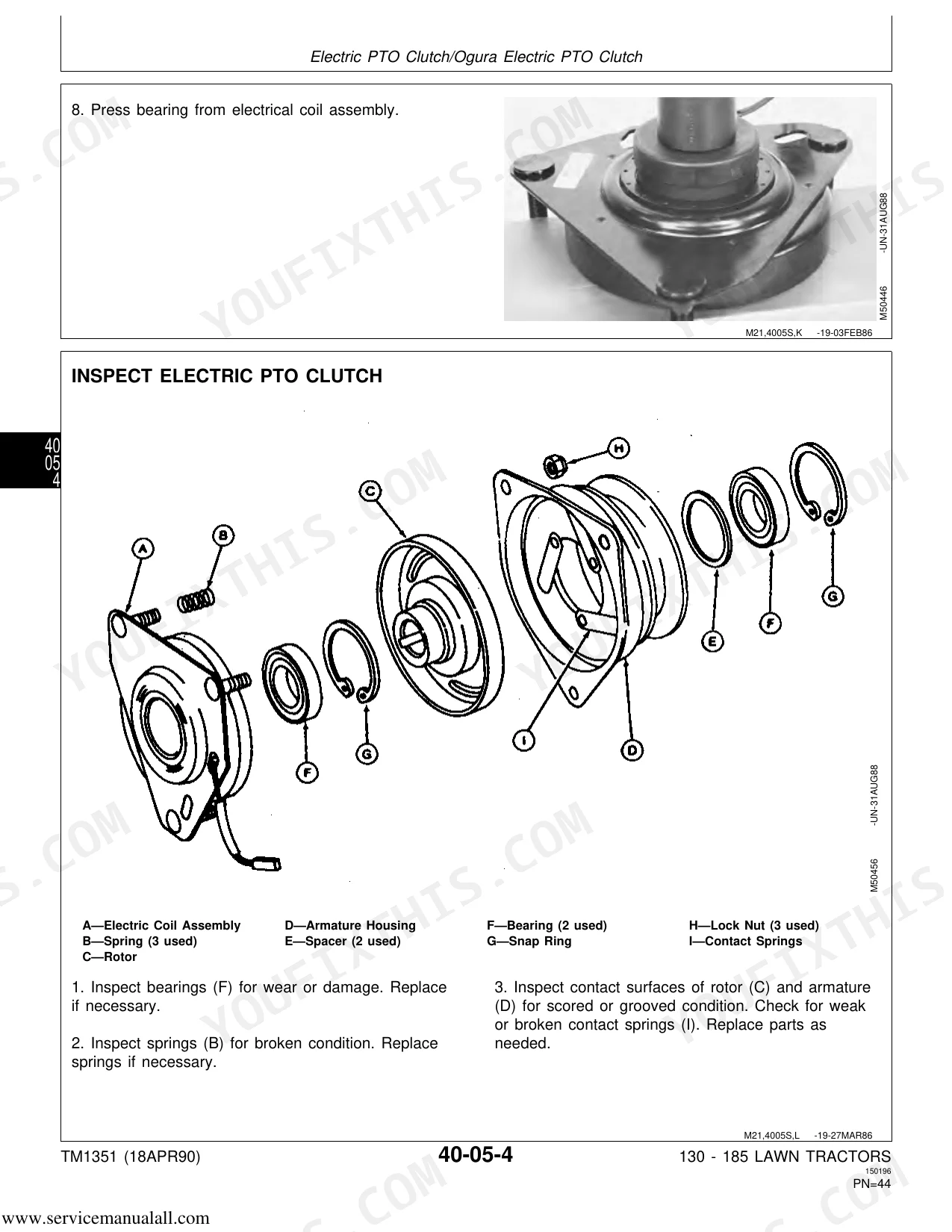
| Section 40 Electrical | 51-62 | Group 05 Electric PTO Clutch |
| Section 50 Power Train | 63-138 | Group 05 Powered Wheels, Group 10 Traction Drive Clutch, Group 15 5-Speed Transaxle, Group 20 Hydrostatic Transmission¯Eaton, Group 21 Hydrostatic Transmission¯Sundstrand |
| Section 60 Steering and Brakes | 139-160 | Group 05 Steering System, Group 10 Front Axle, Group 15 Brakes and Linkages |
| Section 80 Miscellaneous | 161-178 | Group 05 Mower Spindles, Group 10 Mower Lift Linkage |
| Section 210 Specifications/Operational Checkout Procedure | 179-186 | Group 01 Test and Adjustment, Group 05 Machine Operational Checkout |
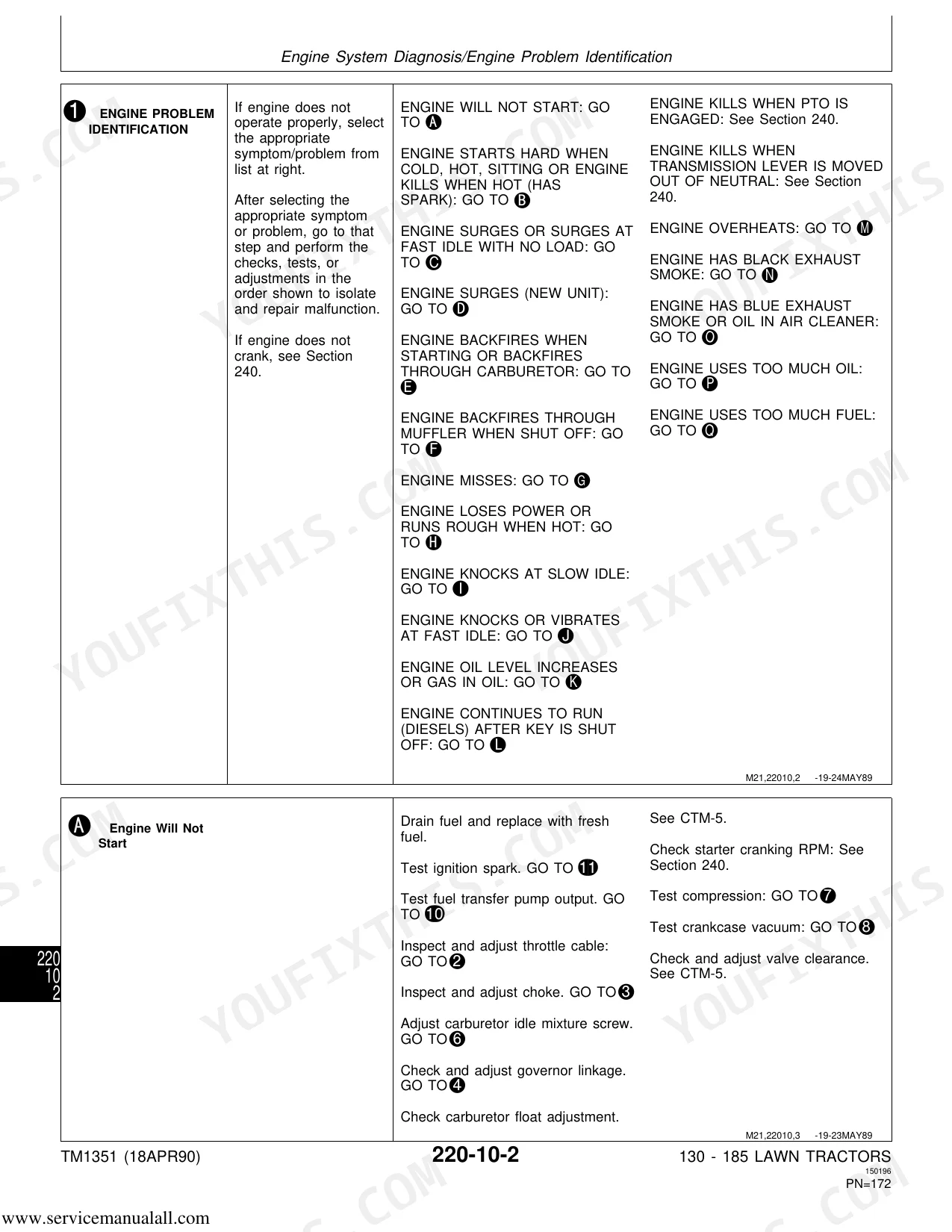
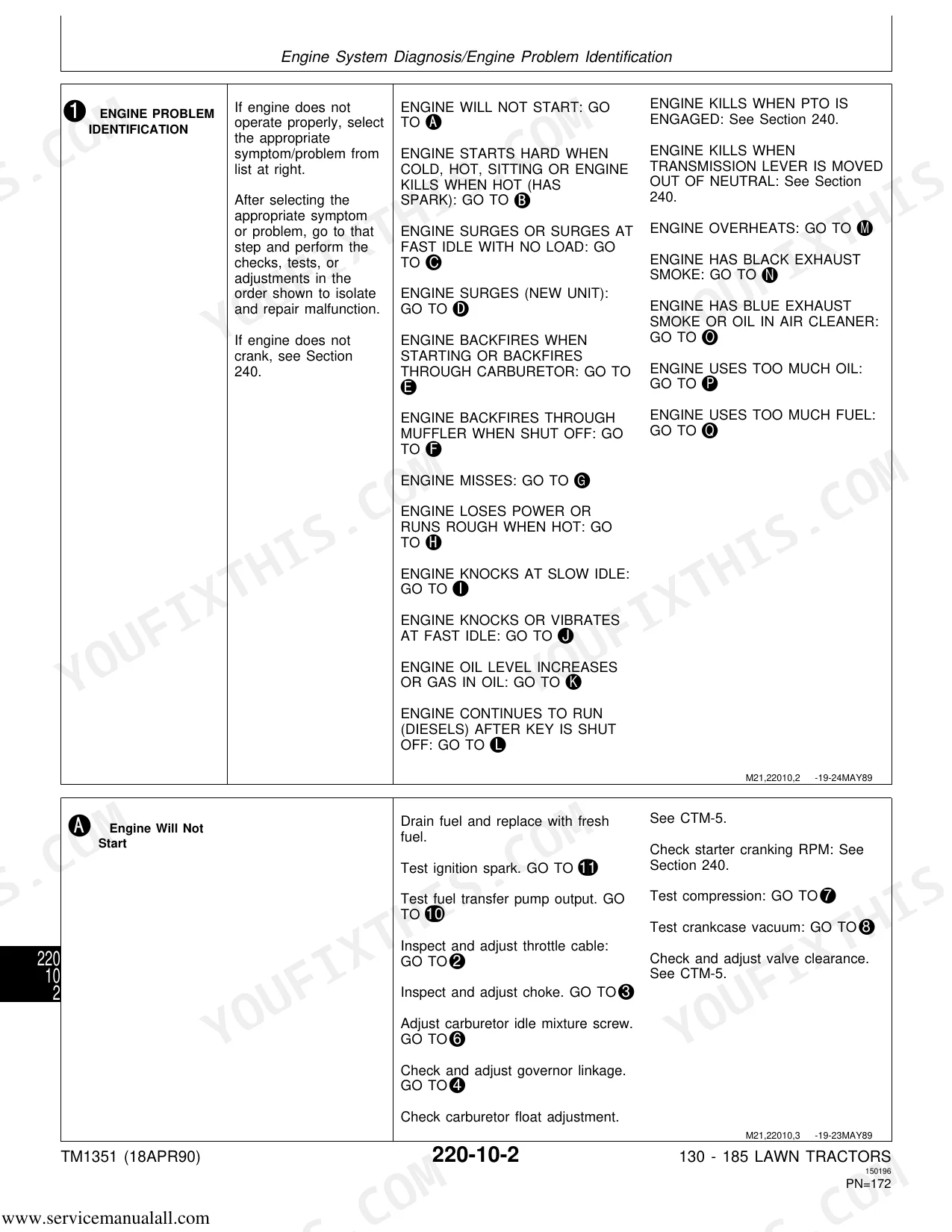
| Section 220 Engine/Fuel Operation and Tests | 187-206 | Group 05 Engine System Checkout, Group 10 Engine System Diagnosis |
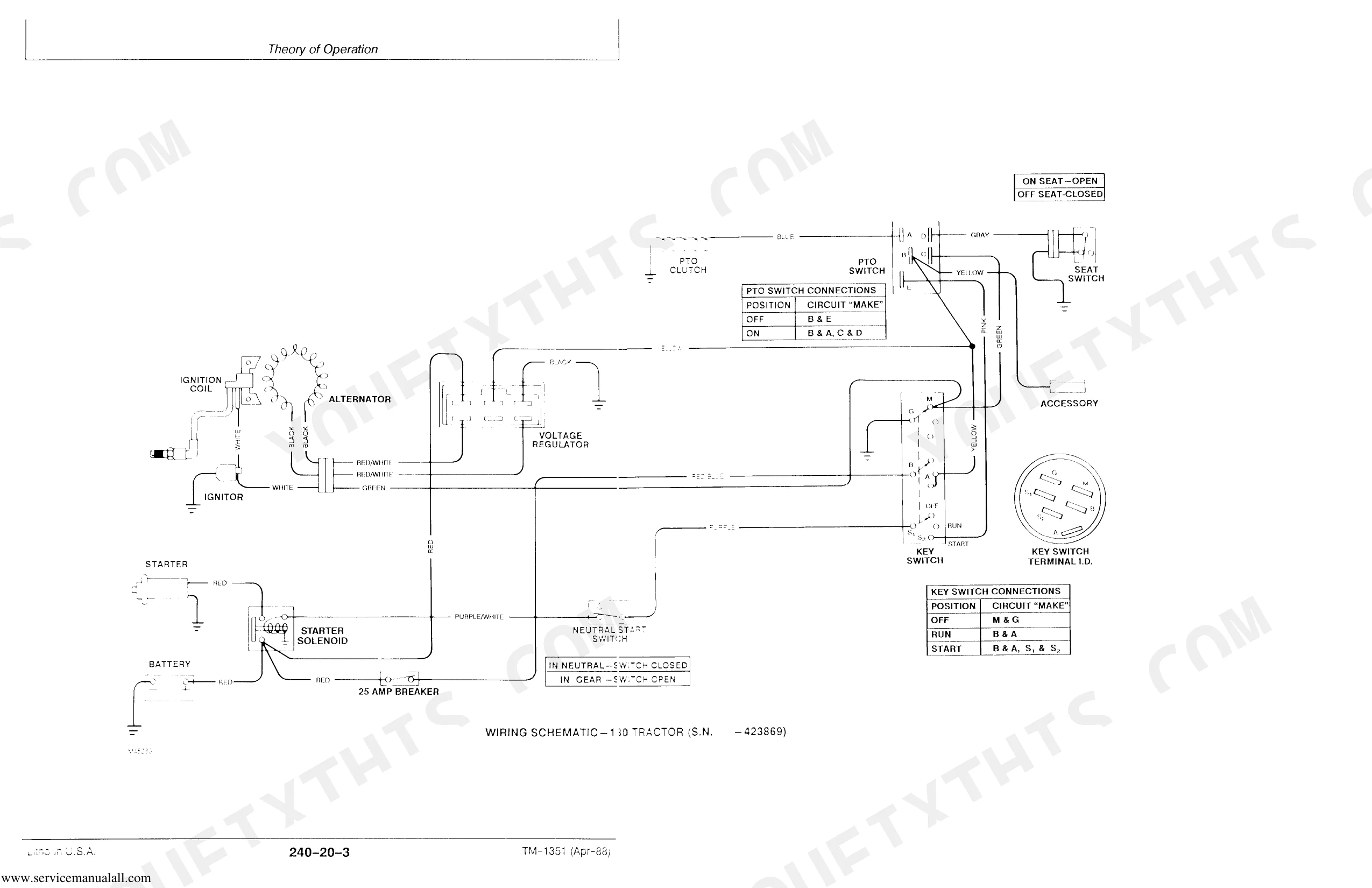
| Section 240 Electrical Operation and Tests | 207-262 | Group 05 Electrical System Checkout, Group 10 Electrical System Diagnosis, Group 15 Electrical System Component Tests, Group 20 Theory of Operation |
| Section 250 Power Train Operation and Tests | 263-290 | Group 05 Hydrostatic Power Train System Checkout, Group 06 Gear Power Train System Checkout, Group 10 Hydrostatic Power Train System Diagnosis |
Quick Reference Specifications
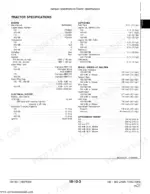
| Specification | Value | Page |
|---|---|---|
| All Models | ||
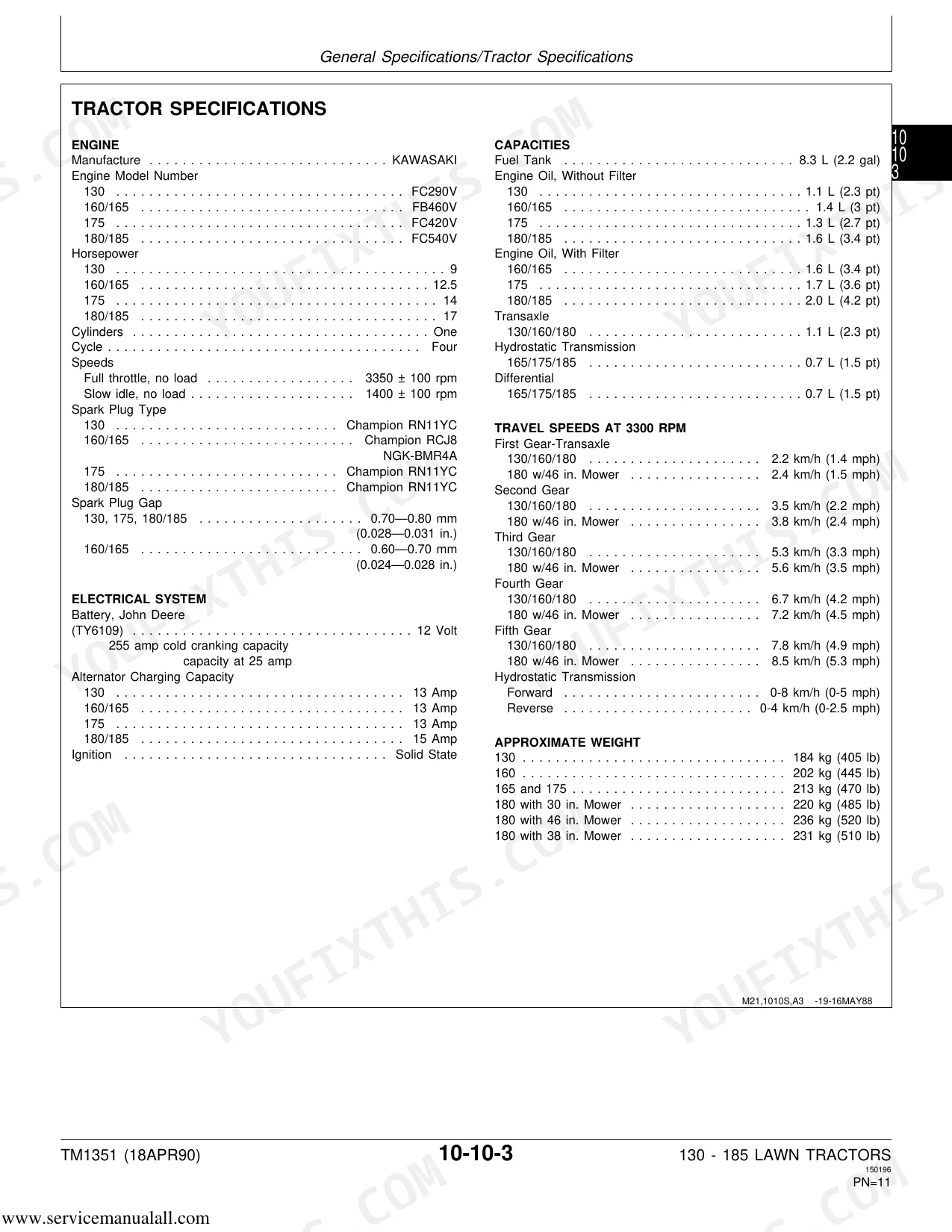
| Traction Drive Clutch Belt Clearance | 94 mm (3.70 in.) | p. 15 |
| Traction Drive Clutch Belt Guide Clearance | 5 mm (0.20 in.) | p. 15 |
| Battery Voltage | 12 Volt | p. 17 |
| Battery Cold Cranking Capacity | 255 amp | p. 17 |
| Starter Amp Draw-Maximum | 150 amps | p. 181 |
| PTO Mounting Cap Screw Torque | 56 N·m (45 lb-ft) | p. 15 |
| PTO Clutch Clearance | 0.41 mm (0.016 in.) | p. 15 |
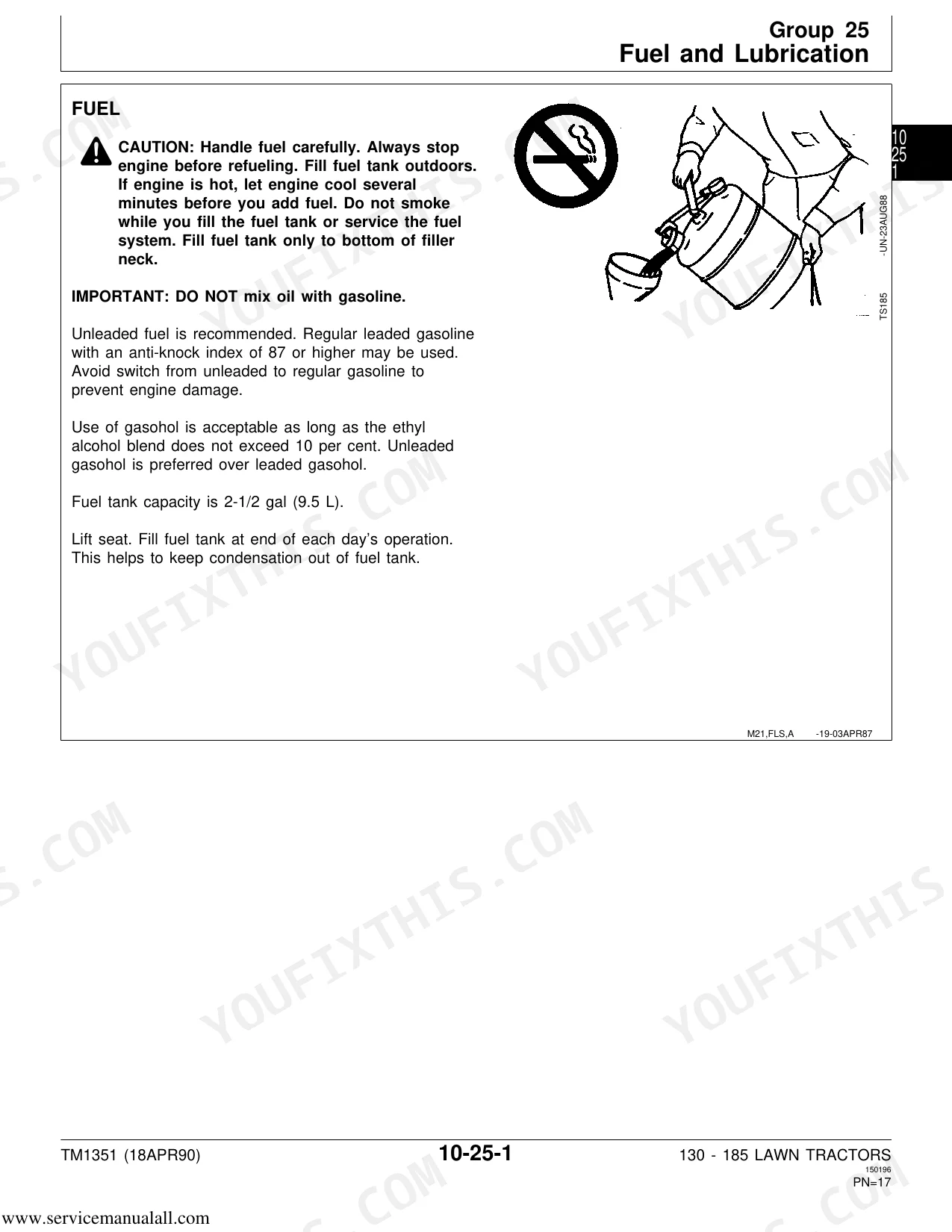
| Fuel Tank Capacity | 8.3 L (2.2 gal) | p. 17 |
| 130 | ||
| Starter No-Load RPM-Minimum | 7000 rpm | p. 181 |
| 130, 175, 180/185 | ||
| Spark Plug Gap | 0.70–0.80 mm (0.028–0.031 in.) | p. 17 |
| 160/165 | ||
| Spark Plug Gap | 0.60–0.70 mm (0.024–0.028 in.) | p. 17 |
| 180/185 | ||
| Engine Oil, With Filter | 2.0 L (4.2 pt) | p. 17 |
John Deere 130–185 Common Problems This Manual Covers
Engine cranks but won't start on the 130 through 185 after sitting all winter p. 194
Drain the tank completely (8.3 L / 2.2 gal) and refill with fresh fuel. Remove the fuel filter and inspect it; replace if discolored or restricted. Pull the carburetor, then clean all passages and the needle valve seat with carb cleaner. On reinstall, gap the spark plug and torque it to 15 N·m (133 lb-in.). The full no-start diagnosis sequence starts on page 194.
Manual Section: Engine System DiagnosisTractor won't crank at all, or cranks intermittently when key is turned
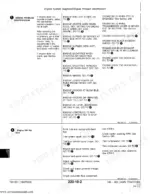
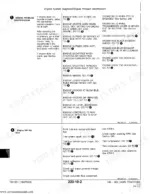
Start at the battery: clean any corrosion off the terminals and confirm 12V. Test starter amp draw, which maxes out at 150 amps. Make sure the seat switch is fully depressed, the transmission is in neutral, and the PTO is disengaged. Walk the starting-circuit tests to pin the fault on the solenoid, switch, or wiring, and check the fuse before condemning the starter.
Manual Section: Electrical System DiagnosisHydrostatic drive hesitates, moves weakly, or won't move in either direction p. 269
Confirm the transmission oil level before anything else; on the 165, 175, and 185 it holds 0.7 L (1.5 pt), and low fluid is the usual culprit. Inspect the drive belt for slippage, cracking, or glazing. Make sure the manual push valve is fully closed. With oil full and the belt sound, run the transmission operating test on page 269 to isolate the control linkage, neutral adjustment, or the transaxle itself.
Manual Section: Hydrostatic Power Train System DiagnosisMower blades won't engage, or disengage unexpectedly under load p. 207
Test the PTO switch for function and confirm the seat switch circuit is live, since a failed seat switch kills blade engagement without warning. Inspect the deck belt and idler pulleys; swap out anything glazed or cracked. Set PTO clutch clearance to 0.41 mm (0.016 in.) if it has drifted. If the clutch mounts were disturbed, torque the mounting cap screws to 56 N·m (45 lb-ft). PTO circuit tests begin on page 207.
Manual Section: Electrical System Operation and TestsEngine surges, loses power under load, or stalls when cutting heavy grass p. 194
Inspect the air filter and replace it if clogged, because a restricted intake starves the engine under load. Look at the fuel filter for restriction and swap it if suspect. Move the throttle and choke linkage through full travel to confirm it isn't binding. On the 130, 175, 180, and 185, measure cylinder compression; the minimum is 483 kPa (71 psi), and low readings point to engine wear. Verify governed high speed reaches 3350 rpm with the throttle wide open.
Manual Section: Engine System DiagnosisSteering feels loose, pulls to one side, or front wheels have excessive play p. 139
Raise and support the front end, then grip each front wheel at 9 and 3 o'clock to feel for play in the tie-rod ends and spindles. Rock it at 12 and 6 o'clock to gauge kingpin wear. Check the steering gear engagement for slop. Replace any worn pivot or rod end before trying to restore alignment. Removal and installation steps live in the Steering System section starting on page 139.
Manual Section: Steering SystemFrequently Asked Questions
How do I reset the PTO on a John Deere 180 lawn tractor?
With the PTO switch OFF, disconnect the spark plug wire and pull the key. On the John Deere 180, insert a 0.41 mm (0.016 in.) feeler gauge through the slot in the clutch plate so it sits between the rotor and armature. Tighten the lock nut until the gauge starts to bind, then repeat on the other two adjusting nuts.
How do I reset the carburetor or governor on a John Deere 175?
On a John Deere 175, start by aligning the throttle control lever with the control plate using a 15/64 in. drill bit through the holes. For the choke, turn its screw clockwise until it just contacts the choke control lever. Then loosen the governor nut, turn the governor shaft clockwise until it stops, and tighten the nut. Finally, set fast idle to 3350 ± 100 rpm and slow idle to 1400 ± 100 rpm.
What is the drive belt routing for a John Deere 165?
On the John Deere 165, install the drive belt on the transmission sheave, idler assembly, engine sheave, and idler. Be sure to route it from the right-hand side of the engine sheave to the TOP of the transmission sheave. Image M50327 on page 70 shows the routing for models including the 165.
How to reset John Deere 185 hydrostatic transmission
On a John Deere 185 (S.N. 475001-), bleeding the hydrostatic system after a repair starts with filling the case and reservoir to the FULL line, roughly 850 cc (28.7 fl oz) of oil. Lift the rear wheels, start the engine, and idle 2-3 minutes. Apply full forward for 10 seconds, return to NEUTRAL for 5 seconds, then push the tow (bleed) valve for 2 seconds. Repeat with full forward for 15 seconds, stop the engine, and top the reservoir back to the FULL line.
Is this John Deere 130 & variants Technical Manual a digital download?
A 292-page searchable PDF, ready for immediate download. It opens on any device, so you can pull it up on your phone while you're under the hood. No shipping, no waiting.
Am I able to print pages from this manual?
Yes. The PDF carries no DRM, so you can print any page or section you need for the shop. It works with any standard printer.
Can I find wiring schematics in this John Deere 130 & variants manual?
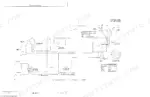
Yes. Full electrical schematics are included, with wire colors, connector locations, and circuit descriptions.
Document Quality
This document is a scanned PDF, but it includes an OCR layer, so you can search the full text and copy content. The text quality is consistently crisp and easy to read throughout the manual. Diagrams and illustrations are raster images or photos, but they are clear, and all labels are readable. Pages are generally clean with no significant scan artifacts, stains, or skewed pages, though some blank pages are present as fillers.

Reviews
There are no reviews yet.