
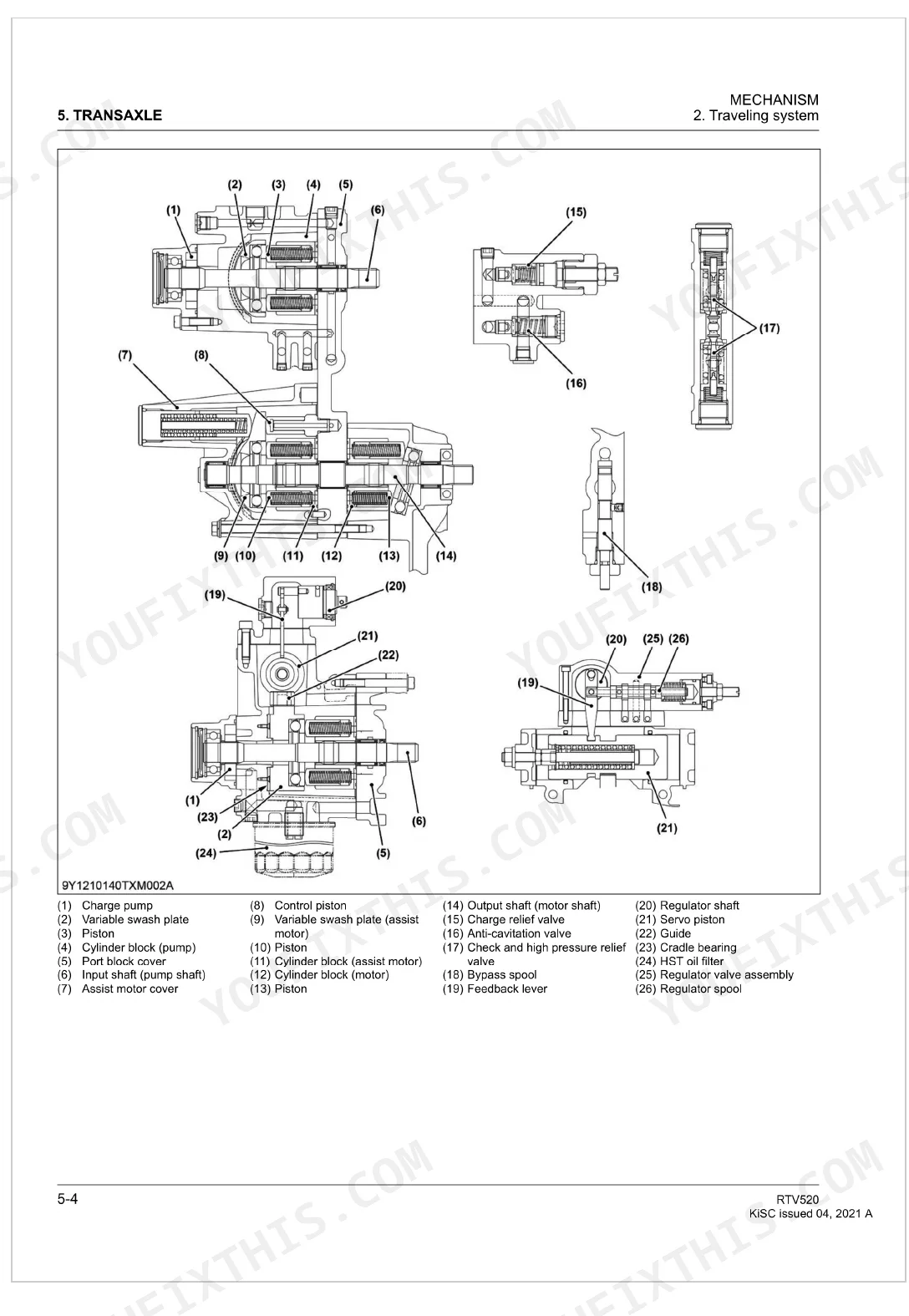
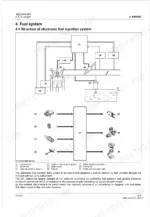
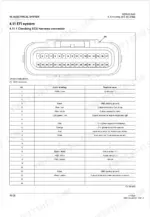
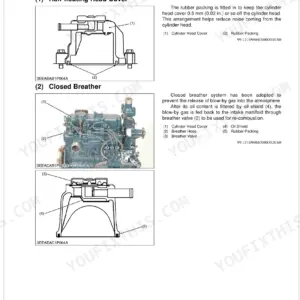
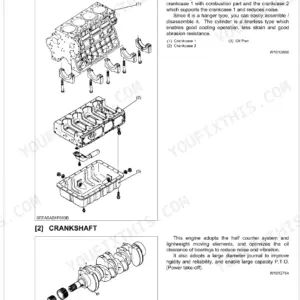
This Kubota RTV520 Workshop Manual stays on one machine: your RTV520 utility vehicle, start to finish across 390 pages. Roughly 100 pages walk through service procedures for the engine, transaxle, suspension, brakes, front axle, steering, and electrical system, backed by 19 pages of troubleshooting charts for brake, front axle, steering, and electrical faults. Four illustrated pages map the HST hydraulic circuit, fuel injection layout, cooling loop, and charging system, and two error code tables take you straight from fault to fix. The torque figures are factory numbers, not approximations: M10 grade-4 fasteners pull to 40-45 N·m, the fuel tank holds 19.2 L, and the cooling system takes 2.4 L with reserve. Forum threads won't rebuild a transaxle when your machine is down. Bookmarked by system and fully searchable, the PDF opens on any device, so you can read it right at the machine.
What's Inside This Kubota RTV520 Manual
| System | Pages | Key Topics |
|---|---|---|
| Safety | 19-32 | Working Precautions, Preparing For Emergencies, Working Cautions, Starting Machine Safely, Preventing Fires, Preventing Acid Burns, Avoiding High Pressure Fluid |
| General | 33-69 | Tightening Torques (Stud Bolts), Hydraulic Fittings (Hydraulic Hose Fittings, Hydraulic Pipe Cap Nuts, Adapters, Elbows And Others), Metric Screws, Bolts And Nuts |
| Maintenance | 70-102 | Service Intervals, Lubricants, Fuel And Coolant |
| Engine | 103-175 | Mechanism, Engine Body (Function: Cylinder Head, Camshaft, Crankcase, Piston, Connecting Rod, Balancer, Crankshaft, Flywheel) |
| Transaxle | 176-254 | Mechanism, Outline of a Transaxle |
| Suspension | 255-267 | Mechanism, Structure of Front Suspension, Structure of Rear Suspension, Servicing, Tightening Torques for Suspension |
| Brakes | 268-296 | Mechanism, Outline of Traveling Brake, Structure of Traveling Brake, Outline of Automatic Brake Adjustment, Outline of Master Cylinder, Outline of Brake Oil |
| Front Axle | 297-319 | Mechanism, Structure of Front Axle, Servicing, Troubleshooting for Front Axle, Service Specifications for Front Axle, Tightening Torques for Front Axle |
| Steering | 320-330 | Mechanism, Structure of Steering Linkage, Structure of Manual Steering, Servicing, Troubleshooting for Steering, Tightening Torque for Steering |
| Electrical System | 331-390 | Mechanism, Location of Electrical Components |
Quick Reference Specifications
| Specification | Value | Page |
|---|---|---|
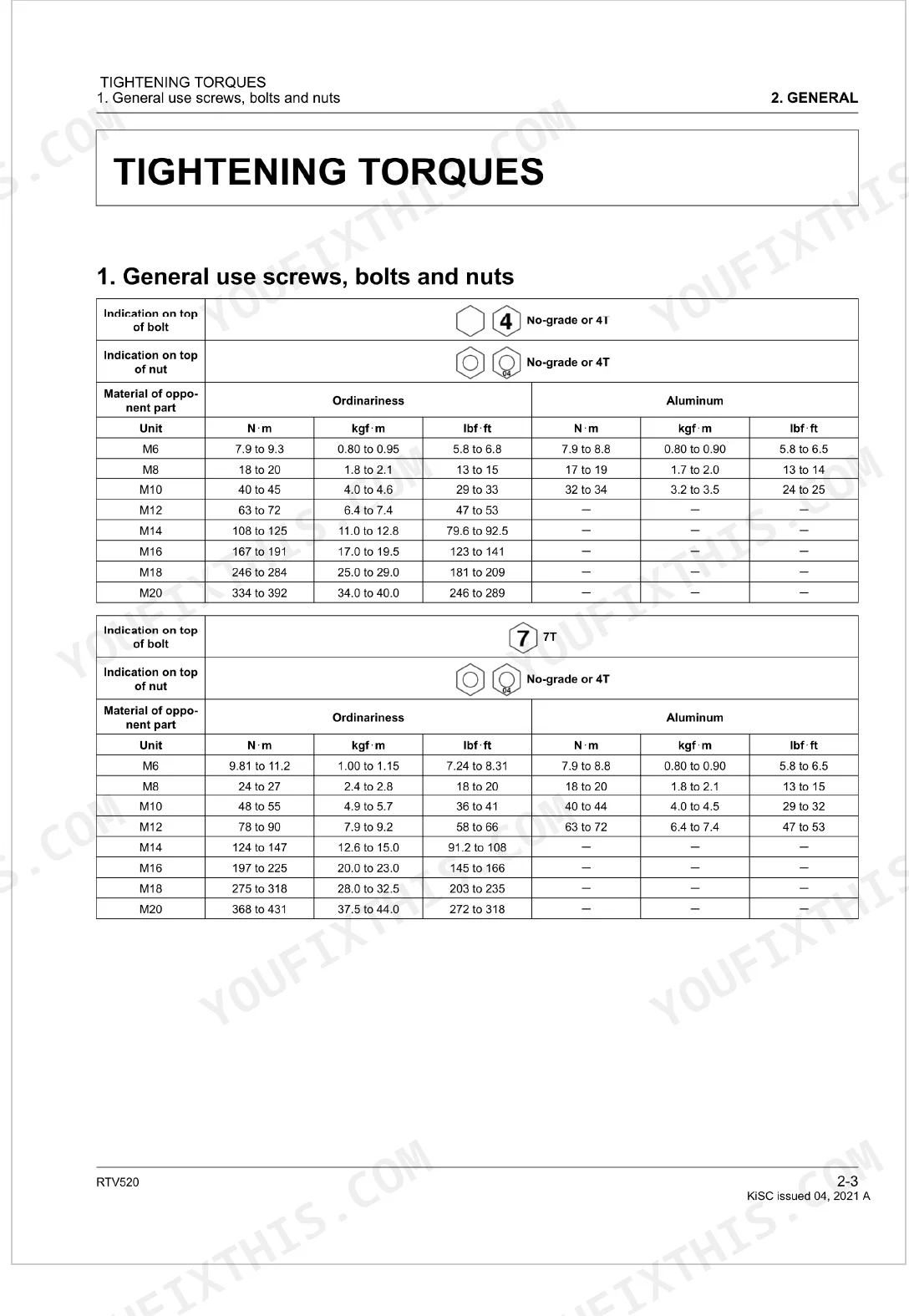
| General use screws, bolts and nuts (M10, Ordinariness 4) | 40 to 45 N·m (4.0 to 4.6 kgf·m, 29 to 33 lbf·ft) | p. 35 |
| General use screws, bolts and nuts (M10, Ordinariness 7T) | 48 to 55 N·m (4.9 to 5.7 kgf·m, 36 to 41 lbf·ft) | p. 35 |
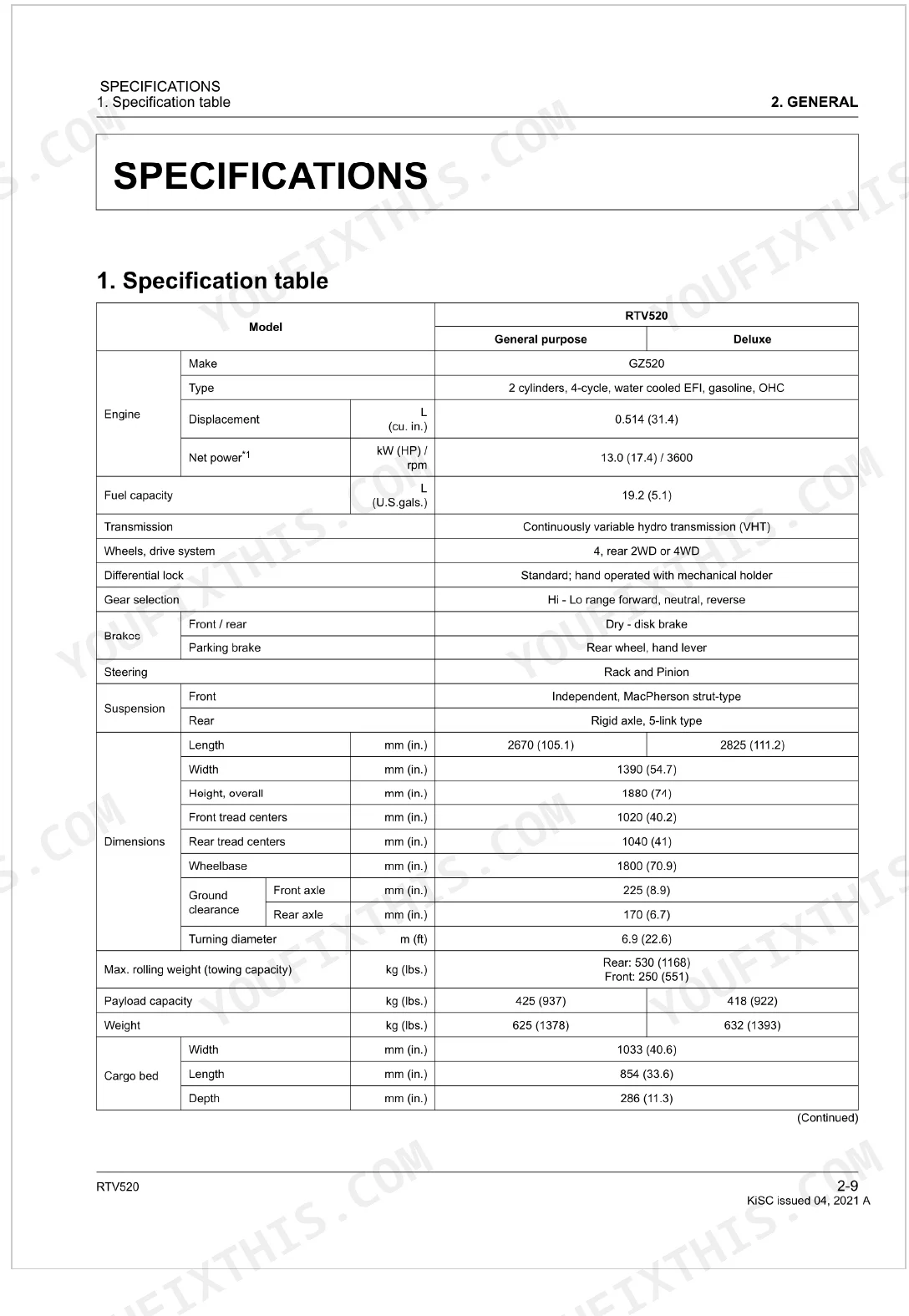
| Engine Displacement | 0.514 L | p. 41 |
| Net power | 13.0 kW (17.4 HP) / 3600 rpm | p. 41 |
| Fuel capacity | 19.2 L | p. 41 |
| Tire inflation pressure | 97 kPa (14 psi) | p. 49 |
| Engine crankcase oil capacity (filter exchanged) | 1.35 L | p. 74 |
| Transmission case oil capacity | 9.0 L | p. 74 |
| Spark plug gap | 0.6 to 0.7 mm | p. 91 |
| Valve clearance (cold) | 0.13 to 0.17 mm | p. 126 |
| Compression pressure | 1.27 MPa (184 psi) | p. 126 |
| Radiator cap specified pressure | 88 kPa (13 psi) | p. 128 |
Kubota RTV520 Common Problems This Manual Covers
Kubota RTV520 engine won't start or cranks slowly in cold morning conditions
Inspect the spark plug condition and gap first; spec is 0.6 to 0.7 mm (page 91). Next, test compression with a gauge: minimum is 1.27 MPa (184 psi) per page 128. If compression holds but it still won't fire, work the no-start diagnosis chart to isolate whether the fault is fuel or ignition.
Manual Section: Engine TroubleshootingBrake pedal feels spongy or sinks toward the floor, vehicle stops poorly p. 276
Measure brake pedal free travel: spec is 7 to 14 mm (page 276). The whole brake fluid system holds just 0.2 L, so even a small air bubble or minor leak skews pedal feel. Bleed both calipers starting from the wheel farthest from the master cylinder, then check for leaks and confirm master cylinder function.
Manual Section: Brakes TroubleshootingLoss of drive power climbing hills, transmission feels like it's slipping p. 176
Pull the transmission dipstick and read the level right away. Capacity is 9.0 L (page 74), with a change interval every 400 hrs (page 71). Rule out low or contaminated fluid before anything else under load. If the fluid checks out, work through the transaxle troubleshooting section for differential gear and one-direction drive faults.
Manual Section: Transaxle TroubleshootingFront wheels wander side to side, hard to track straight on flat ground p. 300
Check front wheel toe-in: spec is 0 to 20 mm (page 300). Look over tie rod ends and front axle pivot points for play or corrosion, and grease every steering linkage zerk fitting on schedule, every 50 hrs per page 70. If toe-in adjustment and greasing don't settle the wander, inspect steering linkage components per page 320.
Manual Section: Front Axle TroubleshootingEngine temperature gauge climbs toward red zone, coolant overflow bottle boiling over p. 128
Verify coolant level against the 2.4 L system capacity (page 74), then pressure-test the radiator cap at 88 kPa (13 psi) per page 128. Clear debris from the radiator fins and check fan motor operation. If the cap holds pressure and the fins are clean, look for a head gasket leak before putting the machine back in service.
Manual Section: Engine TroubleshootingFrequently Asked Questions
What are the recommended service intervals?
The manual lays out service intervals by hours of use. Greasing and the engine start system both fall on a 50-hour cycle, while wheel bolt torque gets checked every 100 hours. Swap the engine oil filter every 200 hours and change transmission oil every 400 hours. The timing belt is checked at 500 hours, and valve clearance is adjusted every 1000 hours.
What fluids and capacities does this machine require?
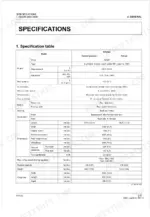
Each system has its own fluid and capacity. The fuel tank takes 19.2 L (5.1 U.S.gals) of automobile unleaded or regular gasoline, 87 octane or higher. The cooling system holds 2.4 L (2.5 U.S.qts) of fresh clean water with antifreeze. With the filter changed, the engine crankcase needs 1.35 L (1.43 U.S.qts) of API Service Classification SH or higher oil (e.g., SAE10W-30). The transmission case holds 9.0 L (2.4 U.S.gals) of KUBOTA SUPER UDT2 fluid, and the front axle case takes 0.21 L (0.22 U.S.qts) of KUBOTA UDT or SUPER UDT-2 fluid. The brake system uses 0.2 L (0.21 U.S.qts) of KUBOTA DOT3 GENUINE BRAKE FLUID.
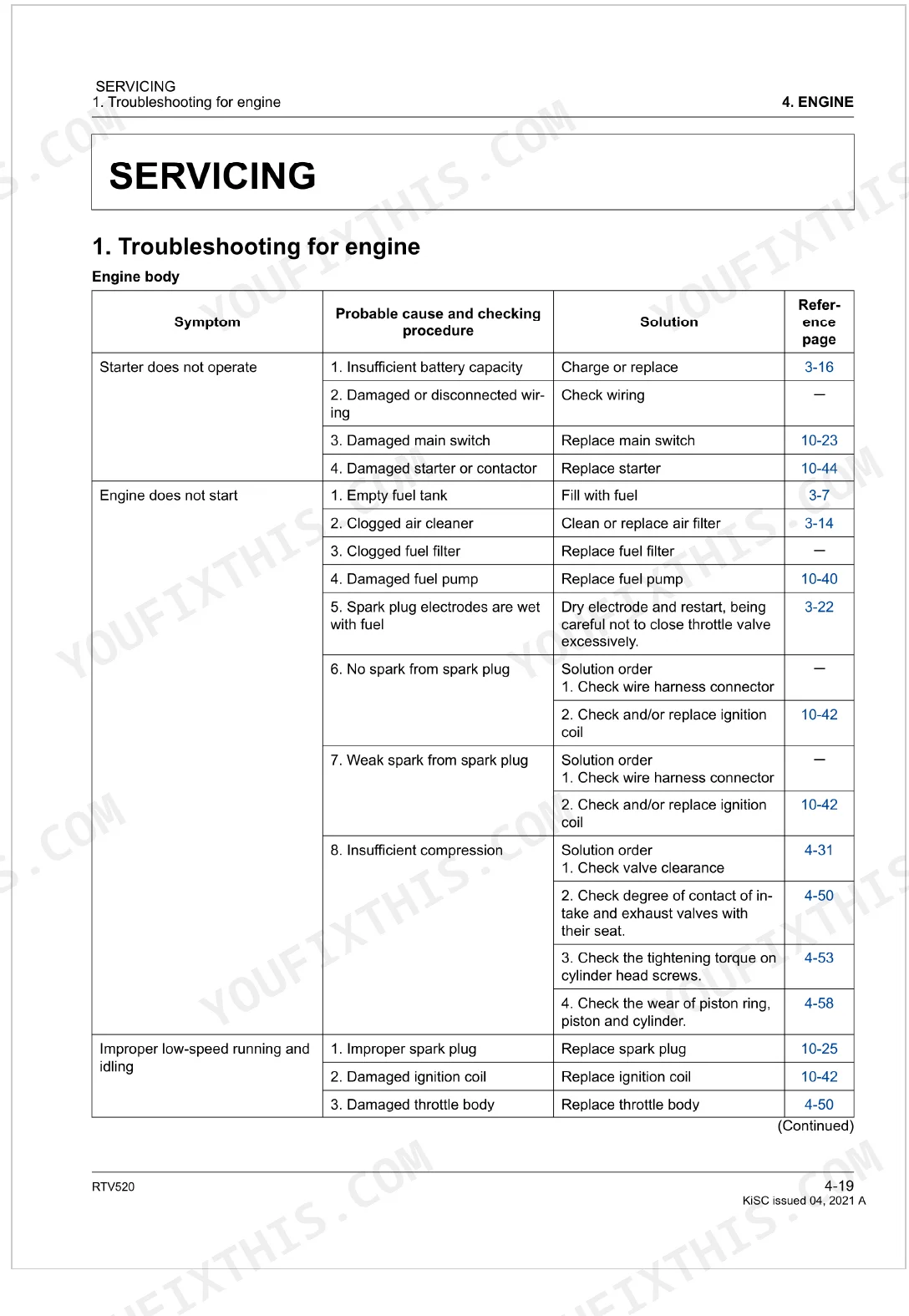
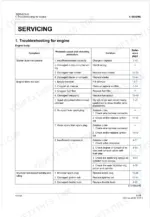
How to troubleshoot engine won't start?
A no-start traces back to a handful of causes. Start with the obvious: an empty tank gets filled (page 3-7), and a clogged air cleaner is cleaned or replaced (page 3-14). A clogged fuel filter or failed fuel pump both call for replacement (page 10-40). Spark plug electrodes wet with fuel should be dried before you restart (page 3-22). For no spark or weak spark, check the wire harness connector and replace the ignition coil (page 10-42). Low compression points to valve clearance (page 4-31).
What are the hydraulic system specifications?
All readings are taken at 3000 rpm with oil at 45 to 55 °C (113 to 131 F). Charge relief pressure runs 0.52 to 0.82 MPa (5.3 to 8.3 kgf/cm², 76 to 110 psi). The high pressure relief valve reads 17.5 to 20.5 MPa (179 to 209 kgf/cm², 2540 to 2970 psi) on the forward side and 11.5 to 14.5 MPa (118 to 147 kgf/cm², 1670 to 2100 psi) on the reverse side.
What torque specifications are listed?
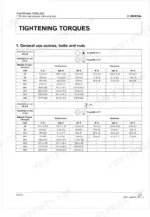
Torque figures are broken out by fastener. Among general use bolts (Ordinariness 4), M6 takes 7.9 to 9.3 N·m, M8 takes 18 to 20 N·m, and M10 takes 40 to 45 N·m. Size 02 hydraulic hose fittings (1/8 thread side) tighten to 13.8 to 15.6 N·m. On the engine, an aluminum wheel bolt runs 130 to 150 N·m, while the brake side calls for a steel wheel bolt at 108.4 to 121.9 N·m.
What do I get after purchasing this Kubota RTV520 manual?
Download is instant. The full 390-page searchable Service Manual lands in your account right after payment, ready to open on a laptop, tablet, or phone in the shop.
Are there any print restrictions on this Kubota RTV520 manual?
Yes. The PDF carries no DRM restrictions, so you can print any page or section you need for the shop. It works with any standard printer.
Document Quality
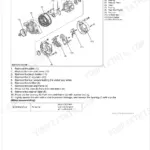
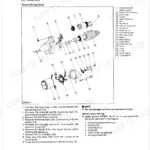
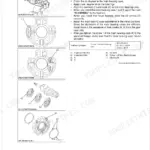
This document is a native digital PDF, allowing you to search and copy the full text with ease. All text is crisp and consistently easy to read throughout the manual. Diagrams are a mix of sharp, vector-like line drawings and clear raster images, with all labels remaining readable. The pages are clean, free of any scan artifacts, stains, or skewed content. You will find several blank pages that serve as section or chapter dividers.

Reviews
There are no reviews yet.