
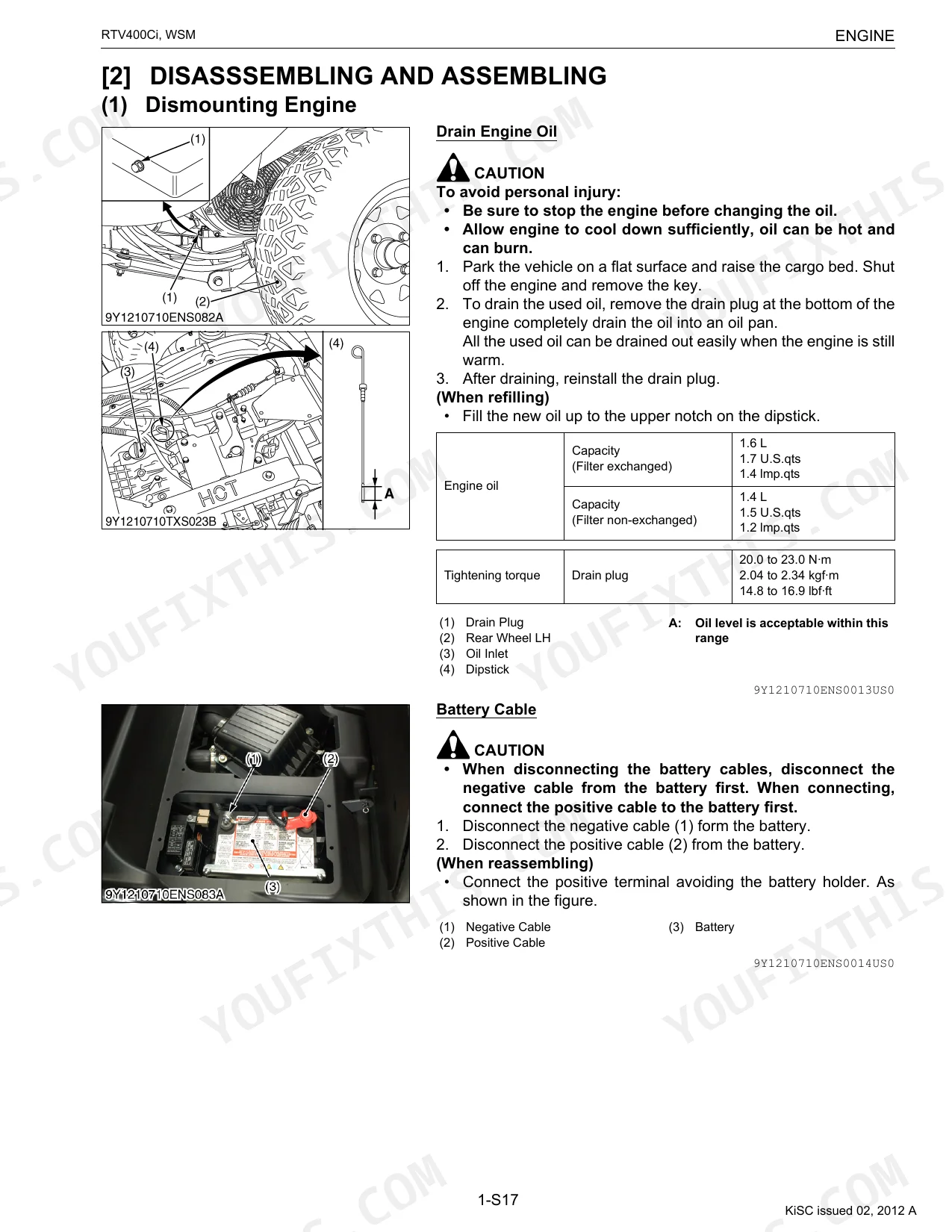
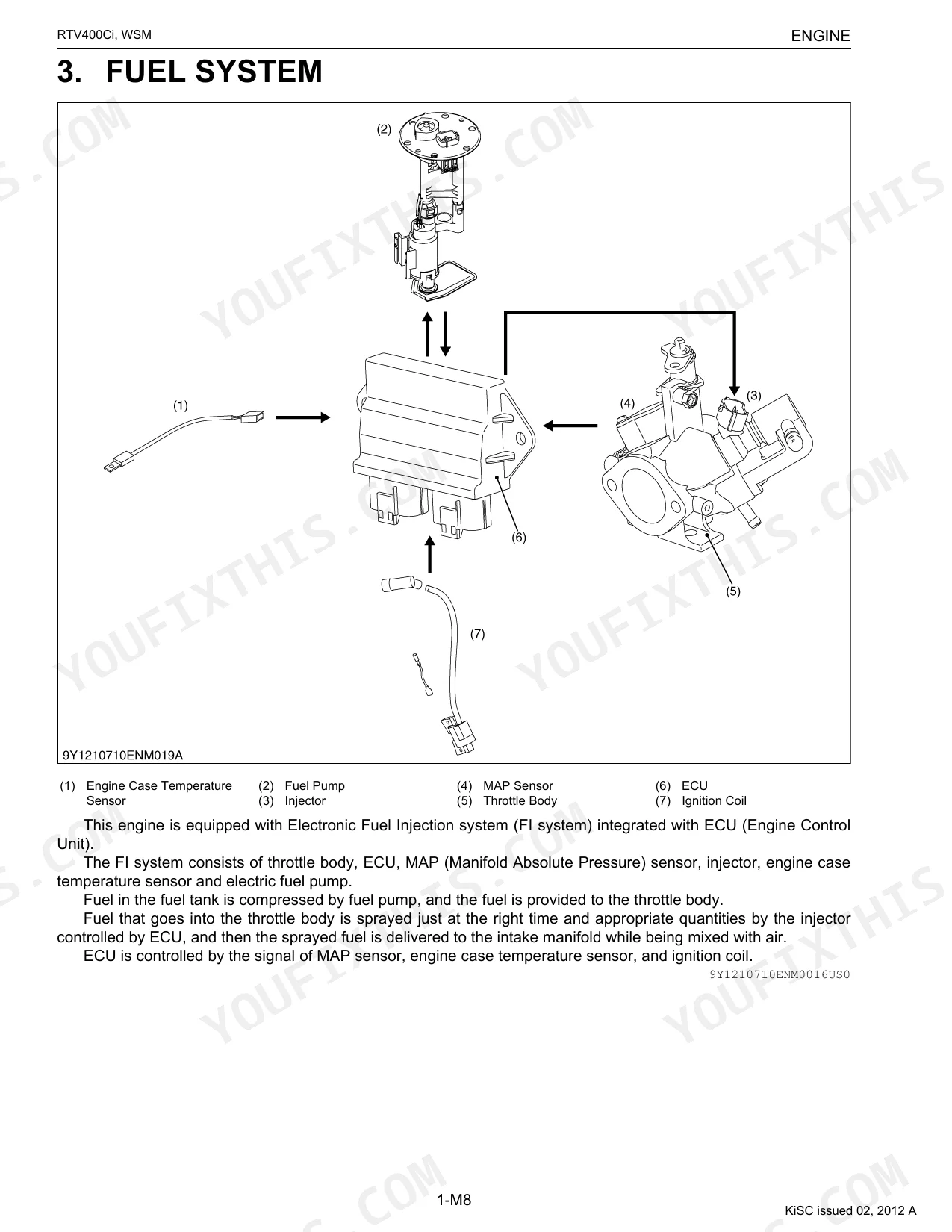
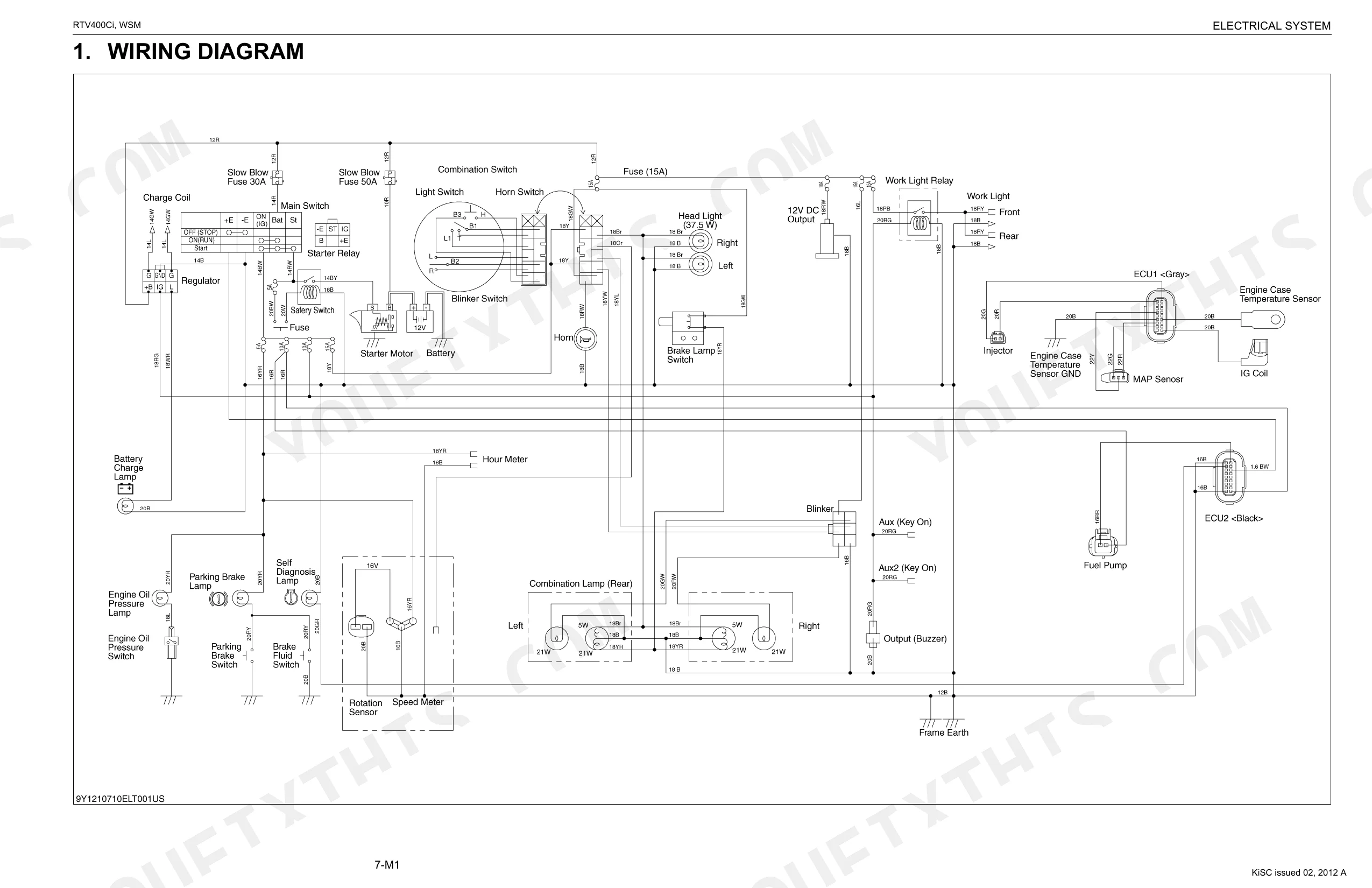
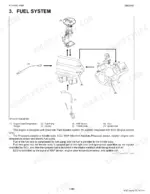
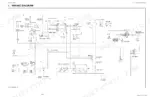
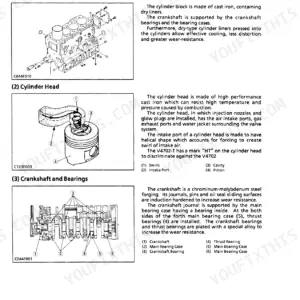
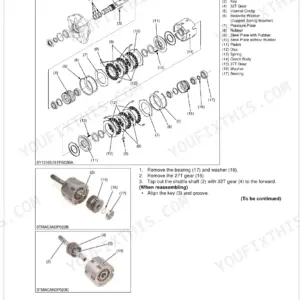
Searching for the Kubota RTV400Ci service manual PDF? This is the factory Workshop Manual (OEM #9Y111-07100), 302 pages covering the whole utility vehicle: engine, CVT transaxle, brakes, front axle, steering, and the electrical system. Inside are wiring diagrams, 12 pages of system diagrams that trace full fluid and mechanical routing, 10 pages of troubleshooting charts, and 100 pages of step-by-step rebuild procedures, backed by 11 pages of torque specifications and a dedicated fault codes section. Numbers are spelled out where they matter: fill the transmission case to 5.4 L, the crankcase to 1.6 L with a filter change. Skip the forum guesswork. Search by keyword and jump straight to any section with bookmarks before you pick up a wrench.
What's Inside This Kubota RTV400Ci Manual
| System | Pages | Key Topics |
|---|---|---|
| I Information | 3-15 | Safety First, Safety Decals, Specifications, Travelling Speeds, Dimensions |
| G General | 16-73 | Product Identification, General Precautions, Handling Precautions for Electrical, Lubricants, Fuel and Coolant, Tightening Torques, Maintenance Check List |
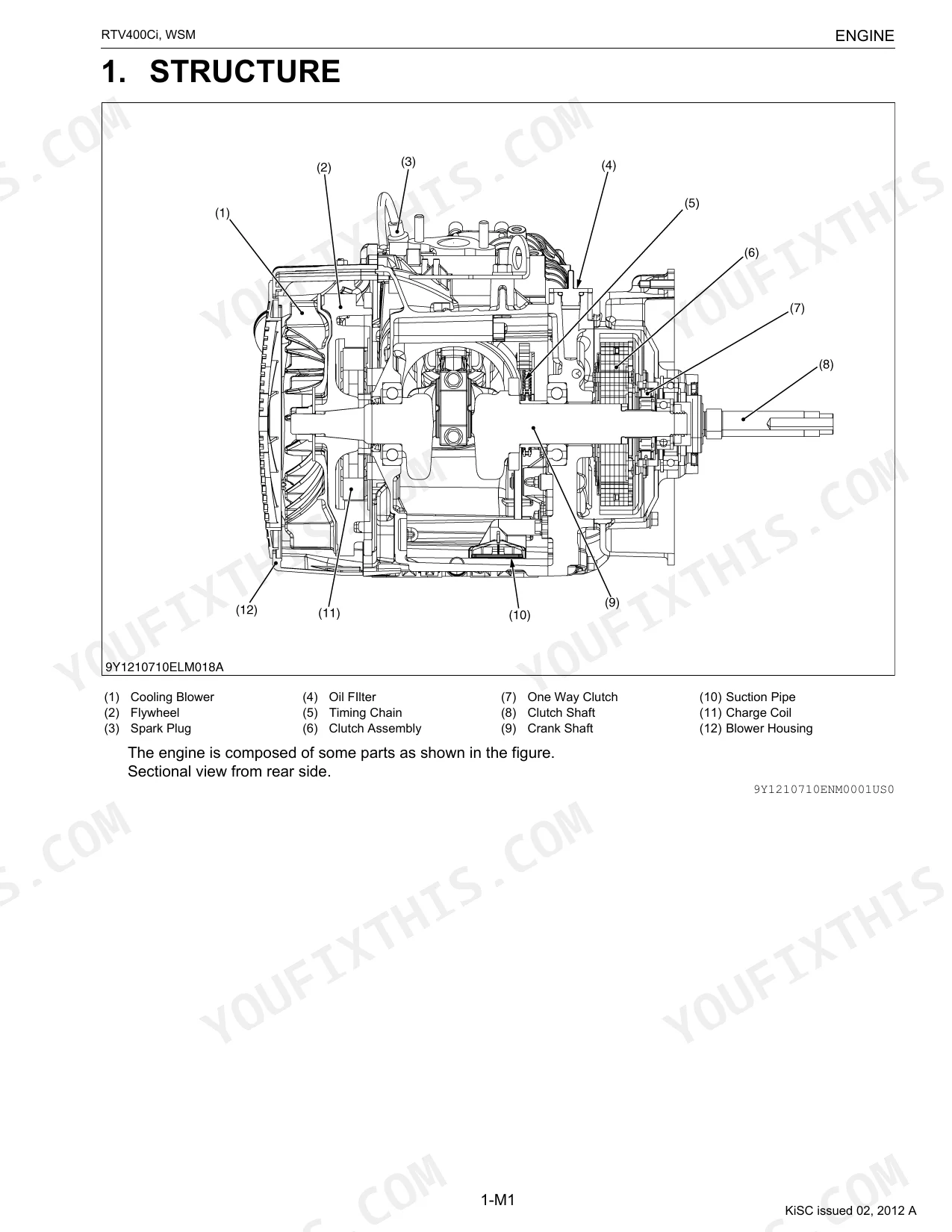
| 1 Engine | 74-136 | Structure, Engine Body, Fuel System, Intake System and Exhaust |
| 2 Clutch | 137-148 | Clutch System, Clutch Operation, One Way Clutch Operation (Engine Brake) |
| 3 Transaxle | 149-188 | Structure, Power Train, CVT (Continuously Variable Transmission) Section, Range Gear Shift Section, Front Wheel Drive Section, Rear Axle Section |
| 4 Brakes | 189-224 | General Outline, Front Brake, Rear Brake, Master Cylinder, Brake Oil, Parking Brake |
| 5 Front Axle | 225-248 | Structure, Front Axle, Front Suspension |
| 6 Steering | 249-258 | Structure, Steering Linkage, Manual Steering |
| 7 Electrical System | 259-302 | Wiring Diagram, Starting System, Charging System, Lighting System, Gauges, Electric Fuel Injection System |
Quick Reference Specifications
| Specification | Value | Page |
|---|---|---|
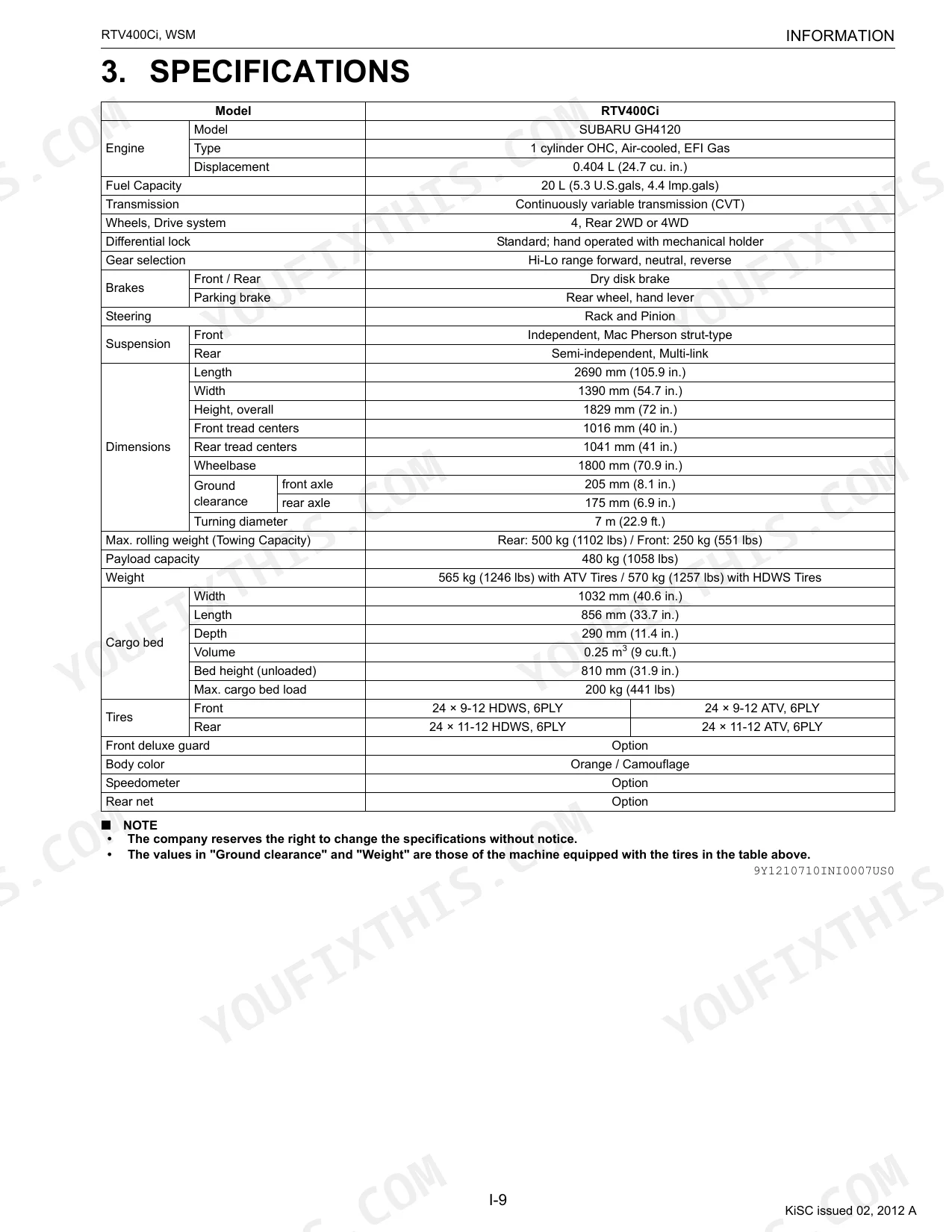
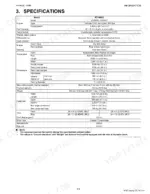
| Fuel Capacity | 20 L (5.3 U.S.gals, 4.4 Imp.gals) | p. 25 |
| Engine crankcase oil (Filter exchanged) | 1.6 L (1.7 U.S.qts, 1.4 Imp.qts) | p. 25 |
| Engine Oil Capacity (Filter exchanged) | 1.6 L | p. 25 |
| Transmission Case Capacity | 5.4 L | p. 25 |
| Tire Inflation Pressure (Front/Rear) | 97 kPa | p. 36 |
| Engine Compression Pressure (Factory Spec) | 1.15 MPa | p. 93 |
| Engine Valve Clearance (Intake/Exhaust) | 0.11 to 0.16 mm | p. 93 |
| Engine Idling Speed | 1300 to 1500 min⁻¹ (rpm) | p. 93 |
| Spark Plug Gap | 0.60 to 0.70 mm | p. 50 |
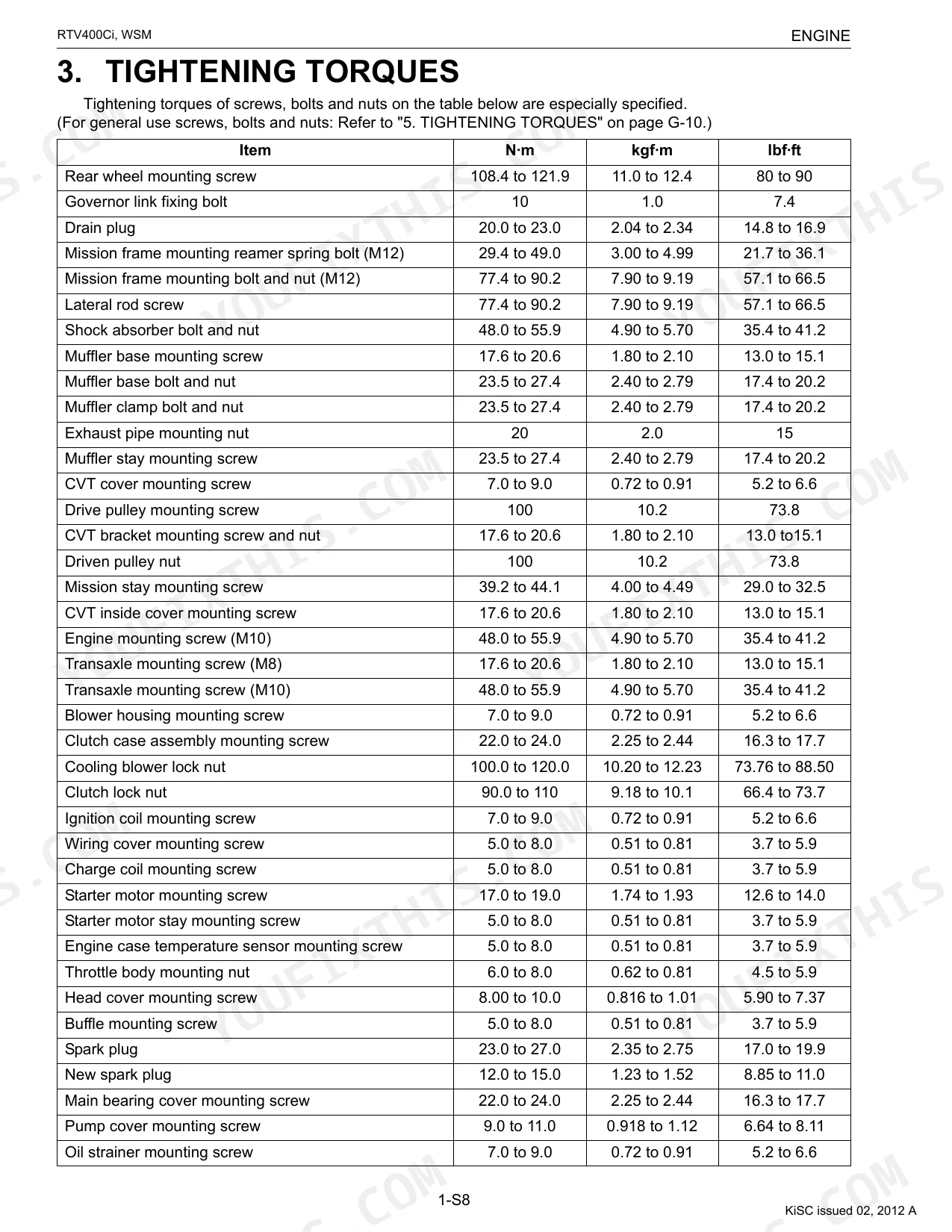
| Rear Wheel Mounting Screw Torque | 108.4 to 121.9 N·m | p. 96 |
| CVT Belt Width (Allowable Limit) | 32.8 mm | p. 39 |
| Brake Pad Thickness (Allowable Limit) | 1 mm | p. 200 |
Kubota RTV400Ci Common Problems This Manual Covers
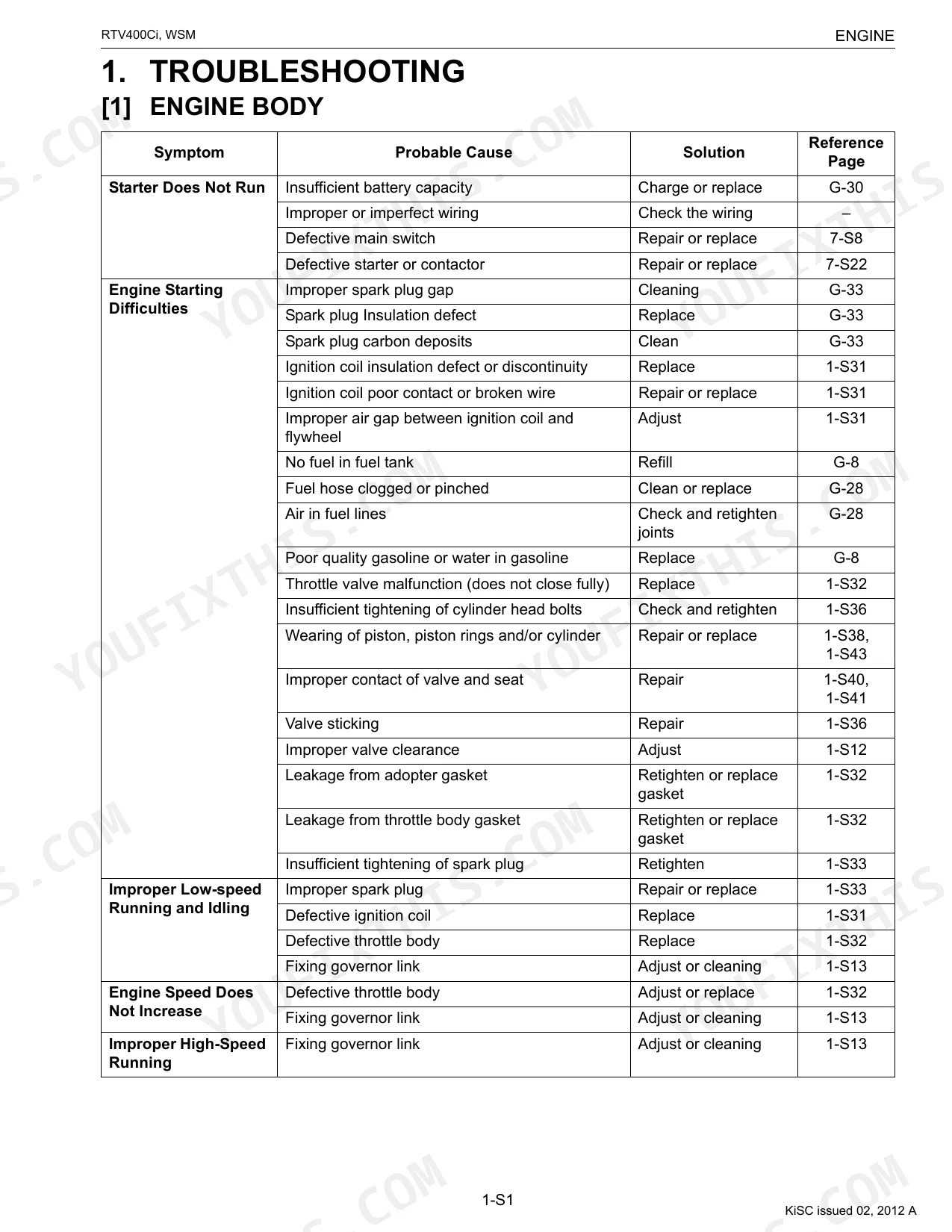
Engine cranks but won't fire, diagnostic lamp blinking after sitting overnight
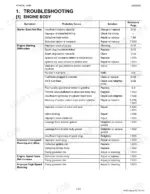
Read the diagnostic lamp blink pattern first: each sequence maps to a specific EFI fault code. Confirm the tank holds fuel (20 L capacity) and the kill switch sits in the run position. When codes point to injector or sensor faults, follow the engine body troubleshooting.
Manual Section: Electronic Fuel Injection TroubleshootingEngine runs rough at idle, surges under light load or backfires on deceleration
Measure the spark plug gap; it should fall between 0.60 to 0.70 mm (page 50), and inspect the plug for fouling. Confirm idle speed sits between 1300 and 1500 rpm (page 93). If the trouble persists, check valve clearance: spec is 0.11 to 0.16 mm on both intake and exhaust, with adjustment due every 300 hrs (page 31).
Manual Section: Engine Body TroubleshootingMachine loses power on hills, CVT belt slipping or squealing under load
Remove the CVT cover and measure the belt width; the allowable limit is 32.8 mm (page 39). Inspect the drive and driven pulleys for scoring or glazing. Then check the CVT air cleaner element, which the maintenance schedule on page 30 calls for cleaning every 100 hrs. A clogged element starves the belt housing of cooling air.
Manual Section: CVT (Continuously Variable Transmission) SectionBrake pedal goes soft and spongy, stopping distance increasing after hard use
Bleed the system at all four corners to purge air, but first inspect the fluid level, hoses, and lines for seepage. Measure brake pad thickness and replace if worn to the 1 mm allowable limit (page 200). Change brake fluid every 2 years per the maintenance schedule on page 31, regardless of visual condition.
Manual Section: Brakes TroubleshootingSteering wheel requires excessive force, hard to turn at low speed or full lock
Inspect front tire pressure first; both fronts belong at 97 kPa (page 36). Under-inflation is the most common cause of heavy steering on this machine. Check the steering linkage for bent or seized tie rods, then confirm the grease zerks have been serviced every 50 hrs per the maintenance schedule on page 30.
Manual Section: Steering TroubleshootingFrequently Asked Questions
What are the recommended service intervals?
The maintenance check list sets several service intervals. Greasing runs every 50 hours, while engine oil and filter get a first change at 20 hours and then engine oil every 100 hours after that. The engine air cleaner element is cleaned every 100 hours or replaced once a year.
What fluids and capacities does this machine require?
Each system takes a defined fluid and volume. The fuel tank holds 20 L (5.3 U.S.gals) of automobile unleaded or regular gasoline. With the filter exchanged, the engine crankcase needs 1.6 L (1.7 U.S.qts) of API Service Classification SG, SH, SJ or higher oil. The transmission case takes 5.4 L (1.4 U.S.qts) of KUBOTA UDT or SUPER UDT-2 fluid, and the brakes use 0.2 L (0.21 U.S.qts) of KUBOTA DOT3 GENUINE BRAKE FLUID.
How to troubleshoot engine won't start?
Several faults can keep the engine from starting. A starter that won't run usually means low battery capacity, so charge or replace it (page G-30). Hard starting often traces to an improper spark plug gap, which needs cleaning (page G-33), or an empty tank that needs refilling (page G-8). One blink of the diagnostic lamp signals a disconnection: inspect the harness or injector (page 7-S18).
What are the hydraulic system specifications?
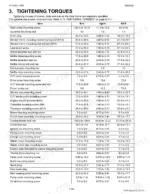
Torque values are given at the fitting level. Size 02 hydraulic hose fittings with a 1/8 thread side tighten to 13.8 to 15.6 N·m (1.40 to 1.60 kgf·m), while ϕ4 × t1.0 hydraulic pipe cap nuts tighten to 19.7 to 29.4 N·m (2.00 to 3.00 kgf·m). Broader figures such as system pressure or flow rate are not listed; the manual stays at component-level torques.
What do I get after purchasing this Kubota RTV400Ci manual?
A 302-page Service Manual in searchable PDF format, available the moment you complete checkout. View it on a computer, tablet, or phone, with no shipping wait.
Can I print specific sections of this Kubota RTV400Ci Service Manual?
None at all. The PDF is DRM-free, so print whatever sections you want to take out to the shop. Standard letter or A4 paper works.
Are there wiring harness diagrams in this Kubota RTV400Ci manual?
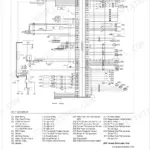
Yes, this Kubota RTV400Ci Service Manual includes complete electrical wiring diagrams, wire routing, and connector pinouts.
Document Quality
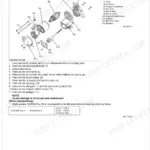
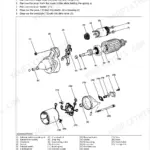
This document is a scanned PDF with an OCR text layer, allowing you to search and copy text throughout the manual. The text is generally crisp and easy to read. Diagrams and illustrations are raster images, meaning they are photos or scans, but their labels are mostly clear and legible. Pages are clean, well-aligned, and free from significant scan artifacts or marks. Note that several pages serve as section dividers, containing only a title.

Reviews
There are no reviews yet.