
This Kubota L3200, L3800 workshop manual PDF covers both drivetrain variants of Kubota's compact tractors, manual transmission and HST, from raw engine teardown through full electrical diagnostics across its 470 pages. Hydraulic schematics trace every circuit in the three-point hitch and power steering systems, wiring diagrams cover both transmission types, and 18 pages of troubleshooting span clutch slippage, HST performance, brakes, and the Operator Presence Control system. The torque tables run from general metric hardware to hydraulic pump bolts, backed by 100 pages of exploded views that walk each disassembly sequence. Fill your L3800 crankcase to 7.1 L (7.5 U.S. qts) with filter, top off the 38.0 L fuel tank, and set coolant to 6.0 L before first fire. Stop chasing specs across forum threads. Download it, pull it up on your phone, and get back to wrenching.
What's Inside This Kubota L3200, L3800 Manual
| System | Pages | Key Topics |
|---|---|---|
| General | 16-81 | Tractor Identification (Model Name and Serial Numbers, Cylinder Number) |
| Engine | 82-162 | Fuel System, Lubricating System, Cooling System, Features, Preparation (Manual Transmission Type, HST Type) |
| Clutch | 163-192 | Preparation (Separating Clutch Housing Case from Engine), Structure |
| Transmission | 193-289 | Manual Transmission Type (Power Train, Shift Linkage Mechanism, PTO System), HST Type (Power Train, HST Pedal Control Linkage, Cruise Control |
| Rear Axle | 290-302 | Structure |
| Brakes | 303-318 | Operation, Features |
| Front Axle | 319-338 | Structure |
| Steering | 339-356 | Steering Gear Box (Structure, Operation), Hydraulic Circuit, Structure |
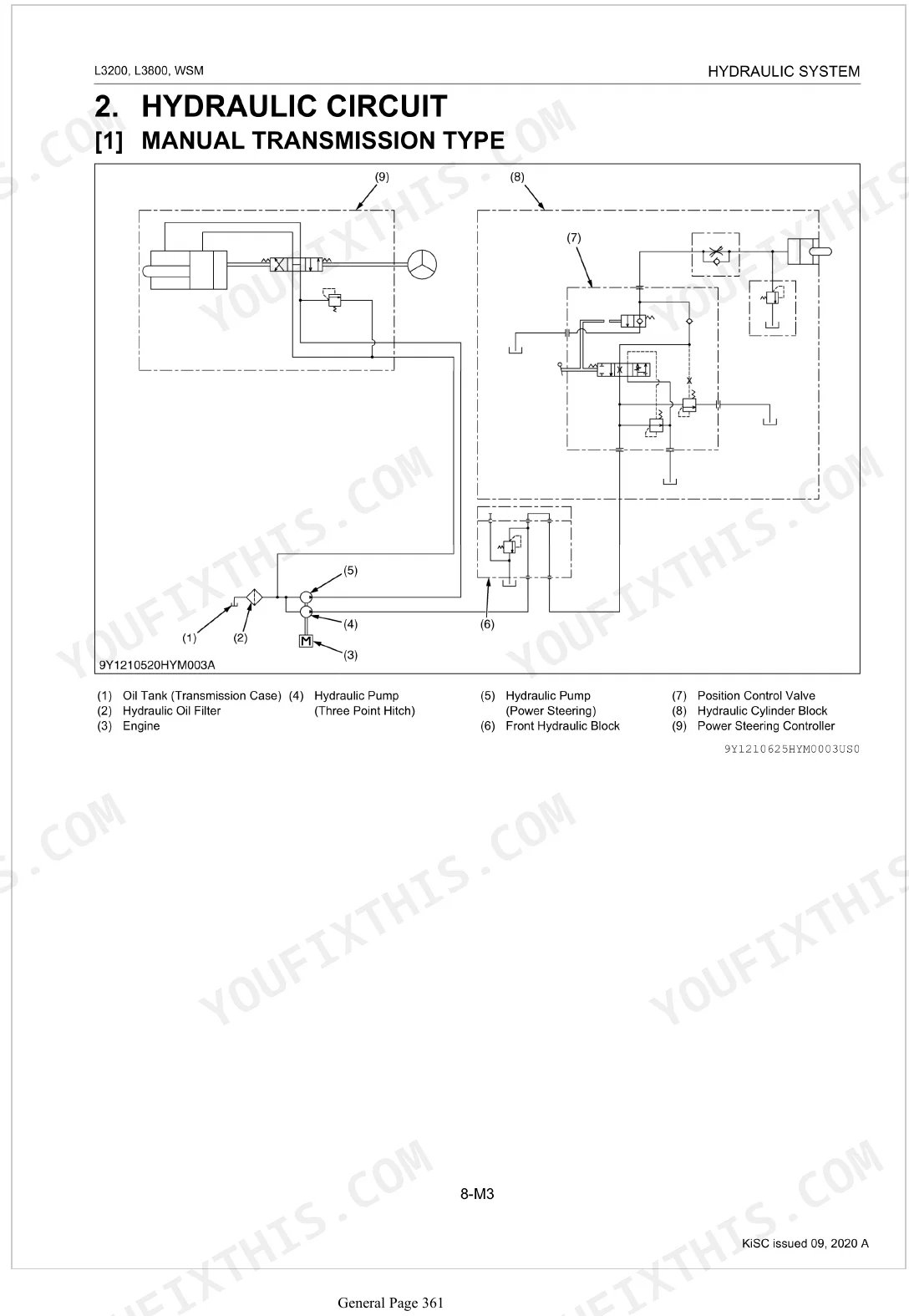
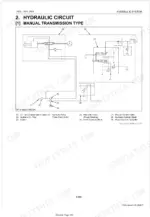
| Hydraulic System | 357-400 | Hydraulic Pump, Three Point Hitch Hydraulic System (Hydraulic Cylinder, Linkage Mechanism, Operation, Front Hydraulic Block), Hydraulic Circuit (Manual Transmission Type, HST Type) |
| Electrical System | 401-470 | Wiring Diagram (Manual Transmission Type, HST Type), Electrical Circuit (Manual Transmission Type, Instrument Panel (Indication Items of Meter Panel, Easy Checker™™) |
Every system also includes tightening torques, disassembling and assembling, servicing, troubleshooting, checking and adjusting, and servicing specifications.
Quick Reference Specifications
| Specification | Value | Page |
|---|---|---|
| All Models | ||
| Fuel tank capacity | 38.0 L (10.0 U.S.gals, 8.4 Imp.gals) | p. 26 |
| Engine Coolant Capacity | 6.0 L (6.3 U.S.qts, 5.3 Imp.qts) | p. 12 |
| Transmission Case Capacity (Manual Transmission) | 27.5 L (7.3 U.S.gals, 6.1 Imp.gals) | p. 12 |
| Transmission Case Capacity (HST) | 23.5 L (6.2 U.S.gals, 5.2 Imp.gals) | p. 12 |
| Front Axle Case Capacity | 4.5 L (4.8 U.S.qts, 4.0 Imp.qts) | p. 12 |
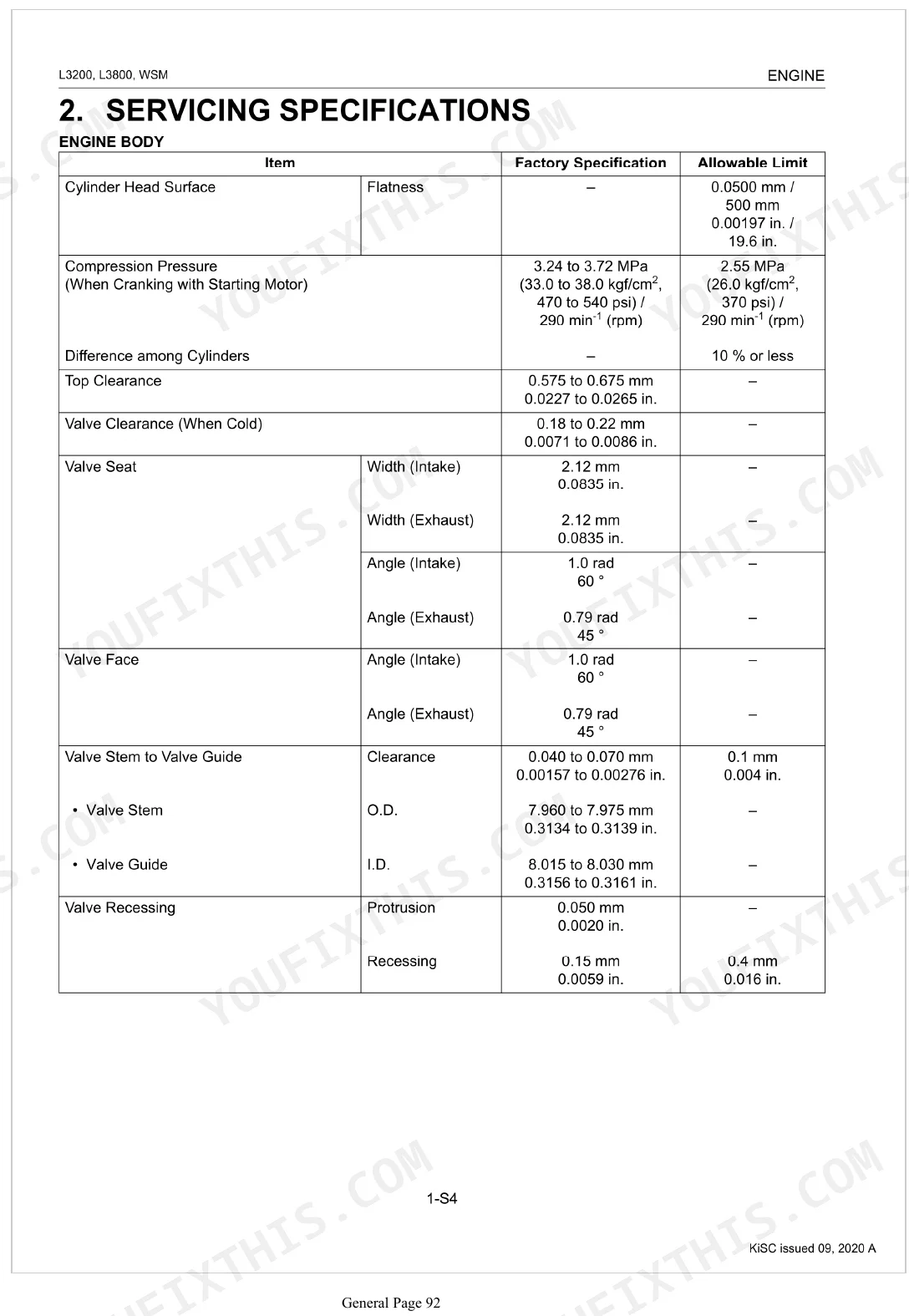
| Cylinder Head Surface Flatness Allowable Limit | 0.0500 mm | p. 92 |
| Valve Clearance (When Cold) | 0.18 to 0.22 mm | p. 92 |
| Fan Belt Tension (Deflection) | 7.0 to 9.0 mm | p. 97 |
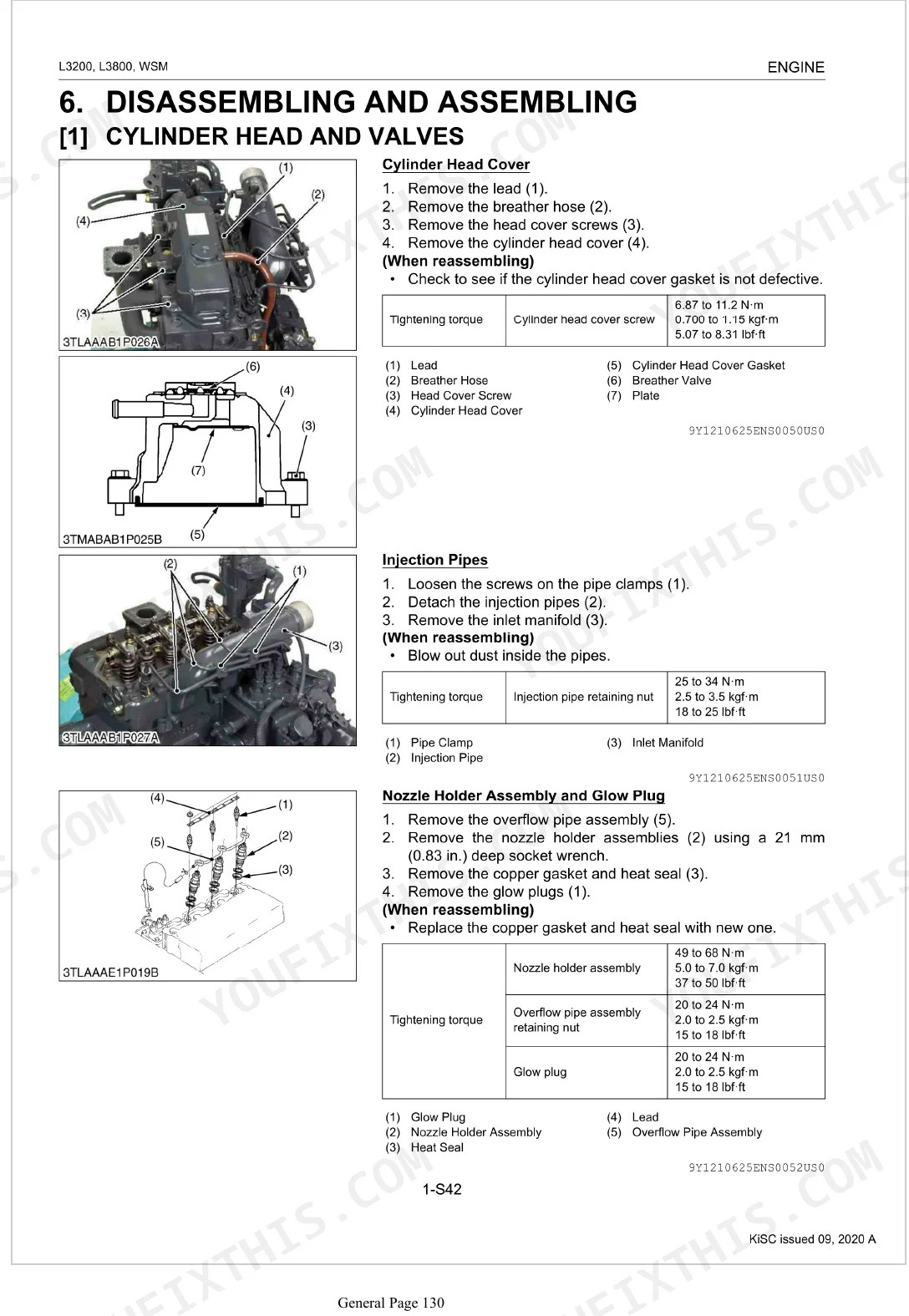
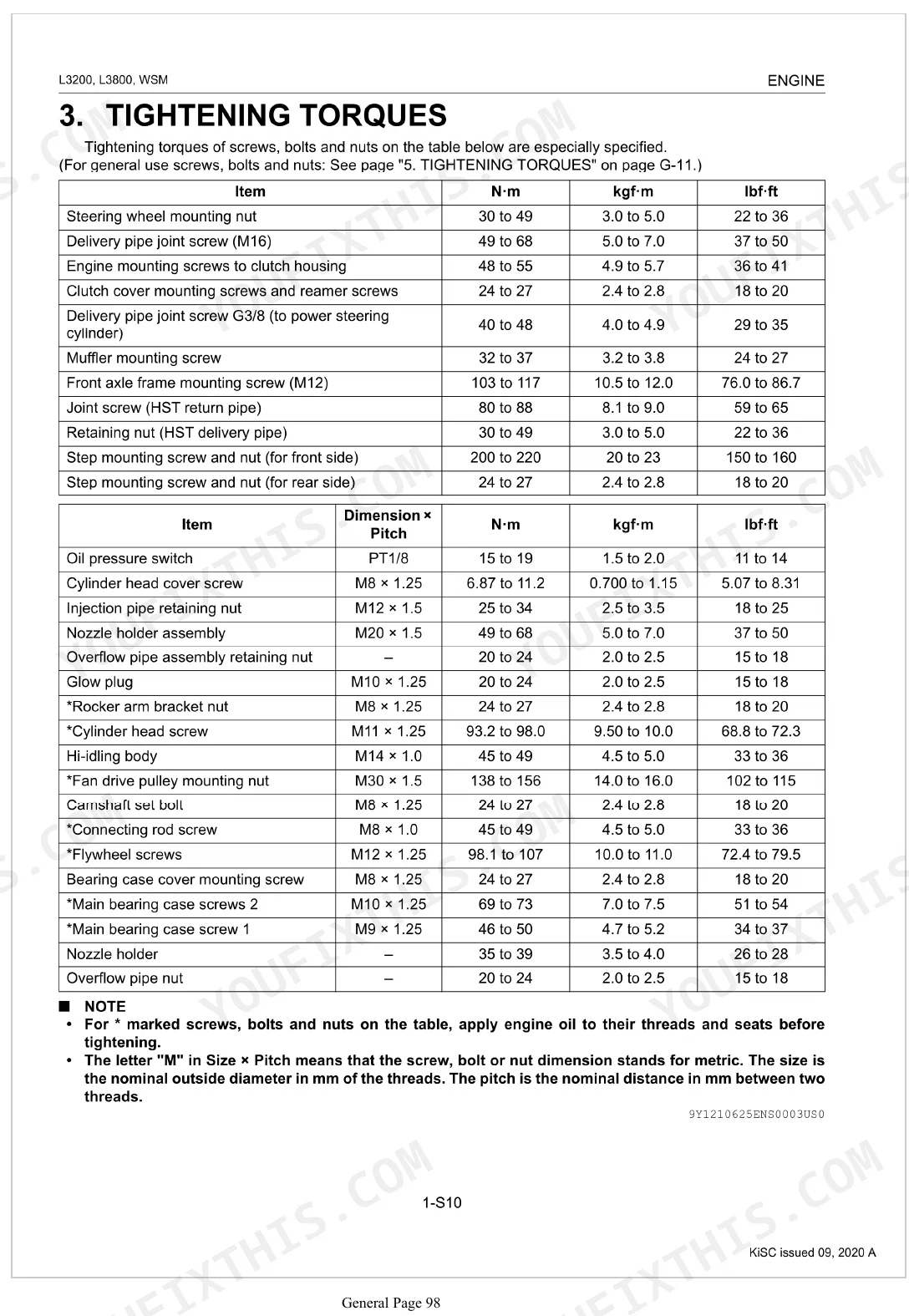
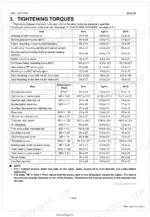
| Nozzle Holder Assembly Tightening Torque | 49 to 68 N·m | p. 98 |
| L3200 | ||
| Engine crankcase (with filter) capacity | 5.7 L (6.0 U.S.qts, 5.0 Imp.qts) | p. 26 |
| Engine Oil Capacity (with filter) | 5.7 L (6.0 U.S.qts, 5.0 Imp.qts) | p. 12 |
| L3800 | ||
| Engine Oil Capacity (with filter) | 7.1 L (7.5 U.S.qts, 6.2 Imp.qts) | p. 12 |
Kubota L3200, L3800 Common Problems This Manual Covers
Kubota L3200 engine won't start or cranks slowly in cold weather conditions
Start with the glow plugs: torque spec is 20 to 24 N·m if you pulled and reinstalled them. Battery terminals should be clean and tight; from there, confirm the fuel shutoff valve is open and the tank isn't empty. Inspect the fuel filter for water or sediment. If it cranks but won't fire, bleed the fuel system and retest.
Manual Section: EngineThree-point hitch won't raise under load or raises too slowly p. 373
Confirm the hydraulic fluid level first: transmission case capacity is 27.5 L (7.3 U.S. gals) for manual transmission or 23.5 L (6.2 U.S. gals) for HST. Look at the hydraulic filter for restriction, then make sure the position control lever moves freely through its full range. If the implement still hunts or fails to lift, work through the hydraulic troubleshooting sequence on page 373 to isolate pump pressure from the control valve.
Manual Section: Hydraulic SystemSteering pulls to one side or requires excessive effort to turn p. 346
Even out the front tire pressures first; uneven inflation is the cheapest cause to rule out. Check the power steering fluid level and look over the lines for leaks. Fan belt deflection should sit at 7.0 to 9.0 mm (page 97). If effort stays high or the tractor keeps pulling after those checks, move to the steering troubleshooting chart on page 346 to test operating pressure and isolate the gear box or cylinder.
Manual Section: SteeringBrake pedal spongy, uneven stopping force left to right, or pedal travels to floor p. 308
Measure brake pedal free travel on both sides: spec is 15 to 20 mm. Adjust the shorter-traveling side first so the pedals match before chasing anything else. If pedal feel stays soft afterward, bleed air from the lines. When braking force is still uneven or weak after adjusting and bleeding, inspect the brake components per the troubleshooting procedures on page 308.
Manual Section: BrakesClutch drags, slips under load, or chatters on engagement p. 167
Inspect the clutch pedal free play before any disassembly; an out-of-spec pedal is the most common cause of drag and slip. Oil on the disc causes chatter, so trace any leak to the rear main seal or transmission input before you replace the disc alone. For full diagnosis, including slip under PTO load and vibration complaints, follow the clutch troubleshooting table on page 167.
Manual Section: ClutchHST transmission loses pulling power or overheats during field work
Gauge the HST fluid level first; capacity is 23.5 L (6.2 U.S. gals). Clear the external HST cooler lines and screen of any blockage or kinking. Make sure the tractor isn't being lugged, since HST units overheat fast when the speed range is too high for the load. If power loss or overheating continues after the fluid and cooling checks, work through the HST troubleshooting sequence to test system pressure and the neutral stop function.
Manual Section: TransmissionFrequently Asked Questions
What are the recommended service intervals?
The maintenance check list lays out an interval for each task. Greasing comes due every 50 hours, while engine oil and the transmission oil filter both go every 200 hours. Longer intervals include checking fuel injection nozzle pressure every 1500 hours, plus flushing the cooling system and changing the coolant every 2 years.
What fluids and capacities does this machine require?
Each component takes a specific fluid and capacity. The fuel tank holds 38.0 L (10.0 U.S.gals, 8.4 Imp.gals) of No. 2-D diesel. The L3200 engine crankcase with filter takes 5.7 L (6.0 U.S.qts, 5.0 Imp.qts) of SAE30, 10W-30 or 15W-40 engine oil. The manual transmission case holds 27.5 L (7.3 U.S.gals, 6.1 Imp.gals) of KUBOTA UDT or SUPER UDT fluid, and the front axle case needs 4.5 L (4.8 U.S.qts, 4.0 Imp.qts) of the same UDT fluid or SAE 80-90 gear oil.
How to troubleshoot engine won't start?
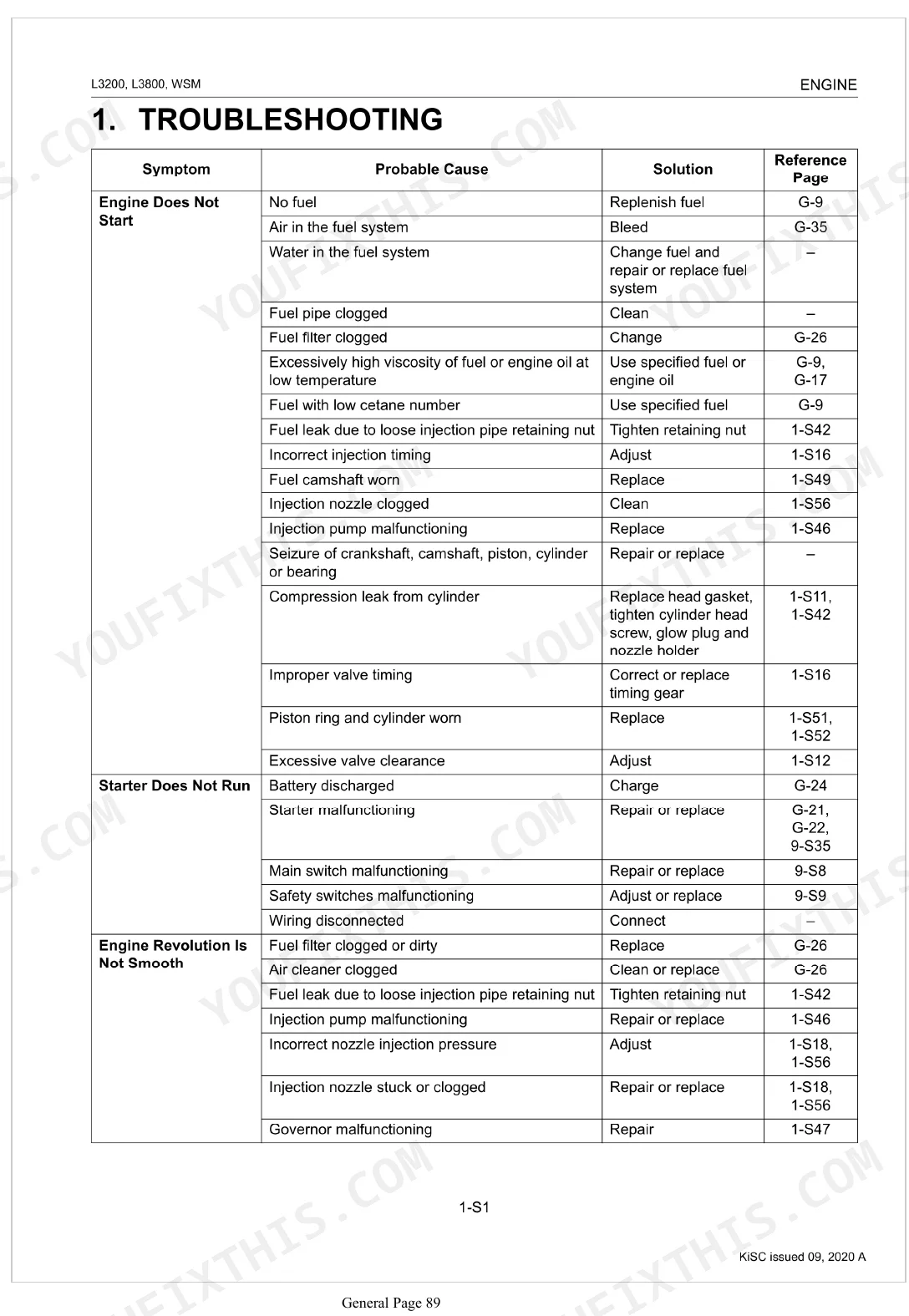
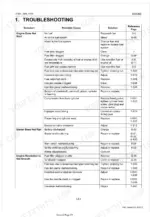
A no-start traces back to a handful of causes. Out of fuel? Replenish it (page G-9). Air in the fuel system needs bleeding (page G-35), and a clogged fuel filter should be changed (page G-26). Incorrect injection timing calls for adjustment (page 1-S16), while a compression leak from the cylinder may mean replacing the head gasket or tightening the cylinder head screws (pages 1-S11, 1-S42).
What are the hydraulic system specifications?
On the L3200, hydraulic pump delivery at rated pressure runs above 15.0 L/min (3.96 U.S.gals/min, 3.30 Imp.gals/min). Relief valve setting pressure is 15.7 to 16.6 MPa (160 to 170 kgf/cm², 2280 to 2410 psi). The cylinder safety valve operates at 19.7 to 22.5 MPa (200 to 230 kgf/cm², 2850 to 3270 psi), and lift arm free play at the maximum raising position is 10 to 15 mm (0.40 to 0.59 in.).
How will I receive this Kubota L3200, L3800 Workshop Manual?
Immediate download of the complete 470-page searchable Workshop Manual. Open it on any device, whether that's the laptop at your desk or your phone in the field.
Can I print specific sections of this Kubota L3200, L3800 Workshop Manual?
Absolutely. No DRM or copy protection. Print the whole manual or just the pages you need. Any home or office printer works.
Does this Kubota L3200, L3800 Workshop Manual have electrical diagrams?
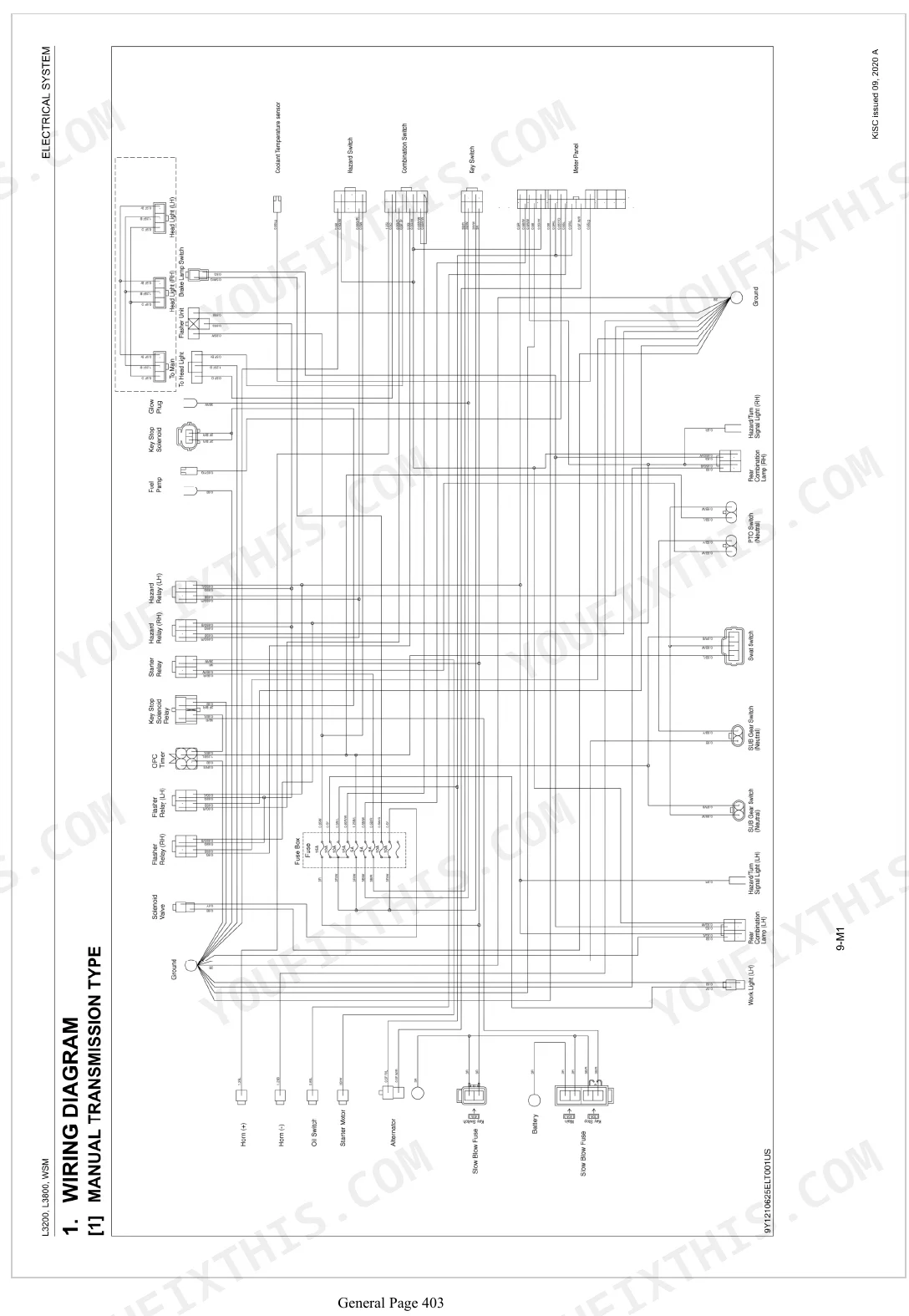
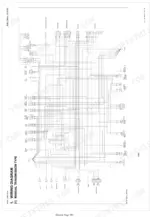
Complete wiring diagrams are included, covering all electrical circuits, harness routing, and connector pinouts for the Kubota L3200, L3800.
Document Quality
This is a native digital PDF document with an accurate OCR text layer, allowing you to search and copy the full text content. All text throughout the manual is crisp, clear, and very easy to read. Diagrams and illustrations are a mix of sharp, vector-like line drawings and clear photographs, with all labels consistently readable at any zoom level. The pages are clean and uniformly presented, free from scan artifacts, stains, or skewed content. Pages 4 and 16 serve as section title pages for "Information" and "General" respectively.


Reviews
There are no reviews yet.