
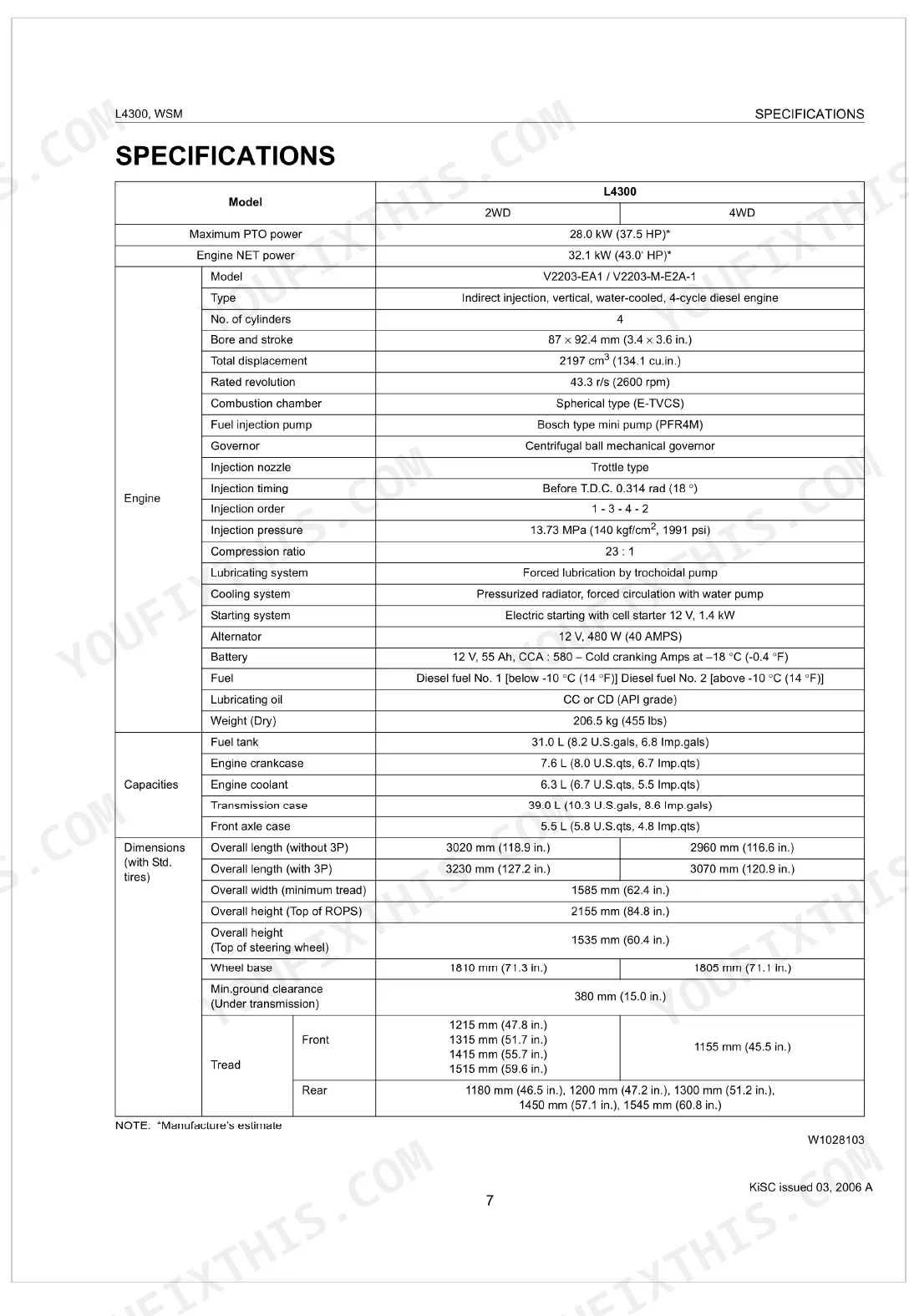
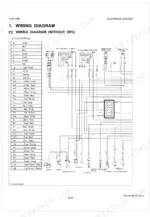
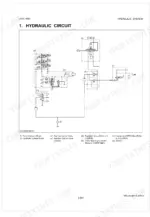
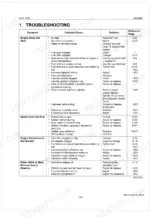

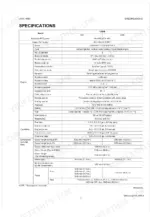
Covering OEM #97897-12793 across 377 pages, this Kubota L4300 Workshop Manual maps the whole tractor from the engine block out to the electrical system. Wiring diagrams cover both OPC and non-OPC configurations; hydraulic schematics trace the three-point system and the power steering circuit. A full 100 pages of exploded-view drawings break down every major assembly, and 13 pages of troubleshooting walk through the travelling clutch, PTO, brakes, front axle, and steering. Service intervals span daily checks through the 3,000-hour points, so nothing slips past its due date. Fill the transmission case to 39.0 L, the crankcase to 7.6 L, and confirm the 4WD front axle holds 5.5 L before reassembly. Bookmarks and keyword search pull any value up in seconds, whether you're reading on a phone, tablet, or laptop beside the machine.
What's Inside This Kubota L4300 Manual
| System | Pages | Key Topics |
|---|---|---|
| General | 12-65 | Feature, Tractor Identification, Handling Precautions for Electrical Parts and Wiring (Battery, Fuse, Connector, Handling of Circuit Tester), Lubricants, Fuel and Coolant |
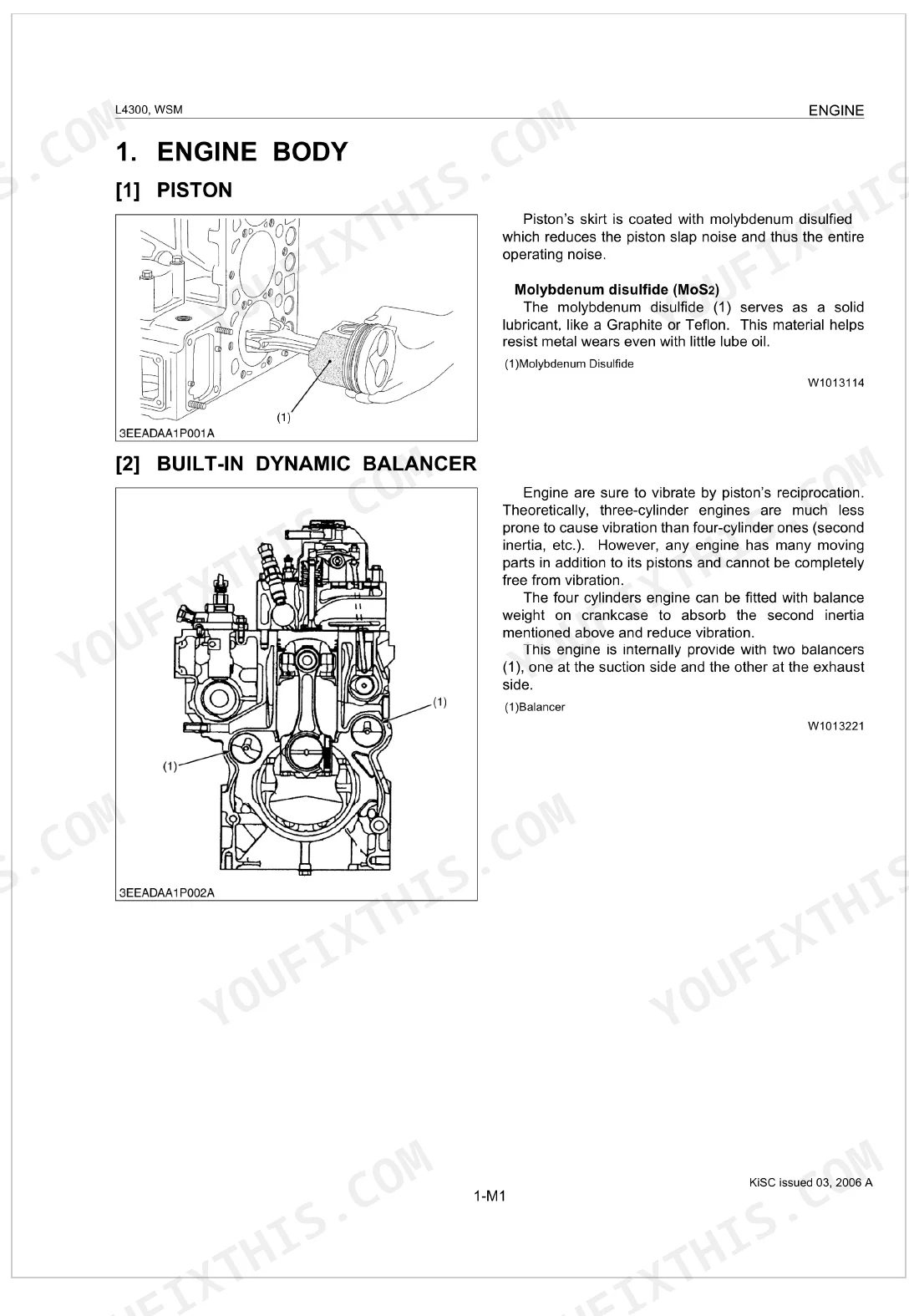
| Engine | 66-129 | Engine Body (Piston, Built-in Dynamic Balancer, Half-Floating Head Cover), Fuel System, Lubricating System |
| Clutch | 130-156 | Travelling Clutch (Features, Linkage Mechanism), Operation, Hydraulic PTO Clutch (Structure, Oil Flow), Shift Linkage, Troubleshooting (Travelling Clutch, PTO Clutch) |
| Transmission | 157-194 | Structure, Power Train (Main Gear Shift Section), Hi-Lo Range Gear Shift Section (Front Wheel Drive Section), Rear PTO Shift Section |
| Rear Axle | 195-203 | Features, Troubleshooting, Tightening Torques, Checking, Disassembling and Servicing (Disassembling and Assembling, ROPS and Rear Wheel), Rear Axle Case, Disassembling Rear Axle |
| Brakes | 204-217 | Features, Operation, Troubleshooting, Servicing Specifications, Tightening Torques, Checking, Disassembling and Servicing (Brake Pedal, Brake Case, Rear Wheels, Rear Axle Case) |
| Front Axle | 218-244 | Structure (2Wd Type, 4Wd Type), Front Wheel Alignment (Camber, Kingpin Angle, Caster), Toe-in, Troubleshooting, Servicing Specifications (2Wd Type, 4Wd Type, 4WD TYPE Continued) |
| Steering | 245-281 | Features, Hydraulic Circuit for Power Steering System, Power Steering System Hydraulic Pump, Steering Controller (Control Valve, Metering Device, Relief Valve), Oil Flow |
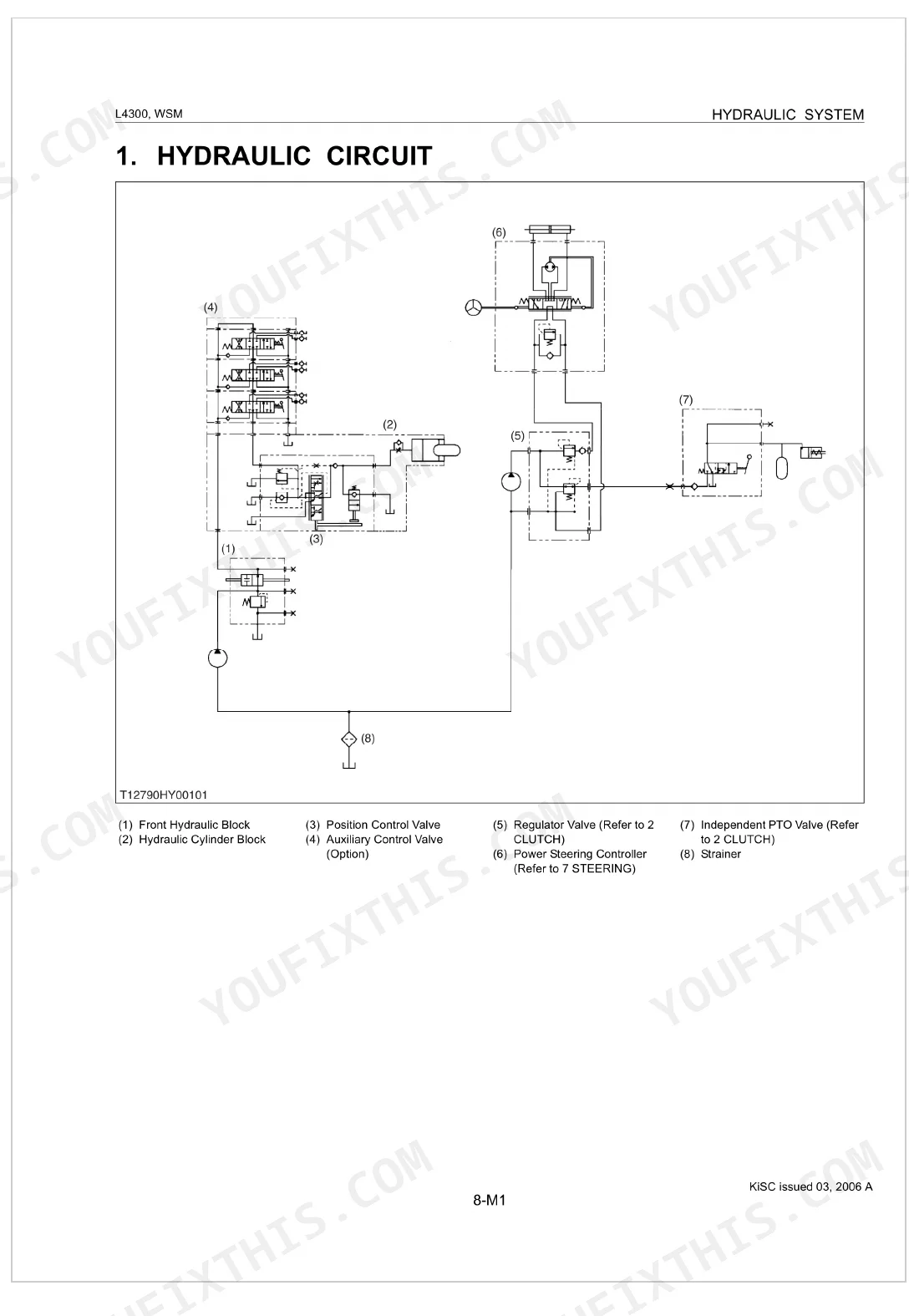
| Hydraulic System | 282-321 | Hydraulic Circuit, Structure, Hydraulic Circuit for Three Point Hydraulic System |
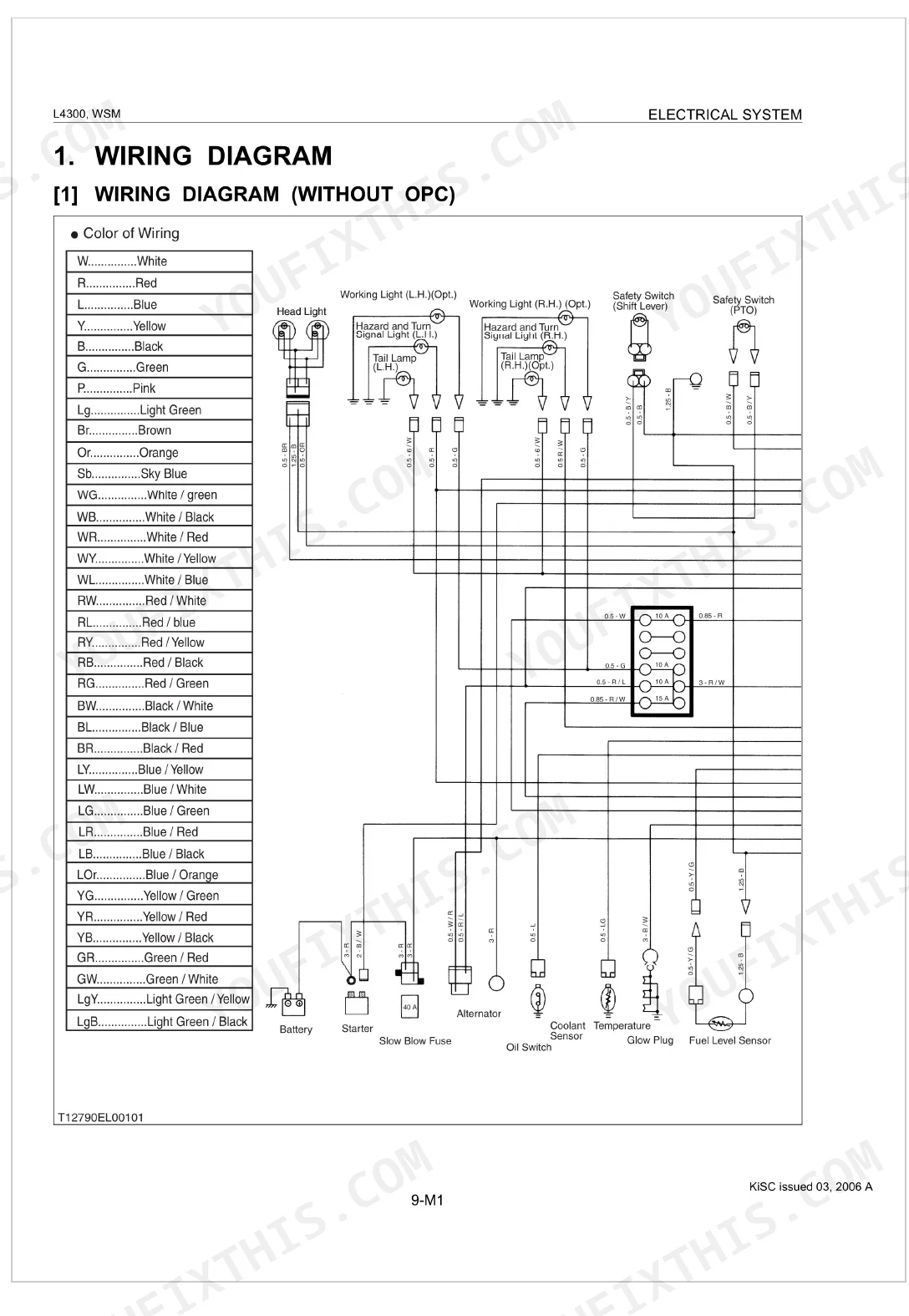
| Electrical System | 322-377 | Wiring Diagram, Electrical Circuit, Starting System (Starter, Glow Plug), Charging System (Alternator, IC Regulator), Lighting System (Head Light, Turn Signal Light, Hazard Light) |
Quick Reference Specifications
| Specification | Value | Page |
|---|---|---|
| Fuel tank capacity | 31 L | p. 21 |
| Engine crankcase capacity | 7.6 L | p. 21 |
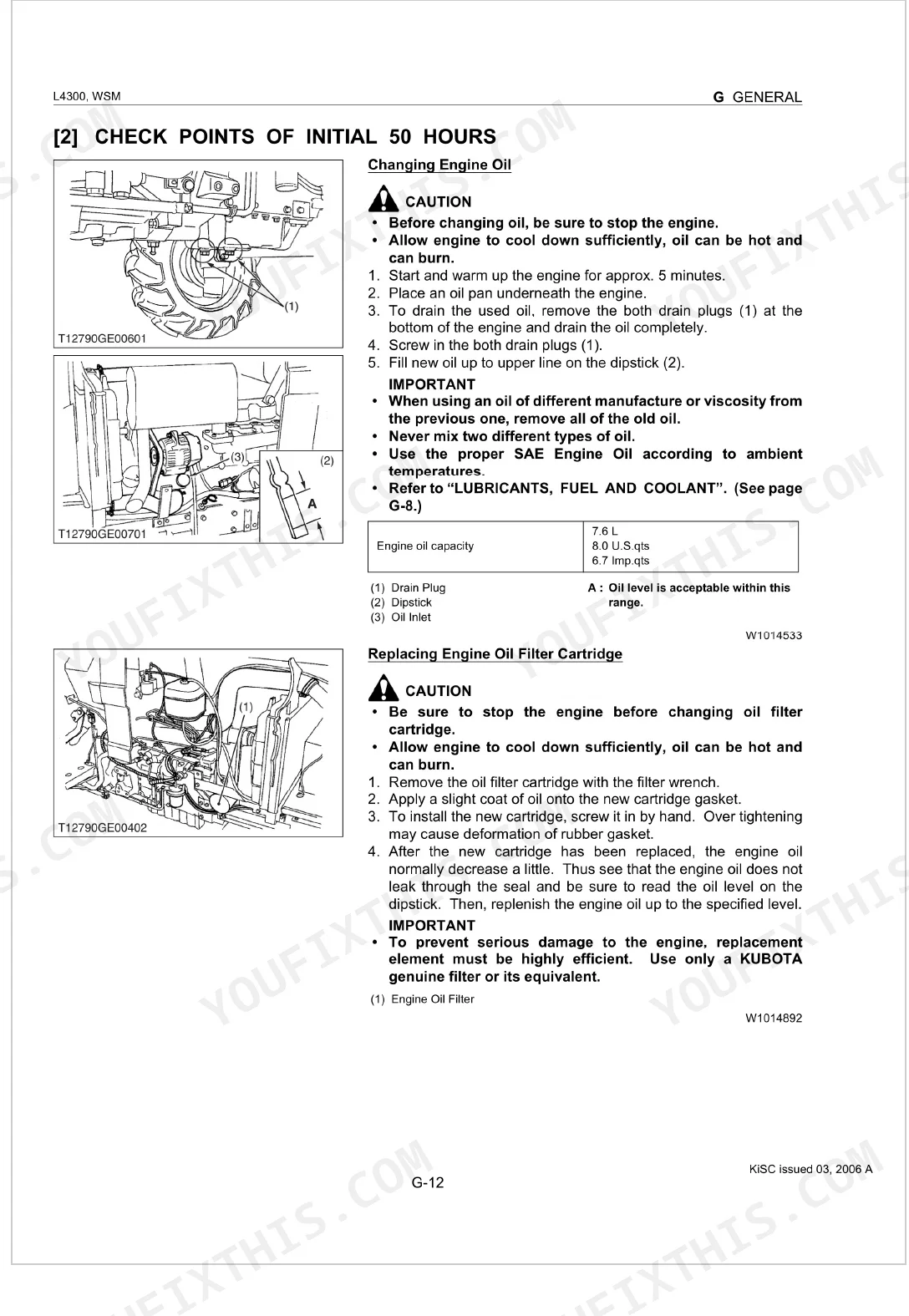
| Engine Oil Capacity | 7.6 L | p. 25 |
| Transmission Fluid Capacity | 39 L | p. 26 |
| Engine Oil Filter Cartridge Replacement Interval | 200 hours | p. 23 |
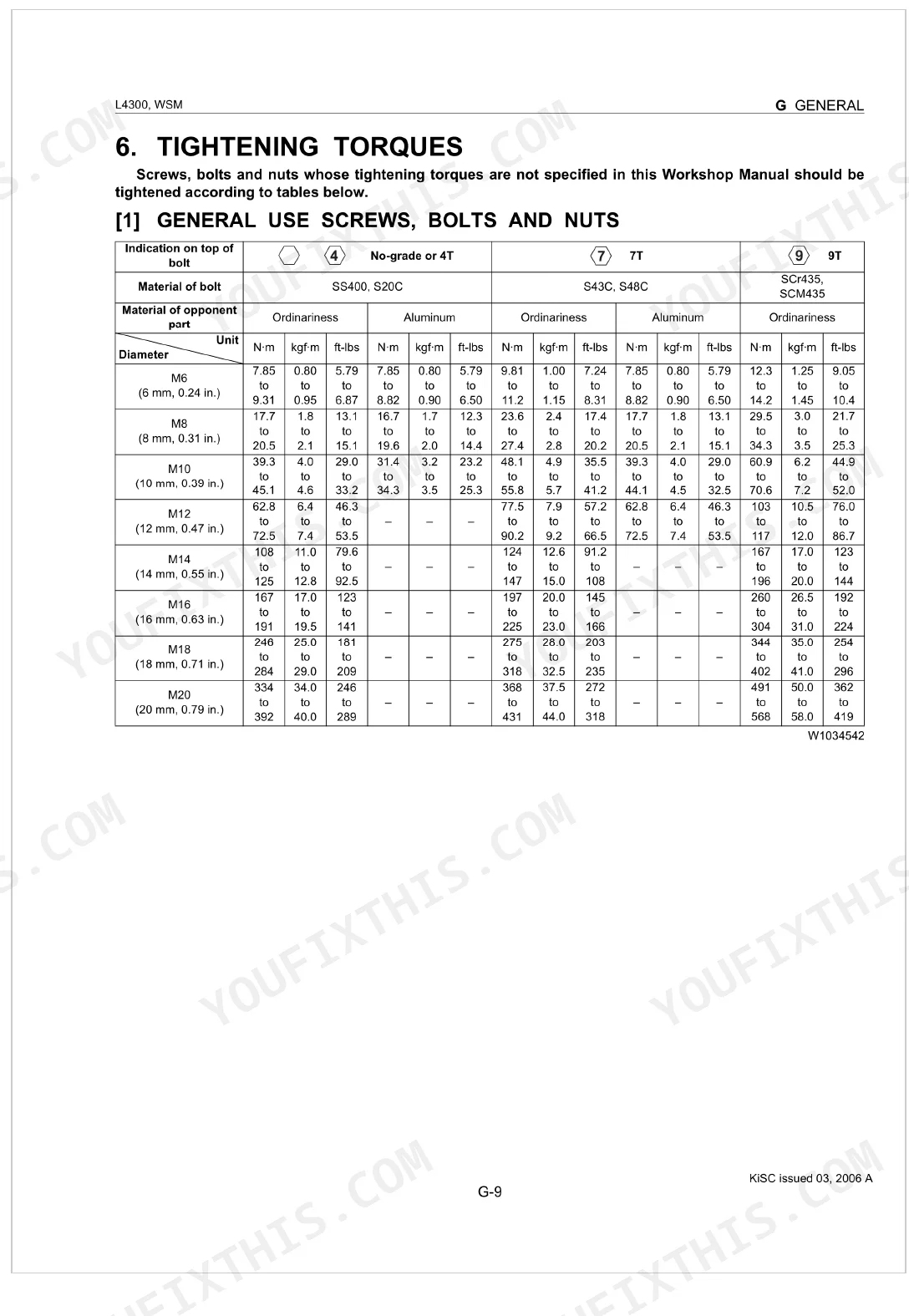
| Cylinder Head Screws Tightening Torque | 93.1 to 98.0 N·m | p. 29 |
| Clutch Pedal Free Play | 20 to 30 mm | p. 33 |
| Rear Wheel Mounting Screws and Nuts Tightening Torque | 197 to 226 N·m | p. 30 |
| Front Axle Case Oil Capacity (4WD) | 5.5 L | p. 27 |
| Fan Belt Tension (Deflection) | 7 to 9 mm | p. 33 |
| Tire Pressure (Rear 14.9-24, 4 PR) | 140 kPa | p. 60 |
| Engine Valve Clearance (When Cold) | 0.18 to 0.22 mm | p. 39 |
Kubota L4300 Common Problems This Manual Covers
Kubota L4300 engine won't start or cranks slowly in cold weather
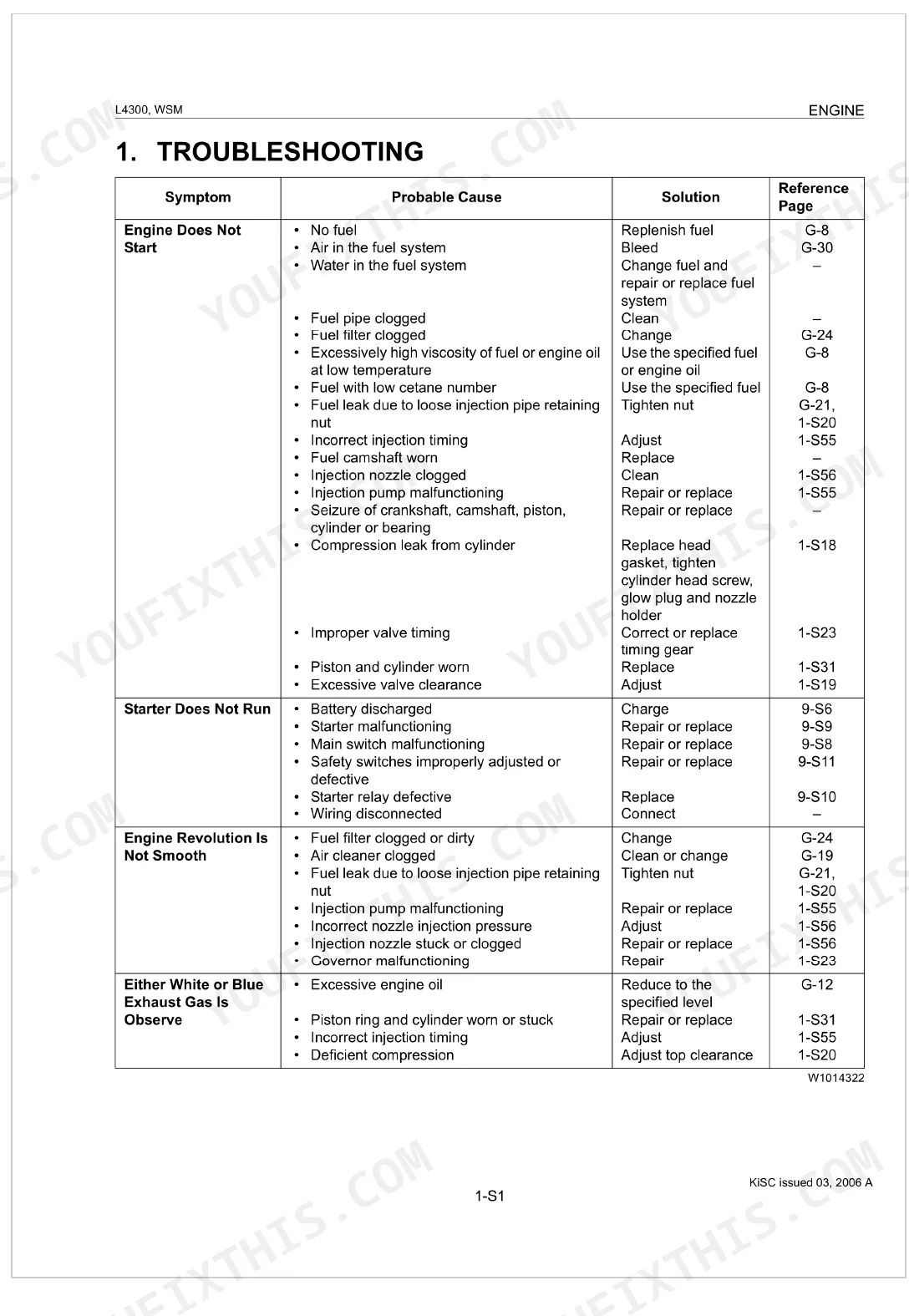
Check the glow plug lamp on the dash before cranking; no light means inspect the glow plug circuit first. Verify oil viscosity is rated for ambient temperature. Test alternator no-load voltage, which should exceed 14 V per the spec on page 351. If battery is good and engine still won't fire, follow the no-start flow.
Manual Section: Engine TroubleshootingHydraulic three-point hitch won't lift implement or stops short of full height
Inspect hydraulic oil level; the transmission case holds 39 L and feeds the hydraulic circuit. Look at the control lever for binding and confirm the lift arm linkage moves freely. Measure pump delivery: rated pressure output should reach 14.8 L/min on 4WD models per page 257. Work through the implement-won't-rise checklist in the Hydraulic System Troubleshooting section.
Manual Section: Hydraulic System TroubleshootingClutch pedal slips or fails to fully disengage when shifting gears
Measure clutch pedal free play; it should fall between 20 to 30 mm per page 33. If free play is outside that range, adjust the linkage before diagnosing internal wear. Inspect the disc for oil contamination from a leaking rear main seal. A dragging clutch often traces to incorrect adjustment rather than disc failure, so set free play first.
Manual Section: Clutch TroubleshootingBattery keeps going dead overnight, tractor won't crank the next morning
Scan the wiring harness for chafed insulation or loose connectors that create a parasitic drain. Test alternator no-load output, which should exceed 14 V per page 351. If alternator is good but battery still discharges overnight, pull fuses one at a time while monitoring current to isolate the draw. Clean and tighten all terminal connections first.
Manual Section: Electrical System TroubleshootingTransmission gears grind on engagement or pop out of mesh during heavy field work
Confirm transmission fluid level; the case holds 39 L and fluid should be changed every 400 hours. Low or degraded fluid accelerates gear wear. Look over the shift linkage rods for looseness or bending before splitting the case. Verify no slop in the shift forks; gear clash at the point of engagement usually means fork or synchronizer wear, not just fluid condition.
Manual Section: Transmission TroubleshootingBrakes pull hard to one side or take full pedal force to stop
Examine both brake assemblies for contamination from axle seal leaks before adjusting pedal height. Check left-right pedal linkage for equal travel; uneven braking almost always starts with contaminated lining on one side. Verify tire pressures match spec: 140 kPa on rear 14.9-24 tires per page 60, since unequal inflation can mimic brake imbalance on soft ground.
Manual Section: Brakes TroubleshootingFrequently Asked Questions
What are the recommended service intervals?
Intervals vary by component. Engine oil and its filter both run on a 200-hour change. The hydraulic oil filter swaps out every 100 hours, and the air cleaner primary element needs cleaning every 100 hours, with replacement once a year or after six cleanings.
What fluids and capacities does this machine require?
Each system takes a specific fluid and fill. The fuel tank holds 31 L (8.2 U.S.gals) of No. 2-D diesel fuel. The engine crankcase takes 7.6 L (8.0 U.S.qts) of API service CC or CD class oil, with viscosity chosen by temperature. The transmission case calls for 39 L (10.3 U.S.gals) of KUBOTA SUPER UDT fluid.
How to troubleshoot engine won't start?
A no-start traces back to a handful of causes. Check first for no fuel (replenish, page G-8), air in the fuel system (bleed, page G-30), or a clogged fuel filter (change, page G-24). Less obvious culprits are incorrect injection timing (adjust, page 1-S55) and a clogged injection nozzle (clean, page 1-S56).
What are the hydraulic system specifications?
The pump numbers are tied to operating conditions. At roughly 2600 rpm and an oil temperature of 40 to 60 °C (104 to 140 °F), delivery at no pressure should top 29.5 L/min. Relief valve setting pressure runs 16.2 to 17.2 MPa (165 to 175 kgf/cm²), and the hydraulic cylinder bore I.D. measures 90.000 to 90.050 mm.
Is this Kubota L4300 Workshop Manual a digital download?
Yes, it downloads instantly. The complete 377-page searchable Workshop Manual is available the moment payment clears, ready to open on a laptop, tablet, or phone in the shop.
Can I print this Kubota L4300 manual?
No restrictions at all. Print individual pages, full chapters, or the entire manual. The PDF is completely unlocked.
Can I find hydraulic circuit diagrams in this Kubota L4300 manual?
Yes. The manual includes hydraulic circuit diagrams, system schematics, and component specifications with pressure ratings.
Document Quality
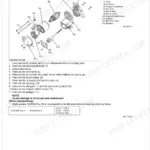
This document is a scanned PDF, but it includes an OCR layer, allowing you to search and copy the full text content. The text is consistently crisp and easy to read throughout, showing good quality from the original scan. Diagrams and illustrations are raster images, which means they are not vector-sharp, but their details and labels are clear and legible. The pages are clean, free from scan artifacts, stains, or skewed content. There are no notable blank or filler pages within the reviewed content.


Reviews
There are no reviews yet.