
Looking for the factory guide to your M8540 Narrow? The 96 pages here run through operating procedures, safety protocols, and maintenance for this narrow-track tractor. Safety coverage takes 6 pages: ROPS work, slope handling, and PTO engagement. Another 28 pages handle operation, including cold-weather starting, foldable ROPS deployment, PTO RPM monitoring, and 3-point hitch control. Implement limitation charts spell out exact drawbar loads, lower link lifting capacity, and cutting widths for your setup. You'll find the fuel tank capacity (60 L) and front wheel bolt torque (260 to 304 N-m) where you need them. Maintenance intervals run from daily checks out to the 3,000-hour mark, with lubricant, fuel, and coolant specs called at each stage. Everything is bookmarked by section, so pull it up on your phone and get back to the job.
What's Inside This Kubota M8540 NARROW Operator Manual
| System | Pages | Key Topics |
|---|---|---|
| Safe Operation | 9-18 | CAB, ROPS, Operating on slopes, Driving the tractor on the road, PTO operation, 3-point hitch usage |
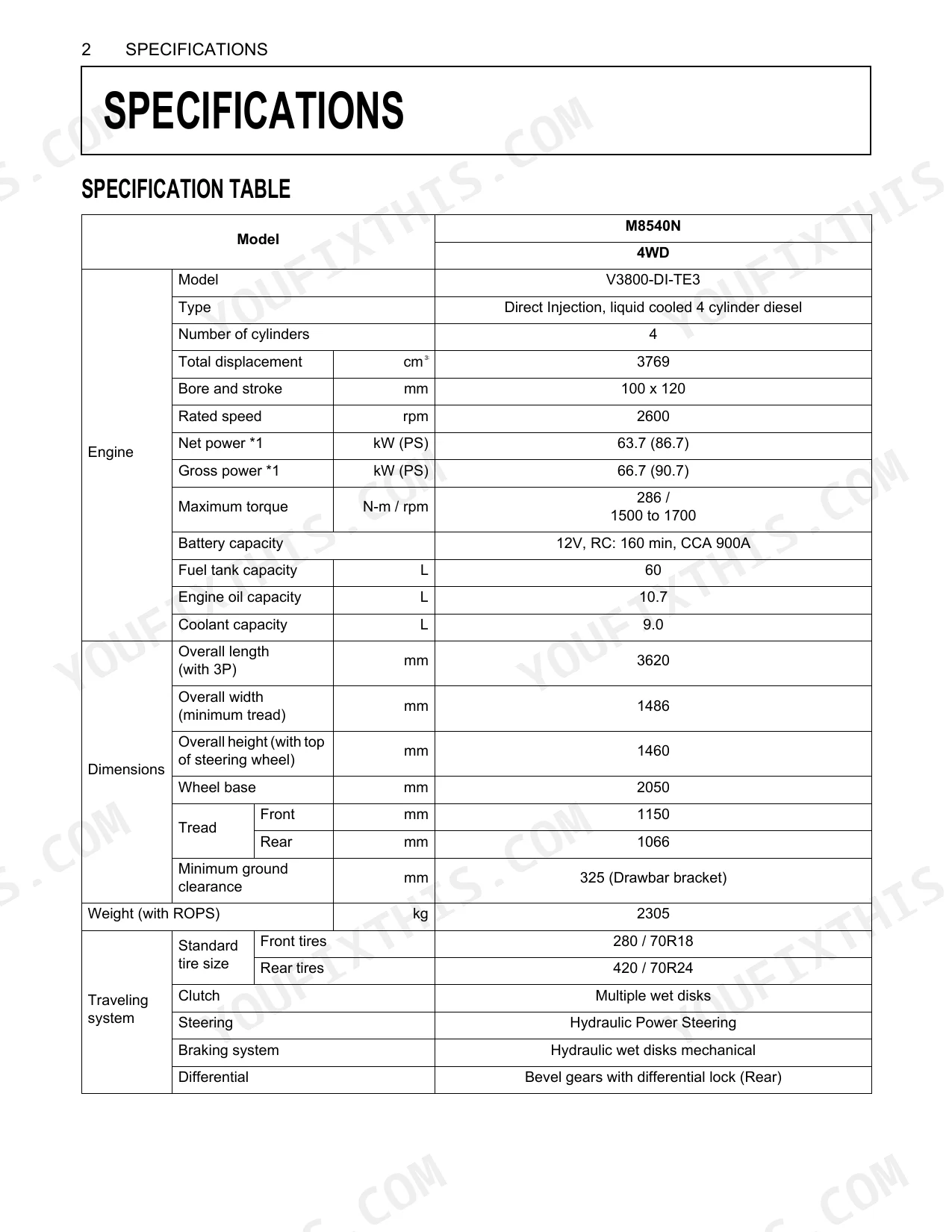
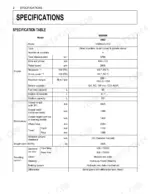
| Servicing of Tractor | 19 | Specifications, Specification table, Traveling speeds |
| Specifications | 20-22 | Specification Table, Travelling Speeds |
| Implement Limitations | 23-24 | Tread width, Lower link lifting capacity, Drawbar load, Implement weight, Trailer loading weight, Cutting width |
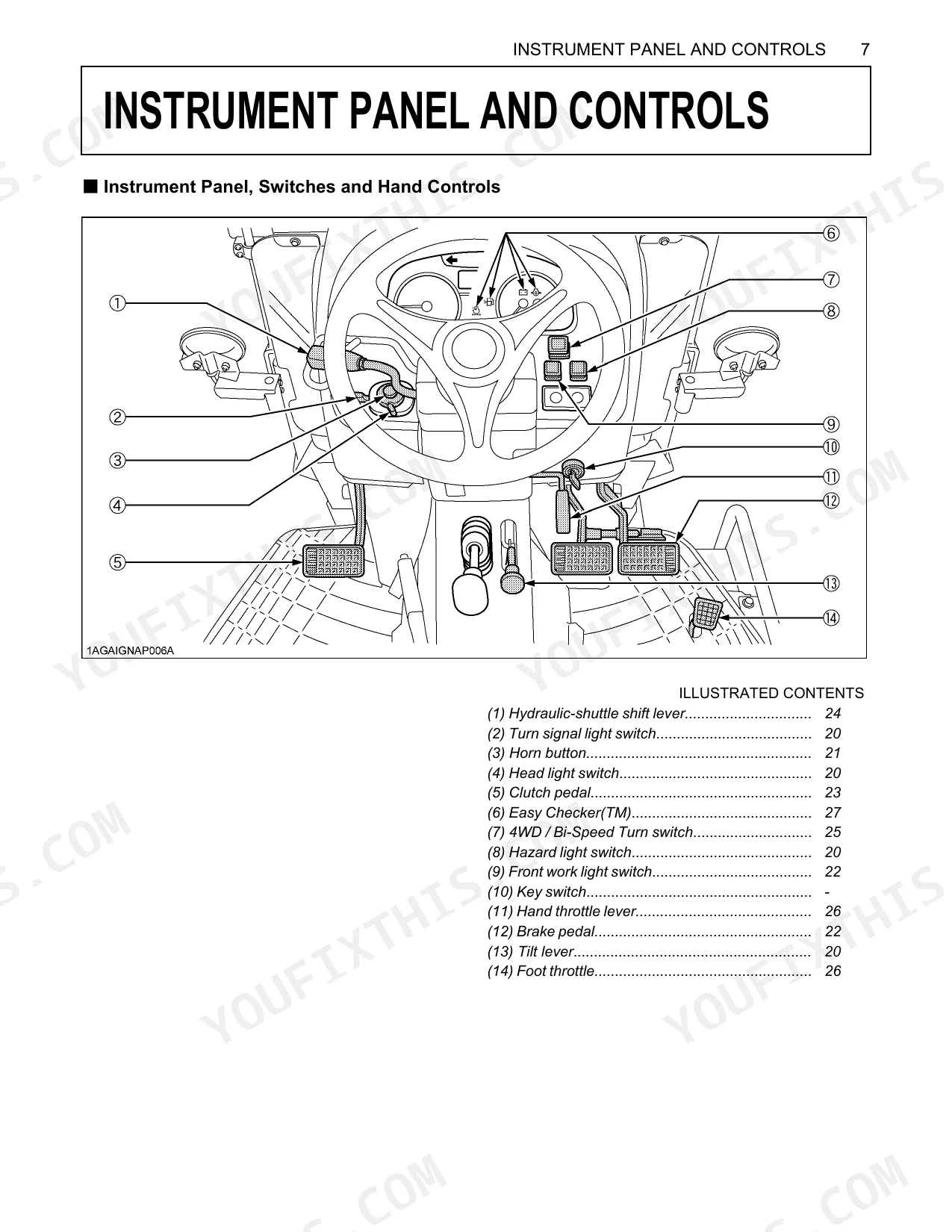
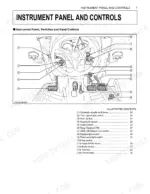
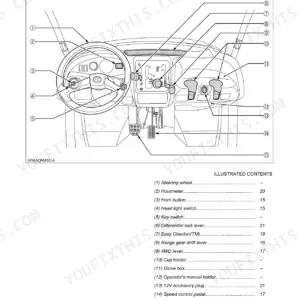
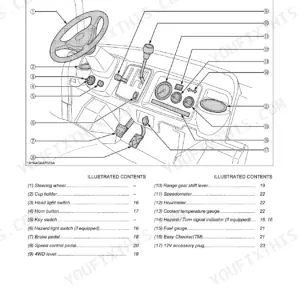
| Instrument Panel and Controls | 25-28 | Instrument Panel, Switches and Hand Controls, Foot and Hand Controls |
| Pre-Operation Check | 29 | Daily Check |
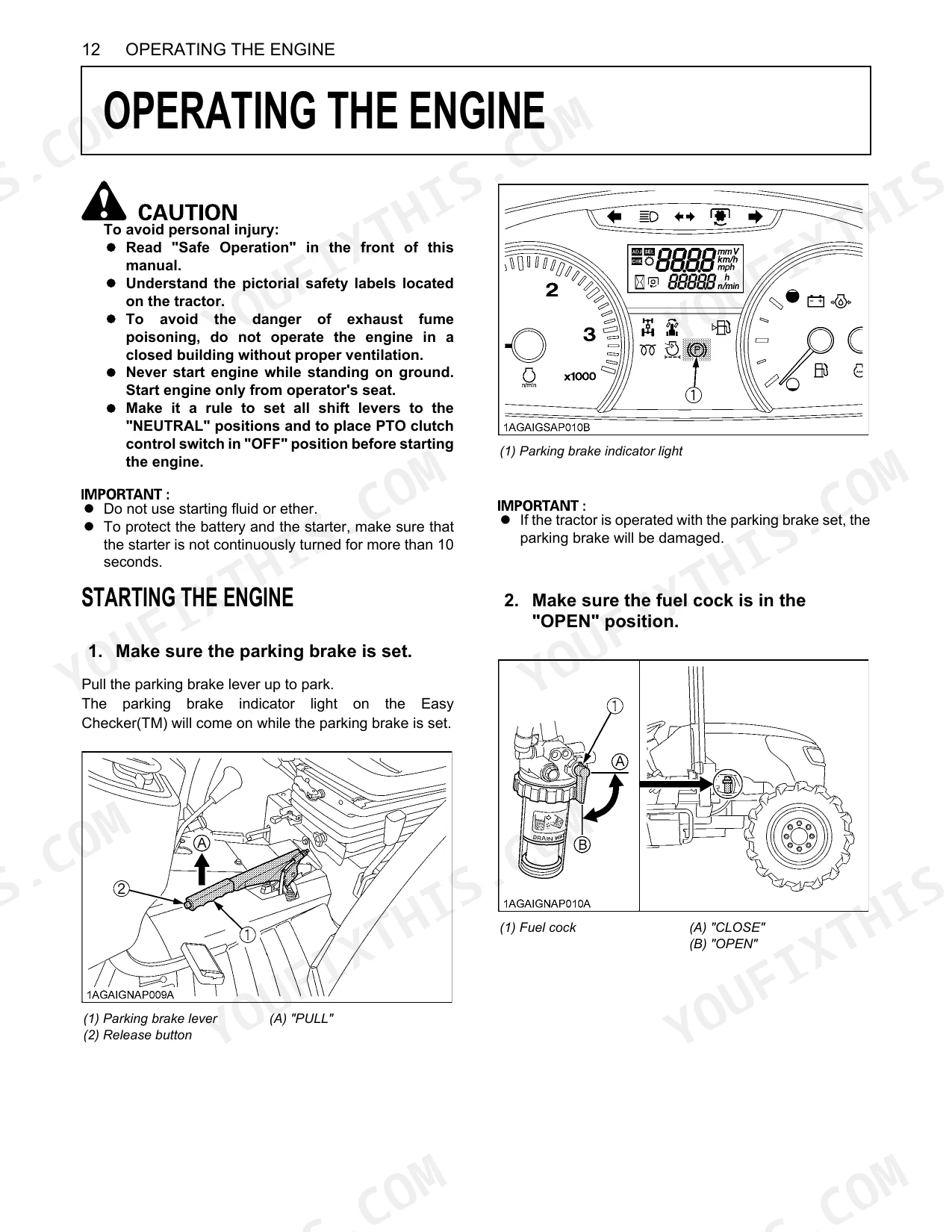
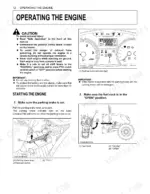
| Operating the Engine | 30-34 | Starting the Engine, Cold Weather Starting, Stopping the Engine, Warming Up, Jump Starting |
| Operating the Tractor | 35-53 | Operating New Tractor, Operating Foldable ROPS, Starting, Stopping, Check During Driving, PTO RPM / Travel Speed Monitor, Parking, Operating Techniques |
| PTO | 54-56 | PTO Operation |
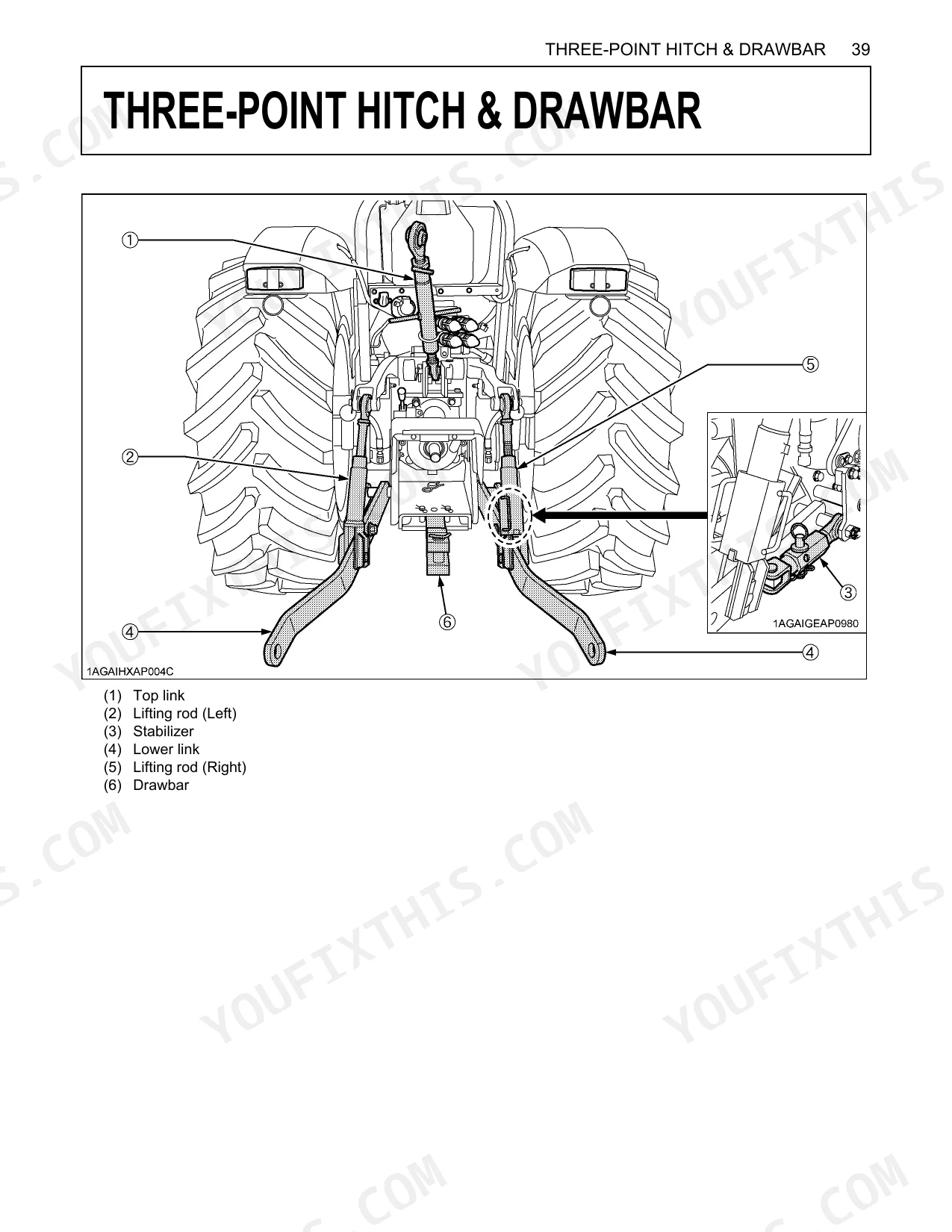
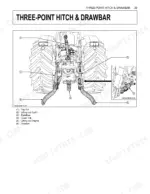
| Three-Point Hitch and Drawbar | 57-61 | 3-Point Hitch, Drawbar |
| Hydraulic Unit | 62-65 | 3-Point Hitch Control System, Remote Hydraulic Control System |
| Tires, Wheels and Ballast | 66-67 | Tires, Ballast |
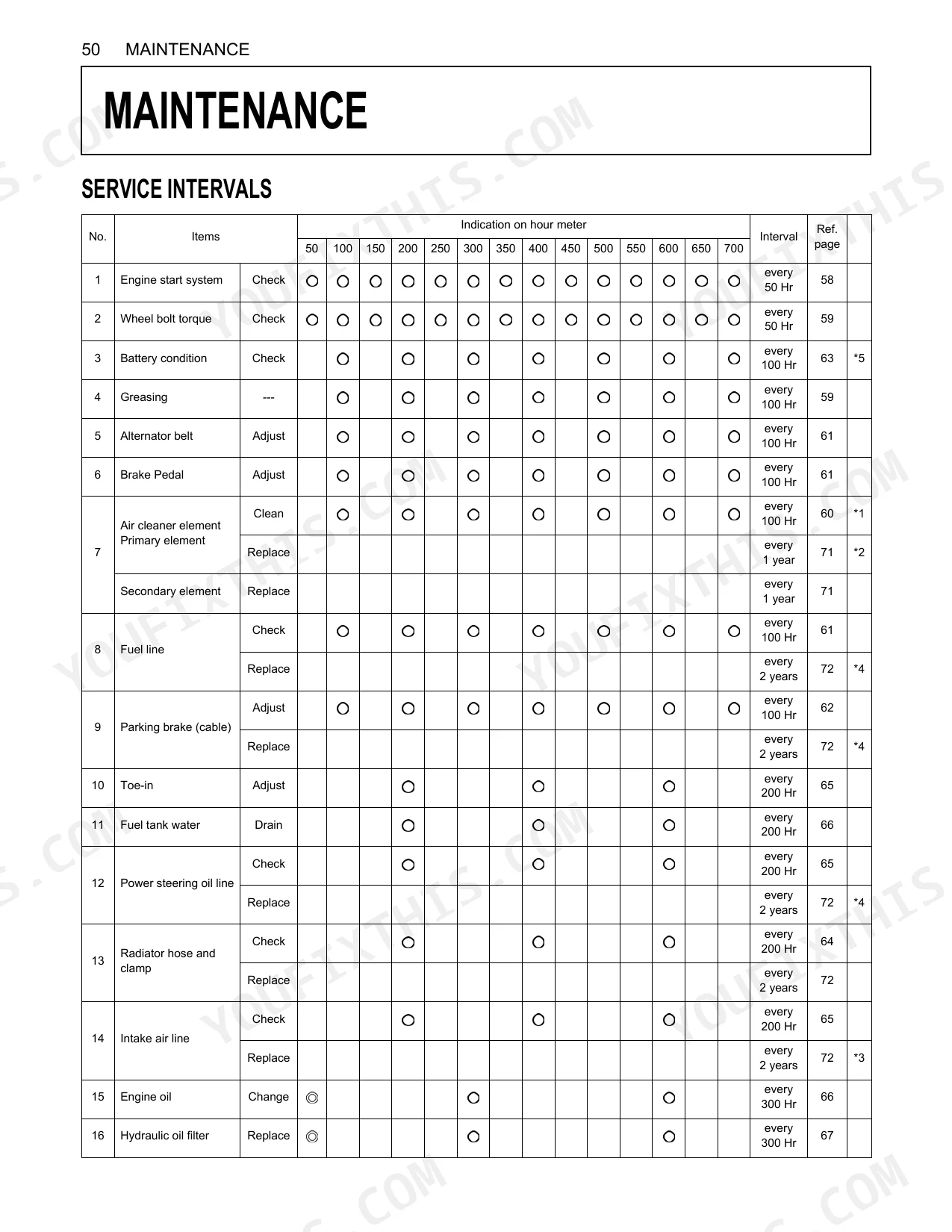
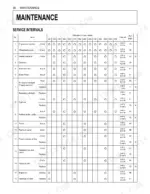
| Maintenance | 68-71 | Service Intervals, Lubricants, Fuel and Coolant |
| Periodic Service | 72-93 | How to Open the Hood, Daily Check, Every 50 Hours, Every 100 Hours, Every 200 Hours, Every 300 Hours, Every 400 Hours, Every 600 Hours |
| Storage | 94 | Tractor Storage, Removing the Tractor From Storage |
| Troubleshooting | 95 | Engine Troubleshooting |
| Options | 96 | Front end weights, Rear wheel weights, Double acting remote hydraulic control valve, Rear work light |
Quick Reference Specifications
| Specification | Value | Page |
|---|---|---|
| Wheel bolt torque (1) | 260 to 304 N-m | p. 77 |
| Wheel bolt torque (2) | 244 N-m | p. 77 |
| Rated engine speed | 2600 rpm | p. 20 |
| Maximum engine torque | 286 N-m | p. 20 |
| Fuel tank capacity | 60 L | p. 20 |
| Engine oil capacity (with filter) | 10.7 L | p. 20 |
| Coolant capacity | 9.0 L | p. 20 |
| Hydraulic system pressure | 19.1 MPa | p. 21 |
| PTO speed | 540 / 2160 rpm | p. 21 |
| Front wheel bolt torque | 260 to 304 N-m | p. 61 |
| Rear wheel bolt torque | 244 N-m | p. 61 |
| Alternator belt deflection | 10 to 12 mm | p. 61 |
Kubota M8540 NARROW Common Problems This Manual Covers
Kubota M8540 NARROW won't start with key, tractor cranks only when solenoid is jumped p. 30
Verify the transmission is in neutral and the PTO lever is fully disengaged before turning the key. Confirm the operator is seated with the seat safety switch active. Review the starting checklist on page 30. Make sure the 60 L fuel tank is not empty, then inspect the battery terminals for corrosion.
Manual Section: Operating the EngineBi-speed turn switch active but front axle steering assist no longer engages p. 35
Confirm the bi-speed turn switch is fully activated at the instrument panel (page 25). Inspect the hydraulic fluid level at the sight glass; the hydraulic section on page 62 lists the correct fill level. The system runs at 19.1 MPa. Look for fluid leaks at the front axle connections.
Manual Section: Operating the TractorEngine warning light stays lit on dash after startup, gauges appear normal p. 25
Start at the warning indicator guide on page 25 to identify which system is flagging. Verify engine oil and coolant sit at their proper levels (10.7 L and 9.0 L capacities). If the lights stay on after the fluid checks, shut the engine down and consult the troubleshooting section on page 95 before resuming work.
Manual Section: Instrument Panel and ControlsEngine loses power and won't pull through soft ground or moderate uphill grades p. 95
Inspect the air filter restriction indicator; a clogged filter starves the engine of intake air. Confirm the 60 L fuel tank holds clean diesel with no water contamination. Work through the daily check items on page 29, then turn to the engine troubleshooting guide on page 95 for the insufficient-power checklist. At full throttle the engine should reach its 2600 rpm rated speed.
Manual Section: TroubleshootingTransmission will not hold third gear position, pops out without operator input p. 35
Stop and verify the gear selector is fully seated in the gate. Review the shifting procedures on page 35 and confirm you are not force-shifting through partial engagement. Measure brake pedal free travel, which should fall between 7 and 14 mm; page 62 covers the adjustment procedure if needed. If the gear keeps slipping, schedule a dealer inspection of the shift linkage.
Manual Section: Operating the TractorCold weather startup difficult, engine turns over slowly and stalls before reaching idle p. 30
Follow the cold-weather starting procedure on page 32: let the intake air heater finish its full preheat cycle before cranking. Match the engine oil grade to the temperature range. Make sure the 60 L fuel tank holds fresh diesel free of condensation water. For a weak battery, the jump-start steps are on page 33.
Manual Section: Operating the EngineFrequently Asked Questions
What are the Kubota M8540 torque specs?
Several torque figures apply to the M8540 narrow. The muffler nut (M10) takes 48.1 to 55.8 N-m (4.9 to 5.7 kgf-m). Wheel bolts call for 260 to 304 N-m (26.5 to 31.0 kgf-m) on one set and 244 N-m (24.9 kgf-m) on another, rechecked after 200 m (200 yards) of driving and 10 shuttle movements of 5 m (5 yards). The tie-rod nut tightens to 167 to 196 N-m (17 to 20 kgf-m).
What causes the Kubota M8540 narrow model to show hydraulic or fuel fault symptoms?
Fuel faults show up when the level drops below 11 L and the warning lamp lights, or when air enters the system from an empty tank and bleeding is needed. Other causes include no fuel flow, insufficient or dirty fuel, and poor fuel quality, any of which can bring hard starting, low power, or colored exhaust. On the hydraulic side, noise as the implement lifts points to a misadjusted hydraulic mechanism, and holding the lever once a remote cylinder reaches the end of its stroke overheats the oil. Line leaks or low transmission fluid can also be the culprit.
how to clear Kubota M8540 alarm
Stand up from the seat with the PTO engaged and a warning buzzer sounds for about 10 seconds. To clear it, sit back down or disengage the PTO clutch control switch or lever.
What are the replacement specifications for starter solenoid?
A 5 A fuse protects the starter relay circuit. The manual does not list replacement specifications for the starter solenoid itself.
What are the replacement specifications for key switch?
A 40 A fuse protects the key switch, head light, and hazard circuit. Replacement specifications for the key switch itself do not appear in the manual.
How will I receive this Kubota M8540 NARROW Operator Manual?
Immediate download of the complete 96-page searchable Operator Manual. Open it on any device: laptop at your desk or phone in the field.
Is this Kubota M8540 NARROW Operator Manual printable?
None at all. The PDF is DRM-free, so print whatever sections you need to take out to the shop. Standard letter or A4 paper works.
Document Quality
This PDF is a scanned document with an OCR layer, allowing you to search and copy the full text. The main body text is crisp and readable, while diagrams and illustrations are raster images that are generally clear enough for their labels to be read. Pages are clean with no scan artifacts, stains, or skewed content, though page 18 is intentionally blank.


Reviews
There are no reviews yet.