
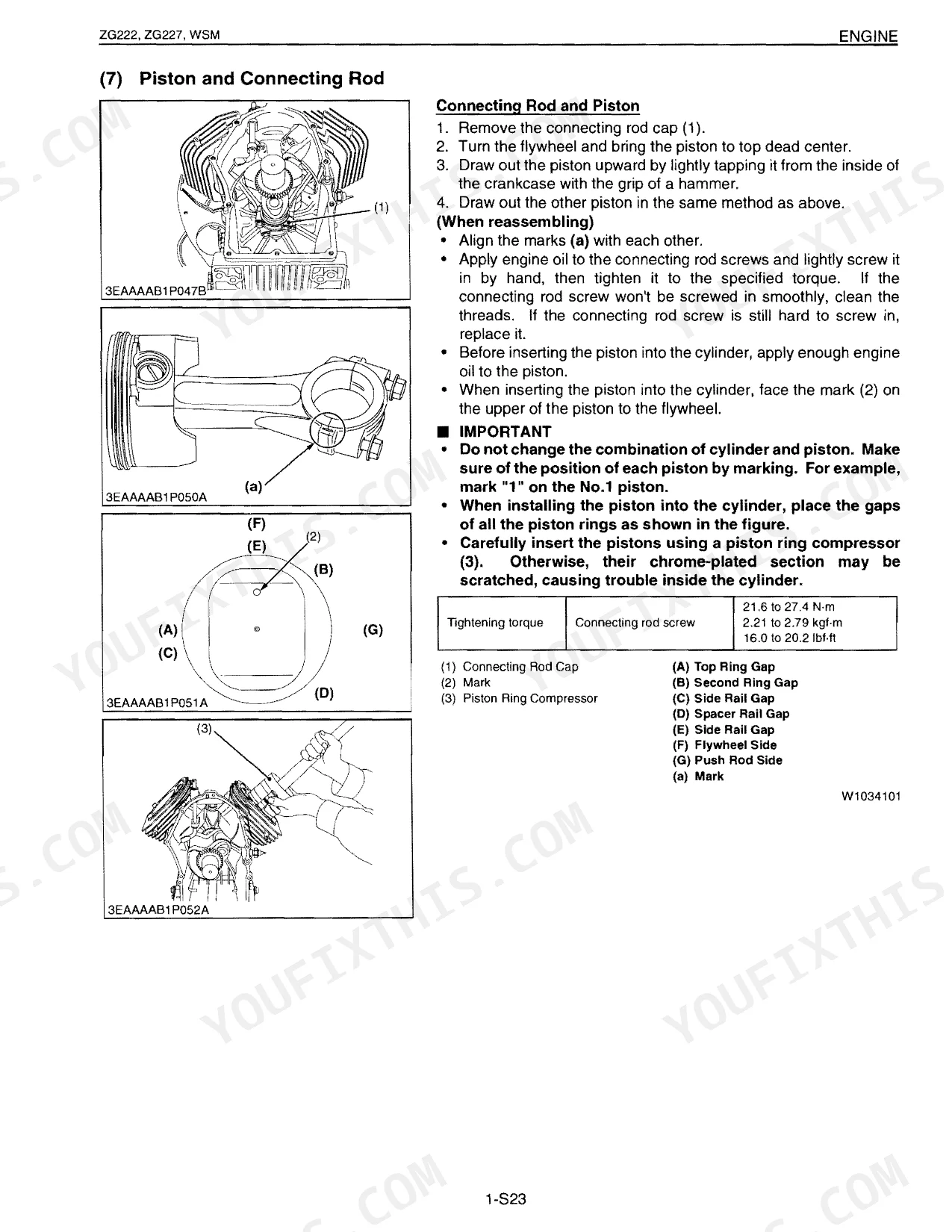
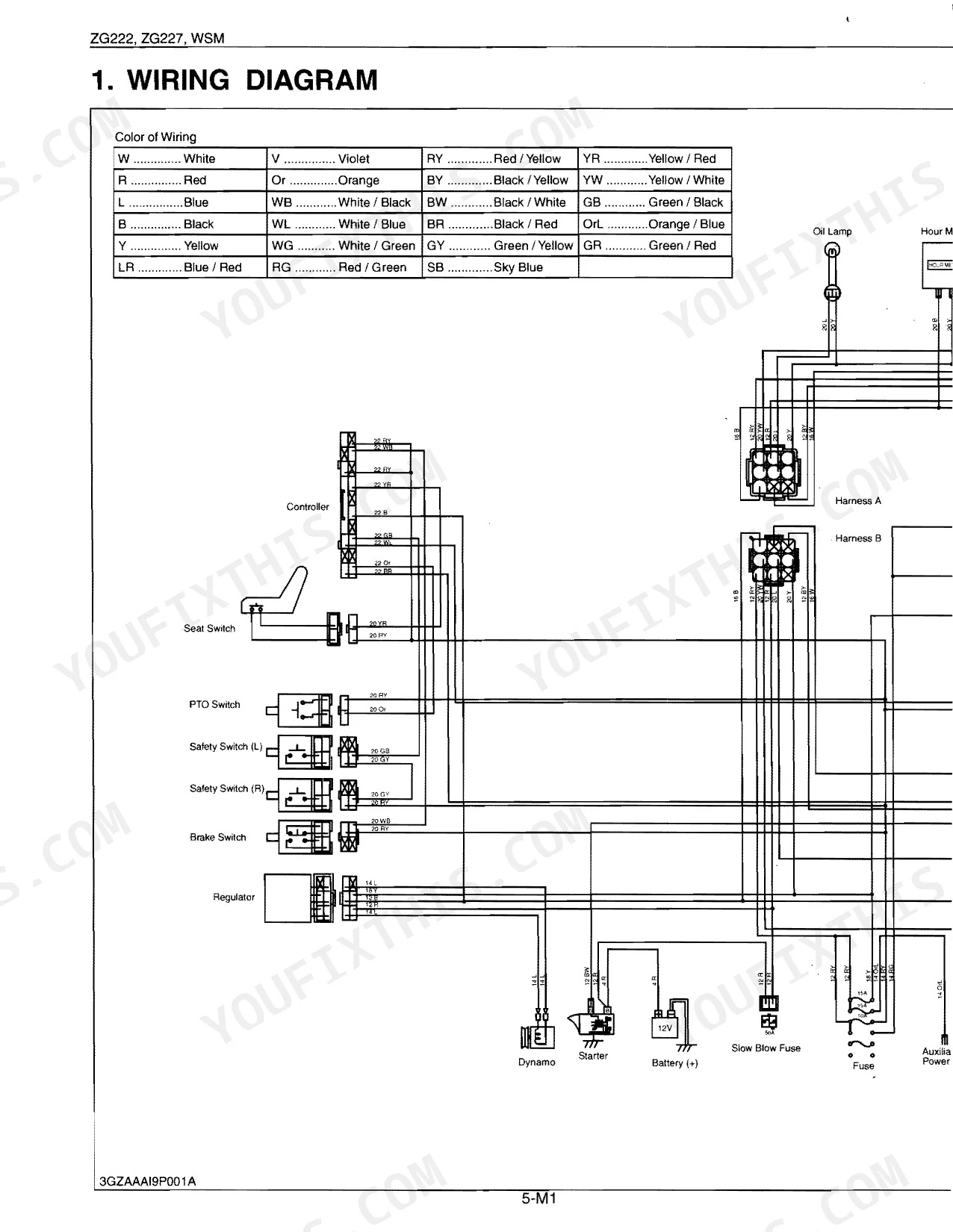
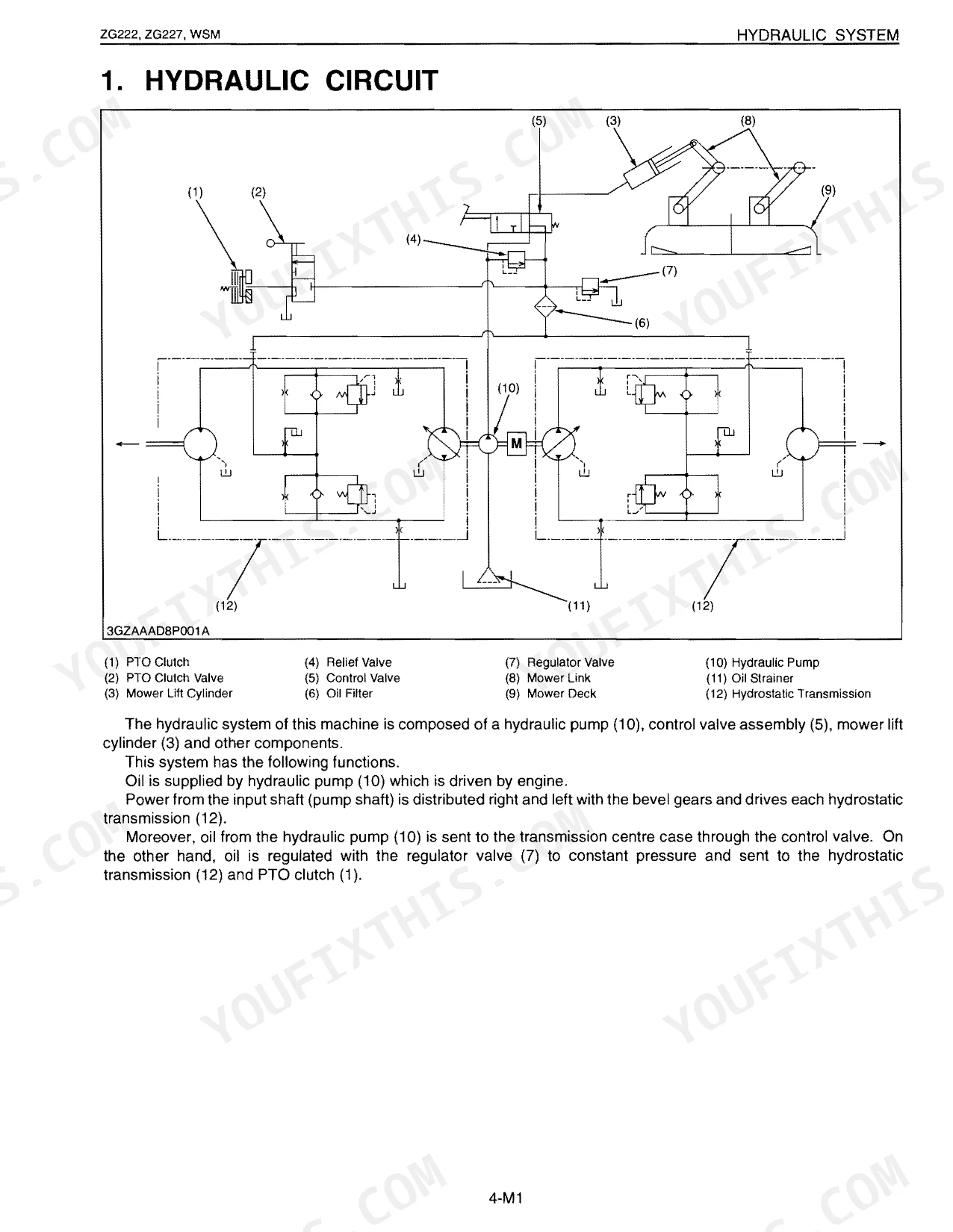
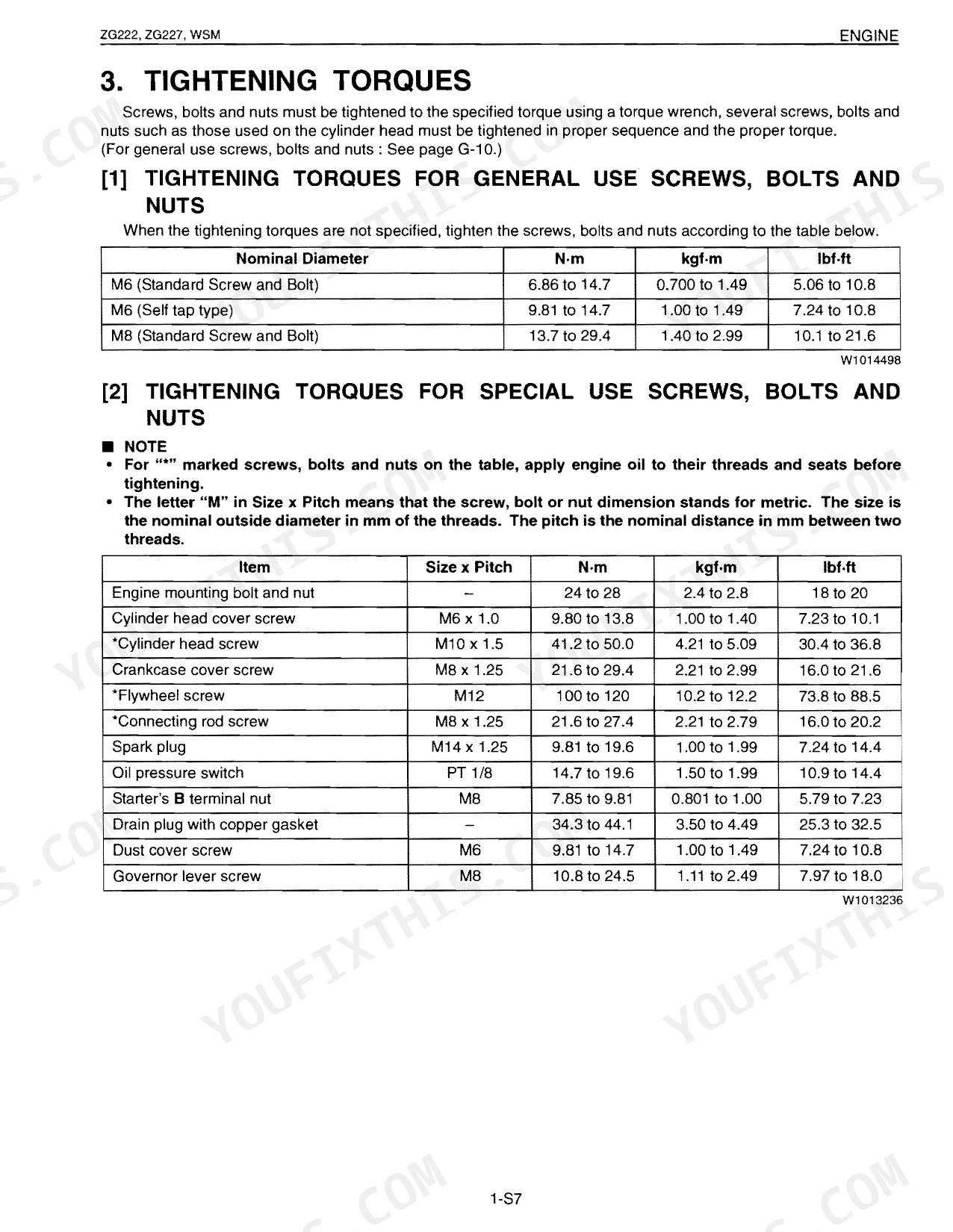
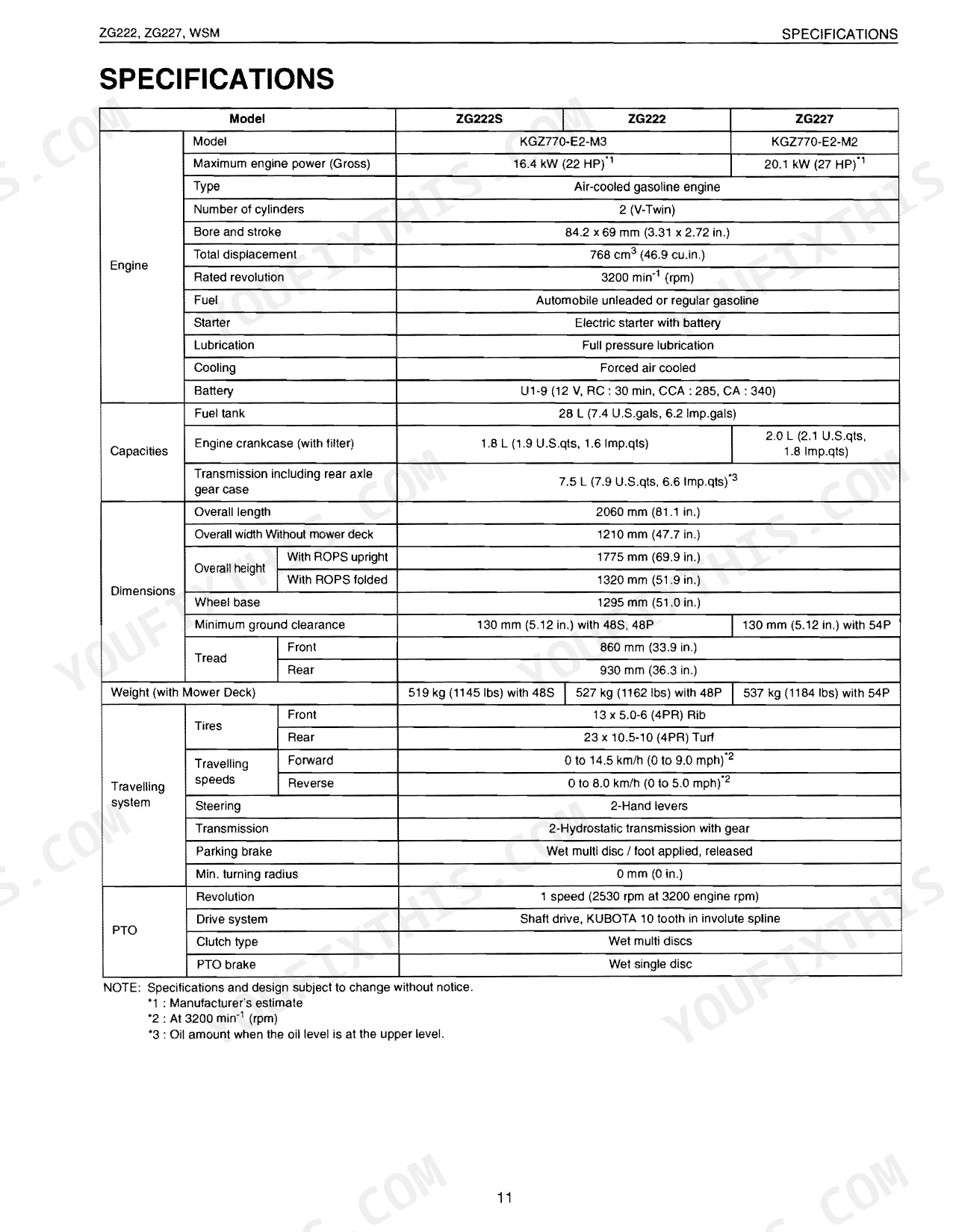
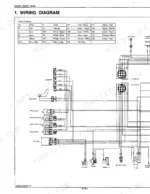
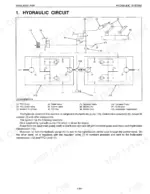
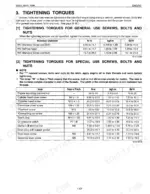
Every procedure here points at one outcome: getting your ZG222, ZG227, or ZG222S zero-turn back to factory condition. The hydraulic circuit schematics map the pump, control valve, lift cylinder, and mower linkage, and 26 pages of wiring diagrams trace the starting, charging, and gauge circuits. Six pages of torque tables sit alongside a transaxle section with full disassembly steps and 100 pages of engine, front axle, and rotary mower work. Need fluids? Fill the transmission to 7.5 L with the rear axle gear case included, then bring the ZG227 crankcase to 2.0 L with filter. When the machine is down and the clock is running, factory numbers beat a forum guess. Bookmarked by section and searchable by keyword, the OEM ZG222. ZG227. WSM pulls up on any device so you can start wrenching.
What's Inside This Kubota ZG222, ZG227, ZG222S Manual
| System | Pages | Key Topics |
|---|---|---|
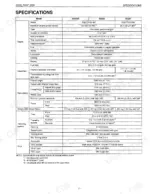
| Specifications | 11-12 | Model, Engine, Capacities, Travelling system, PTO, PRO commercial deck |
| Dimensions | 13-14 | - |
| General | 15-60 | Identification, Electrical Parts and Wiring, Lubricants and Fuel, Tightening Torques, Maintenance Check List, Special Tools |
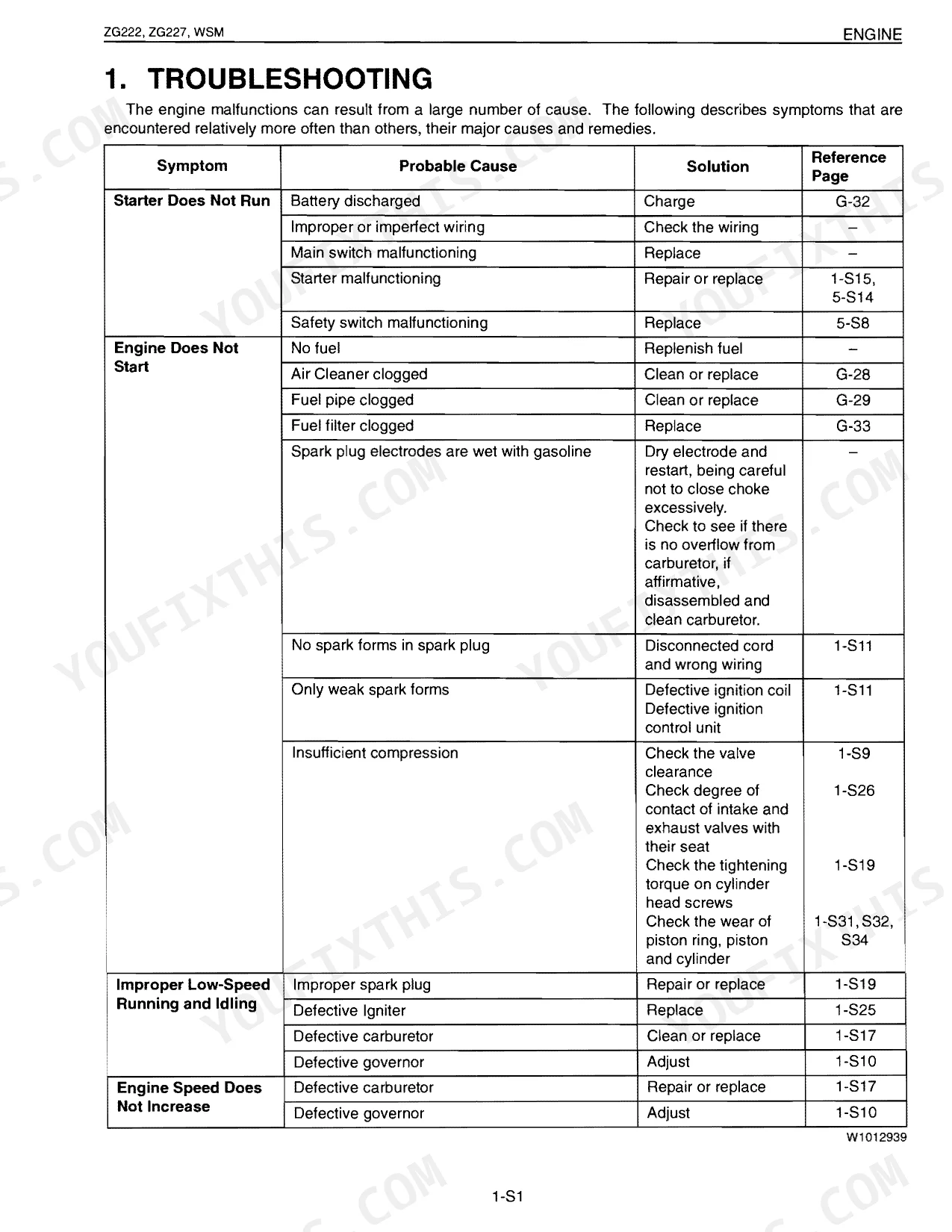
| Engine | 61-112 | Engine Body, Lubricating System, Cooling System, Fuel System, Ignition System, Servicing Specifications |
| Transaxle | 113-154 | Structure, Travelling System, Servicing Specifications, Tightening Torques, Checking, Disassembling and Servicing |
| Front Axle | 155-164 | Structure, Troubleshooting, Tightening Torques, Disassembling and Assembling |
| Hydraulic System | 165-182 | Hydraulic Circuit, Hydraulic Pump, Hydraulic Control Valve and Valve Adaptor, Lift Cylinder, Mower Linkage, Servicing Specifications |
| Electrical System | 183-229 | Wiring Diagram, Starting System, Charging System, Gauges, Servicing Specifications, Tightening Torques |
| Rotary Mower | 230-251 | Power Transmission, Lifting Mechanism, Mower Blades, Gear Box, Anti-scalp Rollers, Mower Deck Level Adjustment |
Quick Reference Specifications
| Specification | Value | Page |
|---|---|---|
| All Models | ||
| Fuel tank capacity | 30 L (7.9 U.S.gals, 6.6 Imp.gals) | p. 24 |
| Transmission fluid capacity (including rear axle gear case) | 7.5 L (7.9 U.S.qts, 6.6 Imp.qts) | p. 24 |
| Mower gear box oil capacity | 0.15 L (0.16 U.S.qts, 0.13 Imp.qts) | p. 24 |
| General use screws, bolts and nuts torque (M6 Standard) | 6.86 to 14.7 N·m (0.700 to 1.49 kgf·m, 5.06 to 10.8 lbf·ft) | p. 83 |
| Engine mounting bolt and nut torque | 24 to 28 N·m (2.4 to 2.8 kgf·m, 18 to 20 lbf·ft) | p. 83 |
| Spark plug torque | 9.81 to 19.6 N·m (1.00 to 1.99 kgf·m, 7.24 to 14.4 lbf·ft) | p. 83 |
| Rear wheel mounting nut torque | 65 to 75 N·m (6.6 to 7.7 kgf·m, 48 to 55 lbf·ft) | p. 132 |
| Transaxle mounting screw (M12) torque | 78 to 90 N·m (7.9 to 9.2 kgf·m, 58 to 66 lbf·ft) | p. 132 |
| Wheel bolt and lock nut torque (Front Axle) | 20 to 25 N·m (2.1 to 2.5 kgf·m, 15 to 18 lbf·ft) | p. 162 |
| ZG222S | ||
| Engine crankcase oil capacity (with filter) | 1.8 L (1.9 U.S.qts, 1.6 Imp.qts) | p. 24 |
| ZG227 | ||
| Engine crankcase oil capacity (with filter) | 2.0 L (2.1 U.S.qts, 1.8 Imp.qts) | p. 24 |
| RCK48S | ||
| Mower blade screw torque | 103 to 117 N·m (10.5 to 12.0 kgf·m, 76.0 to 86.7 lbf·ft) | p. 238 |
Kubota ZG222, ZG227, ZG222S Common Problems This Manual Covers
Kubota ZG222 engine cranks but won't fire on first start in cold weather
Measure the spark plug gap first; it should be 0.60 to 0.70 mm (page 82). Look the plug over for fouling or carbon and swap it if the electrode is worn or bridged. Confirm the choke closes fully and the fuel shutoff valve is open. A cold no-start usually traces to a fouled plug plus stale fuel sitting in the carburetor bowl.
Manual Section: EngineMower deck won't lift or rises very slowly when hydraulic lever is engaged p. 165
Check the hydraulic fluid level in the transaxle reservoir; total capacity is 7.5 L. With fluid full, test the relief valve setting pressure at the control valve, which should read 3.0 to 3.5 MPa (page 178). Low pressure points to a worn pump or a stuck relief valve. Rule out a lift cylinder bypassing fluid before condemning the pump.
Manual Section: Hydraulic SystemMachine creeps forward or backward with both lap bars held in neutral p. 113
Inspect the neutral adjustment linkage on both transaxles with the machine raised on jack stands. Confirm each drive wheel stops turning completely when the lap bar is centered. Sloppy adjustment links often mean worn clevis pins. Torque the hydrostatic transmission mounting screws to 25 to 29 N·m (page 132) if you find any bracket looseness.
Manual Section: TransaxleBlades leave strips of uncut grass or the cut finish is ragged at normal speed p. 230
Remove the blades and check for bends, missing edge material, or reversed installation. Sharpen or replace as needed, then torque blade screws to 103 to 117 N·m for RCK48S decks (page 238). Also verify mower gear box bevel gear backlash against the 0.13 to 0.25 mm spec (page 237). Worn backlash lets the blade slip under cutting load.
Manual Section: Rotary MowerEngine temperature gauge climbs into the red zone during heavy mowing in summer heat
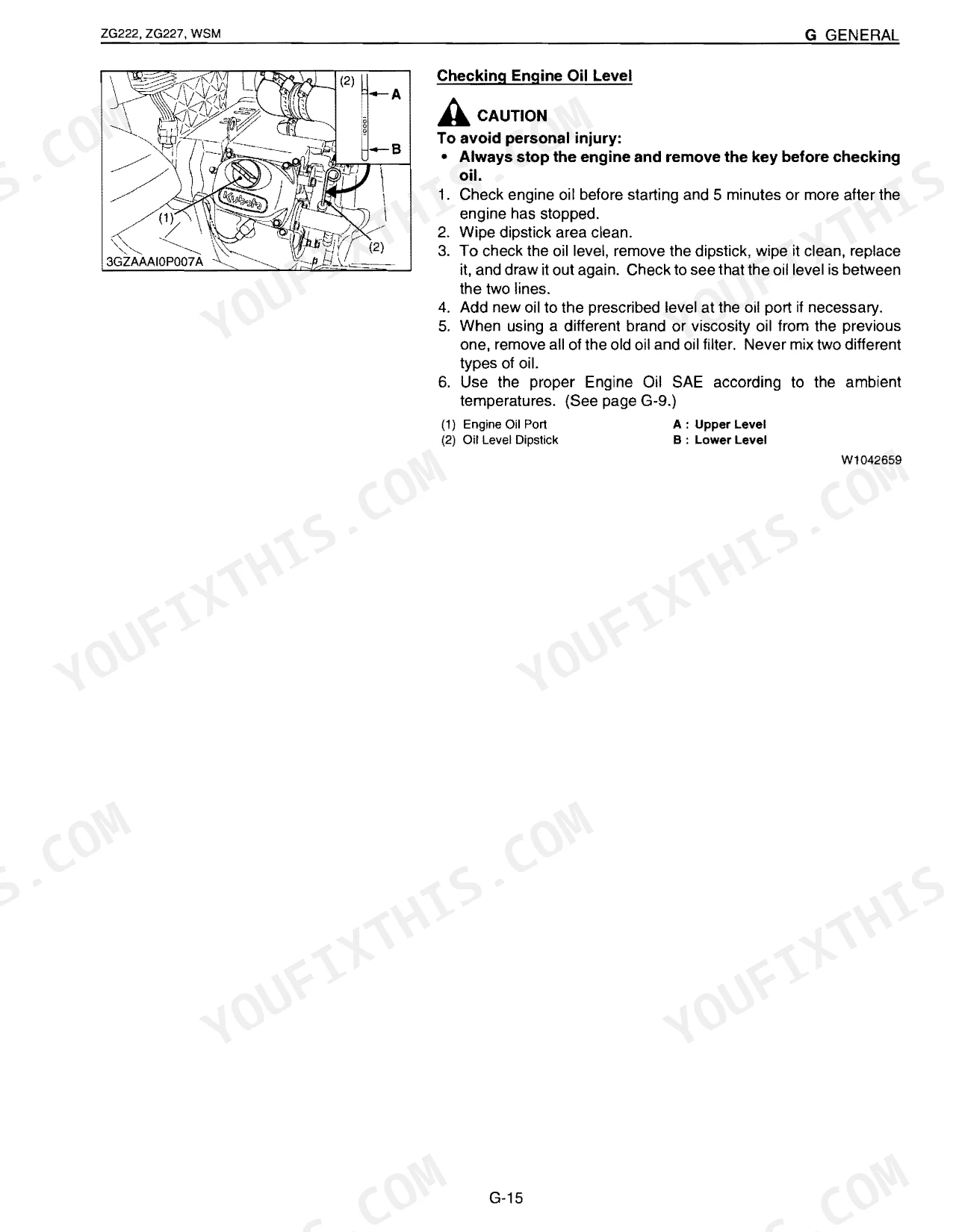
Clear packed grass and debris from the cooling fins and air passages, blowing compressed air from the outside in. Confirm the engine oil is at the right level and clean; the change interval is every 100 hours. Low oil drives heat up fast. With fins clear and oil fresh, move to the overheating diagnosis.
Manual Section: Engine (see pages 43, 44, 78)Front wheels wander or pull hard to one side on flat, level ground p. 155
Verify front wheel bearing play and check that tire pressure matches on both sides. Torque the wheel bolts and lock nuts to 20 to 25 N·m per page 162. If the hardware is tight and pressure is equal, work through the front axle wander diagnosis in the Front Axle section starting at page 155.
Manual Section: Front AxleFrequently Asked Questions
What are the recommended service intervals?
The maintenance check list lays out clear intervals. Engine oil gets changed every 100 hours and the oil filter replaced every 200 hours. Safety devices, greasing, and oiling come due every 50 hours. The fuel line should be checked every 100 hours and replaced every 2 years, while the air cleaner primary element needs cleaning every 100 hours and replacement once a year.
What fluids and capacities does this machine require?
Run automobile unleaded or regular gasoline rated 87 octane or higher; the fuel tank holds 30 L (7.9 U.S.gals). The ZG222[S] crankcase with filter takes 1.8 L of API SG, SH, SJ or higher oil, while the ZG227 takes 2.0 L. The transmission and rear axle gear case need 7.5 L of KUBOTA UDT or SUPER UDT fluid, and the mower gear box holds 0.15 L of SAE 90 gear oil (API classification above GL-3).
How to troubleshoot engine won't start?
A no-start has several usual suspects: a discharged battery (charge it, page G-32), faulty wiring, or a bad main switch or starter (repair or replace, pages 1-S15, 5-S14). If the engine cranks but won't catch, check for no fuel (replenish), a clogged air cleaner (clean or replace, page G-28), or a clogged fuel filter (replace, page G-33). Wet spark plug electrodes may need drying, and weak or absent spark points to ignition trouble (page 1-S11).
What are the hydraulic system specifications?
For the relief valve on the control valve, the factory setting pressure runs 3.0 to 3.5 MPa (31 to 35 kgf/cm², 440 to 500 psi). No allowable limit is listed for this spec.
What do I get after purchasing this Kubota ZG222, ZG227, ZG222S manual?
After checkout you download a 251-page searchable PDF right away. Open it on a laptop, tablet, or phone and carry it straight to the shop floor.
Are there any print restrictions on this Kubota ZG222, ZG227, ZG222S manual?
None at all. The PDF is DRM-free, so print whatever sections you want to take out to the shop. Standard letter or A4 paper works fine.
Can I find hydraulic circuit diagrams in this Kubota ZG222, ZG227, ZG222S?
Yes, this Kubota ZG222, ZG227, ZG222S Workshop Manual includes hydraulic system diagrams, circuit schematics, and component specifications.
Document Quality
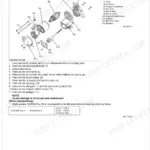
This document is a scanned PDF, not a native digital file. It includes an OCR text layer, so you can search and copy the full text, though some characters might be imperfectly recognized. The scanned text is generally crisp and readable, but some smaller fonts in diagrams may show slight blurriness. Diagrams and illustrations are raster images, not vector, and while labels are mostly clear, they can be small. Pages are clean with minimal scan artifacts, but there are several notable blank pages throughout the document.



Reviews
There are no reviews yet.