
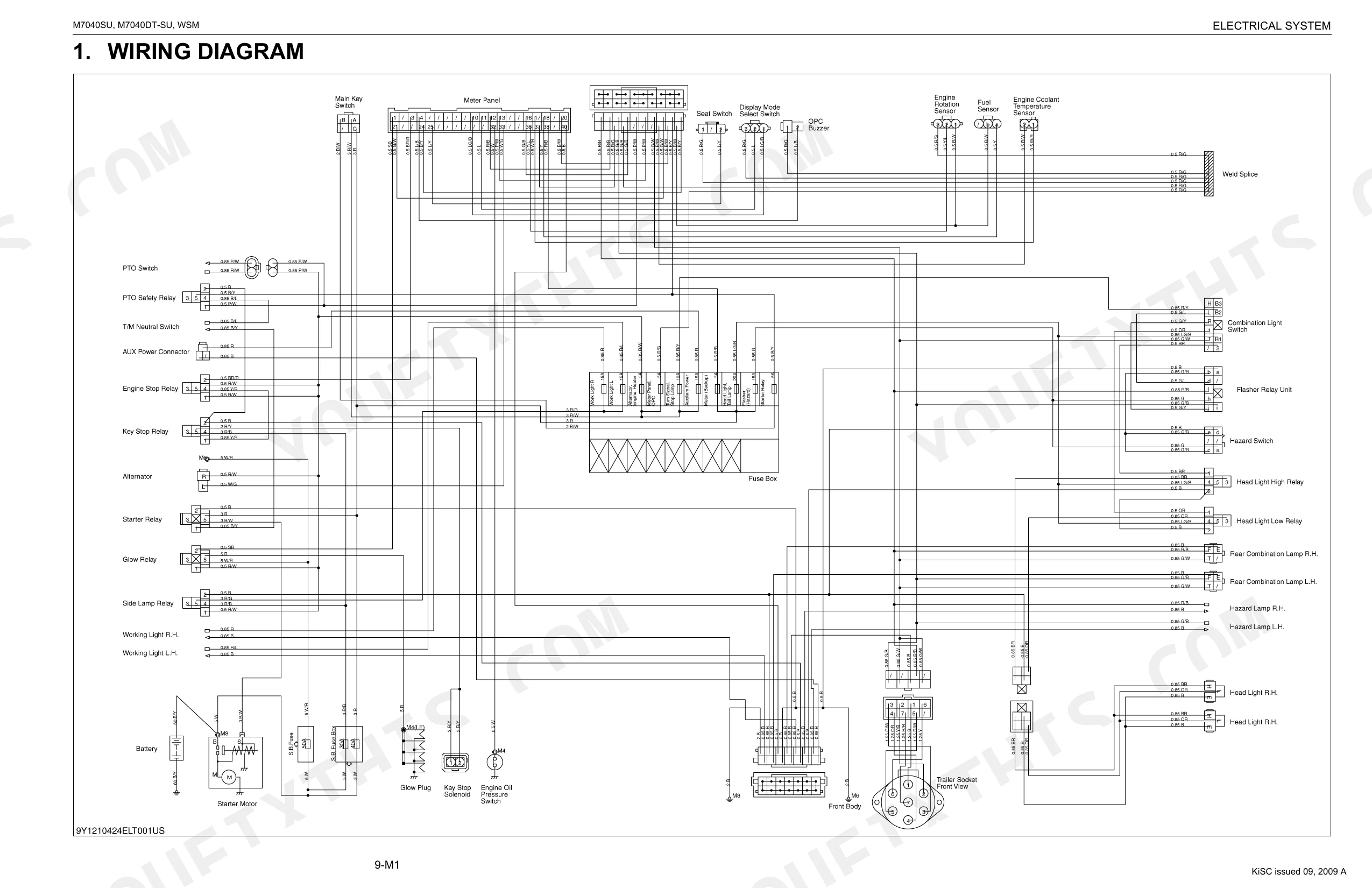
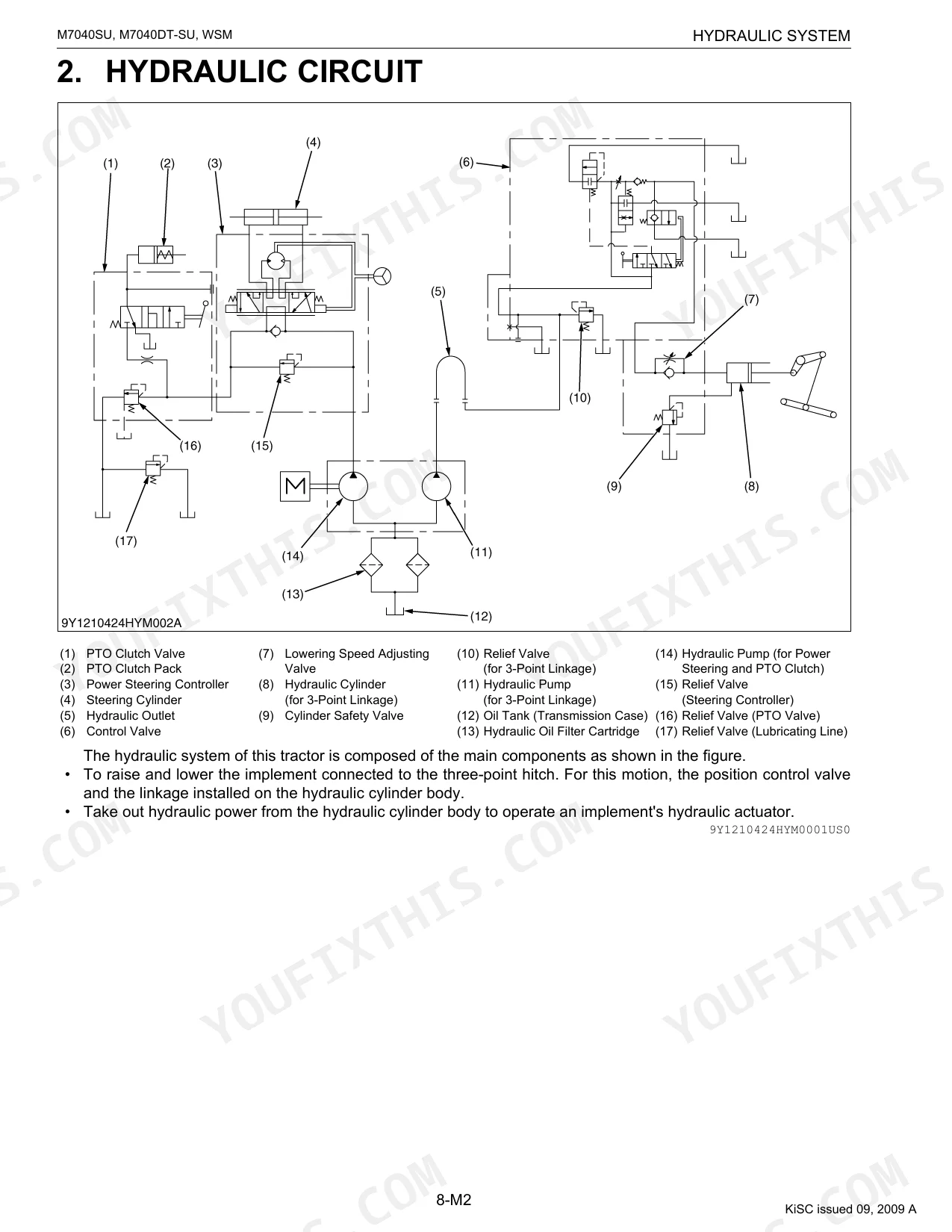
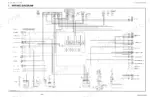
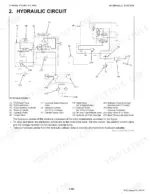
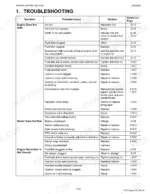
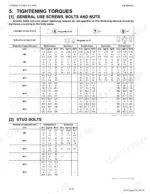
Kubota built the M7040SU and M7040DT-SU as 2009 compact utility tractors, standard and dual-traction, and OEM manual #9Y111-04240 documents both across 407 pages. The electrical coverage runs the full circuit: starting, charging, lighting, flasher unit, and LCD monitor. Hydraulic schematics trace each path through the pump, block, relief valve, and position control linkage. Roughly 100 pages of exploded views break down the engine, transmission, rear axle, and brakes, with troubleshooting procedures alongside a maintenance interval table that spans every 50 hours through every 3,000. Crankcase fill is 11.0 L, the transmission case takes 44.0 L, and M10 general fasteners torque to 40-45 N·m. Those figures come straight from the factory, so you skip the forum guesswork. Download it to any device, search by keyword, and put a wrench on the right bolt the first time.
What's Inside This Kubota M7040SU, M7040DT-SU Manual
| System | Pages | Key Topics |
|---|---|---|
| I Information | 3-14 | Safety First, Safety Decals, Specifications, Traveling Speeds, Dimensions |
| G General | 15-97 | Tractor Identification, General Precautions, Electrical Parts and Wiring, Lubricants, Fuel and Coolant, Tightening Torques |
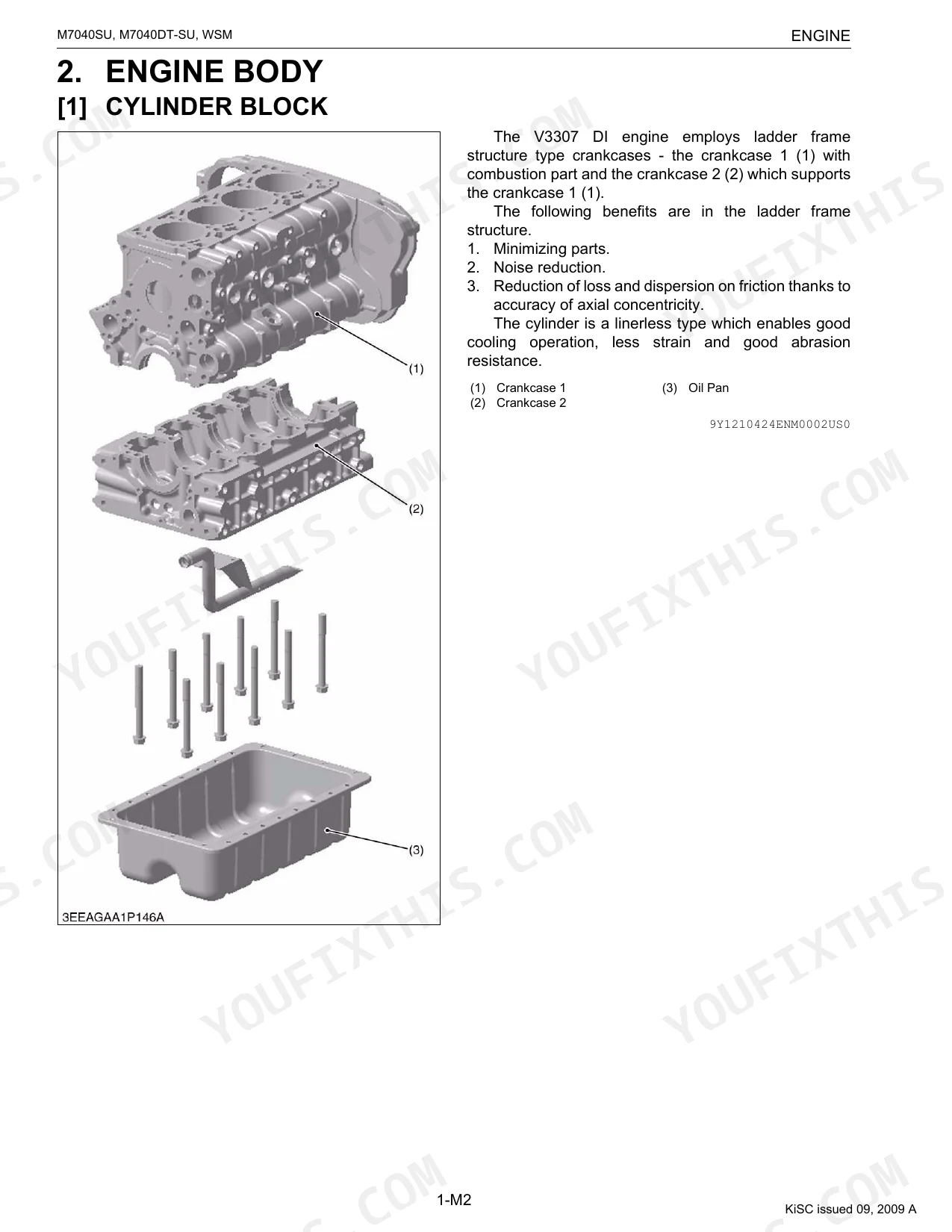
| 1 Engine | 98-185 | Engine Body, Lubricating System, Cooling System, Fuel System |
| 2 Clutch | 186-216 | Travelling Clutch, PTO Clutch, PTO Clutch Valve |
| 3 Transmission | 217-258 | Structure, Traveling System, PTO System, Lubrication for Transmission |
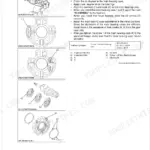
| 4 Rear Axle | 259-271 | Separating Rear Axle Case, Disassembling Planetary Gear, Disassembling Rear Axle, Servicing |
| 5 Brakes | 272-283 | Structure, Brake Pedal, Brake Case, Brake Disc and Plate |
| 6 Front Axle | 284-310 | Structure, Servicing Specifications, Checking and Adjusting, Disassembling and Assembling, Servicing |
| 7 Steering | 311-330 | Steering Controller, Power Steering Hydraulic Pump, Steering Cylinder, Relief Valve, Tie-rod, Gerotor |
| 8 Hydraulic System | 331-357 | Hydraulic Pump, Hydraulic Circuit, Hydraulic Block, Relief Valve, Safety Valve, Position Control Linkage, Hydraulic Cylinder |
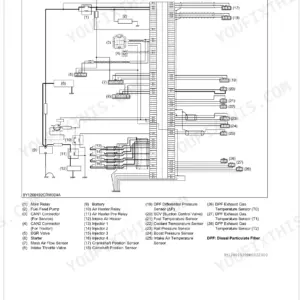
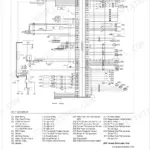
| 9 Electrical System | 358-407 | Wiring Diagram, Electrical Circuit Detailed Chart, Starting System, Charging System, Lighting System, Flasher Unit, Instrument Panel, LCD Monitor |
Quick Reference Specifications
| Specification | Value | Page |
|---|---|---|
| All Models | ||
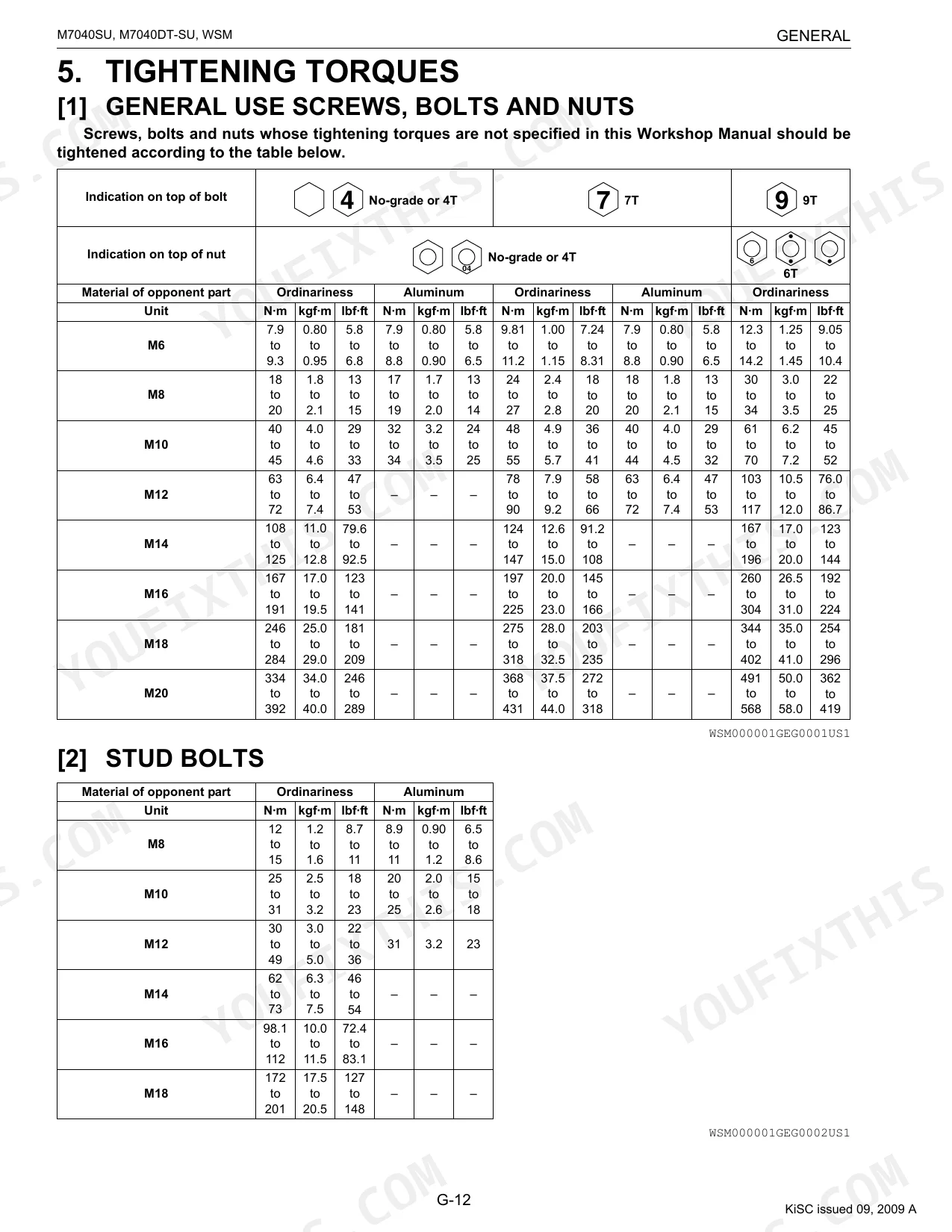
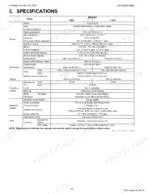
| General Use Screws, Bolts and Nuts (M10, Ordinariness, No-grade or 4T) | 40 to 45 N·m (4.0 to 4.6 kgf·m, 29 to 33 lbf·ft) | p. 28 |
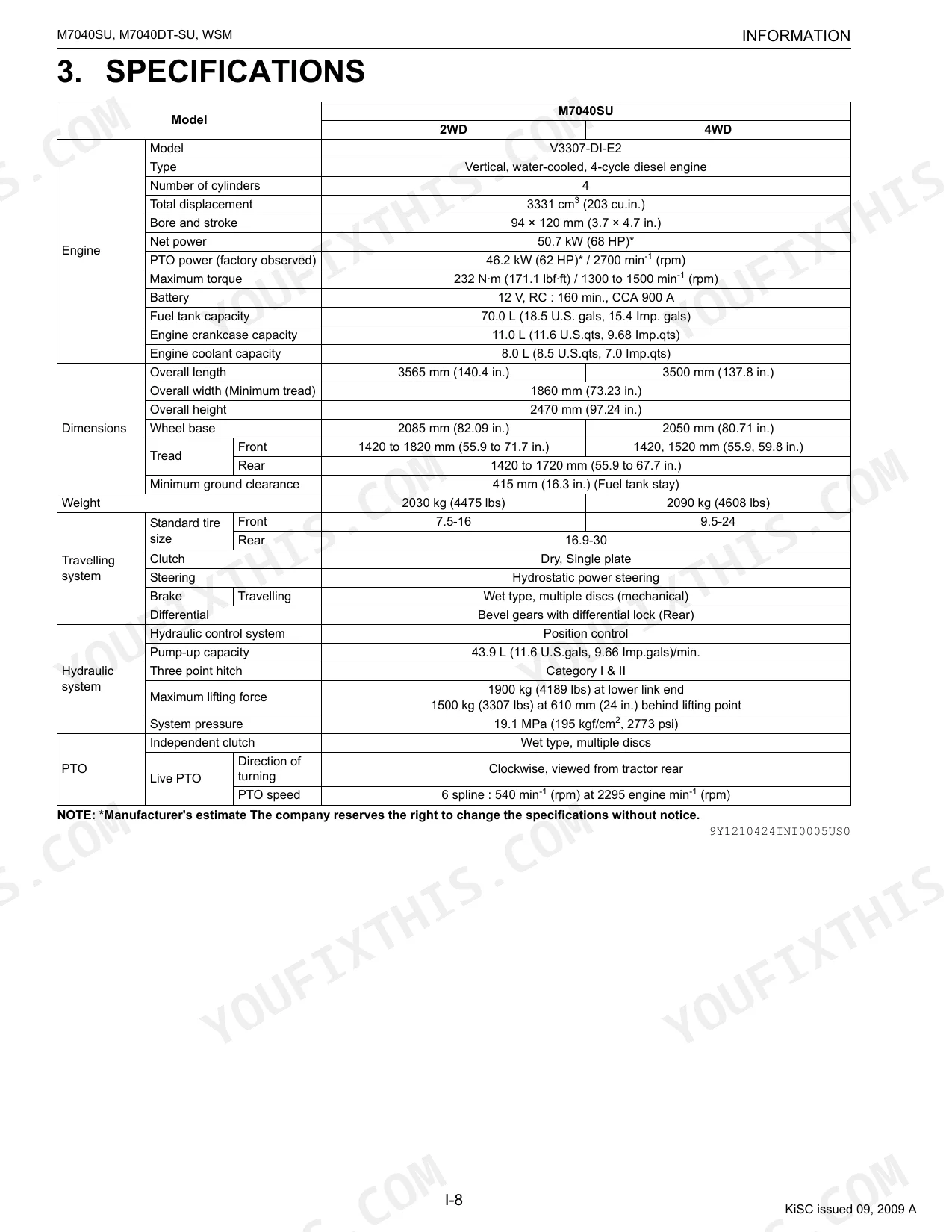
| Fuel tank capacity | 70.0 L (18.5 U.S. gals, 15.4 Imp. gals) | p. 26 |
| Engine crankcase capacity (with filter) | 11.0 L (11.6 U.S.qts, 9.68 Imp.qts) | p. 26 |
| Maintenance Service Intervals | Detailed table with intervals including: every 50 Hr, every 100 Hr, every 200 Hr, every 300 Hr, every 400 Hr, every 600 Hr, every 800 Hr, every 1500 Hr, every 3000 Hr, every 1 year, every 2 years, Service as required. | p. 30 |
| M7040SU | ||
| Engine Total Displacement | 3331 cm3 | p. 12 |
| Fuel Tank Capacity | 70.0 L | p. 12 |
| Engine Oil Capacity (with filter) | 11.0 L | p. 12 |
| Transmission Fluid Capacity | 44.0 L | p. 26 |
| Engine Compression Pressure (Factory Spec) | 3.92 MPa / 250 min-1 (rpm) | p. 118 |
| Engine Valve Clearance (Cold, Factory Spec) | 0.13 to 0.17 mm | p. 118 |
| Alternator Belt Tension (Factory Spec) | 10.0 to 12.0 mm | p. 122 |
| M7040SUD | ||
| Front Differential Gear Case Capacity | 6.6 L | p. 26 |
Kubota M7040SU, M7040DT-SU Common Problems This Manual Covers
Kubota M7040 engine cranks but won't start, turns over slowly in cold weather
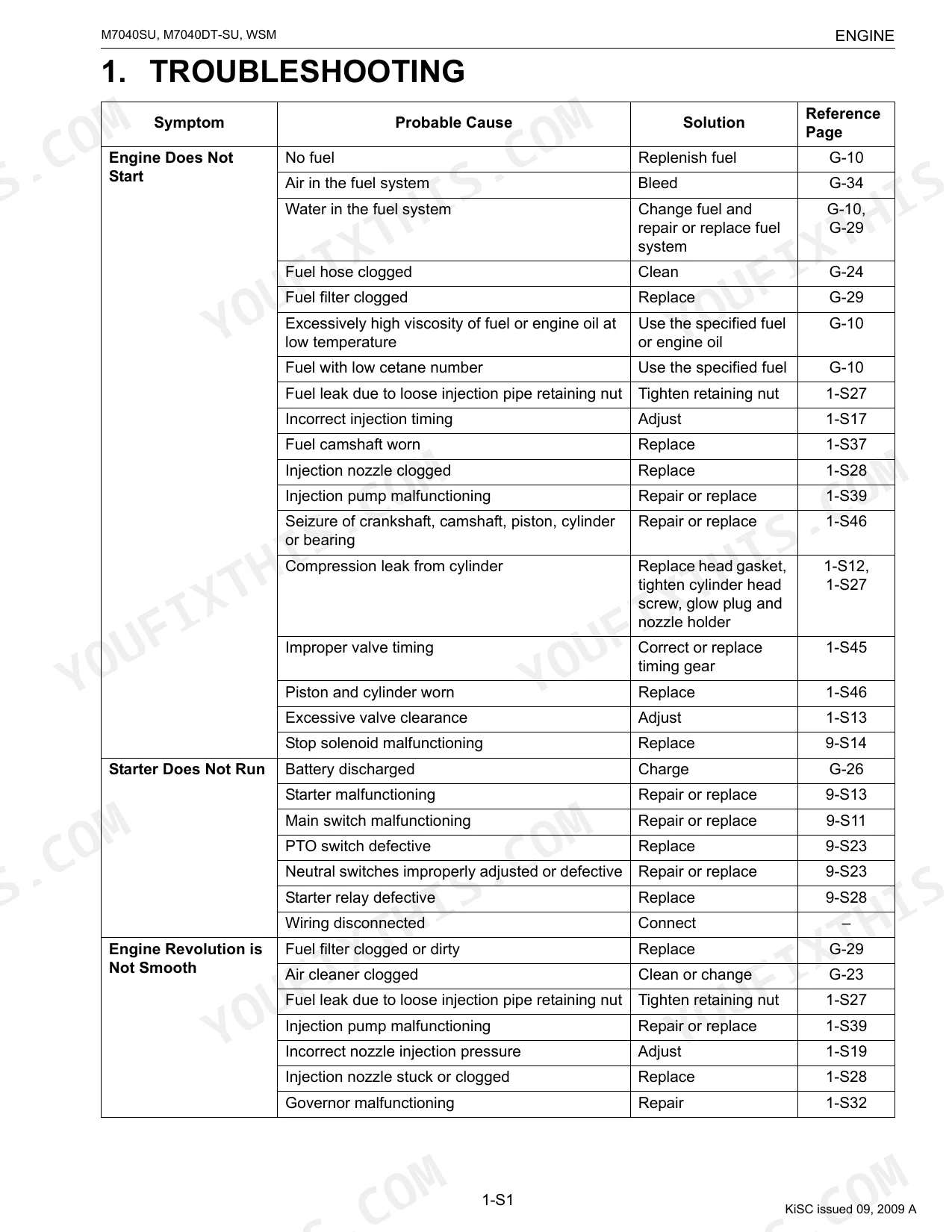
Start with the engine troubleshooting section. Confirm the fuel shutoff valve is open and the tank holds enough fuel; full capacity is 70.0 L (page 12). Test glow plugs for continuity, then check compression against the factory spec of 3.92 MPa at 250 rpm (page 118). Replace any glow plug reading open circuit.
Manual Section: 1 EngineThree-point hitch implement won't rise, hydraulic pump runs but no lift p. 340
Trace the hydraulic troubleshooting chart on page 340. Confirm transmission fluid level first; case capacity is 44.0 L (page 26), and a low level starves the pump. Test system pressure against the spec of 19.1 MPa (page 12). If pressure reads low, pull the relief valve and inspect the pump for worn gears before removing the control valve.
Manual Section: 8 Hydraulic SystemTravelling clutch drags or slips, tractor creeps forward even with pedal fully depressed p. 193
Open the clutch troubleshooting steps on page 193. Look at the disc for oil contamination from a failed rear seal; oil-soaked discs slip under load and drag when released. Confirm the transmission fluid is not overfilled; case capacity is 44.0 L (page 26). Where contamination is confirmed, replace the disc and pressure plate as a set and reseal the source before reassembly.
Manual Section: 2 ClutchHard steering or front wheels wander, steering heavy especially at the beginning of a turn p. 315
Review the steering troubleshooting chart on page 315. Look for leaks at the hoses and steering cylinder, and check the fluid level. Verify hydraulic system pressure reaches 19.1 MPa (page 12); if it falls short, the pump or relief valve is worn. With pressure in spec, remove the steering controller and inspect the gerotor for internal bypass or worn surfaces.
Manual Section: 7 SteeringBattery discharges overnight, starter turns slowly or fails to engage at next start p. 370
Walk the electrical troubleshooting chart on page 370. Inspect the alternator belt: factory deflection spec is 10.0 to 12.0 mm (page 122). A belt sagging past 12.0 mm won't spin the alternator fast enough to recharge between uses. Retension or replace the belt, then read charging voltage at the battery terminals with the engine running to confirm output.
Manual Section: 9 Electrical SystemGears clash or pop out of mesh during range shifts, lever hard to move p. 230
Inspect the transmission troubleshooting chart on page 230. Check the fluid level; total case capacity is 44.0 L (page 26), and low or contaminated fluid causes both hard shifting and gear pop-out. Examine the shift linkage for worn clevis pins and bent rods before opening the case. If gears still clash with the linkage correct, check the clutch for incomplete release.
Manual Section: 3 TransmissionFrequently Asked Questions
What are the recommended service intervals?
A detailed service interval table runs through the schedule. The engine start system gets checked every 50 hours, battery condition every 100 hours, engine oil changed every 400 hours, and the cooling system flushed every 2 years.
What fluids and capacities does this machine require?
Each component takes a specific fluid and capacity. The fuel tank holds 70.0 L (18.5 U.S. gals) of No. 2-D diesel. The engine crankcase (with filter) takes 11.0 L (11.6 U.S.qts) of API Service Classification CC or CD oil, and the transmission case needs 44.0 L (46.5 U.S.qts) of KUBOTA UDT or SUPER UDT fluid.
How to troubleshoot engine won't start?
When the engine won't start, the usual culprits are no fuel (replenish, page G-10), air in the fuel system (bleed, page G-34), or a discharged battery (charge, page G-26).
What are the hydraulic system specifications?
Pump delivery runs above 38.1 L/min (10.1 U.S.gals/min) at rated pressure, dropping no lower than the 31.1 L/min (8.22 U.S.gals/min) allowable limit. Relief valve setting pressure is 18.2 to 19.1 MPa (185 to 195 kgf/cm²), and the cylinder liner bore I.D. measures 90.000 to 90.050 mm (3.5433 to 3.5452 in.), with a 90.15 mm (3.549 in.) allowable limit.
Is this Kubota M7040SU, M7040DT-SU Workshop Manual a digital download?
Yes. It's a 407-page Workshop Manual in searchable PDF, available the moment checkout completes. View it on a computer, tablet, or phone, with no shipping wait.
Can I print this Kubota M7040SU, M7040DT-SU manual?
None at all. The PDF is DRM-free, so print whatever sections you want to carry out to the shop. Standard letter or A4 paper works.
Are hydraulic system diagrams in this Kubota M7040SU, M7040DT-SU manual?
Yes. The manual includes hydraulic circuit diagrams, system schematics, and component specifications with pressure ratings.
Document Quality
This document is a scanned PDF, but it includes an OCR layer, so you can search and copy the full text content. The text is crisp and consistently easy to read throughout. Diagrams and illustrations are high-resolution raster images, and all labels and numbers within them are clear. Pages are clean with no significant scan artifacts or marks, though some have a very slight, negligible skew. There are several blank pages that serve as section dividers, which is standard for this type of manual.


Reviews
There are no reviews yet.