
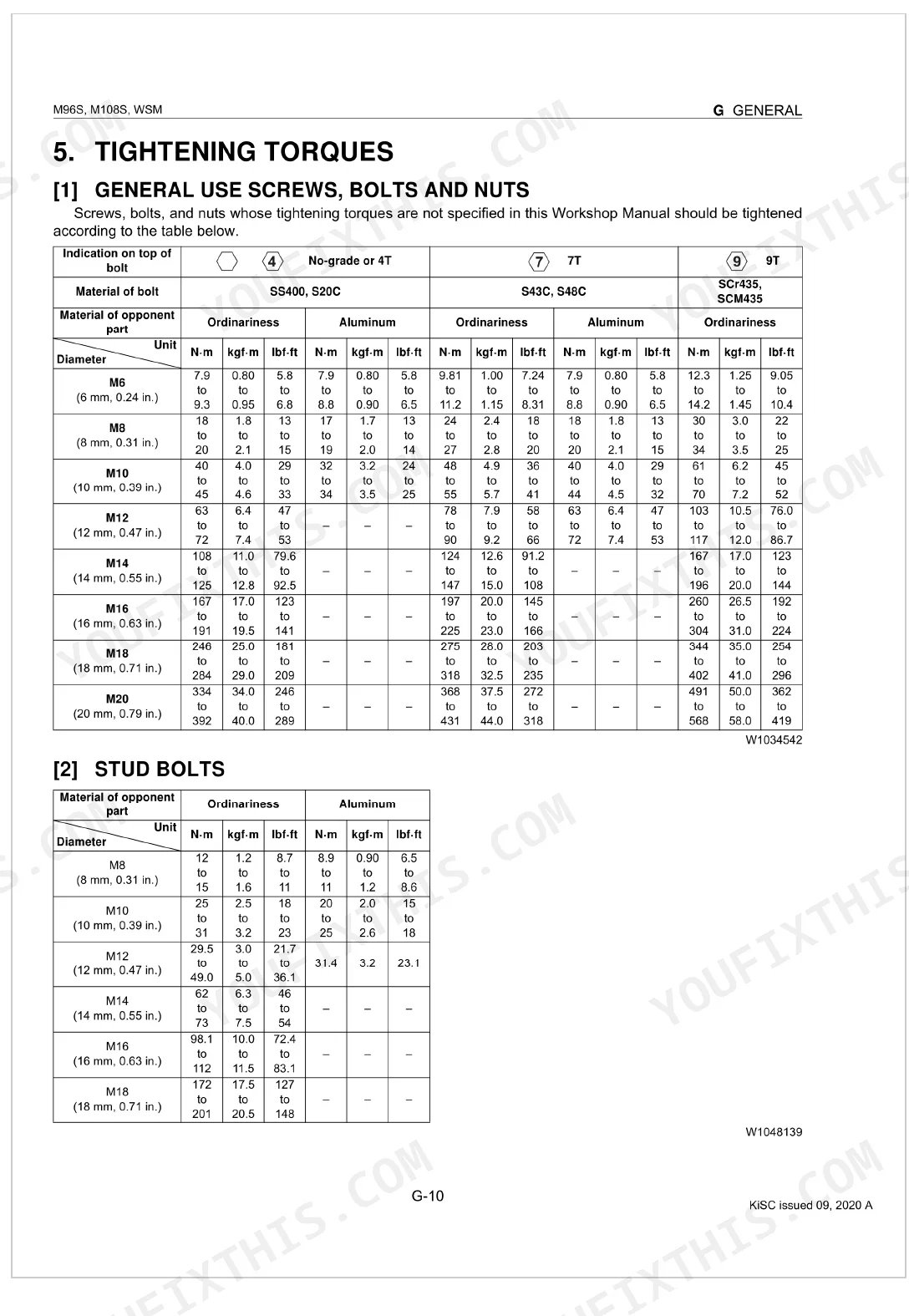
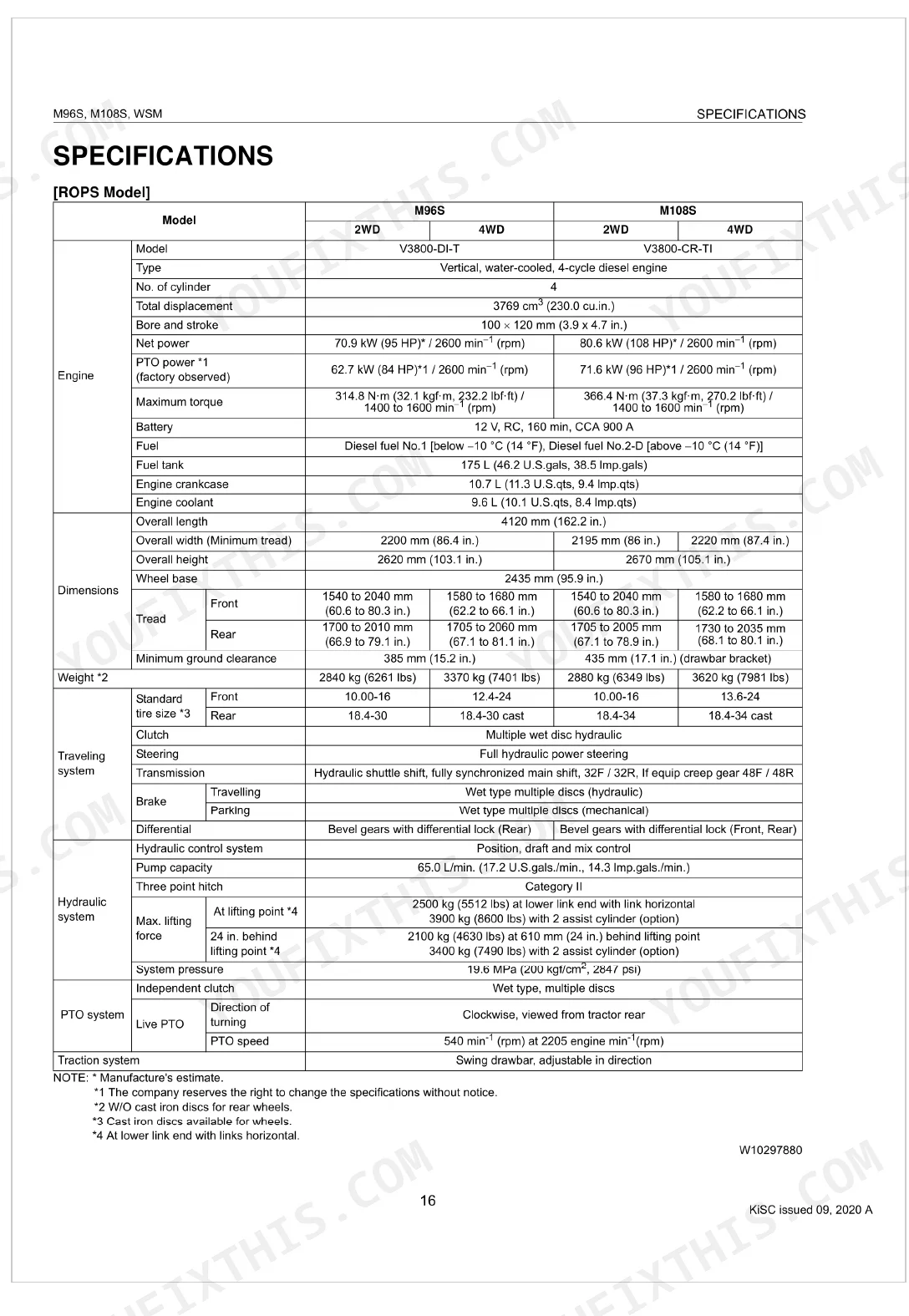
Covering the M96S, M108S, and M96SDTM as one machine family, this Kubota Workshop Manual PDF (OEM #9Y111-00328) runs the full 708 pages from Common Rail engine through cabin HVAC. The hydraulic side gets 49 pages of schematics tracing every fluid path from pump to position control valve, while 23 pages of wiring diagrams break out each harness on its own: main, engine, CRS, body/bonnet, and cabin model. Disassembly and assembly fill another 356 pages across clutch, transmission, both axles, steering, and brakes, backed by 9 pages on the Common Rail fuel system mechanism and calibration data. Before the wheels go back on, fill the transmission to 60.0 liters (M96S, M108S) or 63.0-64.0 liters (M96SDTM) and torque the rear wheel mounting nuts to 344-402 N·m (M96S, M108S) or 259.9-304.0 N·m (M96SDTM). Bookmarked and keyword-searchable, so you jump straight to a system, pull the number, and start wrenching.
What's Inside This Kubota M96S, M108S, M96SDTM Manual
| System | Pages | Key Topics |
|---|---|---|
| General | 27-113 | Tractor Identification, Handling Precautions for Electrical Parts and Wiring (Battery, Fuse, Connector, Handling of Circuit Tester), Lubricants, Fuel and Coolant |
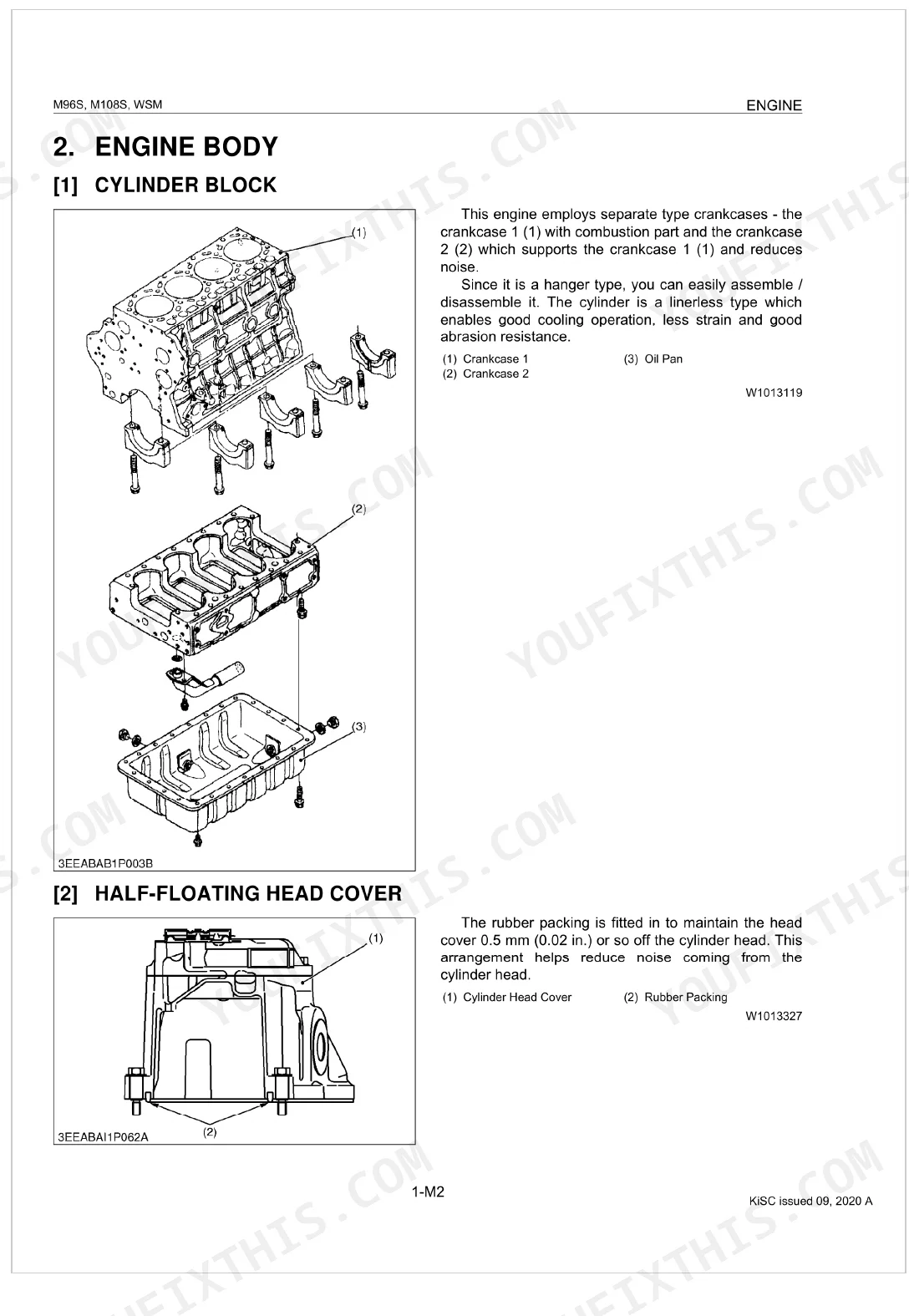
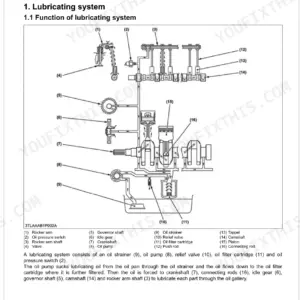
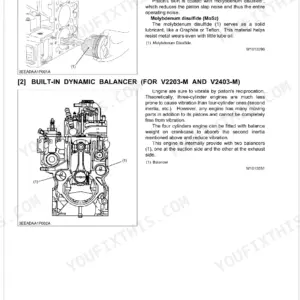
| Engine Mechanism | 114-147 | Feature, Engine Body (Cylinder Block, Half-Floating Head Cover, Cylinder Head, Center Direct Injection System, Piston, Built-In Dynamic Balancer), Lubricating System (Oil Cooler) |
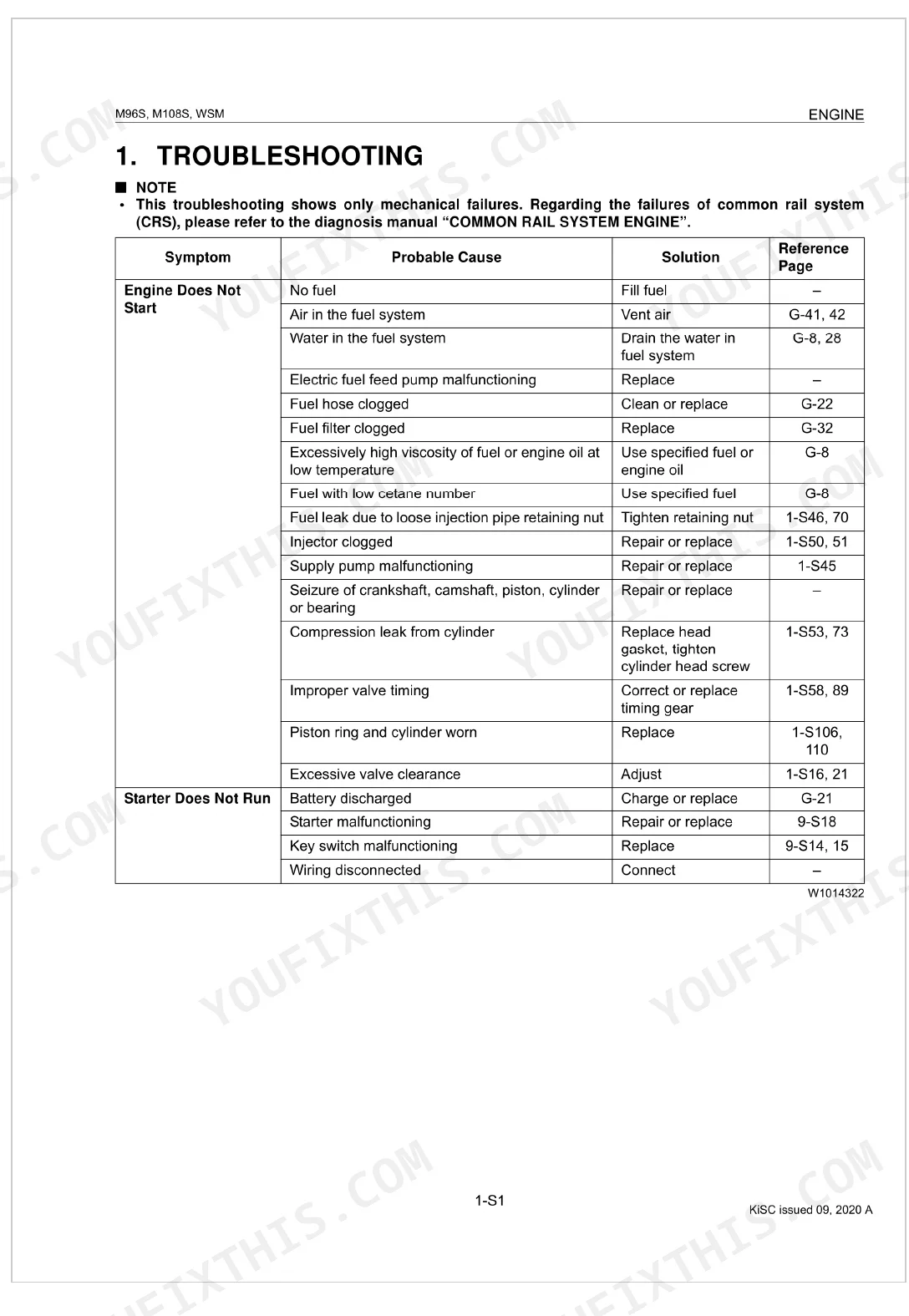
| Engine Servicing | 148-259 | Troubleshooting, Servicing Specifications, Tightening Torques, Checking |
| Clutch Mechanism | 260-265 | Clutch, Contents (Traveling Clutch, Pto Clutch), Traveling Clutch (Structure), Oil Flow, Pto Clutch (Structure), Operation (Pto Valve, Accumulator) |
| Clutch Servicing | 266-294 | Troubleshooting, Servicing Specification, Tightening Torques, Checking, Disassembling and Servicing (Checking and Adjusting, Disassembling and Assembling) |
| Transmission Mechanism | 295-325 | Structure, Shuttle Shift Mechanism (Shuttle Shift Section, Regulator Valve, Hydraulic Shuttle Valve) |
| Transmission Servicing | 326-381 | Troubleshooting, Servicing Specifications, Tightening Torques |
| Rear Axle Mechanism | 382-384 | Rear Axle, Contents (Structure, Final Reduction System), Structure (Rear Axle Diagram) |
| Rear Axle Servicing | 385-398 | Troubleshooting, Servicing Specifications, Tightening Torques, Checking, Disassembling and Servicing (Disassembling and Assembling) |
| Brakes Mechanism | 399-401 | Brakes, Contents (Feature), Feature (Brake System Diagram) |
| Brakes Servicing | 402-422 | Troubleshooting, Servicing Specifications, Tightening Torques, Checking, Disassembling and Servicing (Checking and Adjusting, Disassembling and Assembling) |
| Front Axle Mechanism | 423-426 | Front Axle, Contents (Structure), Structure (2-Wheel Drive Type), 4-Wheel Drive Type |
| Front Axle Servicing | 427-454 | Troubleshooting, Servicing Specifications, Tightening Torques, Checking, Disassembling and Servicing (Checking and Adjusting, Disassembling and Assembling) |
| Steering Mechanism | 455-457 | Steering, Contents (Structure), Structure (Steering: Mechanism, System Diagram) |
| Steering Servicing | 458-474 | Troubleshooting, Servicing Specifications, Tightening Torques, Checking, Disassembling and Servicing (Checking and Adjusting, Disassembling and Assembling) |
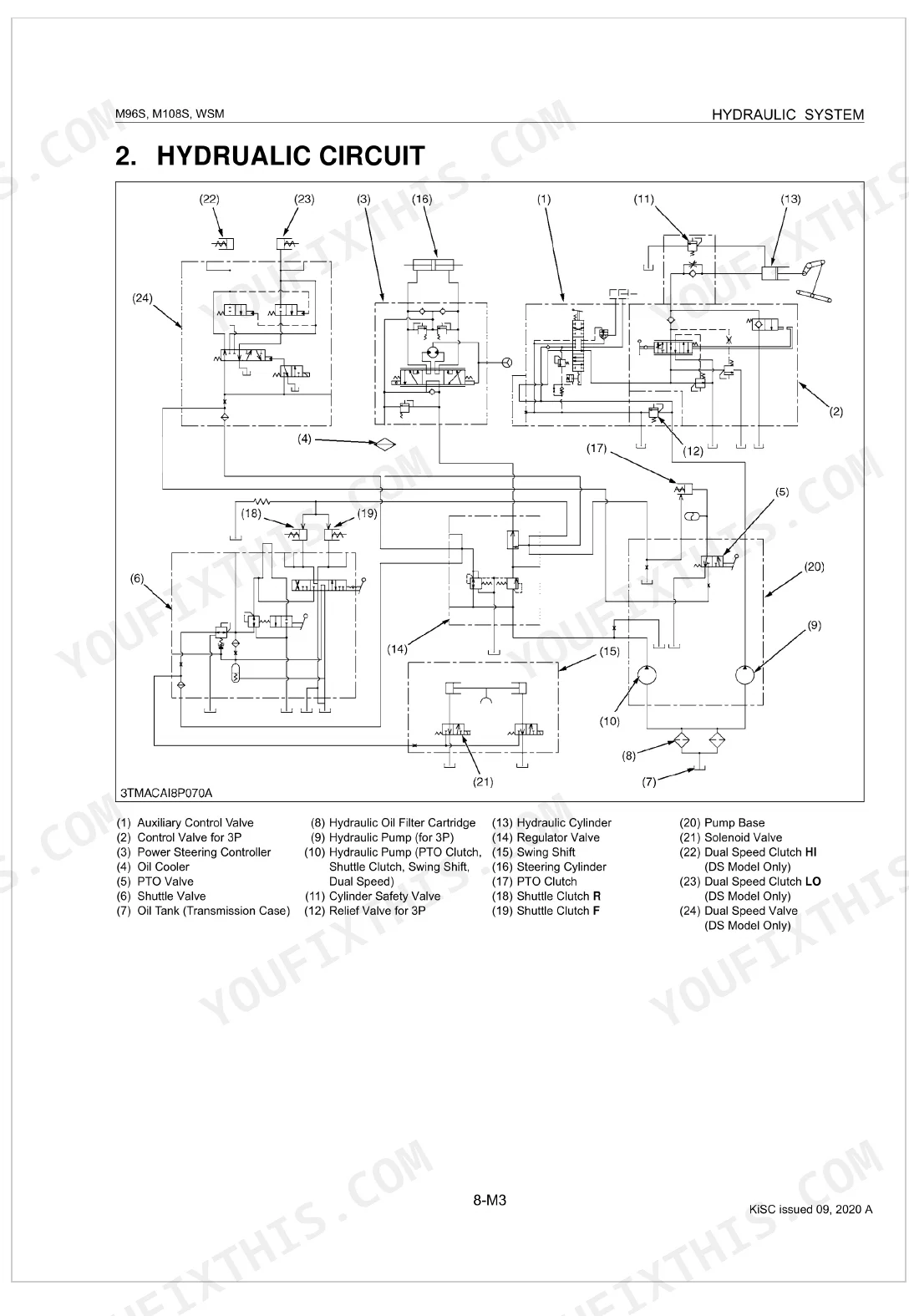
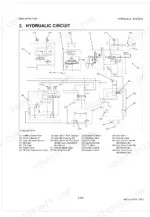
| Hydraulic System Mechanism | 475-483 | Hydraulic System, Contents (Structure, Hydrualic Circuit, Control Valve, Position Control), Structure (Hydraulic System Description) |
| Hydraulic System Servicing | 484-511 | Troubleshooting, Servicing Specifications, Tightening Torques, Checking, Disassembling and Servicing (Checking and Adjusting, Disassembling and Assembling) |
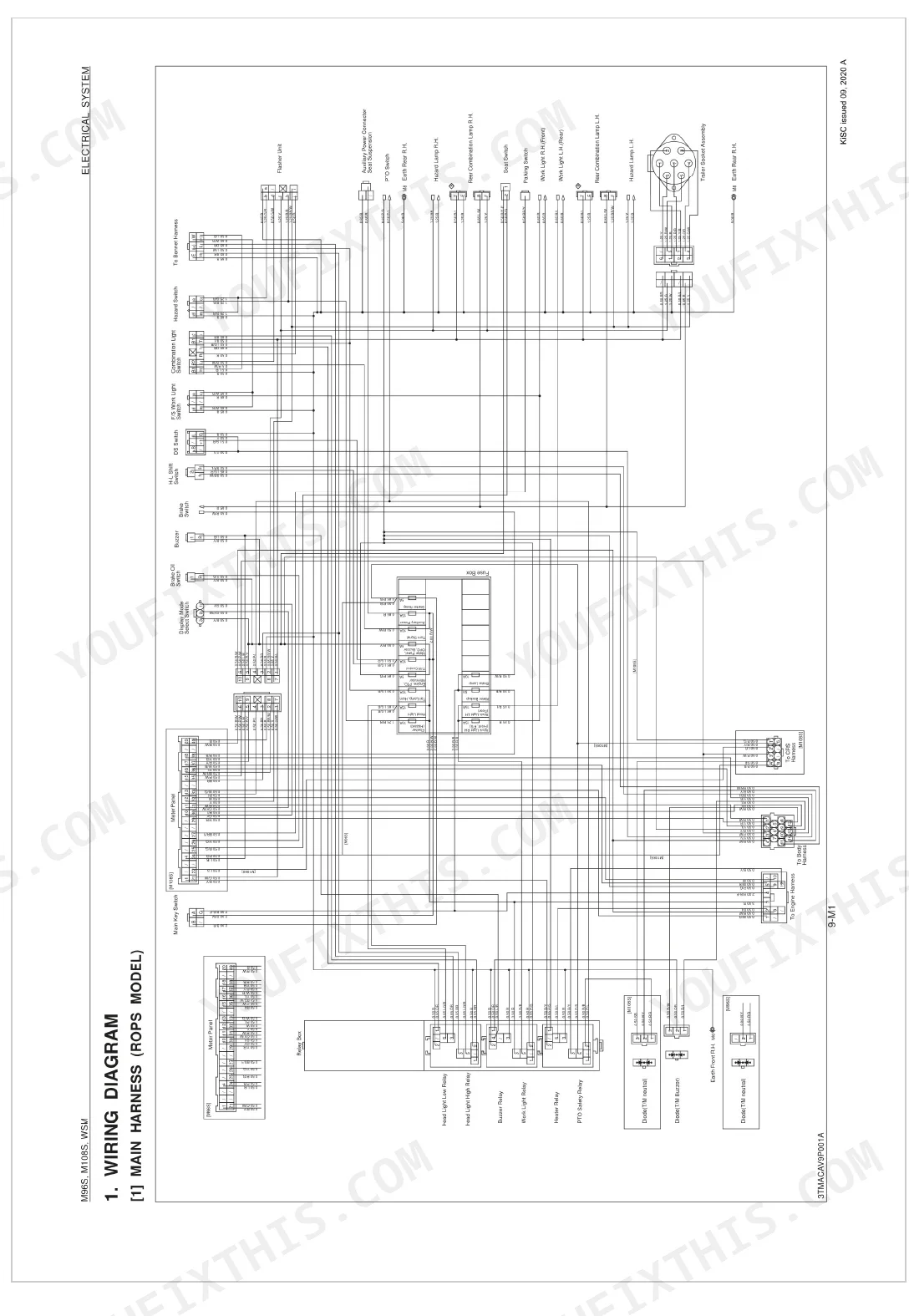
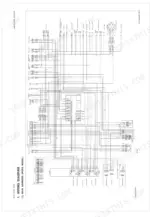
| Electrical System Mechanism | 512-534 | Wiring Diagram (Main Harness, Engine Harness, Crs Harness, Body Harness and Bonnet Harness, Cabin Harness) |
| Electrical System Servicing | 535-580 | Troubleshooting, Servicing Specifications, Tightening Torques |
| Cabin Mechanism | 581-592 | Cabin, Contents (Air Conditioning System, Compressor, Air Flow, Air Control Vent, Control Panel, Operation, Electrical System), Air Conditioning System (Structure) |
| Cabin Servicing | 593-643 | Troubleshooting, Servicing Specifications, Tightening Torques, Precautions at Repairing Refrigerant Cycle (Handling of Service Tools) |
| Information Supplement | 644-657 | Safety First, Safety Decals, Specifications, Traveling Speeds, Dimensions |
| General Supplement | 658-674 | Lubricants, Fuel and Coolant, Tightening Torques (Stud Bolts, Hydraulic Fittings), Maintenance, Check and Maintenance (Check Points: 50 Hours, 600 Hours), Special Tools |
| Transmission Supplement | 675-687 | Transmission, Contents (Structure, Traveling System) |
| Rear Axle Supplement | 688-698 | Rear Axle, Contents (Structure, Final Reduction System), Structure (Rear Axle Diagram), Final Reduction System (Final Reduction Section) |
| Front Axle Supplement | 699-702 | Front Axle, Servicing (Tightening Torques, Disassembling And Assembling), Tightening Torques |
| Electrical System Supplement | 703-708 | Electrical System, Servicing (Checking And Adjusting, Meter Panel), Checking And Adjusting (Meter Panel, Lcd Monitor Indication), Pto Speed Display Mode Switching |
Quick Reference Specifications
| Specification | Value | Page |
|---|---|---|
| All Models | ||
| Fuel Tank Capacity | 175 L (46.2 U.S.gals, 38.4 Imp.gals) | p. 36 |
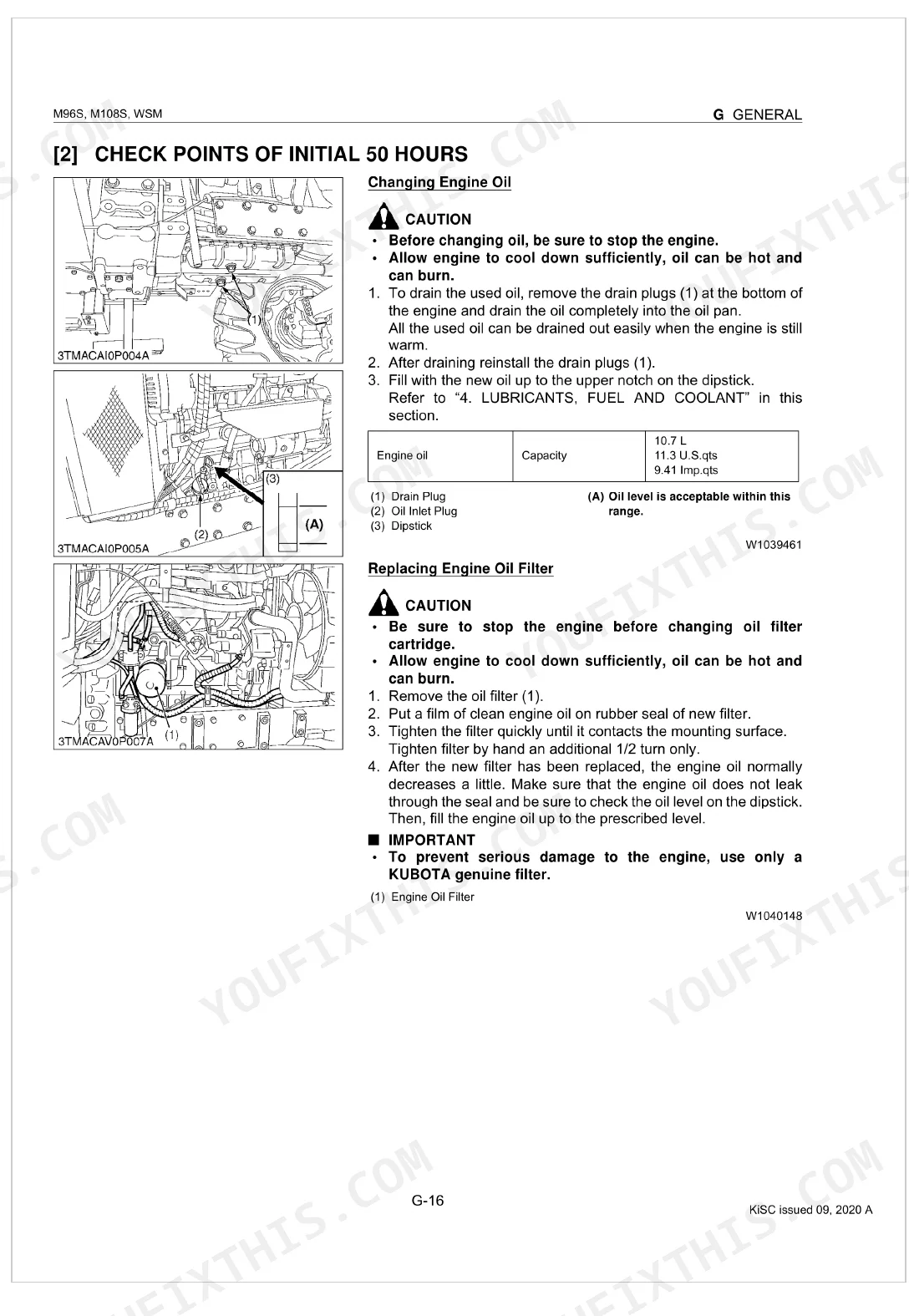
| Engine Crankcase Oil Capacity (with filter) | 10.7 L (11.3 U.S.qts, 9.41 Imp.qts) | p. 36 |
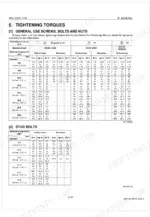
| Starter's terminal B mounting nut | 9.8 to 11 N·m (1.0 to 1.2 kgf·m, 7.3 to 8.6 lbf·ft) | p. 38 |
| M96S, M108S | ||
| Rear wheel mounting nut | 344 to 402 N·m (35.0 to 41.0 kgf·m, 254 to 296 lbf·ft) | p. 38 |
| Engine oil change | every 200 hrs | p. 41 |
| M96SDTM | ||
| Engine oil change | every 300 Hr | p. 664 |
Kubota M96S, M108S, M96SDTM Common Problems This Manual Covers
Kubota M96S engine won't start or cranks slowly in cold weather
Check the air heater circuit at pages 536-541 before assuming a mechanical fault. Verify battery voltage under load and inspect terminals for corrosion. Confirm engine oil viscosity matches the ambient temperature: thin oil drains from cylinder walls overnight and leaves a dry start. Look at the fuel system for wax crystallization in the filter, and replace the fuel filter every 400 hours per the maintenance schedule on page 41.
Manual Section: Engine ServicingImplement does not rise or drops under load with engine running p. 485
Inspect hydraulic fluid level first, since the transmission and hydraulic system share a common sump. Verify position control and draft control linkage are not binding. Check the control valve for contamination and confirm relief pressure is within spec using a gauge at the test port; the troubleshooting flow chart on page 485 walks through low-pressure, internal-leak, and draft-control-malfunction scenarios in sequence. Transmission fluid capacity for M96S and M108S is 60.0 L (63.4 U.S.qts), so top off only with the specified fluid.
Manual Section: Hydraulic System ServicingExcessive transmission noise or gears slip out of mesh under load
Drain a small sample of transmission fluid into a clean container and inspect for metal particles or a milky appearance, which signals water contamination or bearing failure. Change the fluid every 600 hours. Check for hard shifting or clash at the shuttle shift section; the troubleshooting chart covers gear-slip, excessive noise, and dual-speed clutch slip with step-by-step isolation. Torque specifications for transmission housing fasteners are on page 38.
Manual Section: Transmission ServicingUneven or spongy brake pedal, tractor pulls to one side during stops p. 403
Start at the brake fluid reservoir: total system capacity is 0.3 L (0.32 U.S.qts). Compare left and right brake pedal free-play, which must be equalized or the tractor will pull under braking. Bleed the system if the pedal feels spongy, since air in the lines is the most common cause. The brakes troubleshooting sequence on page 403 separates poor braking force from uneven force and spongy pedal into distinct diagnostic paths.
Manual Section: Brakes ServicingHard steering or front wheels wander noticeably on the road p. 459
Measure the power steering hydraulic circuit for low pressure or flow restriction; rising oil temperature and steering force fluctuation are early signs listed in the troubleshooting index on page 459. Check the front axle gear case oil level, which holds 3.5 L (3.7 U.S.qts) for all models. Look at toe-in adjustment and king-pin play at the front axle, since worn king-pins produce wander that gets misdiagnosed as a steering valve issue. Steering servicing specifications and tightening torques are on page 458.
Manual Section: Steering ServicingBattery discharges overnight or charging warning lamp stays on p. 536
Test alternator output voltage at the battery terminals with the engine at operating RPM; a healthy charging system reads above the battery's resting voltage. Inspect the main harness connectors for corrosion or chafing, especially near heat sources, and note that wiring diagrams start on page 514. Check the fuse block for a frequently blown fuse, which points to a short rather than a steady draw. The electrical troubleshooting sequence on page 536 covers battery discharge, charging lamp faults, and all-systems-dead conditions in a structured flow.
Manual Section: Electrical System ServicingFrequently Asked Questions
What are the recommended service intervals?
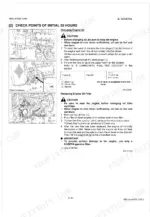
KUBOTA sets the intervals by hour. Every 50 hours, check the engine start system and wheel bolt torque. Every 100 hours, check battery condition, grease parts, and adjust the fan belt, brake pedal, and parking brake lever. Replace secondary air cleaner elements and check air conditioner pipes and hoses yearly. Change engine oil every 300 hours, the water separator every 400 hours, and fuel and engine oil filters, transmission fluid, and front differential/axle gear case oil every 600 hours. Bigger checks like fuel injection nozzle pressure fall at 1500 hours, with a cooling system flush and coolant change every 2 years.
What fluids and capacities does this machine require?
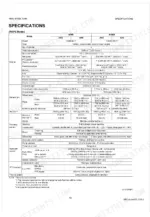
Capacities run as follows: the fuel tank holds 175 L (46.2 U.S.gals). The cooling system takes 9.6 L (10 U.S.qts) of coolant. The engine crankcase with filter needs 10.7 L (11.3 U.S.qts) of oil. The transmission case holds 63.0 L (66.6 U.S.qts) of KUBOTA UDT or SUPER UDT fluid, and the brake system (reservoir and lines) takes 0.3 L (0.32 U.S.qts) of the same.
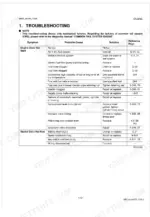
How to troubleshoot engine won't start?
Start with fuel supply: no fuel, air in the system, or water will all stop a start, so fill, vent, or drain as needed. Other likely causes include a clogged fuel filter (replace, page G-32), a blown fuse (replace, page 9-S12), or a damaged engine stop solenoid (replace, page 9-S19). For a compression leak, replace the head gasket and tighten the cylinder head screws (page 1-S53).
What are the hydraulic system specifications?
Pump delivery runs above 48.9 L/min (12.9 U.S.gals./min), with an allowable limit of 39.1 L/min. Maximum scratch depth in the housing bore is 0.09 mm (0.004 in.). Relief valve setting pressure for the three-point hitch hydraulic system is 19.2 to 19.6 MPa (2780 to 2840 psi), and cylinder safety valve operating pressure is 23.1 to 24.5 MPa (3350 to 3550 psi).
Is this Kubota M96S, M108S, M96SDTM Workshop Manual a digital download?
Instant PDF download. The full 708-page searchable Workshop Manual lands the moment payment clears, ready to open on a laptop, tablet, or phone right at the bench.
Can I print specific sections of this Kubota M96S, M108S, M96SDTM manual?
Yes. The PDF carries no DRM restrictions, so you can print any page or section your shop needs. It works with any standard printer.
Are electrical wiring diagrams included in this Kubota M96S, M108S, M96SDTM?
Yes, wiring diagrams are included, covering electrical circuits, harness routing, and connector pinouts across the M96S, M108S, and M96SDTM.
Document Quality
This document is a scanned PDF with an OCR layer, allowing you to search and copy most of the text. The text quality is generally crisp and readable throughout. Diagrams and illustrations are clear raster images, and their labels are legible. Pages are clean with no significant scan artifacts, stains, or skewed content. You will find some intentionally blank pages, particularly as section dividers.


Reviews
There are no reviews yet.