
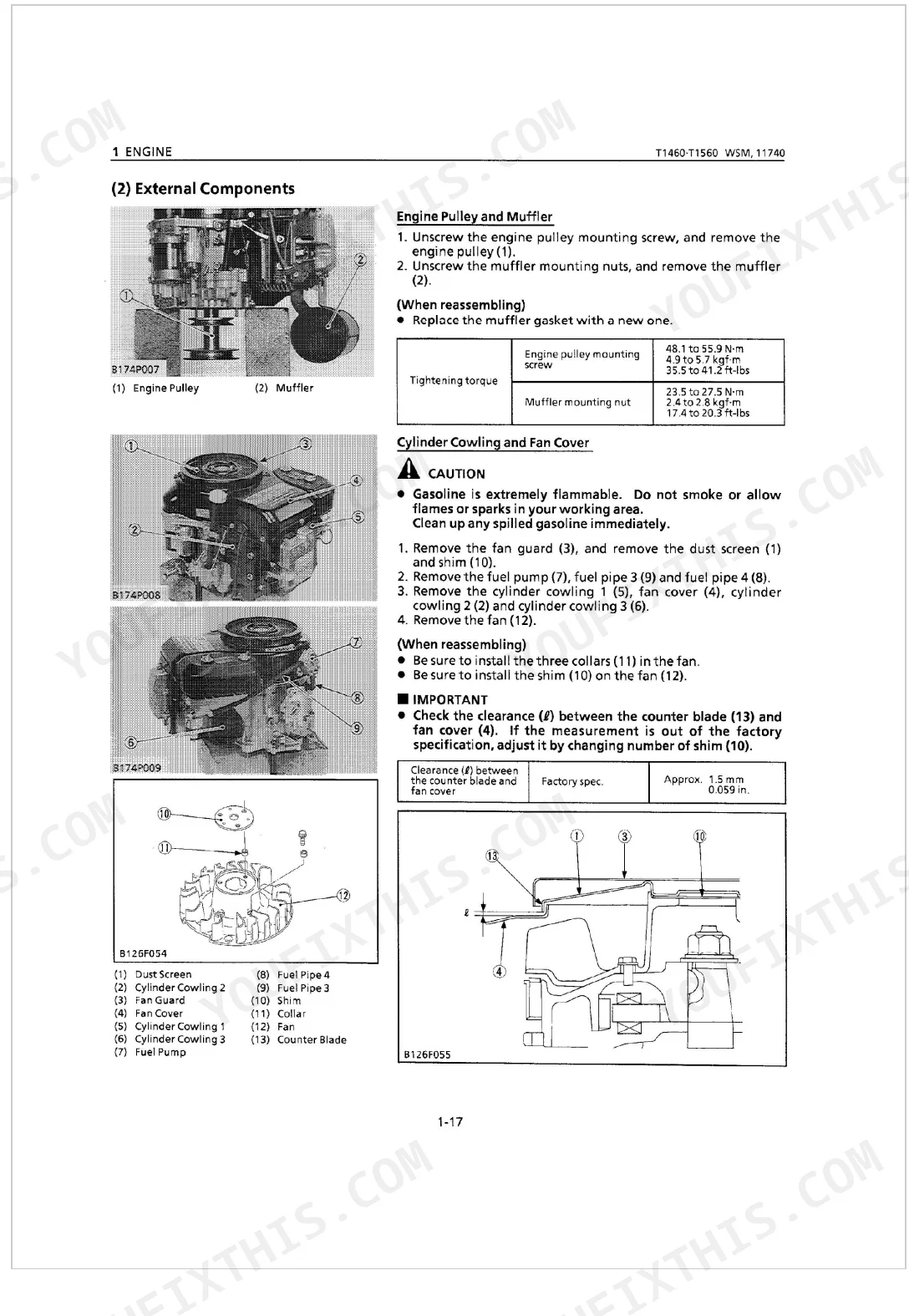
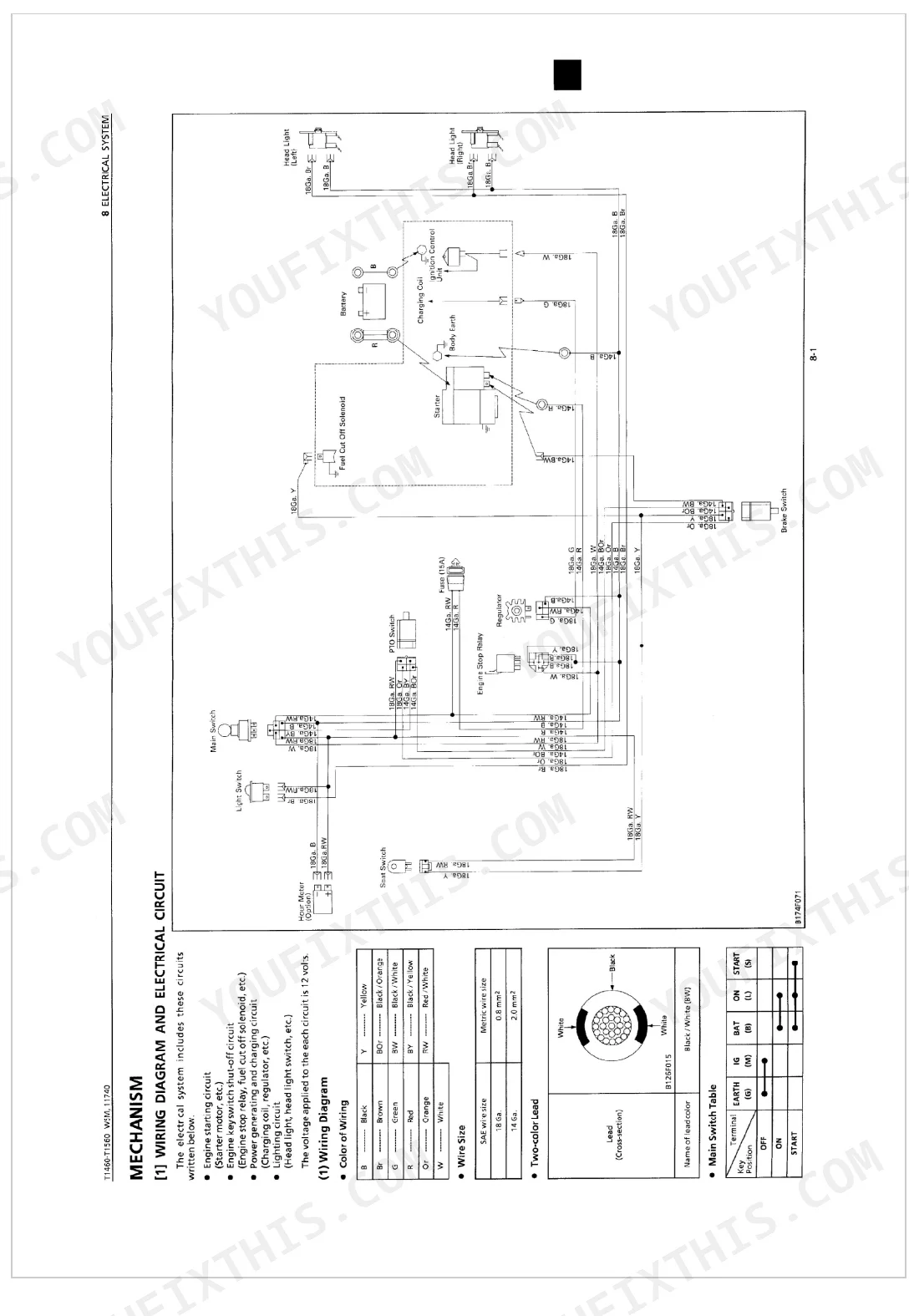
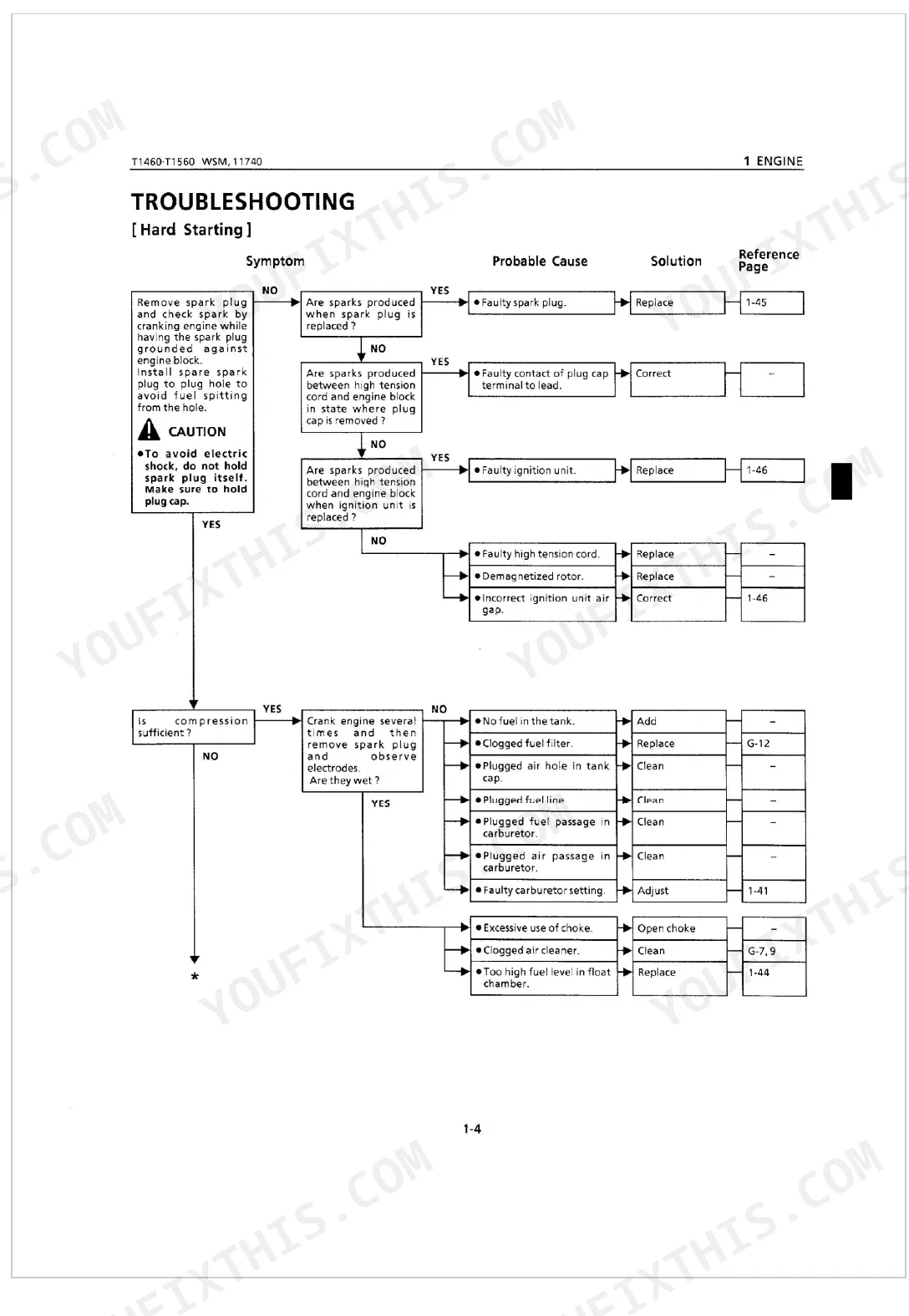
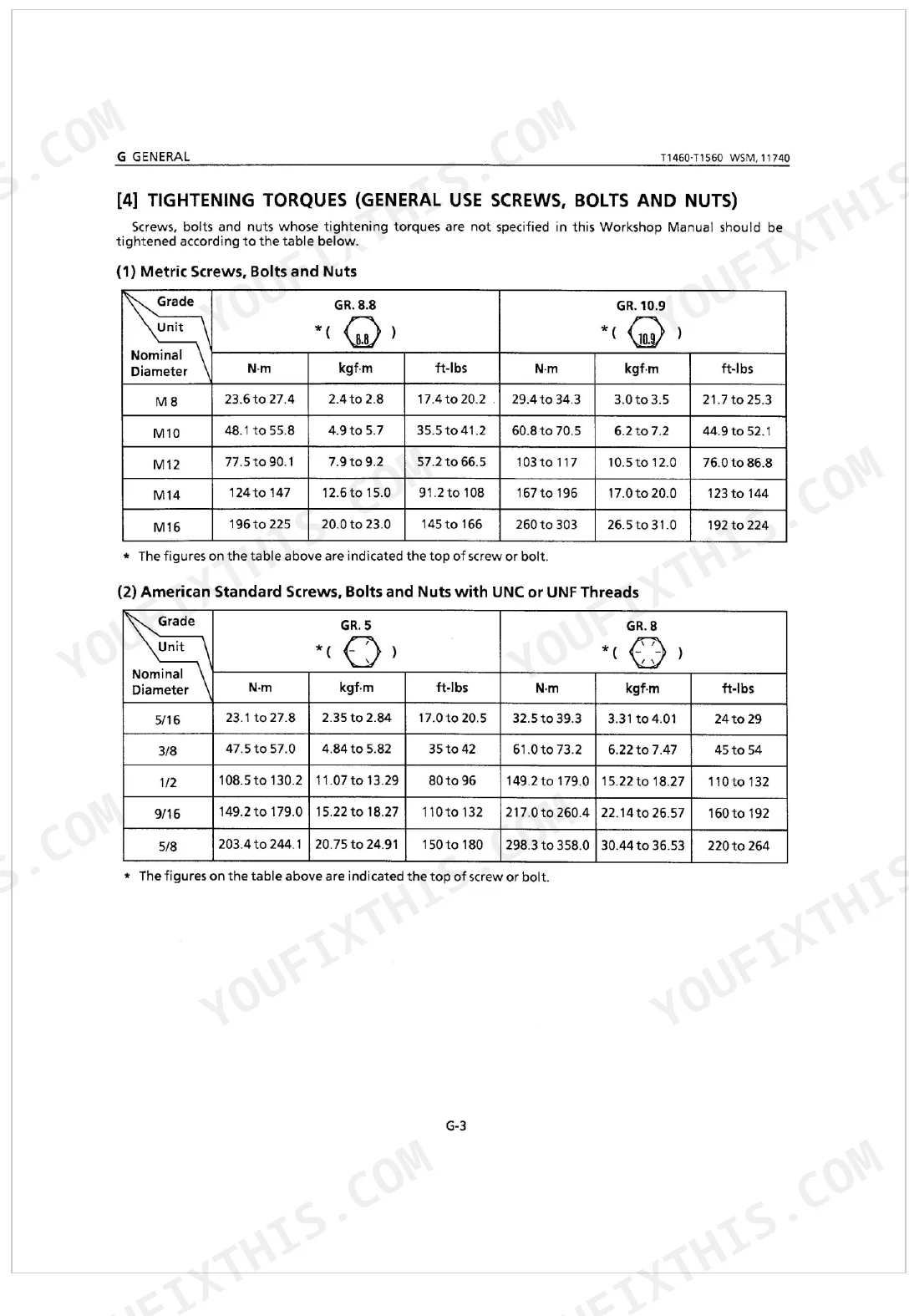
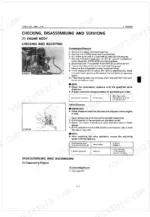
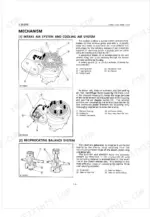
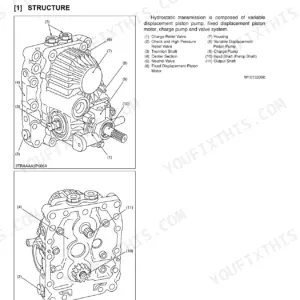
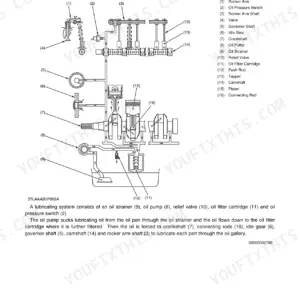
Kubota built the T1460 and T1560 to keep cutting, and this 143-page workshop manual covers what it takes to keep them there: engine internals, the hydrostatic transaxle, PTO system, and mower deck. Wiring diagrams break down every electrical circuit, hydraulic schematics map the hydrostatic transaxle, and exploded views detail the engine, drivetrain, brake, steering, and front axle. Sixteen pages of troubleshooting reach across every major system, with tightening torque specs for both metric and American standard fasteners and a maintenance schedule that runs from daily checks out to the 300-hour mark. Valve clearance sits at 0.15 mm; the hydrostatic transaxle takes 2.3L before you close it up. Since every idle hour costs you, the manual is bookmarked and searchable, so any section or spec comes up fast on a tablet beside the machine.
What's Inside This Kubota T1460, T1560 Manual
| System | Pages | Key Topics |
|---|---|---|
| General | 9-23 | Unit Identification, Lubricants And Fuel, Maintenance Check List |
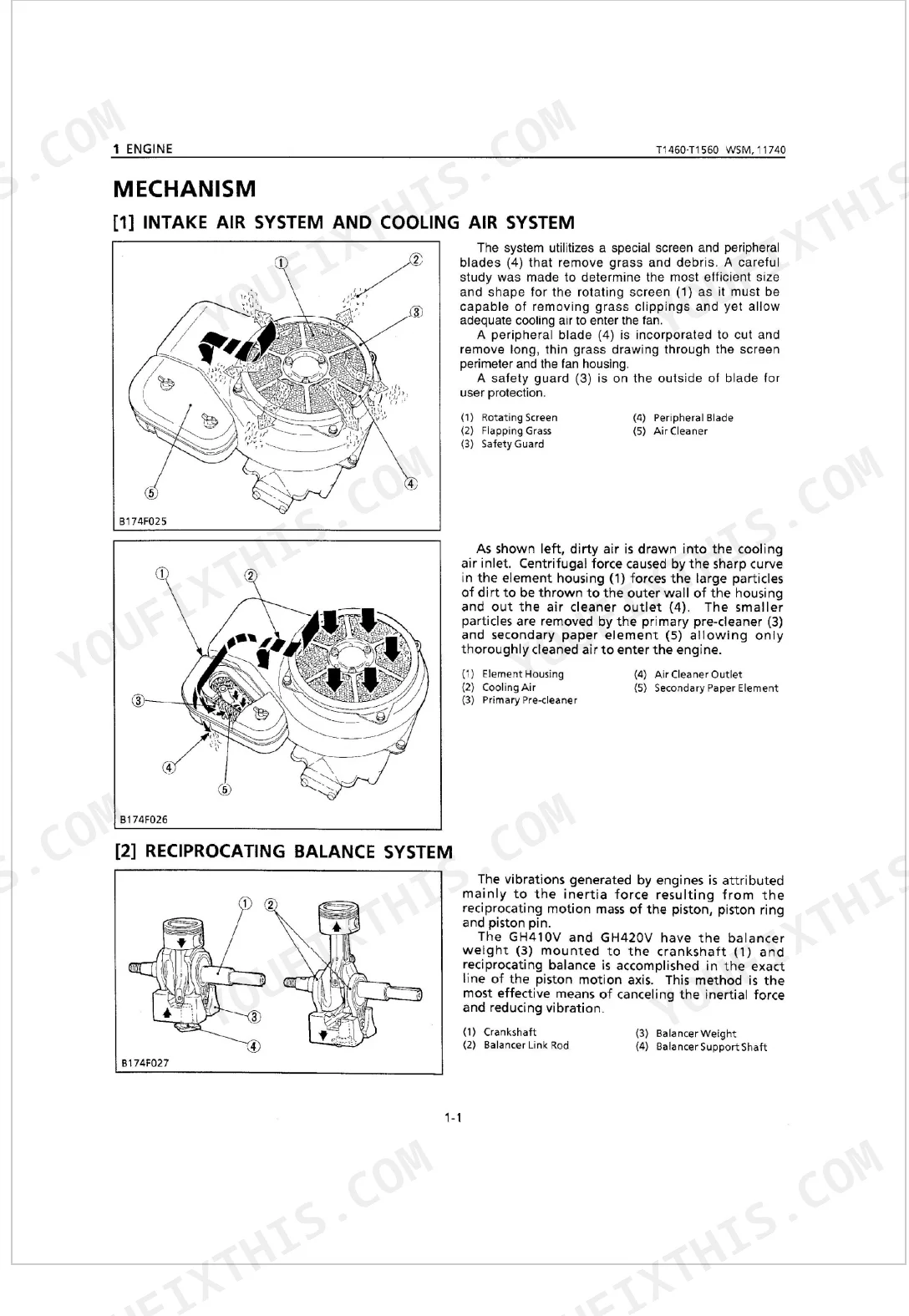
| Engine | 24-74 | Intake Air System And Cooling Air System, Reciprocating Balance System, Lubricating System, Ignition System, Auto Throttle Advance System, Checking |
| Hydrostatic Transaxle | 75-91 | Mechanism, Servicing, Checking |
| Brake | 92-95 | Checking and Adjusting, Disassembling and Assembling |
| Front Axle | 96-99 | Checking and Adjusting, Disassembling and Assembling |
| Steering | 100-104 | Servicing, Checking, Disassembling And Servicing |
| Fender And Lift System | 105-111 | Checking, Disassembling And Servicing (Separating Fender, Lift Linkage, Lift Lever) |
| PTO System | 112-116 | Checking, Disassembling And Servicing |
| Electrical System | 117-134 | Mechanism (Wiring Diagram And Electrical Circuit, Wiring Diagram, Electrical Circuit), Checking |
| Mower | 135-143 | Disassembling And Assembling, Servicing, Checking, Disassembling And Servicing |
Every system also includes servicing specifications, troubleshooting, and tightening torques.
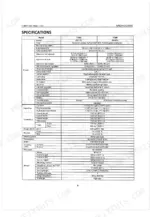
Quick Reference Specifications
| Specification | Value | Page |
|---|---|---|
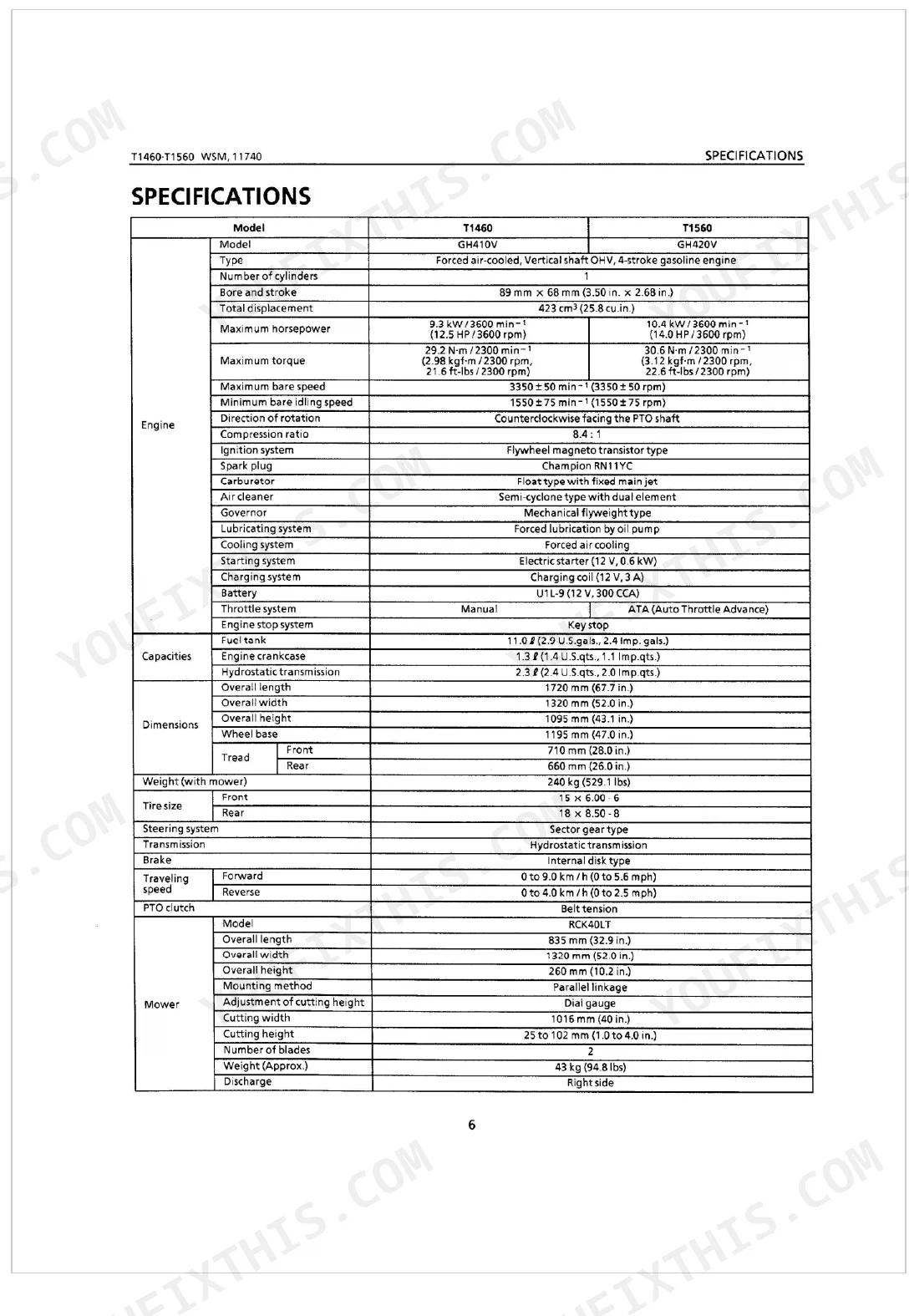
| Fuel tank capacity | 11.0 l (2.9 U.S.gals., 2.4 Imp. gals.) | p. 11 |
| Engine crankcase capacity | 1.3 l (1.4 U.S.qts., 1.1 Imp.qts.) | p. 11 |
| Engine Oil Capacity | 1.3 L | p. 11 |
| Hydrostatic Transaxle Capacity | 2.3 L | p. 11 |
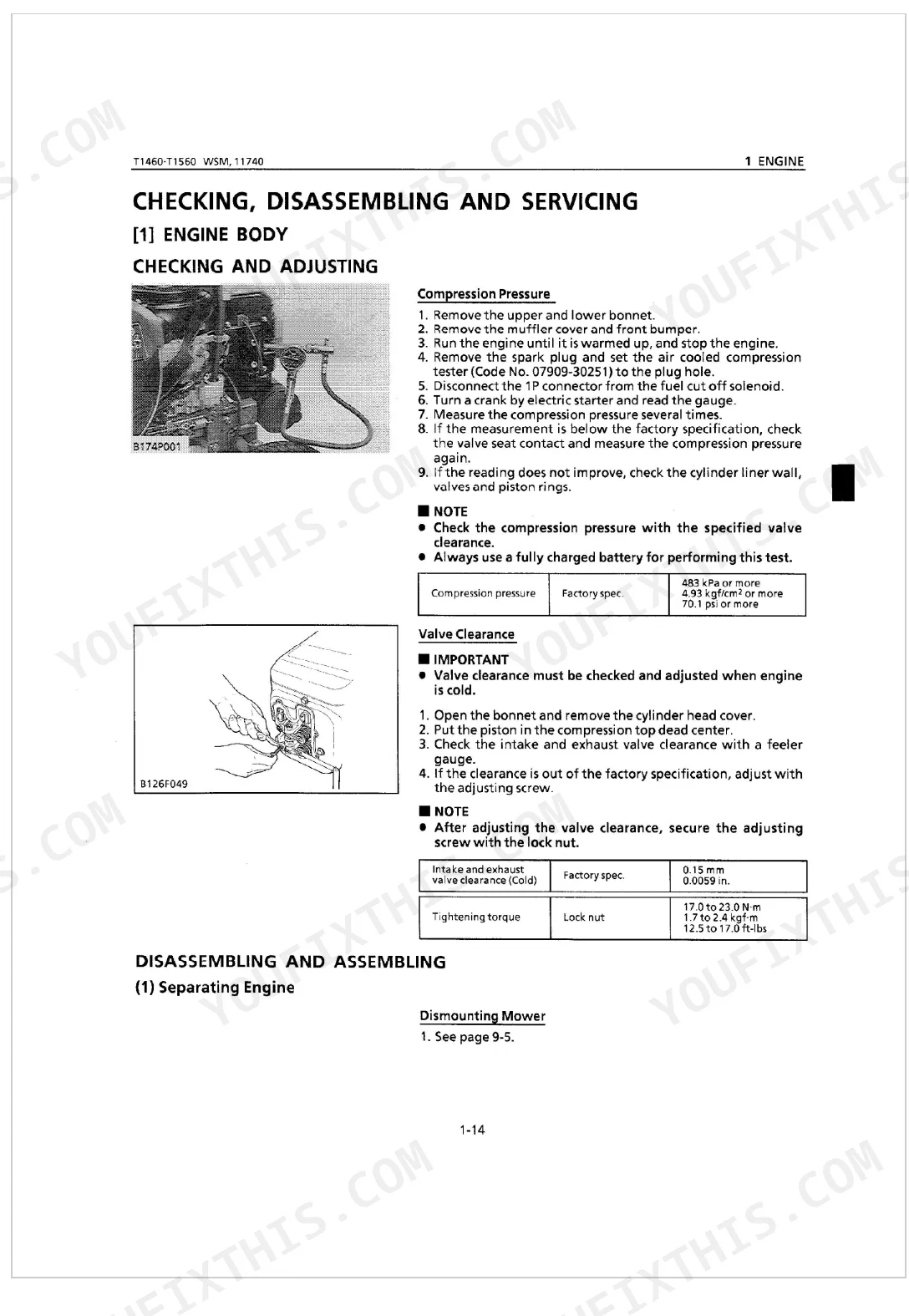
| Valve Clearance (Intake and Exhaust) | 0.15 mm | p. 34 |
| Spark Plug Gap | 0.7 to 0.8 mm | p. 37 |
| Engine Oil Pressure (Factory Spec) | 294 kPa or more | p. 36 |
| Engine Oil Pressure (Allowable Limit) | 235 kPa | p. 36 |
| Cylinder Head Surface Flatness (Allowable Limit) | 0.05 mm | p. 34 |
| Rotor Mounting Nut Torque | 127.0 to 147.0 N-m | p. 37 |
| Connecting Rod Screw Torque | 19.0 to 20.0 N-m | p. 37 |
| PTO Tension Spring Length (Factory Spec) | 69 to 72 mm | p. 113 |
Kubota T1460, T1560 Common Problems This Manual Covers
Kubota T1460 engine hard to start or cranks slowly in cold morning conditions p. 28
Check the spark plug gap; it should measure 0.7 to 0.8 mm (page 37). Remove and inspect the air cleaner foam element; clean it every 25 hours per the maintenance schedule on page 13. If hard starting persists in cold conditions, run through the full engine troubleshooting sequence starting on page 28.
Manual Section: Engine TroubleshootingEngine runs erratically at low RPM, surges, or cuts out under light mowing load p. 28
Remove and clean the carburetor bowl and jets; stale fuel varnish is the usual culprit after seasonal storage. Change the engine oil (capacity 1.3 L) if it is past the initial 50-hour service interval. If surging continues, check valve clearance: intake and exhaust should both measure 0.15 mm (page 34).
Manual Section: Engine TroubleshootingHydrostatic transaxle runs hot, loses drive power, or only moves in one direction p. 75
Verify the transaxle fluid level first; capacity is 2.3 L, and low fluid drives most heat buildup and power loss. Clear the cooling fins of packed grass and debris. If the unit moves in only one direction or slips under load, work through the hydrostatic system diagnostics starting on page 75.
Manual Section: Hydrostatic Transaxle TroubleshootingPTO blade engagement lever stiff or blades fail to spin at full deck speed p. 113
Measure the PTO tension spring free length: factory spec is 69 to 72 mm (page 113). A stretched or broken spring is the most common cause of clutch slip and engagement drag. Inspect the PTO belt for glazing or cracking. If the lever stays stiff, work through PTO system diagnostics starting on page 112.
Manual Section: PTO System TroubleshootingMower deck leaving uncut streaks or scalping low spots despite deck height adjustment p. 135
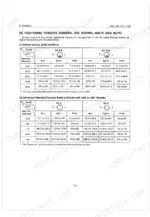
Inspect all three blades for wear, damage, and balance before assuming a leveling problem. Clean the discharge chute of packed clippings; restricted airflow is the most common cause of streaking. Torque blade mounting hardware to 23.6 to 27.4 N-m for M8 grade 8.8 fasteners (page 12). Full deck service procedures are on page 135.
Manual Section: Mower TroubleshootingSteering wheel has too much play or requires excessive effort to turn front wheels p. 101
Gauge steering wheel free play; factory spec is 20 to 30 mm (page 101). Play beyond that limit points to worn tie-rod ends or loose steering gear connections. For hard steering, check front axle pivot and kingpin lubrication; grease all nipples at the initial 25-hour service. Full steering inspection procedures are on page 100.
Manual Section: Steering TroubleshootingFrequently Asked Questions
What are the recommended service intervals?
Service intervals run from daily checks to initial checks at 25 and 50 hours, plus recurring ones every 25, 50, 100, and 300 hours. The air cleaner element, for instance, gets changed every 300 hours or 3 years, whichever comes first.
What fluids and capacities does this machine require?
Each component takes its own fluid and capacity. The fuel tank holds 11.0 liters (2.9 U.S. gallons) of automobile unleaded gasoline, minimum 87 octane. The engine crankcase takes 1.3 liters (1.4 U.S. quarts) of API SE or SF oil (SAE5W-20 below 0°C, SAE30 above 0°C), and the hydrostatic transaxle needs 2.3 liters (2.4 U.S. quarts) of API CD or SG SAE 20W-50.
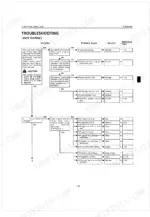
How to troubleshoot engine won't start?
Start with the spark plug, checking for faults, proper contact, and the ignition unit (spark plug replacement on page 1-45). Verify compression next, inspecting piston rings, cylinder bore, and valve seating (piston/piston rings on page 1-31). Examine the fuel system for an empty tank, clogged filters, plugged lines, or wrong carburetor settings (fuel filter on page G-12). Finally, confirm the safety controls are set: seat occupied, brake pedal down, and PTO clutch lever at "DISENGAGE," then look for blown fuses or bad switches (electrical troubleshooting on page 120).
What are the hydraulic system specifications?
Maximum forward speed runs 103 to 116 min⁻¹ (rpm) and maximum reverse 48 to 68 min⁻¹ (rpm), both at an engine speed of 3350 min⁻¹ (rpm) with no load. The Plain Washer 2 to Retaining Ring clearance should be 0.76 mm (0.030 in.), and the Brake Stator to Brake Stator clearance is approximately 0.76 mm (0.030 in.).
Is this Kubota T1460, T1560 Workshop Manual a digital download?
This is a 143-page searchable PDF ready for immediate download. It works on any device, so you can pull it up on your phone while you're under the hood. No shipping, no waiting.
Am I able to print pages from this Kubota T1460, T1560 manual?
Yes, print as many copies as you want; there are no restrictions. Plenty of mechanics print just the section they need and carry it to the shop floor.
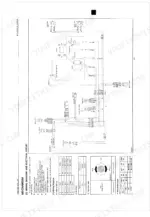
Does this Kubota T1460, T1560 Workshop Manual have electrical diagrams?
Yes. Full electrical schematics are included, with wire colors, connector locations, and circuit descriptions.
Document Quality
This document is a scanned PDF with an OCR layer, meaning you can search and copy the full text from all pages. The text is crisp and consistently easy to read, with no blurry or faded sections. Diagrams and illustrations are clear raster images, and their labels are well-defined and readable. The page condition is clean, showing no scan artifacts, stains, or skewed content, and there are no notable blank or filler pages present.


Reviews
There are no reviews yet.