
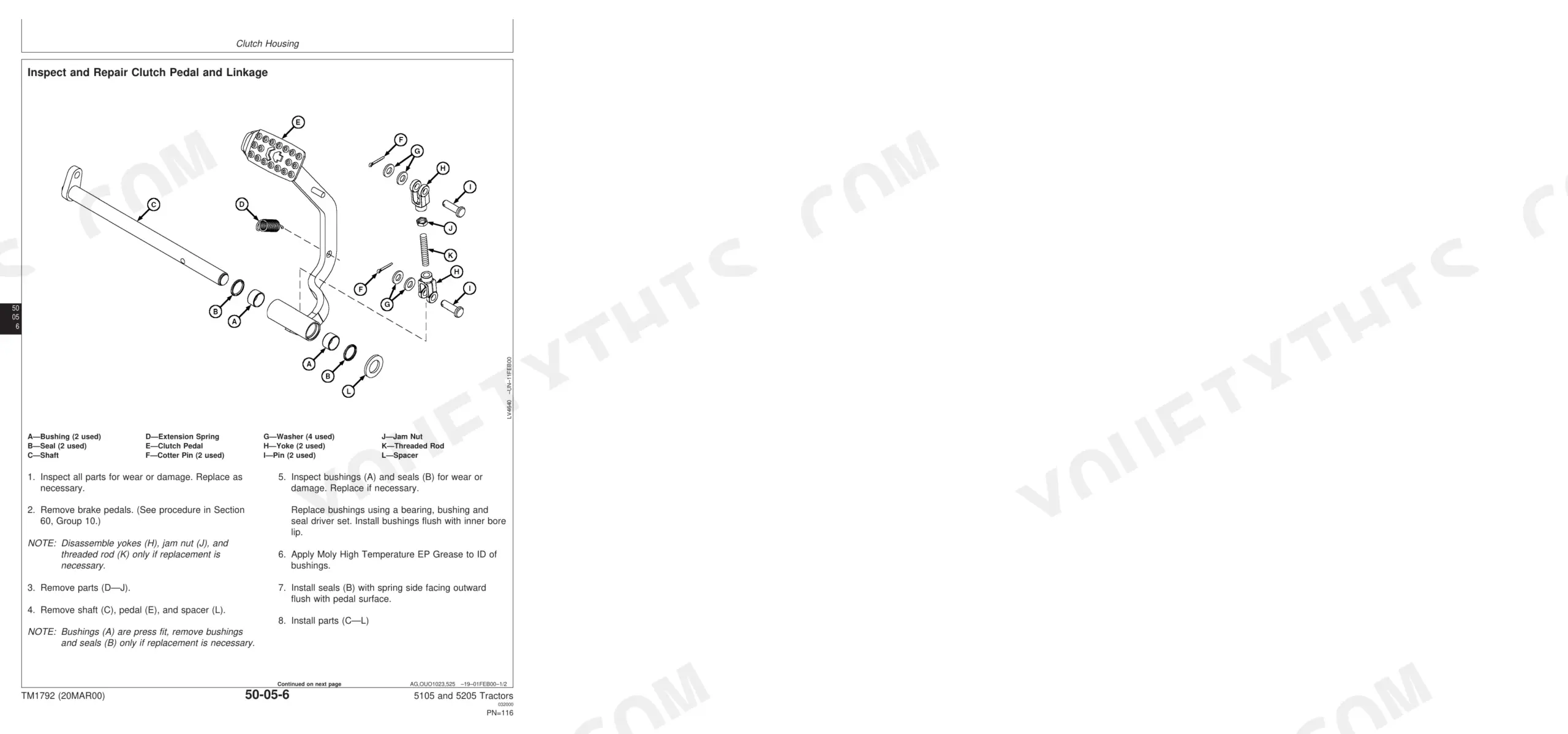
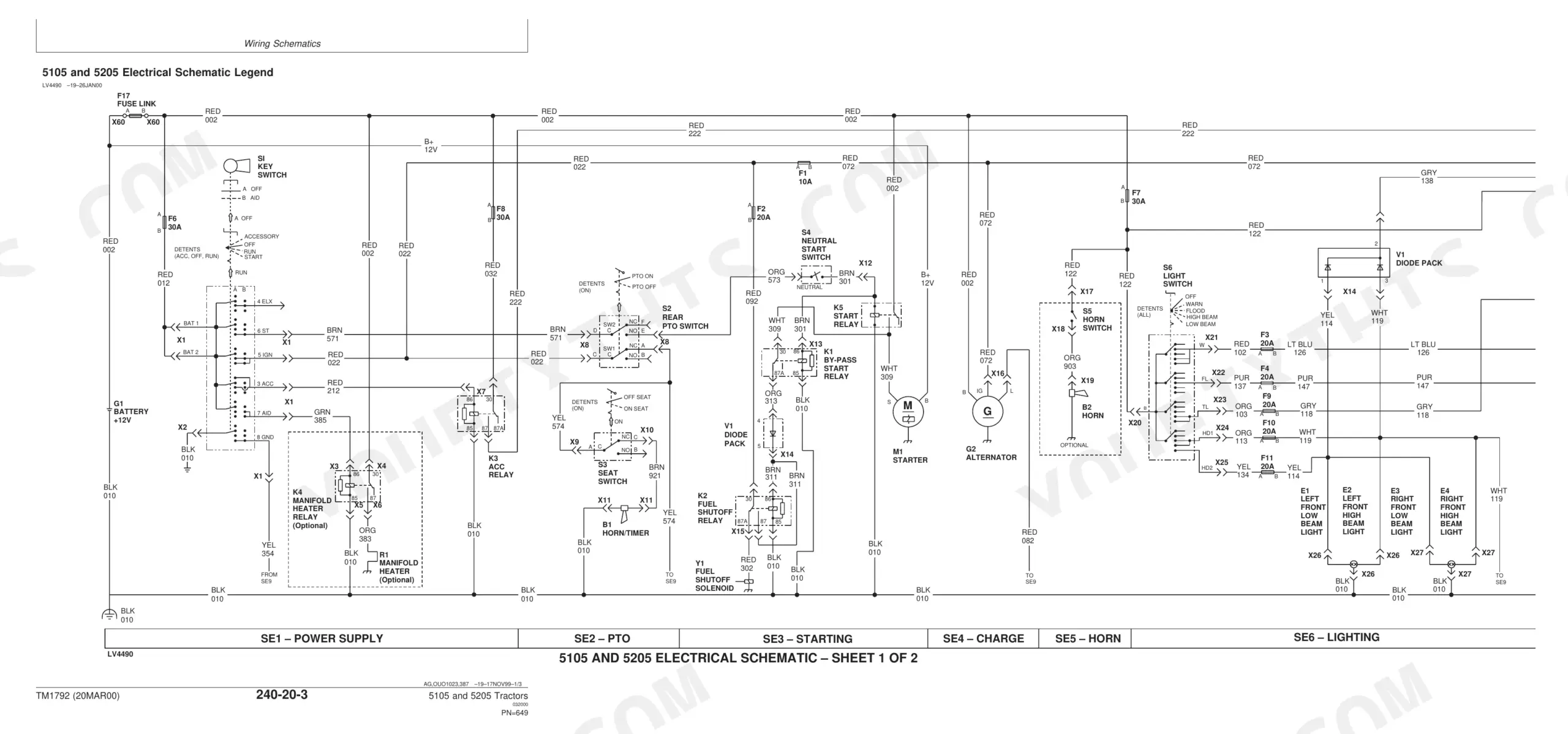
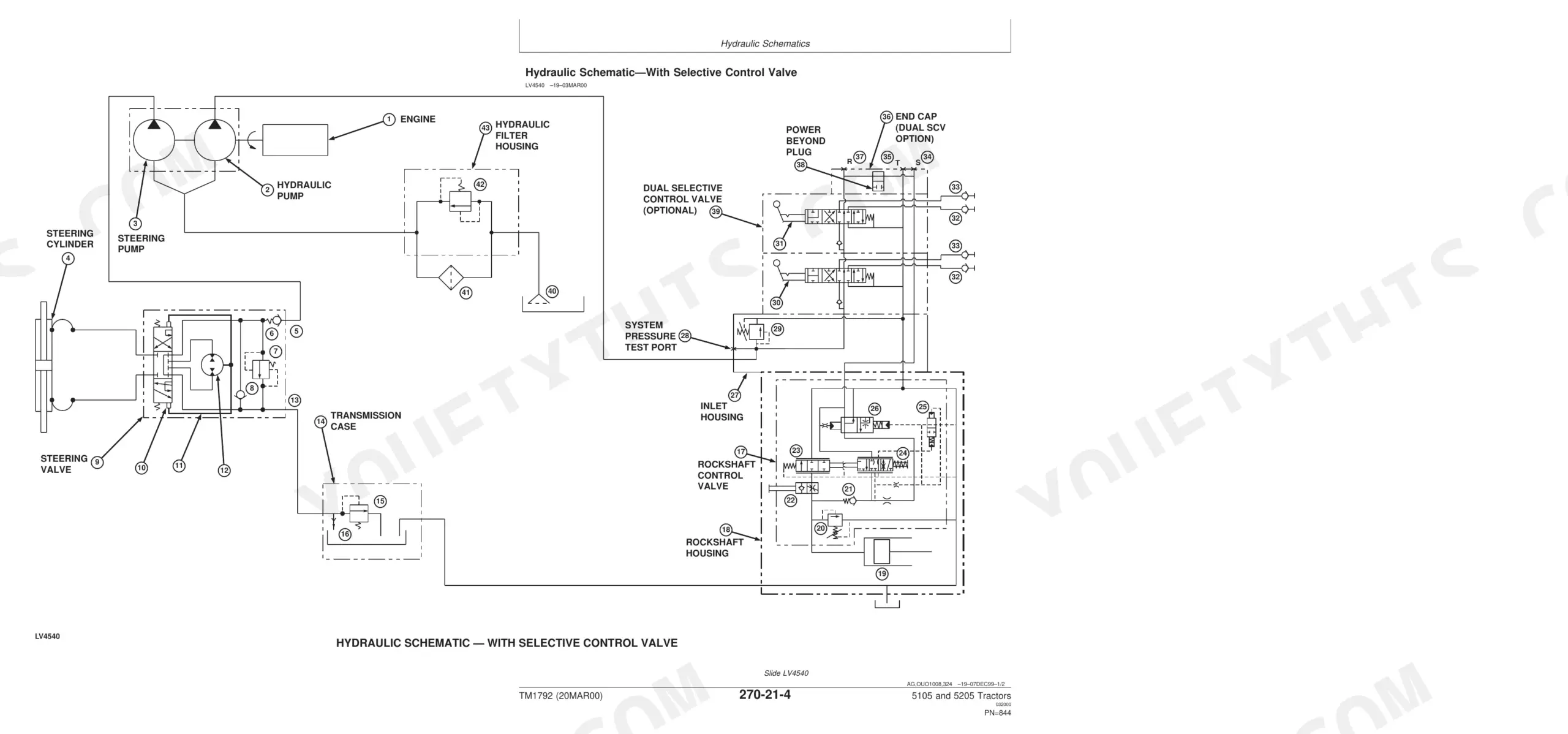
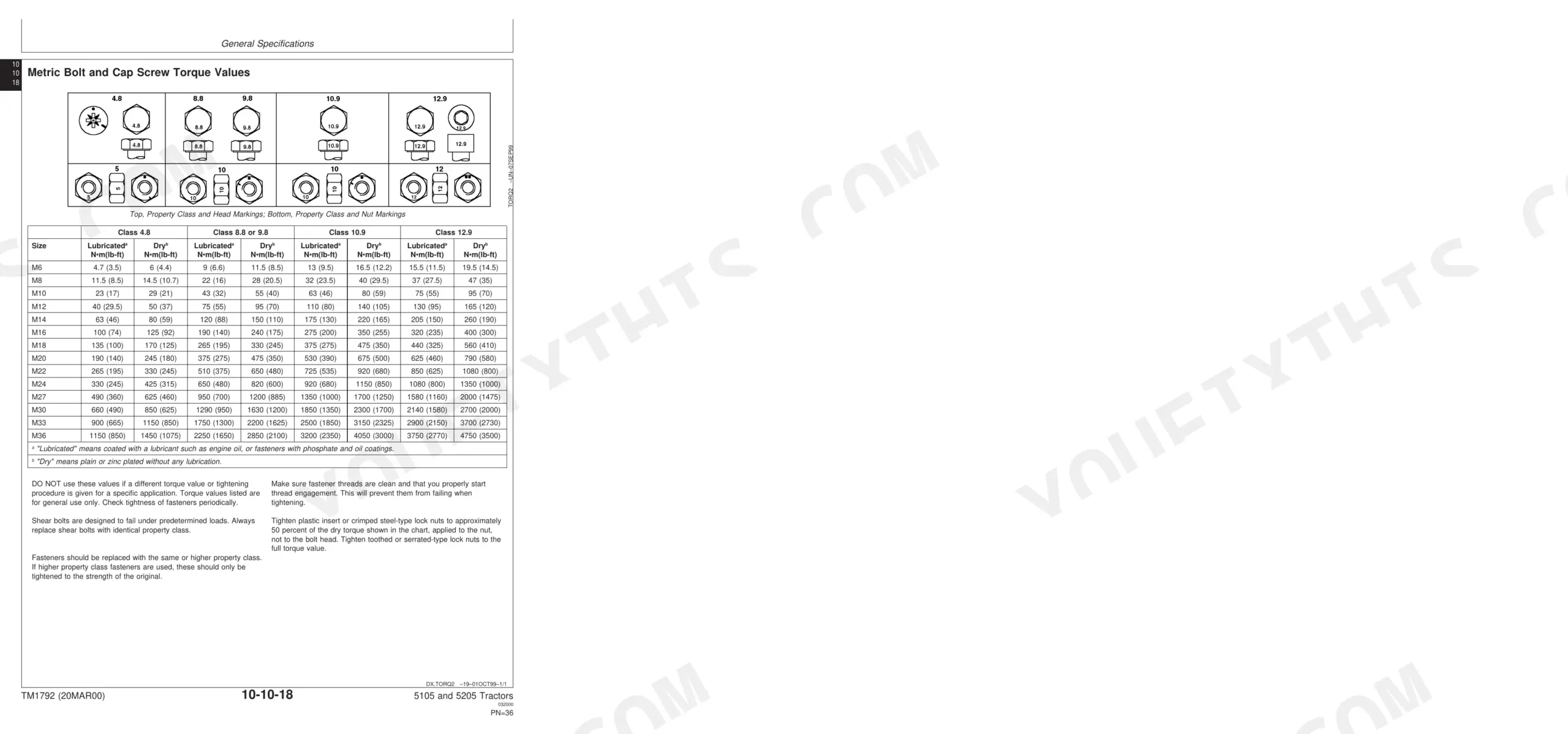
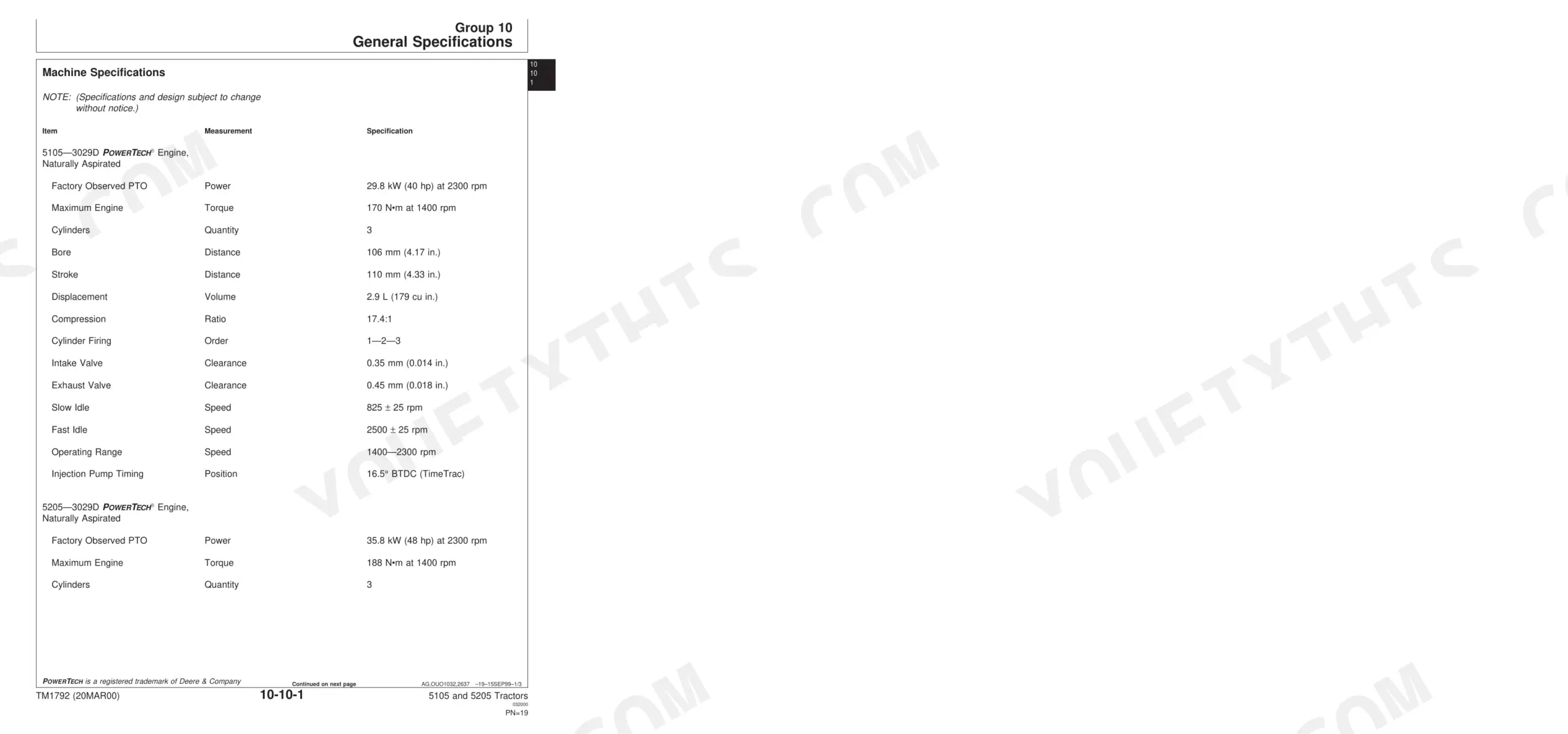
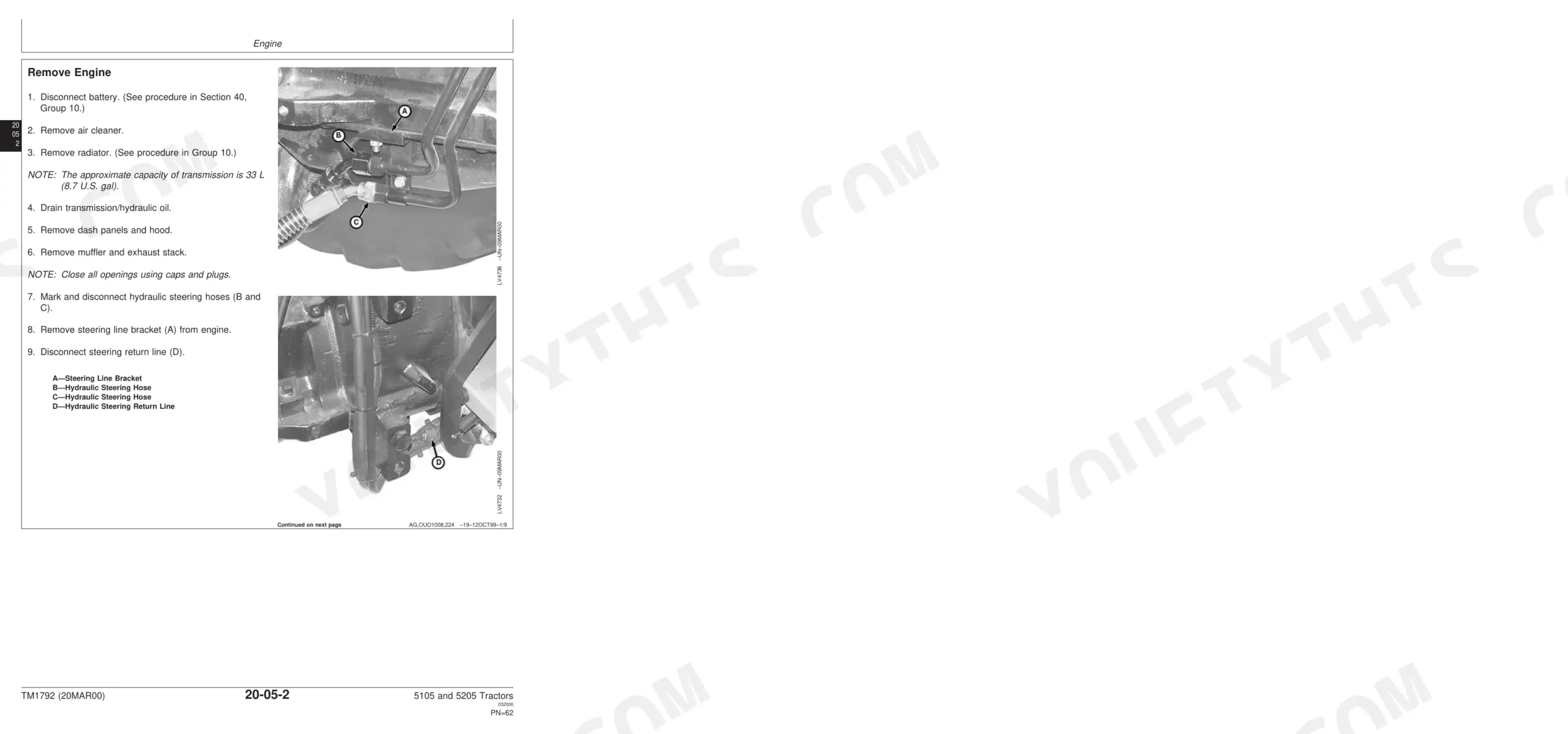
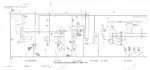
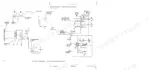
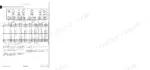
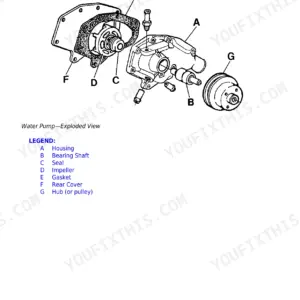
All 894 pages of this John Deere 5105, 5205 Technical Manual PDF (OEM #TM1792) are factory-original: every system from clutch housing and transmission to hydraulic rockshaft and MFWD front axle, documented exactly as John Deere built it. Inside you get wiring schematics covering battery, starter, alternator, and full harness routing, plus hydraulic schematics across the pump, filter, rockshaft, Selective Control Valve, and mid-mount coupler. Add extensive troubleshooting procedures, test values, and full operational checkout for every major system. Set MFWD front wheel nuts to 300 N•m (220 lb-ft); confirm the radiator cap pressure valve opens between 43 and 53 kPa before buttoning up the cooling system. Your machine is down. Get the factory answer, not a forum guess. Bookmarked and keyword-searchable; open it on any device, jump straight to the system you need, and get back to work.
What's Inside This John Deere 5105, 5205 Manual
| System | Pages | Key Topics |
|---|---|---|
| General Information | 7-60 | Safety, Fuel and Lubricants, Serial Number Locations, Features and Accessories |
| Engine Repair | 61-78 | Engine, Cooling System |
| Fuel and Air Repair | 79-88 | Fuel System, Air Intake System, Speed Control Linkage |
| Electrical Repair | 89-110 | Battery, Starter and Alternator, Electrical System Components, Wiring Harness |
| Power Train Repair | 111-244 | Clutch Housing, Clutch Assembly, Transmission, Rear PTO, Differential, Final Drives, Mechanical Front Wheel Drive |
| Steering and Brake Repair | 245-276 | Steering Repair, Brake Repair |
| Hydraulic Repair | 277-348 | Hydraulic Pump and Filter, Rockshaft, Selective Control Valve, Hydraulic Mid Mount Coupler |
| Miscellaneous Repair | 349-366 | Front Axle?2WD, Wheels, 3-Point Hitch |
| Operator Station Repair | 367-386 | Seat and Support, Roll-Gard?, Operator Platform, Fenders |
| Operational Checkout Procedures | 387-416 | Engine Oil Level and Condition Check, Coolant Level and Condition Check, Transmission and Hydraulic Oil Check, Electrical System Check, Hydraulic System Check, Brake Check |
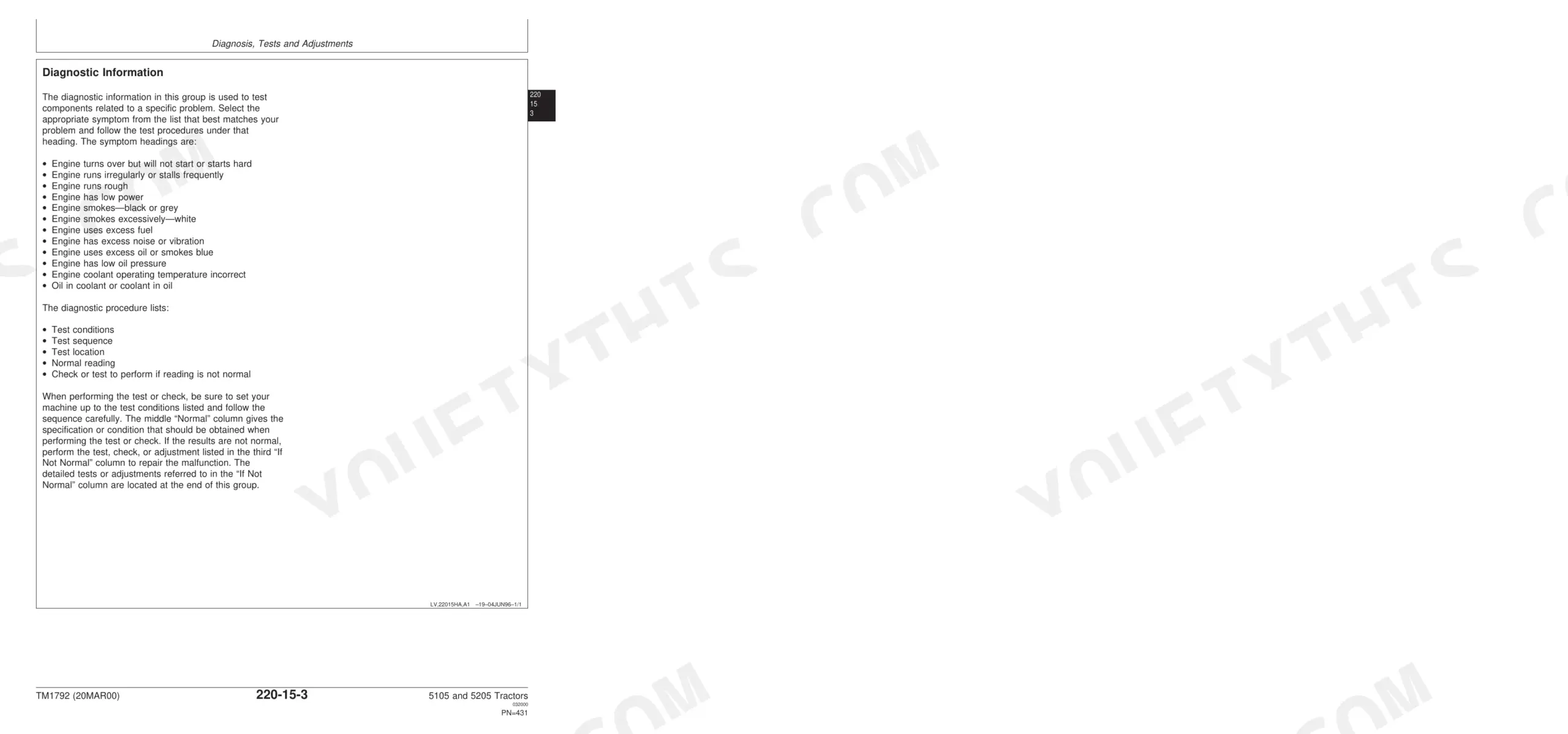
| Engine Operation, Tests and Adjustments | 417-462 | Engine Component Location, Lubrication & Cooling Theory of Operation, Hard-Start / Low-Power / Smoke Diagnosis, Oil Pressure & Compression Tests, Injection Pump Timing, Valve Clearance Adjustment |
| Fuel/Air Operation, Tests and Adjustments | 463-482 | Fuel & Air Intake Component Location, Fuel System / Injection Nozzle Theory of Operation, Fuel-Air Diagnosis, Tests and Adjustments |
| Electrical System Operation, Tests & Adjust | 483-670 | Component Location, Theory of Operation, Diagnosis, Test and Adjust, Wiring Schematics |
| Power Train Operation, Tests & Adjustments | 671-730 | Component Location?Power Train, Theory of Operation?Transmission, Diagnosis, Tests and Adjustments?Power Train |
| Steering and Brake Operation, Test & Adjust | 731-764 | Steering & Brake Component Location, Steering Valve Theory of Operation, Steering Pump Flow & Relief Tests, Steering Cylinder Leakage Test, Toe-In & Brake Pedal Adjustment |
| Hydraulic System Operation, Test & Adjust | 765-878 | Component Location, Theory of Operation, Diagnosis, Hydraulic Tests?Without SCV, Hydraulic Tests?With SCV, Hydraulic Tests?With Mid Mount Control Valve, Hydraulic Tests?All |
| Dealer Fabricated Tools | 879-882 | DFLV1A Final Drive Turning Tool |
Quick Reference Specifications
| Specification | Value | Page |
|---|---|---|
| Front Wheel Cap Screws Torque (2WD) | 175 N•m (130 lb-ft) | p. 357 |
| MFWD Front Wheel Nuts Torque | 300 N•m (220 lb-ft) | p. 225 |
| Fuel Filter Element | Replace element | p. 434 |
| Radiator Cap Pressure Valve Opening Pressure | 43—53 kPa (0.43—0.53 bar) (6.25—7.75 psi) | p. 431 |
| New Standard V-Belt—JDG529 Gauge Method Tension | 578—622 N (130—140 lb force) | p. 431 |
| Used Standard V-Belt—JDG529 Gauge Method Tension | 378—423 N (85—94 lb force) | p. 431 |
| Fuel Injection Nozzle Line Nuts Torque | 27 N•m (20 lb-ft) | p. 462 |
| Crankcase Breather | No restrictions | p. 442 |
| Thermostat (Starts to open / full open) | 71°C (160°F) / 95°C (202°F) | p. 443 |
| Engine Oil Temperature at 825 rpm Engine Speed Temperature | 93°C (200°F) | p. 431 |
| Power train housings condition | Clean and dry, with no evidence of leakage from drain plugs, gaskets or seals. | p. 720 |
| Engine Displacement | 2.9 L | p. 21 |
John Deere 5105, 5205 Common Problems This Manual Covers
John Deere 5105/5205 engine cranks but won't start or fires and immediately dies p. 433
Check the fuel shut-off valve is open and the injection pump shut-off is reset. Replace the fuel filter element per page 434. Verify the battery delivers 12 volts (page 22); a weak battery may not spin the engine fast enough to fire. If no-start persists after bleeding the fuel lines, follow diagnosis procedures on page 433.
Manual Section: Engine Diagnosis, Tests and AdjustmentsEngine temperature gauge climbs into red during heavy loader or PTO work p. 431
Inspect the radiator core and grille screens for packed debris. Check coolant level; the system holds 8.93 L (page 23) and low coolant is the fastest path to overheating. Test the radiator cap: it should open between 43-53 kPa (6.25-7.75 psi) per page 431. If cap and coolant check out, verify the thermostat starts opening at 71°C (page 443).
Manual Section: Engine Diagnosis, Tests and AdjustmentsEngine knocks at startup or under load, oil pressure warning light on p. 431
Check engine oil immediately; crankcase capacity is 7.5 L including filter change (page 23). Pull the dipstick for milky or sludge-black oil, which points to coolant intrusion or long-overdue service. Verify minimum oil pressure reaches 100 kPa (15 psi) at 825 rpm using the diagnostic values on page 431. Do not operate until pressure confirms normal.
Manual Section: Engine Diagnosis, Tests and AdjustmentsFuel consumption noticeably higher than normal, black smoke puffing at full throttle p. 463
Inspect the air filter for restriction; a plugged intake starves combustion and spikes fuel use. Check the crankcase vent tube; the spec calls for no restrictions (page 442). Verify injector line nuts are torqued to 27 N•m (20 lb-ft) at page 462, since loose fittings drip fuel between cycles and inflate consumption totals significantly.
Manual Section: Fuel/Air Operation, Tests and AdjustmentsOil wet spots under tractor each morning, transmission or engine area seeping p. 720
Verify all powertrain housings are clean and dry with no leakage from drain plugs, gaskets, or seals per page 720. Inspect the crankcase vent tube for blockage per page 442; a plugged vent pressurizes the crankcase and forces oil past seals. Top up the crankcase to the full mark; capacity is 7.5 L with filter change (page 23).
Manual Section: Power Train Diagnosis, Tests and AdjustmentsAlternator warning light stays on, battery not charging, belt squealing under hood p. 431
Inspect the fan belt for cracking or glazing. Apply 89 N (20 lb force) midspan and check for 19 mm (0.750 in.) deflection per page 431; a used belt in good condition should show 378-423 N (85-94 lb force) tension. With the belt tensioned correctly, verify alternator output against the 40-amp rating on page 22.
Manual Section: Electrical System Diagnosis, Test and AdjustFrequently Asked Questions
What do John Deere 5105/5205 warning lights and oil pressure/charging system indicators mean?
The manual identifies several indicator lamps: A—PTO Engaged Indicator, B—Air Cleaner Restriction Indicator, C—High Beam Indicator, D—Charging System Indicator, and E—Engine Oil Pressure Indicator. For example, lamps D and E should be off when the engine is running, and lamp B lights when the key is advanced to "START" position.
Why won’t my John Deere 5205 start even though the battery is charged?
If the engine turns over but will not start or starts hard, several factors could be at play. These include issues with the fuel tank caps (e.g., pressure/vacuum), incorrect diesel fuel grade, a malfunctioning fuel shut-off solenoid, or a restricted fuel filter. The manual provides a troubleshooting table to diagnose these issues, directing to specific sections for repair if needed.
How do I troubleshoot a John Deere 5105/5205 that has no crank/no start?
To troubleshoot a no-crank/no-start condition, refer to the "Engine Turns Over But Will Not Start or Starts Hard" diagnostic table. This table guides you through checking components like fuel tank caps, fuel grade, fuel shut-off solenoid, and fuel filter. If issues are found, the manual directs to specific repair sections like CTM8 for engine and fuel system repairs, or Section 240, Group 15 for ignition and electrical tests.
What are the common John Deere 5105/5205 transmission or clutch problems?
Common transmission and clutch problems include: Traction Clutch Slips, Dragging, or Not Engaging; Clutch Pedal Loose, Pulsates, or Does Not Return; Jerky or Rough Transmission of Power; Low Transmission Oil Level; Gears Clash, Shifts Hard, or Will Not Engage; Two Speeds Engage Together; Transmission Will Not Stay in Gear; and Transmission Noisy. Each problem has a dedicated section for diagnosis, tests, and adjustments within Group 15 of the Power Train Operation section.
Is this John Deere 5105, 5205 Technical Manual a digital download?
Instant PDF download. You get the full 894-page searchable Technical Manual immediately after payment. Open it on your laptop, tablet, or phone right in the shop.
Can I print this manual?
Absolutely. No DRM or copy protection. Print the whole manual or just the pages you need. Any home or office printer works.
Can I find wiring schematics in this John Deere 5105, 5205 manual?
Complete wiring diagrams are included, covering all electrical circuits, harness routing, and connector pinouts for the John Deere 5105, 5205.
Document Quality
This document is a scanned PDF with an OCR layer, allowing you to search and copy text throughout. The text is generally crisp and easy to read. Diagrams and illustrations are scanned images, with labels mostly clear, though some show slight pixelation. Pages are clean with no notable stains or marks. Be aware that the document contains a significant number of blank or filler pages, particularly within the table of contents and at the end of various sections.


Reviews
There are no reviews yet.