
Need a Kubota mx5000 service manual pdf built from real factory data? This Kubota MX5000 Shop Manual (OEM #97897-12920) runs 316 pages, covering the tractor from engine body to electrical: clutch, transmission, rear axle, brakes, front axle, steering, and hydraulics. Hydraulic circuit schematics map both the main system and the three-point hitch, while color-coded wiring diagrams trace the full electrical system, and 9 pages of troubleshooting are spread across every major assembly. Nearly 100 pages walk through disassembly and assembly, backed by tightening torque tables, with maintenance intervals running from the first 50-hour check out to 3,000 hours. The engine puts out 32.8 kW (44 HP); fill the oil sump to 7.6 L and the transmission case to 44 L before startup. Bookmarked and keyword-searchable, it opens on laptop, tablet, or phone.
What's Inside This Kubota MX5000 Manual
| System | Pages | Key Topics |
|---|---|---|
| Safety Instructions | 3-8 | Safety First, Danger, Warning, Caution, Important, Note, Before Servicing and Repairing, Safety Starting |
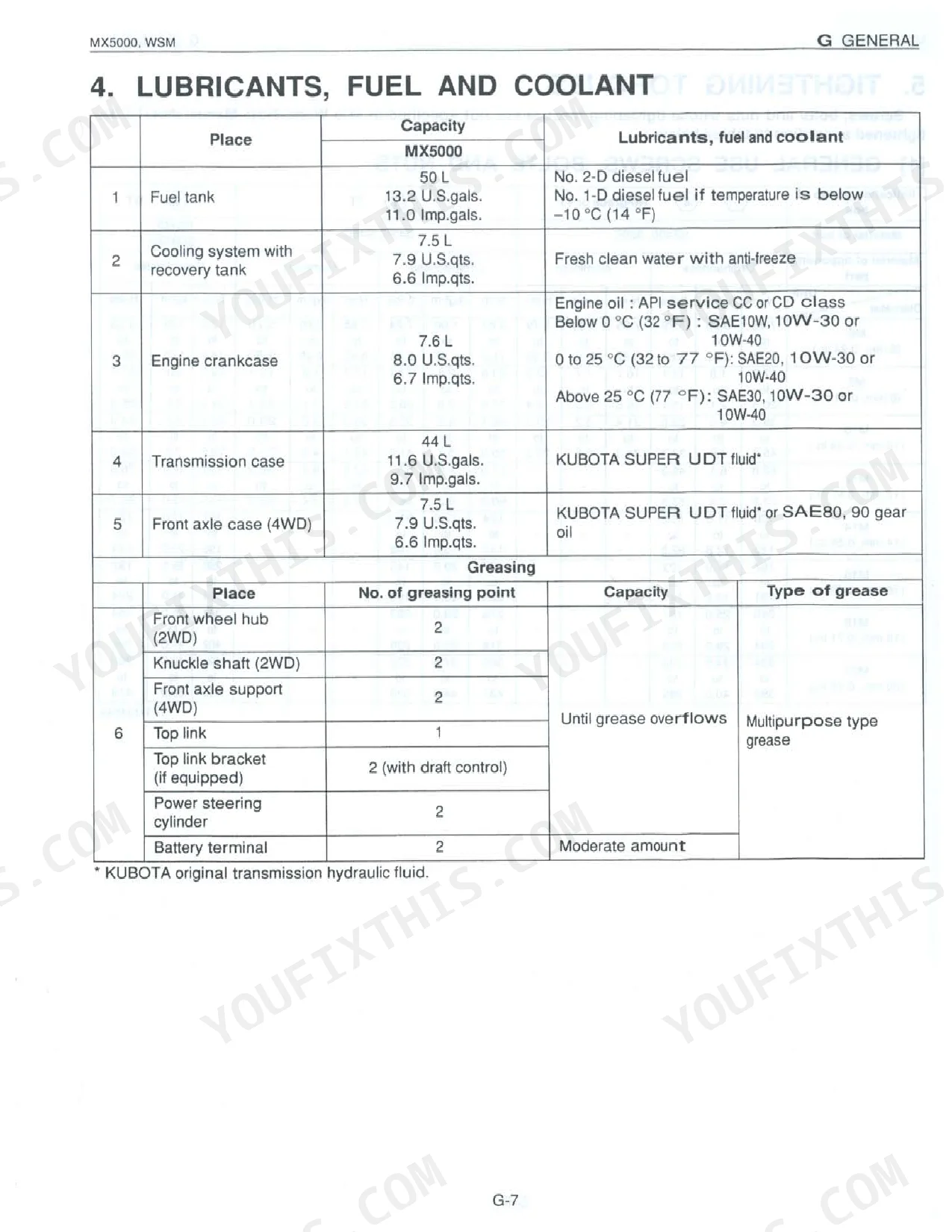
| Specifications | 9 | Capacities, Weight and Tires, Travelling System, Hydraulic Unit, PTO Specifications |
| Travelling Speeds | 10 | MX5000 Travelling Speeds Table, Forward Speeds, Reverse Speeds |
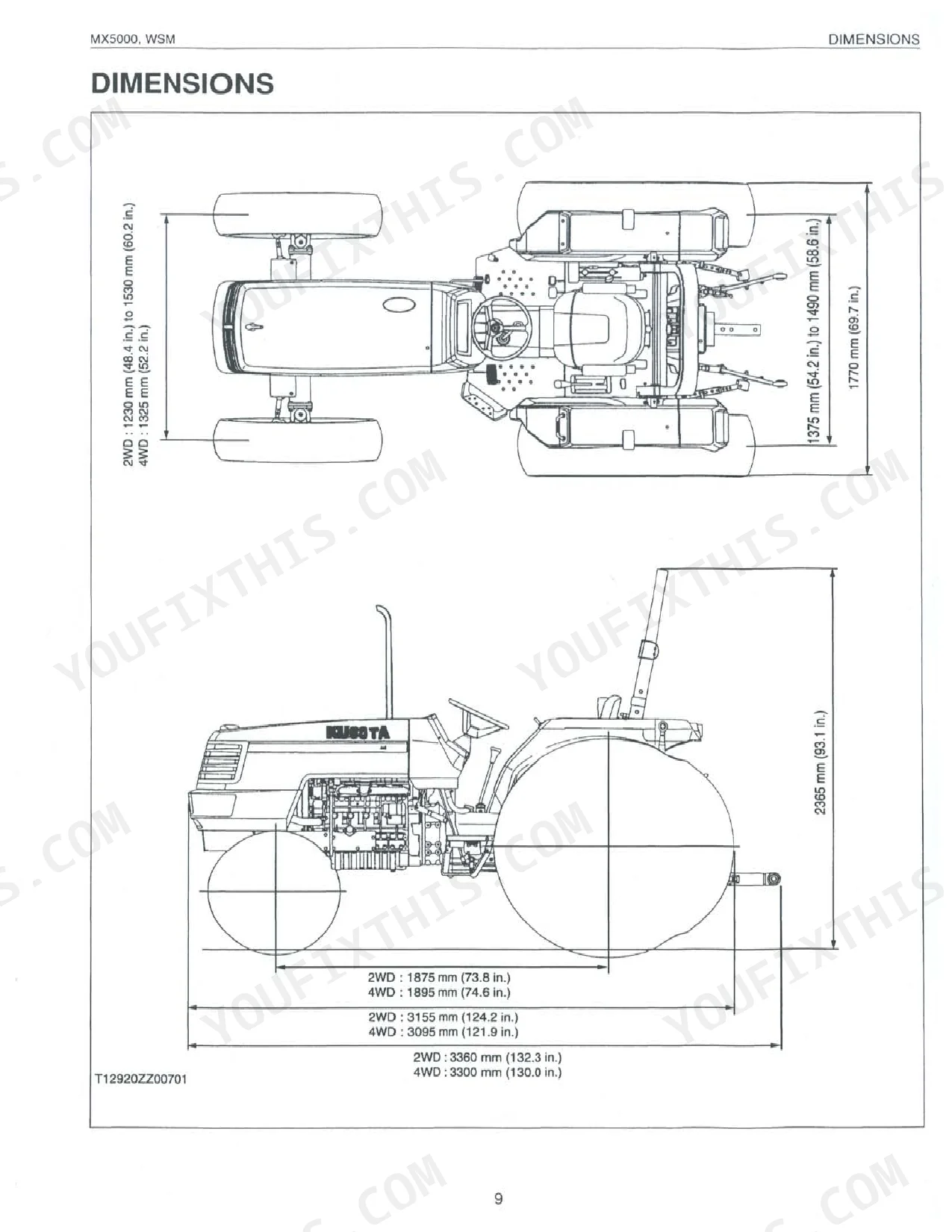
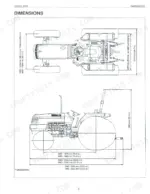
| Dimensions | 11 | Top View Dimensions, Side View Dimensions, Overall Length and Width |
| General | 12-63 | Tractor Identification (Plate, Tractor Serial Number, Engine Serial Number, Hour Meter) |
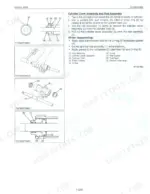
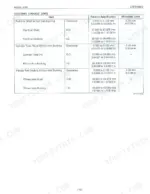
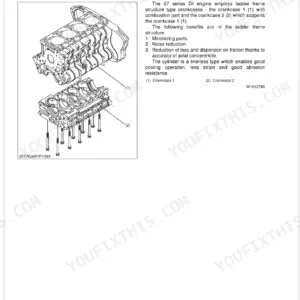
| Engine | 64-108 | Troubleshooting, Servicing Specifications, Tightening Torques, Checking, Disassembling and Servicing (Separating Engine from Tractor, Engine Body) |
| Clutch | 109-129 | Travelling Clutch (Linkage Mechanism), Pto Clutch (Shift Linkage, Structure, Lubricating System), Oil Flow (Cooling System), Troubleshooting (Fuel System), Servicing Specifications |
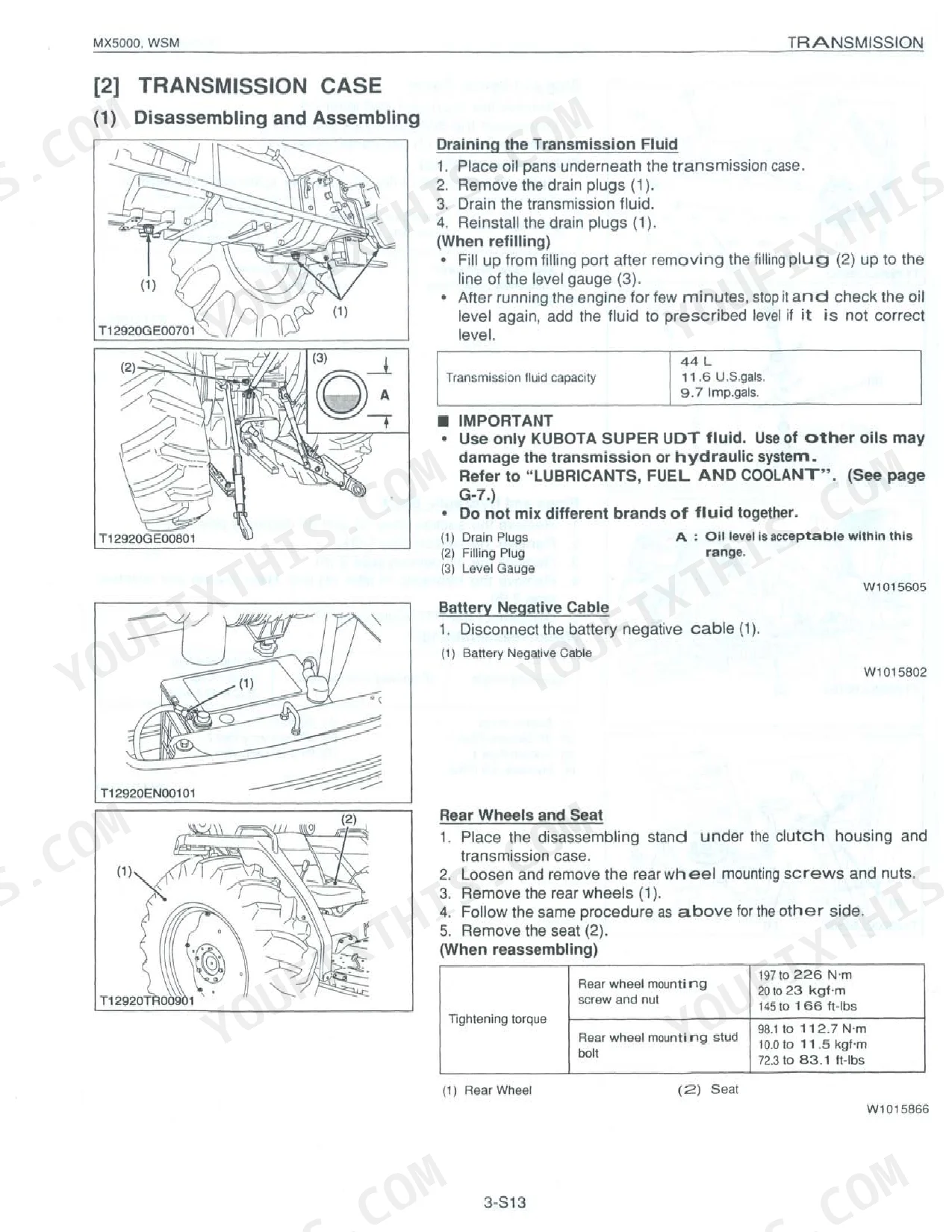
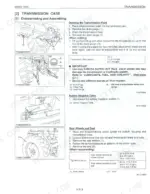
| Transmission | 130-149 | Structure, Troubleshooting, Servicing Specifications, Tightening Torques, Checking, Disassembling and Servicing (Clutch Housing Case and Mid Case, Transmission Case) |
| Rear Axle | 150-158 | Structure, Troubleshooting, Tightening Torques, Checking, Disassembling and Servicing (Disassembling and Assembling) |
| Brakes | 159-168 | Structure, Troubleshooting, Servicing Specifications, Tightening Torques, Checking, Disassembling and Servicing (Brake: Pedal, Case) |
| Front Axle | 169-194 | Structure (2Wd Type, 4Wd Type), Front Wheel Alignment, Troubleshooting, Servicing Specifications, Tightening Torques, Checking |
| Steering | 195-227 | Structure (Steering Linkage), Oil Flow, Steering Cylinder (2Wd Type, 4Wd Type), Troubleshooting, Servicing Specifications, Tightening Torques, Checking |
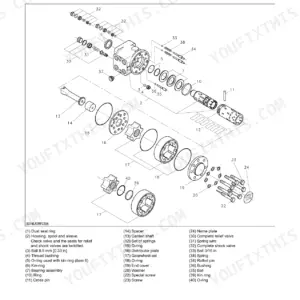
| Hydraulic System | 228-249 | Hydraulic Circuit, Structure, Hydraulic Circuit for Three Point Hydraulic System, Troubleshooting, Servicing Specifications, Tightening Torques, Checking |
| Electrical System | 250-316 | Wiring Diagram (Color of Wiring), Troubleshooting, Servicing Specifications, Tightening Torques, Checking |
Quick Reference Specifications
| Specification | Value | Page |
|---|---|---|
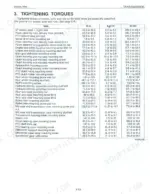
| Tightening Torque (M6, Ordinarness) | 9.80 N·m | p. 21 |
| Fuel Tank Capacity | 50 L | p. 20 |
| Engine Oil Capacity | 7.6 L | p. 20 |
| Transmission Case Capacity | 44 L | p. 20 |
| Engine Net Power | 32.8 kW (44 HP) | p. 9 |
| Cylinder Head Surface Flatness | 0.05 mm | p. 70 |
| Engine Oil Pressure (At Rated Speed) | 294 to 441 kPa | p. 75 |
| Fan Belt Tension | 7.0 to 9.0 mm deflection | p. 75 |
| Injection Nozzle Pressure | 13.73 to 14.71 MPa | p. 75 |
| Front Wheel Mounting Nuts Torque (M10) | 172 N·m | p. 21 |
| Rear Wheel Mounting Nuts Torque (M12) | 215 N·m | p. 21 |
| Clutch Pedal Free Play | 20 to 30 mm | p. 116 |
Kubota MX5000 Common Problems This Manual Covers
Kubota MX5000 PTO won't engage or shaft stops spinning under load p. 116
Verify clutch pedal free play is 20 to 30 mm before testing the PTO circuit (page 116 has both specs). Test PTO clutch valve relief pressure at the hydraulic test port; spec is 2.35 to 2.55 MPa. If pressure reads low, inspect the PTO clutch oil flow passages for blockage in the clutch section on page 109.
Manual Section: Clutch TroubleshootingEngine cranks but won't fire or starts rough on cold mornings p. 75
Start at the glow plug circuit and battery connections using the electrical troubleshooting flowchart on page 250. Confirm fuel delivery by testing injection nozzle pressure; spec is 13.73 to 14.71 MPa (page 75). If it cranks freely but won't fire, look for air in the fuel system and bleed all lines before condemning injection components.
Manual Section: Engine TroubleshootingThree-point hitch won't lift to full height or raises too slowly p. 228
Confirm the hydraulic fluid level first; the transmission case holds 44 L and doubles as the hydraulic reservoir. Trace the hydraulic circuit starting on page 228 for implement rise and height issues. Clean the filter and check the fluid for foam or milky discoloration; both signal contamination killing lift circuit pressure.
Manual Section: Hydraulic System TroubleshootingClutch slips under load or drags, hard to shift into gear p. 109
Measure clutch pedal free play. Spec is 20 to 30 mm (page 116); outside that range, adjust the linkage before opening the clutch housing. If drag persists after adjustment, pull the clutch cover and inspect the disc for wear and the pressure plate for warping. Worn discs require full clutch replacement.
Manual Section: Clutch TroubleshootingSteering wheel hard to turn or pulls to one side constantly p. 195
Inspect power steering fluid level and check all hose connections at the steering cylinder for leaks. Walk the steering troubleshooting flowchart starting on page 195 for linkage inspection steps. Test front wheel alignment and verify 4WD is fully disengaging; check front axle components on page 169 for binding that mimics hard steering.
Manual Section: Steering TroubleshootingBrakes pull to one side or pedal travels too far down p. 163
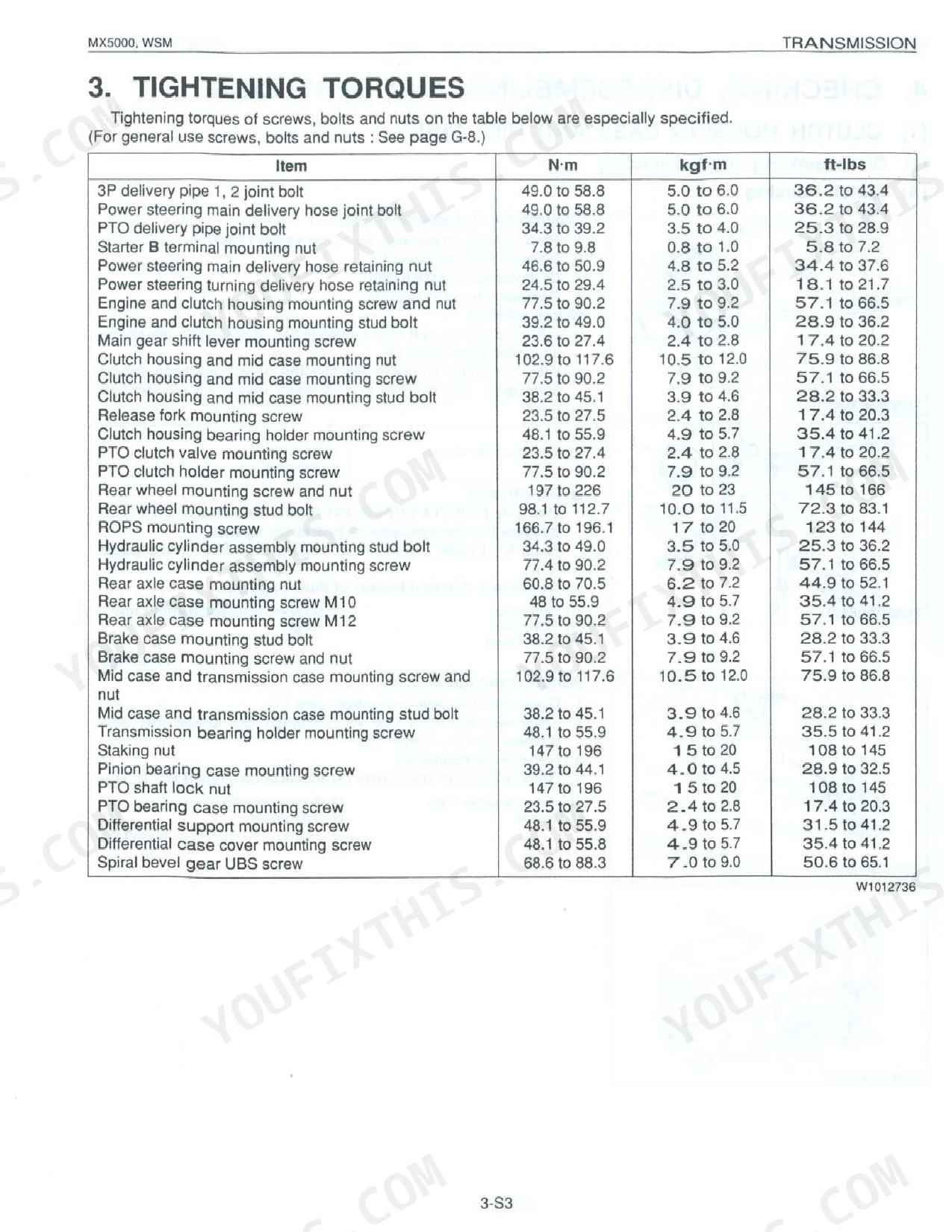
Gauge brake pad thickness and inspect both brake cases for fluid contamination using service procedures on page 163. Adjust pedal linkage for even left-right engagement travel. Torque rear wheel mounting nuts to 215 N·m (page 21), since loose wheels mimic brake pull. Bleed both brake circuits if pedal travel stays excessive after adjustment.
Manual Section: Brakes TroubleshootingFrequently Asked Questions
What are the recommended service intervals?
Service intervals run on a layered schedule. An initial check comes due after the first 50 hours, then recurring checks at every 50, 100, 200, 400, 600, 800, 1500, and 3000 hours, plus yearly and bi-yearly items. Engine oil changes fall every 200 hours; battery condition gets checked every 100 hours.
What fluids and capacities does this machine require?
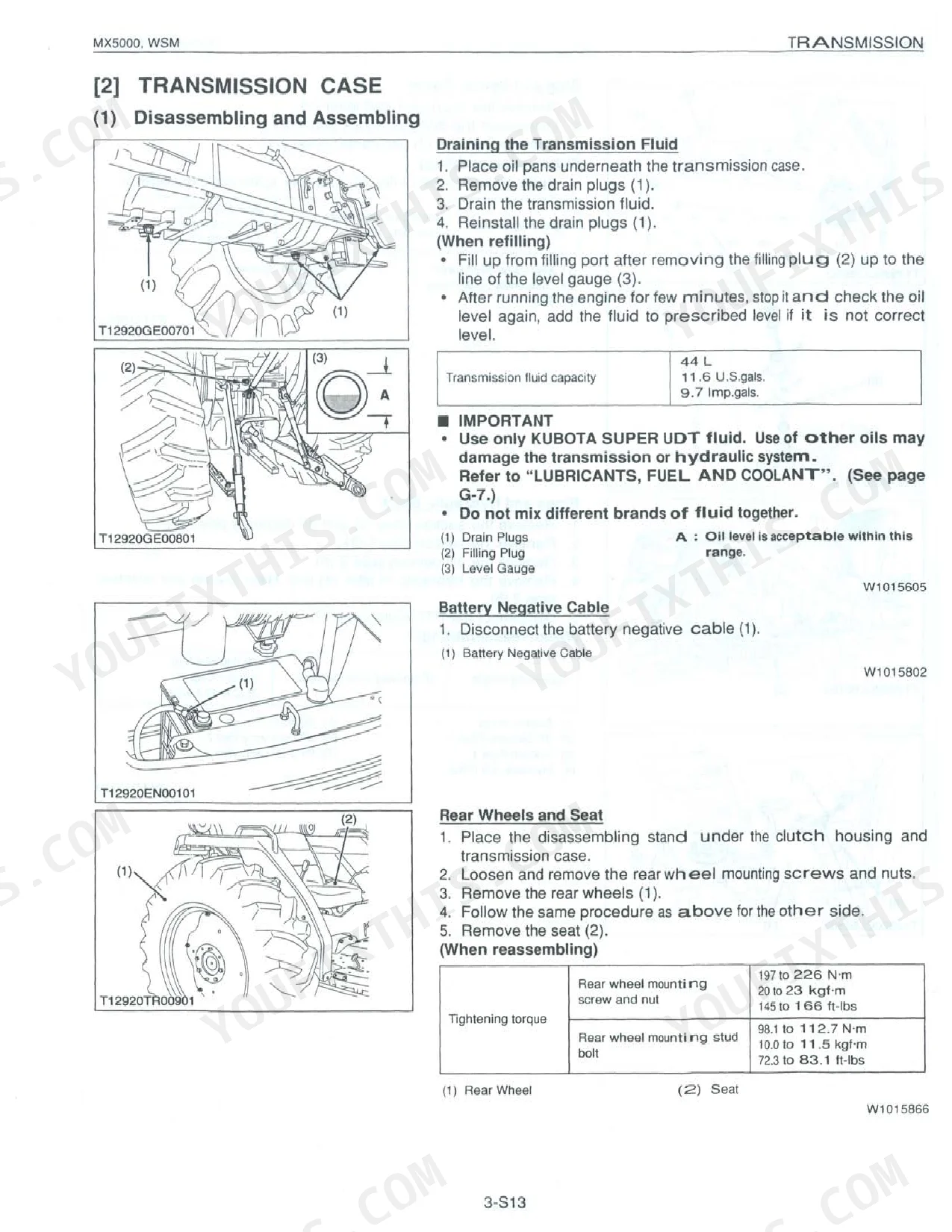
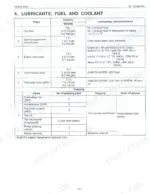
Each system takes its own fluid and volume. The fuel tank holds 50 L (13.2 U.S.gals) of No. 2-D diesel, or No. 1-D below -10 °C. Cooling system: 7.5 L (7.9 U.S.qts) of fresh water with anti-freeze. The engine crankcase needs 7.6 L (8.0 U.S.qts) of API service CC or CD Class oil, viscosity by temperature. Transmission case and 4WD front axle case both use KUBOTA SUPER UDT fluid, at 44 L (11.6 U.S.gals) and 7.5 L (7.9 U.S.qts) respectively.
How to troubleshoot engine won't start?
A no-start traces back to several culprits. The usual ones: no fuel, air or water in the fuel system, or a clogged fuel pipe or filter. Fixes range from replenishing fuel and bleeding the system to cleaning or replacing filters. Deeper causes include incorrect injection timing, a worn fuel camshaft, or a failing injection pump, each needing adjustment or replacement. Seizure of internal engine parts or compression leaks will also keep it from starting.
What are the hydraulic system specifications?
Several numbers define the hydraulic system. Pump delivery runs above 34.9 L/min (9.22 U.S.gals/min) at no pressure and above 30.6 L/min (8.08 U.S.gals/min) at rated pressure. The relief valve sets at 16.7 to 17.7 MPa (2418 to 2560 psi); the cylinder safety valve operates at 19.6 to 22.6 MPa (2845 to 3277 psi). Lift arm free play at the control linkage should be 10 to 15 mm (0.39 to 0.58 in.) at the maximum raising position.
What do I get after purchasing this Kubota MX5000 manual?
This is a 316-page searchable PDF ready for immediate download. It works on any device, so you can pull it up on your phone while you're under the hood. No shipping, no waiting.
Is this Kubota MX5000 Service Manual printable?
None at all. The PDF is DRM-free, so print whatever sections you need to carry out to the shop. Standard letter or A4 paper works fine.
Does this Kubota MX5000 manual include hydraulic schematics?
Yes. Complete hydraulic schematics with flow diagrams, valve configurations, and pressure specifications are included.
Document Quality
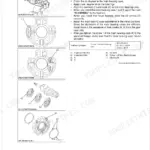
This is a scanned PDF document, so you cannot search or copy the text directly. The text is generally clear and readable, though it has the slight pixelation common with scanned materials. Diagrams and illustrations are raster images, but their labels are mostly readable. Pages are relatively clean, with some minor scanning artifacts and occasional slight skewing. There are several blank pages throughout the document, serving as section dividers or fillers.


Reviews
There are no reviews yet.