
Part of the Kubota Repair Manuals.
This Kubota workshop manual covers the V3307-DI-T-E2B turbocharged diesel engine, built across the 2001 to 2014 range. The 153-page PDF is the factory service reference, organized into Safety, Specifications, Performance Curves, Dimensions, General, Mechanism, and Servicing sections.
It documents engine identification by old and new serial number, full specifications, the maintenance check list, and detailed servicing: troubleshooting, servicing specifications, tightening torques, and step-by-step checking, disassembly, and reassembly. Fluid capacities, clearances, and injection settings are given with exact values.
With it you can identify the engine, work through a no-start or smoking fault, set valve clearance, check compression and injection pressure, and torque fasteners correctly during a rebuild. The text layer is selectable and the file prints cleanly for shop use, so you can keep the pages you need at the bench.
What's Inside This Kubota V3307-DI-T-E2B Manual
| System | Pages | Key Topics |
|---|---|---|
| Record of Revisions | 3 | Lead Digit of the Code No, Month of Revision, Main Revised Point and Corrective Measures, Reference Page |
| Safety First | 4-6 | Danger, Warning, Caution, Important, Note, Before Servicing and Repairing, Safety Starting, Safety Working |
| Specifications | 7-8 | Model, Number of Cylinder, Type, Bore - Stroke, Total Displacement, Iso Net Continuous, Iso / Sae Net Intermittent, Sae Gross Intermittent |
| Performance Curves | 9 | V3307-Di-T-E2B, Brake Horsepower, Engine Speed, B.S.F.C., Torque, Gross Intermittent Torque, Gross Intermittent B.H.P., Gross Intermittent B.S.F.C. |
| Dimensions | 10 | V3307-Di-T-E2B, Top View Diagram Unit: Mm, Side View Diagram Unit: Mm |
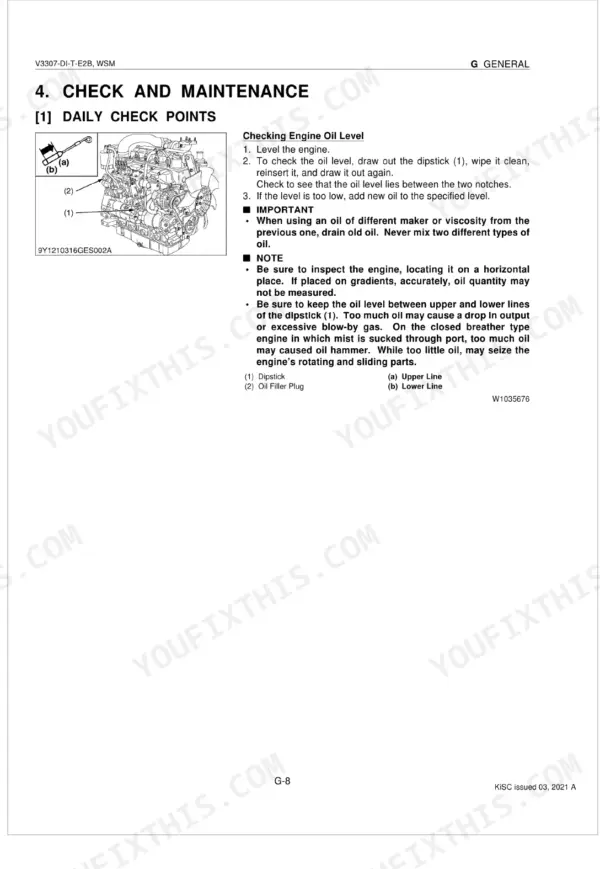
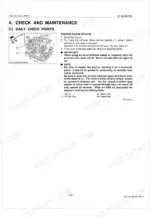
| General | 11-54 | Engine Identification (Model Name and Old Engine Serial Number, Model Name and New Engine Serial Number, Cylinder Number), Maintenance Check List |
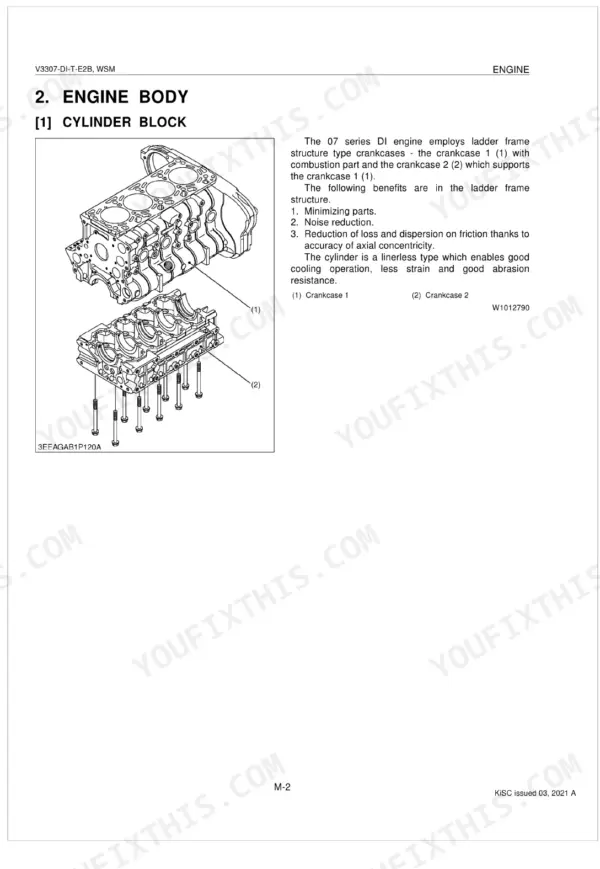
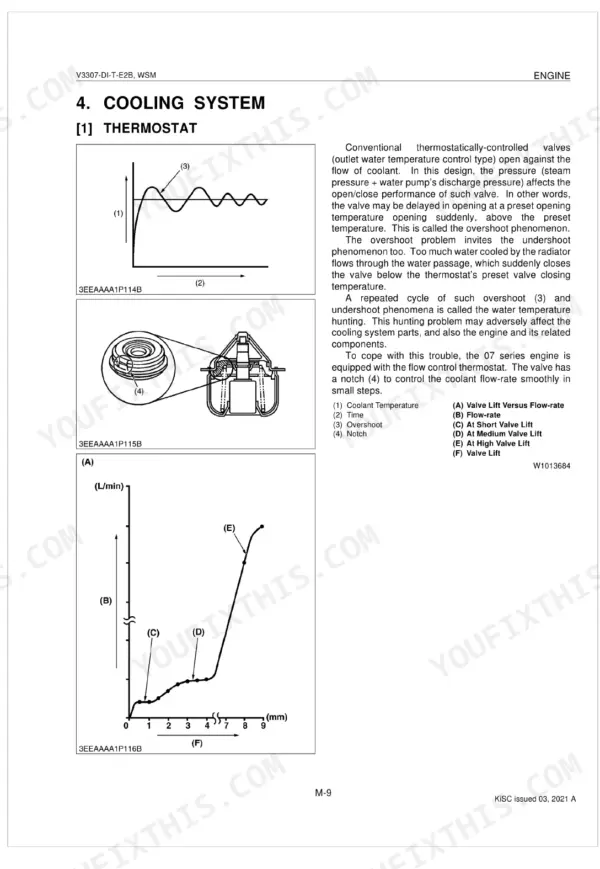
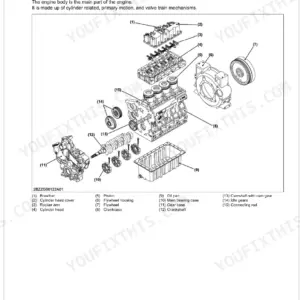
| Mechanism | 55-72 | Engine Body, Cylinder Block, Cooling Jacket, Half-Floating Head Cover, Cylinder Head, Center Direct Injection System (E-Cdis), Gear Train Configuration, Piston |
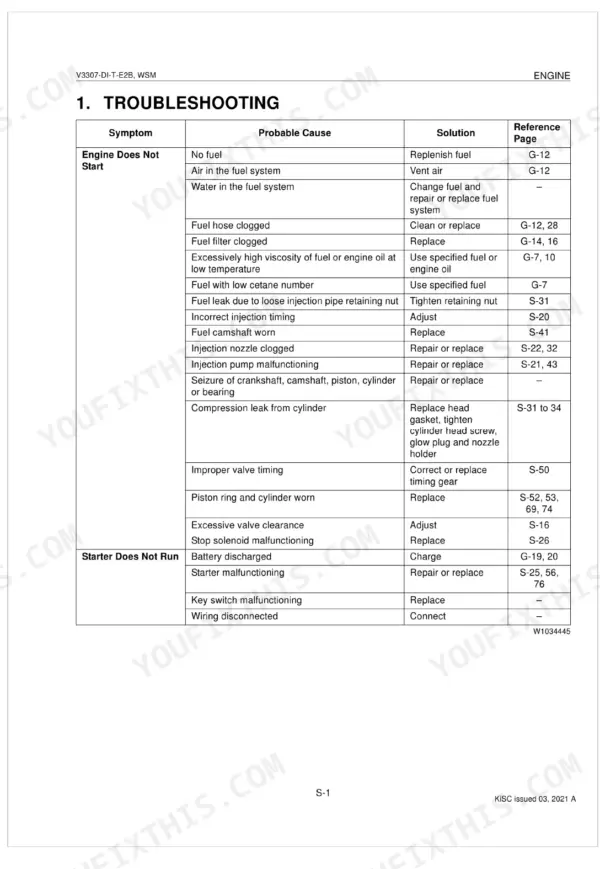
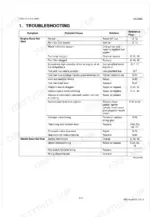
| Troubleshooting | 74-77 | |
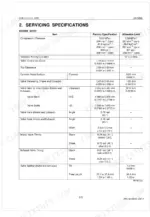
| Servicing Specifications | 78-84 | |
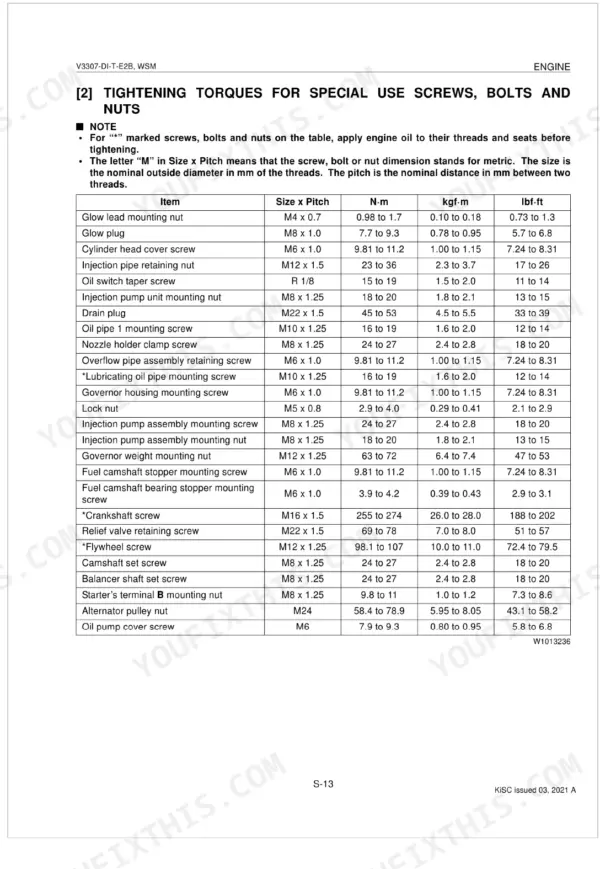
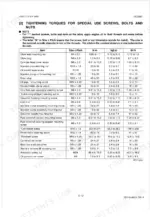
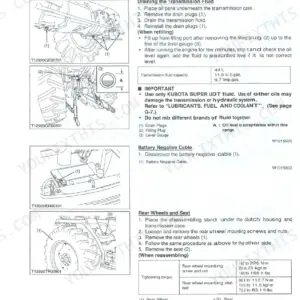
| Tightening Torques | 85-87 | Tightening Torques for General Use Screws, Bolts and Nuts, Tightening Torques for Special Use Screws |
| Checking, Disassembling and Servicing | 88-153 |
Quick Reference Specifications
| Specification | Value | Page |
|---|---|---|
| Lubricating Oil Capacity | 11.2 L (2.96 U.S.gals) | p. 8 |
| Coolant System Capacity | 11.2 L (2.96 U.S.gals) | p. 8 |
| Changing engine oil interval | Every 50 hrs | p. 18 |
| Replacing oil filter cartridge interval | Every 50 hrs | p. 18 |
| Checking valve clearance interval | Every 1000 hrs or 1 month | p. 18 |
| Changing radiator coolant (L.L.C.) interval | Every 2 years | p. 18 |
| Standard Screw and Bolt Torque (M6) | 9.81 to 11.2 N·m | p. 85 |
| Standard Screw and Bolt Torque (M8) | 18 to 20 N·m | p. 85 |
| Standard Screw and Bolt Torque (M10) | 40 to 45 N·m | p. 85 |
| Standard Screw and Bolt Torque (M12) | 63 to 72 N·m | p. 85 |
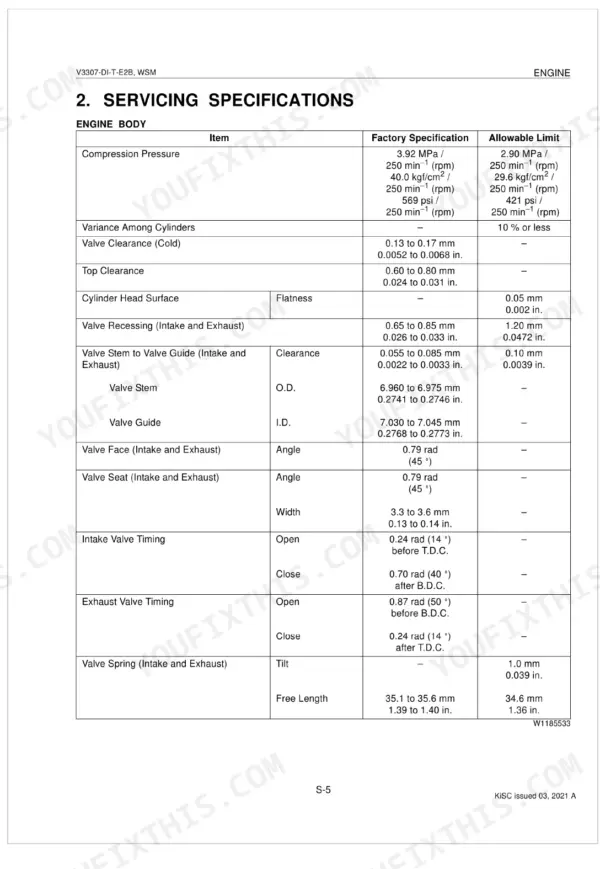
| Cylinder head mounting screw torque (Part number 1G772-03450) | 187 to 196 N·m | p. 87 |
| Cylinder head mounting screw torque (Part number 1J770-03450) | 165 to 178 N·m | p. 87 |
Kubota V3307-DI-T-E2B Common Problems This Manual Covers
Hard starting and low compression
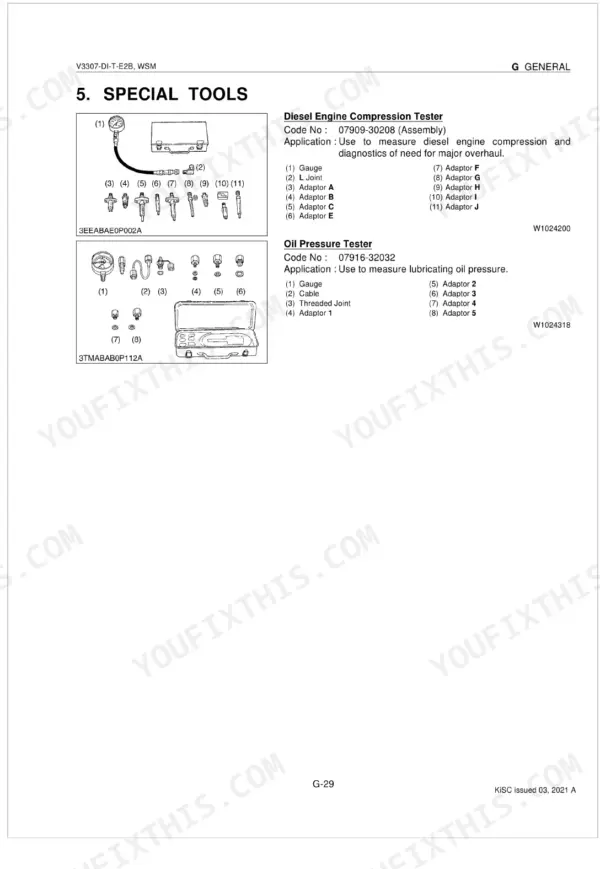
Worn valves, a warped head, or aged rings drop compression below the 2.90 MPa spec, so the engine cranks but will not fire cleanly. The Servicing section covers troubleshooting and the checking procedures to find the cause.
Manual Section: Servicing p. 73Excessive oil consumption and blue smoke
Tired piston rings or bore wear let oil into the combustion chamber, showing as blue exhaust and a falling oil level. The Servicing section covers disassembling and inspecting the engine with wear limits.
Manual Section: Servicing p. 73Overheating from thermostat faults
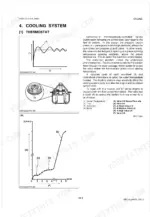
A stuck thermostat that fails to open near the 74.5 to 78.5 C range lets the engine run hot under load. The Servicing section covers checking the thermostat and cooling components.
Manual Section: Servicing p. 73Smoke or poor power from injection faults
Low or uneven injection pressure below the 18.64 to 19.61 MPa first-stage spec causes smoke and weak power. The Servicing section covers checking and setting the injection nozzles.
Manual Section: Servicing p. 73Rough idle from valve clearance drift
As the valve train wears, clearance moves outside the 0.13 to 0.17 mm cold spec, causing a tick and rough idle. The Servicing section gives the checking and adjustment steps.
Manual Section: Servicing p. 73Fan belt slip and weak charging
A loose fan belt outside the 10.0 to 12.0 mm deflection spec squeals and undercharges the battery. The General section covers belt inspection as part of routine maintenance.
Manual Section: General p. 11Frequently Asked Questions
Which engine and years does this manual cover?
It covers the Kubota V3307-DI-T-E2B turbocharged diesel engine across the 2001 to 2014 range. Full specifications and performance curves are included.
Does it list tightening torques?
Yes. The Servicing section lists tightening torques, including the oil drain plug at 45 to 53 N.m, along with servicing specifications for a correct rebuild. p. 73
What is the valve clearance specification?
Valve clearance is 0.13 to 0.17 mm measured cold. The Servicing section explains how to check and adjust it while working on the cylinder head and valve train. p. 73
How do I get the file after paying?
You download the PDF immediately after checkout. Nothing ships, and the file is yours to keep and reopen on any device.
How will I receive this Kubota V3307-DI-T-E2B Workshop Manual?
This is a 153-page searchable PDF ready for immediate download. It works on any device, so you can pull it up on your phone while you're under the hood. No shipping, no waiting.
Can I print specific sections of this Kubota V3307-DI-T-E2B Workshop Manual?
Yes. Print individual pages or full chapters for your own shop use, on letter or A4 paper.






Reviews
There are no reviews yet.