

Part of the Yanmar Repair Manuals.
A BY series engine that cranks clean but will not fire after a filter change is almost always air-locked, and every hour spent guessing is an hour the boat stays tied up. This Yanmar service manual for the 4BY and 6BY marine diesels, publication 0BBY0-G00101, puts the fuel system tests, the flow diagram, and the bleeding warning in front of you.
Across 232 pages it covers periodic maintenance, engine specifications and torque charts, tests and adjustments, plus dedicated sections on the fuel system, cooling system, lubrication, turbocharger, starter motor, alternator, and electrical and ECU, ending in a troubleshooting chart with trouble codes.
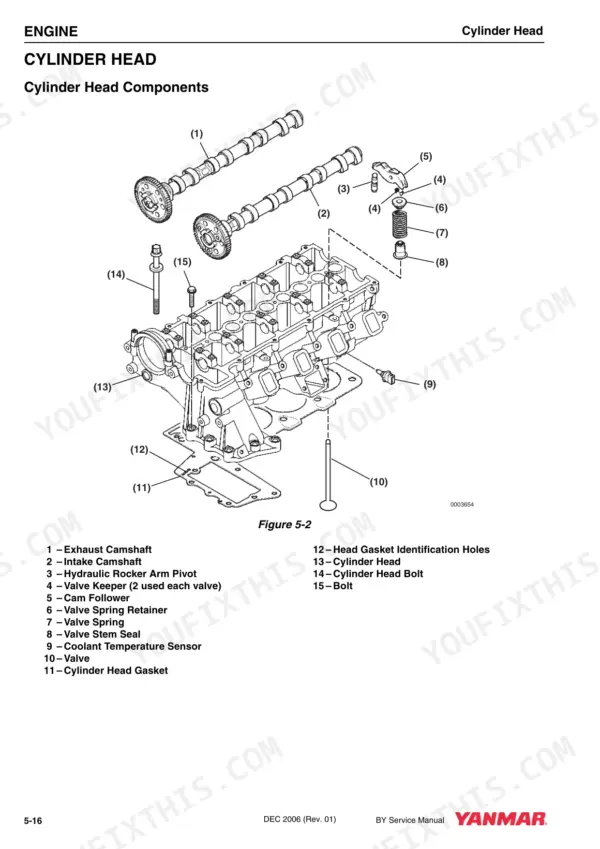
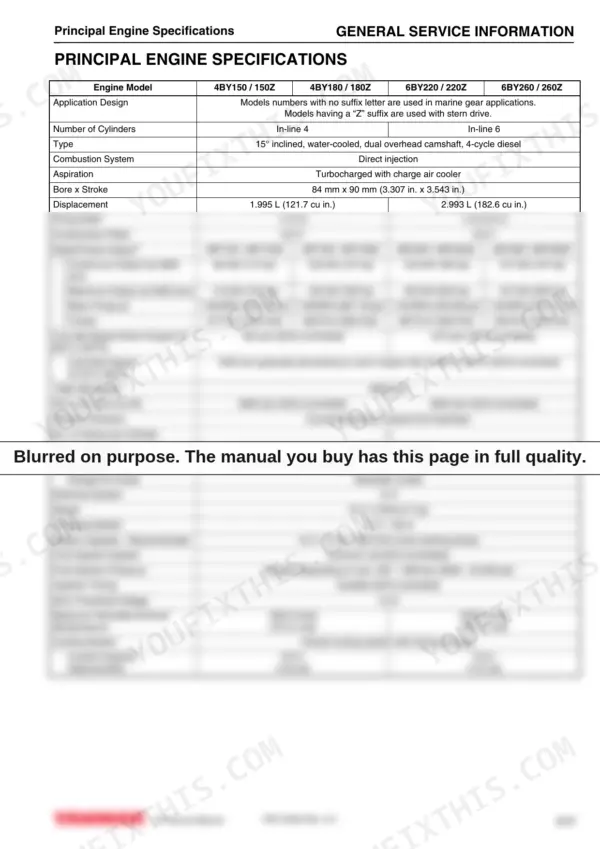
For the rebuild itself, the numbers are all here: 84 mm x 90 mm bore and stroke, 16.5:1 compression ratio, cylinder compression of 28 ±2 bar, and the head bolt torque sequence. With nameplate locations and principal specifications, you order the right parts for the engine on your stand the first time.
Complete the set for your 4BY, 6BY
- Operator Manual: Yanmar 4BY, 6BY Operator Manual
- Operator Manual: Yanmar 4BY / 6BY Series Marine Diesel Engines Operator Manual
Other edition of this manual
- Yanmar 6BY, 4BY Service Manual (incl. Wiring) Original price was: $43.99.$29.99Current price is: $29.99.
What's Inside This Yanmar 4BY, 6BY Manual
| System | Pages | Key Topics |
|---|---|---|
| Introduction | 5-6 | Revision History |
| Safety | 7-12 | |
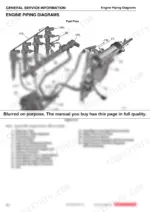
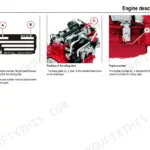
| General Service Information | 13-34 | Safety Precautions, Engine Outline Drawings, Engine Piping Diagrams, Location of Nameplates, Diesel Fuel, Engine Oil, Engine Coolant, Principal Engine Specifications |
| Periodic Maintenance | 35-46 | EPA Requirements, Periodic Maintenance Schedule, Periodic Maintenance Procedures |
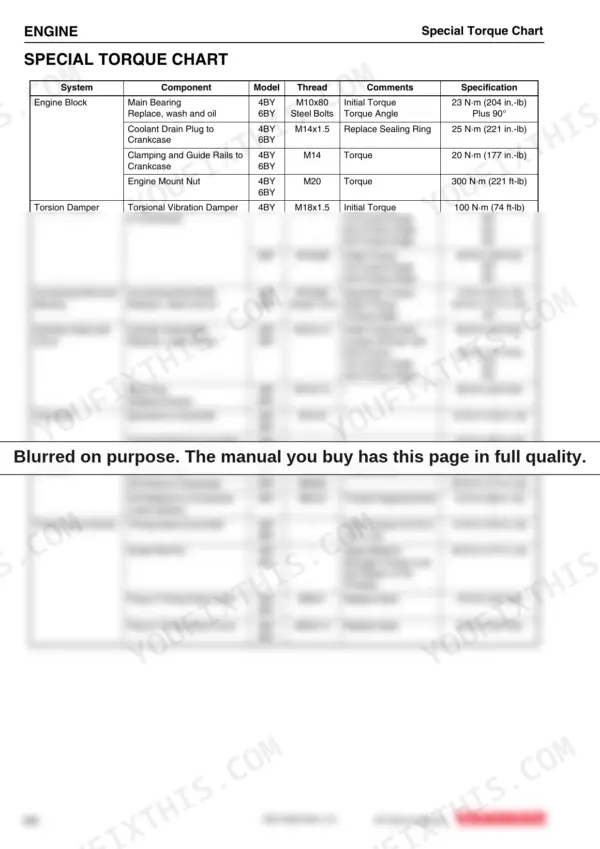
| Engine | 47-116 | Before You Begin Servicing, Specifications, Special Torque Chart, Special Service Tools, Measuring Instruments, Sealants and Compounds, Tests and Adjustments |
| Fuel System | 117-138 | Safety Precautions, Specifications, Special Service Tools, Fuel System Components, Fuel Flow Diagram, Tests and Adjustments, Repair |
| Cooling System | 139-158 | Before You Begin Servicing, Specifications, Special Service Tools, Measuring Instruments, Cooling Flow Diagram, Tests and Adjustments, Repair |
| Lubrication | 159-170 | Specifications, Special Service Tools, Measuring Instruments, Tests and Adjustments, Repair |
| Turbocharger | 171-178 | Specifications, Special Service Tools, Sealants and Compounds, Tests and Adjustments, Repair |
| Starter Motor | 179-184 | Before You Begin Servicing, Starter Motor Specifications, Starter Motor Troubleshooting, Remove and Install Starter Motor |
| Alternator | 185-190 | Before You Begin Servicing, Specifications, Repair |
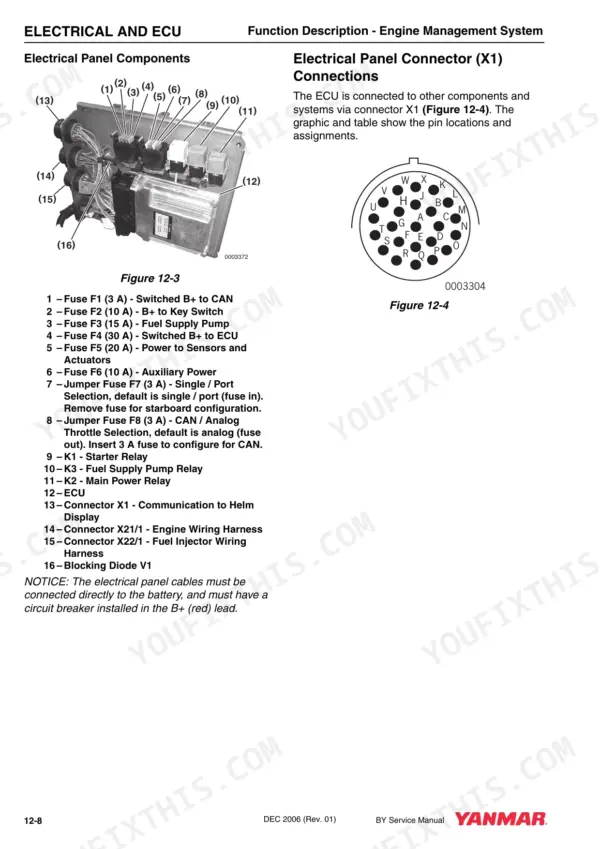
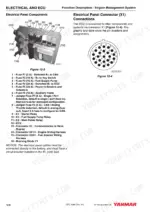
| Electrical and ECU | 191-218 | Specifications, Function Description - Engine Management System, Component Tests, Repair |
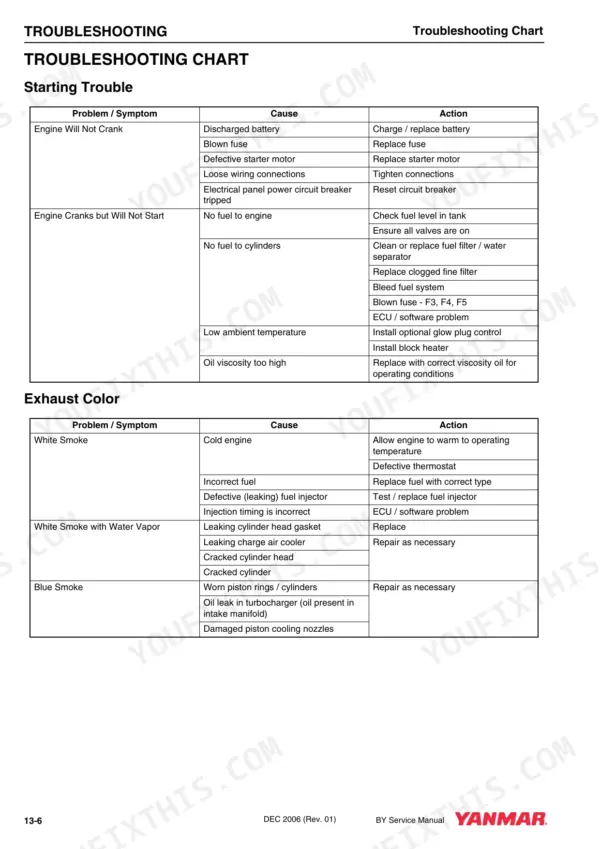
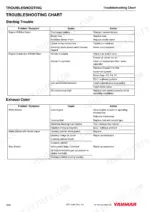
| Troubleshooting | 219-232 | Engine Faults and Torque Limitations, Troubleshooting Chart, Trouble Codes, After Troubleshooting or Repair |
Quick Reference Specifications
| Specification | Value | Page |
|---|---|---|
| Cylinder Head Bolts Torque - First | 80 N·m (59 ft-lb) | p. 54 |
| Cylinder Head Bolts Torque - Second | Loosen all bolts at least 180° | p. 54 |
| Fuel Fine Filter Replacement Interval | Every 250 hours or one year, whichever comes first | p. 39 |
| Fuel Filter / Water Separator Element Replacement Interval | Every 250 hours or one year, whichever comes first | p. 39 |
| Fuel Supply Line Minimum Diameter | 8 mm (0.315 in.) | p. 21 |
| High-Pressure Fuel Line Union Nut Torque | 23 N·m (204 in.-lb) | p. 120 |
| Rubberized Hoses (Fuel and Water) Replacement Interval | Every 500 hours or 2 years, whichever comes first | p. 41 |
| Hose Clamps Torque - 5 mm Hex Head | 1.0 - 1.5 N·m (8.9 - 13 in.-lb) | p. 31 |
| Seawater Pump Impeller Replacement Interval | Every 250 hours or one year, whichever comes first | p. 40 |
| Seawater Pump Belt Replacement Interval | Every 250 hours or one year, whichever comes first | p. 40 |
| Air Filter Element Replacement Interval | Every 500 hours or 2 years, whichever comes first | p. 40 |
| Zinc Anode Torque | 25 N·m (18 ft-lb) | p. 142 |
Yanmar 4BY, 6BY Common Problems This Manual Covers
Cranks but won't start after fuel service
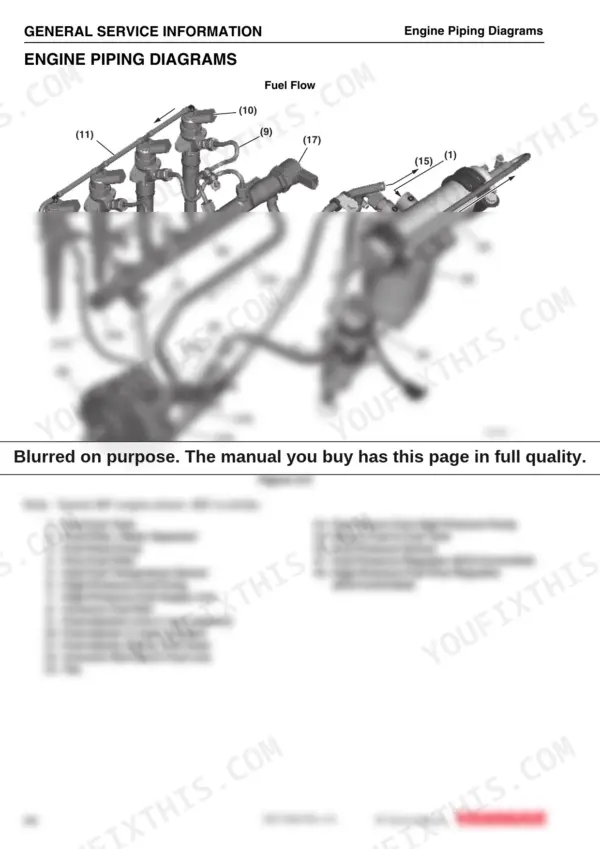
Change a filter or run a tank dry and a BY engine will often crank without firing until the air is out of the lines. The Fuel System section has the fuel flow diagram, tests and adjustments, and repair procedures, and the manual warns against priming the system with the starter motor.
Manual Section: Fuel System p. 117Overheating and high temperature alarms
A worn seawater pump impeller, aged hoses, or low coolant pushes temperatures up fast. The Cooling System section provides the cooling flow diagram, tests and adjustments, and repair procedures, while the maintenance schedule calls for a new impeller and seawater pump belt every 250 hours or one year.
Manual Section: Cooling System p. 139Sudden shutdown with a fault code
When the engine protection system pulls the engine down mid-passage, you need to know what the code means before restarting. The Troubleshooting section carries the troubleshooting chart, trouble codes, engine faults and torque limitations, and the steps to take after troubleshooting or repair.
Manual Section: Troubleshooting p. 219Hard starting and low compression
Tired rings or valves show up first as slow, smoky starts. The Engine section gives the compression test with a standard of 28 ±2 bar (406 ±29 psi), plus specifications, the special torque chart, and the tests and adjustments needed to put it right.
Manual Section: Engine p. 47Wasted zinc anodes and cooling corrosion
Neglected anodes let the raw water circuit eat the engine from the inside. The Periodic Maintenance section says to replace an anode once less than half its original size remains, alongside the rest of the inspection schedule.
Manual Section: Periodic Maintenance p. 35Slow cranking or no crank
A starter that clicks, drags, or does nothing keeps everything else waiting. The Starter Motor section includes specifications, starter motor troubleshooting, and removal and installation procedures, and the manual warns never to use the starter to prime the fuel system.
Manual Section: Starter Motor p. 179Low boost and power under load
An engine that hangs below rated RPM under load often traces back to the turbocharger. The Turbocharger section covers specifications, special service tools, sealants and compounds, tests and adjustments, and repair.
Manual Section: Turbocharger p. 171Frequently Asked Questions
Which engines does this manual cover?
It covers the Yanmar 4BY and 6BY marine diesels of the BY series, Yanmar publication 0BBY0-G00101. The General Service Information section starts on page 13 and carries the principal engine specifications, engine outline drawings, piping diagrams and nameplate locations, so you can confirm your engine before you buy.
Does it give the cylinder head bolt torque procedure?
Yes. The Engine section gives the staged sequence: the first pass is 80 N·m (59 ft-lb), followed by a step that loosens all bolts 180 degrees. Follow the full printed sequence in the manual rather than a single figure. p. 47
Does it help with alarms and trouble codes?
Yes. The Troubleshooting section includes a troubleshooting chart, trouble codes, engine faults and torque limitations, and what to do after troubleshooting or repair. The Electrical and ECU section adds a function description of the engine management system, component tests, and repair procedures. p. 219
Are service intervals for filters and the impeller listed?
Yes. The Periodic Maintenance section sets engine oil changes at 250 hours after an initial 50 hour change, fuel fine filter and water separator elements every 250 hours or one year, seawater pump impeller and belt every 250 hours or one year, and the air filter element every 500 hours or two years. p. 35
How quickly can I access this manual after buying?
A 232-page Service Manual in searchable PDF format, available the moment you complete checkout. View on computer, tablet, or phone, with no shipping wait.
Can I print pages of this manual for my own shop?
Yes. Print the pages you need for the job in your own shop, and bin them when they get greasy.
Can I trace circuits with this Yanmar 4BY manual?
Yes, this Yanmar 4BY, 6BY, BY series Service Manual includes complete electrical wiring diagrams, wire routing, and connector pinouts.




Reviews
There are no reviews yet.