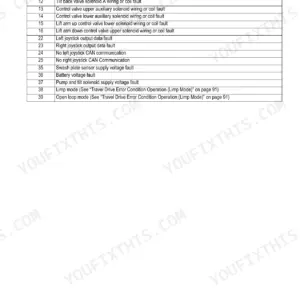
This is the factory Gehl CTL80 Service Manual (Form No. 908311, Revision C), a 799-page PDF covering the CTL80 compact track loader from serial prefix 21500. It documents the machine end to end: drive and travel systems, frame, control system, attachments, the full hydraulic system, and the diesel engines used across the line, including the 4TNE94, 4TNE98, 4TNE106(T) and the 3TNV and 4TNV series.
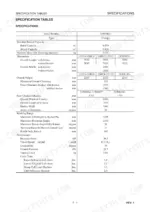
With it you can disassemble and reassemble major assemblies, follow check and maintenance procedures, look up servicing standards and torque values, and work through structured troubleshooting for the hydraulics and engine. Specification tables give machine mass, fuel and hydraulic tank capacities, and engine service data.
The manual has a text layer and 190 bookmarks, so you can search and jump straight to a section. Download it as a PDF and print any page you need at the bench.
What's Inside This Gehl CTL80 Manual
| System | Pages | Key Topics |
|---|---|---|
| Foot of the Page | 5-8 | |
| I . General | 9-22 | Safety Precautions, Cautions During Disassembly and Assembly, Cautions During Removal and Installation of the Hydraulic Units, Cautions During Removal and Installation of Piping |
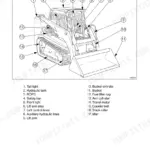
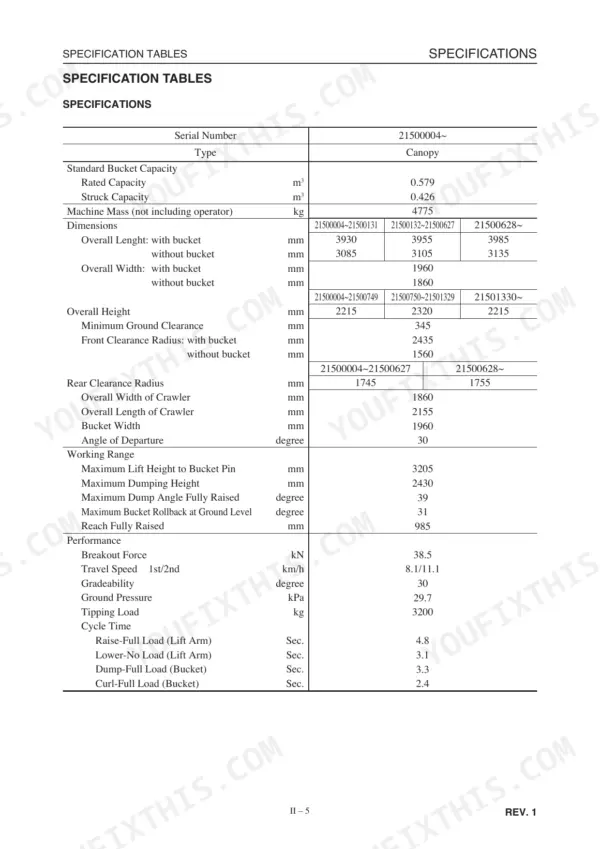
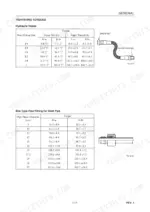
| Ii . Specifications | 23-44 | Names of Components, Specification Diagrams, Specification Tables, Mass Tables, Recommended Lubricants, Servicing Standards |
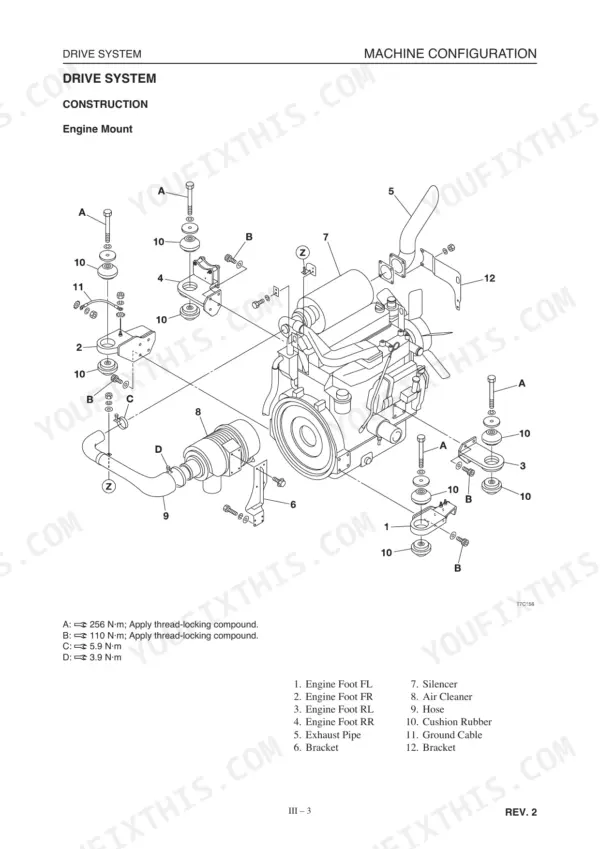
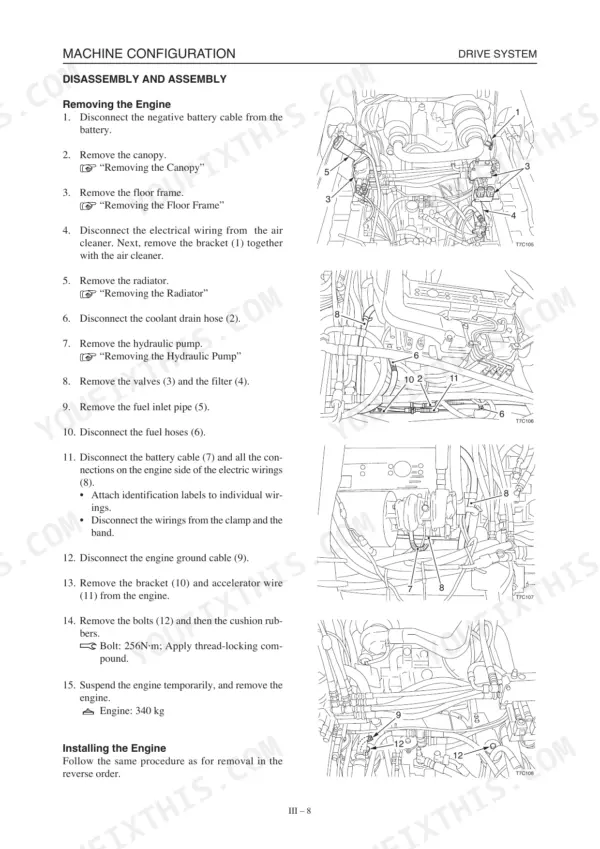
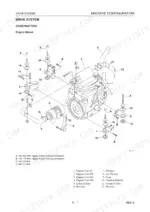
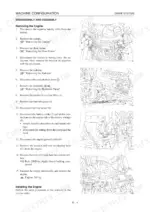
| Iii . Machine Configuration | 45-170 | Drive System, Travel System, Frame, Control System, Attachments, Hydraulic System |
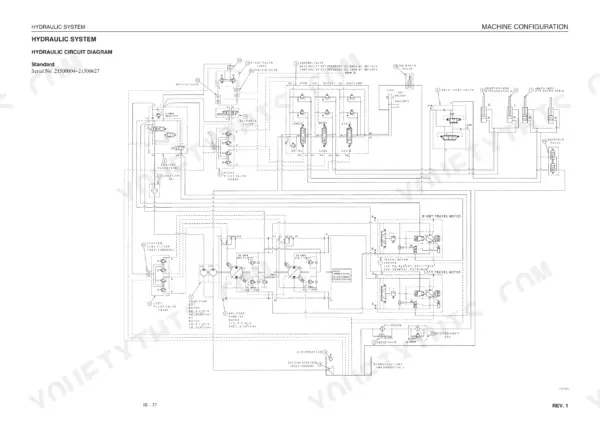
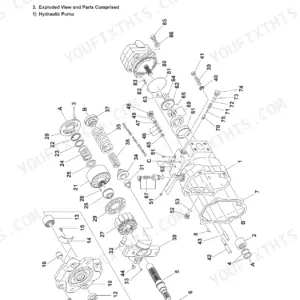
| Iv . Hydraulic Units | 171-300 | HST Pump, Gear Pump, Control Valve, Pilot Valve, Self-Level Valve, Cylinders |
| V . Troubleshooting | 301-331 | Overall Machine, Machine Travel, Lift Arms, Bucket, Auxiliary Hydraulics |
| 4TNE94/98/106(T) | 332-511 | Cover, History of Revision, Preface, Safety Labels, Contents, Tightening Torque for Bolts and Nuts, Back Cover |
| 3TNV/4TNV Series | 512-799 | Cover, History of Revision, Preface, Safety Labels, Contents, Tightening Torque for Bolts and Nuts, Back Cover |
Quick Reference Specifications
| Specification | Value | Page |
|---|---|---|
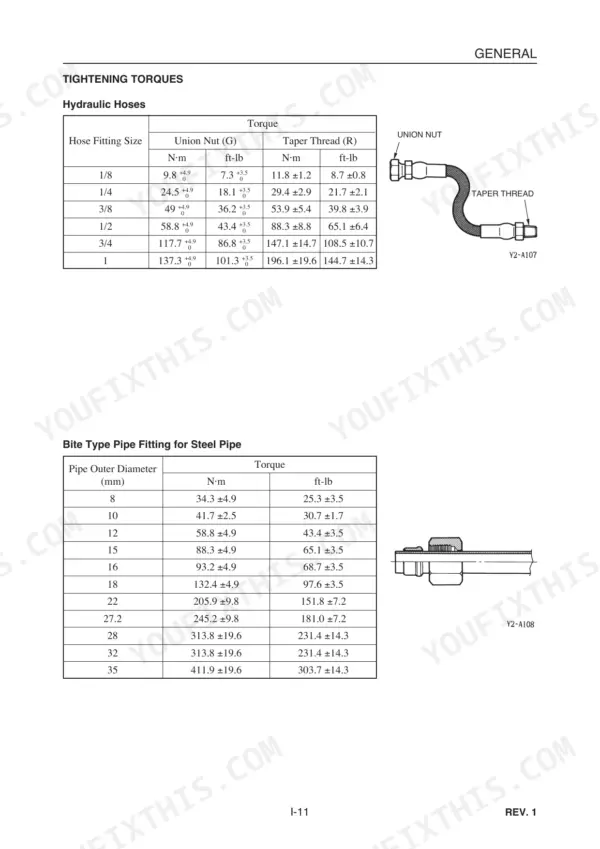
| Bolts and Nuts (for ISO Strength Category 10.9) - General Tightening Points (M6 x 1.0) | 9.8 ±0.5 N·m (7.2 ±0.4 ft-lb) | p. 21 |
| Bolts and Nuts (for ISO Strength Category 10.9) - Special Tightening Points (M6 x 1.0) | 11.8 ±0.6 N·m (8.7 ±0.4 ft-lb) | p. 21 |
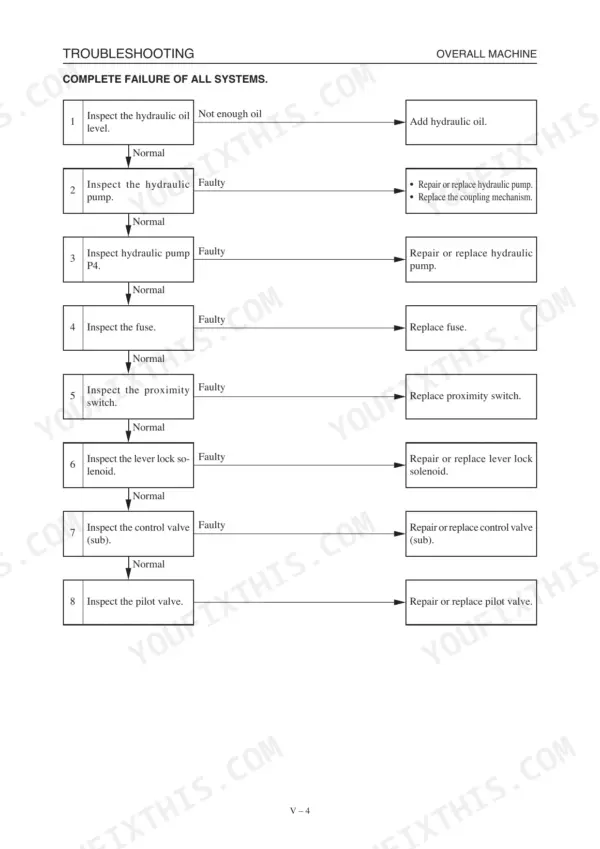
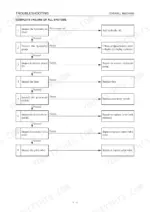
| Troubleshooting - Complete failure of all systems | Inspect hydraulic oil level, hydraulic pump, hydraulic pump P4, fuse, proximity switch, lever lock solenoid, control valve (sub), pilot valve | p. 304 |
| Compressor Assembly - Belt tension (deflection) | 8 mm (when pressed with a force of about 98N) | p. 121 |
| V-belt tension check (3TNV/4TNV series) - For used V-belt (Direction A) | 10 to 14 mm | p. 75 |
| Generator V-kW | 12–0.72 V-kW | p. 28 |
| Alternator (3TNV/4TNV series) - Nominal output (13.5 V heat) | 40 A | p. 176 |
| Fuse (amperage) | 10A, 20A, 30A, 80A | p. 113 |
| Battery V-A·h | 12–92 V-A·h | p. 28 |
| Allowable maximum cable length (3 mm² cable size, 2 mΩ resistance limit) | 0.36 m | p. 184 |
| Radiator (dry mass) | 20 kg | p. 28 |
| Radiator (High Flow) (dry mass) | 38 kg | p. 28 |
Gehl CTL80 Common Problems This Manual Covers
Machine will not move or engage hydraulics
A common CTL-80 fault is the loader failing to move or the hydraulics refusing to engage even after basic safety switches check out. The Troubleshooting section walks through the checks for a complete failure of all systems, from hydraulic oil level and pump to the lever lock solenoid, control valve, and pilot valve.
Manual Section: V . TROUBLESHOOTING p. 301Charging lamp stays on or flashes
The battery or charging warning lamp that stays lit usually points to a loose or broken fan belt, or a failing charger. Check belt slack and tension first, and if the lamp keeps flashing after servicing the belt, suspect the charger.
Manual Section: V . TROUBLESHOOTING p. 301Overheating and coolant loss
Overheating, a dropping coolant level, or contaminated radiator fins are frequent maintenance issues on these loaders. The engine troubleshooting coverage lists coolant volume and the cooling-system checks needed to trace water leakage or sediment buildup.
Manual Section: V . TROUBLESHOOTING p. 301Blown fuses and electrical faults
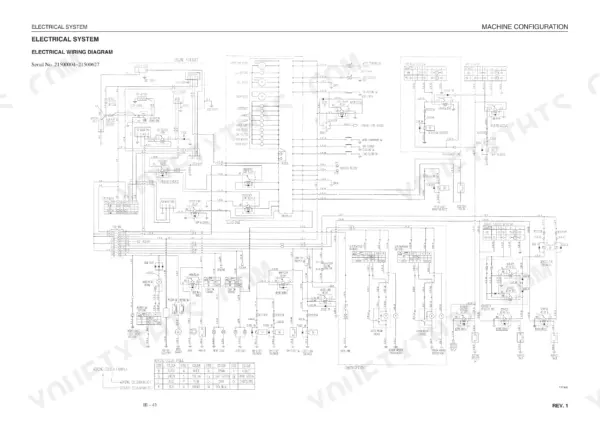
Intermittent starting and auxiliary problems often trace back to a blown fuse or a bad connection. The Machine Configuration section documents the control system and the fuse ratings (10A, 20A, 30A, 80A) so you can inspect the fuse box and confirm the right replacement.
Manual Section: III . MACHINE CONFIGURATION p. 45Weak lift or leaking hydraulic cylinders
Slow or weak boom and bucket action and leaking cylinders are typical wear failures. The Hydraulic Units section covers the HST pump, gear pump, control valve, pilot valve, self-level valve, and cylinders for teardown and rebuild.
Manual Section: IV . HYDRAULIC UNITS p. 171Loss of steering or brake control
A safety-critical loss of control in steering or service braking calls for stopping and parking the machine immediately, then diagnosing the fault. The Machine Configuration section covers the travel and control systems where these problems originate.
Manual Section: III . MACHINE CONFIGURATION p. 45Frequently Asked Questions
Which machine and engines does this manual cover?
It covers the Gehl CTL80 compact track loader from serial prefix 21500, including the diesel engines used across the line: the 4TNE94, 4TNE98, and 4TNE106(T), plus the 3TNV and 4TNV series.
My CTL80 will not move and the hydraulics will not engage. Can this help?
Yes. The Troubleshooting section covers a complete failure of all systems, guiding you through hydraulic oil level, the pump, the fuse, the lever lock solenoid, the control valve, and the pilot valve. p. 301
Where do I find torque and servicing standard values?
The Specifications section covers servicing standards, specification tables, mass tables, and recommended lubricants, including general and special bolt tightening torque points for the machine. p. 23
Does it explain how to rebuild the hydraulic components?
Yes. The Hydraulic Units section details the HST pump, gear pump, control valve, pilot valve, self-level valve, and cylinders, so you can disassemble, inspect, and reassemble them. p. 171
How will I receive this Gehl CTL80 Service Manual?
Checkout delivers a 799-page searchable PDF on the spot. Open it on a laptop, tablet, or phone and carry it straight to the shop floor.
Can I print pages of this Gehl CTL80 manual for my own shop?
Yes. Print a chapter or just the pages for the job at hand, for use in your own shop. Any home or office printer works.
Can I find wiring schematics in this Gehl CTL80 manual?
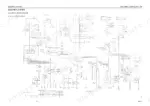
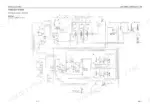
Yes, this Gehl CTL80 Service Manual includes complete electrical wiring diagrams, wire routing, and connector pinouts.