
Part of the Kubota Repair Manuals.
This is the factory Kubota Diagnostic Manual for the V6108-CR-TIE4 common rail diesel engine (publication 9Y110-01860), the Tier 4 powerplant used in Kubota tractors. Across 317 pages it walks a technician through the common rail system, active tests, symptom-based diagnosis, and the full DTC procedure list, so you can trace a fault to its actual cause instead of swapping parts.
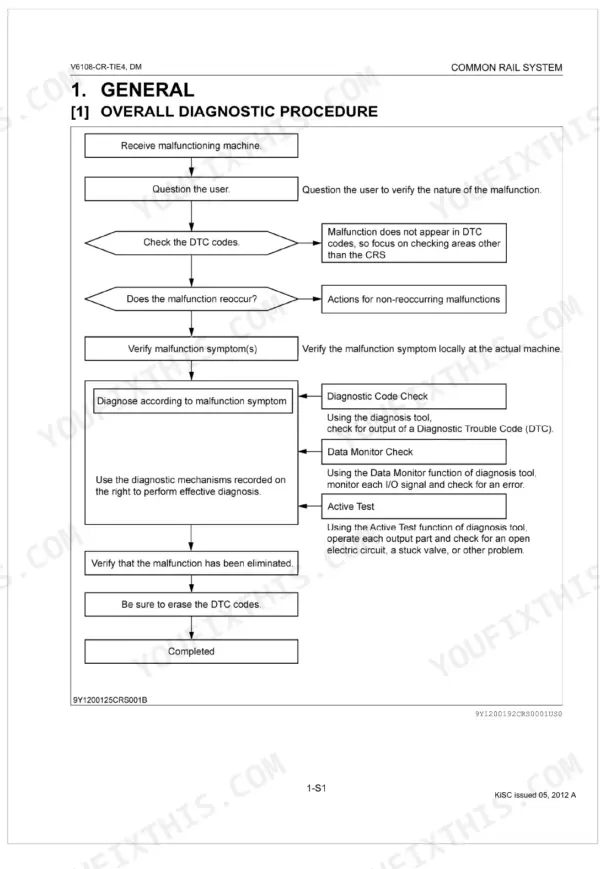
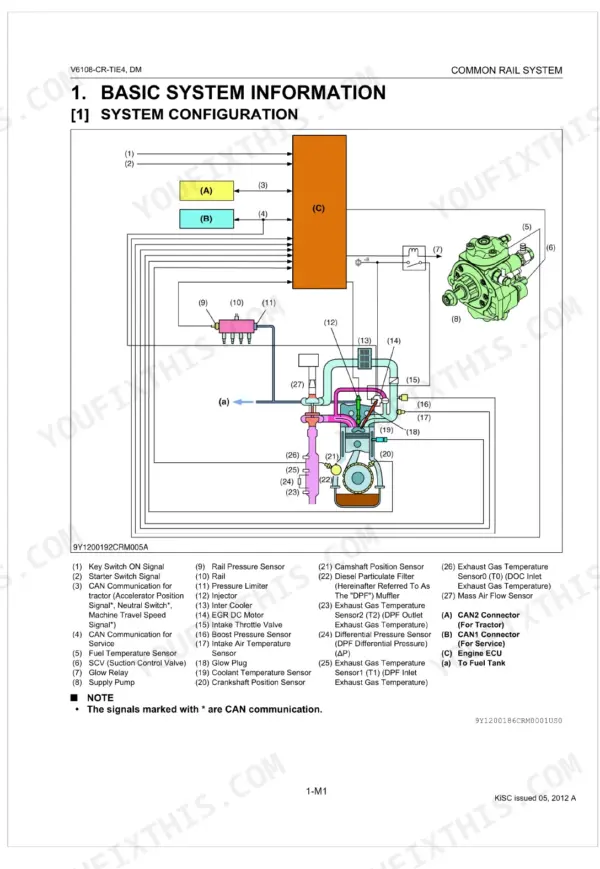
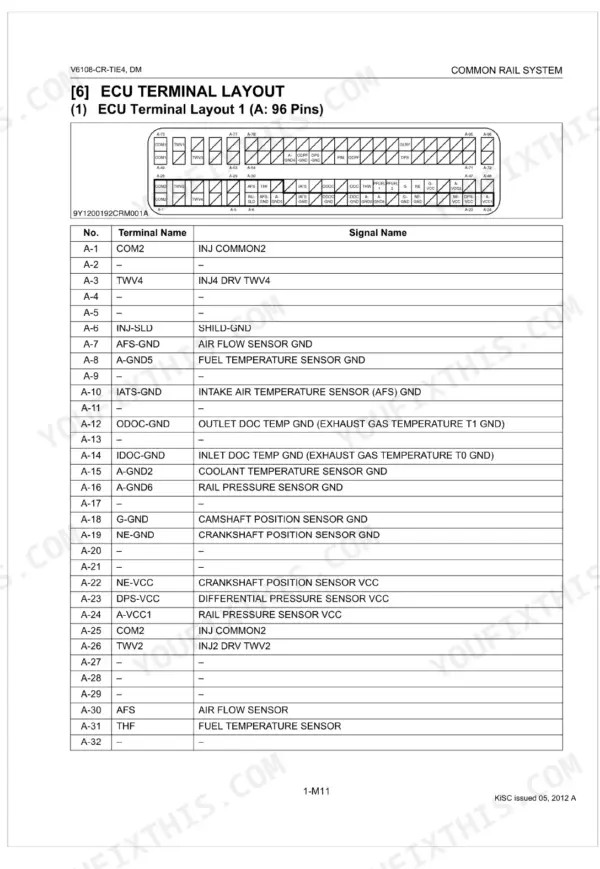
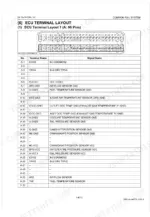
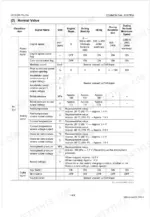
The manual documents the mechanism and wiring of the fuel and intake systems, normal monitor values such as target rail pressure and SCV current, and step-by-step diagnostic routines keyed to each diagnostic trouble code. It also covers connector inspection methods for verifying wiring faults.
You get an instant PDF download you can search, print, and keep on the bench or laptop while you diagnose an engine warning light, a rail pressure problem, or a fuel leak.
What's Inside This Kubota V6108-CR-TIE4 Manual
| System | Pages | Key Topics |
|---|---|---|
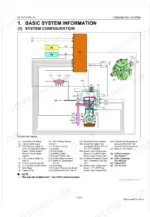
| Common Rail System Mechanism | 7-24 | Basic System Information, System Configuration, Fuel System, Intake and Exhaust System, Wiring Diagram, System Wiring Diagram, Available Data Monitor Signals (Level 2), Monitor Items |
| Active Test and Supply Pump Difference Learning | 43-44 | Injector Non-Injection Instruction, EGR Actuation Test, Glow Relay Actuation Test, Supply Pump Difference Learning, Operating Conditions → Specified Tool Conditions |
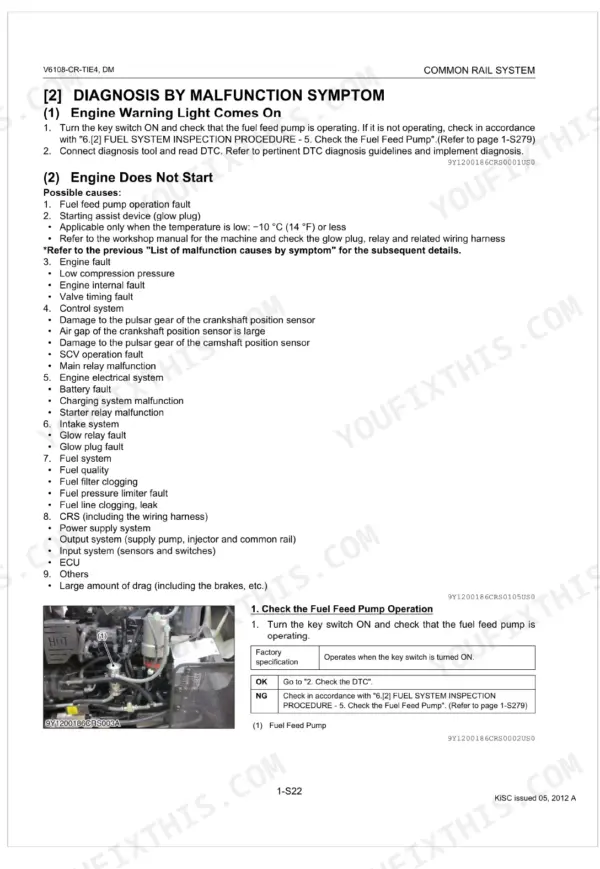
| Diagnosis by Malfunction Symptom | 45-86 | List of Malfunction Causes by Symptom, Engine Warning Light Comes on |
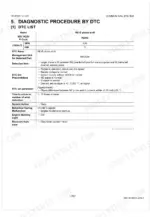
| Diagnostic Procedure by Dtc | 87-283 | Dtc List, Ne - G Phase Shift, Intake Air Temperature Built-In Maf Sensor: Abnormality, Pressure Limiter Emergency Open, High Rail Pressure, SCV Stuck, Fuel Leak |
| Inspection Procedure for Each System | 284-316 | ECU Circuit), Measure the ECU +Bp and Ground Voltage, Check the Relay Terminal Voltage -1, Check the Relay Terminal Voltage - 2, Check the Relay Terminal Voltage - 3, Check the Relay Terminal Voltage - 4, Check the Relay Terminal Voltage - 5, Check the Relay Terminal Voltage - 6 |
| Contact Information | 317 | Editor, Kubota Farm & Industrial Machinery Service, Ltd., Kubota Corporation |
Quick Reference Specifications
| Specification | Value | Page |
|---|---|---|
| Fuel filter replacement interval | every 500 operation hours | p. 306 |
| Air cleaner element cleaning interval | every 250 hours | p. 301 |
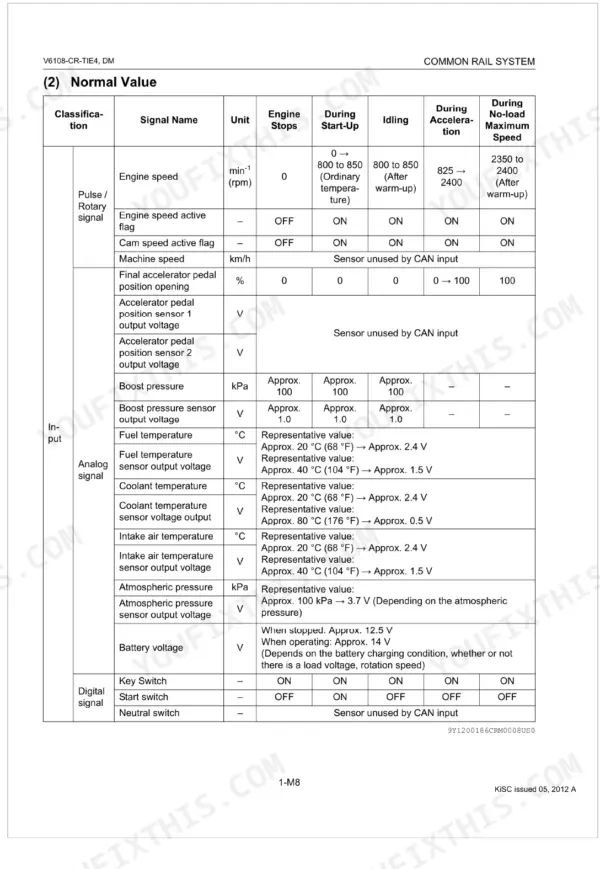
| Engine Speed (Idling) | 800 to 850 min⁻¹ (rpm) | p. 16 |
| Engine Speed (No-load Maximum Speed) | 2350 to 2400 min⁻¹ (rpm) | p. 16 |
| Boost Pressure (Approx.) | 100 kPa | p. 16 |
| Battery Voltage (Stopped) | Approx. 12.5 V | p. 16 |
| Battery Voltage (Operating) | Approx. 14 V | p. 16 |
| Target Rail Pressure (Idling) | 40 to 50 MPa | p. 17 |
| Target Rail Pressure (No-load Maximum Speed) | 95.0 to 115 MPa | p. 17 |
| Target Suction Control Valve (SCV) Current (Idling) | Approx. 1800 mA | p. 17 |
| DPF Regeneration Time Interval (High Frequency) | within 30 min. | p. 139 |
| Air Cleaner Element Cleaning/Replacement Interval | every 250 hours | p. 301 |
Kubota V6108-CR-TIE4 Common Problems This Manual Covers
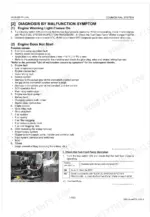
Engine warning light comes on
An illuminated engine warning light means the ECU has logged a fault. The manual maps each symptom to its likely causes and points you to the matching diagnostic routine before you start replacing components.
Manual Section: Diagnosis by Malfunction Symptom p. 45High rail pressure or SCV stuck
A stuck suction control valve or abnormally high rail pressure will trip a specific DTC. The DTC procedures isolate whether the fault is the valve, the pump, or the wiring so you don't guess.
Manual Section: Diagnostic Procedure by DTC p. 87Fuel leak in the common rail circuit
High pressure fuel leaks set their own trouble code on these engines. Follow the DTC procedure to find the leak point in the rail, injectors, or supply lines.
Manual Section: Diagnostic Procedure by DTC p. 87Pressure limiter emergency open
When the pressure limiter opens as an emergency measure the engine derates and logs a code. The DTC section explains the trigger conditions and the checks that confirm the root cause.
Manual Section: Diagnostic Procedure by DTC p. 87Supply pump difference learning needed
After pump or injector service the ECU may need difference learning to run smoothly. The active test section covers the learning procedure and the tool conditions required to complete it.
Manual Section: Active Test and Supply Pump Difference Learning p. 43Connector or wiring fault
Many intermittent codes trace back to a poor connector contact rather than a failed sensor. The inspection section gives a method for verifying connector connection faults across each system.
Manual Section: Inspection Procedure for Each System p. 284Frequently Asked Questions
Which engine does this diagnostic manual cover?
It covers the Kubota V6108-CR-TIE4 Tier 4 common rail diesel engine, publication number 9Y110-01860, as fitted to Kubota tractors.
Does it list the diagnostic trouble codes?
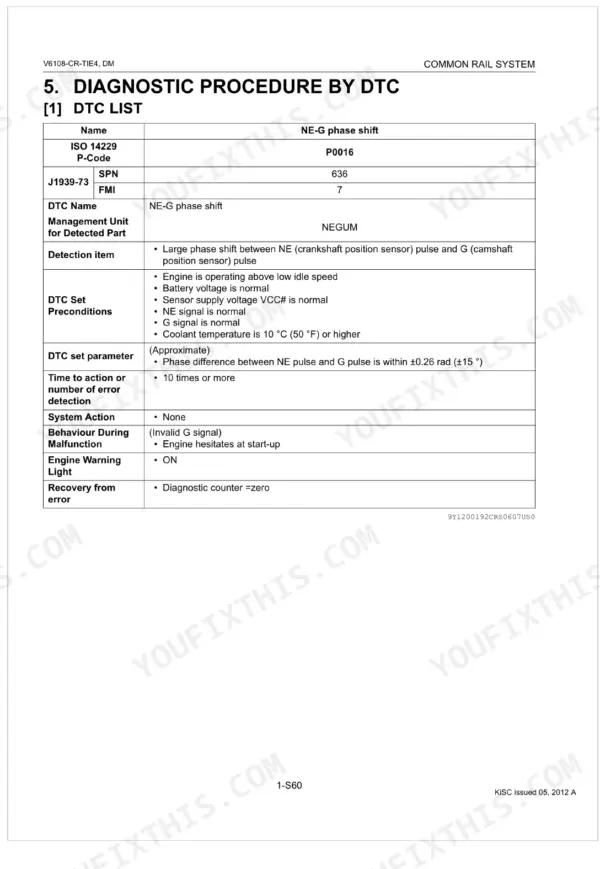
Yes. The Diagnostic Procedure by DTC section includes the DTC list and a step-by-step procedure for each code, covering faults such as NE-G phase shift, high rail pressure, and SCV stuck. p. 87
What normal values does it give for testing?
The mechanism section lists reference values including target rail pressure of 40 to 50 MPa at idle, SCV current of about 1800 mA at idle, and injector resistance of 0.35 to 0.55 ohm. p. 7
How do I get the file after buying?
The PDF is an instant download after purchase. There is no waiting and no physical shipment, so you can start diagnosing right away.
What format is this Kubota V6108-CR-TIE4 manual in?
It is a 317-page searchable PDF ready to download right away. The file opens on any device, so you can pull it up on your phone while you're under the hood. No shipping, no waiting.
Is this Kubota V6108-CR-TIE4 Diagnostic Manual printable?
Yes. Printing works from any reader and any printer, for your own shop use.





Reviews
There are no reviews yet.