

Part of the Yanmar Operator Manuals.
Yanmar tells you to check a suspect hydraulic hose on these machines with a piece of cardboard, never a bare hand, because pressurized oil finds skin faster than your eyes find the pinhole. That is the level of detail in this operator manual for the Yanmar SV05, SV08-1, and ViO10-2A micro excavators (EP versions, publication LGBAB0-00015), and that detail matters most when an alarm lamp lights and the crew is standing.
Its 126 pages cover the controls and pedals for each model, the monitor alarm lamps, fuse assignments, hydraulic P.T.O. handling, rubber crawler care, break-in, transport and lifting, long-term storage, and a troubleshooting chart. Maintenance tables set service intervals and tightening torques, and the specification pages carry operating mass, bucket capacity, and engine output for all three machines and their 2TE67-BV, 2TE67L-BV, and 3TNV70-WBVB engines.
Print the pages you need and take them to the machine; the PDF stays clean while the paper copy earns its grease.
What's Inside This Yanmar SV05 (EP), SV08-1 (EP), ViO10-2A (EP) Operator Manual
| System | Pages | Key Topics |
|---|---|---|
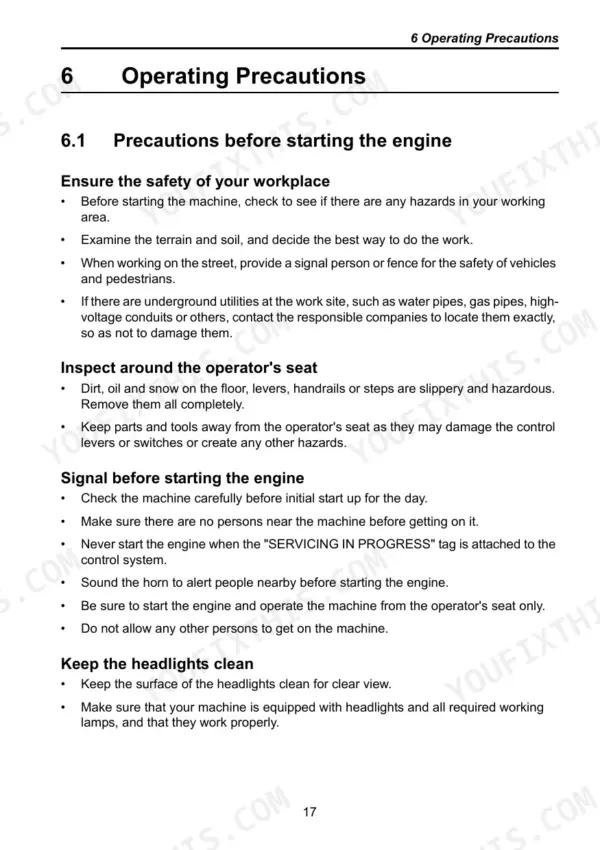
| Safety & Precautions | 5-40 | Introduction, Safety Information, Product Overview and Regulation, Operating & Servicing Precautions, Safety Messages and Warning Labels, Precautions When Traveling / Working / Parking, Attachment & Transportation Precautions, Battery Handling, Periodic Replacement of Safety Parts |
| Machine Identification & Ordering Parts | 8-16 | Machine / Engine / EPA Serial Number Plates, Model Designation, Intended Uses, Ordering Replacement Parts and Service Calls |
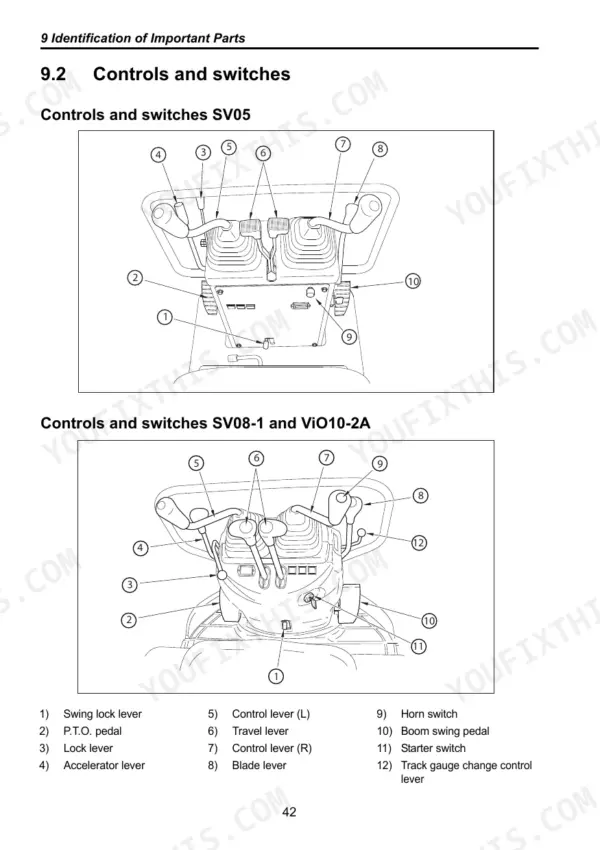
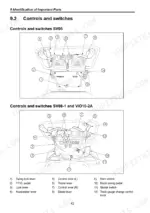
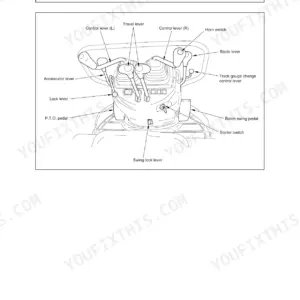
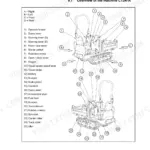
| Controls, Switches & Monitor | 41-46 | Overview of the Machine, Control Levers and Switches, Monitor Alarm Lamps (Oil Pressure, Battery Charge, Water Temp.), Hourmeter |
| Operation | 47-66 | Control Levers and Pedals (SV05 / SV08-1 / ViO10-2A), Fuses, Break-In Period, Pre-Start Checks, Operating the Implement, Handling the Rubber Crawler, Hydraulic P.T.O., Machine Transport and Suspension |
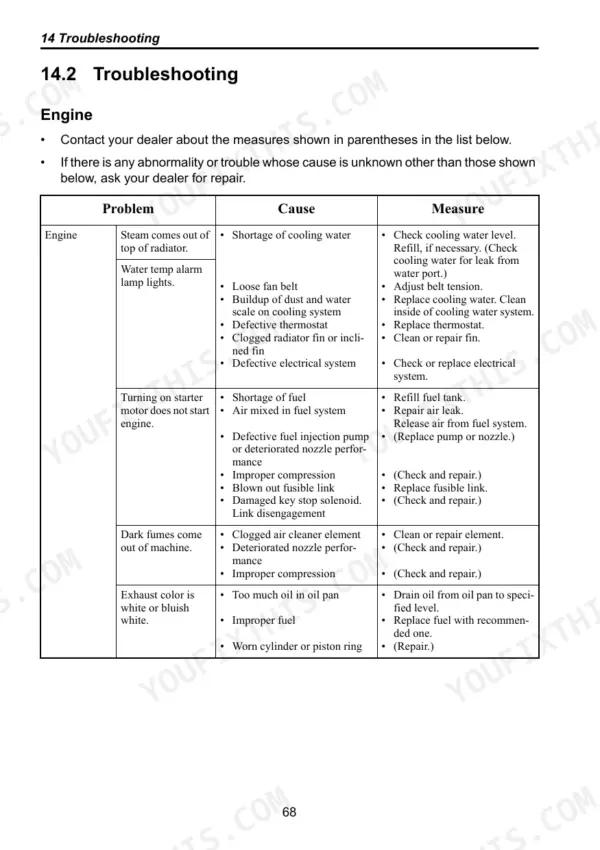
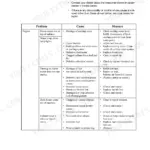
| Troubleshooting | 67-73 | Phenomena That Are Not Breakdowns, Engine, Electrical Equipment, Machine Body |
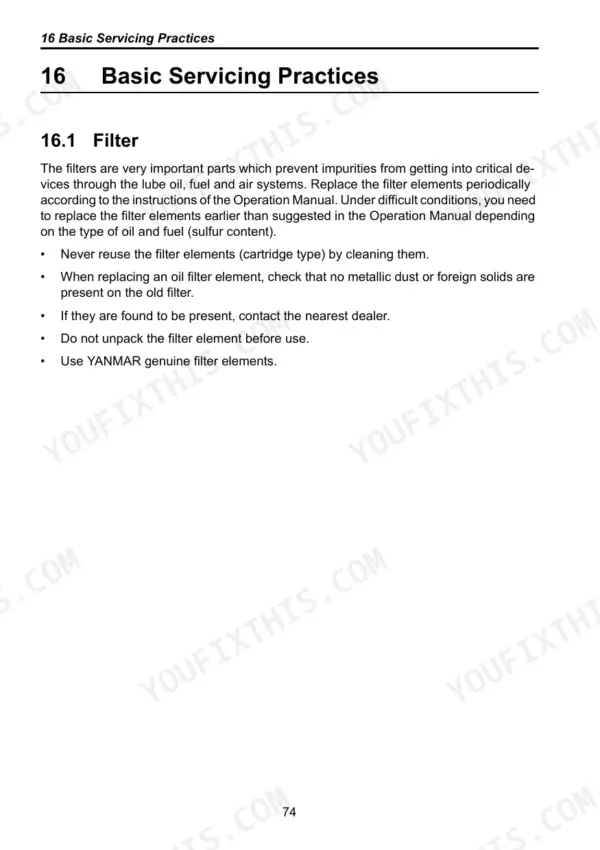
| Maintenance & Servicing | 74-88 | Filters, Fuel and Oil, Cooling Water, Torque Table, Rubber Crawler Tension, Fan Belt Tension, Greasing, Water Separator and Fuel Filter, Travel Reduction Gearbox Oil, Breaker Service Intervals |
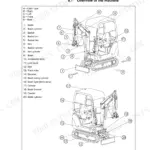
| Specifications | 89-100 | Model View and Working Range, Noise and Vibration Emissions, Lifting Capacity |
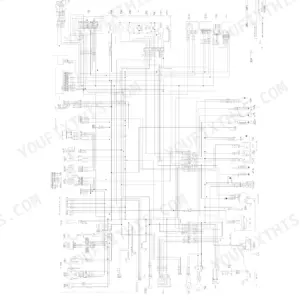
| Hydraulic & Wiring Diagrams | 101-104 | Swing Motor, Travel Motor, Blade / Arm / Boom / Bucket Cylinders, Wiring (Boom Lamp, Horn, Indicator Lamps, Starter Switch, Battery, Fuse) |
Quick Reference Specifications
| Specification | Value | Page |
|---|---|---|
| All Models | ||
| Main pump outlet hose replacement interval | Earlier of either every 2 years or every 4000 service hours | p. 35 |
| Pipe joint bolt torque (M8) | 12.7 - 16.7 N·m | p. 80 |
| Rubber hose (fuel and cooling water) replacement interval | Every 1000 hours or once a year | p. 83 |
| Fuse capacity (Engine stop solenoid, Fuel feed pump, Timer) | 10 A | p. 58 |
| Fuse capacity (Boom light, Horn, Buzzer, Alarm lamps, Hourmeter, Current limiter, Relay, Cut off valve) | 10 A | p. 58 |
| Hydraulic hose leak detection | Use a piece of cardboard or a plywood block to detect emissions of hot oil. | p. 37 |
| Hydraulic oil level (before start-up, oil temperature 10 to 30°C) | Around the midpoint of the gauge scale | p. 61 |
| Hydraulic oil level (during normal operation, oil temperature 50 to 80°C) | Around the upper limit mark of the gauge scale | p. 61 |
| SV05 | ||
| Rubber crawler tension (H) | 55~60 mm | p. 93 |
| Operating mass (with operator + 75 kg), SV05 | 615 kg | p. 93 |
| SV08-1 | ||
| Rubber crawler tension (H) | 55~60 mm | p. 93 |
| Operating mass (with operator + 75 kg), SV08-1 | 1065 kg | p. 93 |
Yanmar SV05 (EP), SV08-1 (EP), ViO10-2A (EP) Common Problems This Manual Covers
Rubber crawler loose or coming off
A slack rubber crawler wears fast and can walk off on a turn. The Handling the Rubber Crawler section explains proper use, compares rubber against steel crawlers, and covers keeping the track from slipping.
Manual Section: Handling the Rubber Crawler p. 61Hydraulic hose leaks and seal failure
Hoses age out before they blow. Yanmar calls for replacing the main pump outlet hose every 2 years or 4000 service hours, whichever comes first, and the Replacing Essential Parts Periodically section lists the safety-critical hoses and clamps to renew on age rather than visible wear.
Manual Section: Replacing Essential Parts Periodically p. 29Engine overheating from aged coolant hoses
Coolant hoses dry out and clamps loosen long before the water temperature alarm trips. The pre-start walking check covers cooling water level and leaks, and the maintenance schedule elsewhere in the manual calls for renewing rubber fuel and cooling water hoses every 1000 hours or once a year.
Manual Section: Checking Before Starting the Engine p. 55Blown fuses killing lights or shutdown
When the horn, boom light, or engine stop solenoid goes dead, the fuse box is the first stop. The Fuses section shows its position, the replacement procedure, and the capacity and circuit name for each fuse.
Manual Section: Fuses p. 53Battery trouble and risky jump starts
A flat battery invites shortcuts that end in a hydrogen gas explosion or acid burns. The Precautions for the Battery section covers electrolyte handling, short circuits, and the correct way to connect booster cables.
Manual Section: Precautions for the Battery p. 27Jerky implement blamed on real faults
Bucket shake, discontinuous arm movement, and a time lag in travel speed change can look like failures but are normal behavior on these machines. The Phenomena That Are Not Breakdowns section separates them from genuine faults before you start pulling hoses.
Manual Section: Phenomena That Are Not Breakdowns p. 67Residual pressure fighting P.T.O. attachments
Attachments on the hydraulic P.T.O. circuit can trap residual pressure that makes changeover a fight. The Handling Hydraulic P.T.O. section covers the selector valve, the P.T.O. pedal, and single acting actuator type attachments.
Manual Section: Handling Hydraulic P.T.O. p. 62Frequently Asked Questions
Which machines does this manual cover?
It covers the Yanmar SV05, SV08-1, and ViO10-2A micro excavators (EP versions) with the 2TE67-BV, 2TE67L-BV, and 3TNV70-WBVB engines. Where the machines differ, the manual splits coverage, with separate control lever and pedal pages for the SV05 versus the SV08-1 and ViO10-2A.
Is this a service manual or an operator manual?
It is the factory operator manual, publication LGBAB0-00015. It covers daily checks, controls, maintenance intervals, torque tables, fuses, transport, storage, and troubleshooting rather than full teardown procedures, which suits owners and operators keeping these machines working between shop visits.
Does it include a troubleshooting guide?
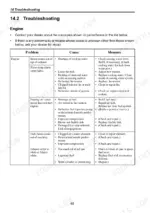
Yes. The Troubleshooting section works from symptom toward likely cause, and the Phenomena That Are Not Breakdowns pages first rule out normal quirks like bucket shake or a shift in upperstructure position, so you do not chase faults that are not there. p. 68
Does it list part replacement intervals?
Yes. The Replacing Essential Parts Periodically section lists safety parts to renew on age, and the manual gives intervals such as the main pump outlet hose every 2 years or 4000 service hours, and rubber fuel and cooling water hoses every 1000 hours or once a year. p. 29
What do I get after purchasing this Yanmar SV05 (EP) manual?
Immediate download of the complete 126-page searchable Operator Manual. Access it on any device, from a laptop at your desk to a phone in the field.
Can I print this manual?
Yes. Print the pages or sections you need for your own shop use. Any standard printer works.


Reviews
There are no reviews yet.