

Part of the Yanmar Operator Manuals.
Air trapped in the fuel lines will keep a small marine diesel cranking until the battery gives up, and the bleeding procedure that clears it is one of the first things this book settles. It is Yanmar's operator manual for the 1GM, 2GM, 3GMD, and 3HM pleasure craft diesels: 56 pages in English running from engine installation and first start through daily operation, winter storage, and the periodical maintenance schedule.
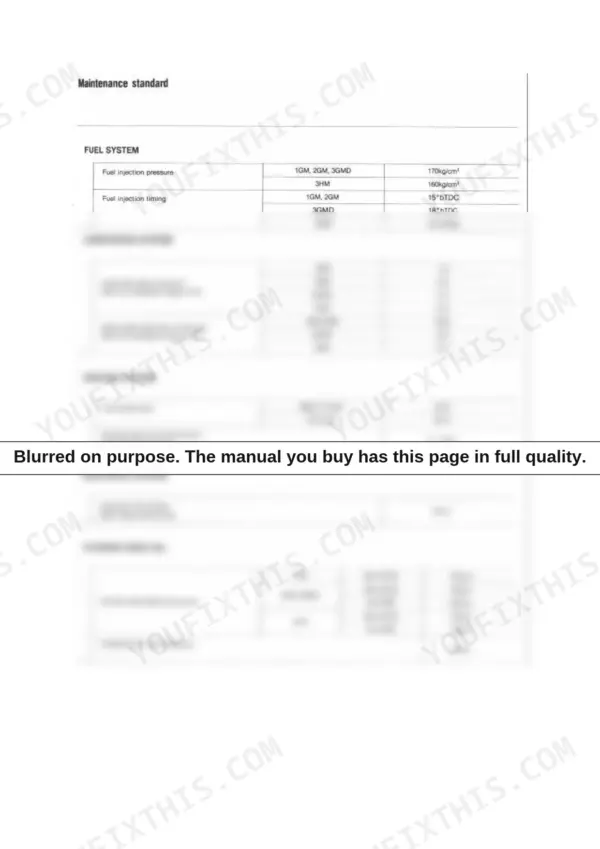
The maintenance chapter carries the numbers owners chase: fuel injection timing for each model, valve clearance, alternator belt deflection, and a 250 hour fuel filter element interval. Piping and wiring diagrams at the back trace every line and terminal, and the troubleshooting chart works through hard starting, knocking, overheating, and black or gray exhaust smoke.
The PDF carries 44 bookmarks for quick navigation, and pages print cleanly, so the bleeding sequence can lie beside the injection pump and take the fuel stains instead of your only copy.
What's Inside This Yanmar 1GM, 2GM, 3GMD, 3HM Operator Manual
| System | Pages | Key Topics |
|---|---|---|
| Introduction | 1 | Engine Parts, Engine Maintenance, Proper Handling, Dealer Consultation, Safety Messages, Operation Messages |
| Appearance | 2-3 | Engine Number, Clutch Model Name Plate, Engine Model Name Plate, Engine Model, Clutch Model, Clutch Gear Ratio |
| Name of Parts | 4 | Reduction and Reversing Gear, Cooling Water Pump, Fuel Feed Pump, Alternator, Fuel Injection Pump, Engine Stop Device |
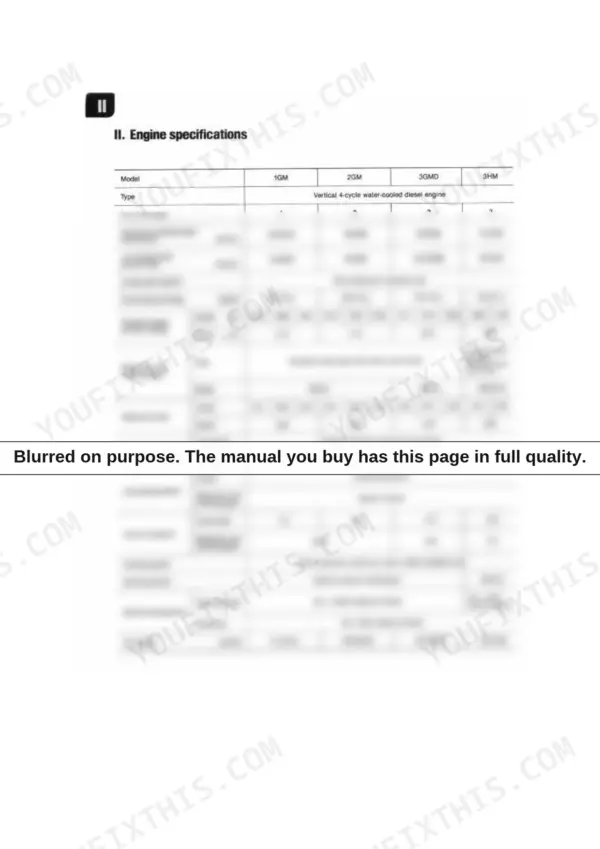
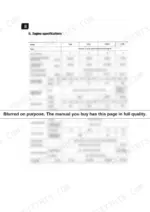
| Engine Specifications | 5 | No. of Cylinders, Continuous Rating Output, Fuel Injection Timing, Reduction Ratio, Lubricating System, Cooling System |
| Engine Installation | 6-15 | 3-1.1 Inspection After Unpacking, 3-2.1 Preparation of the Engine Foundation Plate, 3-3.1 Engine Installation, 3-4.1 Propeller, Propeller Shaft, 3-5.1 Cooling Water Supply Device |
| After Launching | 16 | Water or Air Intake, Engine Installation Bolts, Shaft Joints, Decompression Lever, Clutch Handle, Propeller Shaft Alignment |
| Fuel and Lubrication Oil | 17-19 | Selection and Handling of Fuel Oil, Selection of Lubricating Oil |
| Starting the New Engine for the First Time | 20-24 | Supply Fuel Oil, Supply of Lubrication Oil, Air Bleeding in the Fuel System, External Inspection, Remote Control Device Check, Check of Instrument Panel Alarm System, Tuning |
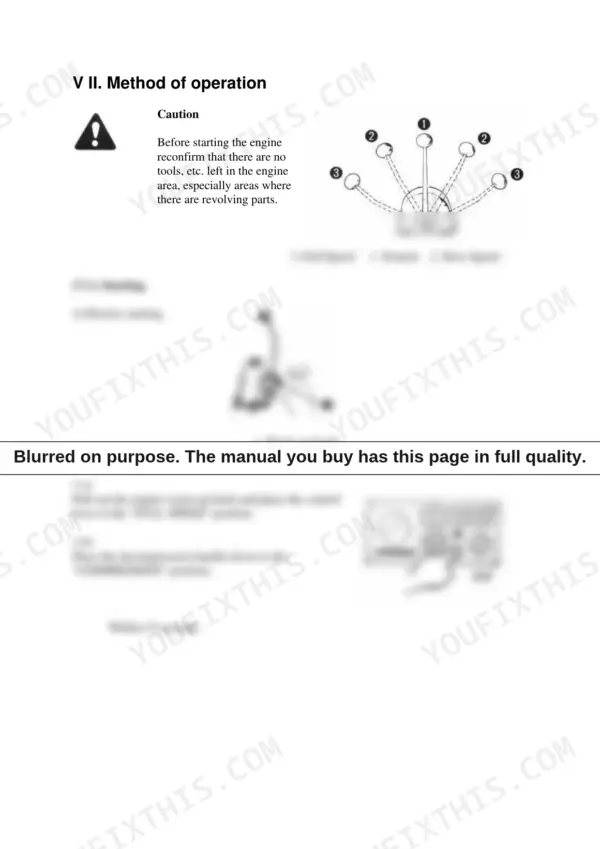
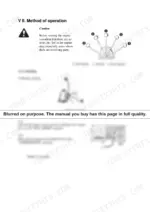
| Method of Operation | 25-31 | Tuning, Starting, Cautions After Starting the Engine, Cautions During Operation |
| Storage | 32-36 | Stopping, Storing, Removing Engine From Storage |
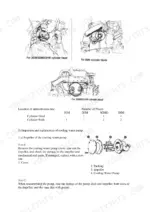
| Periodical Inspection and Maintenance | 37-53 | Fuel Oil System, Lubricating Oil System, Cooling Water System, Inspection of Engine Body, Washing the Air Intake Silencer Element |
| Trouble Shooting | 54 | Engine Hard to Start, Engine Knocks, Engine Runs Irregularly, Lack of Engine Power, Engine Overheat, Engine Emits Black or Gray Exhaust Smoke |
| Fuel Oil, Lubricating Oil and Cooling Water Piping Diagram | 55 | Fuel Injection Valve, Lube Oil Pressure Switch, Cooling Water Pump, Kingston Cock, Fuel Injection Pump, Fuel Oil Filter |
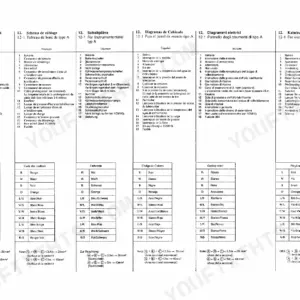
| Electrical Wiring Diagram | 56 | Battery, Key Switch, Push Button Switch, Starter Motor, Alternator, L.O. Pressure Switch |
Quick Reference Specifications
| Specification | Value | Page |
|---|---|---|
| All Models | ||
| Fuel filter element replacement interval | every 250 hours of operation | p. 43 |
| Recommended speed control cable type | Morse 33-C | p. 12 |
| Recommended clutch control cable type | Morse 33-C | p. 12 |
| Alternator belt tension (with 10kg thumb force) | 10 mm | p. 48 |
| Intake/exhaust valve clearance | 0.2 mm | p. 8 |
| 1GM, 2GM, 3GMD | ||
| Recommended battery capacity (1GM, 2GM, 3GMD) | 12V - 70AH (Mini) | p. 16 |
| 3HM | ||
| Recommended battery capacity, 3HM | 12V - 100AH (Mini) | p. 16 |
| Fuel injection timing, 3HM | 21±1 degree BTDC | p. 41 |
| 1GM, 2GM | ||
| Fuel injection timing (1GM, 2GM) | 15±1 degree BTDC | p. 41 |
| 3GMD | ||
| Fuel injection timing, 3GMD | 18±1 degree BTDC | p. 41 |
Yanmar 1GM, 2GM, 3GMD, 3HM Common Problems This Manual Covers
Cranks but will not start
Air drawn into the fuel system after a filter change or a tank run dry is the classic cause, and it costs owners whole weekends at the mooring. The manual walks through air bleeding in the fuel system so the engine fires instead of just cranking.
Manual Section: VI. Starting the new engine for the first time p. 20Overheating from lost cooling water flow
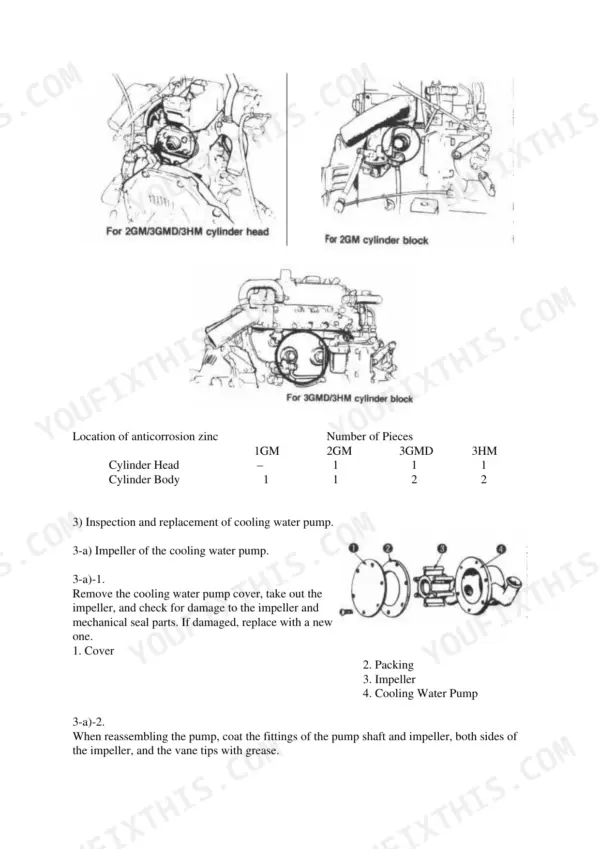
A blocked water intake or a tired cooling water pump shows up first as an overheat under load. Section 9-3 covers cooling water system inspection so flow problems get caught at the dock rather than offshore.
Manual Section: 9-3. Cooling water system p. 45Stale fuel and clogged filter elements
Diesel that sat over a season carries water and gum straight into the filter, and power fades or the engine hunts. The fuel oil system section sets the filter element replacement at every 250 hours of operation.
Manual Section: 9-1. Fuel oil system p. 39Slow cranking from a weak battery
These diesels need real cranking speed, and a neglected battery turns every cold start into a gamble. The electrical equipment section sets an electrolyte level check every 200 hours and tells you when specific gravity calls for a recharge.
Manual Section: 9-6. Electrical equipment p. 50Sticky or misadjusted control cables
A clutch that half engages or a throttle that creeps usually traces to cable adjustment, not the engine. Section 9-7 covers remote control cable adjustment, and the installation chapter specifies Morse 33-C cables with the correct lever strokes.
Manual Section: 9-7. Remote control cable adjustment p. 51Rough running after winter layup
An engine put away wet comes back with corrosion, stiff parts, and fuel that will not burn clean. The storage chapter gives the laying up procedure and the steps for removing the engine from storage.
Manual Section: VIII. Storage p. 32Black or gray exhaust smoke
Smoke under load points at fuel delivery, air supply, or combustion trouble. The troubleshooting chart runs smoke alongside knocking, irregular running, and lack of power, pointing each symptom back to its likely cause.
Manual Section: X. Trouble shooting p. 54Frequently Asked Questions
Which Yanmar engines does this manual cover?
The Yanmar 1GM, 2GM, 3GMD, and 3HM marine diesels for pleasure craft. One book covers all four models, with model specific figures such as fuel injection timing and recommended battery capacity called out where they differ.
Does it explain how to bleed the fuel system?
Yes. Section 6-3, air bleeding in the fuel system, covers purging air after a fuel filter change or running the tank dry, the usual reason one of these engines cranks but will not fire. p. 23
Does it include maintenance intervals and specifications?
Yes. The periodical inspection and maintenance chapter works through the fuel oil, lubricating oil, and cooling water systems, with figures such as a 250 hour fuel filter element interval, alternator belt tension, and fuel injection timing per model. p. 37
Is there a wiring diagram?
Yes. Section XII carries the electrical wiring diagram, covering the battery, key switch, push button switch, starter motor, alternator, and lube oil pressure switch, and section XI adds the fuel oil, lubricating oil, and cooling water piping diagram. p. 56
Is this Yanmar 1GM manual a PDF I download?
Instant PDF download (1 MB). You get the full 56-page searchable Operator Manual immediately after payment. Open it on your laptop, tablet, or phone right in the shop.
Is this Yanmar 1GM manual print-friendly?
Yes. Print individual pages or full chapters for your own shop use, on letter or A4 paper.
Does this Yanmar 1GM manual have electrical schematics?
A wiring diagram for the Yanmar 1GM, 2GM, 3GMD, 3HM electrical system is included.


Reviews
There are no reviews yet.