
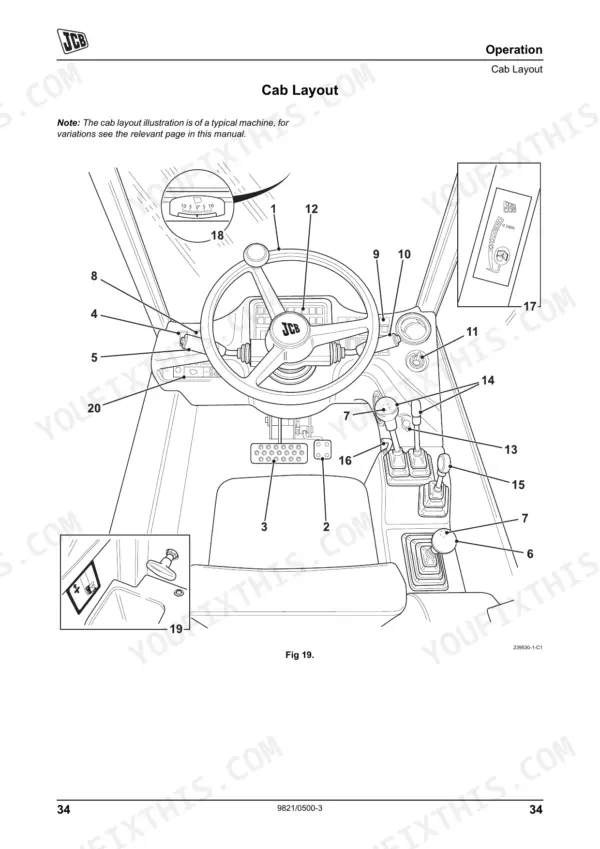
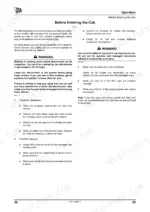
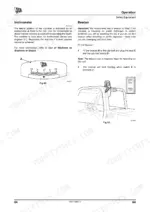
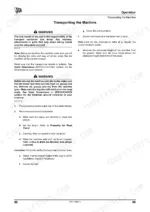
This is the JCB operator manual for the 520-50 Loadall, the variable reach truck built from serial number 754000, publication number 9821/0500 and running to 212 pages in English. It is the handbook that should stay with the machine.
The manual explains safe operation from cab entry and seat belts through the drive controls, the Longitudinal Load Moment Indicator and load charts, working with the boom, and operating on slopes. It then covers routine maintenance with fluids, lubricants and capacities, optional attachments such as the fork mounted hook and work platforms, and the full machine specifications.
Use it to learn correct operating practice, run the pre-shift checks, follow the service schedule and find the tyre pressures, dimensions and capacities for your 520-50. Download it as a PDF and keep it in the cab or the office.
What's Inside This JCB 520-50 Operator Manual
| System | Pages | Key Topics |
|---|---|---|
| Safety Notices | 9-10 | Important Information, Operator Manual, Safety Warnings |
| Operation | 35-112 | Introduction, Before Entering the Cab, Entering and Leaving the Cab (Emergency Exit), Doors and Windows (Opening Closing: Rear Window), Seat Controls (Introduction, Basic Seat) |
| Routine Maintenance | 113-182 | Fluids, Lubricants and Capacities (Coolant Mixtures, Fuels), Prepare the Machine for Maintenance (Introduction, How to Make the Machine Safe) |
| Optional Attachments | 183-196 | Fork Mounted Hook (Safety, Installing, Removing, Operation, Maintenance), Work Platforms, Static Dimensions (520-50), Performance Dimensions (520-50) |
| Specifications | 197-204 | Static Dimensions, Performance Dimensions, Noise Data, Vibration Data, Tyre Sizes and Pressures, Trailer Towing |
| Warranty Information | 205-208 | Machine Service Record Sheet (Installation Checklist, 500 Hrs./6 Month, 1000 Hrs./12 Month, 1500 Hrs./18 Month, 2000 Hrs./24 Month, 2500 Hrs./30 Month, 3000 Hrs./36 Month, 3500 Hrs./42 Month, 4000 Hrs./48 Month, 4500 Hrs./54 Month, 5000 Hrs./60 Month, 5500 Hrs./66 Month, 6000 Hrs./72 Month, 6500 Hrs./78 Month, 7000 Hrs./84 Month, 7500 Hrs./90 Month, 8000 Hrs./96 Month, 8500 Hrs./102 Month, 9000 Hrs./108 Month, 9500 Hrs./114 Month, 10000 Hrs./120 Month) |
| European Community Standards | 209-212 | Ec Declaration of Conformity, Introduction |
Quick Reference Specifications
| Specification | Value | Page |
|---|---|---|
| ROPS/FOPS mounting bolts torque | 244 Nm (180 lbf ft) | p. 138 |
| Tyre pressure for 10.5/80 x 18 tyre | 3.0 BAR (43.5 PSI) | p. 192 |
| Wheel nut torque | 680 Nm (500 lbf ft) | p. 177 |
| Air cleaner inner element change interval | 500 hours | p. 120 |
| Battery electrolyte level | 6 mm (1/4 in) above the plates | p. 137 |
| Hydraulic tank filler cap change interval | 1000 hours or yearly | p. 121 |
| ROPS/FOPS Mounting Bolt Torque | 244 Nm (180 lbf ft) | p. 138 |
| Engine Oil Capacity | 10 Litres (2.2 UK Gal) | p. 125 |
| Fuel Tank Capacity | 75 Litres (16.5 UK Gal) | p. 125 |
| Hydraulic Tank Capacity | 70 Litres (15.4 UK Gal) | p. 125 |
| Alternator Drive Belt Deflection | 10 mm (0.625 in) | p. 160 |
| Minimum Hydraulic Oil Temperature for Operation | 10°C (50°F) | p. 70 |
JCB 520-50 Common Problems This Manual Covers
Boom or machine moves unexpectedly
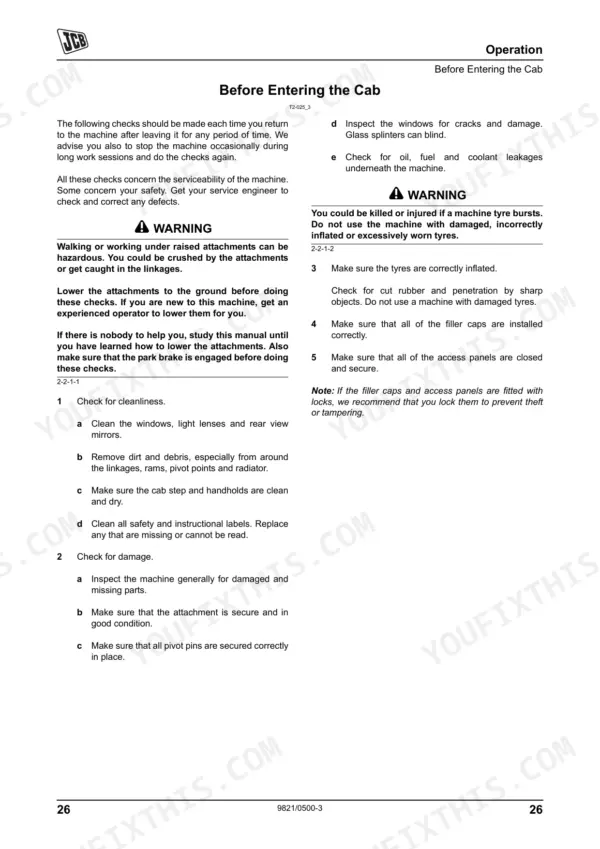
Unexpected movement during checks usually means the boom is not fully lowered, the parking brake is not engaged or the machine is not secured. The Operation section explains how to make the machine safe before you work around it.
Manual Section: Operation p. 35Unstable or unsafe lifting
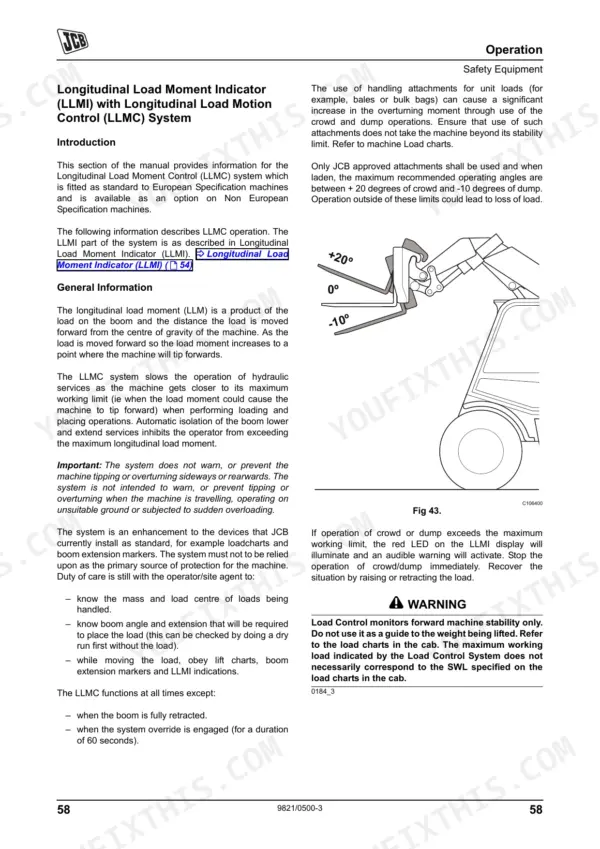
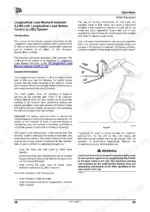
Poor stability when lifting is often wrong tyre pressures, a damaged tyre or a load beyond the chart. The Operation section covers the load charts and the Longitudinal Load Moment Indicator that keep lifts within limits.
Manual Section: Operation p. 35Dash warning alarms during work
Alarms for coolant temperature, engine oil pressure, air cleaner, battery charge or transmission oil warn of a fluid, filtration or charging problem. The Routine Maintenance section covers the checks and service behind these warnings.
Manual Section: Routine Maintenance p. 113Leaks under the machine
Hydraulic oil, fuel or coolant on the ground points to a damaged hose, loose fitting, failed seal or loose filler cap. The Routine Maintenance section sets out the daily leak checks and fluid service.
Manual Section: Routine Maintenance p. 113Wrong tyre pressures and handling
Incorrect or uneven tyre pressures reduce stability and safe lifting on a telehandler. The Specifications section lists the tyre sizes and pressures for the 520-50.
Manual Section: Specifications p. 197Steering mode confusion
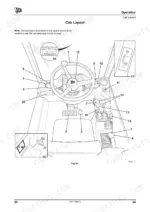
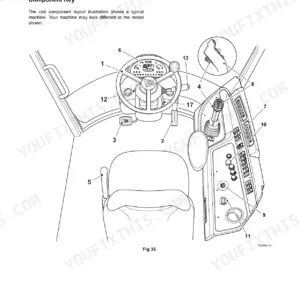
Difficulty selecting or confirming the steering mode is a common concern on these Loadalls. The Operation section explains the drive controls, switches and steering selection for safe travel.
Manual Section: Operation p. 35Frequently Asked Questions
Which model does this manual cover?
It is the JCB operator manual for the 520-50 Loadall variable reach truck from serial number 754000. It is publication 9821/0500 with 212 pages in English.
Does it cover daily checks and the service schedule?
Yes. The Routine Maintenance section gives the fluids, lubricants and capacities, how to prepare the machine for maintenance and the service record schedule for the 520-50. p. 113
Does it explain the load charts and load moment indicator?
Yes. The Operation section covers the load charts, boom indicators and the Longitudinal Load Moment Indicator so you can keep lifts within the machine limits. p. 35
How is it delivered?
You download the PDF straight after purchase, so there is no wait, and you can keep a copy with the machine as intended.
How quickly can I access this manual after buying?
Immediate download of the complete 212-page searchable Operator Manual. Open it on any device, whether that's a laptop at your desk or a phone out in the field.
Is this JCB 520-50 Operator Manual printable?
Yes. Print a chapter or just the pages for the job at hand, for use in your own shop. Any home or office printer works.
Reviews
There are no reviews yet.