
This JCB service manual covers the 3CX, 4CX, 214, 215 and 217 backhoe loaders and their variants from machine number 460001 onwards. It is the factory workshop document, publication number 9803/3270, running to 711 pages, for machines with the 1000 Series four cylinder engines.
The manual works through every system: general information and torque settings, the electrical system with fuse and relay identification, the loader and backhoe hydraulics, the transmission with front and rear axles, brakes, steering and the engine. Technical data, fault finding and overhaul procedures are given throughout.
Use it to trace a hydraulic fault, diagnose an electrical or starting problem, overhaul the transmission or set up the steering. This is the information a JCB service engineer works from, delivered as a PDF you can download and print.
What's Inside This JCB 3CX & 4CX Backhoe Loaders Manual
| System | Pages | Key Topics |
|---|---|---|
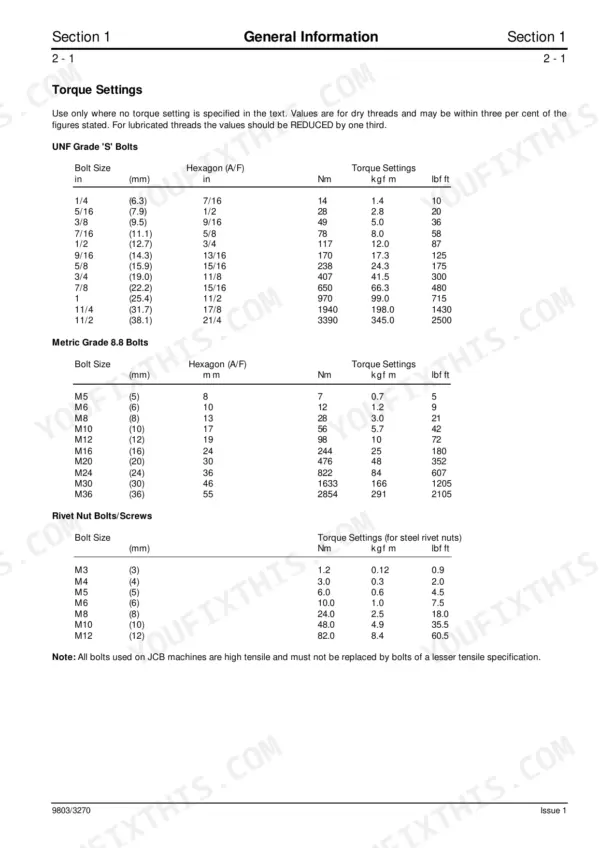
| General Information | 3-27 | Machine Identification Plate, Typical Vehicle Identification Number, Typical Engine Identification Number, Serial Plates, Torque Settings, Service Tools Numerical List |
| Care & Safety | 28-34 | Safety Notices, General Safety, Operating Safety, Maintenance Safety |
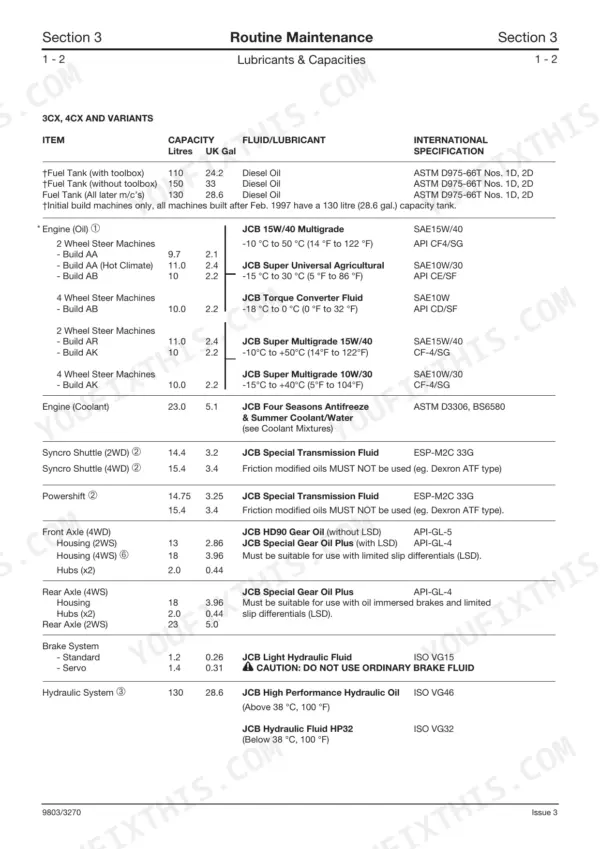
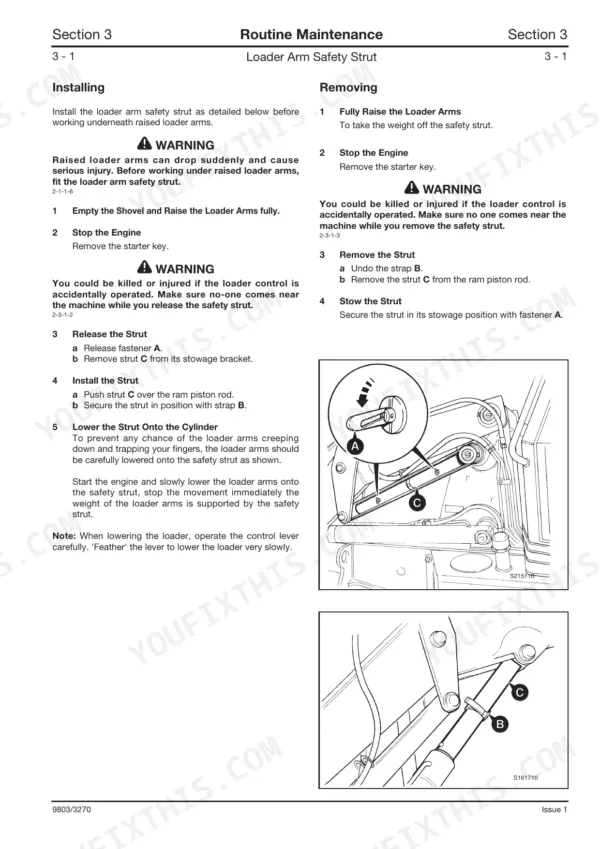
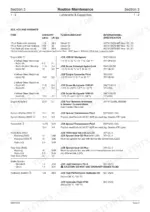
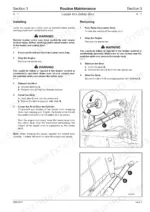
| Routine Maintenance | 35-72 | Lubricants Health & Safety, Lubricants & Capacities, Service Schedules, Loader Arm Safety Strut (Fitting and Removing) |
| Attachments | 73-75 | Extradig Dipper Wear Pads - Upper/Lower, Inspecting the Top Wear Pads, Torque Settings, Bottom Wear Pads |
| Body & Framework | 76-116 | Engine Panels (Removing Fitting: a Side Panel, The Access Panel, The Engine Cover), Rivet Nuts (Fitting Procedure, Specifications), Slide Hammer Kit (Procedures) |
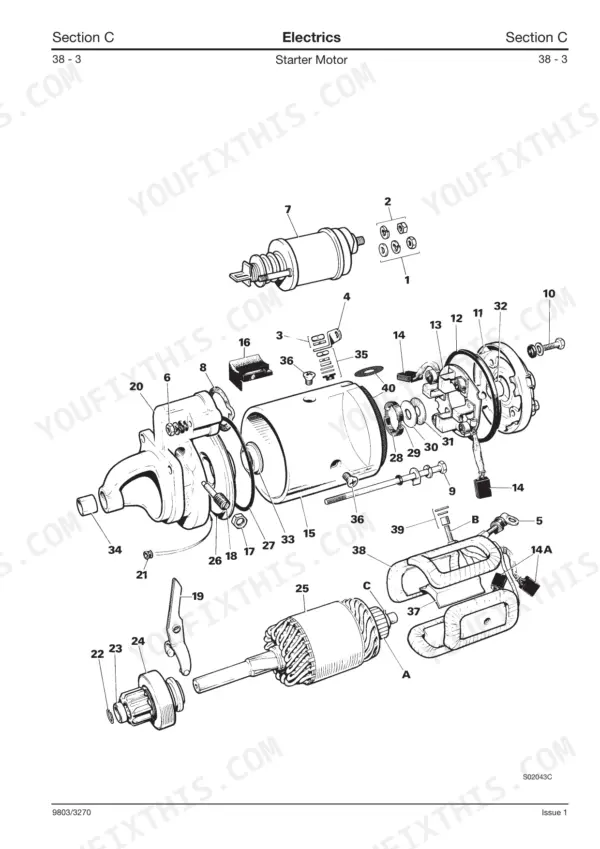
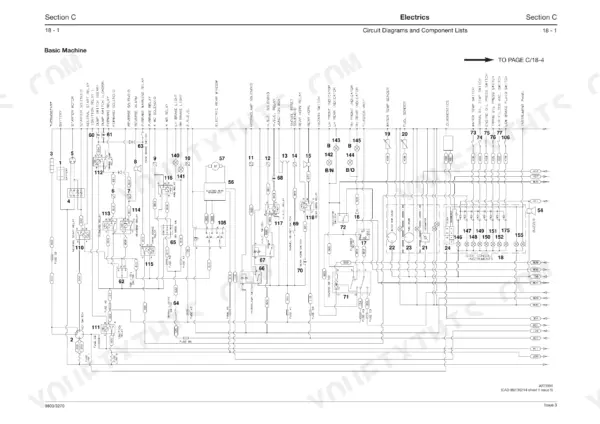
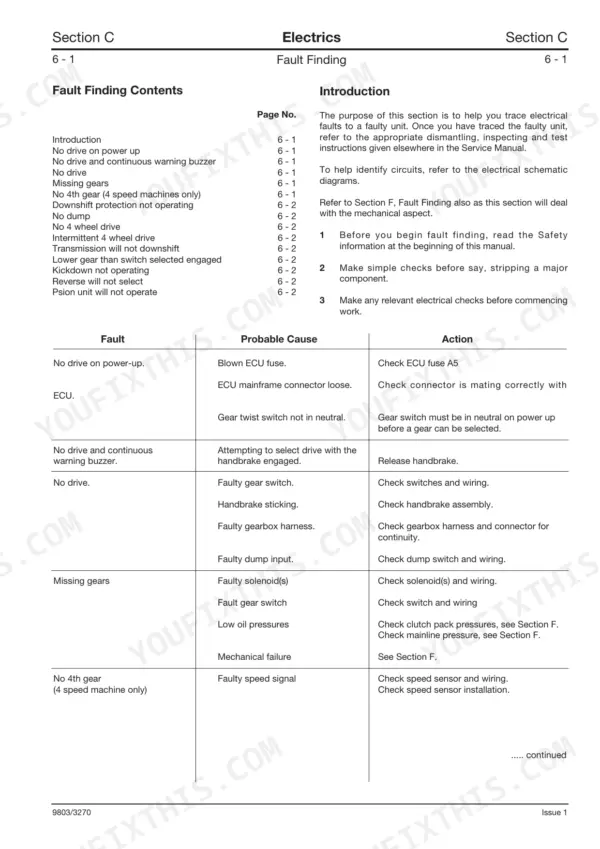
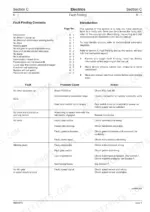
| Electrics | 117-211 | Technical Data (Fuse Identification, Relay Identification, Fuse Identification - 3CXE, 214E, Relay Identification - 3CXE, Fuse Identification - Servo Command, Relay Identification - Servo Command, Fuse Identification - 214Se, Relay Identification - 214Se, Fuse Identification - From Serial No. 495455, Relay Identification - From Serial No. 495455, Relay Identificatioon - Autoshift Only, Relay Identificatiom - Powershift Transmission - From Serial No. 495455, Relay Identification - Syncro Shuttle Transmission - From Serial No. 495455, Link Box Fuses, Bulbs) |
| Controls | 212-225 | Backhoe (Boom Lock, Removal and Replacement), Steering Column (Dismantling and Assembly), Control Rods and Linkages (Loader Valve, Backhoe Valve) |
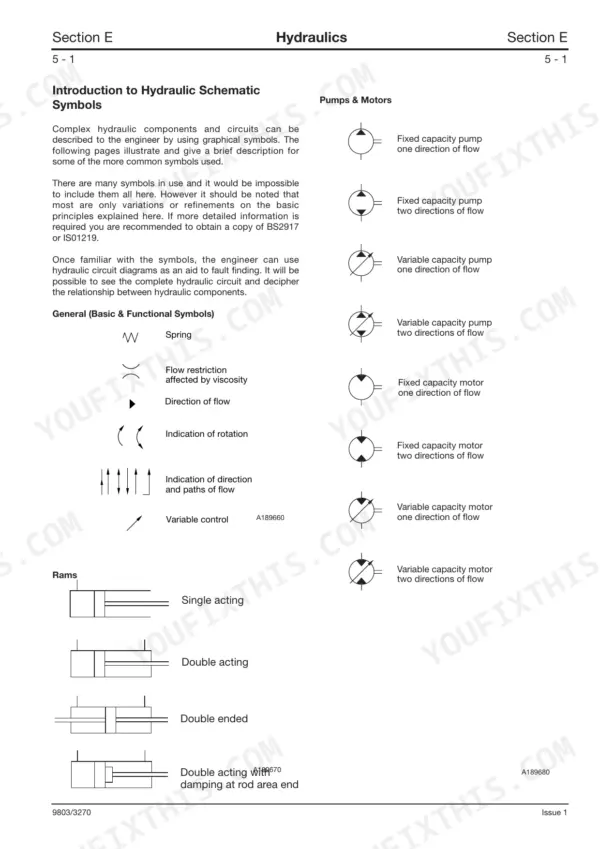
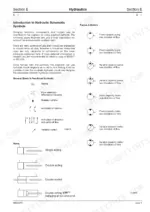
| Hydraulics | 226-443 | Technical Data (Hydraulic Pumps, Loader Valve, Backhoe Valve, Auxiliary Valve, Ancillary Equipment, Manifold Block), Quick Release Couplings, Hydraulic Contamination |
| Transmission | 444-657 | Technical Data (Front Axle, All Wheel Steer Machines, Wheel Steer Machines, Rear Axle, Tyre Pressures, Front Wheels, Rear Wheels, Syncro Shuttle Transmission, Powershift Transmission, Pump/Transmission Stall Speed Combinations, Gear Pump, Variable Pump, Low Emission Engine, 2 Wheel Steer Machines, All Wheel Steer Machines) |
| Brakes | 658-680 | Technical Data, Descriptions (Compensating Master Cylinder, Pedals Locked - Normal Operation, Pedals Locked - Compensating Operation, Pedals Unlocked - Normal Operation) |
| Steering | 681-705 | Technical Data (Steer Hydraulics), Schematics (2WS Machines, 4WS Machines), Fault Finding, Machine Steer Circuit Description (2WS Machines |
| Engine | 706-711 | Technical Data, Removal & Replacement, Fuel Lift Pump |
Documents This Manual Refers To
The manufacturer cites these publications by number. We carry them:
Quick Reference Specifications
| Specification | Value | Page |
|---|---|---|
| Hydraulic Fault Reset Procedure | Not found. Corrective actions involve diagnosis and repair of specific components, not a general reset procedure. | p. 245 |
| Front Wheel Nut Torque | 680 Nm (500 lbf ft) | p. 56 |
| Rear Wheel Nut Torque | 680 Nm (500 lbf ft) | p. 56 |
| Boom Pivot Pin Torque | 98 Nm (72 lbf ft) | p. 99 |
| Front Axle Trunnion Bolts Torque | 98 Nm; 10 kgf m; 72 lbf ft | p. 461 |
| Front Axle Drivehead Bolts Torque (SD55 M10 8.8) | 56 Nm; 5.7 kgf m; 42 lbf ft | p. 461 |
| Oil Seal Replacement | Renew all O-rings and back-up rings | p. 312 |
| Gasket Replacement | Renew whenever disturbed unless otherwise instructed | p. 32 |
| Gasket Replacement (General) | Renew all O-rings and gaskets | p. 644 |
| Hydraulic Oil Cooler Hose Connection Torque | 58 Nm (42 lbf ft) | p. 436 |
| Double pump/4070H Theoretical Displacement (Pump section 1) | 33 cc/rev | p. 230 |
JCB 3CX & 4CX Backhoe Loaders Common Problems This Manual Covers
Weak or slow hydraulics under load
Hydraulic functions that are weak, slow or stop under load usually mean low or contaminated oil, worn pumps, a valve fault or leaks. The Hydraulics section covers the pumps, loader and backhoe valves and their technical data.
Manual Section: Hydraulics p. 226Machine will not start
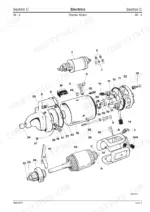
A no start or intermittent start on these backhoe loaders is traced through the battery, charging, starter circuit and wiring. The Electrics section gives the fuse and relay identification and technical data to find the fault.
Manual Section: Electrics p. 117Poor or inconsistent braking
Spongy or uneven brakes point to wear, contamination or a compensating master cylinder fault. The Brakes section carries the technical data and describes normal and compensating operation of the system.
Manual Section: Brakes p. 658Heavy or erratic steering
Heavy, wandering or unresponsive steering is usually a hydraulic steering fault, low fluid or pump wear. The Steering section covers the steer hydraulics, the 2WS and 4WS schematics and fault finding.
Manual Section: Steering p. 681Engine overheats or loses power
Overheating or power loss can be a cooling restriction, coolant loss or an engine fault. The Engine section covers the engine technical data, removal and replacement and the fuel lift pump.
Manual Section: Engine p. 706Oil seal and gasket leaks
Ageing seals and gaskets on older machines leak and need renewal whenever a joint is disturbed. The Transmission section covers the axles and driveline where these leaks appear, with the seal and O-ring renewal notes.
Manual Section: Transmission p. 444Frequently Asked Questions
Which models does this manual cover?
It covers the JCB 3CX, 4CX, 214, 215 and 217 backhoe loaders and variants, from machine number 460001. It is publication 9803/3270 with 711 pages.
Does it include wiring diagrams and electrical diagnostics?
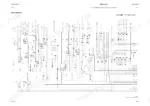
Yes. The Electrics section covers fuse and relay identification for the different transmissions and serial ranges, link box fuses and bulbs, which is what you need to trace electrical faults. p. 117
Does it give torque settings such as wheel nuts?
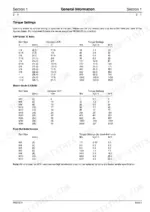
Yes. The General Information section sets out the standard torque settings, and wheel nut and axle torque figures are given in the relevant sections for these backhoe loaders. p. 3
How do I get the manual?
You download the PDF straight after purchase, with no wait, and can keep it on the machine or at the bench.
How quickly can I access this manual after buying?
Download is instant. The full 711-page searchable Service Manual lands the moment payment clears, ready to open on a laptop, tablet, or phone right at the bench.
Can I print pages of this manual for my own shop?
You can. Print the sections you want for your own use and keep the file as your backup.
Does this Service Manual have electrical diagrams?
Yes. Wiring diagrams are included, covering electrical circuits, harness routing, and connector pinouts.
Reviews
There are no reviews yet.