This is the factory Kubota Operator's Manual (publication K2581-7121-2A), 80 pages covering the BX1850 and BX2350 sub-compact tractors. It covers machines built with the D722-E2-BX-2 and D902-E2-BX-2 diesel engines and explains how to operate, inspect, and maintain the tractor correctly.
Inside are the universal symbol reference, safe-operation rules, full specifications, implement limitations, instrument and control layout, pre-operation checks, engine starting including cold-weather and jump starting, and tractor operation. It continues through the PTO, three-point hitch and drawbar, hydraulic unit, tires and ballast, a detailed maintenance chapter with service intervals, storage, troubleshooting, and options.
Use it to run the tractor safely, follow the correct service schedule, set fan-belt tension, torque the wheel bolts, and work through starting or hydraulic issues. Delivered as a downloadable PDF you can read on any device or print.
What's Inside This Kubota BX1850, BX2350 Operator Manual
| System | Pages | Key Topics |
|---|---|---|
| Operator's Manual | 1 | Kubota Tractor Models, Aux Valve Equipped Machine, Read and Save This Manual |
| Abbreviation List | 2 | Abbreviations and Definitions, California Proposition 65, Engine Exhaust Warning |
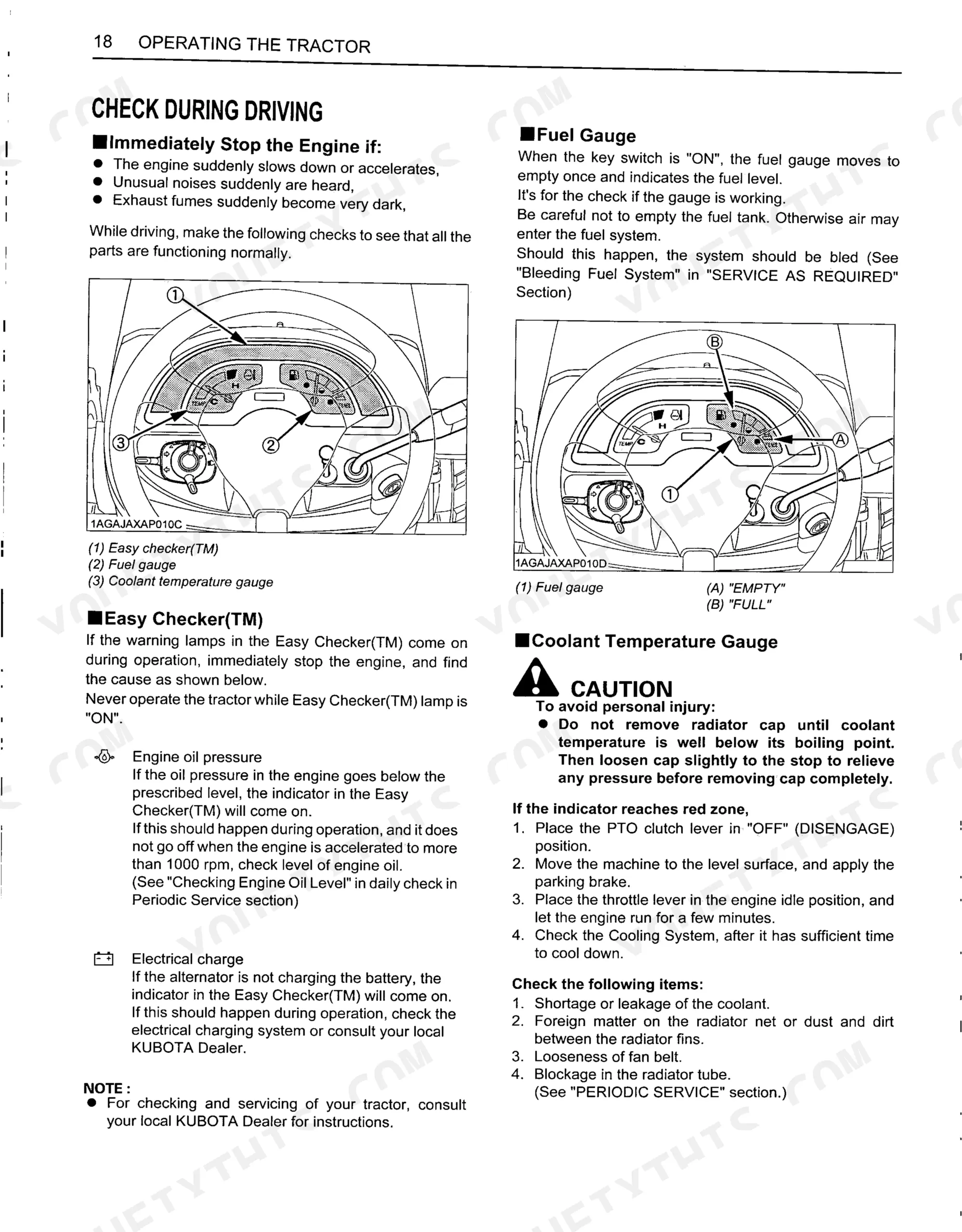
| Universal Symbols | 3 | Safety Alert Symbol, Diesel Fuel Symbol, Fuel-Level Symbol, Hourmeter/Elapsed Operating Hours Symbol, Engine Coolant-Temperature Symbol, Brake Symbol, Parking Brake Symbol, Battery Charging Condition Symbol |
| Foreword | 4 | |
| Contents | 5-8 | |
| Safe Operation | 9-17 | Before Operating the Tractor, Operating the Tractor, Starting, Working, Safety for Children, Operating on Slopes, Driving the Tractor on the Road, Parking the Tractor |
| Servicing of Tractor | 18 | Introduction to Servicing, Tractor and Engine Serial Numbers Table, Tractor Identification Plate, Engine Serial Number |
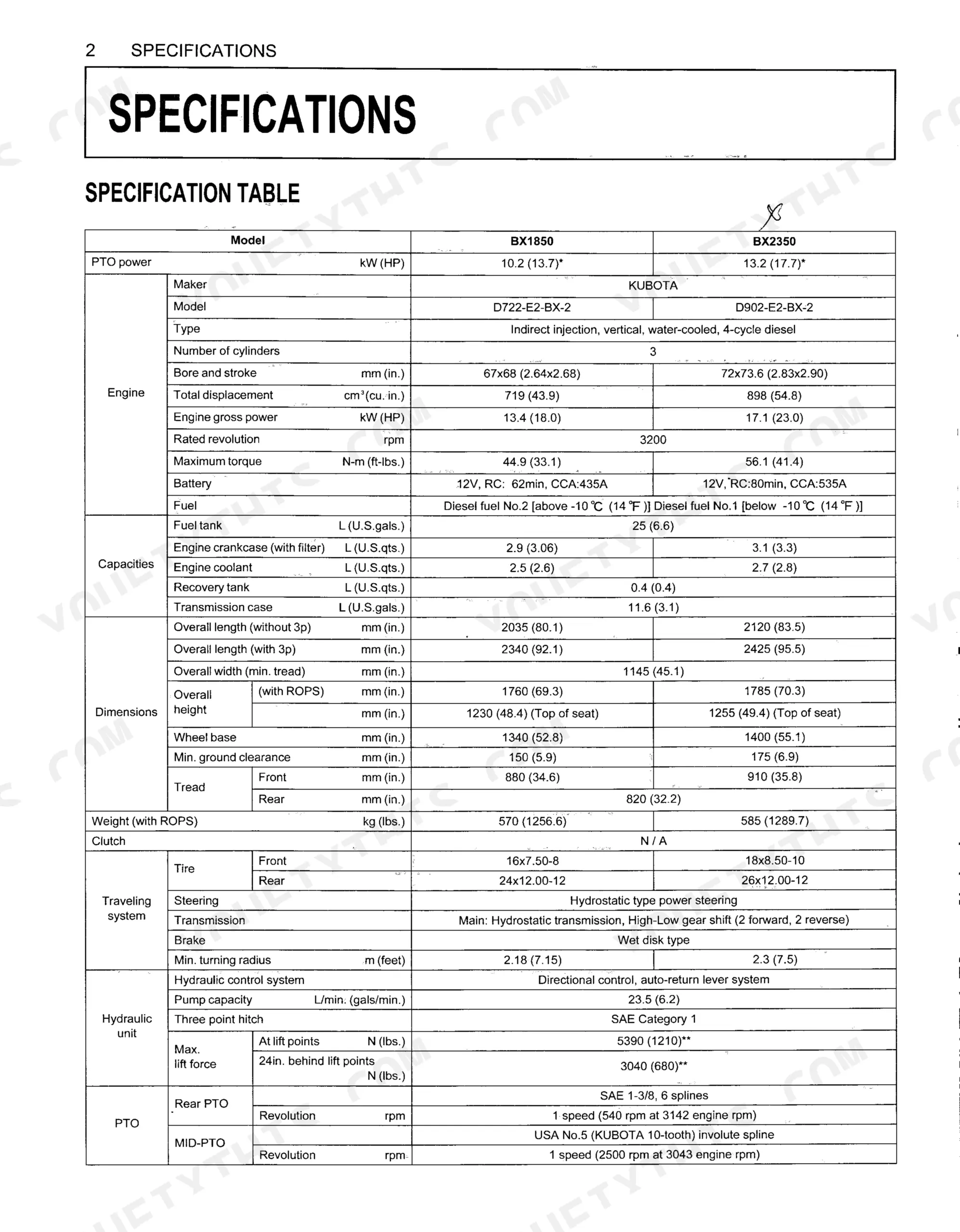
| Specifications | 19-20 | Specification Table, PTO Power, Engine Specifications, Capacities, Dimensions, Traveling System, Hydraulic Unit, PTO Specifications |
| Implement Limitations | 21-22 | Tread Max Width, Actual Figures, Lower Link End Max Loading Weight, Implement Weight, Max Hitch Load, Trailer Loading Weight, Implement Specifications Table |
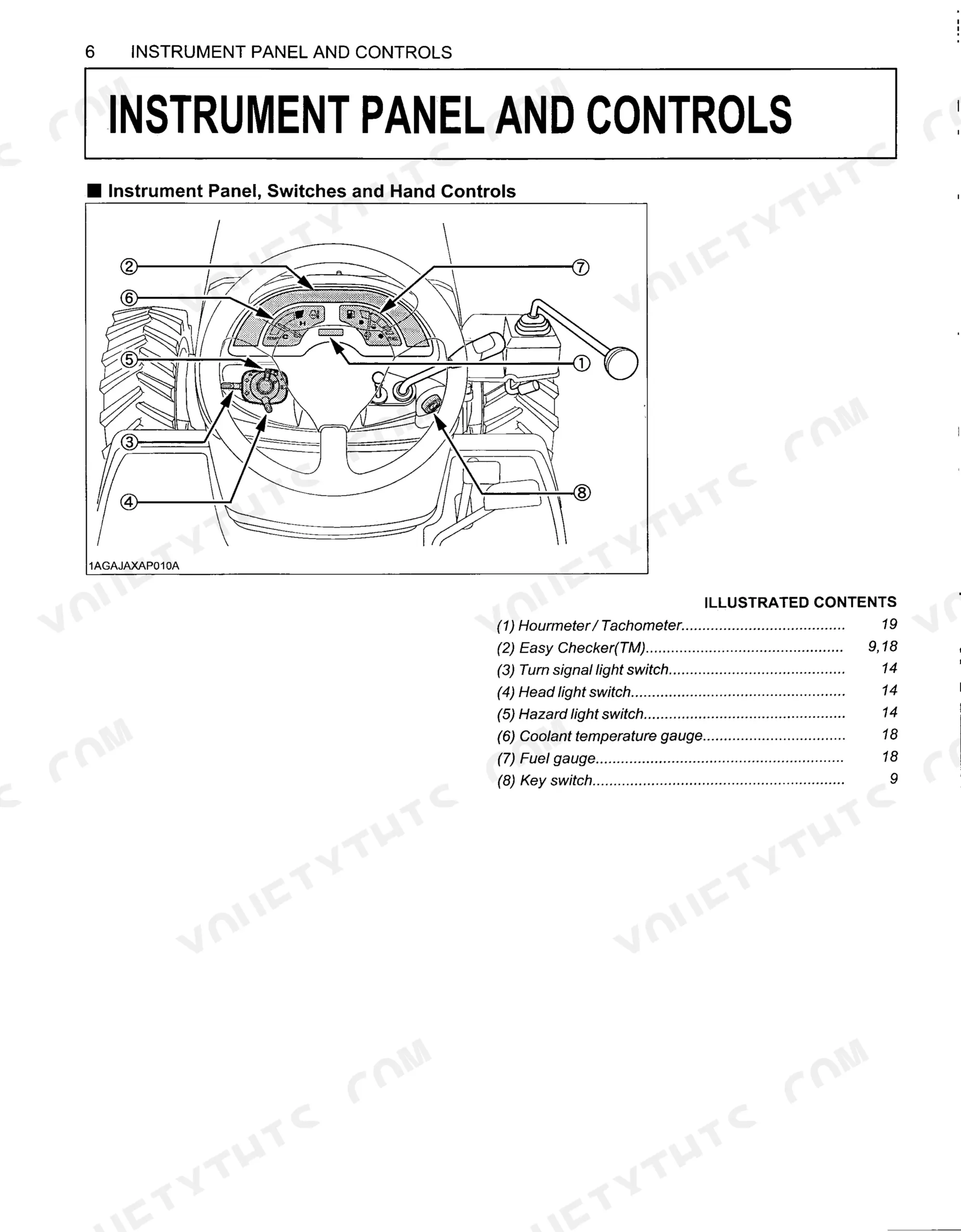
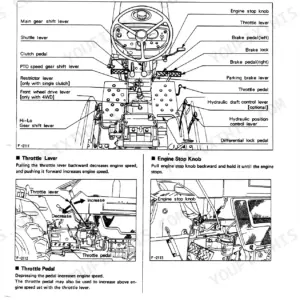
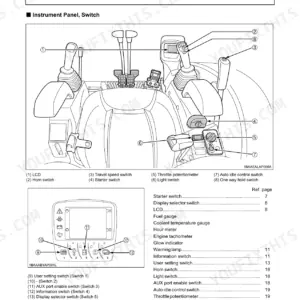
| Instrument Panel and Controls | 23-24 | Instrument Panel, Switches and Hand Controls, Illustrated Contents Instrument Panel, Foot and Hand Controls, Illustrated Contents Foot and Hand Controls |
| Pre-Operation Check | 25 | Daily Check, Check Item List, Care of Danger, Warning and Caution Labels |
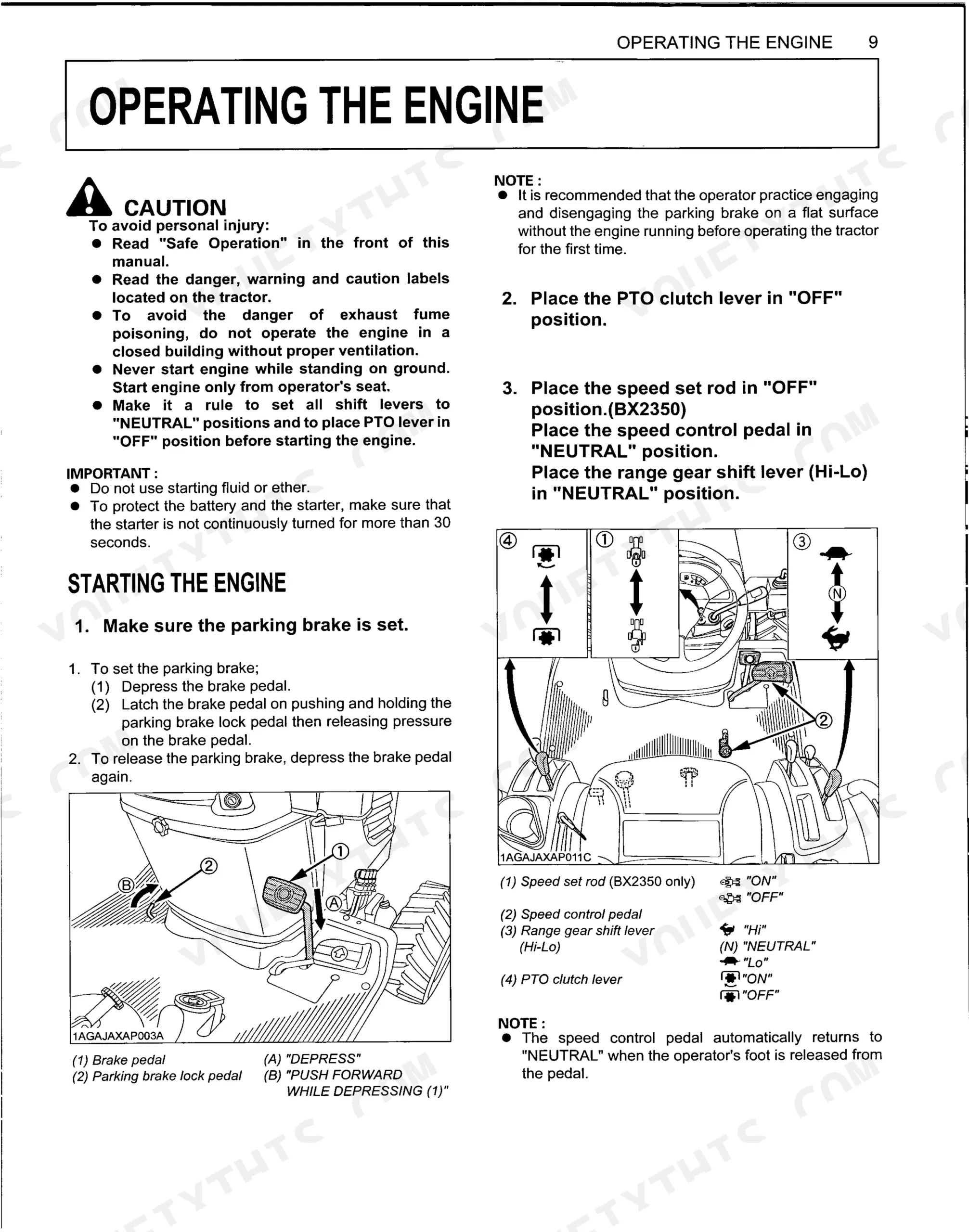
| Operating the Engine | 26-29 | Starting the Engine, Cold Weather Starting, Block Heater (Option), Stopping the Engine, Warming Up, Jump Starting |
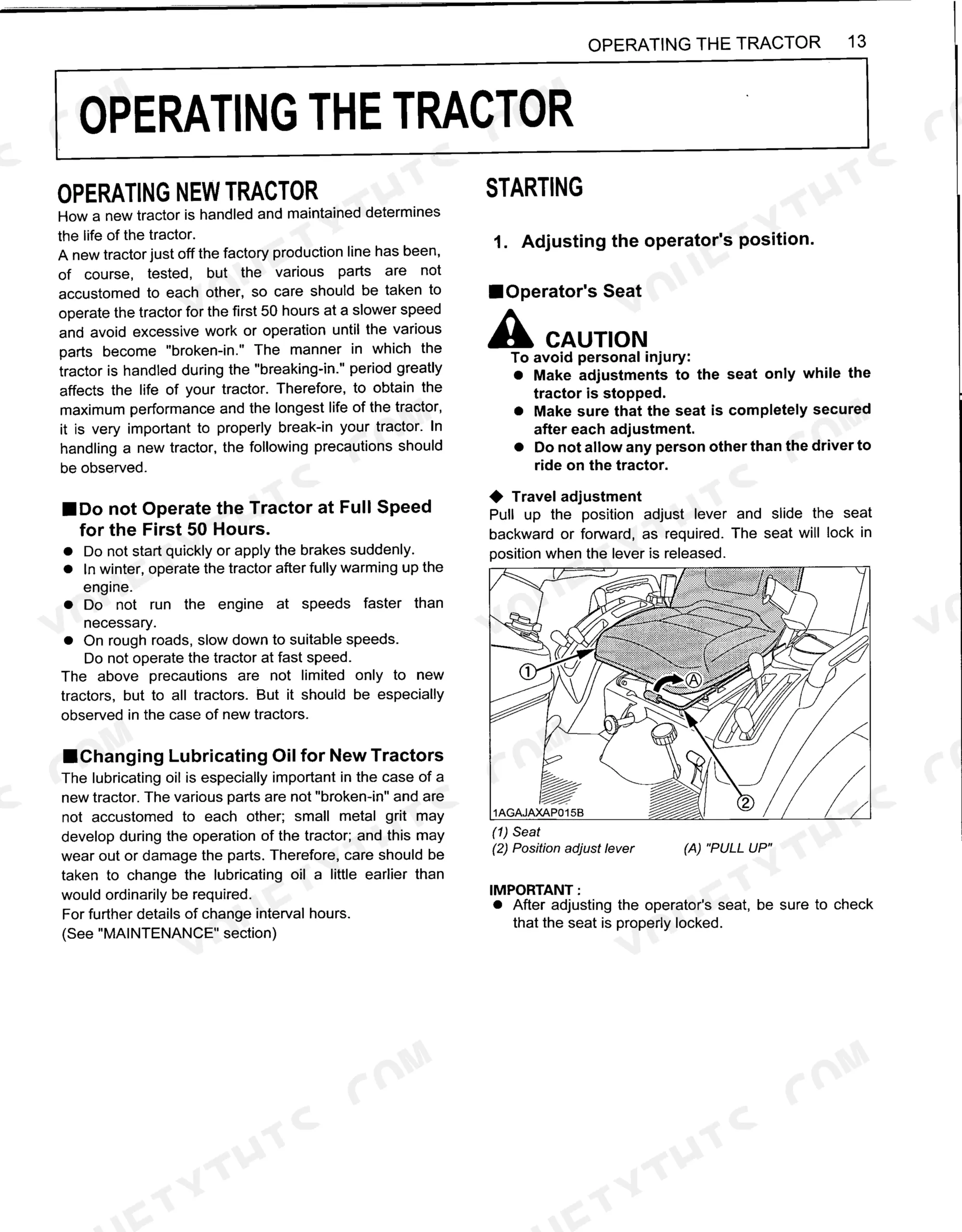
| Operating the Tractor | 30-36 | Operating New Tractor, Changing Lubricating Oil for New Tractors, Starting, Operator's Seat, Seat Belt, Head Light Switch, Hazard Light Switch, Turn Signal Light Switch |
| Accessory | 37-38 | Differential Lock, 12V Electric Outlet, Operator's Manual Holder, Operating Techniques, Operating the Tractor on a Road, Operating on a Slopes and Rough Terrain, Directions for Use of Power Steering |
| PTO | 39-41 | PTO Operation, PTO Select Lever, Rear PTO, Mid-PTO, Mid-Rear PTO, PTO Clutch Lever, PTO Shaft Cover and Shaft Cap, Stationary PTO |
| Three-Point Hitch & Drawbar | 42-43 | Three-Point Hitch & Drawbar Overview, 3-Point Hitch, Attaching and Detaching Implements, Lifting Rod Right, Check Chains, Hitch, Top Link |
| Hydraulic Unit | 44-48 | 3-Point Hitch Control System, Hydraulic Control, 3-Point Hitch Lowering Speed, Auxiliary Hydraulics, Hydraulic Outlet, Mower Lift Linkage System, Cutting Height Control Dial, Hydraulic Control Unit Use Reference Chart |
| Tires, Wheels and Ballast | 49-51 | Tires, Inflation Pressure, Wheel Tread, Front Wheels, Rear Wheels, Ballast, Front Ballast, Rear Ballast |
| Maintenance | 52-75 | Service Intervals, Lubricants, Periodic Service, Service As Required |
| Storage | 76 | Safety Precautions for Storage, Tractor Storage Procedures, Removing the Tractor From Storage Procedures |
| Troubleshooting | 77 | Engine Troubleshooting, Trouble Engine, Cause Engine, Countermeasure Engine |
| Options | 78 | Options Overview, Tire Options, Engine Block Heater, Rear Work Light, Front End Weights, Rear Wheel Weight, Sunshade for ROPS, Dual-Double Acting Remote Valve |
| Kubota Corporation | 79 | Company History, Product Diversification, Basic Necessities Giant, Customer Dependence |
| Kubota Contact Information | 80 | Usa Contact Information, Canada Contact Information, France Contact Information, Italy Contact Information, Germany Contact Information, Uk Contact Information, Spain Contact Information, Australia Contact Information |
Quick Reference Specifications
| Specification | Value | Page |
|---|---|---|
| All Models | ||
| Front wheel bolt torque | 149.2 to 179.0 N-m (15.2 to 18.3 kgf-m, 110 to 132 ft-lbs.) | p. 62 |
| Rear wheel bolt torque | 108.5 to 130.2 N-m (11.1 to 13.3 kgf-m, 80 to 96 ft-lbs.) | p. 62 |
| Engine oil filter replacement interval | every 200 Hr | p. 52 |
| Transmission oil filter replacement interval | every 300 Hr | p. 52 |
| Fuel filter element replacement interval | every 500 Hr | p. 52 |
| Air cleaner element cleaning interval | every 100 Hr | p. 52 |
| Air cleaner element replacement interval | every 1 year | p. 52 |
| Fan belt adjustment interval | every 100 Hr | p. 52 |
| BX1850 | ||
| Battery voltage and RC/CCA (BX1850) | 12V, RC: 62min, CCA:435A | p. 19 |
| BX2350 | ||
| Battery voltage and RC/CCA (BX2350) | 12V, RC:80min, CCA:535A | p. 19 |
Kubota BX1850, BX2350 Common Problems This Manual Covers
Front axle hydraulic oil leak
BX owners report hydro oil weeping on both sides where the front axle passes through the frame, usually from worn or age-hardened axle seals. The maintenance chapter covers fluid checks and the front axle service points.
Manual Section: Maintenance p. 52Weak or slow loader and hydraulics
Slow lift or weak hydraulic response is commonly low transmission-hydraulic fluid, a dirty filter, or contamination. The hydraulic unit section explains the three-point control system and auxiliary hydraulic outlet.
Manual Section: Hydraulic Unit p. 44Overheating during mowing or loading
A restricted cooling system from a clogged radiator screen, dirty core, or blocked air cleaner drives temperatures up under load. The maintenance section covers cleaning the screen and servicing the air cleaner element.
Manual Section: Maintenance p. 52Hard starting after a long interval
Hard starting, stalling, or lost power after neglected service usually traces to a restricted fuel filter or water-separator contamination. The troubleshooting chart lists engine causes and countermeasures.
Manual Section: Troubleshooting p. 77No crank from a safety interlock
A BX that will not crank often has an open seat, PTO, or neutral safety switch rather than a dead starter. The troubleshooting section helps confirm the interlock condition before deeper diagnosis.
Manual Section: Troubleshooting p. 77Problems from skipped daily checks
Skipping the daily inspection leads to fluid, cooling, and safety-switch problems that are easy to prevent. The pre-operation check list defines exactly what to look at before each use.
Manual Section: Pre-Operation Check p. 25Frequently Asked Questions
Which models and engines does this manual cover?
It is the operator's manual for the Kubota BX1850 and BX2350 tractors, publication K2581-7121-2A, 80 pages. The BX1850 uses the D722-E2-BX-2 engine and the BX2350 uses the D902-E2-BX-2 engine.
Does it give wheel-bolt and other torque figures?
Yes. The Maintenance section lists torque values such as the front wheel bolts at 149.2 to 179.0 N-m and rear wheel bolts at 108.5 to 130.2 N-m, plus the every-50-hour bolt-torque check. p. 52
Does it explain the PTO setup?
Yes. The PTO section covers the rear, mid, and mid-rear PTO, the PTO select and clutch levers, shaft cover and cap, and stationary PTO use. p. 39
Is this an operator manual or a repair manual?
It is the operator's manual, covering operation, specifications, the maintenance schedule, and basic troubleshooting. It is not a workshop manual for full component overhaul.
What format is this manual in?
A searchable PDF, delivered the moment payment clears. The full 80-page Operator Manual opens on your laptop, tablet, or phone, ready to use right in the shop.
Can I print pages of this manual for my own shop?
Yes. Print individual pages or full chapters for your own shop use, on letter or A4 paper.