
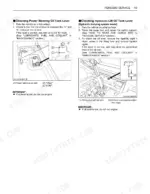
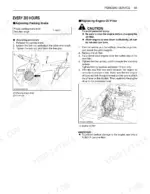
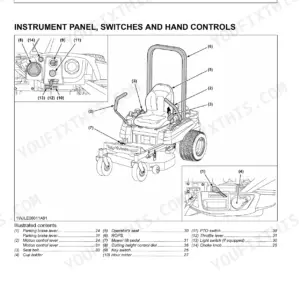
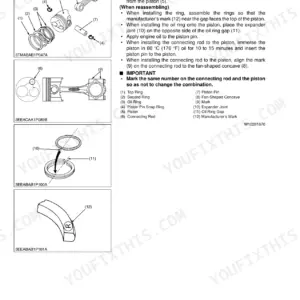
This is the factory operator's manual for the Kubota RTV900 utility vehicle, powered by the Kubota D902-E3-UV diesel engine. It is the same 108-page book Kubota supplies with the machine, covering safe operation, controls, daily checks, and the routine service an owner is expected to perform.
You get clear procedures for starting and warming the engine, using the cargo bed and hydraulic outlet, setting tire pressure, and reading the specification tables. Maintenance sections list service intervals, fluid capacities, and adjustment values, while the troubleshooting charts help you trace engine, battery, and drivetrain faults before calling a dealer.
Delivered as a downloadable PDF you can read on a phone, tablet, or computer, or print the pages you need for the shop, it is a practical reference for owners, mechanics, and anyone maintaining an RTV900 who wants the correct Kubota figures on hand.
Complete the set for your RTV900
- Repair Manual: Kubota RTV900 Service Manual (incl. Wiring)
What's Inside This Kubota RTV900 Operator Manual
| System | Pages | Key Topics |
|---|---|---|
| Safe Operation | 11-20 | Before Operating the Vehicle, Hauling Loads in the Cargo Bed, Operating Hydraulic Outlet Driven Equipment, Parking the Vehicle, Transporting, Servicing the Vehicle, Danger |
| Servicing of Vehicle | 21 | Vehicle and Engine Serial Numbers, Vehicle Identification Plate, Engine Serial Number |
| Specifications | 22-23 | Specification Table, Sound Level, Operator Ear, Tires, Front Deluxe Guard, Body Color, Bed Lift, Speedometer |
| Vehicle Limitations | 24 | Max. Cargo Loading Weight, Rear Trailer Hitch, Front Trailer Hitch, Rolling Weight: Trailer Weight + Cargo Load |
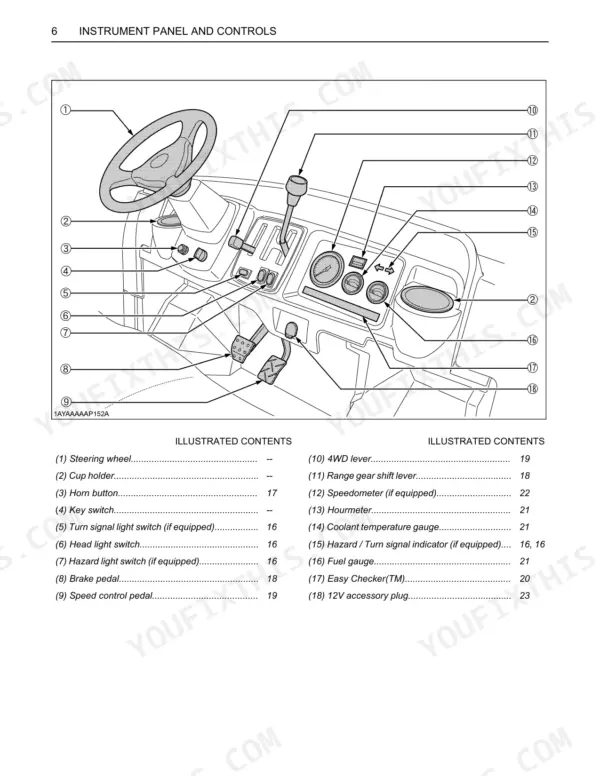
| Instrument Panel and Controls | 25-28 | Location of Parts, Work Light, ROPS, Hazard / Turn Signal Light, Front Hood, Headlights, Winch Mount Bracket, Front Trailer Hitch Bracket |
| Pre-Operation Check | 29 | Daily Check (Check Item) |
| Operating the Engine | 30-34 | Starting the Engine (Cold Weather Starting, Block Heater), Stopping the Engine, Warming Up (Warm-Up Transmission Oil in the Low Temperature Range), Jump Starting |
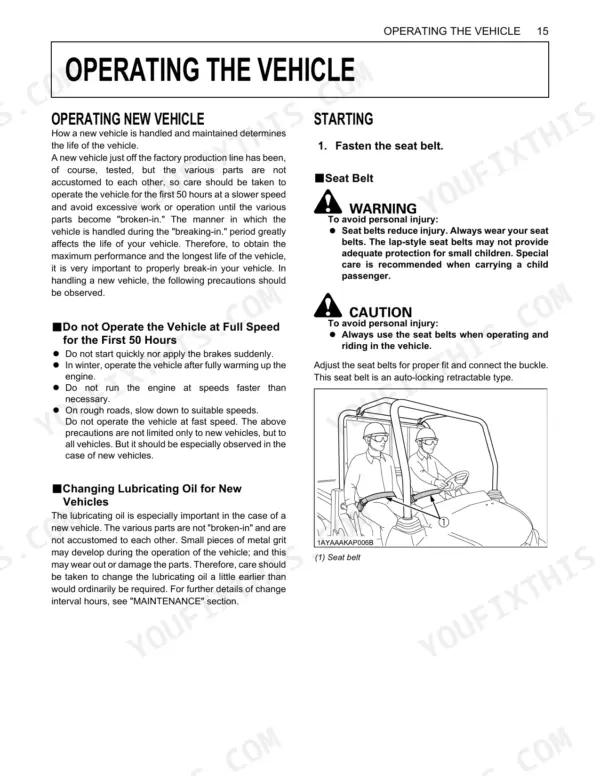
| Operating the Vehicle | 35-41 | Operating New Vehicle (Do Not Operate the Vehicle at Full Speed for the First 50 Hours, Changing Lubricating Oil for New Vehicles) |
| Parking | 42 | Parking Brake Lever, Setting the Parking Brake, Releasing the Parking Brake |
| Accessories & Controls | 43-47 | 12V Electric Outlet, Utility Box, Operating Techniques (Differential Lock), Directions for Use of Power Steering |
| Operating Hand Throttle | 48 | Increasing Engine Speed, Decreasing Engine Speed, Fine-Tune Engine Speed, Stationary Hydraulic Outlet |
| Cargo Bed | 49-51 | Max. Cargo Load, Payload Capacity, Cargo Bed Tailgate, Raising and Lowering the Cargo Bed [If Equipped with Hydraulic Dump] (Raise the Cargo Bed, Lower the Cargo Bed) |
| Hydraulic Outlet | 52-53 | Hydraulic Outlet [If Equipped], Hydraulic Outlet Lever (Steps for Operation), Hydraulic Outlet Valve Coupler Connecting and Disconnecting |
| Tires and Wheels | 54-55 | Tires, Inflation Pressure, Tire Type and Use (Heavy Duty Work Site Tire, Turf Tire, All Terrain Vehicle Tire), Wheels |
| Towing and Transporting | 56-57 | Rear Trailer Hitch [If Equipped], Front Trailer Hitch [If Equipped], Winch Mount Bracket, Transporting Vehicle |
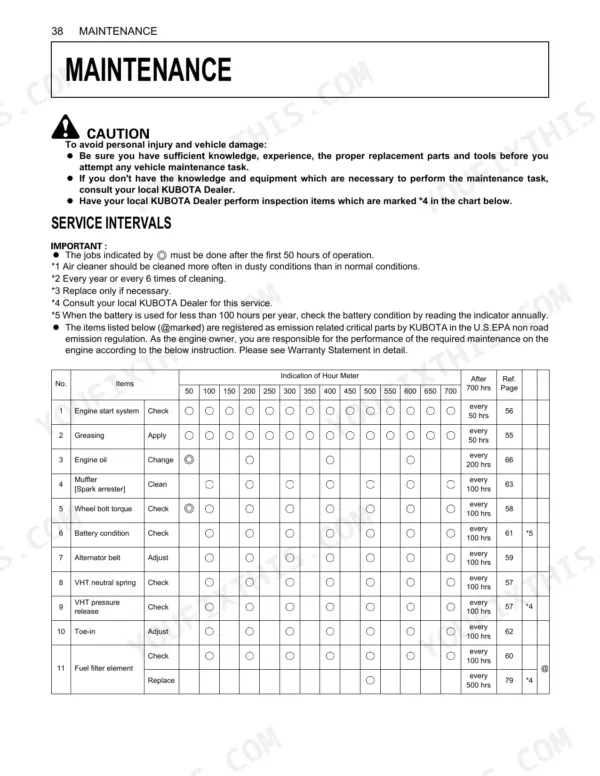
| Maintenance | 58-63 | Service Intervals (Indication of Hour Meter), Lubricants, Fuel and Coolant (Greasing, Engine Oil, Transmission Oil, Brake Fluid) |
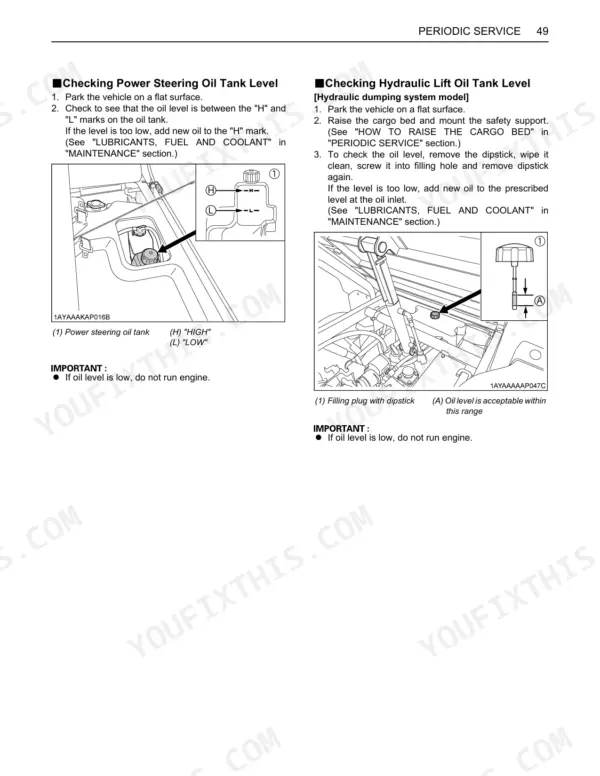
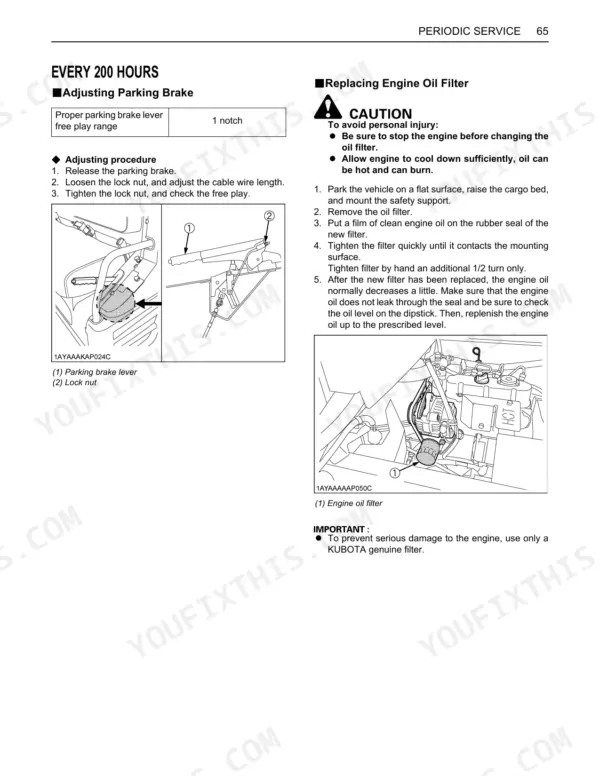
| Periodic Service | 64-103 | How to Open the Hood and Tilt the Seat (Operator's Seat), How to Raise the Cargo Bed (Raising Lowering: [If Equipped with Hydraulic Dump], [Without Hydraulic Dump]) |
| Storage | 104 | Vehicle Storage, Preparing for Storage, Removing the Vehicle From Storage, Post-Storage Checks |
| Troubleshooting | 105-107 | Engine Troubleshooting, Battery Troubleshooting, Machine Troubleshooting |
| Options | 108 | Backup Beeper, Bed Liner, Cab Heater, Camo Steel Cab, Console Kit, Engine Hand Throttle Kit, Fabric Cover, Front Accessory Box |
Quick Reference Specifications
| Specification | Value | Page |
|---|---|---|
| Wheel bolt torque | 75 to 90 N-m (7.6 to 9.2 kgf-m) (55.3 to 66.4 ft-lbs.) | p. 78 |
| Machine operation is not smooth / Machine does not move while engine is running | Hydrostatic transmission fluid is insufficient / Transmission fluid level is insufficient | p. 107 |
| Air cleaner element replacement interval | every 1 year | p. 59 |
| Fuel filter element replacement interval | every 500 hrs | p. 58 |
| Transmission case capacity | 10 L (2.6 U.S.gals.) | p. 61 |
| Engine oil filter replacement interval | every 200 hrs | p. 59 |
| Coolant capacity | 4.0 L (4.2 U.S.qts.) | p. 61 |
| Brake fluid capacity | 0.4 L (0.4 U.S.qts.) | p. 61 |
| Radiator screen maintenance | Clean / Remove all foreign materials | p. 67 |
| Alternator belt tension (deflection) | 7 to 9 mm (0.28 to 0.34 in.) | p. 79 |
| Fuel Capacity | 28 L | p. 22 |
| Engine Horsepower | 16.1 kW | p. 22 |
Kubota RTV900 Common Problems This Manual Covers
Hard shifting or stuck in gear
RTV900 owners often report the vehicle becoming hard to shift or stuck, a fault commonly traced to an improperly adjusted or broken pressure release valve in the hydrostatic transmission. The troubleshooting charts help you separate operator error from a service-level fault.
Manual Section: Troubleshooting p. 105Loss of power climbing under load
Poor climbing or weak drivetrain performance under load can come from low or insufficient hydrostatic transmission fluid. The maintenance section shows how to check the transmission oil level and the correct capacity.
Manual Section: Maintenance p. 58Overheating in dusty conditions
Running in dust and debris lets the radiator screen and intake areas clog, driving up engine temperature. The periodic service procedures cover cleaning the radiator screen and keeping the cooling area clear.
Manual Section: Periodic Service p. 64Hard starting after storage or neglect
A clogged air cleaner element or restricted fuel filter is a frequent cause of poor starting and running after the machine has sat. The maintenance schedule lists the replacement intervals for both filters.
Manual Section: Maintenance p. 58Battery goes flat or will not crank
Weak cranking and dead batteries are common on utility vehicles that sit between jobs. The battery troubleshooting chart walks through the likely causes and checks before replacement.
Manual Section: Troubleshooting p. 105No start in cold weather
Diesel starting in low temperatures needs the correct cold-weather procedure and, where fitted, the block heater. The engine operation section explains cold weather starting and jump starting.
Manual Section: Operating the Engine p. 30Frequently Asked Questions
Which machine does this manual cover?
It covers the Kubota RTV900 utility vehicle with the Kubota D902-E3-UV diesel engine. This is the factory operator's manual, 108 pages, written for owners and mechanics running and maintaining the RTV900.
What is the wheel bolt torque for the RTV900?
The manual lists a wheel bolt torque of 75 to 90 N-m. The Tires and Wheels section covers wheel and tire service, including inflation pressure and torque figures. p. 54
My RTV900 will not move while the engine is running, where do I look?
Start with the Troubleshooting charts, which tie a machine that does not move to insufficient hydrostatic transmission fluid and other checks. It points you to the transmission fluid level before deeper service. p. 105
What maintenance does the manual cover?
The Maintenance section gives service intervals, lubricants, fuel and coolant guidance, and the capacities for engine oil, transmission oil, and coolant, so you can service the RTV900 on schedule. p. 58
How will I receive this Kubota RTV900 Operator Manual?
Immediate download of the complete 108-page searchable Operator Manual. Open it on any device, whether that's a laptop at your desk or a phone out in the field.
Can I print pages of this manual for my own shop?
Yes. Printing works from any reader and any printer, for your own shop use.

Reviews
There are no reviews yet.