
This is the factory operator's manual for the Kubota U35-4 compact excavator, covering machines built with the D1703-M-DI-E4-US1 and D1703-M-DI-E4-US2 diesel engines. It is a 122-page reference delivered as a downloadable PDF you can read on a phone, tablet, or shop computer and print whenever you need a page at the machine.
Inside you get the full operating procedure: instrument panel and LCD display, checks before start, engine starting including cold-weather and auxiliary-battery starts, and safe excavator operation. It also carries the daily checks, service intervals, recommended oils, and a troubleshooting section for engine, hydraulic, and drive-system faults.
With it you can run the machine correctly, keep scheduled maintenance on time, understand the warning lamps, and diagnose common problems before they turn into downtime.
Complete the set for your U35-4
- Repair Manual: Kubota U35-4 Excavator Service Manual (incl. Wiring)
What's Inside This Kubota U35-4 Operator Manual
| System | Pages | Key Topics |
|---|---|---|
| Safe Operation | Before Operation, Working, After Operation, Safety for Children, Danger, Warning and Caution Labels | |
| Dealer Service | Warranty Policy, Scrapping the Product, Excavator Serial No., Engine Serial No. | |
| Technical Data | Operating Weight, Engine Specifications, Performance, Dozer Dimensions, Fluid Capacities | |
| Description of Machine Parts | Bucket Cylinder, Arm, Boom, Cab, Drive Sprocket, Track Roller, Front Idler | |
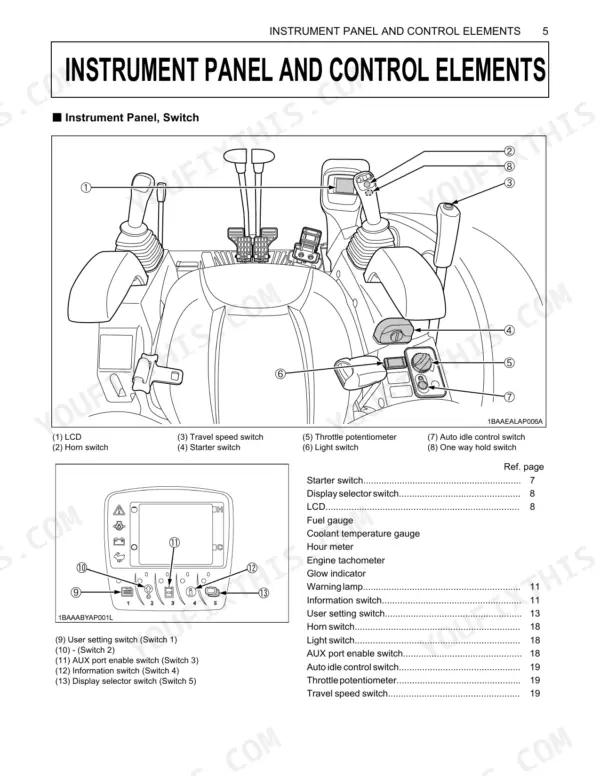
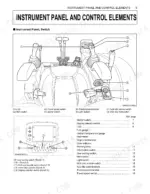
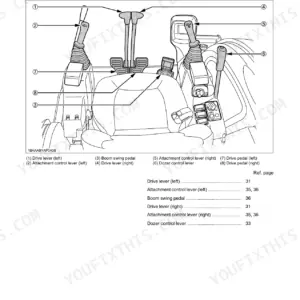
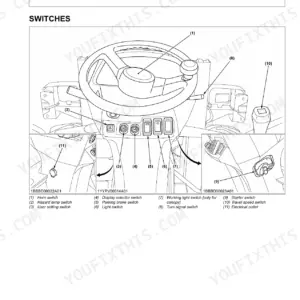
| Instrument Panel and Control Elements | Lcd Display, Starter Switch, Warning Lamp, Horn Switch, Control Pedals and Levers | |
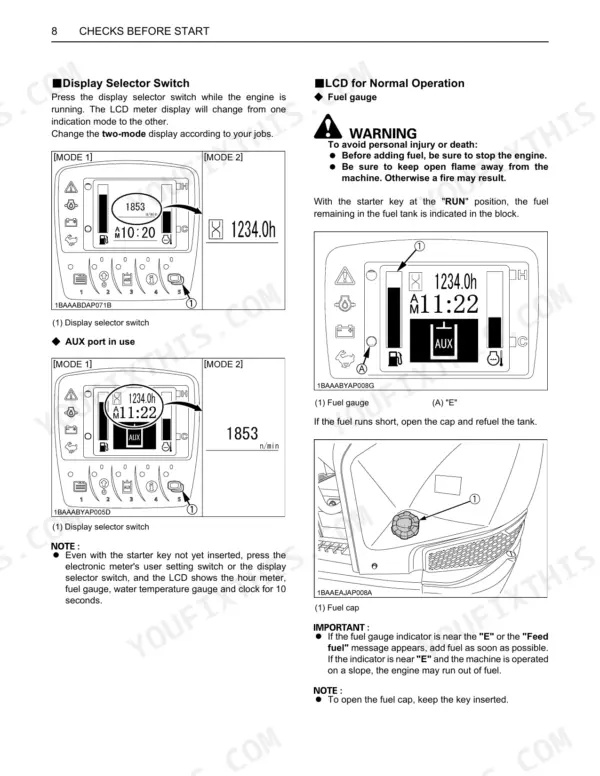
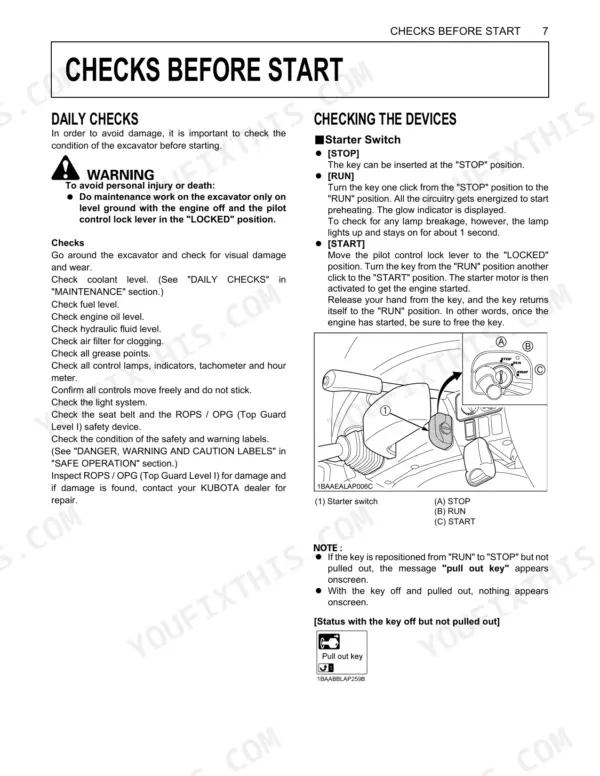
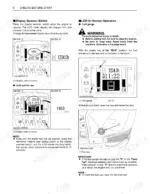
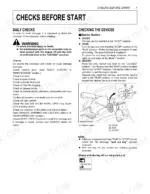
| Checks Before Start | Checking the Devices, Starter Switch, Display Selector Switch, Lcd for Normal Operation, Warning Lamp, Lcd for Warning, Setting the Clock | |
| Operation of the Engine | Starting the Engine, Starting the Engine Under Cold Conditions, Starting with an Auxiliary Battery, Observe Following Guidelines When Starting with an Auxiliary Battery | |
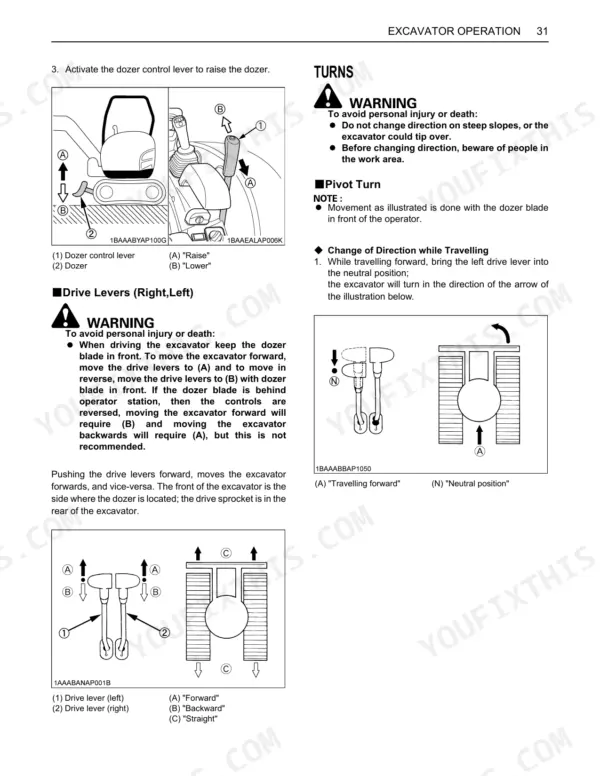
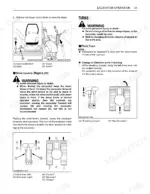
| Excavator Operation | Running-In of the New Excavator, Do Not Work with Full Engine Rpm's or Full Loads During the First 50 Working Hours, Oil Change in the Run-In Stage, Operator's Seat, Seat Belt | |
| Transporting the Excavator on a Vehicle | Loading Procedure, Securing Ramps, Towing the Machine, Tie Down Points | |
| Lifting of the Excavator | Basics When Lifting, Safety Aspects, Lifting Procedure, Attaching Steel Cables or Straps, Maximum Strength | |
| Daily Checks | Coolant Level, Fuel Level, Engine Oil Level, Hydraulic Oil Level, Greasing Front Attachments, Greasing Bucket Pin | |
| Other Adjustments and Replacements | Purging of the Fuel System, Adjustment of Tracks, Changing the Bucket, Fuses, Auxiliary Electric, Slow Blow Fuse | |
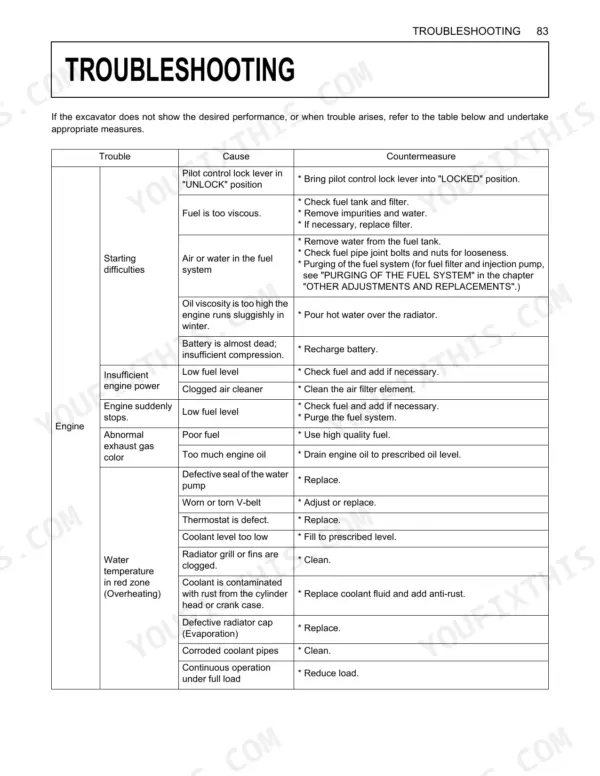
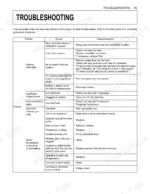
| Troubleshooting | Engine Starting Difficulties, Insufficient Engine Power, Hydraulic System Issues, Drive System Deviation, Ai System Errors | |
| Recommended Oils | Engine Oil Viscosity, Fuel Specifications, EGR Engine Oil Classification |
Quick Reference Specifications
| Specification | Value | Page |
|---|---|---|
| Grease fitting tightening torque | 98 to 108 N-m | p. 100 |
| Fuel tank capacity | 45.1 L | p. 25 |
| Battery capacity (GP24 (80D26R)) | 55 (at 5H.R(A.H)) | p. 65 |
| Engine oil change | every 250 hrs | p. 75 |
| Engine oil change (regardless of service hours) | every 1 year | p. 70 |
| Operating weight (Canopy) | 3687 kg | p. 25 |
| Operating weight (CAB) | 3833 kg | p. 25 |
| Engine power SAE gross | 18.5 kW (25 HP) | p. 25 |
| Rated speed | 2200 rpm | p. 25 |
| Engine oil volume (with filter) | 5.3 L | p. 92 |
| Hydraulic tank oil volume | 35 L | p. 95 |
| Drive unit oil volume | approx. 0.6 L | p. 93 |
Kubota U35-4 Common Problems This Manual Covers
Hard starting in cold weather
When temperatures drop, the D1703 diesel can crank slowly or refuse to fire without proper glow and cold-start steps. The manual walks through starting under cold conditions and jump-starting from an auxiliary battery.
Manual Section: Operation of the Engine p. 46Weak or slow hydraulic response
Sluggish boom, arm, or bucket movement usually points to hydraulic supply or flow issues rather than the cylinders themselves. The troubleshooting section lists hydraulic system symptoms and where to look first.
Manual Section: TroubleshootingTrack sag and drive pull to one side
Loose track tension causes the machine to wander when driving straight and speeds up sprocket and roller wear. The manual covers adjusting the tracks so both sides run evenly.
Manual Section: Other Adjustments and ReplacementsOverheating from low coolant
Skipping the daily coolant and radiator check is a common cause of overheating on compact excavators worked hard in dusty conditions. The pre-start checks show the coolant, fuel, and oil levels to confirm before each shift.
Manual Section: Checks Before Start p. 29Warning lamps and LCD alerts
An unfamiliar warning lamp or LCD message can stop work until you know what it means. The instrument panel section explains each warning lamp and the LCD display so you can react correctly.
Manual Section: Instrument Panel and Control Elements p. 27Dead accessories from a blown fuse
Lights, horn, or auxiliary circuits going dead is often a blown fuse or slow blow fuse rather than a wiring failure. The manual identifies the fuses, their circuits, and the slow blow fuse.
Manual Section: Other Adjustments and ReplacementsFrequently Asked Questions
Which machine and engine does this manual cover?
It covers the Kubota U35-4 compact excavator built with the D1703-M-DI-E4-US1 and D1703-M-DI-E4-US2 diesel engines. It is the operator's manual, so it focuses on running and maintaining the machine.
Is this an operator manual or a full service manual?
This is the operator's manual. It covers operation, controls, daily checks, maintenance intervals, recommended oils, and a Troubleshooting section for engine, hydraulic, and drive faults, rather than component teardown and rebuild.
Does it list key specifications like operating weight and fuel capacity?
Yes. The Technical Data section gives the operating weight of 3687 kg for the canopy machine and a 45.1 L fuel tank capacity, along with engine power and performance figures. p. 25
How do I get the manual after I buy it?
You download the PDF straight after purchase. There is no waiting for shipping, and you can save a copy to your own device for offline use.
What format is this Kubota U35-4 manual in?
This is a 122-page searchable PDF that downloads the moment you check out. Open it on a laptop, tablet, or phone and take it straight to the shop floor.
Can I print this Kubota U35-4 manual?
Yes. It prints from any PDF reader, so run off the pages you need for your own repair work.

Reviews
There are no reviews yet.