
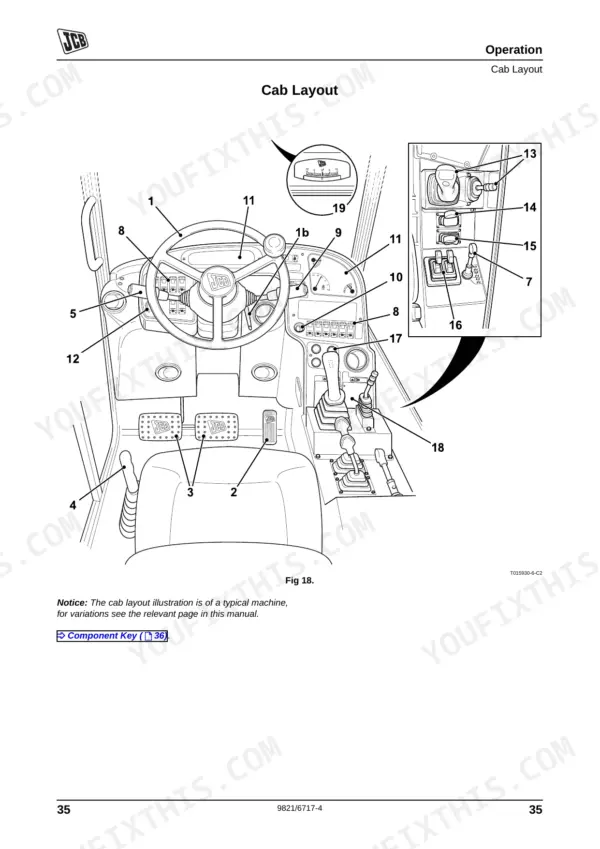
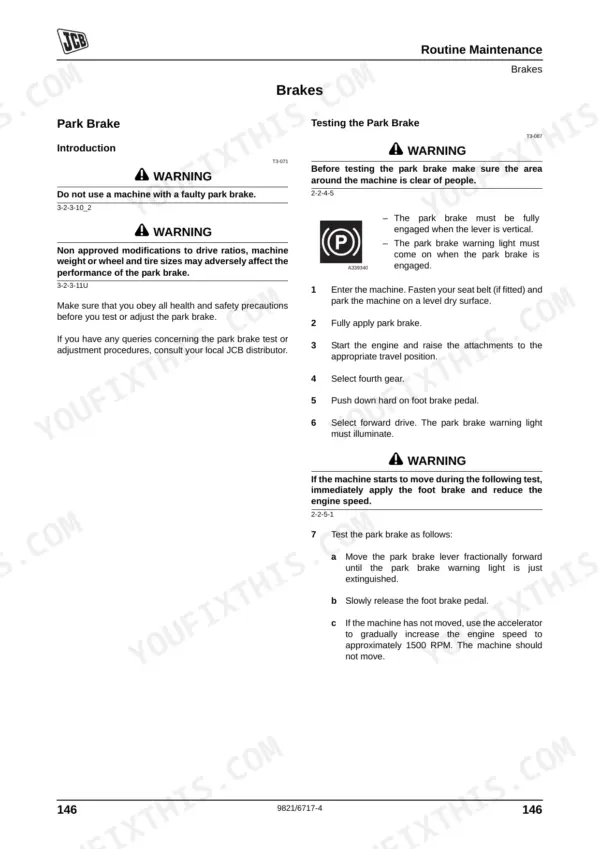
Need a JCB 506-36 Operator Manual PDF that covers the rest of your fleet? This 226-page factory guide (OEM #9821/6717) provides complete daily service and operating procedures for the JCB Loadall lineup, including the 507-42, 509-42, 510-56, 512-56, and 514-56 models. Dashboard indicator guides, daily walkaround checklists, and a full section of scheduled maintenance intervals are all included. Open to the service pages to find exact grease point locations, Q-Fit attachment instructions, and step-by-step cold start procedures. Top off the 132-liter fuel tank and verify the engine oil level is at the maximum of 15 liters before starting your shift. A dead machine in the yard ruins the daily schedule. Download this bookmarked file directly to your phone, check the factory fluid specs, and get the equipment moving.
Other editions of this manual
- JCB 506-36, 507-42, 509-42, 510-56 Operator Manual Original price was: $31.99.$19.99Current price is: $19.99.
- JCB 506-36, 507-42, 509-42, 510-42, 510-56, 512-56, 514-56 Loadall Operator Manual Original price was: $26.99.$19.99Current price is: $19.99.
- JCB 506-36, 514-56, 507-42, 509-42, 510-56, 512-56 Loadall Operator Manual Original price was: $31.99.$19.99Current price is: $19.99.
What's Inside This JCB 506–514 Operator Manual
| System | Pages | Key Topics |
|---|---|---|
| Safety Notices | 9-10 | Important Information, Operator Manual, Safety Warnings |
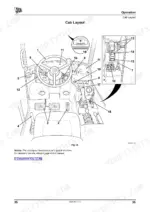
| Operation | 37-104 | Introduction, Before Entering the Cab, Entering and Leaving the Cab, Emergency Exit, Doors and Windows, Seat Controls, Suspension Seat (Kab 100 Series - Mechanical), Seat Belt |
| Pre-Start Cold Checks, Service Points and Fluid Levels | 105-114 | Health and Safety, Service/Maintenance Agreements, Service Requirements, Battery, Service Schedules, Pre-Start Cold Checks, Service Points and Fluid Levels |
| Fuel | 115-123 | Coolant Mixtures, Functional Test and Final Inspection, Fluids, Lubricants and Capacities |
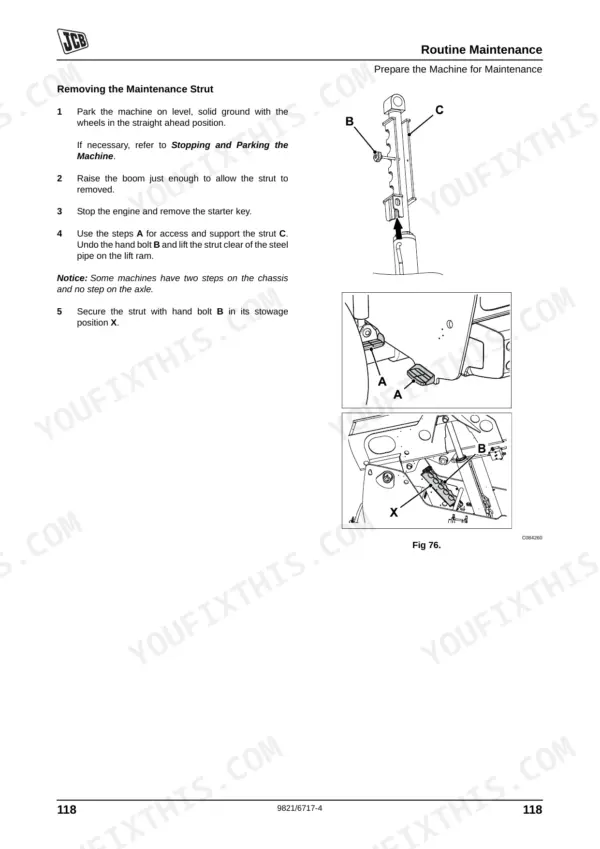
| Every 50 Hours | 124-139 | How to Make the Machine Safe (Boom Lifted), How to Make the Machine Safe (Boom Lowered), Prepare the Machine for Maintenance, Cleaning the Machine, Check the Electrical Circuits, Checking for Damage, Greasing |
| Boom | 140-155 | Access Panels, Every 500 Hours, Oiling, Every 1000 Hours, Boom Chains, Central Access Panels, Undershield, Engine Cover |
| Relays | 156-165 | Electrical System, Brakes, Foot Brake, Fuses, Jump Starting the Engine, Primary Fuses |
| Front End Accessory Drive Belt | 166-174 | Engine, Engine Compartment Fuse and Relay Box, Cooling System, Crankcase Ventilation |
| Axles | 175-195 | Water Separator and Engine Fuel Filter, Air Filter, Fuel System, Oil and Filter, Hydraulic System, Bleeding the System, Releasing the Hydraulic Pressure, Transmission |
| Fire Extinguisher (If Fitted) | 196-204 | Wheel Alignment, Tire Inflation, Tires and Wheels, Wheel Nuts, Wear Pads, Windshield Washer |
| Optional Attachments | 205-212 | Introduction, Attachments for Your Machine, Connecting/Disconnecting Hydraulic Hoses, Disconnecting the Hydraulic Hoses, Quick Release Couplings, Q-Fit Attachments |
| Specifications | 213-218 | Static Dimensions, Performance Dimensions, Maximum Wading Depth, Tire Sizes and Pressures |
| Warranty Information | 219-226 | Machine Service Record Sheet, 6500 Hrs./78 Month, Emission Control System Maintenance and Warranty Statement (All Epa and Carb Regulated Territories) |
Quick Reference Specifications
| Specification | Value | Page |
|---|---|---|
| All Models | ||
| Hydraulic Tank Capacity | 34 (128) US Gal (Liters) | p. 117 |
| Hydraulic Fluid Type | JCB Multigrade Hydraulic Fluid | p. 117 |
| Fuel Tank Capacity | 35 US Gal (132 Liters) | p. 117 |
| Engine Oil Capacity (MAX) | 3.9 US Gal (15 Liters) | p. 117 |
| Engine Coolant Capacity | 5.3 US Gal (20 Liters) | p. 117 |
| Gearbox Oil Capacity | 5 US Gal (19 Liters) | p. 117 |
| ROPS/FOPS Mounting Bolts Torque | 205 Nm (151 lbf ft) | p. 134 |
| Wheel Nut Torque | 680 Nm (500 lbf ft) | p. 198 |
| Boom Wear Pad Vertical Clearance (Outer to Intermediate) | 3.0mm (0.12in) | p. 200 |
| Antifreeze Protection (Standard) | -40 °C (-39 °F) | p. 118 |
| 506-36 | ||
| Maximum Lift Capacity, 506-36 | 2722 kg (6000 lb) | p. 214 |
| 514-56 | ||
| Maximum Lift Capacity, 514-56 | 6350 kg (14000 lb) | p. 214 |
JCB 506–514 Common Problems This Manual Covers
Telescopic boom extension feels jerky or clunks loudly when extending under heavy load
Measure the boom wear pad vertical clearance from outer to intermediate sections. Verify the gap does not exceed the 3.0mm (0.12in) limit shown on page 200. Clean debris from the boom tracks and apply approved grease to all sliding surfaces.
Manual Section: Specifications p. 200Cab structure rattles excessively over rough terrain or shows visible shifting around the mounting points
Inspect the cab mounts for missing hardware or cracked brackets. Torque the ROPS/FOPS mounting bolts to 205 Nm (151 lbf ft) as specified on page 134. Replace any damaged isolation mounts immediately before operating the machine on uneven ground.
Manual Section: Routine Maintenance p. 134Engine coolant temperature gauge spikes into the red zone during heavy lifting or continuous operation
Check the coolant reservoir level before starting the engine. Ensure the mixture provides antifreeze protection down to -40 °C (-39 °F) as noted on page 118. Clean the exterior radiator fins of heavy dust and debris using low pressure compressed air.
Manual Section: Routine Maintenance p. 118Frequently Asked Questions
What are the torque specs for wheel lug nuts on JCB 507-42?
For JCB 507-42, the wheel nuts should be tightened to a torque of 680 Nm (500 lbf ft) for both front and rear wheels. It is recommended to check the wheel nut torques every two hours on new machines or whenever a wheel has been removed, until they remain correct. p. 198
What are the replacement specifications for Hydraulic lines and hoses?
Replacement hydraulic hoses must be of the same size and standard as the original. It is crucial to inspect hoses regularly for damage, chafing, ballooning, kinks, or displaced end fittings, and not to use the machine if any damage is found. Always ensure hoses do not touch hot parts or parts that can rub, and use hose clamps to support long runs. p. 134
What are the replacement specifications for Hydraulic oil and filters?
The hydraulic tank capacity is 34 US Gal (128 Liters), and JCB Multigrade Hydraulic Fluid (Part Number 4002/2020, Container Size 20 liters) is recommended. The hydraulic oil filter should be changed every 500 hours, and the pilot filter (if fitted) also every 500 hours. When replacing the filter element, ensure a genuine JCB filter is used to prevent system damage, and fit new seals H and J. p. 117
How do you fix JCB 506-36 engine stalls unexpectedly under load or refuses to restart after changing the fuel filter?
Inspect the fuel lines for loose connections that allow air to enter the system. Drain any water from the separator bowl and fill the tank to its 35 US Gal (132 Liters) capacity as noted on page 117. Operate the electrically operated fuel lift pump to bleed the system before starting the engine, as described in the 'Bleeding the System' section on page 172. p. 117
Is this JCB 506-36 & variants Operator Manual a digital download?
Instant PDF download. You get the full 226-page searchable Operator Manual immediately after payment. Open it on your laptop, tablet, or phone right in the shop.
Am I able to print pages from this manual?
Yes. Print a chapter or just the pages for the job at hand, for use in your own shop. Any home or office printer works.
Reviews
There are no reviews yet.