
This is the factory service manual for the Kubota L2900, L3300, L3600, and L4200 tractors, supplied as a 650-page PDF you download and keep. One volume covers all four models and their diesel engines: the D1503-L-A, D1703-A, V1903-A, and V2203-A.
The manual is split into mechanism and servicing coverage for each system, running from specifications and general maintenance through the engine, clutch, transmission, rear axle, brakes, front axle, steering, hydraulics, and the full electrical system. It also includes sections for the mower and loader attachments.
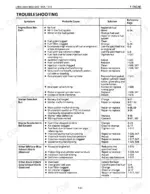
You get factory specifications, allowable limits, torque values, disassembly and assembly steps, and troubleshooting so you can carry a repair from diagnosis to reassembly. The file has a text layer and bookmarks, letting you search for a spec or procedure and print only the pages you need for the job at hand.
Complete the set for your L2900–L4200 Series
- Operator Manual: Kubota L2900–L4200 Series Operator Manual
What's Inside This Kubota L2900–L4200 Series Manual
| System | Pages | Key Topics |
|---|---|---|
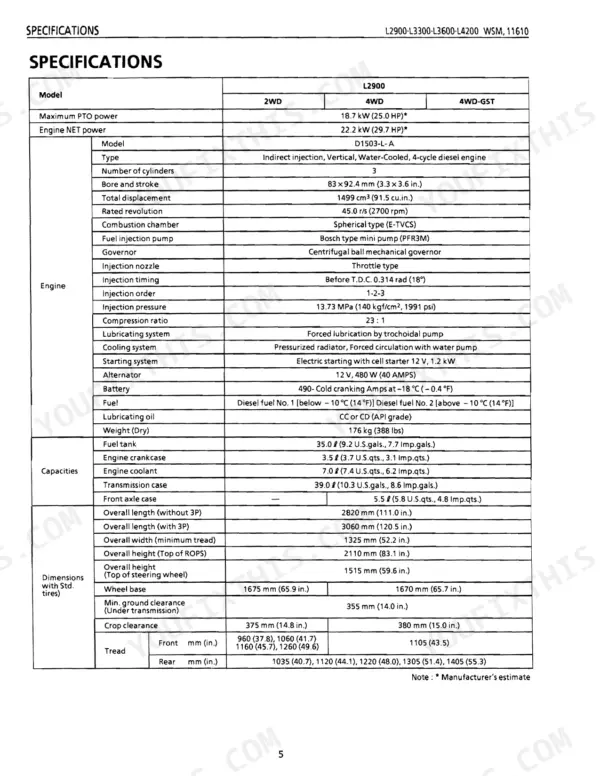
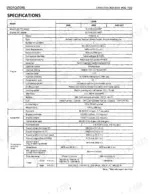
| Specifications | 5-12 | Engine, Capacities, Dimensions, Traveling System, Hydraulic System, PTO Shaft, Traction System |
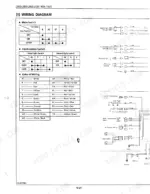
| General | 16-61 | Tractor, Electrical Parts, Wiring, Lubricants, Fuel, Cooling Water, Screws, Bolts |
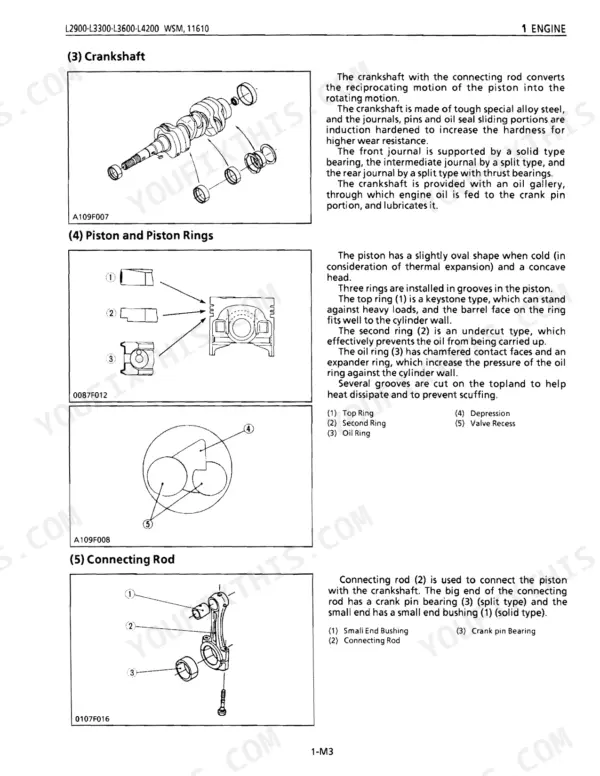
| Engine | 62-129 | Features, Engine Body, Lubricating System, Cooling System, Fuel System, Timing Gears, Crankcase |
| Clutch | 130-142 | Linkage Mechanism, Clutch Pedal, Clutch Disc, Pressure Plate, Diaphragm Spring, Panel Frame Assembly, Propeller Shaft |
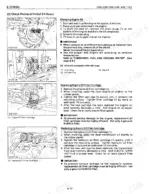
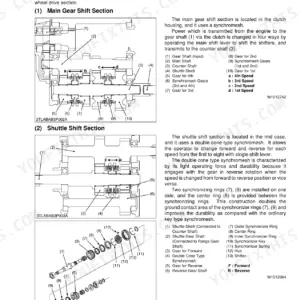
| Transmission | 143-252 | Structure, Power Train, Shift Linkage Mechanism, Independent PTO, Glide Shift Transmission, Differential Gear |
| Rear Axle | 253-262 | Ball Bearing, Rear Axle Case, Differential Gear Shaft, Brake Case, Brake Disc, Ring Gear, Differential Pinion |
| Brakes | 263-278 | Brake Case, Brake Cam Lever, Parking Brake Lever, Brake Pedal, Brake Rod, Brake Lever, Turnbuckle, Cam Plate |
| Front Axle | 279-310 | Front Wheel Alignment, Propeller Shaft, Bumper, Tie-Rods, Breather Pipe, Front Wheel Hub, Knuckle Shaft |
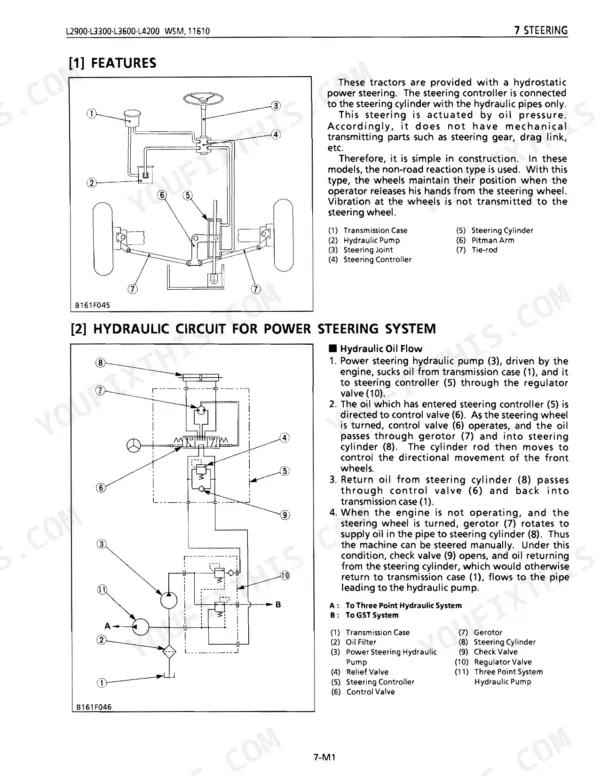
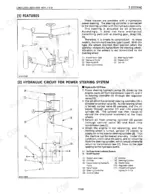
| Steering | 311-346 | Hydraulic Pump, Relief Valve, Steering Controller, Control Valve, Metering Device (Gerotor), Steering Cylinder |
| Hydraulic | 347-390 | Hydraulic Pump, Oil Filter, Position Control Valve, Relief Valve, Hydraulic Cylinder, Linkage Mechanism |
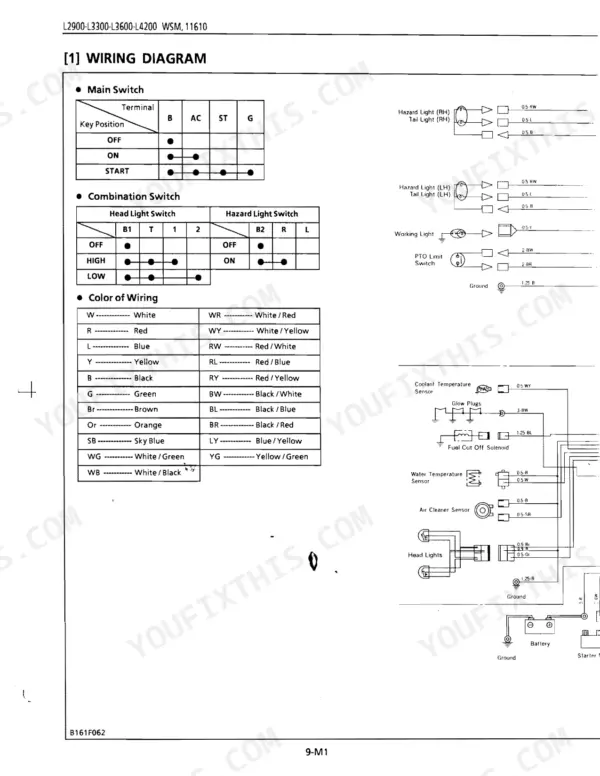
| Electrical | 391-456 | Battery, Starting System, Starter Motor, Glow Control System, Charging System, Lighting System |
| Mower | 554-571 | Power Transmission, Lifting Mechanism, Gear Box, Spindle Shaft, Blade, Belt |
| Loaders | 572-650 | Safety Instructions |
Quick Reference Specifications
| Specification | Value | Page |
|---|---|---|
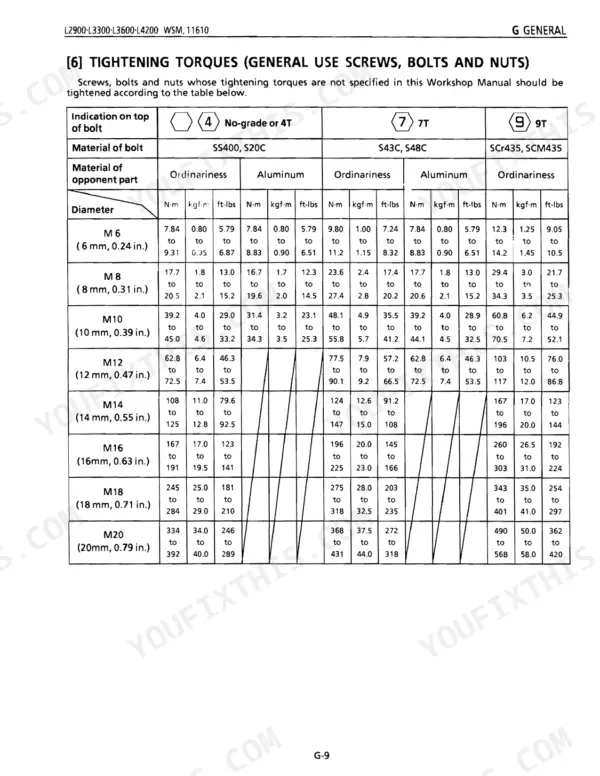
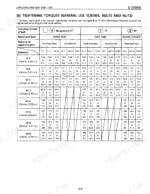
| Cylinder head screws torque | 93.1 to 98.0 N·m (9.5 to 10.0 kgf·m, 68.7 to 72.3 ft-lbs) | p. 90 |
| Front wheel mounting lug nuts torque | 137 N·m (14 kgf·m, 100 ft-lbs) | p. 33 |
| Rear wheel mounting screws and nuts torque | 215 N·m (22 kgf·m, 160 ft-lbs) | p. 33 |
| Engine and clutch housing mounting screws, nuts torque | 77.5 to 90.2 N·m (7.9 to 9.2 kgf·m, 57.1 to 66.5 ft-lbs) | p. 90 |
| Connecting rod screws torque | 44.1 to 49.0 N·m (4.5 to 5.0 kgf·m, 32.5 to 36.2 ft-lbs) | p. 90 |
| Rear axle case mounting screw torque | 48.1 to 55.9 N·m (4.9 to 5.7 kgf·m, 35.4 to 41.2 ft-lbs) | p. 260 |
| Rear axle case mounting nut torque | 77.5 to 90.2 N·m (7.9 to 9.2 kgf·m, 57.1 to 66.5 ft-lbs) | p. 260 |
| Fuel filter element cleaning frequency | Service as required | p. 27 |
| Fuel filter element replacement frequency | Every 400 hours | p. 27 |
| Air cleaner element cleaning frequency | Service as required | p. 27 |
| Air cleaner element replacement frequency | Every 1 year or every 6 times of cleaning | p. 34 |
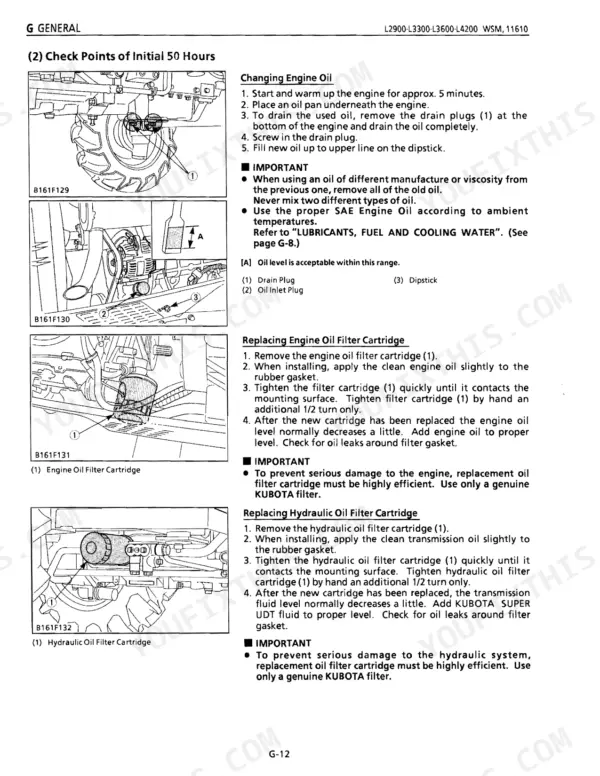
| Engine oil filter cartridge replacement frequency | Every 200 hours | p. 27 |
Kubota L2900–L4200 Series Common Problems This Manual Covers
Engine cranks but will not start
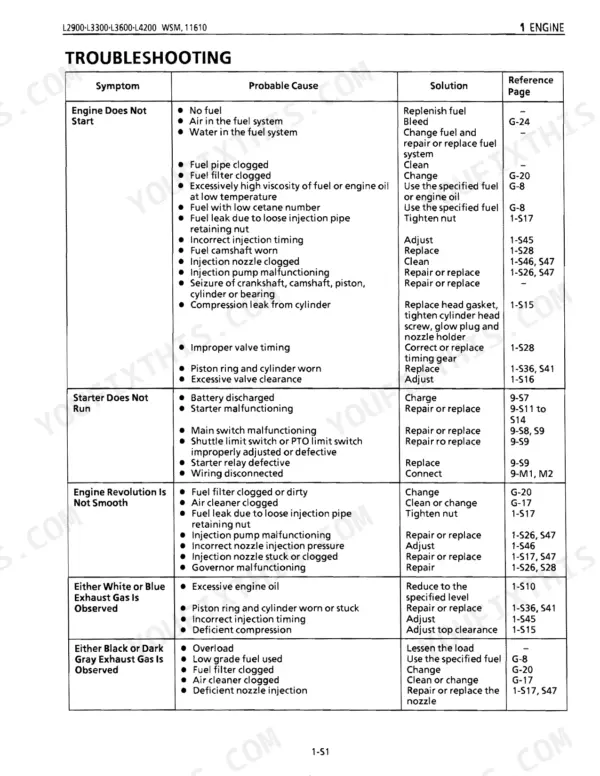
Hard starting or intermittent no-start on these tractors often comes from fuel delivery problems, air in the fuel system, clogged filters, or weak battery and glow plug issues. The Engine section covers the mechanism and servicing, including the fuel system, to isolate the fault.
Manual Section: Engine p. 62Weak or slow three-point lift
A hydraulic lift that is weak, slow, or will not raise usually means low oil, a clogged screen or filter, a worn pump, or a valve fault. The Hydraulic section documents the pump, relief valve, position control valve, and cylinder.
Manual Section: Hydraulic p. 347Jerky transmission or lost drive
A driveline that feels jerky, noisy, or loses drive can stem from incorrect fluid level, contamination, clutch adjustment, or worn internal parts. The Transmission section gives the mechanism and servicing steps for deep diagnosis.
Manual Section: Transmission p. 143Overheating or coolant loss under load
Overheating and repeated coolant loss often trace to a clogged radiator screen, dirty fins, or belt and hose problems. The General section covers the daily checks, including coolant level and radiator screen cleaning.
Manual Section: General p. 16Heavy or unstable steering
Steering that turns heavy or feels unstable points to low hydraulic fluid, air in the system, or worn pump and valve components. The Steering section covers the hydraulic pump, relief valve, steering controller, and metering device.
Manual Section: Steering p. 311No charge or electrical starting fault
A dead charging circuit or an intermittent starting fault involves the battery, starter, glow control, or charging system. The Electrical section gives the mechanism and servicing for each of these circuits.
Manual Section: Electrical p. 391Clutch slips or drags
A slipping or dragging clutch usually needs adjustment or shows wear. The Clutch section covers the mechanism and servicing, and the clutch pedal free play should sit at 20 to 30 mm.
Manual Section: Clutch p. 130Frequently Asked Questions
Which models does this manual cover?
It is one service manual covering the Kubota L2900, L3300, L3600, and L4200 tractors, including the D1503-L-A, D1703-A, V1903-A, and V2203-A engines.
Does it include torque specifications?
Yes. The Engine section lists torque values such as the cylinder head screws at 93.1 to 98.0 N·m and the crankshaft nut at 137.3 to 156.9 N·m, alongside wheel and axle torque figures. p. 62
Does it cover the mower and loader attachments?
Yes. Beyond the tractor systems, the manual includes a dedicated Loaders section with safety, mechanism, and servicing, plus a mower section. p. 572
Is this Service Manual a digital download?
Immediate download of the complete 650-page searchable service manual. Open it on any device: laptop at your desk, phone out in the field.
Can I print pages of this manual for my own shop?
Yes. Print individual pages or full chapters for your own shop use, on letter or A4 paper.
Does this Kubota L2900–L4200 Series manual include hydraulic schematics?
Full hydraulic system diagrams are included, covering circuits, valve locations, and component specs across the Kubota L2900 to L4200 Series.

Reviews
There are no reviews yet.