
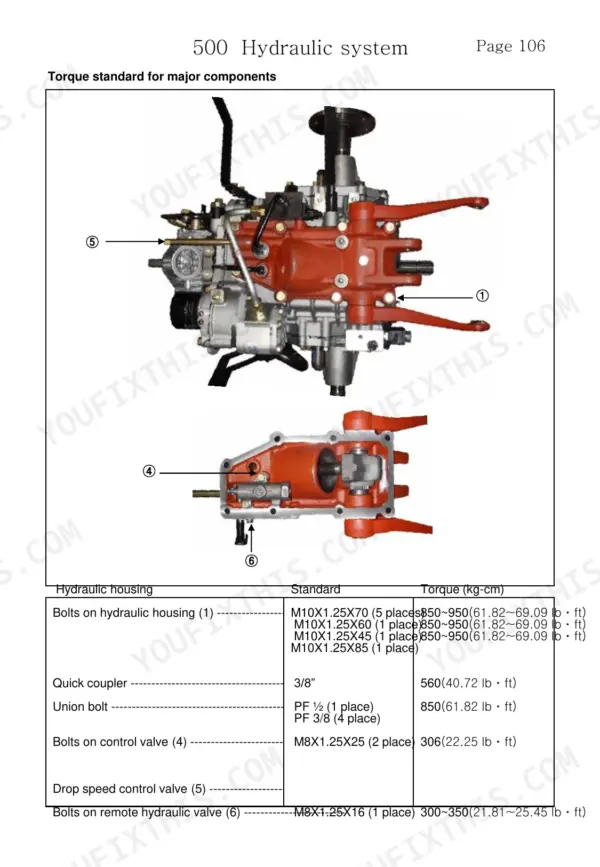
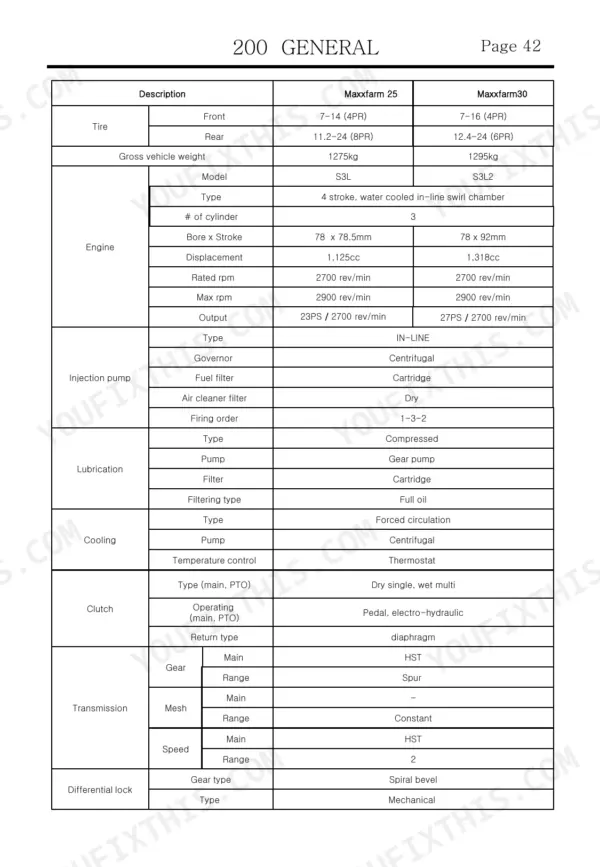
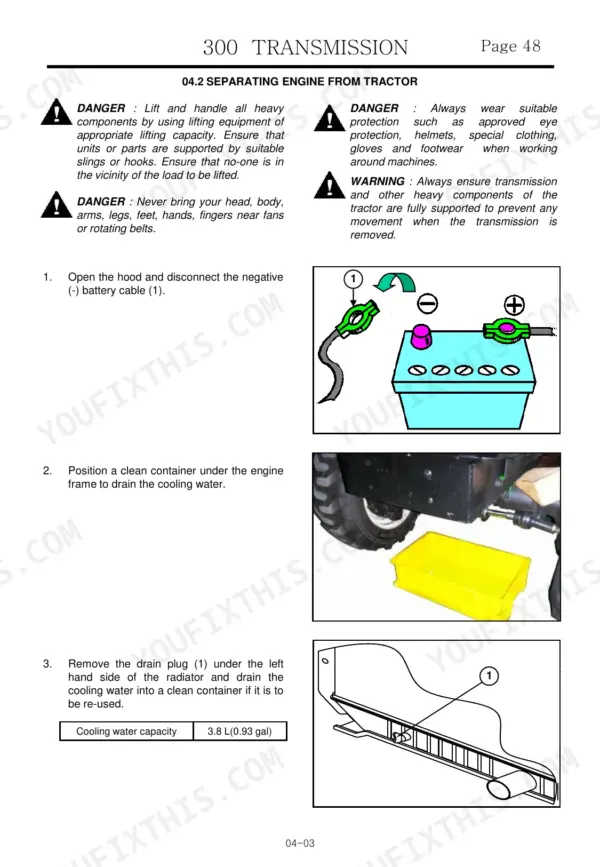
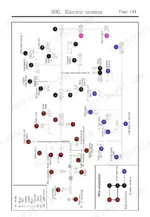
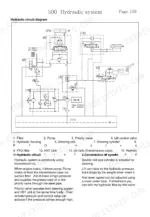
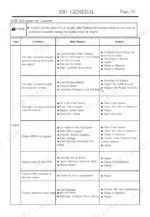
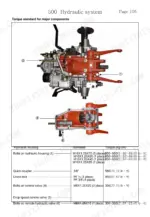
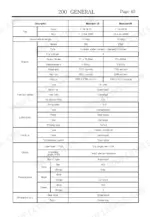
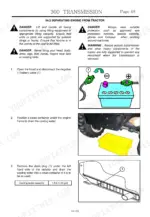
All 182 pages of this Maxxfarm 25 and Maxxfarm 30 Service Manual (OEM #47673548) are built around four core systems: General, Transmission, Steering & Front Axle, and Electric. Inside, you get a deep transmission section covering HST unit separation, full transmission overhaul, rear PTO system overhaul, and final drive case procedures — plus steering knuckle and front differential overhaul in the axle section. The electric system section walks you through glow system circuits, PTO wiring, starter motor disassembly and brush inspection, alternator overhaul, and full charging system checks — backed by wiring diagrams covering every circuit from head lamps to working lamps. Fill the engine to 4.2 litres, top the fuel tank at 25 litres, and confirm cooling water at 3.8 litres before you start. Your machine is down. Pull up this bookmarked PDF on any device, jump straight to the section you need, and get back to work.
What's Inside This Maxxfarm Maxxfarm 25/30 Manual
| System | Pages | Key Topics |
|---|---|---|
| 200 General | 2-44 | Names for Each Part, Ignition Switch, Glow Lamp, Engine RPM, Fuel Gauge, Cooling Water Thermometer, Signal Light Switch, Engine Oil Warning Lamp |
| 300 Transmission | 45-74 | Separating Engine From Tractor, Separating HST Unit From Transmission, Separating Transmission, Transmission Overhaul, Rear PTO System Overhaul, Final Drive Case Overhaul |
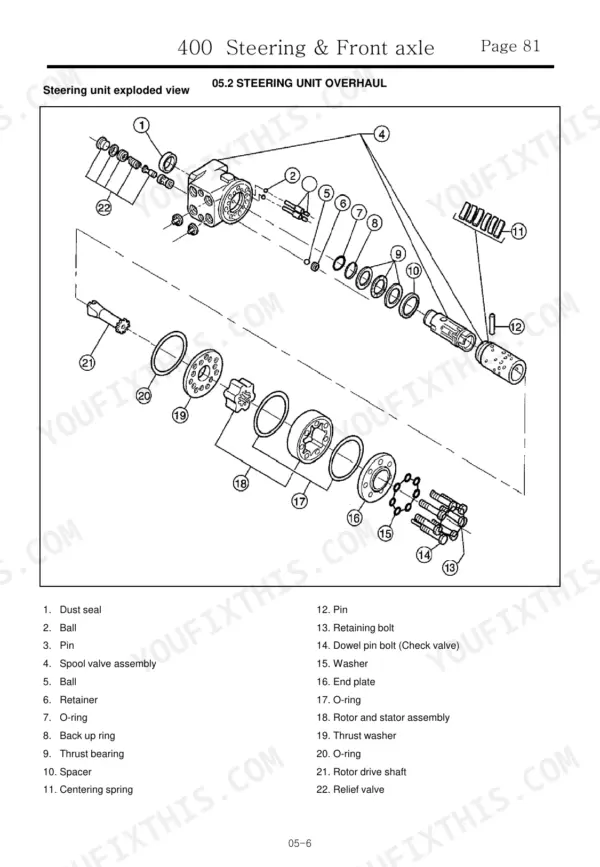
| 400 Steering & Front Axle | 75-140 | Steering System Over-View, Steering Unit Overhaul, Front Axle Over-View, Front Axle Removal, Steering Knuckle Overhaul, Front Differential Overhaul |
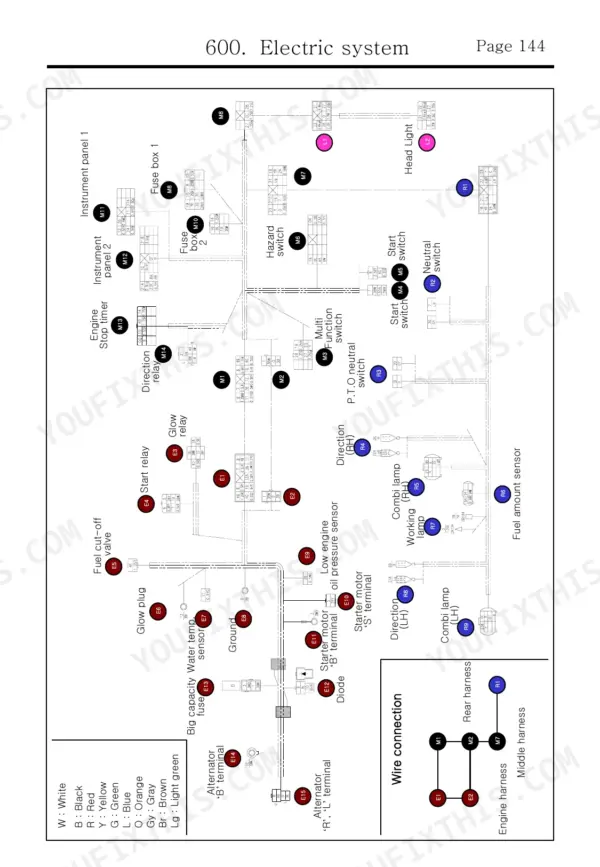
| 600. Electric System | 141-182 | Safety & Start, Glow System, Collant/Engine Oil Temperature, Engine RPM, Fuel Gauge & Parking Brake, PTO System, Head Lamp & Turn Signal, Working Lamp |
Quick Reference Specifications
| Specification | Value | Page |
|---|---|---|
| All Models | ||
| Wheel axle shaft bearing (Front axle, Steering Knuckle unit) | 6206, 6304, 6909, 6910, 6204 | p. 94 |
| Wheel axle shaft bearing (Wheel Hubs) | 6304, 6206 | p. 95 |
| Engine Oil Capacity | 4.2 ℓ (1.1 U.S. gallons) | p. 18 |
| Fuel Tank Capacity | 25 ℓ (6.6 U.S. gallons) | p. 19 |
| Cooling Water Capacity | 3.8 ℓ (1.0 U.S. gallons) | p. 22 |
| Tire Air Pressure (Farming, Before) | 26.1 psi | p. 24 |
| Valve Clearance Standard Gap | 0.01 in | p. 27 |
| Fuel Injection Nozzle Recommended Pressure | 2,219 psi (15.3 Mpa) | p. 27 |
| Transmission Oil Recommended Amount | 5.3 U.S. gallons | p. 44 |
| PTO Speed (STD) | 540 rev/min / 2603 rev/min | p. 43 |
| Maxxfarm 25 | ||
| Engine Displacement, Maxxfarm 25 | 1,125cc | p. 42 |
| Maxxfarm 30 | ||
| Engine Displacement, Maxxfarm 30 | 1,318cc | p. 42 |
Maxxfarm Maxxfarm 25/30 Common Problems This Manual Covers
Transmission whines or clunks in low gear, noise changes with vehicle speed
Check transmission oil level immediately and refill to 5.3 U.S. gallons if low (page 44). Run the tractor briefly, then check for leaks at the input shaft and PTO drive shaft seals. If noise persists after correct fill, separate the HST unit from the transmission per the service procedures on page 48 and inspect bearing surfaces.
Manual Section: 300 Transmission p. 44Tractor won't move in any gear, forward or reverse completely unresponsive
Verify clutch engagement first; a seized friction disc or broken pressure plate locks out all drive. Check transmission oil level (5.3 U.S. gallons, page 44) before splitting the tractor. If oil is correct, separate the HST unit per page 48 and inspect the clutch pack and synchronizers for mechanical failure or broken gear teeth.
Manual Section: 300 Transmission p. 48Hydraulic lift won't raise or raises very slowly under full implement load
Test hydraulic pump relief pressure with a gauge before anything else; the spec is 150 kg/cm² (2,133 psi) per page 113. Low pressure points to a worn pump, blocked strainer, or mis-adjusted relief valve. Check hydraulic oil level first. Inspect the relief valve and clean the strainer; replace the pump only if pressure still won't hold after adjusting the valve.
Manual Section: 400 Steering & Front Axle p. 113Steering wheel requires excessive force to turn, especially at low speed or standstill
Measure steering system relief valve pressure; it should read 140 to 145 kg/cm² per the spec on page 77. A reading below range indicates a stuck-open or worn relief valve. Check hydraulic fluid level before testing. If pressure is within spec but steering stays stiff, inspect the steering unit for internal bypassing or worn seals.
Manual Section: 400 Steering & Front Axle p. 77Frequently Asked Questions
How do you fix maxxfarm 25/30 clutch slips under load, engine revs climb but ground speed doesn't increase?
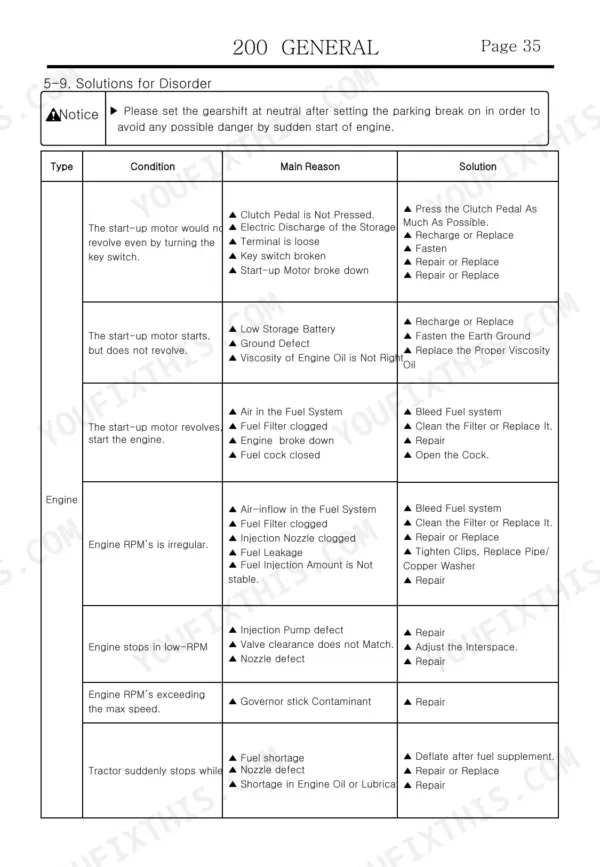
Inspect the clutch friction disc and pressure plate for glazing or wear. Verify transmission oil is at 5.3 U.S. gallons (page 44); low oil accelerates friction disc wear significantly. If the disc is contaminated or worn below spec, replace it before returning to service. Use the troubleshooting chart on page 35 to confirm diagnosis. p. 35
How do you fix gears grind or won't engage when shifting, especially from neutral into first?
Drain and refill the transmission to 5.3 U.S. gallons (page 44) with the correct oil specification before diagnosing further. Low or degraded fluid causes synchronizer drag that mimics a clutch adjustment issue. If refilling doesn't resolve the problem, inspect the friction disc and flywheel surface for wear; the clutch troubleshooting chart on page 35 covers each likely failure point. p. 44
Will this Maxxfarm 25 Service Manual download right away?
This is a 182-page searchable PDF (10 MB) ready for immediate download. Works on any device, so pull it up on your phone while you're under the hood. No shipping, no waiting.
Am I able to print pages from this Maxxfarm 25 manual?
No restrictions at all. Print individual pages, full chapters, or the entire manual. The PDF is completely unlocked.
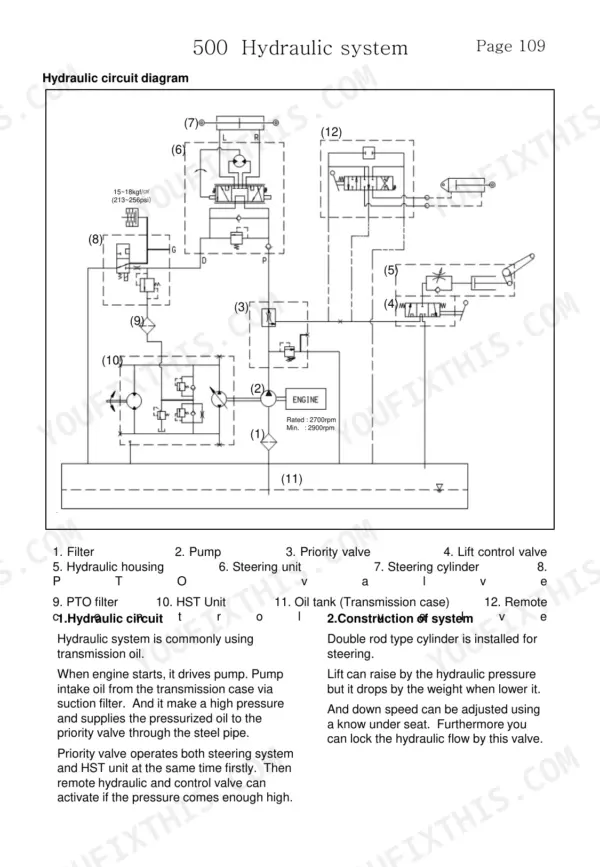
Does this Maxxfarm 25 manual include hydraulic schematics?
Yes, complete hydraulic schematics with flow diagrams, valve configurations, and pressure specifications are included.


Reviews
There are no reviews yet.