
Hunting for the International 784 operator manual PDF? This 120-page factory document (OEM #1135063R4) covers the complete International tractor lineup: 484, 584, 684, 784, 884, and Hydro 84. Inside, you get a dedicated safety section covering pre-start checks, transport rules, and post-upset procedures, followed by a full walkthrough of the warning light panel, differential lock pedal, and auxiliary control levers. Operating procedures take you through gear drive, torque amplifier engagement, and hydrostatic drive, then into hydraulic position control, draft response, and three-point linkage setup. Set your clutch pedal pad to 32.0 mm from the housing face; keep front wheel toe-in between 2 and 5 mm (1/16 to 3/16 in). Your preventive maintenance schedule opens at the 100-hour initial oil change and runs through transmission fluid, brake bleeding, and air cleaner service. No more chasing specs across random forums. Bookmarked by section; grab your tablet, walk to the machine, and start wrenching.
Other edition of this manual
- International 784, 484, 584, 684, Hydro 84 Tractors Operator Manual Original price was: $30.99.$19.99Current price is: $19.99.
What's Inside This International 484-884 Operator Manual
| System | Pages | Key Topics |
|---|---|---|
| Introduction | 15 | Caution! for Your Protection, Compiled in This Manual, Read the Operator's Manual |
| Safety Rules | 16-18 | Before Starting, During Operation, Transporting, After Operating, Dismounting, After an Upset |
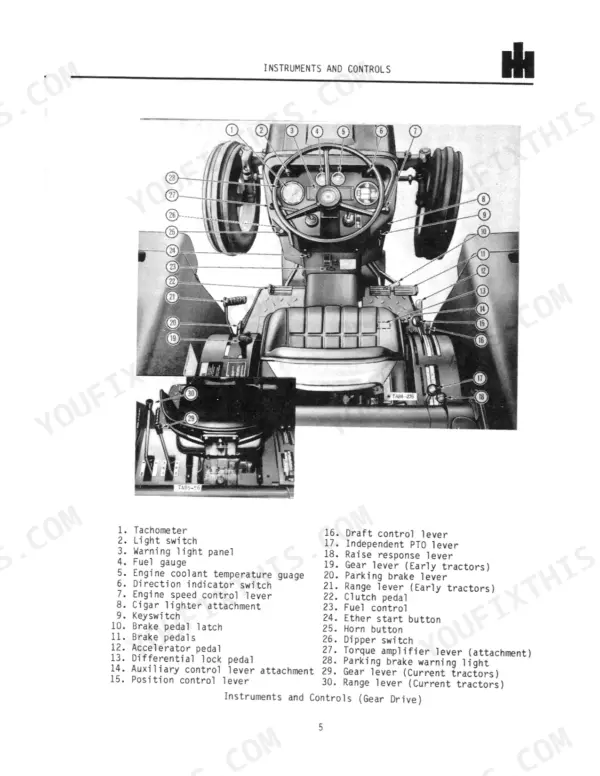
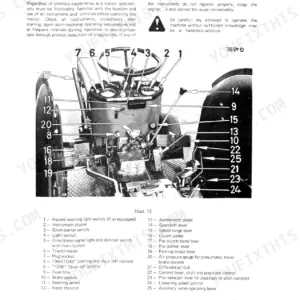
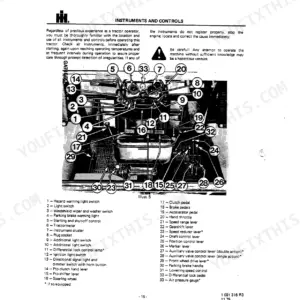
| Instruments and Controls | 19-25 | Warning Light Panel, Light Switch, Engine Speed Control Lever, Differential Lock Pedal, Auxiliary Control Lever, Range Lever |
| Before Operating the Tractor | 26 | Lubrication, Fuel System, Air Cleaning System, Tires, Engine Cooling System, Operator's Seat Adjustment |
| Engine Break in Procedure | 27 | Period, Lever Position, Load |
| Operating the Tractor | 28-36 | Starting the Engine, After Starting, Stopping the Engine, Driving the Tractor, Gear Drive, Torque Amplifier, Hydrostatic Drive, Driving Hydrostatic Tractors |
| Hydraulic System | 37-41 | Position Control, Adjustable Stop, Drop Response, Draft Control, Raise Response, Auxiliary Valves, Self Sealing Couplings, Thermal Expansion Pressure |
| Three Point Linkage | 42-45 | Lift Links, Lower Linkstem, Upper Links, Check Chains, Stabilizers, Coupling the Equipments, Uncoupling the Equipment, Swinging Drawbar |
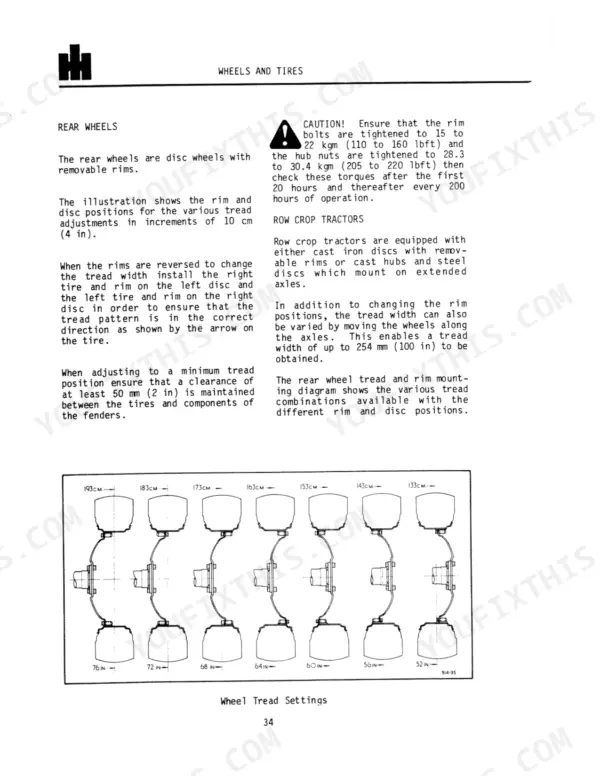
| Wheels and Tires | 46-53 | Front Wheels, Tread Widths, Row Crop Tractors, Tire Pressures and Ballasting, Front Tire Loads and Inflation Pressures, Rear Tire Loads and Inflation Pressures, Water Ballast |
| Preventive Maintenance | 54-56 | Cooling System, Rust Protection, Adding Coolant, Draining the System, Flushing the System, Cleaning the Radiator and Cooler, Fan Belt Tension, Changing the Fan Belt |
| Aircleaning System | 57-58 | Servicing the Aircleaner |
| Engine Servicing | 59-60 | Engine Oil, Checking the Oil Level, Changing the Oil, Changing the Filter, Crankcase Breather |
| Fuel System | 61-64 | Diesel Fuel Storage, Tractor Fuel System, Injection Pump, Fuel Tank, Fuel Filters, Venting the System, Changing the Ether Start Fluid Container |
| Engine Clutch (Current Tractors) | 65-66 | General, Clutch Pedal Height Settings, Setting Basic Pedal Height |
| Engine Clutch (Early Tractors) | 67 | Adjustment, Free Travel, Pedal Height, Locknut |
| Foot-N-Inch Valve | 68 | - |
| Transmission | 69-72 | Fluid Level, Changing the Fluid, Freeing the System of Air, Filters, Transmission Filter, Hydrostatic Filter, Transmission Breather |
| Front Wheel Bearings | 73 | - |
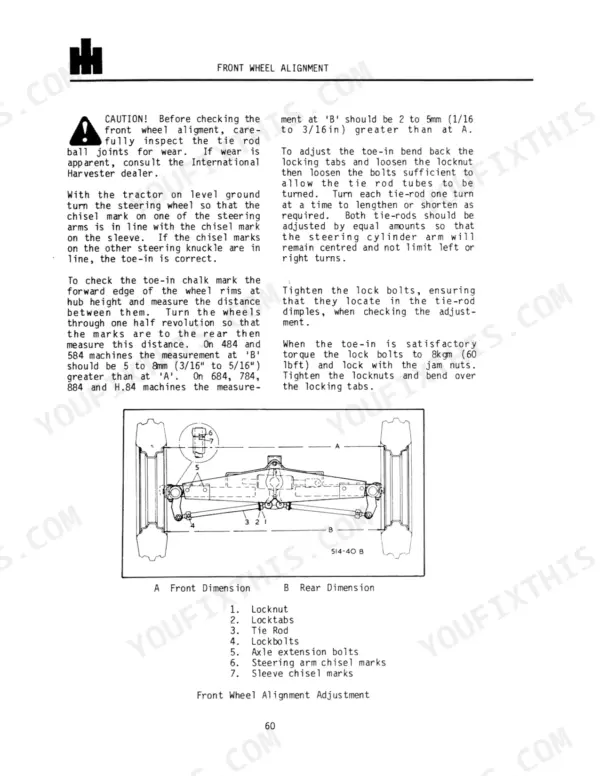
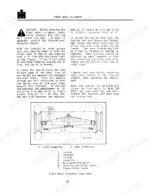
| Front Wheel Alignment | 74 | Locknut, Locktabs, Tie Rod, Axle Extension Bolts, Steering Arm Chisel Marks, Clevis Chisel Marks |
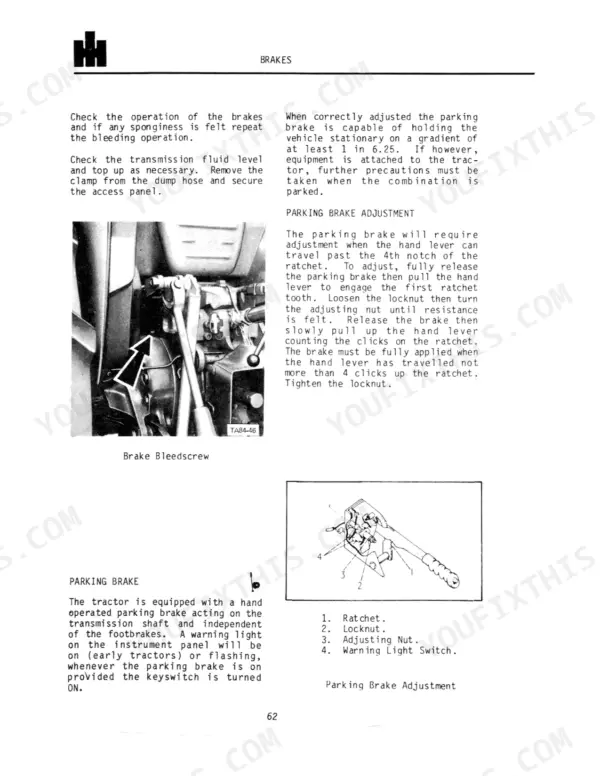
| Brakes | 75-76 | Adjustment, Bleeding the Brakes, Parking Brake, Parking Brake Adjustment |
| Electrical System | 77-120 | Cleaning and Servicing the Battery, Electrolyte Level, Removing the Battery |
Quick Reference Specifications
| Specification | Value | Page |
|---|---|---|
| Current Tractors | ||
| Clutch pedal pad distance from clutch housing face | 32.0 mm (1-1/4 in) | p. 65 |
| Clutch pedal travel | 115.0 mm (4 1/2 in) | p. 65 |
| All Models | ||
| Engine Oil Change Interval (Initial) | 100 hours | p. 59 |
| 484, 584, 684, 784, 884 | ||
| Front Wheel Toe-in | 3 to 5 mm (1/16 to 3/16 in) | p. 60 |
International 484-884 Common Problems This Manual Covers
Brakes feel spongy or unequal and lose stopping power between scheduled adjustment intervals
Adjust brake pedals for equal, firm feel before each season and after 100 hours of operation, using the adjustment procedure on page 75. Test in a safe area: both locked pedals should bring the tractor to a straight stop. If pedal travel is still excessive after adjustment, bleed the system to remove air from the hydraulic lines.
Manual Section: Brakes p. 75Engine loses power under load and blows black smoke in dusty field conditions
Remove and inspect the air cleaner element; the servicing steps are on page 57. Tap the element gently to knock loose dust free; replace it if torn, oil-soaked, or heavily clogged. Service the air cleaner every 100 hours under normal conditions and more often in dusty fields. Never run the engine without the element installed.
Manual Section: Aircleaning System p. 57Frequently Asked Questions
How do you fix international 484 clutch slips during field work and wears out after short seasons?
Check clutch pedal height before each season. On current tractors, adjust the clevis rod so the pedal pad is 32.0 mm (1-1/4 in) from the clutch housing face, as shown on page 65. Verify total pedal travel reaches 115.0 mm (4 17/32 in). Never allow the clutch to slip longer than three seconds during engagement. p. 65
How do you fix oil pressure warning light comes on or stays lit after engine startup?
Check engine oil level immediately; oil must sit between the MIN and MAX marks on the dipstick. Match the lit indicator to the warning light panel on page 19 to confirm which system triggered. If oil level is correct and the warning remains, shut the engine down. Change oil and filter at the first 100-hour service mark. p. 19
How do you fix PTO shaft won't fully disengage, implement keeps turning after lever is moved?
Move the PTO lever fully rearward until it stops, not halfway, before leaving the seat or approaching an implement. Review the disengagement procedure on page 28. Inspect lever linkage for binding or wear at each 100-hour service; a lever that does not snap to the off detent needs attention before the next use. p. 28
How do you fix engine cranks but won't fire after running out of fuel or changing filters?
Vent the fuel system before cranking after a runout or filter change. Fill the tank, then open the bleed screw on the injection pump and pump the hand primer until fuel flows without air bubbles, as described on page 61. Let the lines fill completely before cranking. Change the fuel filter at your 100-hour service to prevent recurrence. p. 61
What format is this manual in?
Immediate download of the complete 120-page searchable Operator Manual. Access it on any device, from a laptop at your desk to a phone in the field.
Am I able to print pages from this manual?
No restrictions at all. Print individual pages, full chapters, or the entire manual. The PDF is completely unlocked.

Reviews
There are no reviews yet.