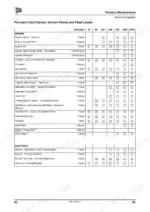
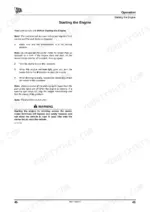
Looking for the exact factory maintenance intervals for your utility vehicle? All 152 pages of this JCB Workmax 1000D operator manual pdf (OEM #9821-0850) focus on keeping your machine running strong day after day. Inside, you get complete fluid capacity charts, detailed daily inspection checklists, and a full section explaining every dashboard indicator. Open to the maintenance schedules to find exact interval breakdowns for servicing the CVT, differentials, and braking systems safely. Swap out your air cleaner element every 100 hours in dusty conditions, and always verify your front wheel nuts are tightened to exactly 120 Nm before hitting the job site. Don't risk unexpected downtime over skipped grease points or ignored warning lights. Download this bookmarked file straight to your phone or tablet, walk out to your vehicle, and get your daily checks done right the first time.
What's Inside This JCB WORKMAX 1000D Operator Manual
| System | Pages | Key Topics |
|---|---|---|
| General Information | 1-2 | Dear JCB Customer, Operator Manual, This Manual Should Always Stay with the Machine, Workmax 1000D, English - 9821-0850 - Issue 5 - October 2014, Copyright © 2004 JCB Service |
| Safety Notices | 3-4 | Important Information, Operator Manual, Safety Warnings (Danger, Warning, Caution), Page Left Intentionally Blank |
| Machine Description | 6 | JCB Workmax 1000D, Intended Use |
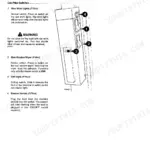
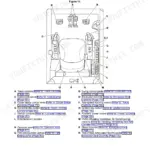
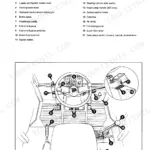
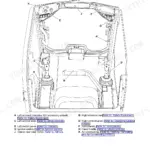
| Component Location | 7-8 | Note, Fig 1, Fig 2, Fig 3 |
| Safety Check List | 9-10 | Safety - Yours and Others, Care and Alertness, Clothing, Alcohol and Drugs, Feeling Unwell, Mobile Phones, Lifting Equipment, Raised Equipment |
| Operating Safety | 11-12 | Machine Condition, Machine Limits, Engine/Steering Failure, Exhaust Gases, Work Sites, Communications, Parking, Banks and Trenches |
| Maintenance Safety | 13-18 | Communications, Repairs, Metal Splinters, Electrical Circuits, Fluid Under Pressure, Hydraulic Pressure, Fuel, Oil |
| Safety Labels | 19 | Hazards, Safety Instructions, Safety Label Identification, Replacement Parts |
| Safety Label Identification | 20 | Fig 4 |
| Part Numbers and Description | 21 | Iso-01A, Iso-04A, Iso-06D, Iso-07G, Iso-09B, Iso-09C |
| Identifying Your Machine | 22 | Machine Identification Plate, Note: the Machine Model and Build Specification, Serial Number of Each Major Unit, Machine and Engine Serial Numbers |
| Typical Product Identification Number | 23 | Code, World Manufacturer Identification, Machine Model, Randomly Generated Check Letter, Machine Serial Number, Each Machine Has a Unique Serial Number, Fig 5 |
| Component Identification Plates | 24-26 | Typical Engine Identification Number, ROPS Data Plate, Single Vehicle Approval Data Plate |
| Operation | 27 | Introduction, Aim of This Part of the Manual, Before You Start the Machine, Operator Must Always Be Aware, When You Understand the Operating Controls, Finally |
| Before Entering the Cab | 28-29 | Cleanliness, Damage, Tyres, Access Panels, ROPS, Caps |
| Entering and Leaving the Cab | 30 | Entering/Leaving, Wheels, Emergency Exit, Windscreen, Locking-Pin, Handle |
| Doors and Windows | 31 | Hard Doors, Door Retaining Strap, Lock Barrel, Handle, Windscreen, Locking-Pin |
| Opening and Closing the Windscreen | 32 | Opening, Closing, Handles, Locking-Pin |
| Seat Controls | 33 | Introduction, Seat, Operator'S Seat CAN Be Adjusted |
| Basic Seat | 34 | Machine Has Seats for the Operator, Driver'S Seat CAN Be Adjusted Forwards and Backwards, Fig 5 |
| Seat Belts | 35 | Inertia Reel Seat Belt, Fasten the Seat Belt, Check the Seat Belt Is Operating Correctly, Release the Seat Belt |
| Visibility Aids | 36 | Mirrors, Introduction, Mirror, Checking the Field of Vision, Side Mirrors |
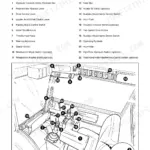
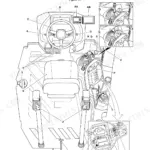
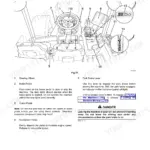
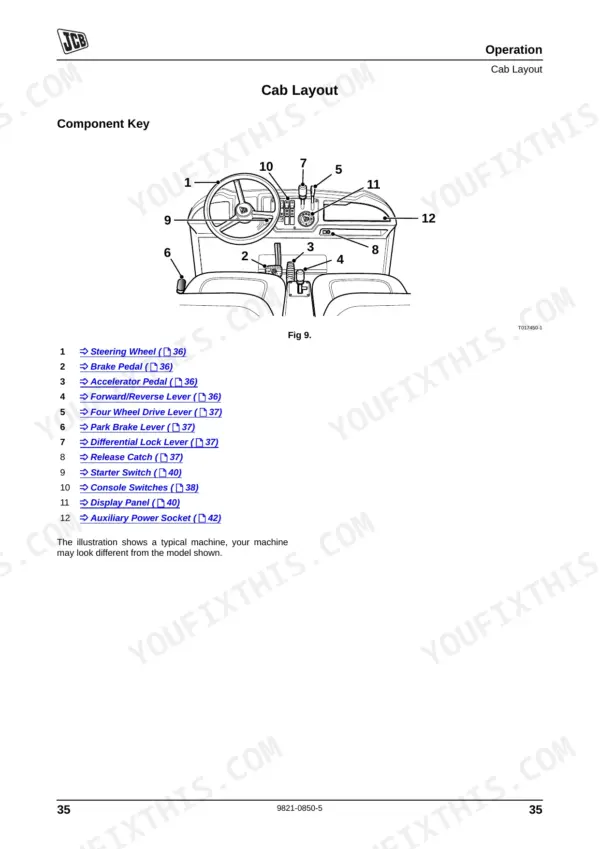
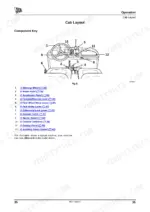
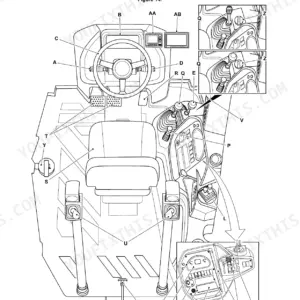
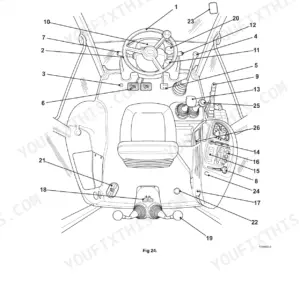
| Cab Layout | 37 | Component Key, Fig 9, Steering Wheel, Brake Pedal, Accelerator Pedal, Forward/Reverse Lever, Four Wheel Drive Lever, Park Brake Lever |
| Drive Controls, Switches and Instruments | 38-39 | Drive Controls, Steering Wheel, Brake Pedal, Accelerator Pedal, Forward/Reverse Lever, High Range Machine Option Only, Four Wheel Drive Lever, Park Brake Lever |
| Switches | 40-41 | Console Switches, Introduction, Front Console Switches, Beacon, Hazard Warning Lights, Rear Fog Light, Headlights and Tail Lights, Load Bay Tipper |
| Hour-Meter | 43 | Engine Pre-Heat on, Trailer Indicator Repeater, Power Steering Indicator Light |
| Auxiliary Power Socket | 44 | Socket X Supplies a 12 Volt DC Power Supply, Always Operate the Engine During Prolonged Use, Make Sure That the Socket Cap Is Closed, Open the Dashboard Cover Y, Fig 15 |
| Safety Equipment | 45 | Beacon, In Certain Territories You Will Be Breaking the Law |
| Before Starting the Engine | 46 | Oil and Filter, Introduction, Pollute Drains, Sewers or the Ground, Do Not Exceed the Correct Level of Engine Oil, Oil, Park the Machine on Hard, Level Ground |
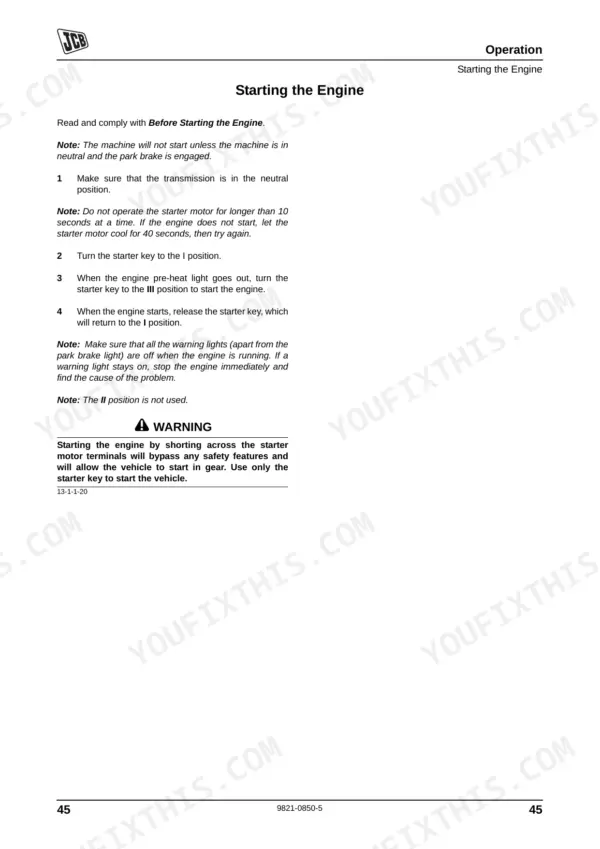
| Starting the Engine | 47 | Starter Key, Glow Plug Pre-Heat, Ignition, Engine Running Checks |
| Preparing the Machine for Travel | 48 | Road Travel, Road Lights, Work Lights, Beacon, Laws and Regulations |
| Preparing for Site Travel | 49 | - |
| Getting the Machine Moving | 50 | Operating Practices, Ear Defenders, Seat Belt, Differential Lock Lever, Forward/reverse Lever, Power Steering System |
| Operating Procedure | 51 | Ear Defenders, We Recommend That You and Your Passenger, Make Sure That Your Seat Belt Is Fastened Correctly, Make Sure That Your Passenger, Set the Differential Lock Lever |
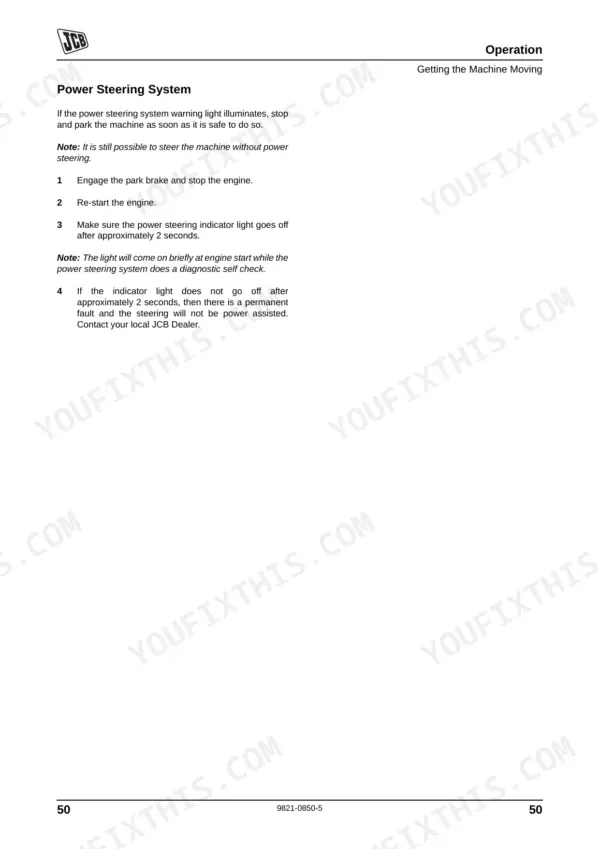
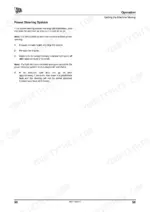
| Power Steering System | 52 | If the Power Steering System Warning Light Illuminates, Engage the Park Brake and Stop the Engine, Re-Start the Engine, Make Sure the Power Steering Indicator Light Goes Off |
| Stopping and Parking the Machine | 53 | Parking, Foot Brake Pedal, Park Brake Lever, Forward/reverse Lever, Starter Key, Switches |
| Working with Your Machine | 54-55 | Operating Practices and Site Safety, Danger Zone, Clothing and Safety Equipment, Safety Practices, Reworking Old Sites, Water Supplies and Drains, Fibre Optic Cables |
| Working with the Load Bay | 56 | Load Bay, Raised Load Bay, Raising and Lowering the Load Bay, Electrically Operated Load Bay, Electric Tipping Mechanism, Engine Bay Access |
| Transporting a Load | 57 | Maximum Load Capacity, Partial Loads Positioning, Driving Speed, Box-Shaped Objects Loading, Tailgate Latches, Side Door Latches |
| Raising and Lowering the Load Bay | 58 | Gas Strut, Hydraulic, Safety Strut, Load Bay Tipper Switch, Load Bay |
| Raising the Load Bay | 59 | Gas Strut, Locking Clamps, Securing Pins, Hydraulic, Load Bay Tipper Switch, Hydraulic Rams |
| Lowering the Load Bay | 60 | Gas Strut, Gas Strut Lock, Locking Clamps, Securing Pins, Hydraulic, Rocker Switch |
| Dumping a Load | 61 | Dump Site, Park Brake, Forward/reverse Lever, Starter Key, Tailgate Latches, Hydraulic Tipper Mechanism |
| Operating on Slopes or Rough Terrain | 62 | Hillsides, Rough Roads, Heavy Equipment Transport, Continuous Slope, Maximum Slope, Engine fuel/oil Starvation |
| Operating Environment | 63 | Operating in Low Temperatures, Use the Correct Viscosity Engine Lubricating Oil, Use the Correct Viscosity Hydraulic Oil, If Available Use a Low Temperature Diesel Fuel |
| Tow Hitch Options | 64 | Introduction, Examine the Tow Hitch and the Trailer Draw Bar, Do Not Exceed the Permitted Limits, Make Sure Your Tyre Pressures Are Correct, When Towing |
| Disconnecting the Trailer | 65 | Trailer Connection Reversal, Trailer Load Stability, Unexpected Tipping |
| Refuelling the Machine | 66-67 | Low Fuel Levels, Fuel Tank Filling, Fuel Type, Mobile Phone Use, Spilt Fuel, Condensation Prevention |
| Moving a Disabled Machine | 68 | Service Brakes, Transmission Damage, Towing Distance, Rigid Draw-Bar, Forward/reverse Lever, Differential Lock |
| Transporting the Machine | 69 | Loose Dirt Removal, Local Transport Laws, Trailer Suitability, Machine dimensions/weight, Trailer/ramp Cleanliness, Park Brake |
| Loading a Machine Onto the Transporting Vehicle/Trailer | 70 | Ramp Incline, Lifting Procedure, Park Brake, Loading Ramps, Wheel Alignment, Machine Securement |
| Lifting the Machine | 71 | Payload, Loose Dirt Removal, Forklift Points, Pallet Forks Alignment, Fork Spacing, Machine Stability |
| Storage of the Machine | 72 | Introduction, Storage Area, Prepare the Machine for Storage, Put the Machine Into Storage, During Storage |
| Take the Machine Out of Storage | 73-74 | Coolant Condition, Fluid Levels, Machine Cleaning, Grease Removal, Battery Installation, Engine Start, Hydraulic Controls |
| Routine Maintenance | 75 | Introduction, Owner/Operator Support, Service/Maintenance Agreements, Initial Service and Inspection |
| Obtaining Replacement Parts | 76 | If You Use Non-Genuine JCB Parts or Consumables, A Parts Book for Your Machine Is Available, Your Dealer Will Need to Know the Exact Model, Data Plate Also Shows the Serial Numbers |
| Health and Safety | 77 | Lubricants, Introduction, Hygiene, Storage, Waste Disposal, Handling, New Oil, Used Oil |
| First Aid - Oil | 78 | Eyes, Swallowing, Skin, Spillage, Fires |
| Battery | 79-80 | Battery Disconnection/Connection, Disconnection, Connection, Checking the Electrolyte Level |
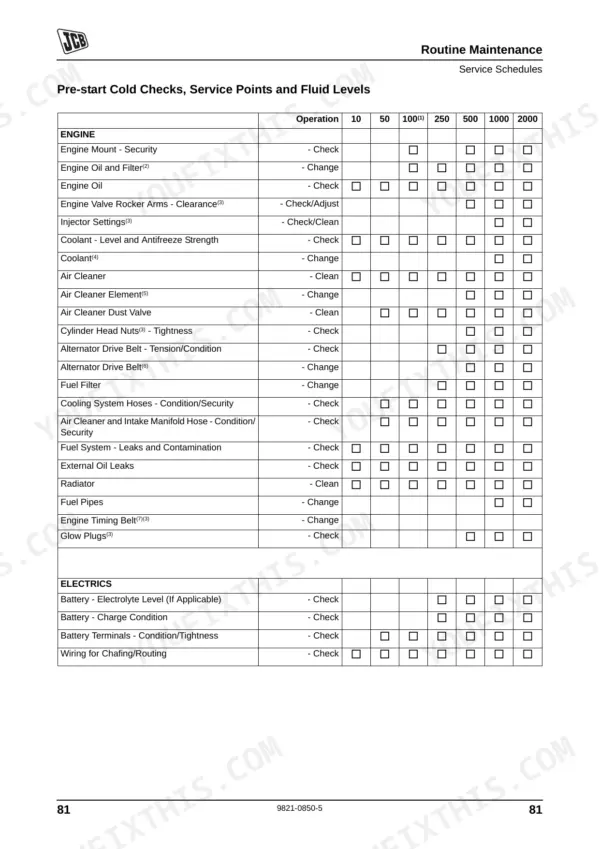
| Service Schedules | 81 | Introduction, Maintenance Must Be Done Only by Suitably Qualified, To Prevent Anyone Starting the Engine, A Badly Maintained Machine Is a Danger, Apart From the Daily Jobs |
| Operating Conditions | 82 | Introduction, Normal Operating Conditions with Minimal Roading, Moderate Operating Conditions with Moderate Roading |
| Transmission, Axles and Steering | 84 | Front Differential Unit, Rear Differential Unit, Gearbox, Continuously Variable Transmission (CVT), Cv Joint Gaitors, Driveshaft |
| Fluids, Lubricants and Capacities | 87 | Fuel, Engine Oil, Front Differential Oil, Rear Differential Oil, Engine (Coolant), Brake Fluid |
| Types of Fuel | 88 | Recommended Fuel Specification, Cetane Number, Viscosity, Density, Sulphur Content, Distillation |
| Coolant Mixtures | 89 | Check the Strength of the Coolant Mixture, Replace the Coolant Mixture, Antifreeze CAN Be Harmful, You Must Dilute Full Strength Antifreeze, Correct Concentration of Antifreeze |
| Prepare the Machine for Maintenance | 90 | Engine, Park Brake, Transmission, Wheels, Battery |
| Cleaning the Machine | 91-92 | Introduction, Detergents, Pressure Washing and Steam Cleaning, Prepare the Machine for Cleaning, Wheels |
| Checking for Damage | 93 | Check the Machine Body and Structure, Check the Electrical Circuits, Check the Tyres, Check the Seat and Seat Belt |
| Checking the ROPS | 94 | Mounting Bolts, ROPS for Damage, ROPS for Security, Harnesses/cables, Complete New Structure |
| Greasing | 95 | Introduction, You Must Grease the Machine Regularly, Greasing Should Be Done with a Grease Gun, In the Following Illustrations, Waxoyl Contains Turpentine Substitute |
| Greasing the Machine | 96-98 | Grease Points, Grease Gun Application, Waxoyl Application, Lubrication Points, Driveshaft Grease Points, Fig References |
| Access Panels | 99 | Front Access Panel, Make the Machine Safe, Let the Engine Cool, Pull the Release Catch 1, Lift and Hold the Front Access Panel, Fig 8, Fuse and Battery Cover |
| Brakes | 100 | Park Brake, Introduction, Testing the Park Brake |
| Adjusting the Park Brake | 101 | At the Cab Lever, Brake Cables, Locknuts, At the Calliper, Brake Calliper Lever, Splined Calliper Shaft |
| Foot Brake | 102-103 | Brake Pad Inspection, Make the Machine Safe, Remove the Wheel, Examine the Brakes, Check for Corrosion and Freedom of Movement, Fig 12, Fig 13, Fig 14 Front Brakes |
| Brake Fluid Check | 104 | Using Incorrect Fluid Could Damage the System, Faulty Brakes CAN Kill, Check the Level of Brake Fluid, Make the Machine Safe, Lift the Front Access Panel |
| Electrical System | 105-106 | Electrical System Overview, Wiring, Fuse Locations, Circuit Protection, Fuse Box Access, Electrical Fault Diagnosis |
| Battery Isolation | 107 | To Isolate the Battery From the Machine, Make the Machine Safe, Machines Without a Battery Isolation Switch, Except in an Emergency, Machines with a Battery Isolation Switch |
| Jump Start the Engine | 108 | Booster Battery Connection, Jump Start Procedure, Positive/Negative Cable Sequence, Engine Start After Jump, Cable Removal Order |
| Secondary Fuse Box | 110 | Glow Plug Relay, Esos and Instrumentation Panel, Main Beam, 12V DC Power Output, Fan and Tipper Switch, Work Lights |
| Power Steering Fuses | 111 | Fig 25, Power Steering Primary Fuse, Power Steering In-Line Fuse |
| Engine | 112 | Engine Oil Check, Dipstick Location, Oil Level Verification, Engine Oil Type, Engine Oil Capacity |
| Changing the Oil and Filter | 114-115 | Drain the Oil, Change the Oil Filter, Fill the Engine with Oil, Check for Leaks |
| Cooling System | 116 | Check the Coolant Level, Cooling System Is Pressurised, Antifreeze CAN Be Harmful, Make the Machine Safe, Let the Engine Cool, Open the Front Access Panel |
| Changing the Coolant | 117-118 | Drain the Coolant, Flush the System, Add the Coolant |
| Checking the Hoses and Clamps | 119 | Radiator Hoses, Clamps, Radiator Drain Plug, Radiator Pipes |
| Alternator Drive Belt | 120 | Check the Drive Belt, Make Sure the Engine Cannot Be Started, Turning the Engine, Make the Machine Safe, Raise the Load Bay, Remove the Belt Guard |
| Adjusting the Alternator Drive Belt | 121 | Adjust Belt Tension, Locknut Adjustment, Alternator Positioning, Belt Deflection Check, Belt Guard Removal and Refit |
| Air Filter | 122 | Changing the Element, Outer Element Must Be Renewed, Make the Machine Safe, Raise the Load Bay, Release the Two Securing Clips 1, Compressed Air Is Dangerous |
| Fuel System | 123 | Introduction, Fuel, Fine Jets of Fluid at High Pressure, Do Not Allow Dirt to Enter the System, Running the Engine with Air in the System |
| Change the Fuel Filter | 124 | Remove the Fuel Filter, Lubricate the Seals, Install the New Fuel Filter, Bleed the Fuel System |
| Hydraulics | 125 | Introduction, Temperature of the Hydraulic Oil Will Be High, Fluid Under Pressure, Hydraulic Pressure, Using Incorrect Fluid Could Damage the System |
| Load Bay Tipper Mechanism | 126-127 | Checking the Oil Level, Make the Machine Safe, Set the Starter Key to Position I, Push and Hold the Top of the Load Bay Tipper Switch |
| Transmission | 128 | Introduction |
| Gearbox | 129 | Checking the Oil Level, Make the Machine Safe, Clean the Area Around the Oil Level Plug 2, Remove the Oil Level Plug 2, Oil Is at the Correct Level, If Necessary |
| Differentials | 131 | Checking the Oil Level, Make the Machine Safe, Clean the Area Around the Front Differential Oil Level Plug 1, Remove the Oil Level Plug 1, Oil Is at the Correct Level, If Necessary |
| Checking the Cv Joint Gaitors on the Driveshafts | 132 | Visual Examination of the Gaitors, Damaged Gaitor, Defective Gaitor Replacement |
| Tyres and Wheels | 133 | Tyre Inflation, Introduction, Procedure |
| Checking the Wheel Nut Torques | 134 | Wheel Stud Renewal, Wheel Nut Torques, Front Wheel Torques, Rear Wheel Torques, Hub Torques |
| Windscreen Washer | 135-136 | To Get Access to the Windscreen Washer Bottle, If Necessary, Remove Cap and Fill the Washer Bottle, Make Sure You Do Not Spill Fluid Into the CVT Housing, On Completion |
| Specifications | 137 | Static Dimensions, Load Bay |
| Service Fill Capacities | 138 | Fuel Tank, Engine Oil Sump and Filter, Gear Box, Front Differential, Rear Differential, Coolant System, Brake System |
| Performance Specifications | 139 | Speeds, Maximum Travel Speed, Maximum Operating Slope Angle |
| Trailer Towing | 140 | Towing Limitations, Maximum Gross Trailer Weight Permitted, Fig 2 |
| Tyre Sizes and Pressures | 141 | Manufacturer, Type, Front Pressure PSI (Bar), Rear Pressure PSI (Bar), Location |
| Vibration Data | 142 | Introduction, To Assist in Compliance with European Directive 2002/44/EC, Unless Otherwise Indicated for a Specific Operating Condition |
| Workmax 1000D | 143 | Table 1 Whole-Body Vibration Emission Under Representative Operating Conditions, Whole-Body Vibration Emission Determined in Accordance, Hand-Arm Vibration Determined in Accordance |
| Warranty Information | 144-146 | Installation Checklist, 1st 50 Hrs./ Weekly, 250 Hrs./6 Month, 500 Hrs./12 Month, 750 Hrs./18 Month, 1000 Hrs./24 Month, 1250 Hrs./30 Month, 1500 Hrs./36 Month |
| Registration Information | 147-148 | Customer Copy, Dealer Copy |
| European Community Standards | 149-150 | Introduction, A Completed Copy of the Ec Declaration of Conformity, A Sample Copy of the Ec Declaration of Conformity, Page Left Intentionally Blank |
| Explanation of the Ec Declaration of Conformity | 151-152 | JCB Compact Products Limited, Works Truck, Machine Model and Serial Number, Typical Product Identification Number (Pin), En Standards, Engineering Manager |
Quick Reference Specifications
| Specification | Value | Page |
|---|---|---|
| Wheel Nut Torque - Front | 120 Nm (88 lbf ft) | p. 134 |
| Wheel Nut Torque - Rear | 120 Nm (88 lbf ft) | p. 134 |
| Battery Capacity | 60 Ah | p. 140 |
| System Voltage | 12 VDC | p. 140 |
| Air Cleaner Element Change Interval (dusty conditions) | every 100 Hours | p. 84 |
| Alternator Drive Belt Deflection | 7 - 9 mm (0.275 - 0.354 in.) | p. 121 |
| Alternator Drive Belt Change Interval | every 500 hours or two years | p. 84 |
| Fuel Tank Capacity | 37 (8.1) Litres (Gallons) | p. 138 |
| Engine Oil Sump and Filter Capacity | 2.6 (0.6) Litres (Gallons) | p. 138 |
| CVT Belt Slip Condition | If belt slip occurs during normal use for example on a steep slope, always examine the belt. | p. 128 |
| Differential Lock Usage Warning | Excessive tyre wear occurs if the differential lock is engaged on normal ground conditions. Turning the vehicle or driving at high speeds while the differential lock is engaged can cause you to lose control of the vehicle. Only use the differential lock at low speeds. | p. 39 |
| Gearbox Oil Capacity | 1.2 Litres (0.3 Gallons) | p. 138 |
JCB WORKMAX 1000D Common Problems This Manual Covers
JCB Workmax 1000D engine will not start or stalls shortly after starting in cold weather conditions. p. 124
Bleed the fuel system as described on page 124 to remove trapped air. Check the engine oil dipstick and verify the sump contains exactly 2.6 Litres (0.6 Gallons) of oil. Inspect battery terminals for corrosion and confirm the starter engages properly.
Manual Section: Change the Fuel FilterPower steering indicator light stays illuminated on the dashboard and steering feels unusually heavy during operation. p. 52
Engage the park brake and stop the engine immediately. Check the diagnostic steps on page 52. Inspect the power steering primary and in-line fuses located in the secondary fuse box. Verify the alternator drive belt deflection measures between 7 - 9 mm (0.275 - 0.354 in.).
Manual Section: Power Steering SystemDriveline performance degrades and transmission slips when driving up steep inclines or carrying heavy loads. p. 129
Inspect the CVT belt for severe fraying or cracks. Verify the gearbox oil level is correct and holds exactly 1.2 Litres (0.3 Gallons) of fluid. Check the front wheel nut torques on page 134 to ensure they are tightened to 120 Nm (88 lbf ft).
Manual Section: GearboxUnusual rattling noise from the cab structure when driving over rough terrain or bumpy job sites. p. 94
Examine the Roll Over Protection Structure (ROPS) for damage and loose mounting hardware as described on page 94. Tighten any loose mounting bolts to the manufacturer-specified torque. Inspect all safety harnesses and cables for proper security before resuming operation.
Manual Section: Checking the ROPSFrequently Asked Questions
What is the torque spec for JCB Workmax 1000D wheel nuts?
The correct torque specifications for the JCB Workmax 1000D wheel nuts are 120 Nm (88 lbf ft) for both front and rear wheels. For the hub, the torque is 250 Nm (184 lbf ft). Check wheel nut torques each day before work and recheck after any wheel removal until readings are stable.
What are the replacement specifications for battery?
The battery capacity for the JCB Workmax 1000D is 60 Ah. The system voltage is 12 VDC.
What are the replacement specifications for filters?
The manual specifies that the air cleaner element should be changed every 100 hours, or more frequently in dusty conditions. For engine oil, JCB Engine Oil EP 15W40 (above -10°C) is recommended; the oil and filter should be changed every year in low use conditions.
How do you fix JCB Workmax 1000D engine will not start or stalls shortly after starting in cold weather conditions?
Bleed the fuel system as described on page 124 to remove trapped air. Check the engine oil dipstick and verify the sump contains exactly 2.6 Litres (0.6 Gallons) of oil. Inspect battery terminals for corrosion and confirm the starter engages properly.
What do I get after purchasing this JCB Workmax 1000D manual?
A 152-page Operator Manual in searchable PDF format, available the moment you complete checkout. View on computer, tablet, or phone, with no shipping wait.
Can I print this manual?
Yes. The PDF has no DRM restrictions, so print any page or section you need for your shop. Works with any standard printer.


Reviews
There are no reviews yet.