
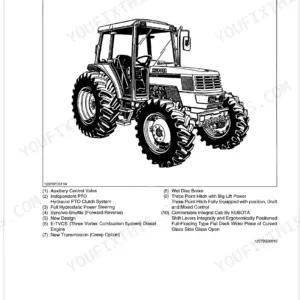
This Kubota Workshop Manual covers the L3010, L3410, L3710, and L4310 compact tractors, including ROPS and cabin versions and both gear and HST transmission types. It runs 616 pages and was scanned from the factory service book (publication 9Y011-12223), so you get the same procedures Kubota dealers use.
Inside you can trace every major system: the D1503, D1703, V1903, and V2203 diesel engines, the clutch, gear and hydrostatic transmissions, front and rear axles, power steering, the three-point hydraulic system, brakes, the electrical system with wiring diagrams, the cabin, and the mid-mount mower.
With torque values, service intervals, clearances, and step-by-step disassembly, an owner or independent mechanic can handle everything from routine maintenance to a full engine or transmission rebuild without guessing.
Complete the set for your L3010–L4310 Series
- Operator Manual: Kubota L3710, L4310, L4610 Operator Manual
Other edition of this manual
- Kubota L3010–L4610 Series Tractor Workshop Manual (incl. Wiring) Original price was: $56.99.$39.99Current price is: $39.99.
What's Inside This Kubota L3010–L4310 Series Manual
| System | Pages | Key Topics |
|---|---|---|
| Safety Instructions | 4-7 | |
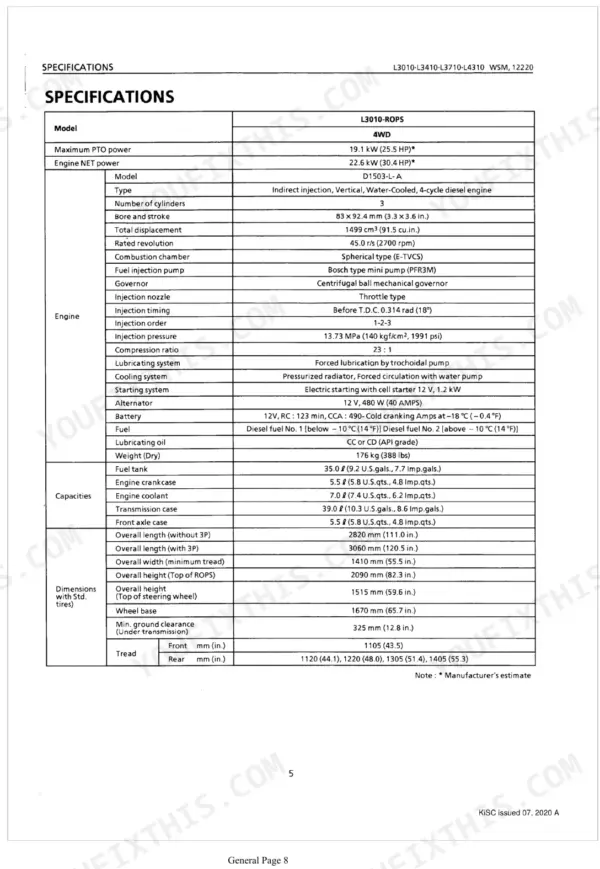
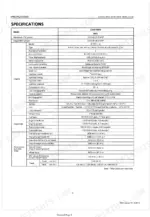
| Specifications | 8-20 | L3010-Rops, L3410-Rops, L3710-Rops, L4310-Rops, L4310-Cabin |
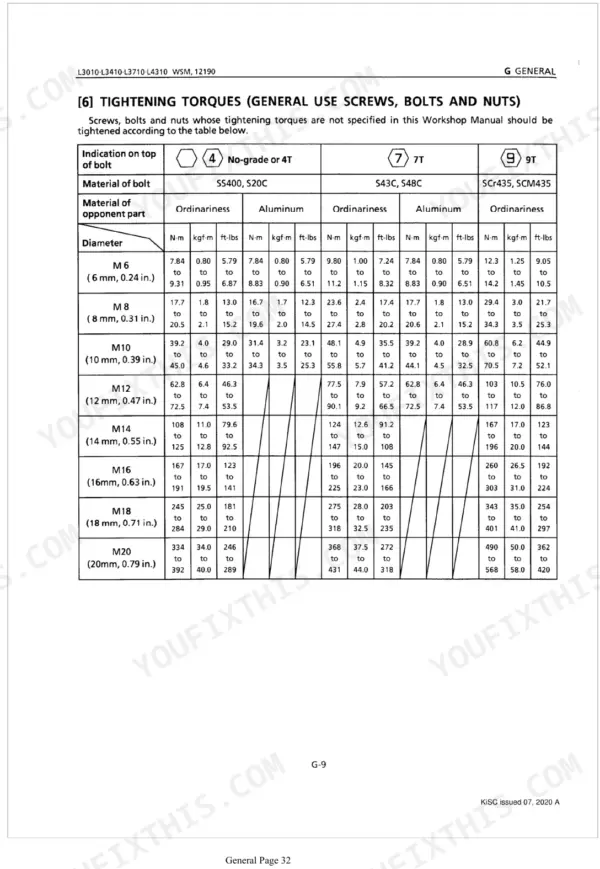
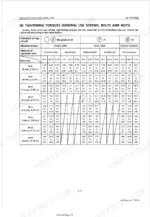
| General | 21-68 | Features, Tractor Identification, General Precautions, Handling Precautions for Electrical Parts and Wiring, Lubricants, Fuel and Cooling Water, Tightening Torques General Use |
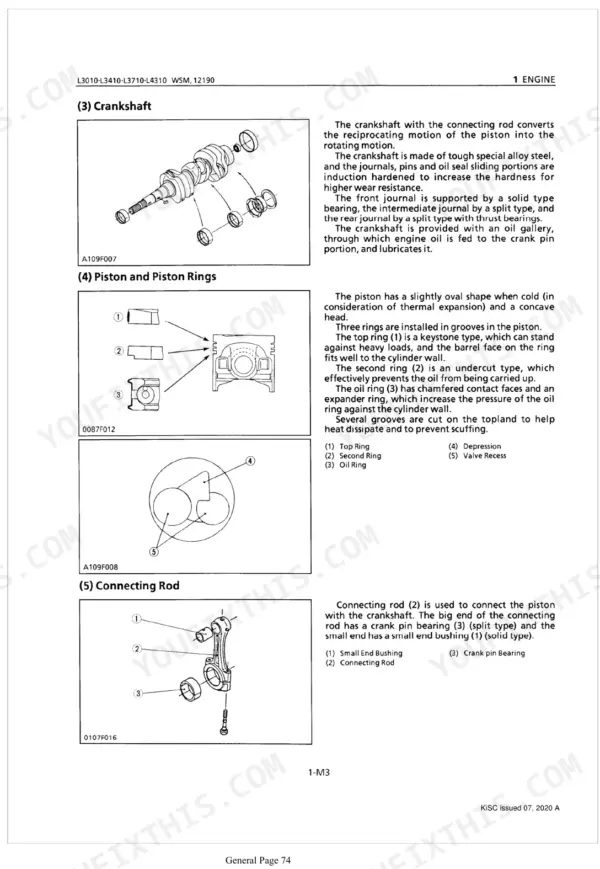
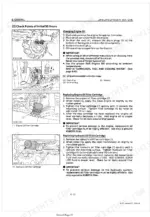
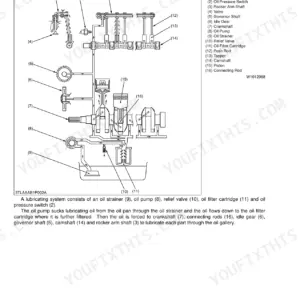
| Engine | 69-135 | Features, Engine Body (Cylinder Block, Cylinder Head, Crankshaft, Piston and Piston Rings, Connecting Rod, Camshaft, Rocker Arm, Intake and Exhaust Valves, Flywheel) |
| Clutch | 136-149 | Features, Linkage Mechanism, Operation |
| Transmission | 150-255 | Power Train, Main Gear Shift Section, Shuttle Shift Section, Hi-Lo Range Shift Section, Mid PTO Section, Rear PTO Shift Section, One-Way Clutch, Creep Speed Shift Section (Option) |
| Transmission (HST Model) | 256-322 | Power Train, Clutch Housing Section, Hydrostatic Transmission Section, Features, Function of Each Components, Operation, Control Linkage, Range Gear Shift Section |
| Rear Axle | 323-330 | Features, Draining the Transmission Fluid, ROPS and Rear Wheel, Rear Axle Case, Disassembling Rear Axle |
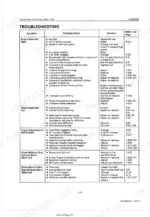
| Brakes | 331-345 | Features, Operation, Brake Pedal, Brake Case, Troubleshooting, Servicing Specifications (Checking and Adjusting), Tightening Torques (Servicing, Disassembling and Assembling) |
| Front Axle | 346-369 | Structure (2WD Type, 4WD Type), Front Wheel Alignment (Camber, Kingpin Angle, Caster, Toe-In), Troubleshooting, Servicing Specifications, Checking |
| Steering | 370-404 | Features, Hydraulic Circuit for Power Steering System, Hydraulic Pump, Steering Controller (Control Valve, Metering Device, Relief Valve), Oil Flow, Steering Cylinder |
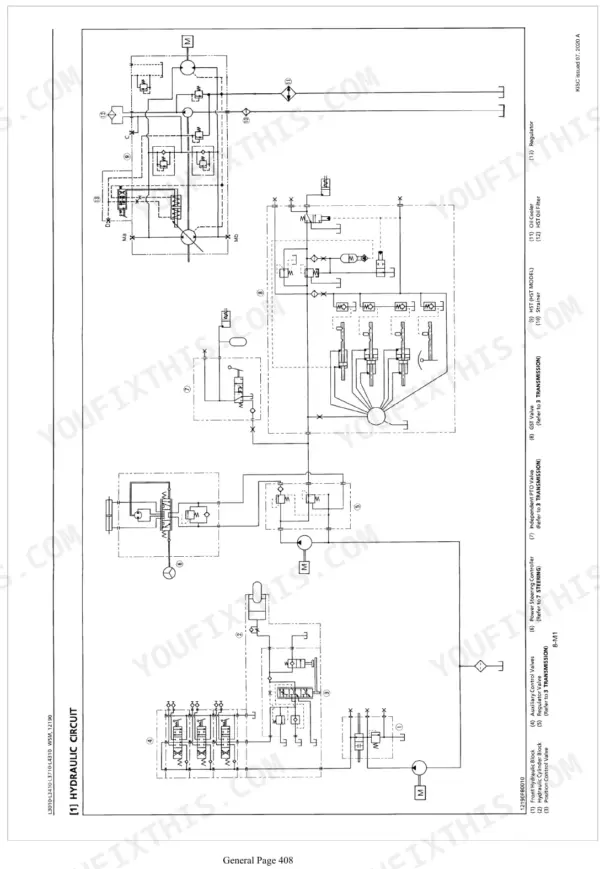
| Hydraulic System | 405-445 | Hydraulic Circuit, Structure, Hydraulic Circuit for Three Point Hydraulic System, Hydraulic Pump, Oil Filter, Position Control Valve, Relief Valve, Hydraulic Cylinder |
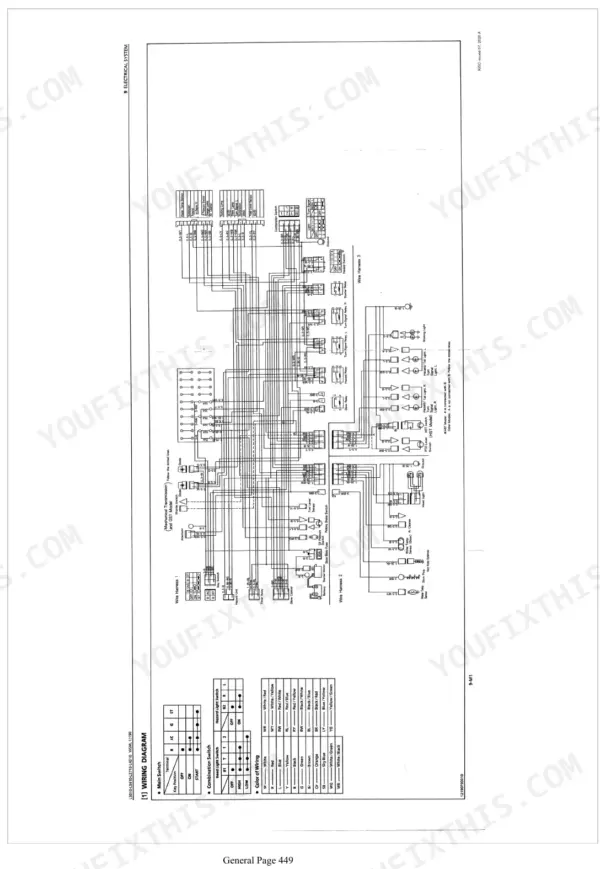
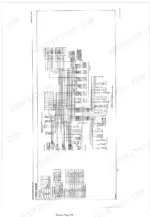
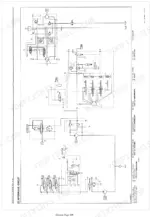
| Electrical System | 446-497 | Wiring Diagram, Electrical Circuit, Starting System (Starter Motor, Roller Clutch, Magnet Switch, Operation of Starter Motor, Glow Control System) |
| Cabin | 498-596 | Cooling Water, Maintenance Check List, Check and Maintenance (Daily Check, Check Points of Every 200 Hours, Check Points of Every 1 Year, Others), Special Tools |
| Mower | 597-616 | Mower Identification, Lubricants, Tightening Torques, Maintenance Check List, Check and Maintenance, Troubleshooting, Servicing Specifications, Mounting and Dismounting Mower |
Quick Reference Specifications
| Specification | Value | Page |
|---|---|---|
| All Models | ||
| Tightening Torque M6 (No-grade or 4T) | 7.84 to 9.31 N-m (0.80 to 0.95 kgf-m, 5.79 to 6.87 ft-lbs) | p. 32 |
| Tightening Torque M8 (No-grade or 4T) | 17.7 to 20.5 N-m (1.8 to 2.1 kgf-m, 13.0 to 15.2 ft-lbs) | p. 32 |
| Fuel tank capacity | 35.0 l (9.2 U.S.gals., 7.7 Imp.gals.) | p. 31 |
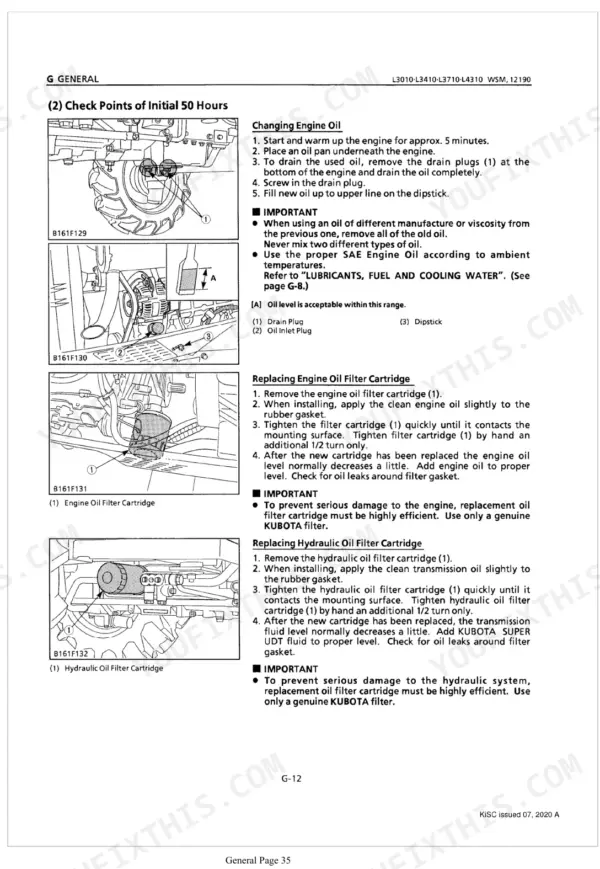
| Maintenance Check List - Initial 50 Hours | Greasing, Engine starting system checking, Wheel bolt torque checking, Battery condition checking, Engine oil changing, Hydraulic oil filter cartridge replacement, Transmission fluid changing, Front axle case oil changing, Front axle pivot adjustment, Fuel filter element replacement, Greasing (2WD front wheel hub), Engine valve clearance adjustment, Air cleaner element replacement, Radiator hose and clamp replacement, Power steering oil line replacement, Fuel line replacement, Engine cooling system cleaning, Coolant changing, Fuel system bleeding, Clutch housing water draining, Fuse replacement, Light bulb replacement | p. 33 |
| Maintenance Check List - Every 50 Hours | Greasing, Engine starting system checking, Wheel bolt torque checking, Battery condition checking, Engine oil changing, Air cleaner element cleaning, Fuel filter element cleaning, Fan belt tension adjustment, Clutch pedal free travel adjustment, Brake pedal free travel adjustment, Engine oil filter cartridge replacement, Hydraulic oil filter cartridge replacement, Radiator hose and clamp checking, Power steering oil line checking, Fuel line checking, Toe-in adjustment | p. 33 |
| Transmission Case Capacity | 39.0 L | p. 31 |
| Front Axle Case Capacity (4WD) | 5.5 L | p. 31 |
| L3010, L3410 | ||
| Engine crankcase capacity | 5.5 l (5.8 U.S.qts., 4.8 Imp.qts.) | p. 31 |
| Engine Oil Capacity (L3010, L3410) | 5.5 L | p. 31 |
| Cooling System Capacity (L3010, L3410) | 7.0 L | p. 31 |
| L3710, L4310 | ||
| Engine Oil Capacity (L3710, L4310) | 7.6 L | p. 31 |
| Cooling System Capacity (L3710, L4310) | 7.5 L | p. 31 |
Kubota L3010–L4310 Series Common Problems This Manual Covers
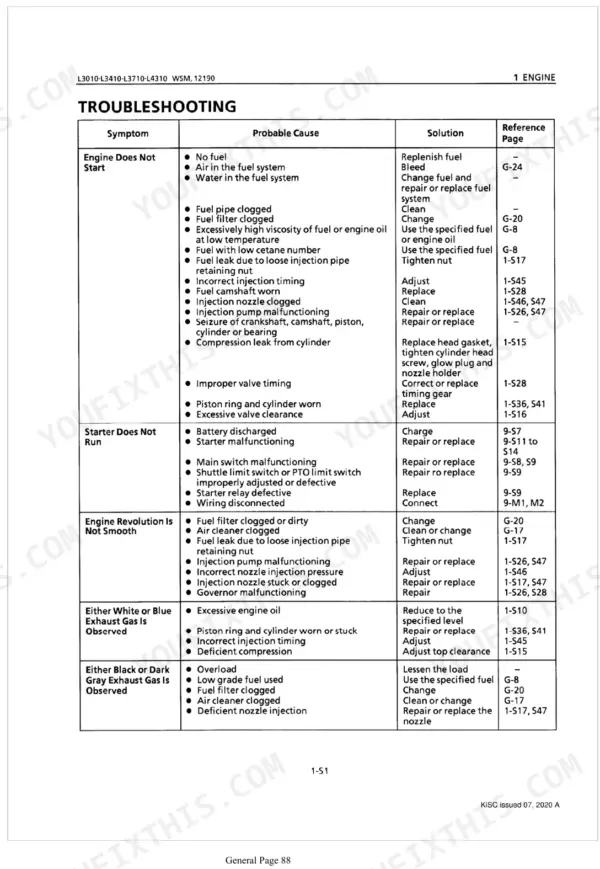
Hard cold starting on the diesel
Slow or failed cold starts often trace to a weak glow control system or worn starter. The Electrical System section documents the starter motor, magnet switch, and glow control system so you can test each part instead of replacing blindly.
Manual Section: Electrical System p. 446Clutch drag or slipping
A clutch that drags when shifting or slips under load usually means free travel has drifted out of spec or the linkage is worn. The Clutch section covers the linkage mechanism and operation so you can adjust and diagnose it correctly.
Manual Section: Clutch p. 136Three-point hitch won't lift
A rear hitch that lifts slowly or not at all points to the hydraulic pump, position control valve, or relief valve. The Hydraulic System section maps the circuit and each component for the three-point system.
Manual Section: Hydraulic System p. 405Heavy or wandering steering
Hard steering or poor return often comes from the hydraulic pump, steering controller, or relief valve losing pressure. The Steering section details the power steering circuit, metering device, and steering cylinder for tracing the fault.
Manual Section: Steering p. 370HST creeps in neutral
On hydrostatic models, creeping when the pedal is released or weak drive usually means the HST needs adjustment or a filter or strainer service. The Transmission (HST Model) section covers its structure for diagnosis.
Manual Section: Transmission (HST Model) p. 256Weak or grabbing brakes
Uneven braking or excessive pedal travel typically means the brake pedal free travel is out of spec or the brake case parts are worn. The Brakes section includes troubleshooting and servicing specs for checking and adjusting.
Manual Section: Brakes p. 331Frequently Asked Questions
Which Kubota tractors does this manual cover?
It covers the Kubota L3010, L3410, L3710, and L4310 compact tractors, including ROPS and cabin versions and both gear and HST transmission types, with the D1503, D1703, V1903, and V2203 diesel engines.
What engine valve clearance should I set?
The engine valve clearance when cold is 0.18 to 0.22 mm for all models. The Engine section covers the cylinder head, rocker arm, and intake and exhaust valves for the adjustment procedure. p. 69
Does it include wiring diagrams?
Yes. The Electrical System section includes the wiring diagram and electrical circuit, plus the starting system with starter motor, magnet switch, and glow control system. p. 446
What are the main tightening torque values?
General-use torque values are listed for standard fasteners, for example 39.2 to 45.0 N-m for M10 and 62.8 to 72.5 N-m for M12 bolts. The General section lists the full torque tables. p. 21
How will I receive this Kubota L3010–L4310 Series Workshop Manual?
A 616-page Workshop Manual in searchable PDF format, available the moment you complete checkout. View on computer, tablet, or phone, with no shipping wait.
Am I able to print pages from this Kubota L3010–L4310 Series manual?
Yes. Many mechanics print the section they need for their own shop and bring it to the bench.
Does this Kubota L3010–L4310 Series Workshop Manual have electrical diagrams?
Yes. You'll find full electrical schematics with wire routing diagrams, connector identification, and circuit descriptions.

