
Part of the Yanmar Repair Manuals.
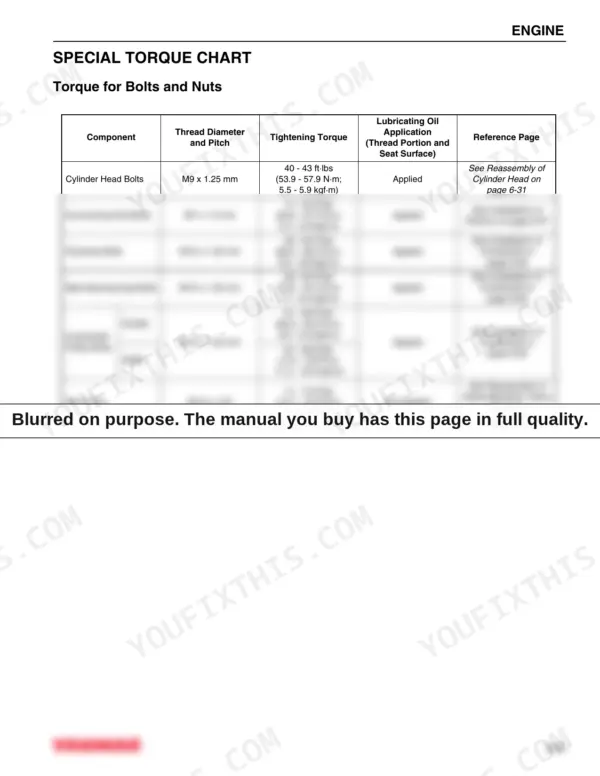
Deep into a cylinder head job on a 3TNV70, the work stalls for want of one number: the head bolt torque. Yanmar publication 0BTNV0-U0100 has it. This is the factory-issued service manual for the 2005 to 2007 TNV series industrial diesels, covering the 2TNV70, 3TNV70, and 3TNV76.
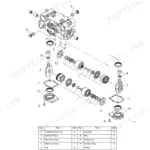
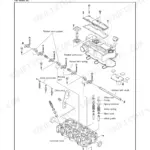
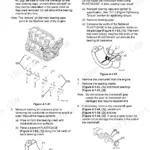
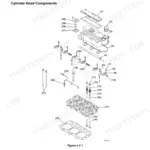
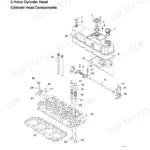
Across 288 pages it moves from periodic maintenance schedules into full engine service, with cylinder head, camshaft and timing gear train, and crankshaft and piston specifications, then through the fuel system with injection pressures and special service tools, plus cooling, lubrication, starter motor, alternator, electric wiring, and a troubleshooting chapter built around compression measurement.
The PDF is an 18 MB download with 350 bookmarks, so you can jump straight to a spec table or print the pages you need at the bench. It also lists service part numbers, such as oil filter 119305-35150, so you order the right part the first time.
Complete the set for your 2TNV70, 3TNV70, 3TNV76
- Operator Manual: Yanmar 2TNV70-4TNV106T Industrial Engine Operator Manual
- Operator Manual: Yanmar TNV Series Industrial Engine Operator Manual
Other edition of this manual
- Yanmar 2TNV70 / 3TNV70 / 3TNV76 Industrial Engines Service Manual (incl. Wiring) Original price was: $60.99.$39.99Current price is: $39.99.
What's Inside This Yanmar 2TNV70, 3TNV70, 3TNV76 Manual
| System | Pages | Key Topics |
|---|---|---|
| Yanmar Warranties | 7-14 | Yanmar Limited Warranty (What Is Covered by This Warranty?, How Long Is the Warranty Period?, What the Engine Owner Must Do:, To Locate an Authorized Yanmar Industrial Engine Dealer or Distributor:, What Yanmar Will Do:, What Is Not Covered by This Warranty?, Warranty Limitations:, Warranty Modifications:, Questions:, Retail Purchaser Registration.) |
| Safety | 15-34 | Safety Statements, Safety Precautions (Before You Operate, During Operation and Maintenance) |
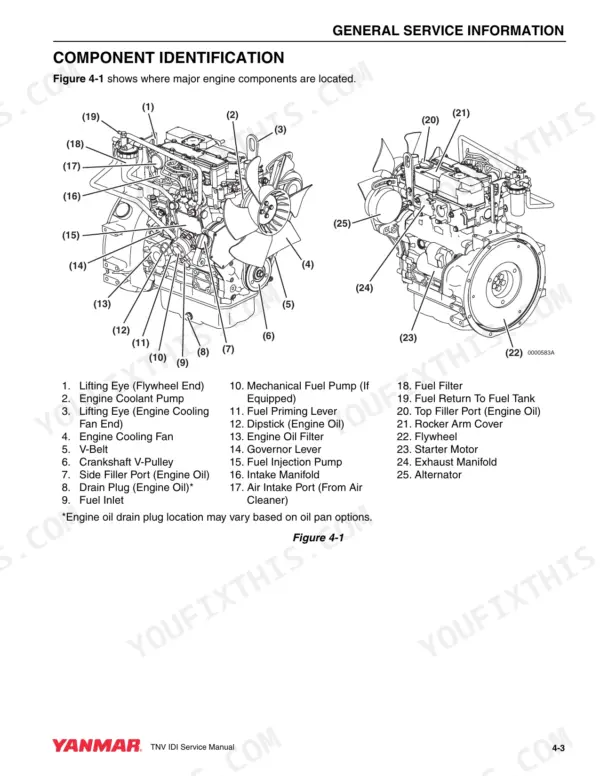
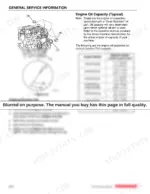
| General Service Information | 35-62 | Component Identification, Location of Labels, EPA / Arb Emission Control Regulations - Usa Only, Emission Control Labels, The 97/68/EC Directive Certified Engines, Engine Family |
| Periodic Maintenance | 63-100 | Precautions, Periodic Maintenance Schedule, Periodic Maintenance Procedures |
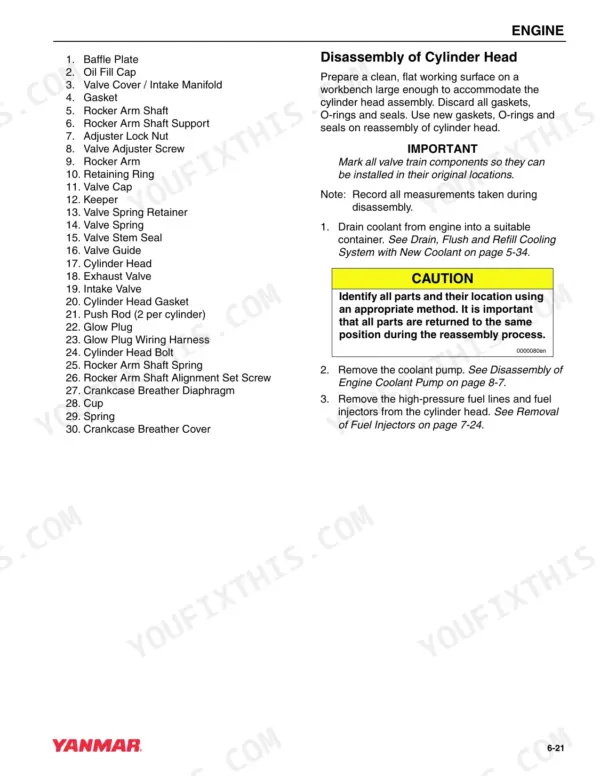
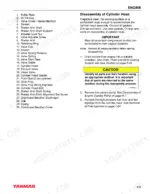
| Engine | 101-162 | Before You Begin Servicing, Introduction, Cylinder Head Specifications, Camshaft and Timing Gear Train Specifications, Crankshaft and Pistons Specifications |
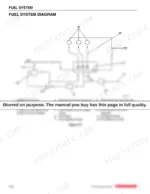
| Fuel System | 163-194 | Before You Begin Servicing, Introduction, Fuel System Specifications, Special Service Tools, Measuring Instruments, Fuel System Diagram, Fuel System Components |
| Cooling System | 195-206 | Before You Begin Servicing, Introduction, Cooling System Diagram, Engine Coolant Pump Components, Engine Coolant System Check, Engine Coolant Pump |
| Lubrication System | 207-218 | Before You Begin Servicing, Introduction, Oil Pump Service Information, Lubrication System Diagram, Checking Engine Oil Pressure, Trochoid Oil Pump |
| Starter Motor | 219-238 | Before You Begin Servicing, Introduction, Starter Motor Information, Starter Motor Specifications, Starter Motor Troubleshooting, Starter Motor Components |
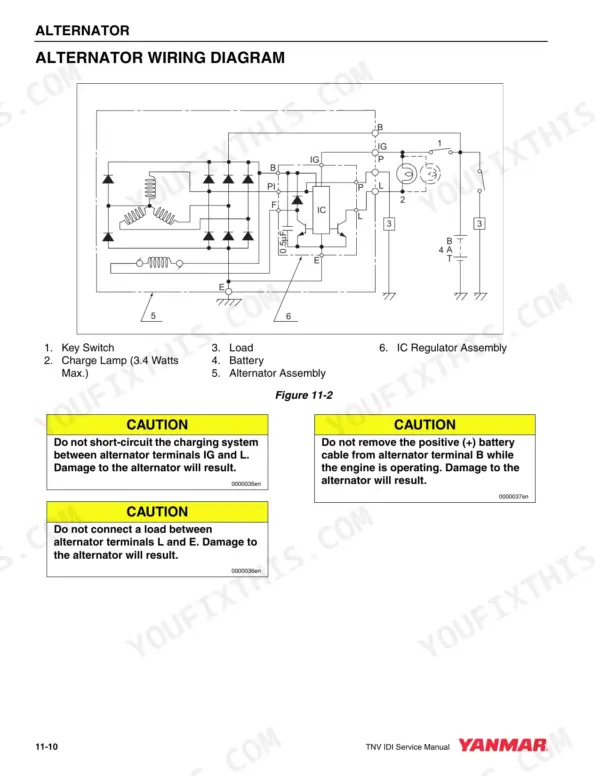
| Alternator | 239-260 | Before You Begin Servicing, Introduction, Standard and Optional Dynamo Information, Standard and Optional Alternator Information, Alternator Specifications, Dynamo Specifications |
| Electric Wiring | 261-268 | Electric Wiring Precautions, Electrical Wire Resistance, Battery Cable Resistance, Electrical Wire Sizes - Voltage Drop, Conversion of Awg to European Standards |
| Troubleshooting | 269-288 | Special Service Tools, Troubleshooting by Measuring Compression Pressure, Quick Reference Table for Troubleshooting |
Quick Reference Specifications
| Specification | Value | Page |
|---|---|---|
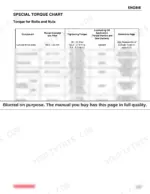
| Cylinder Head Bolts Torque | 40 - 43 ft·lbs (53.9 - 57.9 N·m; 5.5 - 5.9 kgf·m) | p. 115 |
| Fuel Filter / Water Separator Check Frequency | Every 250 hours | p. 80 |
| Fuel Filter / Water Separator Clean Frequency | Every 500 hours | p. 80 |
| Engine Oil Filter Replacement Frequency (Initial) | After Initial 50 Hours of Operation | p. 81 |
| Engine Oil Filter Replacement Frequency (Subsequent) | Every 250 hours | p. 80 |
| Air Cleaner Element Clean or Replace Frequency | Every 500 hours | p. 80 |
| Maximum Air Intake Restriction | 0.90 psi (6.23 kPa; 635 mm Aq) or less | p. 92 |
| Fuel Injector Pressure (used parts) | 1711 - 1856 psi (11.8 - 12.8 MPa; 120 - 130 kgf/cm²) | p. 169 |
| Fuel Injector Torque | 29 ft·lbs (39.2 N·m, 4 kgf·m) | p. 169 |
| Fuel Pump Drive Gear Nut Torque | 44 - 51 ft·lbs (59 - 69 N·m; 6 - 7 kgf·m) | p. 169 |
| Electric Fuel Pump Voltage | 12 VDC | p. 40 |
| Cooling Fan V-belt Check & Adjust Frequency (Initial) | 1st time (After Initial 50 Hours of Operation) | p. 80 |
Yanmar 2TNV70, 3TNV70, 3TNV76 Common Problems This Manual Covers
Cranks but will not start
Air pulled into the fuel lines or contaminated fuel is the usual culprit on these small diesels, and chasing it blind wastes hours. The Fuel System chapter includes the fuel system diagram, component breakdown, and the specifications and measuring instruments needed to test your way through the circuit.
Manual Section: Fuel System p. 163Hard starting after a filter change
A TNV that ran fine before service but fights you afterward usually has air left in the system or a priming step skipped. The Periodic Maintenance chapter gives the filter procedures and intervals, including draining the fuel filter water separator every 50 hours and replacing the filter every 1000 hours.
Manual Section: Periodic Maintenance p. 63Low oil pressure warning after startup
A flickering oil light can mean anything from a lazy sender to worn bearings, and you cannot guess with a crankshaft at stake. The Lubrication System chapter covers checking engine oil pressure and servicing the trochoid oil pump, with the system diagram to trace the oil path.
Manual Section: Lubrication System p. 207Overheating under sustained load
Engines run at steady load for long stretches will expose a tired coolant pump or a blocked circuit fast. The Cooling System chapter includes the engine coolant system check, the cooling system diagram, and component-level service of the engine coolant pump.
Manual Section: Cooling System p. 195Starter clicks or drags on cranking
Before buying a starter, prove whether the fault is the motor, the solenoid, or the cabling. The Starter Motor chapter has its own troubleshooting procedure, component breakdown, and specifications for bench testing what you have.
Manual Section: Starter Motor p. 219Battery goes flat between runs
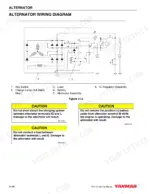
Charging faults on these engines can trace to the alternator, the dynamo on some setups, or resistance in the wiring. The Alternator chapter covers standard and optional alternator and dynamo information with full specifications for testing output.
Manual Section: Alternator p. 239Down on power, suspect worn rings
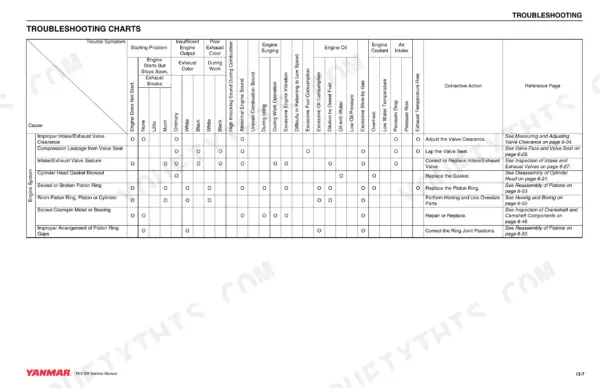
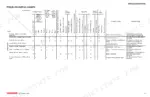
Loss of power with no obvious fuel fault points toward compression. The Troubleshooting chapter is built around troubleshooting by measuring compression pressure, with a quick reference table that maps symptoms to causes across the engine.
Manual Section: Troubleshooting p. 269Frequently Asked Questions
Which engines does this service manual cover?
It covers the Yanmar TNV series industrial diesels 2TNV70, 3TNV70, and 3TNV76, model years 2005 to 2007, under Yanmar publication number 0BTNV0-U0100. One book serves all three models, and the specification tables flag values that apply to a single model, such as oil and coolant capacities.
Does it have the torque specs and clearances for a rebuild?
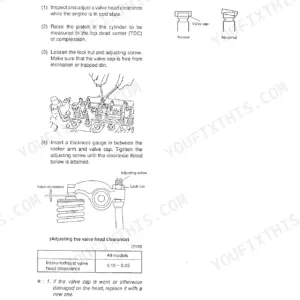
Yes. The Engine section carries cylinder head, camshaft and timing gear train, and crankshaft and piston specifications, including cylinder head bolt torque of 40 to 43 ft lbs and valve clearance of 0.006 to 0.010 in (0.15 to 0.25 mm), so reassembly is done to the factory numbers. p. 101
Can I use it to test and set the injectors?
Yes. The Fuel System section gives the injector pressure for USED parts as 1711 to 1856 psi (11.8 to 12.8 MPa), on page 169, along with the special service tools and measuring instruments for the job. The maintenance schedule calls for injector inspection and cleaning. p. 163
Will it help diagnose a no-start or loss of power?
Yes. The Troubleshooting section works through troubleshooting by measuring compression pressure and includes a quick reference table matching symptoms to causes, while the Fuel System section gives the diagram and component detail for tracing air or fuel delivery faults. p. 269
How quickly can I access this manual?
Immediate download of the complete 288-page searchable Service Manual. Access it on any device, from a laptop at your desk to a phone in the field.
Is this manual print-friendly?
Yes. Print the pages you need for the job in your own shop, and bin them when they get greasy.
Does this Yanmar TNV series manual include wiring diagrams?
Complete wiring diagrams are included, covering all electrical circuits, harness routing, and connector pinouts for the Yanmar TNV series, 2TNV70, 3TNV70, 3TNV76.



Reviews
There are no reviews yet.