
Part of the Yanmar Repair Manuals.
Cold morning at the dock, and the 6CXM-GTE2 will not get its first start until the lube oil, cooling water, and fuel have been checked in order. This Yanmar operation manual (publication 49961-205100, a 45 page English PDF) walks that routine end to end: product explanation, pre-operation supply and cranking, starting and running checks, periodic maintenance, and troubleshooting.
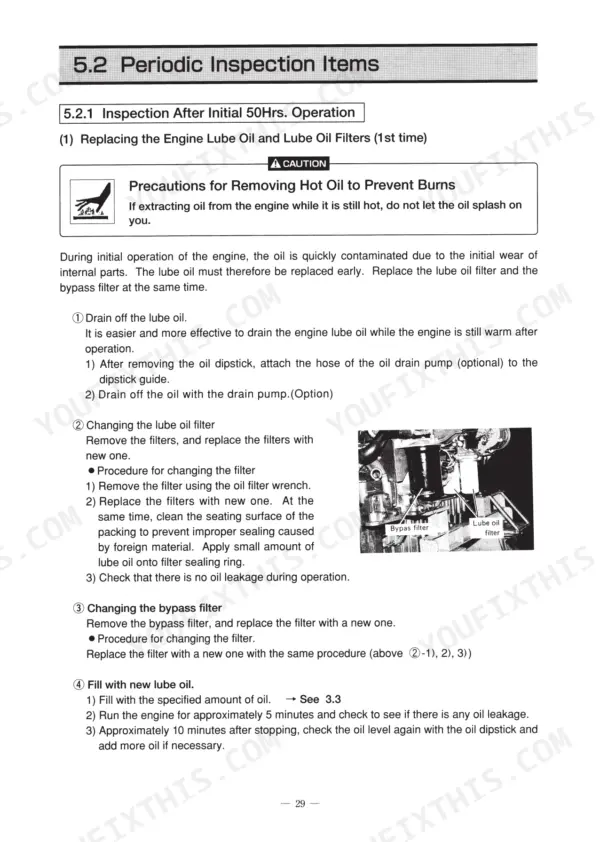
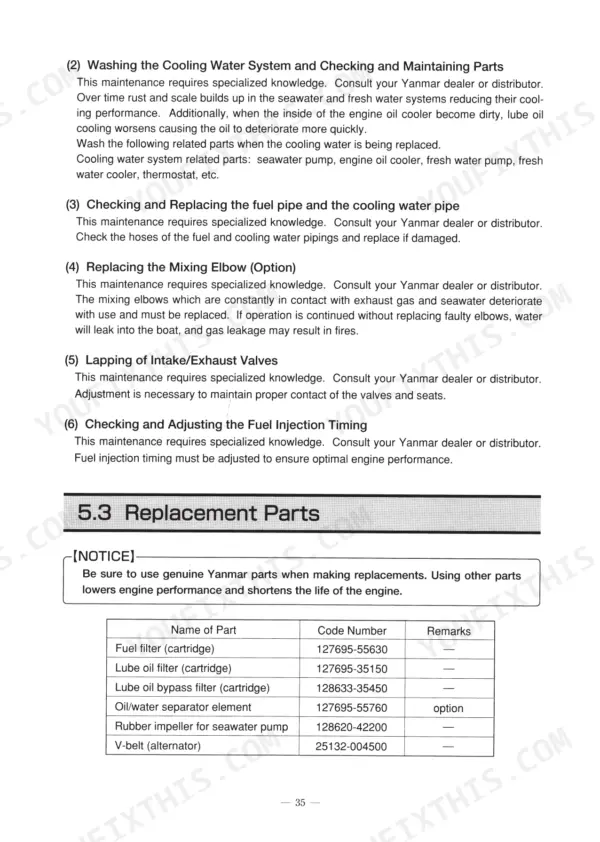
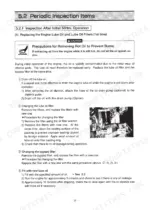
A job stalls fastest for want of one number, and this book puts the working ones on the page: fuel filter tightened to 11.8~15.7 N·m, V-belt give of 8~10 mm at the depression, seawater pump impeller replaced every 2000 hours, mixing elbow replacement on the periodic inspection list. The inspection tables run from the initial 50 hour service through the 250, 500, and 1000 hour items.
Work through it and the outcome is the one that matters: alarms checked, engine started, and gauges steady at running temperature.
Complete the set for your 6CXM-GTE2
- Repair Manual: Yanmar 6CXM-GTE, 6CXM-GTE2 Service Manual (incl. Wiring)
What's Inside This Yanmar 6CXM-GTE2 Manual
| System | Pages | Key Topics |
|---|---|---|
| Introduction | 2 | For Safe Operation, Explanation of Product, Preparation for Operation, Operation, Maintenance & Inspection, Trouble and Troubleshooting |
| For Safe Operation | 4-7 | Warnig Symbols, Safety Precautions, Location of Product Safety Labels |
| Product Explanation | 8-13 | Use & Driving System, Engine Specifications, Location of Component, Operation Equipment (Instruments) |
| Before Operation | 14-19 | Fuel Oil, Lube Oil and Cooling Water, Supplying with Fuel, Supplying Engine Lube Oil, Supplying Cooling Water, Cranking |
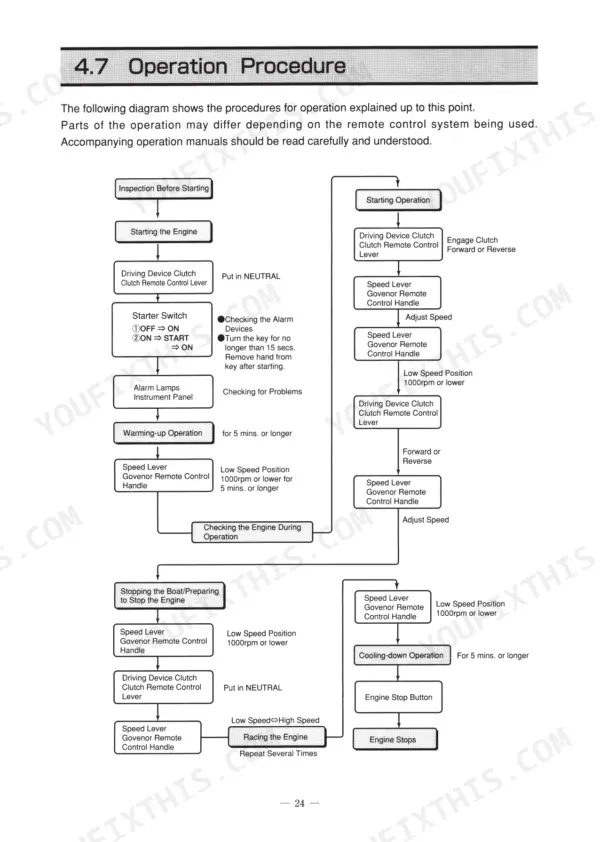
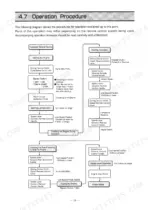
| How to Operate | 20-29 | Inspection Before Starting, Checking the Instrument Panel and Alarm Devices, Starting, Adjusting the Engine Speed, Check During Operation |
| Maintenance & Inspection | 30-38 | List of Periodic Inspections |
| Trouble and Troubleshooting | 39-44 | Simple Problems and the Appropriate Countermeasures, Consulting Your Yanmar Dealer or Distributor |
Quick Reference Specifications
| Specification | Value | Page |
|---|---|---|
| Impeller replacement interval | every 2000 hrs. | p. 37 |
| Fuel filter tightening torque | 11.8~15.7N·m (1.2~1.6kg-m) | p. 35 |
| Battery Voltage/Capacity | 12V-200 Ah | p. 9 |
| V-belt Tension Depression | 8~10 mm | p. 35 |
| Seawater Pump Impeller Replacement Interval | 2000 hrs | p. 37 |
Yanmar 6CXM-GTE2 Common Problems This Manual Covers
Corroded mixing elbow lets water back
The exhaust mixing elbow is the classic weak point on a marine Yanmar: corrosion opens a path for water to work back toward the cylinders, and hard starting or compression loss follows. This manual puts mixing elbow replacement on the periodic inspection list so it gets changed before it fails.
Manual Section: 5. Maintenance & Inspection p. 30Overheating from a worn impeller
Seawater pump impeller vanes wear and take set, seawater flow drops, and the temperature climbs on a long run. The manual sets a firm replacement interval of every 2000 hours in the periodic inspection items.
Manual Section: 5. Maintenance & Inspection p. 30Slack V-belt and a weak battery
A loose V-belt slips, the battery runs down, and cranking gets lazy long before the belt actually squeals. The inspection items give the check to do by hand: about 8~10 mm of give at the depression.
Manual Section: 5. Maintenance & Inspection p. 30Oil sprayed from the breather
Overfill the crankcase and the engine will push oil mist out of the breather in operation. The pre-operation chapter covers supplying engine lube oil and checking the level correctly before you crank.
Manual Section: 3. Before Operation p. 14Alarm sounds and nothing looks wrong
An alarm at speed is useless if you cannot tell which device tripped it. The operating chapter walks through checking the instrument panel and alarm devices before starting, so each warning can be traced to its sender instead of guessed at.
Manual Section: 4. How to Operate p. 20Hard starting or sudden power loss
When the engine cranks but will not fire, or loses power under way, the troubleshooting chapter lists simple problems with the appropriate countermeasure for each, and tells you when the fix is beyond onboard tools and it is time to call the Yanmar dealer.
Manual Section: 6. Trouble and Troubleshooting p. 39Frequently Asked Questions
Which engine does this manual cover?
The Yanmar 6CXM-GTE2 marine diesel engine. It is the factory operation manual, publication 49961-205100, in English, 45 pages, covering safe operation, product explanation, pre-operation checks, operation, maintenance and inspection, and troubleshooting.
Is this a full workshop rebuild manual?
No. This is the operation manual: fluids and supply, cranking, starting and running checks, the periodic maintenance schedule, and troubleshooting. It does not include internal rebuild data such as bearing clearances or a cylinder head torque sequence.
Does it include a maintenance schedule?
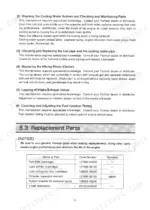
Yes. The Maintenance & Inspection section has a list of periodic inspections plus itemized procedures for the initial 50 hour service, every 50 hours, every 250 hours or 1 year, every 500 hours or 2 years, and every 1000 hours or 4 years, along with a replacement parts list. p. 30
How often is the seawater pump impeller replaced?
Every 2000 hours, per the periodic inspection items in the Maintenance & Inspection section. The same section covers the V-belt tension check (8~10 mm of give) and fuel filter service with its tightening torque of 11.8~15.7 N·m. p. 30
How quickly can I access this manual after buying?
A 45-page Operation Manual in searchable PDF format, available the moment you complete checkout. View on computer, tablet, or phone, with no shipping wait.
Can I print this manual?
Yes. Print a chapter or just the pages for the job at hand, for use in your own shop. Any home or office printer works.

Reviews
There are no reviews yet.