
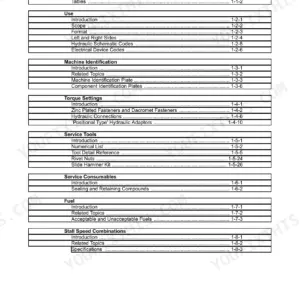
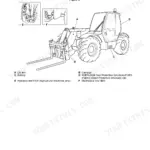
This is the full JCB factory service manual (publication 9813-0900) for the Side Engine Loadall range from the 526-56 up to the 5-tonne 550-80, taking in the 531-70, 533-105, 535-95, 536-60, 536-70 and 541-70 along the way, including the Tier engine variants. Across 2,947 pages it spans both the JCB Dieselmax Tier 3 and the later Ecomax Tier 4 engines and the PS750 powershift transmission, so one manual covers a mixed fleet of these agricultural and construction telehandlers. It carries the dealer-level diagnostics, removal and refit procedures, capacities and torque figures, and the full hydraulic and electrical schematic circuits for every section: general information, routine maintenance, the boom and body, electrics, the load-sensing hydraulics, transmission, axles, brakes, steering, engine and the CANbus electronic data systems.
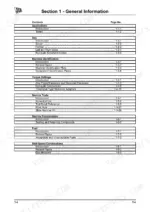
What's Inside This JCB 531-70 to 550-80 Manual
| System | Pages | Key Topics |
|---|---|---|
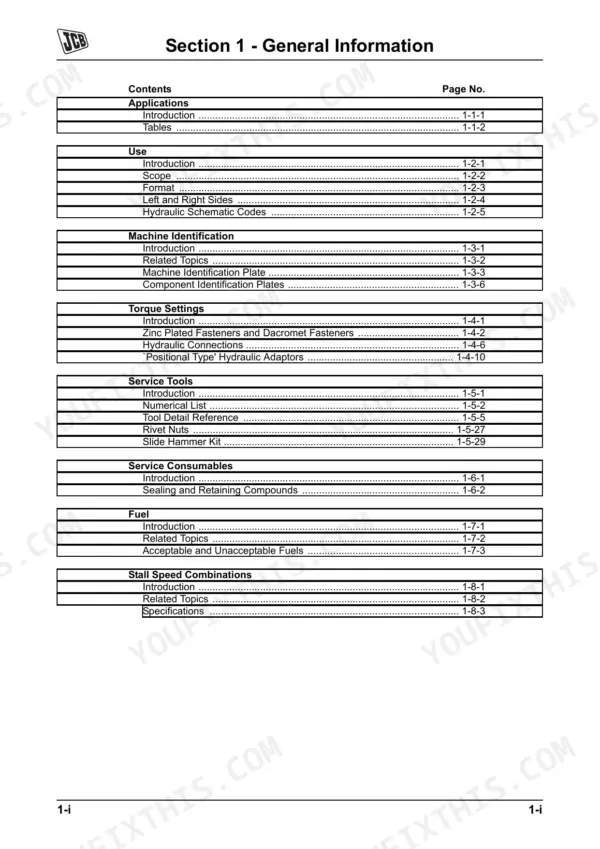
| General Information | Applications, Use, Machine Identification, Torque Settings, Service Tools, Service Consumables | |
| Care and Safety | Safety Notices, General Procedures | |
| Routine Maintenance | Service Schedules - Machines with Sd and Sf Engines, Fluids, Lubricants and Capacities, Inspection, Greasing, Electrical System, Engine Air Filter | |
| Body and Framework | Fork Carriage, Cab Heating and Ventilation System, Load Moment Indicator (Lmi) System, Fuel Tank, Boom, Stabilisers | |
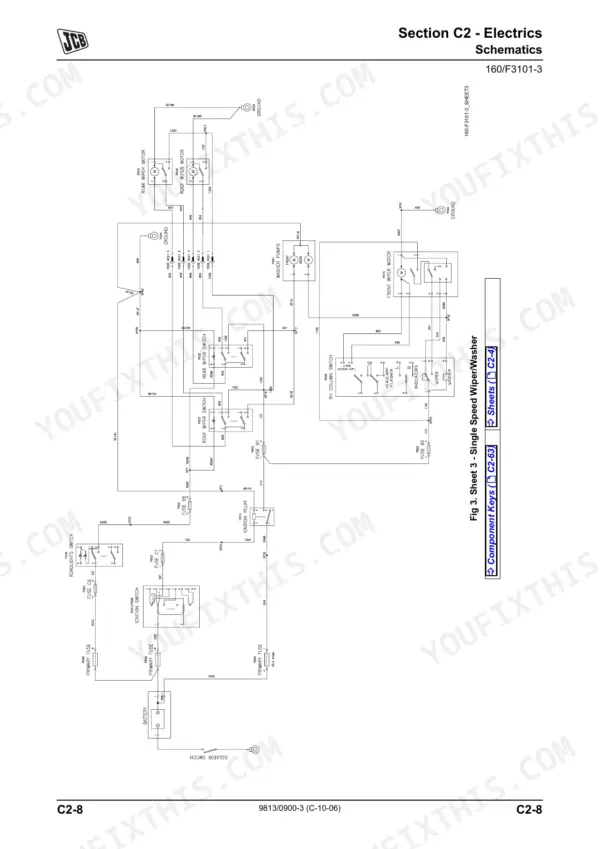
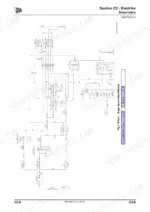
| Electrics | Fuses and Relays, Schematics, Battery Charging System, Alternator, Machine Control ECU (S1), Machine Control ECU (S2) | |
| Hydraulics | Systems and Schematics, Lsp Gearpump Hydraulic System, Smooth Ride System (SRS) Lsp, Main Pump - Variflow, Cooling Fan Motor, Lift Rams | |
| Transmission | Configuration, Wheels and Tyres, PS750 Gearbox System, Lock Up Torque Converter System, Dual Control System (S1), Torque Converter | |
| Brakes | Single Axle Service Brakes System, External Park Brake System, Park Brake Caliper, Park Brake Disc, Master Cylinder, Fluid Reservoir | |
| Steering | Steering System, Manual Steer Mode System, Auto Steer Mode System, Hydraulic Steering Unit, Power Track Rod, Steering Column | |
| Engine | Stop and Start System (Mechanical F.I. Engines), Cold Start Heater System, Starter Motor, Cooling Pack - Non Intercooled, Coolant Expansion Tank, JCB Dieselmax Engine (Mechanical F.I.) | |
| Electronic Data Systems | CANbus System, Loadall Monitoring System, Fault Code System, Servicemaster System, Electronic Control Unit Theory, Pulse Width Modulation Theory |
Quick Reference Specifications
| Specification | Value | Page |
|---|---|---|
| Models covered | 526-56, 531-70, 531-T70, 533-105, 535-95, 535-T95, 536-60, 536-70, 536-T60, 536-T70, 541-70, 541-T70, 550-80, 550-T80 | |
| Engine | JCB Dieselmax (Tier 3) and Ecomax (Tier 4) turbo-diesel | |
| Rated power | 85 kW (114 hp) on the core variant | |
| Transmission | PS750 powershift | |
| Fuel tank capacity | 148 L (32.5 UK gal) | |
| Coolant capacity | 22 L (4.4 UK gal) | |
| Hydraulic tank capacity | 115 L (25.3 UK gal) | |
| Top lift / reach | up to 5.0 t and 8 m on the 550-80 | |
| Manual pages | 2947 |
JCB 531-70 to 550-80 Common Problems This Manual Covers
Complete loss of hydraulic power to the boom or outriggers
Pressure-test the main pump and check the main control valve for an internal seal failure before anything else. A total loss of boom and outrigger power is usually a failed pump or a ruptured spool seal dumping flow internally, which the hydraulic schematic and the pump test procedure will pin down.
Manual Section: HydraulicsBoom drifts or will not hold position under load
Check the load-holding (check) valves and the telescopic cylinder seals. Boom drift is classically worn piston seals letting the cylinder leak down, or a leaking load-holding valve; the manual gives the cylinder overhaul and the valve test that separate the two.
Manual Section: HydraulicsSteering becomes heavy or fails while the hydraulic pump is still running
Check steering fluid level and condition first, then test the steering pump and priority valve. Contaminated fluid or a steering pump worn by running low is the usual cause when the steering fails but the main hydraulics still work.
Manual Section: SteeringEngine stalls after extended operation under high hydraulic load
Look for an overheating or cavitating hydraulic pump, a clogged filter or an air-intake restriction loading the engine. Check oil temperature and filter condition and confirm the cooling pack and intake are clear before suspecting the engine itself.
Manual Section: HydraulicsTelescopic boom extends unevenly or the wear pads knock
Measure the boom wear-pad clearances against spec and shim or renew the pads, and check the extend/retract chains or cylinders for the model. Uneven or knocking boom movement is usually worn wear pads rather than a hydraulic fault.
Manual Section: Body and FrameworkFrequently Asked Questions
Which JCB Loadall models does this manual cover?
The Side Engine Loadall range from the 526-56 up to the 5-tonne 550-80, including the 531-70, 533-105, 535-95, 536-60, 536-70 and 541-70 and their Tier engine variants (publication 9813-0900).
Does it cover both the older Tier 3 and the newer Tier 4 engines?
Yes. This edition spans the JCB Dieselmax Tier 3 and the later Ecomax Tier 4 engines, so it covers a mixed fleet of these Loadalls under one manual.
How do I read or reset a fault code on a 531-70 or 550-80?
The Electrics and Electronic Data Systems sections cover the CANbus diagnostics, fault-code read and reset and the fault-memory procedures for the range, so you can clear a stored code or fault memory yourself.
My boom drifts down under load. What does the manual say to check?
It points you to the load-holding valves and the telescopic cylinder seals: a leak-down test and the cylinder overhaul procedure that separate worn piston seals from a leaking load-holding valve.
Does it include wiring and hydraulic circuit diagrams?
Yes. The Electrics section carries the wiring schematics and the Hydraulics section the systems and schematic circuits, with component locations and fault-finding.
Do I get instant access to this JCB 526-56 Service Manual?
You get a 2947-page searchable PDF (486 MB) that downloads instantly after checkout. Open it on your laptop, tablet, or phone, and bring it right to the shop floor.
Does this JCB 526-56 manual allow printing?
Yes. Print the sections you need to take out to the shop for your own use. Standard letter or A4 paper works.

Reviews
There are no reviews yet.