
Part of the JCB Repair Manuals.
This is the JCB service manual for the 802.7, 803, and 804 mini excavators, publication 9803/3145, covering machines powered by the KE 103-15 IDI engine. The 250-page manual has a searchable text layer and includes the Plus and Super variants.
It is organised by system for workshop use: general information, routine maintenance, body and framework, electrics, controls, hydraulics, gearboxes, track and running gear, and engine. Each coded section starts with technical data and contents, then covers removal, dismantling, and reassembly.
Expect the figures a repair calls for: fluid capacities and torque settings, hydraulic circuit descriptions and relief valve pressures, fuel and hydraulic filter intervals, battery capacities and specific gravity, track tension clearances, and engine oil pressure and coolant data. It is the detailed reference for servicing the servo-controlled excavator, its gearboxes, and the undercarriage.
Other edition of this manual
- JCB 802.7, 803, 804 Service Manual (incl. Wiring) Original price was: $55.99.$39.99Current price is: $39.99.
What's Inside This JCB 802.7, 803, 804 Manual
| System | Pages | Key Topics |
|---|---|---|
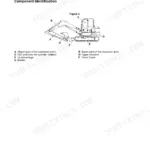
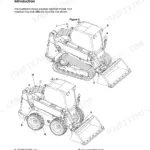
| General Information | 2-52 | Introduction, Identification, Storing your machine, Operation, Entering/exiting the cab, Cab, Opening the windscreen, Heater controls |
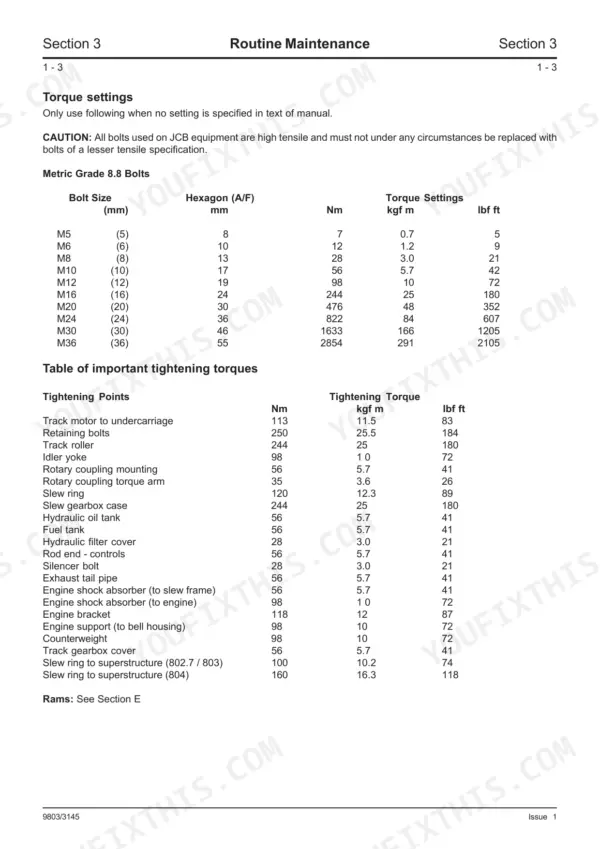
| Routine Maintenance | 53-70 | Fluids, Lubricants, Capacities and Specifications, Engine Lubrication Chart, Torque Settings, Hydraulic Fittings, Fuel Systems, Bleeding the Fuel System |
| Optional Equipment | 71 | Cab Working Lights, Double Acting Auxiliary Pipework, 3CX Hand Controller Pattern, Hose Burst Protection Valves, Radio Kit, Long, Standard or Short Dipper, Long or Short Dozer |
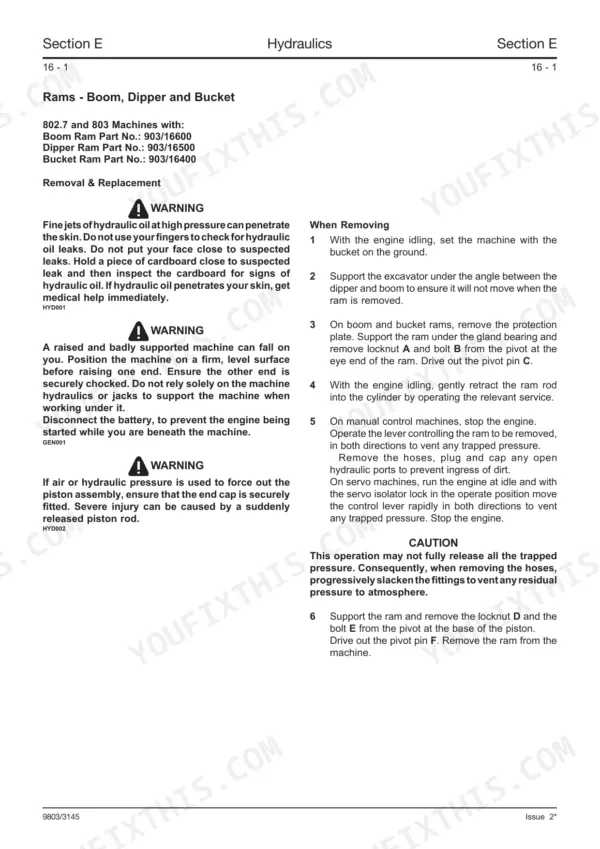
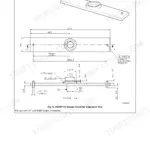
| Body & Framework | 72-84 | Bucket Linkage (Removal and Replacement), Bucket Ram Pivot and Linkage (Removal and Replacement), Dipper (Removal and Replacement), Boom (Removal and Replacement) |
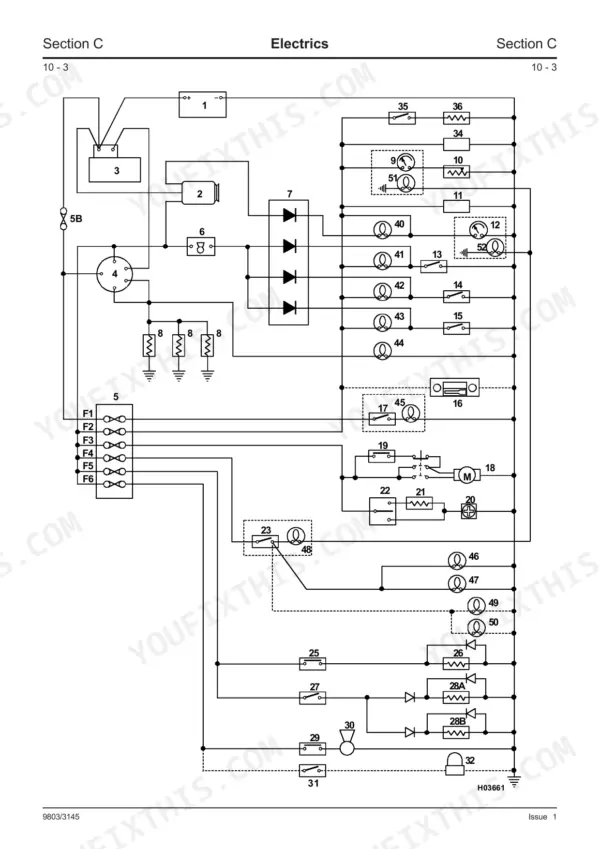
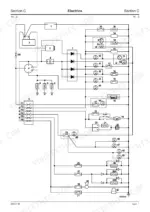
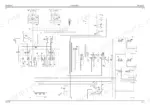
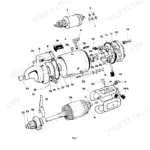
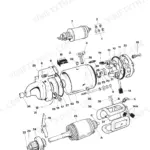
| Electrics | 85-111 | Technical Data, Battery, Fan Belt, Alternator, Starter Motor, Beacon, Circuit Diagram, Wiring Harness |
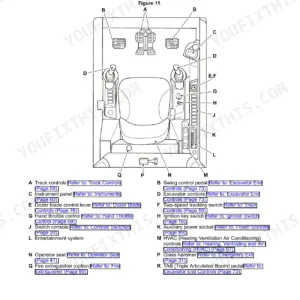
| Controls | 112-113 | Servo Hand Controllers (Description and Operation, Port Identification, Switchable ISO/SAE Mode, Changing the Excavator Control Mode), Track Levers, Dozer Lever |
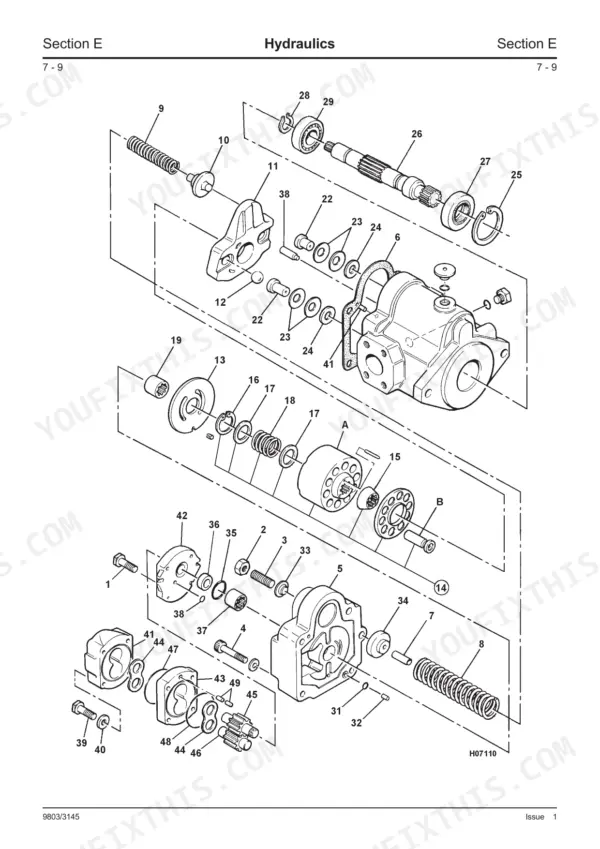
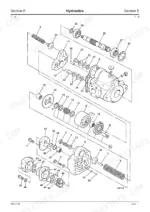
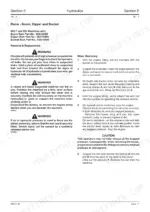
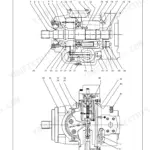
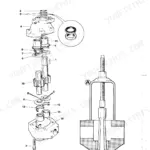
| Hydraulics | 114-185 | Technical Data, Hydraulic Circuit 802.7 / 803, Hydraulic Circuit 803 Super / 804, Servo Circuit (Description), Hydraulic System, Hydraulic Pump 802.7 / 803 (Operation) |
| Gearboxes | 186-196 | Technical Data, Track Gearbox (Operation, Check Oil Level, Drain and Refill, Removal and Replacement, Dismantling and Assembly), Slew Gearbox (Removal and Replacement) |
| Track & Running Gear | 197-211 | Tracks (Clean and Inspection, Removal and Replacement, Changing), Track Rollers (Removal and Replacement, Dismantling and Assembly) |
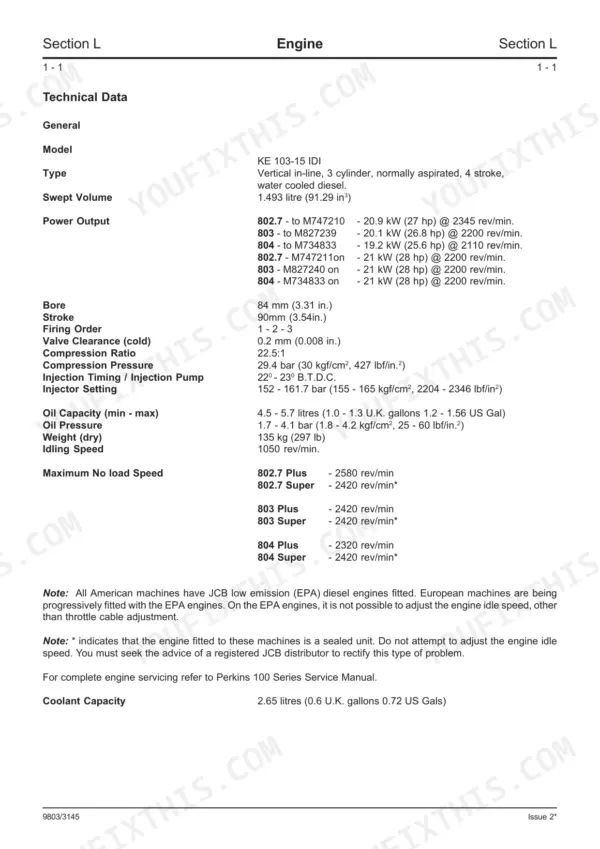
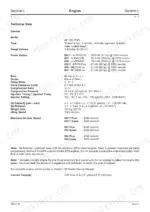
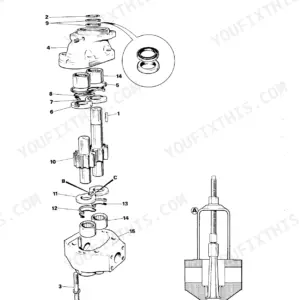
| Engine | 212-250 | Technical Data, Engine Oil Drain and Refilling, Oil Filter Renewing, Oil Cooler Removing and Fitting, Oil Pressure Relief Valve Removing and Fitting, Oil Sump |
Quick Reference Specifications
| Specification | Value | Page |
|---|---|---|
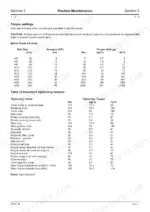
| Metric Grade 8.8 Bolt Torque (M5) | 7 Nm (5 lbf ft) | p. 56 |
| Metric Grade 8.8 Bolt Torque (M6) | 12 Nm (9 lbf ft) | p. 56 |
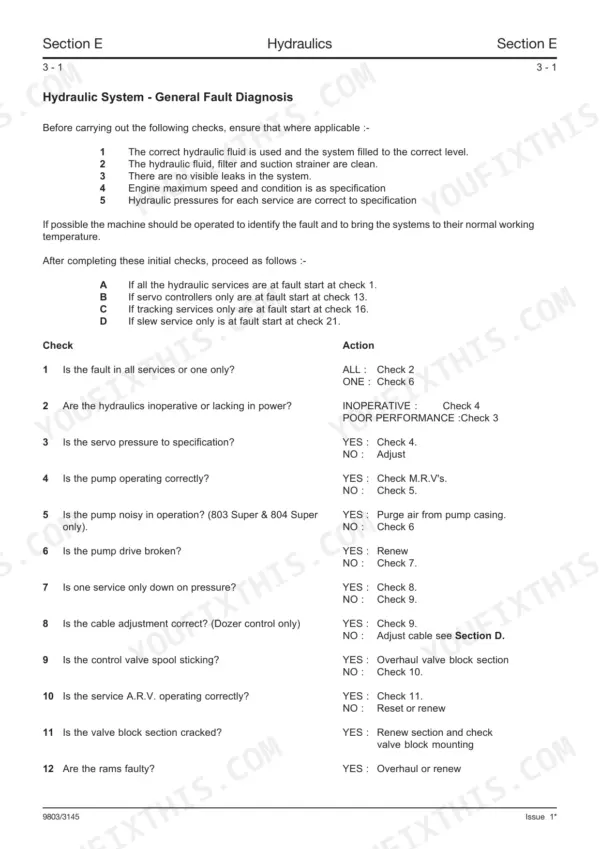
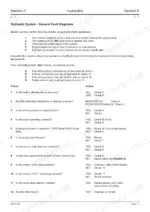
| Hydraulic Fault Troubleshooting First Step | Is the fault in all services or one only? ALL : Check 2 ONE : Check 6 | p. 124 |
| Fuel Filter Element Replacement Interval | Every 500 operating hours or 6 months whichever occurs first | p. 64 |
| Fuel Filter Canister Tightening | hand tight and then one quarter turn | p. 223 |
| Fuel Sediment Bowl Cleaning Interval | Every 50 operating hours or weekly whichever occurs first | p. 63 |
| Fan Belt Deflection | 5 mm (0.2 in) with approximately 10 N (1 kgf, 0.51 lbf) force | p. 88 |
| Fan Belt Adjustment Interval | Every 50 operating hours or weekly whichever occurs first | p. 63 |
| Battery Voltage | 12V | p. 86 |
| Battery Capacity (Wet charged) | 75 ampere/hour | p. 86 |
| Hydraulic Fluid Return Filter Element Replacement Interval | Every 500 operating hours or 6 months whichever occurs first | p. 64 |
JCB 802.7, 803, 804 Common Problems This Manual Covers
Hard starting from air in the fuel
A machine that cranks but will not start after several attempts usually has air in the fuel system. The routine maintenance chapter covers bleeding the fuel system to restore fuel delivery.
Manual Section: Routine Maintenance p. 53Oil pressure warning stays on
An oil pressure warning that remains lit during or after starting can mean low oil level or a lubrication fault. The engine chapter gives the engine oil pressure range and covers the starting sequence that clears the light.
Manual Section: Engine p. 212Fan belt tension damages the timing cover
Incorrect fan belt tension can lead to timing case cover damage as well as overheating and noise. The electrics chapter covers the fan belt and its correct deflection.
Manual Section: Electrics p. 85Weak or erratic hydraulics
Hydraulic functions that are weak, erratic, or dead usually trace to low or contaminated oil, air in the system, or a machine that has not warmed up. The hydraulics chapter gives the circuit and relief valve data for diagnosis.
Manual Section: Hydraulics p. 114Poor tracking or undercarriage wear
Poor tracking or abnormal wear points to incorrect track tension or worn running gear. The track and running gear chapter covers track cleaning, inspection, tension, and replacement.
Manual Section: Track & Running Gear p. 197Power loss from a clogged fuel filter
A partially blocked fuel filter or dirty sediment bowl restricts fuel and drops power under load. The routine maintenance chapter sets the fuel filter and sediment bowl service intervals.
Manual Section: Routine Maintenance p. 53Frequently Asked Questions
Which machines does this manual cover?
It is the service manual for the JCB 802.7, 803, and 804 mini excavators, powered by the KE 103-15 IDI engine, under publication 9803/3145.
Are torque settings included?
Yes. The routine maintenance chapter lists the metric grade 8.8 bolt torque table along with cylinder head and connecting rod torque values. p. 53
Does it cover engine specifications?
Yes. The engine chapter covers the KE 103-15 IDI engine, including oil pressure range, coolant capacity, and engine service procedures. p. 212
How do I get the manual?
The PDF downloads immediately after checkout, so you get instant access and keep your own copy with no shipping.
What do I get after purchasing this Jcb 802.7 manual?
Yes. You download the full 250-page searchable Service Manual right away and open it on any device — PC, tablet, or phone — with a standard PDF reader.
Can I print a copy of this Jcb 802.7 Service Manual for the shop?
You can. Print the sections you want for your own use and keep the file as your backup.
Does this Jcb 802.7 Service Manual cover the hydraulic system?
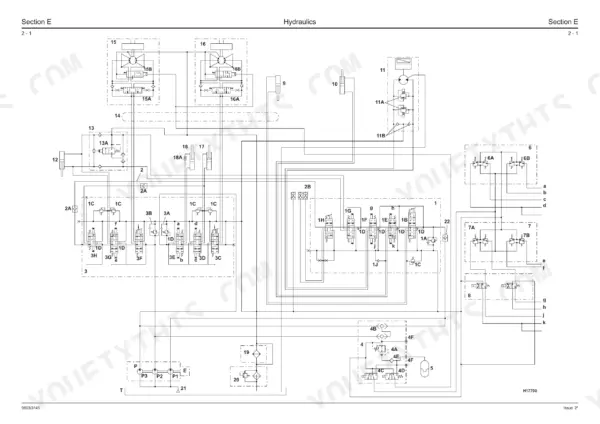
Yes. The hydraulic schematics map every circuit, control valve, and component spec for the 802.7/803 and 803 Super/804 variants.

Reviews
There are no reviews yet.