
This 428-page New Holland Rustler Service Manual covers both the Rustler 125 Gasoline and Rustler 120 Diesel utility vehicles from the 2010 lineup, gasoline and diesel drivetrains side by side so you're never flipping between two books. Inside you get separate wiring diagrams for each electrical system, full test procedures for starters, relays, and sensors, exploded views of the differentials and transmission, and a troubleshooting guide built for chasing no-start and no-charge complaints instead of guessing. Set the front brake caliper mounting bolts to 36 ft-lb (49 N-m) and the banjo bolt to 13 ft-lb (18 N-m); rear calipers use the same 36 ft-lb spec. Your multimeter and a wiring diagram beat swapping parts on a hunch every time. Bookmarked by system, so you jump straight from brake service to differential teardown without hunting through 400 pages by hand.
What's Inside This New Holland Rustler 120 & 125 Manual
| System | Pages | Key Topics |
|---|---|---|
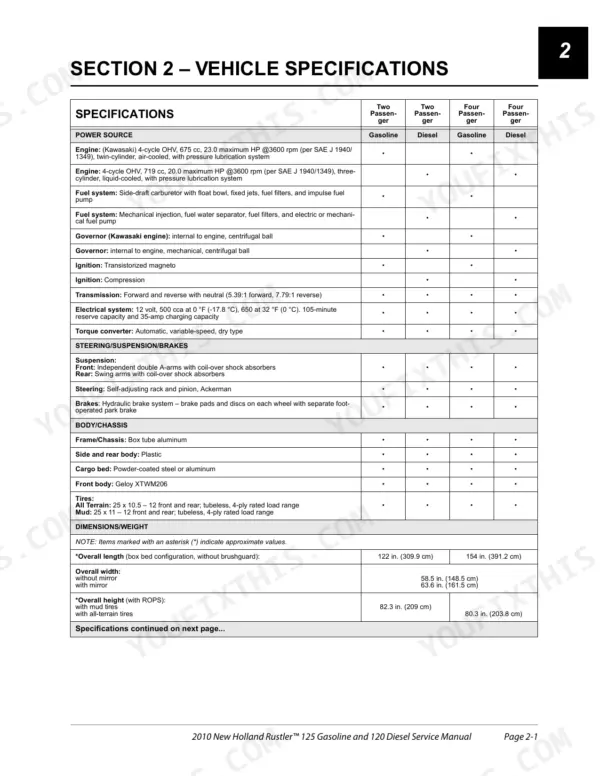
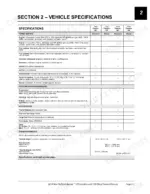
| Vehicle Specifications | Power Source, Steering/Suspension/Brakes, Body/Chassis, Dimensions/Weight, Liquid Capacities, Tire Pressure | |
| General Information | Model Identification, Identification Numbers, Storage, Preparing for Extended Storage, Returning to Service, Using a Booster Battery | |
| Body and Trim | Cleaning the Vehicle, Seat Cleaning, Front Body Repair, Roll-Over Protective Structure (ROPS), Seat Removal/Installation, Cargo Bed | |
| Accelerator and Brake Pedal Assemblies | Accelerator Pedal Removal/Installation/Adjustment, Brake Pedal Removal/Installation/Adjustment, Park Brake Pedal Assembly | |
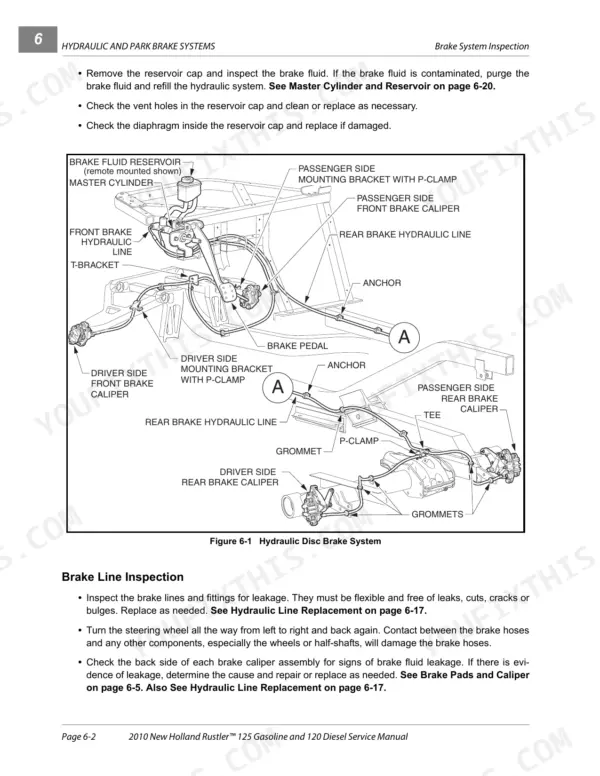
| Hydraulic and Park Brake Systems | Brake System Inspection, Brake System Troubleshooting, Brake Pads and Caliper, Brake Disc and Hub, Hydraulic Line Replacement, Master Cylinder and Reservoir | |
| Steering and Front Suspension | Steering Wheel, Steering Column, Rack and Pinion, Front Suspension, Wheel Alignment, Front Suspension Components, Front Coil-Over Shock Absorber | |
| Wheels and Tires | General Information, Wheels Removal/Installation, Tire Removal/Installation, Tire Pressure | |
| Rear Suspension | Rear Coil-Over Shock Absorber, Swing Arms Removal/Installation | |
| Periodic Maintenance | Periodic Service Schedule, Periodic Lubrication Schedule, Engine Oil, Spark Plugs, Gearcase Lubrication, Engine Coolant, Fueling Instructions, Battery | |
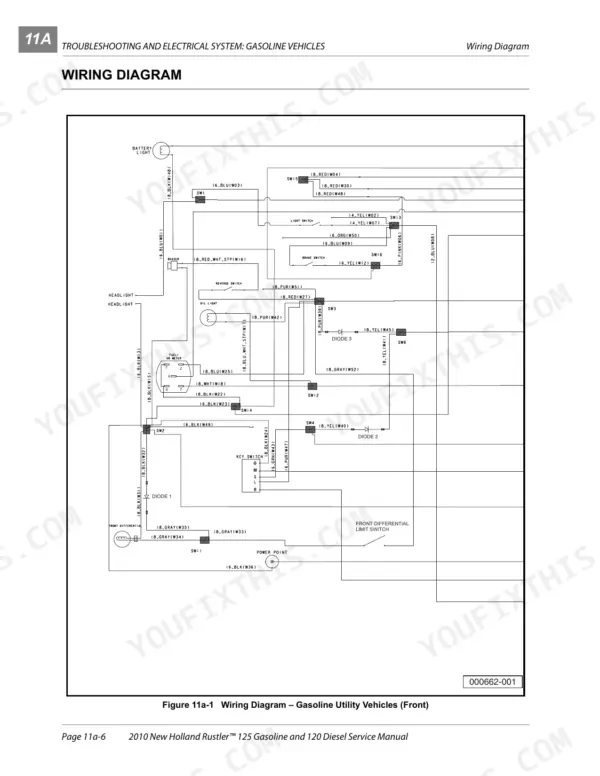
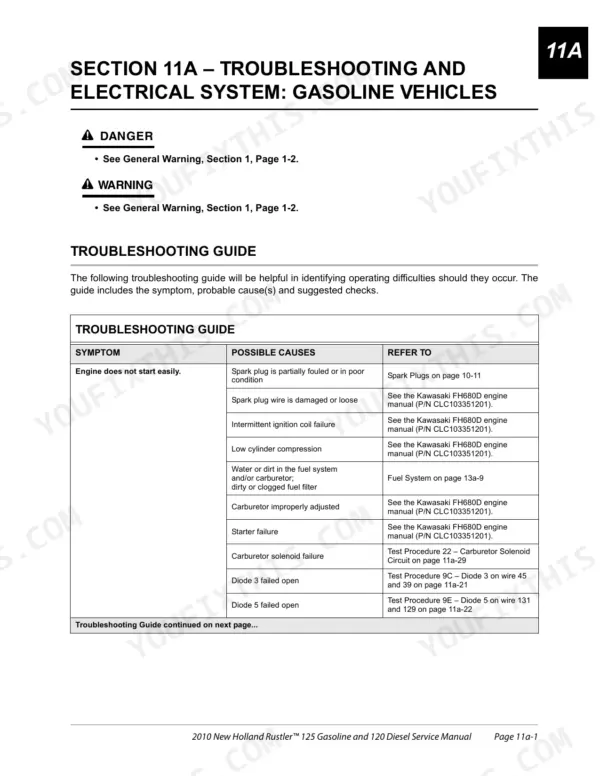
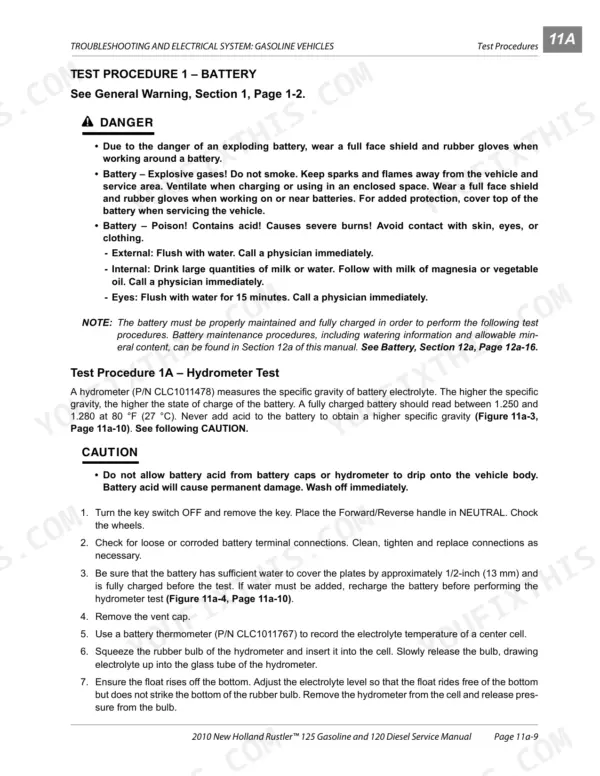
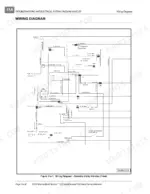
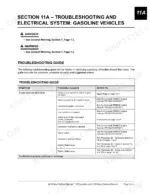
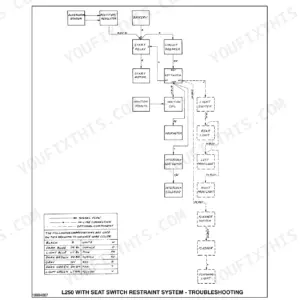
| Troubleshooting and Electrical System: Gasoline Vehicles | Troubleshooting Guide, Wiring Diagram, Test Procedures (Battery, Fuse, Key Switch, Relays, Diodes, Switches, Coils, Sensors, Lights, Bed Lift) | |
| Troubleshooting and Electrical System: Diesel Vehicles | Troubleshooting Guide, Wiring Diagram, Test Procedures (Battery, Fuse, Key Switch, Relays, Diodes, Switches, Coils, Sensors, Lights, Bed Lift) | |
| Electrical Components: Gasoline Vehicles | Starter and Starter Solenoid, Relays, Neutral Switch, Carburetor Solenoid, Voltage Regulator, Warning Lights, Battery | |
| Electrical Components: Diesel Vehicles | Starter and Starter Solenoid, Relays, Neutral Switch, Fuel Solenoid, 60-Amp Fusible Link, Warning Lights, Battery | |
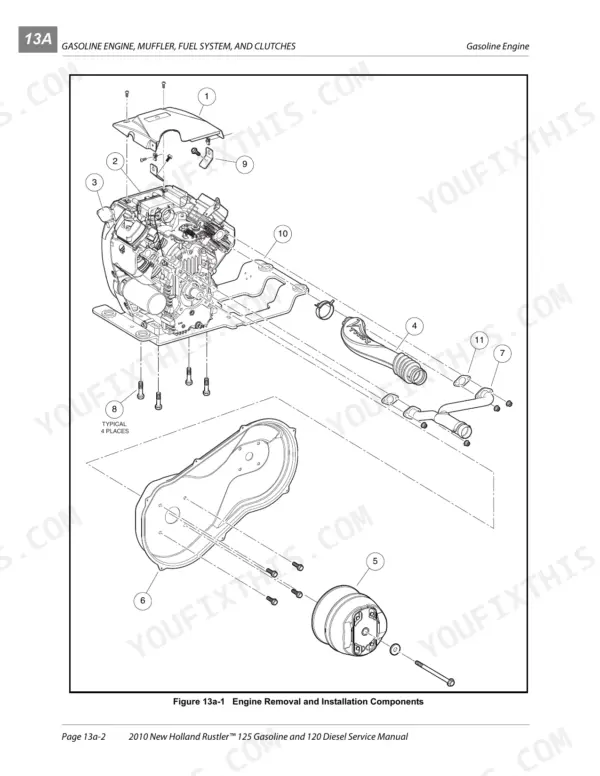
| Gasoline Engine, Muffler, Fuel System, and Clutches | Gasoline Engine Removal/Installation, Exhaust System, Fuel System, Engine Control Linkages, Air Intake System, Clutches | |
| Diesel Engine, Muffler, Fuel System, and Clutches | Diesel Engine Removal/Installation, Exhaust System, Fuel System, Engine Control Linkages, Air Intake System, Clutches | |
| Drivetrain Components | Half Shafts, Front Differential, Front Driveshaft, Rear Receiver Hitch, Rear Axle, Rear Driveshaft, Transmission, Rear Differential and Axle Shafts | |
| Radiator and Coolant System (Diesel) | Engine Coolant Level Check, Engine Coolant Change, Coolant Reservoir, Radiator, Coolant Pipe Weldment, Fan | |
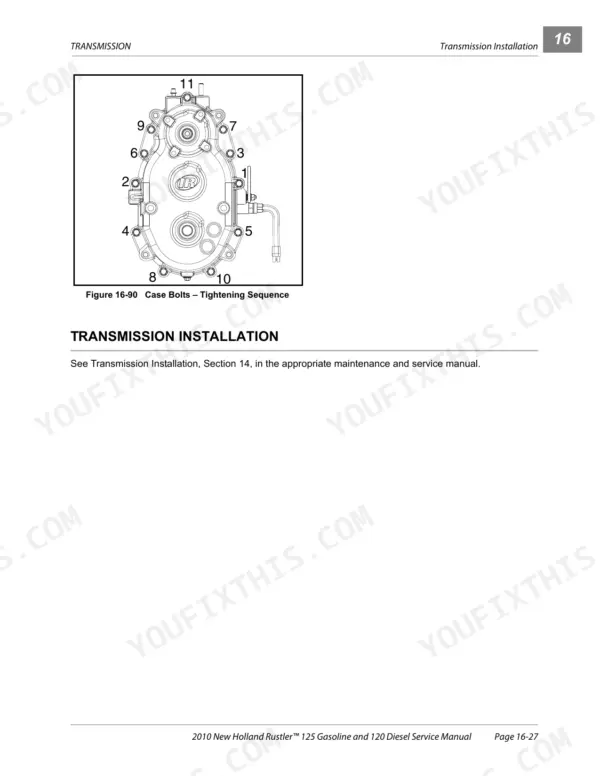
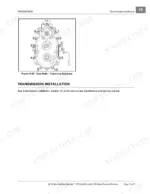
| Transmission | Service Fixture, Transmission Removal/Disassembly/Assembly, Input Shaft Disassembly/Assembly, Intermediate Shaft Disassembly/Assembly, Output Shaft Disassembly/Assembly | |
| Front Differential | Axle Half Shaft Removal, Front Differential Removal/Disassembly/Assembly/Installation, Coil and Output Cover, Clutch and Ring Gear Disassembly/Assembly, Backlash Adjustment | |
| Rear Differential | Axle Shafts and Differential Removal, Rear Differential Disassembly/Assembly, Pinion Gear Removal/Installation, Ring Gear Removal/Installation, Clutch Carrier, Rear Wheel Bearings |
Quick Reference Specifications
| Specification | Value | Page |
|---|---|---|
| All Models | ||
| Front brake caliper mounting bolts torque | 36 ft-lb (49 N·m) | p. 57 |
| Front brake line to caliper banjo bolt torque | 13 ft-lb (18 N·m) | p. 57 |
| Air filter replacement part number | P/N CLC102498601 | p. 278 |
| Recommended battery part number | P/N CLC103496801 | p. 225 |
| Recommended battery cranking amp rating at 32 °F (0 °C) | 650 cranking amp | p. 225 |
| Governed RPM | 3825 | p. 20 |
| Forward Speed | 25 mph (40 km/h) | p. 20 |
| Tire Pressure (All-terrain/Mud) | 20 - 22 psi | p. 20 |
| New Holland Rustler 120 Diesel | ||
| Diesel fuel filter replacement part number | P/N CLC102703401 | p. 305 |
| Rustler™ 125 Gasoline, New Holland Rustler 125 Gasoline | ||
| Engine (Kawasaki) Maximum HP | 23.0 HP @3600 rpm | p. 19 |
| Rustler™ 120 Diesel, New Holland Rustler 120 Diesel | ||
| Engine (4-cycle OHV, 719 cc) Maximum HP | 20.0 HP @3600 rpm | p. 19 |
New Holland Rustler 120 & 125 Common Problems This Manual Covers
New Holland Rustler 120 Diesel overheats and derates under load after baling in dusty fields
Shut the engine down and let it cool before opening the hood. Inspect the radiator fins for chaff and dirt packed between the coils; blow them out from the back side with low pressure air. If the core is crushed or leaking, replace it per the instructions on page 354, since crushed coils restrict coolant flow and won't clear with cleaning alone.
Manual Section: Radiator and Coolant System (Diesel) p. 354Won't crank or cranks slowly in cold mornings even though the battery seems charged
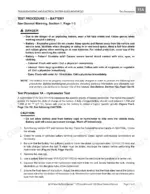
Pull the battery and load test it against spec on page 225: it should hold 650 cranking amps at 32°F (0°C) and 500 CCA at 0°F (-17.8°C) with a 105 minute reserve capacity. If it falls short on a load tester, replace it with the OEM unit, part number CLC103496801, sized 8-1/4 in W x 6-1/2 in D x 7-1/4 in H. Also clean and re-torque both ground cable terminals before condemning the starter.
Manual Section: A – Electrical Components: Gasoline Vehicles p. 225Bogs down and loses power hauling heavy loads in high range on grades
Drain a sample from the water separator bowl first and check for contamination or water mixed in the fuel. Replace the diesel fuel filter, part number CLC102703401 on page 305, and prime the system before restart. Also check the air filter for restriction; a clogged element on the intake side will mimic the same power loss symptom under load.
Manual Section: B – Diesel Engine, Muffler, Fuel System, and Clutches p. 305Rough idle and RPM hunting or redlining right after a carburetor swap
Verify the choke linkage and throttle cable are seated correctly and not binding at idle; a misadjusted linkage after reinstall will cause hunting. Follow the rough running checks, confirm float bowl level is correct, and set idle speed to spec before touching the mixture screw. Recheck spark plug gap while the carburetor is off for access.
Manual Section: Troubleshooting Guide (Gasoline Vehicles)Bed lift moves jerky or won't raise the cargo bed fully under load
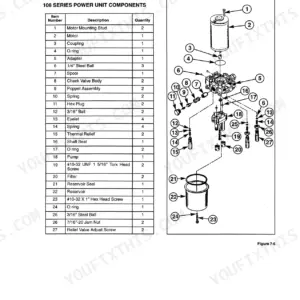
Check hydraulic fluid level at the reservoir first, since a low or aerated supply causes jerky, uneven lift motion. Run the bed lift motor and switch checks starting, testing motor current draw and switch continuity. Inspect the lift ram for external leaks at the rod seal before condemning the pump or motor.
Manual Section: Troubleshooting Guide (Gasoline Vehicles)Brake pedal feels spongy or pulsates when stopping on pavement
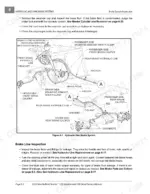
Check brake fluid level and condition at the reservoir; this system requires DOT 5 silicone fluid per page 53, and mixing in DOT 3 or DOT 4 will cause a soft, spongy pedal. Bleed the lines to remove trapped air, then torque the caliper mounting bolts to 36 ft-lb (49 N·m) and the banjo bolt to 13 ft-lb (18 N·m) on reassembly. Inspect the rotor for warping if the pedal pulsates under braking.
Manual Section: Hydraulic and Park Brake Systems p. 53Frequently Asked Questions
What are the torque specs for the engine mounts on a New Holland Rustler 120 diesel?
For the New Holland Rustler 120 diesel, the engine mounting bolts and washers should be tightened to 21 ft-lb (28.5 N·m). p. 344
What are the torque specs for the brake caliper bolts on a New Holland Rustler 125?
The lock-patch bolts securing the front and rear brake calipers to the upright or axle tube should be tightened to 36 ft-lb (49 N·m). Additionally, the banjo bolt securing the brake line to the caliper should be tightened to 13 ft-lb (18 N·m). p. 57
What is the engine oil capacity for a New Holland Rustler 125 gasoline vehicle?
The Kawasaki gasoline engine crankcase with filter requires 1 quart and 19 ounces (1.5 L) of SAE 10W-30, API classification SJ oil per change. p. 19
What is the lubricant capacity for the front differential of a New Holland Rustler?
The front differential requires 5 ounces (150 mL) of Mobil 424, Exxon Hydraul 560, or Esso Hydraul 56 lubricant. p. 19
What format is this New Holland Rustler™ 125 Gasoline?
Instant PDF download. You get the full 428-page searchable Service Manual immediately after payment. Open it on your laptop, tablet, or phone right in the shop.
Can I print specific sections of this New Holland Rustler™ 125 Gasoline?
Yes. Print the sections you need to take out to the shop for your own use. Standard letter or A4 paper works.
Are there wiring harness diagrams in this New Holland Rustler™ 125 Gasoline?
Yes, full electrical schematics are included with wire colors, connector locations, and circuit descriptions.

Reviews
There are no reviews yet.