

Part of the Yanmar Repair Manuals.
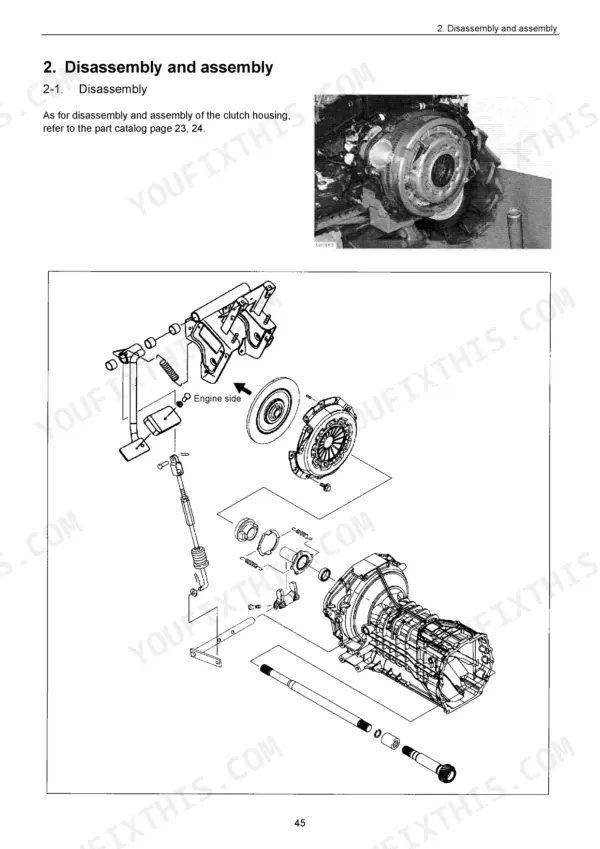
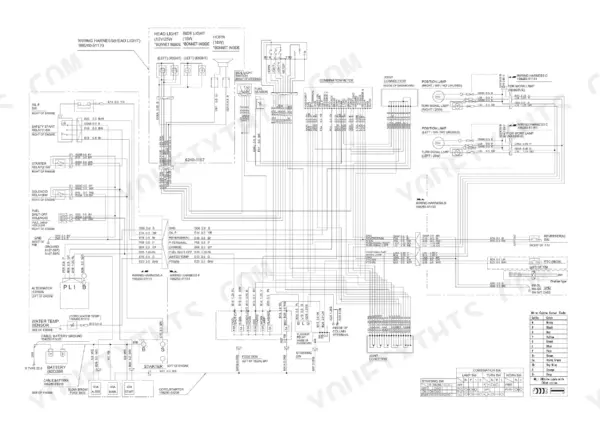
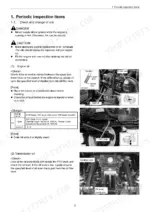
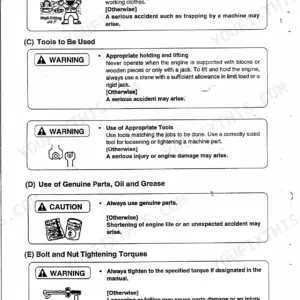
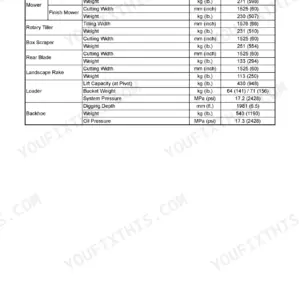
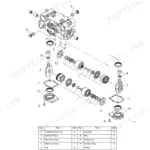
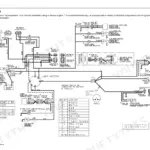
All 149 pages of this Yanmar EF-312T, EF-352T Technical Manual PDF (OEM #0B040-G00100, 2007 edition) focus on the two diesel tractor variants, walking through rough component disassembly, clutch, transmission, front and rear axle, power steering, and the hydraulic lift unit. You get wiring diagrams covering the engine start, charging, fuel, alarm, and safety circuits, plus hydraulic circuit schematics and a full set of exploded views across every major assembly. Inside: step-by-step disassembly and assembly procedures for all ten systems, periodic inspection tables with service intervals, and fluid capacity data. Change the fuel strainer at 500 hours (then every 500 thereafter), swap the air cleaner element yearly or every 300 hours, and torque M6 bolts to 4.90-6.86 N·m. Your machine is down and the dealer wants three days. Download this PDF, jump to any system with the built-in bookmarks, and get back to wrenching.
What's Inside This Yanmar EF312T, EF352T Manual
| System | Pages | Key Topics |
|---|---|---|
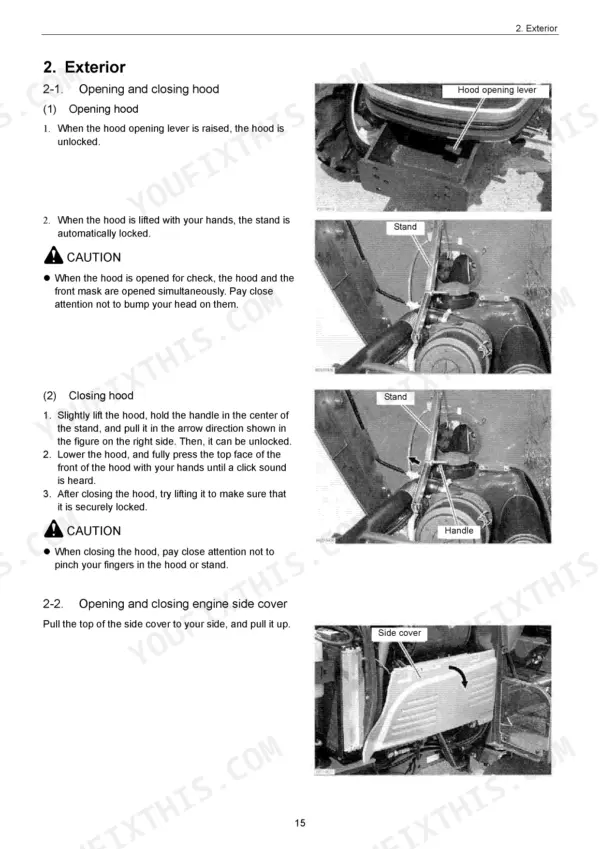
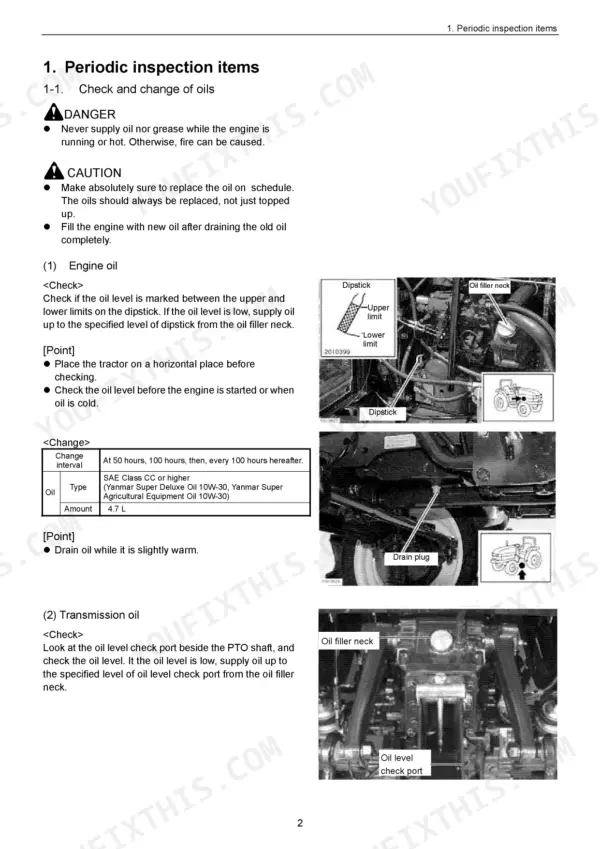
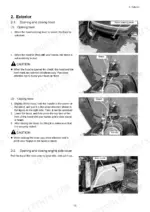
| I Rough Disassembly of Components | 23-46 | Periodic Inspection Items, Exterior, Clutch Housing, Disassembly of Floor, Front Axle Assembly, Rear Axle Assembly, Hydraulic Cylinder Case |
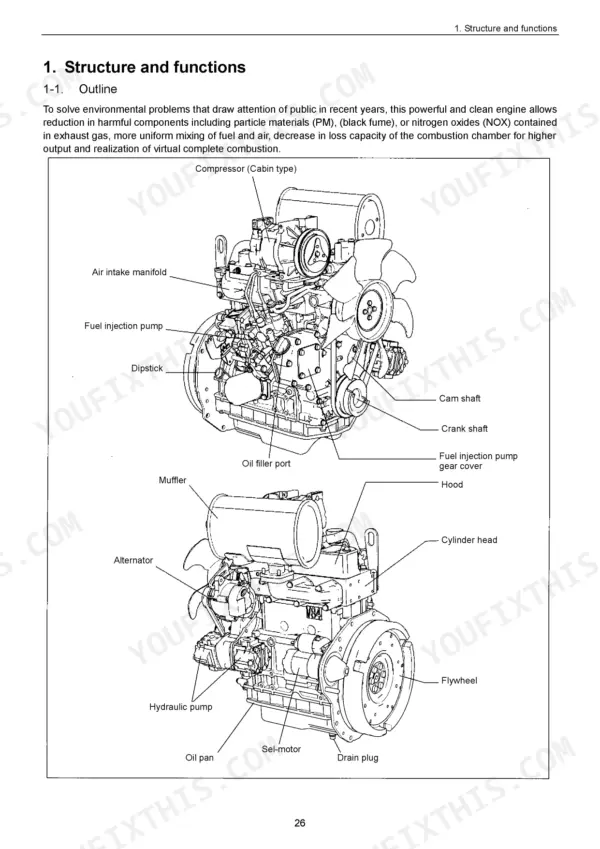
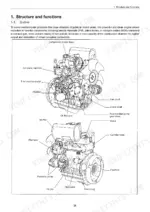
| Ii Engine | 47-64 | Structure and Functions, Removal of the Fuel Injection Pump |
| Iii Clutch | 65-70 | Structure and Functions, Disassembly and Assembly, Check and Adjustment |
| Iv Transmission | 71-80 | Structure and Functions, Check and Adjustment |
| V Front Axle | 81-86 | Structure and Functions, Disassembly and Assembly |
| Vi Rear Axle and Brake | 87-94 | Structure and Functions, Disassembly and Assembly |
| Vii Power Steering | 95-100 | Structure and Functions, Check and Adjustment |
| Viii Hydraulic Lift Unit | 101-116 | Structure and Functions, Check and Adjustment |
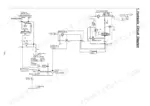
| Ix Electric Equipment | 117-144 | Engine Start Circuit, Charging Circuit, Fuel Circuit, Alarm Circuit, Safety Circuit |
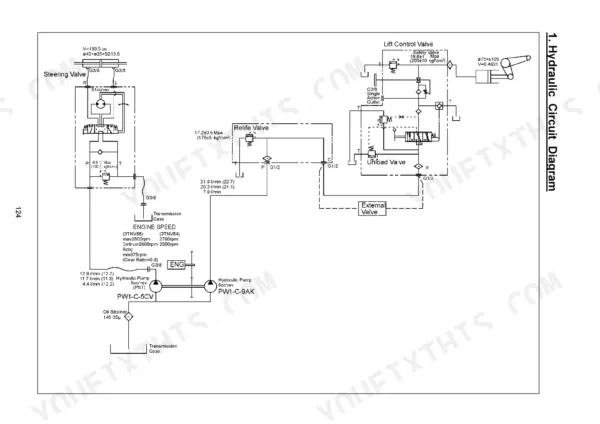
| X Appendixes | 145-149 | Hydraulic Circuit Diagram |
Quick Reference Specifications
| Specification | Value | Page |
|---|---|---|
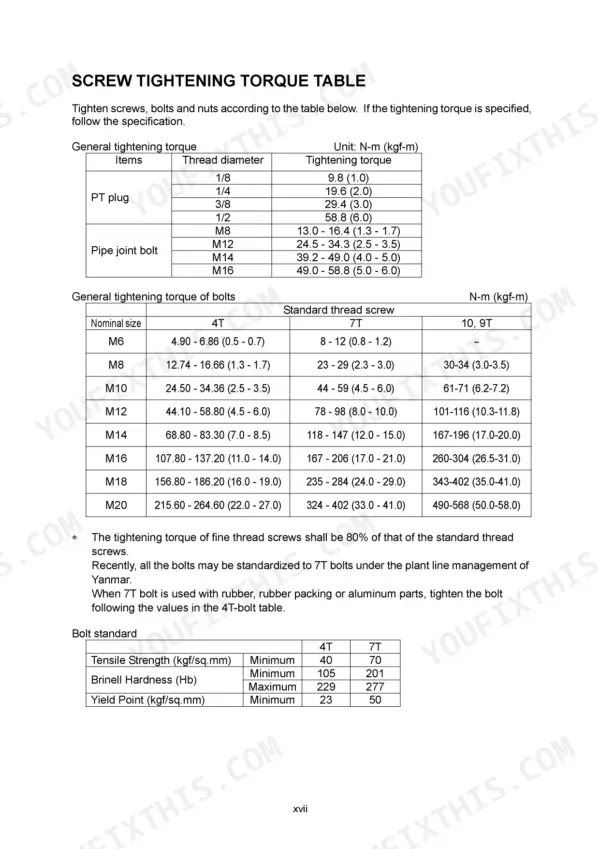
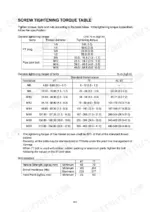
| General tightening torque of bolts (M6) | 4.90 - 6.86 N·m (0.5 - 0.7 kgf·m) | p. 19 |
| Fuel strainer element replacement interval | At 500 hours, then, every 500 hours hereafter | p. 26 |
| Battery charging current and time | Approximately 3 amperes for 8 to 10 hours | p. 29 |
| Air cleaner element replacement interval | Every year | p. 18 |
| Hydraulic line filter filtration | From 145 to 35 µ | p. 103 |
| Radiator screen cleaning interval | Every year | p. 18 |
| Thermostat valve opening temperature | 71°C | p. 56 |
| Starter motor continuity test (Terminal M - Terminal S) | Continuity | p. 121 |
| Fuel cut solenoid continuity ([2] - [1]) | Approx. 24Ω | p. 130 |
| Coolant temperature sensor resistance (at 80°C) | 118 ± 6Ω | p. 135 |
| Engine Oil Capacity | 4.7 L | p. 24 |
| Transmission Oil Capacity | 25.0 L | p. 24 |
Yanmar EF312T, EF352T Common Problems This Manual Covers
Engine overheats under load, temperature warning lamp comes on
Stop the machine and let it cool. Check radiator coolant level first — capacity is 4.4 L (page 27). Remove and clean the radiator screen; the schedule calls for cleaning every 50 hours and replacement annually (page 18). If coolant level and airflow are fine, suspect the thermostat: it should begin opening at 71°C (page 56). Verify the coolant temperature sensor reads 118 ± 6Ω at 80°C (page 135) before replacing the thermostat, so you are not chasing a gauge fault.
Manual Section: Ii Engine p. 56Hydraulic lift is slow to raise, drops under load, or stops responding
Verify the hydraulic fluid level in the transmission case — capacity is 25.0 L (page 24). Inspect the line filter rated 145 to 35 µ (page 103); a plugged filter starves the pump before any other symptom appears. If flow and level are good, check position feedback link adjustment on page 115 before pulling the pump. Internal wear or a stuck relief valve will require full disassembly of the hydraulic lift unit starting on page 101.
Manual Section: Viii Hydraulic Lift Unit p. 103Power steering feels heavy, wanders, or requires excessive wheel effort
Check the power steering fluid level and condition first. Then inspect the strainer for clogging. Connect a pressure gauge and verify relief pressure is 9.8 ± 0.5 MPa (page 100); low pressure points to a worn pump or mis-set relief valve. If pressure is correct but steering still feels heavy, the troubleshooting chart on page 100 covers O-ring failure inside the cylinder and steering wheel engagement faults.
Manual Section: Vii Power Steering p. 100Wet disc brakes feel spongy, uneven, or require excessive pedal travel
Measure brake pedal free play on both pedals — spec is 25 to 35 mm (page 32). If one pedal is out of range, adjust per the procedure on page 32 and re-check that both sides lock at the same time when the pedals are coupled. Contaminated brake fluid or glazed discs will require disassembly of the rear axle and brake assembly starting on page 87.
Manual Section: Vi Rear Axle and Brake p. 32Fuel system causes loss of power or stalls after running fine at startup
Replace the fuel strainer element at 500-hour intervals (page 26) — a partially clogged strainer passes enough fuel at idle but starves the injector pump under load. Confirm the fuel cut solenoid circuit is not intermittently dropping out by checking solenoid coil resistance at approx. 24Ω (page 130). If the engine surges or hunts at governed speed, check the fuel injection pump linkage and governor per the engine section starting on page 47.
Manual Section: Ii Engine p. 47Frequently Asked Questions
What are the torque specs for a YANMAR EF-312T / EF-352T head bolts?
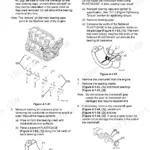
The tightening torque for the head bolts on the YANMAR EF-312T / EF-352T is 85.3 - 91.1 N·m (8.7 - 9.3 kgf·m). This specification applies to head bolts with a thread diameter of M10 x 1.25.
What are the torque specs for wheel nuts on a YANMAR EF-312T / EF-352T?
For the YANMAR EF-312T / EF-352T, the tightening torque for front wheel mounting bolts is 118-147 N·m (12-15 kgf·m). For rear wheel mounting bolts, the torque specification is 177-196 N·m (18-20 kgf·m).
What are the replacement specifications for Fuel filter?
The fuel filter on the YANMAR EF-312T / EF-352T should be replaced every 200 hours as part of the periodical service. This is a scheduled maintenance item to ensure proper operation of the machine.
How do you fix yanmar EF-312T / EF-352T engine won’t crank or cranks slowly in cold weather?
Check battery voltage and inspect terminals for corrosion — clean and tighten before condemning the starter. If the battery is low, charge at approximately 3 amperes for 8 to 10 hours (page 29). Then verify the fuel cut solenoid energizes on key-on: measure resistance between terminals [2] and [1], spec is approx. 24Ω (page 130). Walk the start circuit diagnostics on pages 121-122 to isolate whether the fault is the starter relay, safety start relay, PTO switch, or reverser switch. p. 121
What do I get after purchasing this Yanmar EF-312T manual?
Immediate download of the complete 149-page searchable Technical Manual. Access it on any device, from a laptop at your desk to a phone in the field.
Can I print pages of this manual for my own shop?
Yes. Many buyers print one chapter at a time for their own shop and keep the rest on a tablet.
Are hydraulic diagrams part of this Yanmar EF-312T Technical Manual?
Yes. The manual includes a hydraulic system diagram covering the main circuits.


Reviews
There are no reviews yet.