
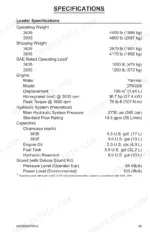
For two Gehl skid-steer loaders, rated operating load, service intervals and the safety interlock system are settled by one source: the 82-page Gehl SL3635, SL3935 operator manual PDF, publication 908268/BP0904. Controls and safety equipment take up a solid share of the book, followed by engine starting, operation, attachment hookup, transport guidance and troubleshooting split across the electrical system, engine and hydrostatic drive. A maintenance schedule lists the air cleaner, hydraulic oil, cooling system, chaincases, spark arrestor muffler and fuel filter, while a materials density table lets you check whether a bucket of clay or gravel stays inside your machine's rated capacity. Hold the SL3635 to 1050 lb (476 kg) SAE rated operating load and the SL3935 to 1260 lb (572 kg); seat a new oil filter 3/4 of a turn past gasket contact. A filter change stalls on one forgotten number. Bookmarked and text-searchable, the PDF prints clean, so schedule pages can sit on the bench and take the grease.
What's Inside This Gehl SL3635, SL3935 Operator Manual
| System | Pages | Key Topics |
|---|---|---|
| Introduction | 4-8 | Operating Plan, Safety Chapter, Manual Storage Box, Attachments, Service Parts |
| Safety | 9-18 | Potential Hazards |
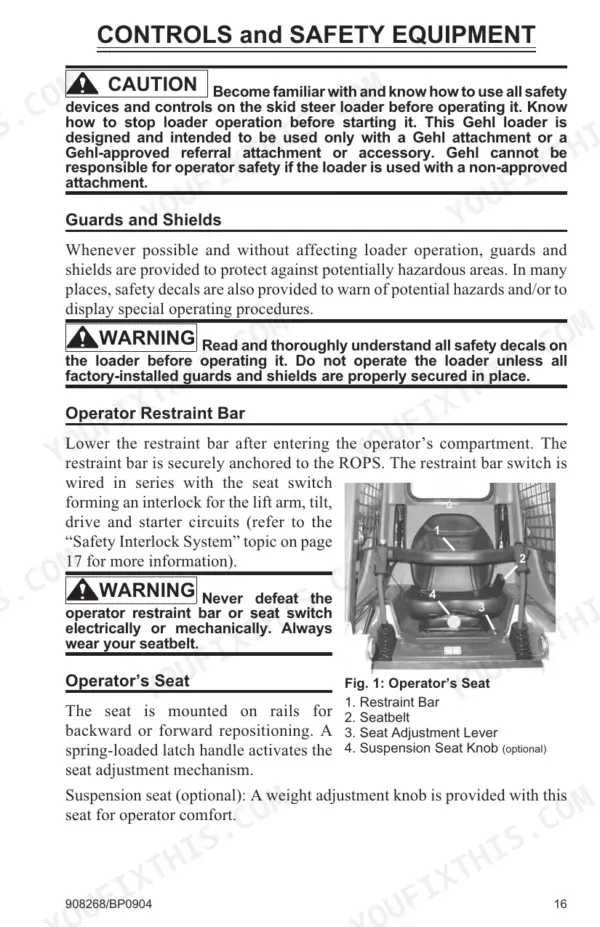
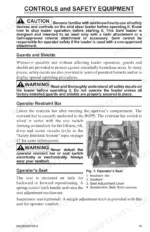
| Controls and Safety Equipment | 19-34 | Safety Interlock System |
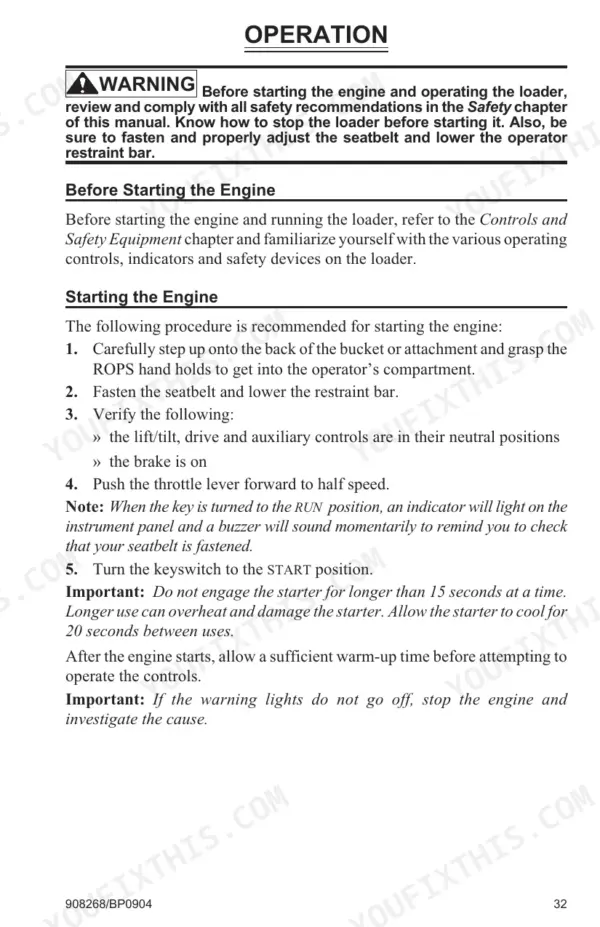
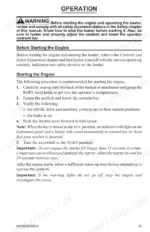
| Operation | 35-43 | Starting the Engine |
| Service | 44-58 | Dealer Services, Engine Service, Hydraulic System |
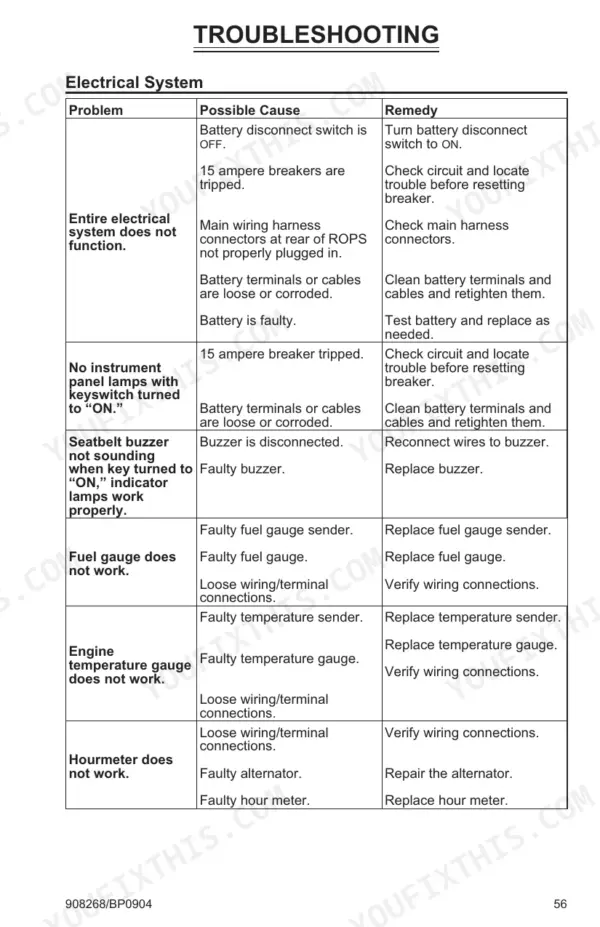
| Troubleshooting | 59-67 | Electrical System, Engine, Hydrostatic System |
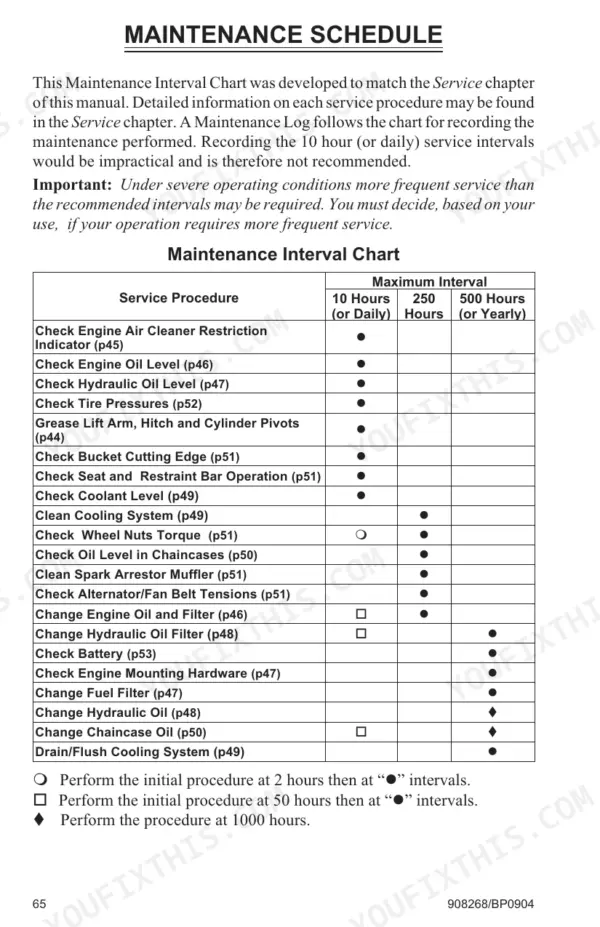
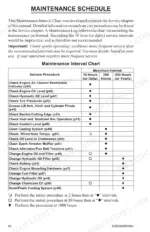
| Maintenance Schedule | 68-70 | Engine Air Cleaner, Hydraulic Oil, Cooling System, Chaincases, Spark Arrestor Muffler, Fuel Filter |
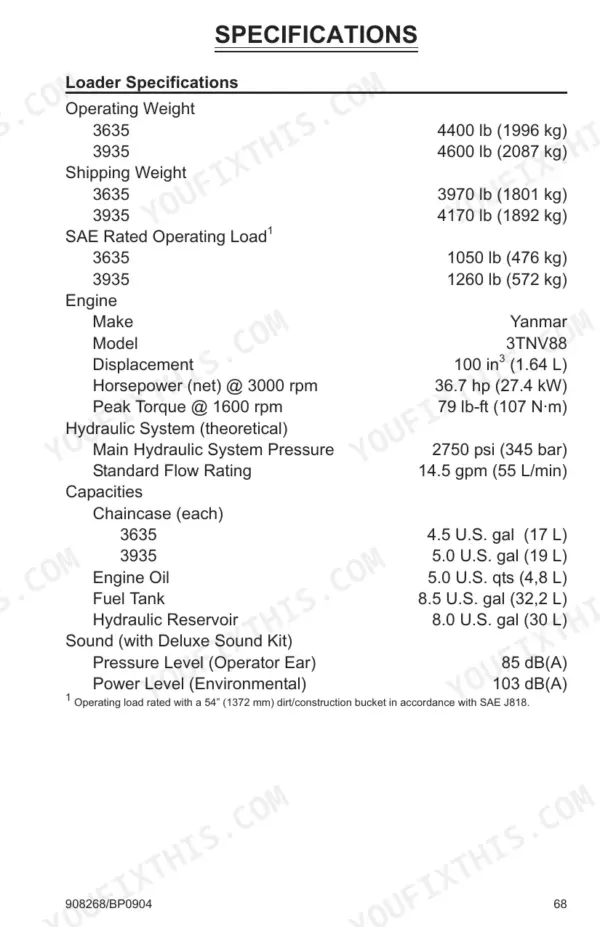
| Specifications | 71-74 | Operating Weight, SAE Rated Operating Load, Engine, Hydraulic System, Capacities, Sound |
| Table of Common Materials and Densities | 75-76 | Clay, Coal, Concrete, Gravel, Iron Ore, Sand |
| Torque Specifications | 79-82 | Unified National Thread, Grade 2, Grade 5, Grade 8, Metric Coarse Thread, Grade 12.9 |
Quick Reference Specifications
| Specification | Value | Page |
|---|---|---|
| All Models | ||
| Engine oil filter tightening | 3/4 of a turn past the point where the gasket contacts the filter head | p. 51 |
| Main Hydraulic System Pressure | 2750 psi (345 bar) | p. 71 |
| Engine Oil Capacity | 5.0 U.S. qts (4.8 L) | p. 71 |
| Hydraulic Reservoir Capacity | 8.0 U.S. gal (30 L) | p. 71 |
| Wheel Nut Torque | 120-130 ft-lbs (161-175 N·m) | p. 55 |
| Tire Inflation Pressure (27 x 8.5 -15 8-ply Heavy Duty) | 60 PSI (414 kPa) | p. 56 |
| SL3635 | ||
| Operating Weight | 4400 lb (1996 kg) | p. 71 |
| SAE Rated Operating Load | 1050 lb (476 kg) | p. 71 |
| Chaincase Oil Capacity | 4.5 U.S. gal (17 L) | p. 71 |
| SL3935 | ||
| Operating Weight | 4600 lb (2087 kg) | p. 71 |
| SAE Rated Operating Load | 1260 lb (572 kg) | p. 71 |
| Chaincase Oil Capacity | 5.0 U.S. gal (19 L) | p. 71 |
Gehl SL3635, SL3935 Common Problems This Manual Covers
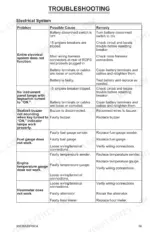
Gehl SL3635 or SL3935 starter will not engage when the key is turned to START
Check that the seat and restraint bar switches are activated, then verify starter relay connections in the instrument panel per page 60. Before cleaning and retightening battery terminals and cables, turn the battery disconnect switch OFF as page 57 directs. Replace faulty switches as needed, never bypass them (page 20), and contact your dealer if the engine still doesn't start.
Manual Section: Electrical System Troubleshooting p. 60Engine coolant temperature warning light comes on and engine overheats during loader work
Check crankcase oil level per page 61 after stopping the engine on the coolant temperature light (page 24); add or remove oil as required, or drain and refill with the proper grade if it is dirty. With the engine OFF, clear blocked fan airflow and replace a restricted air filter. Let the exhaust cool before removing a restriction (page 61). Contact your dealer for a mispositioned fan shroud.
Manual Section: Engine Troubleshooting p. 61Skid steer traction drive will not operate in either direction with the engine running
Check that the parking brake is disengaged, then check the reservoir for low hydraulic oil and add oil following page 62. Inspect the control rod linkage at the control levers and neutral centering mechanisms, and reconnect any disconnected linkage. If the drive still won't move, low charge pressure or faulty hydrostatic pump relief valves are the likely causes; contact your dealer.
Manual Section: Hydrostatic System Troubleshooting p. 62Loader bucket slowly drifts downward with the tilt control held in the neutral position
Inspect the hydraulic hoses, tubes and fittings between the control valve and tilt cylinders following page 66, tighten loose fittings and replace damaged hoses or tubes. Escaping fluid under pressure can be invisible and can penetrate the skin (page 11). If the lines are tight and dry, leaking tilt cylinder seals or a malfunctioning self-leveling valve are the cause; contact your dealer.
Manual Section: Hydraulic System Troubleshooting p. 66Lift arm will not raise or lower when the lift/tilt control is moved
Check that the restraint bar is lowered, then verify the lift arm support device is disengaged following page 67; never leave the operator's compartment to disengage it with the engine running (page 23). Check electrical connections to the lift solenoid and to the seat and restraint bar switches, repairing or replacing as needed. Never bypass interlock switches, relays or solenoid valves (page 20).
Manual Section: Hydraulic System Troubleshooting p. 67Auxiliary hydraulic circuit does not function when trying to run a hydraulic attachment
Lower the restraint bar first, since a raised bar keeps the auxiliary hydraulics from working (page 65). Check the electrical connections to the lock solenoid and the restraint bar switch, and repair connections as needed. If either part still does not work properly, contact your dealer. Never bypass the restraint bar switch or solenoid valves to get the circuit working (page 20).
Manual Section: Hydraulic System Troubleshooting p. 65Frequently Asked Questions
How do you bleed the hydraulic system on a Gehl SL3635 or SL3935?
To bleed air from the hydraulic system, cycle the lift and tilt cylinders to their maximum stroke and maintain pressure for a short time. This procedure is detailed in the Hydrostatic System troubleshooting section on page 62. p. 62
What is the recommended engine oil capacity for the SL3635 and SL3935?
The engine oil capacity for these models is 5 U.S. quarts (4.8 liters). p. 48
What is the correct torque specification for wheel nuts on the SL3635 and SL3935?
The recommended torque setting for wheel mounting hardware is 120-130 ft-lbs (161-175 N·m). This must be checked before initial operation and every two hours thereafter until the torque stabilizes. p. 55
What is the hydraulic reservoir capacity for the SL3635 and SL3935?
The hydraulic reservoir capacity is 8.0 U.S. gallons (30 liters). p. 71
What is the procedure for jump starting the battery safely?
Jump starting requires two people to perform the procedure as detailed on page 37. You must ensure both machines are in neutral, connect the positive (+) cable to the disabled loader first, and connect the final negative (-) cable to the disabled loader's engine block (ground), not the battery negative post. WARNING: Do not jump start a frozen battery as it may rupture or explode. p. 37
Do I get instant access to this Gehl SL3635 Operator Manual?
You download the Operator Manual yourself: 82 pages, searchable PDF, available immediately. Keep a copy on every device you use.
Is this Gehl SL3635 manual print-friendly?
Yes. Print individual pages or full chapters for your own shop use, on letter or A4 paper.


Reviews
There are no reviews yet.