
Part of the JCB Repair Manuals.
This service manual runs 1,176 pages and covers the JCB 135, 155, 175, 190, and 205 skid steer loaders end to end, OEM #9813/6750. It carries full electrical schematics with chassis, engine, and operator-station harness routing, plus hydraulic circuit diagrams for the Smooth Ride System, the lift arm control valve block, and the cooling fan circuits. Torque tables list every fastener in the machine. The engine section covers crankcase, cylinder head, camshaft, fuel injection, turbocharger, and the related sensors and solenoids. Torque the cylinder head bolts to 100 Nm, set the crankshaft pulley nut to 304 Nm, and fill the hydraulic tank to its 32L total capacity before you close up. When your machine is down, every hour costs money. Open the bookmarked PDF on your tablet and search any spec by keyword.
Complete the set for your 135–205
Other edition of this manual
- JCB 135, 155, 175, 190, 205, 150T, 190T, 205T Skid Steer Loader Service Manual (incl. Wiring) Original price was: $59.99.$39.99Current price is: $39.99.
What's Inside This JCB 135–205 Manual
| System | Pages | Key Topics |
|---|---|---|
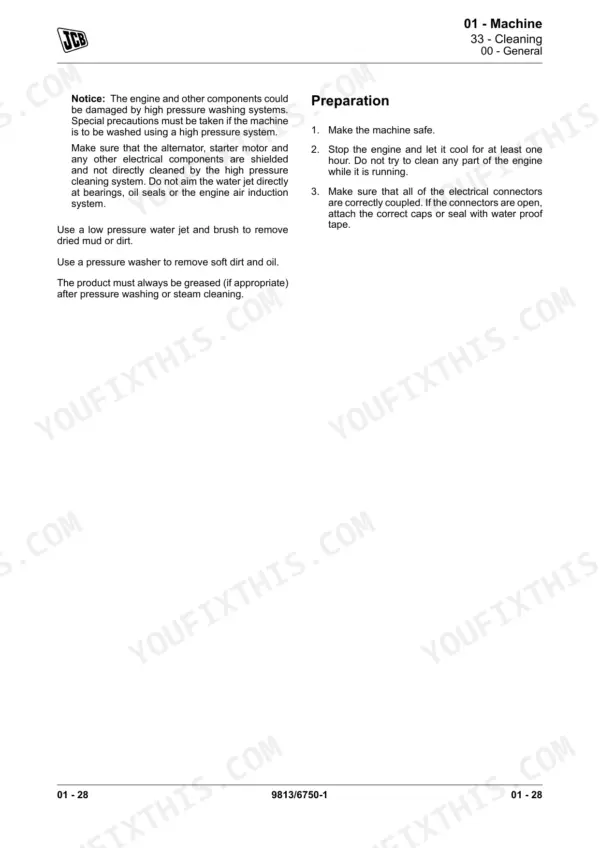
| Machine | 5-34 | Cleaning, Acronyms Glossary |
| Attachments and Options | 35-58 | General, Lift Arm Quickhitch, Shovel, Fork (General, Mechanical Quickhitch, Electronic Quickhitch) |
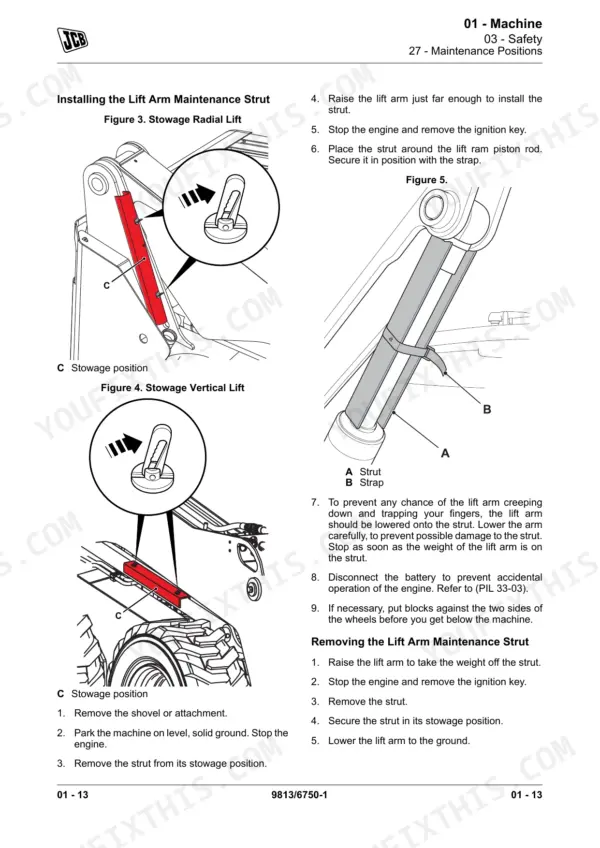
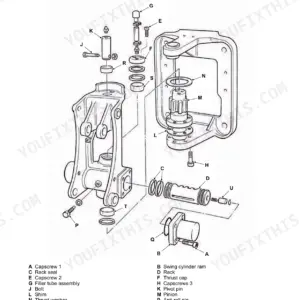
| Body and Framework | 59-100 | Acronyms Glossary, Access Cover (General, Engine Compartment, Rear Cover), Lift Arm (General, Stop Pad), Transportation Lock (General), Pivot Pins (General), Mirror (Side Mirror) |
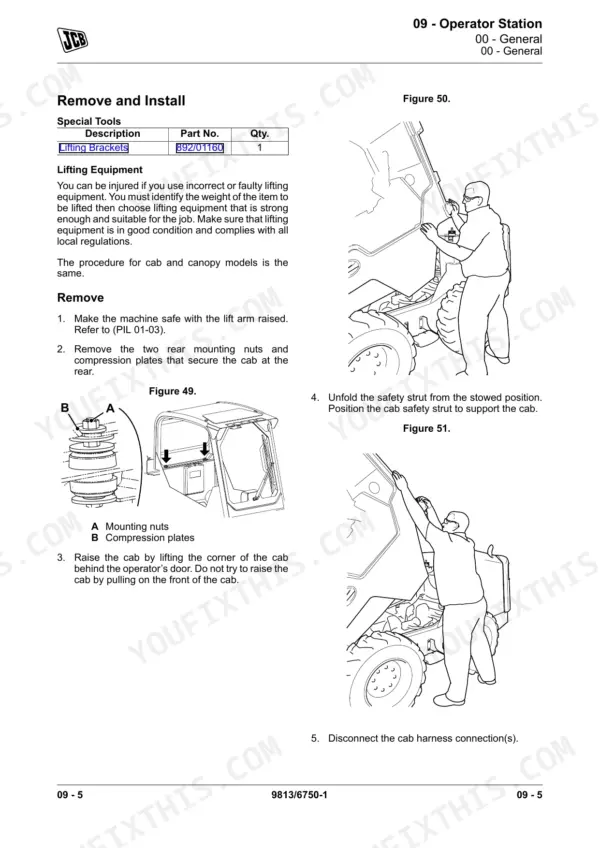
| Operator Station | 101-144 | General, Window, Door, Lock, Latch, Hinge, Handle, Controls |
| Heating, Ventilating and Air-Conditioning (HVAC) | 145-196 | HVAC Unit, Compressor, Receiver Drier, Condenser, Filter, Heater Valve, Pipe, Acronyms Glossary |
| Engine | 197-436 | Crankcase, Cylinder Head, Crankshaft, Camshaft, Engine Belt, Oil Filter, Air Filter, Crankcase Breather |
| Fuel and Exhaust System | 437-514 | General, Tank, Filter, Water Separator, Injection, Fuel Pump, Exhaust, Turbocharger |
| Cooling System | 515-556 | Cooling Pack, Fan Motor, Expansion Tank, Pump, Thermostat, Hose, Acronyms Glossary, General (Housing) |
| Brakes | 557-568 | Contents (General, Park Brake), - General (Introduction), - Park Brake (- General, Introduction, Technical Data, Operation, Check, Remove and Install) |
| Driveline | 569-666 | General, Front Hub, Rear Hub, Front Wheel, Rear Wheel, Wheel Drive Pump, Wheel Drive Motor, Tyre |
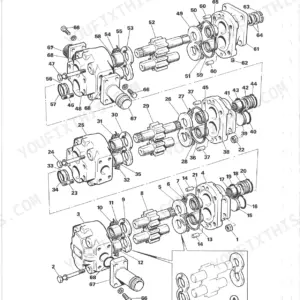
| Hydraulic System | 667-808 | General, Tank, Filter, Motor, Charge Pump, Gear Pump, Cylinder Ram, Accumulator |
| Electrical System | 809-1062 | General, Battery, Battery Cable, Power Distribution, Harness, Alarm, Instruments, Interior Switch |
| Fasteners and Fixings | 1063-1090 | General, Screws, Bolts, Bearings, Clips, Threaded Insert (General, Worm Drive) |
| Consumable Products | 1091-1142 | Oil, Grease, Fluids, Locking Fluids, Solvents and Primers, Adhesive, Sealant, Fuel |
| After Sales | 1143-1176 | Maintenance Schedules, Clothing and Personal Protective Equipment, Special Tools |
Quick Reference Specifications
| Specification | Value | Page |
|---|---|---|
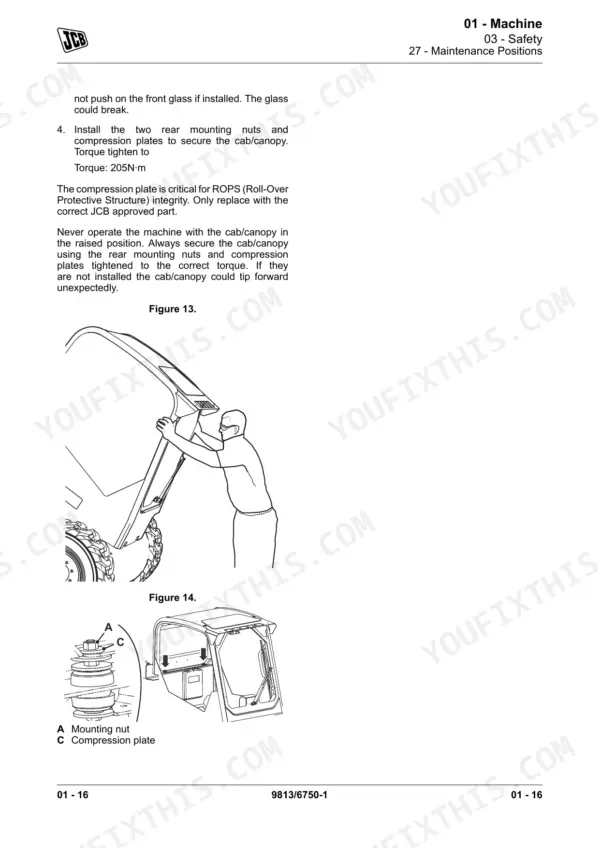
| Cab/canopy rear mounting nuts and compression plates torque | 205 N·m | p. 22 |
| Cylinder head bolt torque | 100 Nm | p. 239 |
| Engine Swept Volume | 2.216L | p. 205 |
| Engine Idling Speed | 1400 RPM | p. 205 |
| Hydraulic Tank Total Capacity | 32L | p. 675 |
| Main Relief Valve (MRV) Setting | 230bar | p. 675 |
| SRS Accumulator Pre-charge Pressure | 303bar | p. 754 |
| Joystick Screw Torque | 9.9 Nm | p. 775 |
| Battery Voltage | 12V | p. 867 |
| Battery Cold Cranking Amps (CCA) | 1000 | p. 867 |
| Work Lights Rating | 55W | p. 1016 |
| Internal Hexagon Headed Capscrews (Zinc) M8 torque | 46 N·m | p. 1072 |
JCB 135–205 Common Problems This Manual Covers
JCB 205 skid steer hydraulic hoses blowing repeatedly, oil spraying from fittings under load
Inspect all hose assemblies for chafing, kinking, and age cracking before tracing the pressure side. Check hydraulic fluid level in the 32L tank (page 675) and confirm the main relief valve is set to 230 bar. Torque any worm-drive hose clamps in the 172-194mm range to 10 -0/+0.5 N·m (page 1083). Walk the hydraulic fault-finding chart to isolate whether the failure is a pressure spike, a worn fitting, or a faulty relief valve.
Manual Section: Hydraulic System Fault-FindingLoader arms and steering slow or unresponsive, machine barely moving the bucket under full throttle
Start at the hydraulic tank: check fluid level against the 32L capacity spec. Pull and inspect the hydraulic filter element (pages 667-808) for collapse or heavy contamination. Then run the fault-finding procedure, watching for low pump output and hot-oil symptoms. If the hydrostatic side is suspect, work through the no-drive and low-pump-output diagnosis.
Manual Section: Hydraulic System Fault-FindingEngine cranks but won't fire, or barely turns over in cold morning starts
Verify the battery delivers its rated 1000 CCA at 12V (page 867) before chasing anything else. Test glow plug continuity and current draw. Inspect the fuel filter and water separator (Fuel and Exhaust System, pages 437-514) for restriction or water contamination. Run the starter motor electrical tests if cranking speed is weak. Confirm the diesel cetane number is 40 minimum (page 1136).
Manual Section: Engine Fault-FindingControls unresponsive or sluggish, joystick inputs not matching machine movement
Check joystick connector pins for corrosion and confirm the mounting screws are torqued to 9.9 Nm (page 775). Inspect all safety switches for continuity: a single failed interlock kills the whole control circuit. Work through the electrical fault-finding procedure covering relay, CAN bus, and ECU faults. Confirm the 12V battery (page 867) is fully charged, since a weak battery causes intermittent control drop-outs.
Manual Section: Electrical System Fault-FindingEngine temperature gauge climbing into the red during normal digging or grading work
Clean the radiator and condenser face first: packed debris is the most common cause on skid steers. Check coolant level in the expansion tank and inspect all hoses for collapse under suction (Cooling System, pages 515-556). Test the coolant temperature sensor resistance. Follow the cooling system fault-finding chart on pages 522-523, which covers over-temperature, coolant loss, and contamination. Inspect the fan motor for correct speed and direction.
Manual Section: Cooling System Fault-Finding p. 522Frequently Asked Questions
How do I reset the service light on a JCB 175?
The service light shows on the 'Key On Display' as the time to next service. Enter the advanced logic control, then press and hold the “i” button for 3 seconds to reset the interval to 500 hours. p. 1002
How do I reset the hydraulic system on a JCB 155?
Resetting the JCB 155 hydraulic system means bleeding the air and flushing contaminants. Crank the starter for 30 seconds to clear air from the lines, then cycle between forward and reverse for 5 minutes to bleed the remaining air and flush the system loop. p. 688
What are the replacement specifications for hydraulic hoses?
Any replacement hydraulic hose must match the original size, standard, and pressure rating. Contact your JCB dealer if you need more detail. p. 795
What are the replacement specifications for hydraulic filter?
The main hydraulic filter is rated at 10 Micron. Service the filters on the machine's maintenance schedule to keep the system running reliably. p. 675
What do I get after purchasing this JCB 135 & variants manual?
Checkout gives you a 1176-page searchable PDF, downloadable right away. Open it on your laptop, tablet, or phone and take it straight to the shop floor.
Am I able to print pages from this manual?
Yes. Print individual pages or full chapters for your own shop use, on letter or A4 paper.
Are there wiring harness diagrams in this JCB 135 & variants manual?
Yes. Full electrical schematics are included, with wire colors, connector locations, and circuit descriptions.

Reviews
There are no reviews yet.