
Part of the JCB Repair Manuals.
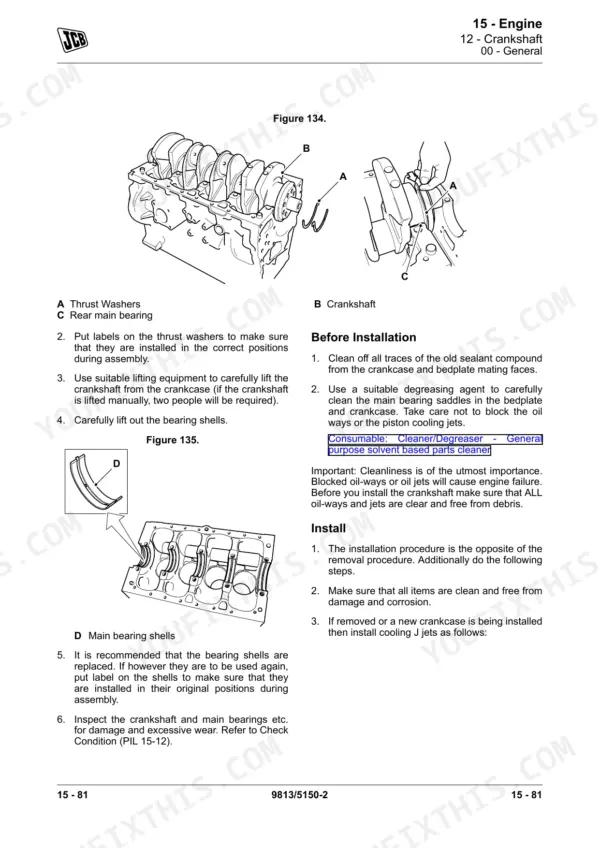
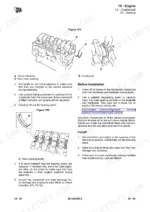
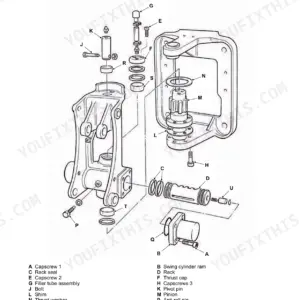
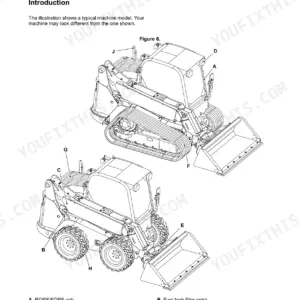
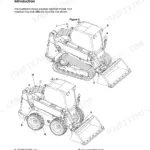
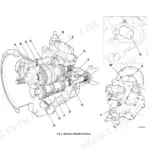
Factory-level repair coverage for ten JCB skid steer loaders sits in one 1,328-page PDF (OEM #9813/5150): the 225, 225T, 260, 260T, 280, 300, 300T, 320T, 325T, and 330. Hydraulic schematics trace fluid routing at the circuit level, and extensive wiring diagrams map the electrical side. A dedicated fault codes section ties every DTC to what your Servicemaster tool reads. Engine work runs start to finish: crankshaft, timing gear, VGT turbocharger, and EGR actuator, with torque figures and procedures for the fuel injection system. Crankshaft pulley bolts go in three stages, 30 N·m, then 75 N·m, then a final 180-degree turn. With the machine down, you can search any spec by keyword and jump straight to a section by bookmark.
Complete the set for your 225–330
Other editions of this manual
- JCB 225, 300, 444 Series Skid Steer Loader Service Manual (incl. Wiring) Original price was: $56.99.$39.99Current price is: $39.99.
- JCB 225, 225T, 260, 260T, 280, 300, 300T, 320T, 330 Skid Steer Loader Service Manual Original price was: $57.99.$39.99Current price is: $39.99.
- JCB 225T, 250, 250T, 260, 260T, 270, 270T, 280, 300, 300T, 320T, 325T, 330 Skid Steer Loader Service Manual Original price was: $59.99.$39.99Current price is: $39.99.
What's Inside This JCB 225–330 Manual
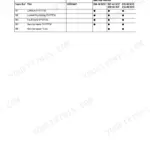
| System | Pages | Key Topics |
|---|---|---|
| Machine | 5-50 | Acronyms Glossary |
| Attachments, Couplings and Load Handling | 51-72 | Attachments (General), Lift Arm Quickhitch (General, Mechanical Quickhitch, Electronic Quickhitch), Shovel (General), Fork (General) |
| Body and Framework | 73-120 | Acronyms Glossary, Moveable Panel and Cover (General, Engine Compartment, Rear Cover), Lift Arm (General, Stop Pad), Dozer Blade (General), Transportation Lock (General) |
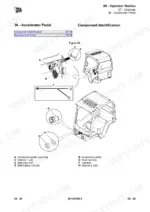
| Operator Station | 121-160 | General, Window, Operator Seat, Seat Belt |
| Heating, Ventilating and Air-Conditioning (HVAC) | 161-212 | Heating, Ventilating and Air-Conditioning (HVAC), General, HVAC Unit, Evaporator, Expansion Valve, Compressor |
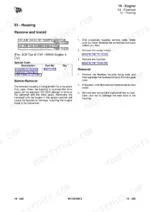
| Engine | 213-574 | General, Crankcase, Cylinder Head, Bedplate |
| Fuel and Exhaust System | 575-744 | General, Throttle Control System, Tank, Filter, Filter Element |
| Cooling System | 745-780 | General, Cooling Pack, Fan Motor, Expansion Tank |
| Brake System | 781-792 | Park Brake, Introduction, Technical Data, Table 172. Technical Data, Operation, Park Brake Assembly, Check (Operation) |
| Driveline | 793-822 | Acronyms Glossary, Drive Chain |
| Hydraulic System | 823-952 | Acronyms Glossary, General (Levelling System, Schematic Symbols, Schematic Circuit), Tank (General, Suction Strainer, Breather), Filter (General, Main, Return Line) |
| Electrical System | 953-1200 | General, Schematic Circuit, Earth Point, Battery, Isolator Switch, Battery Cable |
| Fasteners and Fixings | 1201-1228 | General, Screws, Bolts, Bearings |
| Consumable Products | 1229-1282 | General, Oil, Refrigerant, Grease |
| After Sales | 1283-1328 | Maintenance Schedules (General, Maintenance Intervals, Pre-Start Cold Checks, Service Points and Fluid Levels, Functional Tests and Final Inspection) |
Quick Reference Specifications
| Specification | Value | Page |
|---|---|---|
| JCB Tier 4i /T4F <55kW Engine 4 Cyl | ||
| Crankshaft pulley fixing bolts (1st stage) | 30 N·m | p. 311 |
| Crankshaft pulley fixing bolts (2nd stage) | 75 N·m | p. 311 |
| Crankshaft pulley fixing bolts (Final stage) | 180° | p. 311 |
| All Models | ||
| Oil sump drain plug | 40 Nm | p. 342 |
| Main hydraulic filter canister | 30 Nm | p. 873 |
| Lift arm cylinder ram locking bolts | 56 Nm | p. 893 |
| Lift arm crowd cylinder ram locking bolts | 56 Nm | p. 897 |
| Oil filter housing drain plug torque | 40 Nm | p. 342 |
| Tracked Machine | ||
| Park Brake Item 4 Torque, Tracked Machine | 70–77 N·m | p. 788 |
| Park Brake Item 9 Torque, Tracked Machine | 117–122 N·m | p. 788 |
| Wheeled Machine | ||
| Park Brake Item 4 Torque, Wheeled Machine | 35–39 N·m | p. 788 |
| Park Brake Item 9 Torque, Wheeled Machine | 70–77 N·m | p. 788 |
JCB 225–330 Common Problems This Manual Covers
JCB 225 and 300 series engine cranks but won't fire, or starts then stalls with exhaust smoke
Check the air filter and replace the outer element at the recommended interval; the inner element goes in at least every other outer change (page 347). Verify fuel filter restriction hasn't hit the 0.65bar (9.4psi) maximum pressure drop (page 581). Drain the water separator bowl and inspect for contaminated or gelled fuel before condemning the injectors or high-pressure pump.
Manual Section: EngineEngine oil pressure warning light stays on at operating temperature after warm-up
Confirm oil level and condition before reaching for the pressure gauge. The relief valve should hold 6bar (87.0psi) per the spec on page 228; if pressure reads low with clean, full oil, suspect a worn pump or blocked pickup screen. If you've recently drained and refilled, check that the sump plug is torqued to 40N·m (page 342) and look for a weeping seal dropping the level.
Manual Section: Engine p. 228Hydraulic loader functions sluggish, bucket fails to lift under full working load
Bring hydraulic fluid up to the sight glass; tank total capacity is 32L (page 829). Replace the main filter canister and torque to 30N·m (page 873); the return line filter must meet 10μm filtration (page 875). If functions stay slow after fresh fluid and filters, verify lift arm cylinder ram locking bolts are torqued to 56N·m (page 893).
Manual Section: Hydraulic System p. 829Machine veers to one side under load, or loses drive entirely in one direction
Inspect drive chain condition and tension in the Driveline section (page 793). Verify tire pressure is equal side-to-side on wheeled models. Check pump and motor connections for hydraulic leaks: a stuck relief valve or low charge pressure pulls the machine offline. On wheeled machines, confirm park brake pack height is 36.45mm ±0.05mm (page 788); a dragging brake mimics driveline failure.
Manual Section: Driveline p. 793Engine coolant temperature gauge climbs into the red zone during normal duty cycle
Start at the radiator cap: it must hold 1bar (14.5psi) per page 750; a failed cap vents coolant and hides low-level conditions. Clean debris from the cooling pack fins and verify the fan motor spins at full speed under load. Inspect the expansion tank level and hose clamps for seepage. Confirm engine oil is at spec before suspecting the cooling pack itself.
Manual Section: Cooling System p. 750Park brake won't fully release or machine creeps with the brake applied
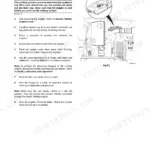
Trace the brake system from page 781 and check hydraulic brake release pressure at the diagnostic port. On wheeled machines, measure pack height X: spec is 36.45mm ±0.05mm (page 788); worn packs below minimum bind and won't clear. On reassembly, torque item 4 fasteners to 35-39N·m and item 9 fasteners to 70-77N·m (page 788).
Manual Section: Brake System p. 788Frequently Asked Questions
How to reset JCB 225/260/300/320T fault codes?
On JCB 225, 260, 300, and 320T models with T3 GE0 engines, there's no diagnostic capability, so there are no fault codes to reset. The Technical Data section confirms this for these specific models. p. 1176
How to reset JCB skid steer service light on 225T/260T/300T?
On the 225T, 260T, and 300T, open the 'Time Until Next Service' display on the instrument panel, then press and hold the 'i' button for 3 seconds to reset the service interval to 500 hours. p. 1106
What do JCB 225/260/280/300 error codes mean?
These T3 GE0 machines (225, 260, 280, 300) carry no diagnostic capability, so there are no error codes to interpret. The Technical Data section states this directly for each listed model. p. 1176
How to clear JCB 320T/325T/330 warning messages?
Logged fault codes count as warning messages; clear them with the Servicemaster diagnostic tool. Click 'Erase Fault Codes' to wipe them from the ECM memory. Turn the engine ignition OFF before clearing codes that are no longer active. p. 1147
What do I get after purchasing this JCB 225 & variants manual?
The download is instant: the full 1328-page searchable Service Manual lands the moment payment clears. Open it on a laptop, tablet, or phone right at the workbench.
Can I print pages of this manual for my own shop?
Yes. Printing works from any reader and any printer, for your own shop use.
Does this Service Manual have electrical diagrams?
Yes. Full electrical schematics are included, with wire colors, connector locations, and circuit descriptions.
Reviews
There are no reviews yet.