




Part of the Kubota Repair Manuals.
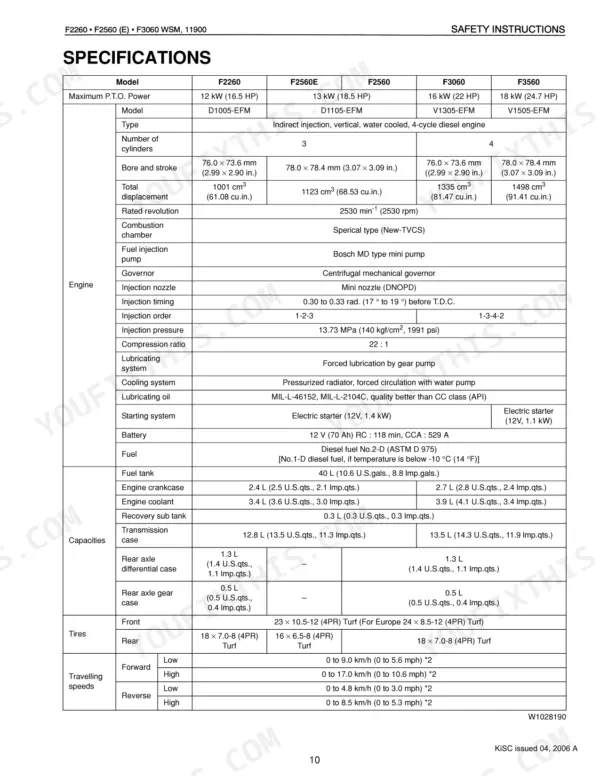
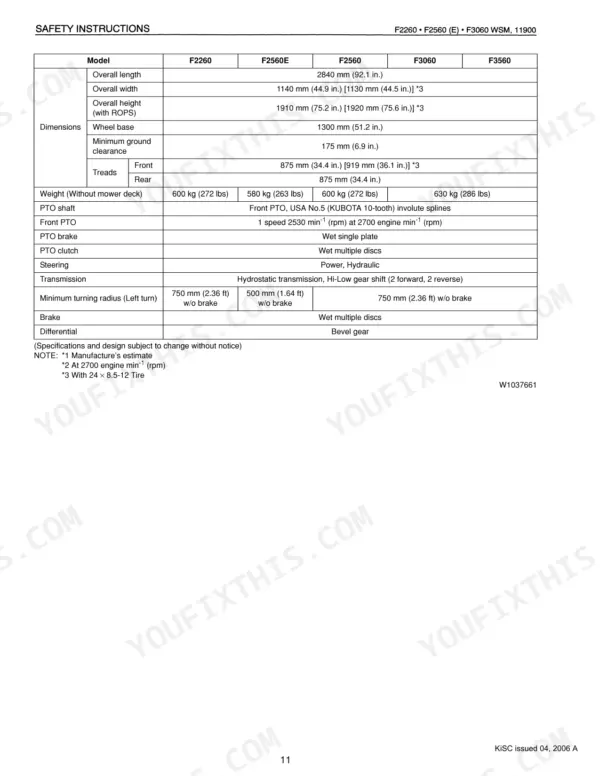
This Kubota workshop manual covers the F2260, F2560(E), F3060 and F3560 front mount mowers and their D1005-EFM, D1105-EFM and V1505-EFM diesel engines. Across 338 pages it walks through the full machine, from the engine and hydrostatic transmission to the front axle, brakes, rear axle, steering, hydraulic system, electrical system and mower deck.
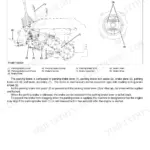
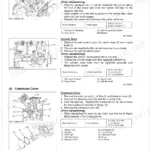
Each section explains how the system works, then gives the servicing specifications, factory clearances and torque values needed to inspect, adjust and rebuild it. You get wiring diagrams, an oil flow layout for the hydrostatic drive, and step by step disassembly coverage.
This is the dealer level information for keeping these front mowers running, whether you are diagnosing a loss of drive, servicing the steering, or replacing mower blades. Download the PDF and use it on a phone, tablet or shop computer.
What's Inside This Kubota F2260–F3560 Series Manual
| System | Pages | Key Topics |
|---|---|---|
| G General | Features, Identification, Handling Precautions for Electrical Parts and Wiring (Battery, Fuse, Connector, Handling of Circuit Tester), Lubricants, Fuel and Cooling Water | |
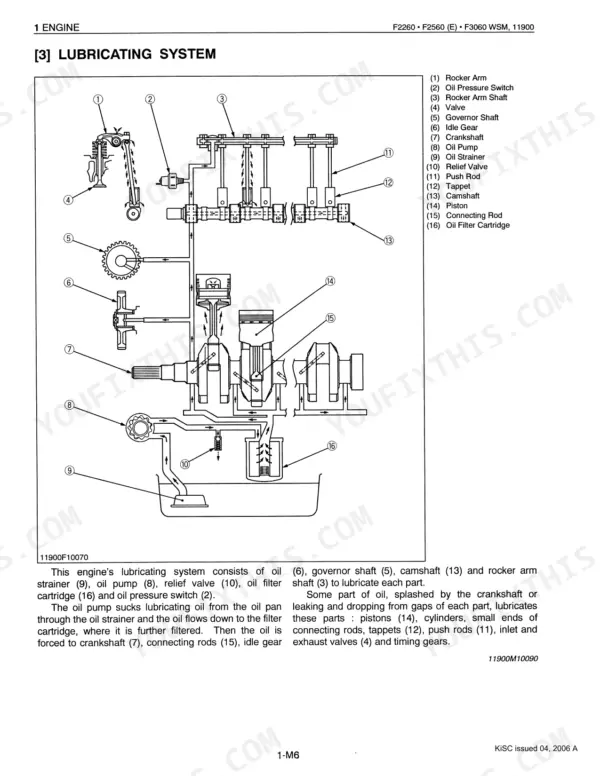
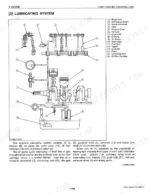
| Engine | Cylinder Block, Cylinder Head, Crankshaft, Piston and Connecting Rod, Lubricating System, Fuel System | |
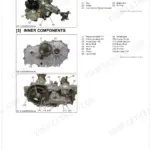
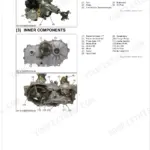
| Transmission | Four Wheel Drive, Two Wheel Drive, Hydrostatic Transmission, Dual-Acting Overrunning 4WD, Differential Gear | |
| N New Hydrostatic Transmission | Structure, Oil Flow, Pump and Motor, Charge Relief Valve, Check and High Pressure Relief Valve, Control Linkage | |
| Front Axle | Differential Gear, Front Axle Case, Front Wheels, Differential Lock Shift Fork | |
| Brakes | Brake Pedal, Brake Disc, Brake Cam, Parking Lock Lever, Brake Assembly | |
| Rear Axle | Knuckle Arm, Differential Case, Spiral Bevel Pinion Shaft, Axle Flange and Rear Wheel Hub | |
| Steering | Hydraulic Circuit, Steering Controller, Oil Flow of Steering Valve, Relief Valve, Steering Cylinder | |
| Hydraulic System | Hydraulic Circuit, Hydraulic Pump, Flow Priority Valve, Relief Valve, Hydraulic Cylinder, Hydraulic PTO Clutch | |
| Electrical System | Wiring Diagram, Electrical Circuit, Battery, Starter, Alternator, Safety Devices | |
| M Mower | Power Trains, Mower Blades, Gear Box, Mower Belt, Universal Joint, Outer Pulley and Blade Shaft |
Quick Reference Specifications
| Specification | Value | Page |
|---|---|---|
| All Models | ||
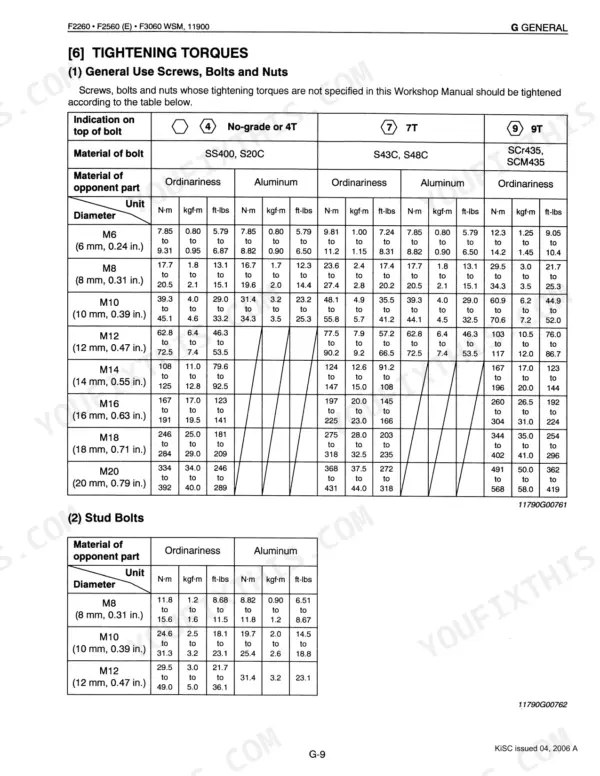
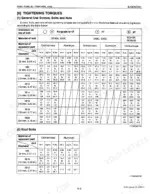
| Front wheel mounting nut torque | 49.0 N-m (5.0 kgf-m, 36.2 ft-lbs) | p. 205 |
| Front axle case mounting screw and nut torque | 39.3 to 44.1 N-m (4.0 to 4.5 kgf-m, 29.0 to 32.5 ft-lbs) | p. 205 |
| Mower blade screw torque | 98.1 to 117.7 N-m (10.0 to 12.0 kgf-m, 72.3 to 86.8 ft-lbs) | p. 321 |
| Fan Belt Tension (Deflection) | 7 to 9 mm (0.28 to 0.35 in.) | p. 34 |
| Belt tension pulley torque | 39.3 to 44.1 N-m (4.0 to 4.5 kgf-m, 29.0 to 32.5 ft-lbs) | p. 321 |
| Adjusting Screw Length | 15 to 20 mm (Approx. 0.59 in.) | p. 183 |
| Check and High Relief Pressure | 27.9 MPa (285 kgf/cm², 4056 psi) | p. 183 |
| Battery Terminal Connection torque | 5.9 to 7.8 N-m (0.6 to 0.8 kgf-m, 4.3 to 5.8 ft-lbs) | p. 294 |
| RCK60-F30 | ||
| Mower blade tip velocity, RCK60-F30 | 73.0 m/s (14400 fpm) | p. 316 |
| RC72-F30 | ||
| Mower blade tip velocity, RC72-F30 | 78.2 m/s (15400 fpm) | p. 316 |
Kubota F2260–F3560 Series Common Problems This Manual Covers
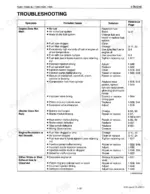
Loss of drive under load
When the mower slows or stops moving under load, the hydrostatic transmission, control linkage or charge circuit is the usual cause. This section covers the pump, motor, relief valves and control linkage.
Manual Section: N New Hydrostatic Transmission p. 175Hard steering or unstable handling
Hard turning or wandering points to wear in the steering controller, relief valve or cylinder. The steering section gives the hydraulic circuit and setting pressures.
Manual Section: 6 Steering p. 244Poor braking
Loss of stopping power comes from worn brake discs, cams or an out of adjustment pedal. This section covers brake service and the factory pedal force spec.
Manual Section: 4 Brakes p. 210No-start or intermittent electrical fault
A no-start, random shutdown or dead accessory usually traces to wiring, a switch, a safety device or the battery ground. The electrical section includes the wiring diagram and circuits.
Manual Section: 8 Electrical System p. 284Slow or dead hydraulic lift
When the deck lift or attachments respond slowly, suspect low fluid, a clogged filter, the pump or the flow priority valve. This section covers the hydraulic circuit and relief valve.
Manual Section: 7 Hydraulic System p. 260Worn mower blades and deck drive
Vibration, poor cut or belt slip point to worn blades, a tired belt or the gear box. The mower section covers blades, gear box, belt and blade shaft.
Manual Section: M Mower p. 310Frequently Asked Questions
Which models does this workshop manual cover?
It covers the Kubota F2260, F2560(E), F3060 and F3560 front mount mowers and their D1005-EFM, D1105-EFM and V1505-EFM diesel engines in one 338 page manual.
What is the mower blade screw torque?
The manual specifies a mower blade screw tightening torque of 98.1 to 117.7 N-m. The full blade and deck service is covered in the Mower section. p. 310
Does it cover the hydrostatic transmission?
Yes. The new hydrostatic transmission section explains the structure, oil flow, pump and motor, charge relief valve and control linkage, which is where you diagnose a loss of drive. p. 175
What format is this Kubota F2260–F3560 Series manual in?
A searchable PDF, delivered the moment payment clears. All 338 pages download at once, ready to open on whatever device is handy in the shop.
Can I print specific sections of this Kubota F2260–F3560 Series Workshop Manual?
Yes. Print individual pages or full chapters for your own shop use, on letter or A4 paper.
Are electrical wiring diagrams included in this Kubota F2260–F3560 Series?
Yes, they're included. Complete wiring harness diagrams, electrical circuits, and connector pinouts are all covered in the manual.




Reviews
There are no reviews yet.