
Part of the Kubota Repair Manuals.
This Kubota workshop manual covers the T1760 riding mower and its WG510V gasoline engine. In 92 pages it moves from safety and general maintenance through mechanism descriptions into detailed checking, disassembly and servicing for the whole machine.
You get engine service for the cooling, lubrication, ignition and fuel systems, along with the hydrostatic transaxle, brake, electrical system and mower deck. Servicing specifications, tightening torques and troubleshooting charts give you the factory numbers to diagnose a problem and set clearances correctly.
Aimed at the owner or independent mechanic who wants to service a T1760 rather than pay shop rates, this PDF download is the same reference Kubota supplies to dealers. It is fully searchable and prints cleanly, so you can keep a copy on the bench or on your phone.
What's Inside This Kubota T1760 Manual
| System | Pages | Key Topics |
|---|---|---|
| Safety Instructions | 2-3 | Safety Decals, Part No K1122-6581-1, Part No K1122-6582-1, Part No K5112-7312-1, Part No K1122-6584-1, Part No K1122-6583-1 (Under Hood), Part No K5112-7311-1, Part No K1122-6115-1, Part No K1122-6585 |
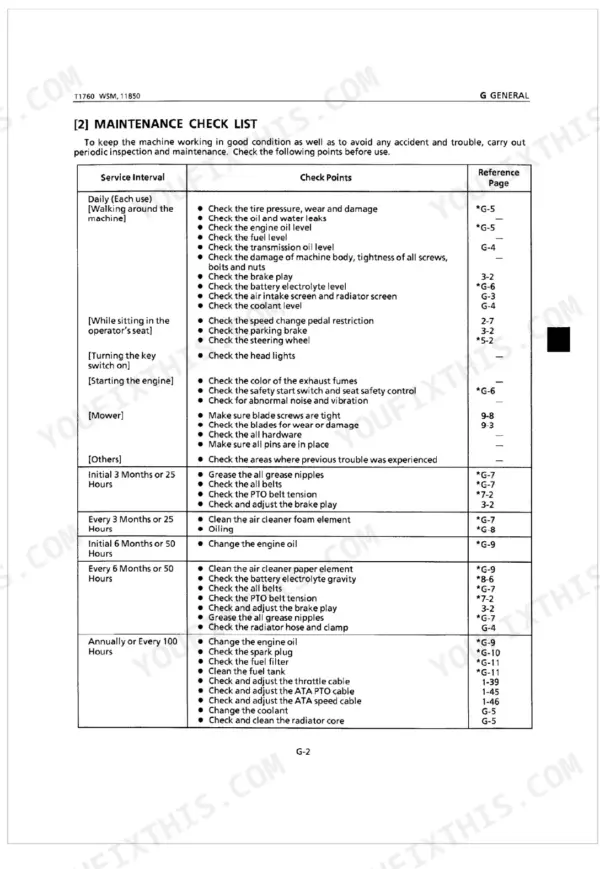
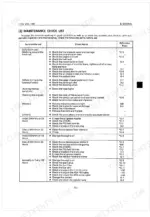
| General | 6-11 | Lubricants, Fuel and Coolant, Maintenance Check List |
| Mechanism | 14-16 | Cooling System, Pressurized Lubrication System, Ignition System, Auto Throttle Advance System |
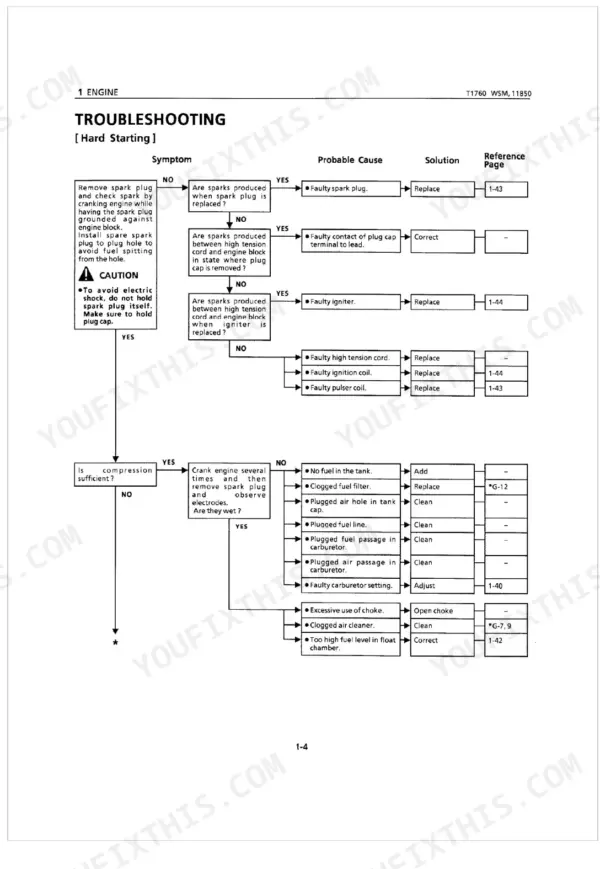
| Troubleshooting | 17-22 | |
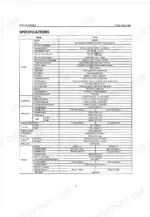
| Servicing Specifications | 23-25 | |
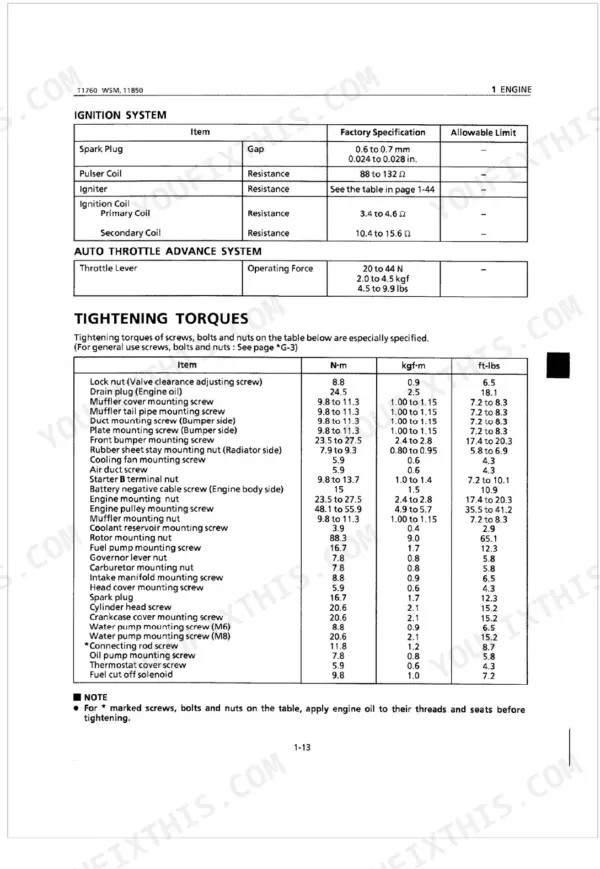
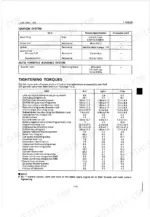
| Tightening Torques | 26 | |
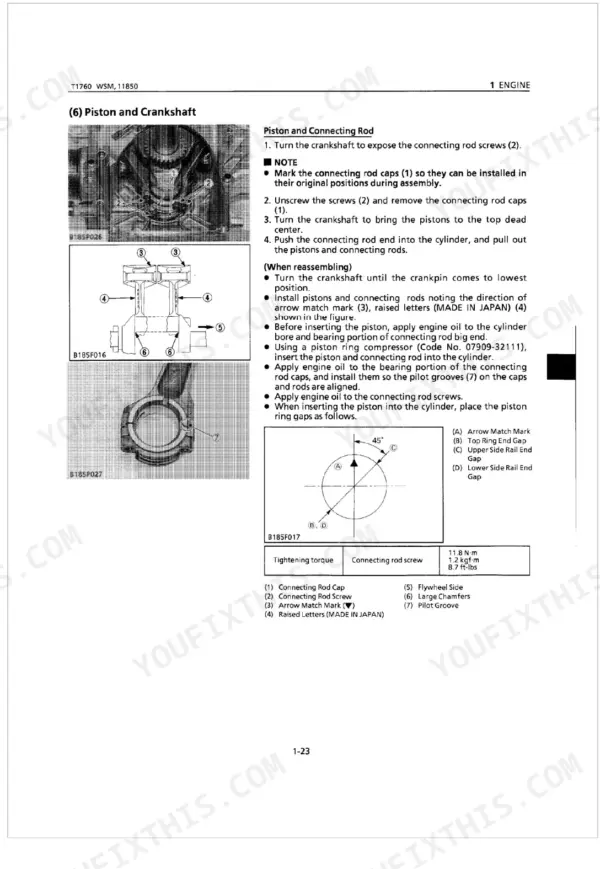
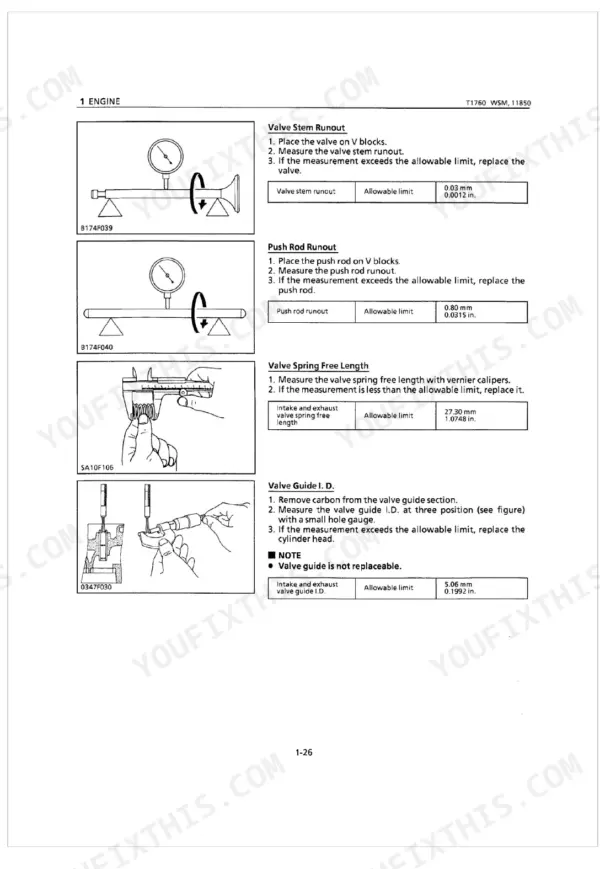
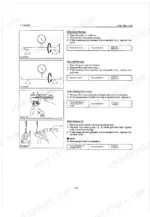
| Checking, Disassembling and Servicing | 27-60 | Engine Body, Lubricating System, Cooling System, Fuel System, Ignition System, Auto Throttle Advance System |
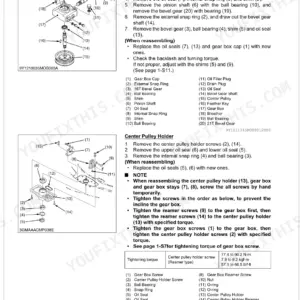
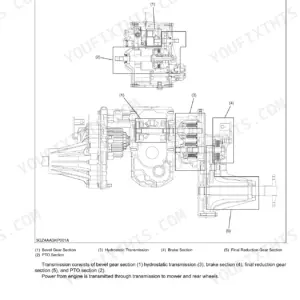
| Hydrostatic Transaxle | 61-74 | Mechanism (Hydrostatic Transmission Block, Oil Circuit, Reduction Gear, Parking Brake), Tightening Torques |
| Brake | 75-78 | Tightening Torques |
| Electrical System | 79-82 | Mechanism (Wiring Diagram and Electrical Circuit, Wiring Diagram, Electrical Circuit) |
| Mower | 83-92 | Tightening Torques |
Every system also includes checking, disassembling and servicing, servicing specifications, and troubleshooting.
Quick Reference Specifications
| Specification | Value | Page |
|---|---|---|
| Lock nut (Valve clearance adjusting screw) torque | 8.8 N-m | p. 26 |
| Holder shaft retaining screw torque (Hydrostatic Transaxle) | 23.5 to 27.5 N-m | p. 66 |
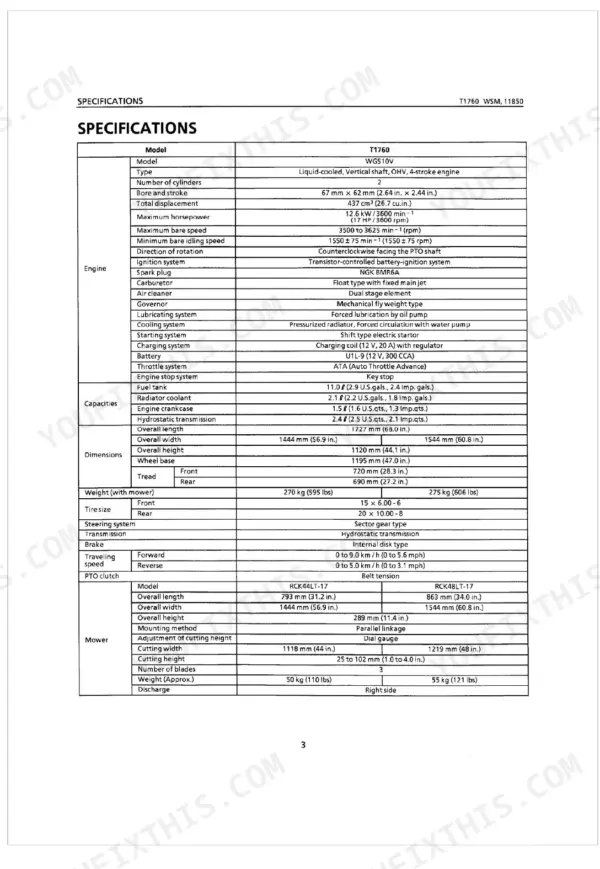
| Fuel tank capacity | 11.0 l | p. 7 |
| Engine crankcase capacity | 1.5 l | p. 7 |
| Daily check points | Check the tire pressure, wear and damage | p. 8 |
| Every 6 Months or 50 Hours service | Change the engine oil | p. 8 |
| Engine Crankcase Oil Capacity | 1.5L (1.6 U.S.qts., 1.3 Imp.qts.) | p. 4 |
| Hydrostatic Transaxle Oil Capacity | 2.4L (2.5 U.S.qts., 2.1 Imp.qts.) | p. 4 |
| Coolant Capacity | 2.1 L (2.2 U.S.qts., 1.8 Imp.qts.) | p. 4 |
| Valve Clearance (Intake and Exhaust) | 0.15 mm (0.006 in.) | p. 23 |
| Spark Plug Tightening Torque | 16.7 N-m (1.7 kgf-m, 12.3 ft-lbs) | p. 26 |
| Engine Oil Pressure (3550 min-1, No Load) | 276 kPa (2.82 kgf/cm², 40.0 psi) | p. 25 |
Kubota T1760 Common Problems This Manual Covers
Engine will not start
A no-start on this gasoline engine usually comes down to ignition, fuel or valve clearance. The Checking, Disassembling and Servicing section covers the ignition and fuel systems along with valve clearance for working through the causes.
Manual Section: Checking, Disassembling and Servicing p. 27Loss of drive from the transaxle
Weak ground speed or creep in neutral points to the hydrostatic transaxle. The Hydrostatic Transaxle section explains the transmission block, oil circuit and parking brake so you can check and rebuild the drive.
Manual Section: Hydrostatic Transaxle p. 61Uneven or poor cut
Streaking or scalping often traces to blade wear or deck level. The Mower section provides the servicing and tightening torques, including blade screw torque and blade tip alignment, for restoring a clean cut.
Manual Section: Mower p. 83Weak charging or electrical faults
A battery that will not stay charged or intermittent electrics call for a wiring trace. The Electrical System section provides the wiring diagram and electrical circuit to isolate the problem.
Manual Section: Electrical System p. 79Brake grabs or will not hold
A brake that drags or fails to hold the machine on a slope needs adjustment or overhaul. The Brake section provides the tightening torques and service steps to set it correctly.
Manual Section: Brake p. 75Overheating under load
Rising temperature during mowing often means a cooling system fault such as a weak radiator cap or restricted flow. The Mechanism section describes the cooling system so you know how it should perform.
Manual Section: Mechanism p. 14Frequently Asked Questions
Which mower does this manual cover?
It covers the Kubota T1760 riding mower and its WG510V gasoline engine. The manual addresses this single model, including its engine, transaxle, brake, electrical system and mower deck.
Does it include engine repair procedures?
Yes. The Checking, Disassembling and Servicing section covers the engine body, lubricating, cooling, fuel and ignition systems with the factory servicing specifications and tightening torques. p. 27
Are wiring diagrams included?
Yes. The Electrical System section provides the wiring diagram and electrical circuit, so you can trace charging and starting faults on the T1760. p. 79
What format is this Kubota T1760 manual in?
This is a 92-page searchable PDF ready for immediate download. It works on any device, so you can pull it up on your phone while you're under the hood. No shipping, no waiting.
Can I print pages of this Kubota T1760 manual for my own shop?
Yes. Print individual pages or full chapters for your own shop use, on letter or A4 paper.





Reviews
There are no reviews yet.