
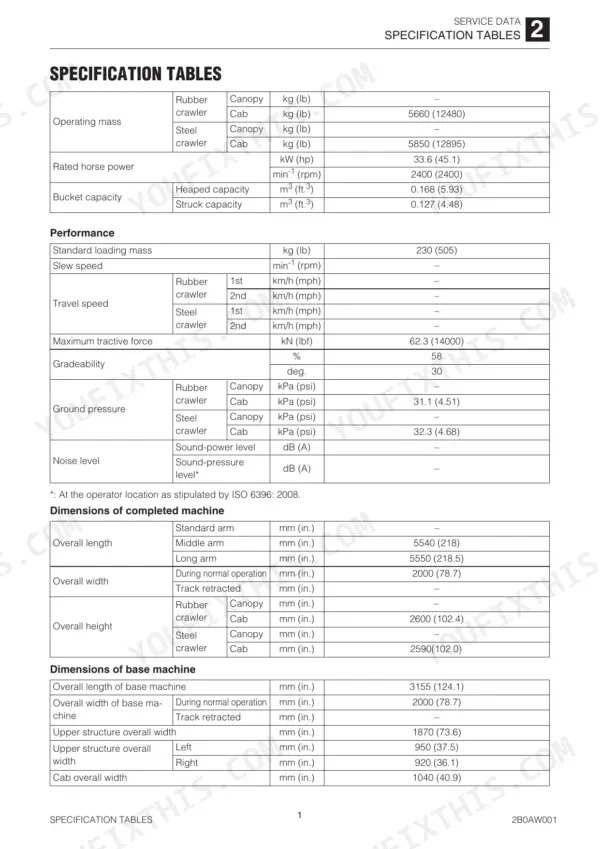
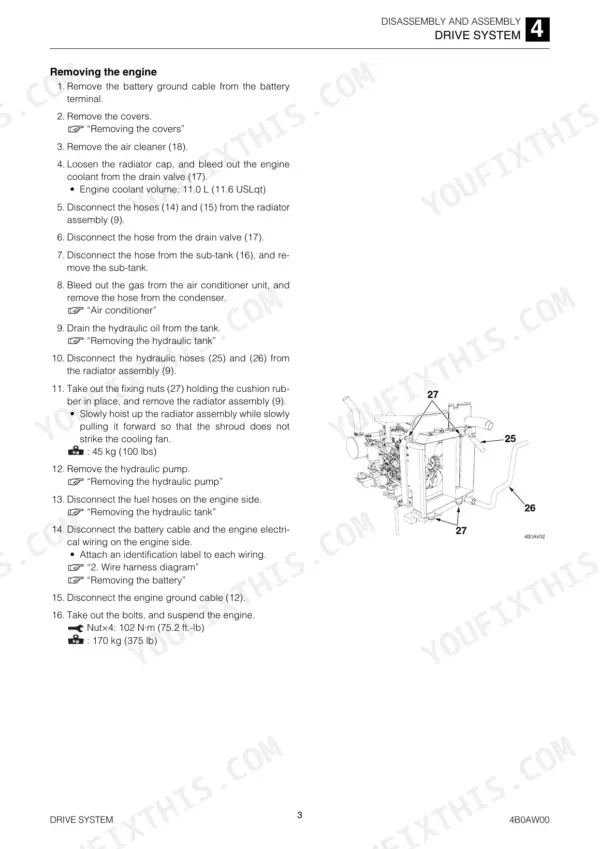
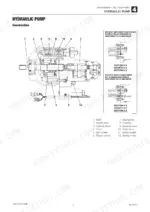
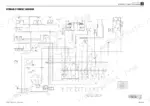
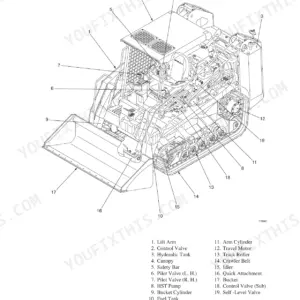
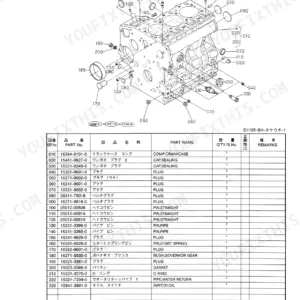
This is the factory Takeuchi TB260 workshop manual (publication CQ1E001) for mini excavators from serial number 126100001 and up, powered by the Yanmar 4TNV86CT diesel engine. It runs 702 pages and is written for the technician who actually pulls the machine apart, not a quick-start leaflet.
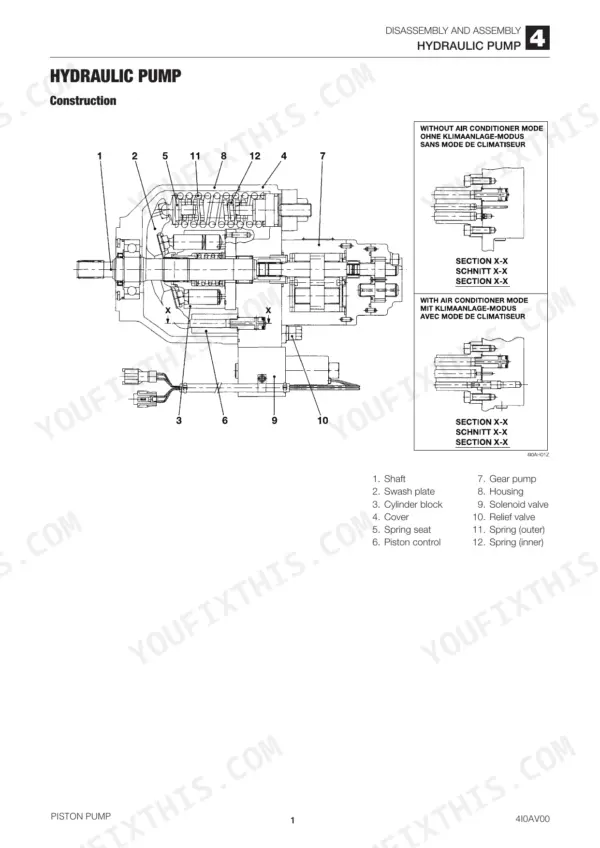
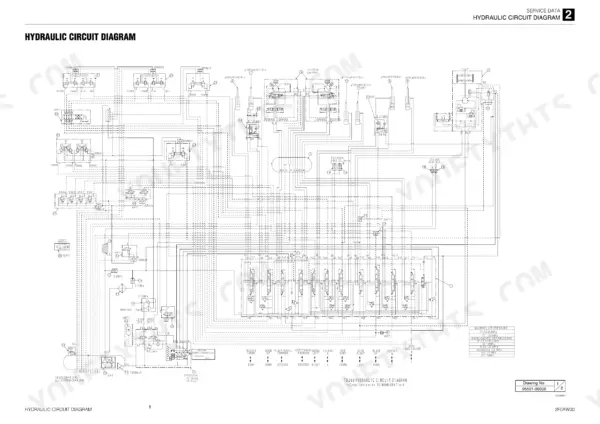
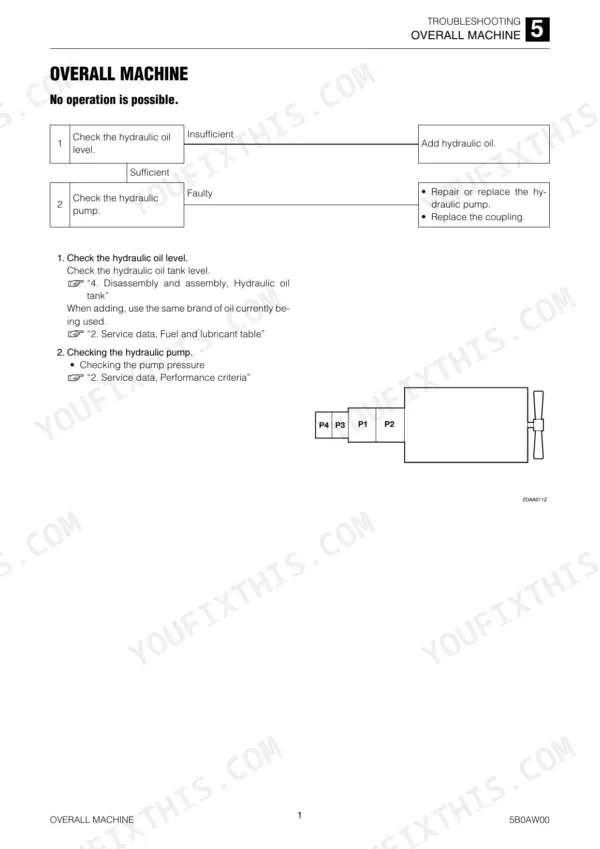
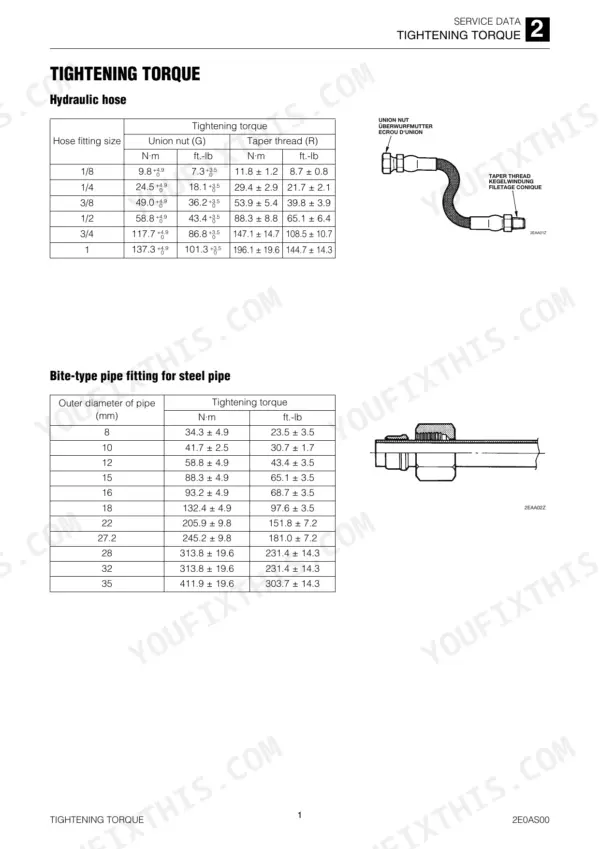
Inside you get service data with torque tables and hydraulic and electrical circuit diagrams, function descriptions of the piston pump, control valve and pilot valves, full disassembly and assembly procedures for the travel system, hydraulic pump, cylinders and slew motor, plus a troubleshooting section organized by symptom across traveling, slewing, boom, arm, bucket and blade.
With it you can diagnose weak hydraulics, rebuild a leaking cylinder, set correct tightening torques and trace a wiring fault back to the harness. Delivered as a downloadable PDF you can read on any device or print.
Complete the set for your TB260
- Parts Catalog: Takeuchi TB260 Parts Catalog
What's Inside This Takeuchi TB260 Manual
| System | Pages | Key Topics |
|---|---|---|
| Safety | 3-12 | |
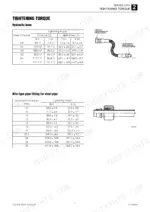
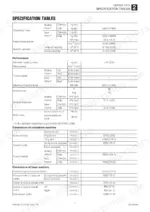
| Service Data | 13-66 | Dimensional Drawing, Table of Masses, Lubricant and Fuel Chart, Performance Criteria, Tightening Torque, Hydraulic Circuit Diagram, Electrical Circuit Diagram, Wire Harness Diagram |
| Function | 67-101 | Piston Pump, Gear Pump, Control Valve, Pilot Valve, Proportional Control Solenoid Valve, Solenoid Valve, Selector Valve, Cylinders |
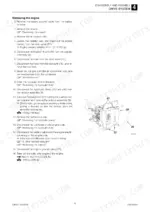
| Disassembly and Assembly | 102-303 | Travel System, Upper Frame, Hydraulic Tank, Hydraulic Pump, Pilot Valve, Proportional Control Solenoid Valve, Solenoid Valve, Selector Valve |
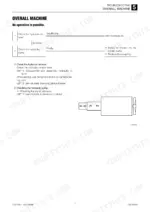
| Troubleshooting | 304-362 | Overall Machine, Traveling, Slewing, Boom, Arm, Bucket, Boom Swing, Blade |
| Other | 363-406 | Multi-Information Display, Cover |
Quick Reference Specifications
| Specification | Value | Page |
|---|---|---|
| Track roller bolt tightening torque | 256 N·m (189 ft.-lb) | p. 119 |
| Arm cylinder rod cover tightening torque | 530 N·m (390.9 ft.-lb) | p. 259 |
| Dozer blade cylinder rod cover tightening torque | 834 N·m (615.1 ft.-lb) | p. 259 |
| Control valve Tie rod tightening torque | 26.5-29.4 N·m | p. 186 |
| Hydraulic hose Union nut (G) 1/8 fitting tightening torque | 9.8 N·m | p. 37 |
| DPF intermediate temperature sensor installation tightening torque | 25 - 40 N·m | p. 29 |
| Arm cylinder natural drop limit | 12 mm (0.5 in.) | p. 28 |
| Hydraulic Pump Delivery (P1, P2) | 58.3 L/min | p. 20 |
| Main Relief Valve Pressure Setting | 24.0 MPa | p. 20 |
| Slew Motor Parking Brake Torque | 2040 N·m | p. 44 |
| Travel Motor Reduction Gear Ratio | 1/58.4 | p. 45 |
| Cylinder Head Valve Clearance (All models) | 0.006 - 0.010 in. | p. 83 |
Takeuchi TB260 Common Problems This Manual Covers
Dozer blade drifts down under load
Owners report the dozer blade slowly bleeds down and will not hold position, usually from worn or leaking blade cylinder seals. The troubleshooting section walks the symptom by circuit so you can confirm the cause before tearing into the cylinder.
Manual Section: Troubleshooting p. 304Weak or jerky arm movement
A weak, jerky arm that loses holding force typically points to worn arm cylinder seals or contaminated hydraulic fluid. Disassembly and assembly covers stripping and resealing the cylinders with the correct rod cover torque.
Manual Section: Disassembly and Assembly p. 102Slow or unresponsive hydraulics
Sluggish response across the machine often traces to the piston pump, gear pump or control valve. The function section explains how each component works so you can isolate the failing part.
Manual Section: Function p. 67Slewing hesitation or brake drag
Hesitation when swinging or a slew brake that drags shows up under load. Troubleshooting isolates slewing faults by symptom, and the slew motor teardown is documented separately.
Manual Section: Troubleshooting p. 304Tracking pulls to one side
Uneven tracking or a machine that crabs to one side is commonly worn track rollers or a travel motor issue. The travel system disassembly covers roller replacement and the track roller bolt torque.
Manual Section: Disassembly and Assembly p. 102Hydraulic fittings weep at unions
Seeping union nuts and hose fittings are a routine complaint on aging machines. The service data tightening torque tables give the exact values so you can reseat fittings without crushing them.
Manual Section: Service Data p. 13Frequently Asked Questions
Which machines and serial numbers does this manual cover?
It covers the Takeuchi TB260 mini excavator from serial number 126100001 and up, powered by the Yanmar 4TNV86CT diesel engine. Publication number CQ1E001.
Does it include wiring and electrical diagrams?
Yes. The Service Data section includes the electrical circuit diagram and the wire harness diagram, alongside the hydraulic circuit diagram. p. 13
Does it cover full hydraulic component teardown?
Yes. The Disassembly and Assembly section covers the hydraulic pump, pilot valves, solenoid valves and cylinders with step by step removal and installation. p. 102
Can it help me diagnose a weak arm or a blade that drops?
Yes. The Troubleshooting section is organized by symptom across traveling, slewing, boom, arm, bucket and blade, so you can trace a weak arm or a bleeding blade cylinder. p. 304
How will I receive this Takeuchi TB260 Workshop Manual?
Immediate download of the complete 702-page searchable Workshop Manual. Access it on any device — laptop at your desk or phone in the field.
Can I print this Takeuchi TB260 manual?
Yes. Print the sections you need to take out to the shop for your own use. Standard letter or A4 paper works.
Does this Takeuchi TB260 Workshop Manual have electrical diagrams?
Yes, this Takeuchi TB260 Workshop Manual includes complete electrical wiring diagrams, wire routing, and connector pinouts.
Reviews
There are no reviews yet.