
Part of the Case IH Operator Manuals.
All 248 pages of this Case IH 9370, 9380, 9390 Operator Manual (OEM #Rac 9-29652) focus on one goal: keeping your articulated tractor safely in the field. Inside, you get a dedicated safety chapter covering ROPS requirements, articulation cylinder locking blocks, and every safety decal on the machine. Packed into the instruments section: the complete digital cluster walkthrough, area meter calibration, Powershift transmission diagnostic LEDs, and every cab operating control from seat suspension to remote hydraulics prep. Fill the fuel tank to 270 gallons (1,022 L) and run engine oil changes at the factory-specified 250-hour interval; the 38.6-litre sump is one entry on a full system capacities page. Every hour your tractor sits idle costs you money. Bookmarks take you straight to any section; open it on your phone, walk to the machine, and get back to work.
What's Inside This Case IH 9370, 9380, 9390 Operator Manual
| System | Pages | Key Topics |
|---|---|---|
| To the Owner | 7-9 | - |
| Identification Numbers | 10-11 | Product Identification and, Serial Numbers |
| Safety/Decals | 12-21 | Safety, Hazardous Chemicals, Safety Decals, Articulation Cylinder Locking Blocks, Mounting and Dismounting the Tractor, Roll Over Protective Structure, Cleaning Cab Windows |
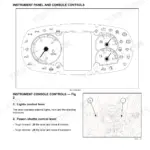
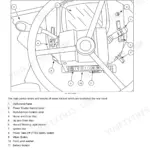
| Instruments/Controls | 22-60 | Digital Instrument Cluster, Digital Display Screens, Engine Hours, Mechanical Gauge Instrument Panel, True Ground Speed Sensor, Area Meter, Area Meter Operation |
| Operating Instructions | 61-98 | Before Starting the Engine, Run-In Procedure, Seat Belt, Engine Starting Procedure, Stopping the Engine, Cold Temperature Operation, Maintaining Operating Temperatures |
| Field Operation | 99-133 | Drawbar Clevis Preparation, Three Point Hitch Preparation, Remote Hydraulics Preparation, Auxiliary Power Connections, Instrument Cluster Calibration, Scraper Operations |
| Tires/Wheels/Spacing/Ballast | 134-159 | Tire and Rim Equipment, Bias Tire Pressure and Load Capacity Chart, Wheel Bolt Torques, Tread Positions, Articulation Stops, Tractor Ballast |
| Lubrication/Maintenance Charts | 160-161 | - |
| Lubrication/Filters/Fluids | 162-205 | Grease Fittings, System Capacities, Engine Lubrication, Fuel System, Cooling System, Hydraulic Oil |
| Maintenance/Adjustments | 206-217 | Cooling System, Drive Belts, Refrigerant Check, Seat |
| Electrical System | 218-230 | - |
| Storage | 231-232 | - |
| Specifications | 233-240 | Diesel Engine, Power Train, Power Takeoff (If Equipped), Hydraulic System, Hitch System (If Equipped), Tractor Weights |
Quick Reference Specifications
| Specification | Value | Page |
|---|---|---|
| Engine Oil Capacity with Filter | 10.2 Gal (38.6 Litres) | p. 174 |
| Cooling System Capacity | 18.3 Gal (69.0 Litres) | p. 174 |
| Fuel Tank Capacity | 270 Gal (1022 Litres) | p. 174 |
| Engine Oil Change Interval | 250 Hours or Annually | p. 176 |
| Engine Coolant Change Interval | 6000 Hours or 2 Years | p. 161 |
| Radiator Cap Pressure | 7 PSI (62 kPa) | p. 181 |
| Wheel Disc to Planetary Hub Bolts Torque (Dry) | 510 to 590 lb ft (692 to 800 Nm) | p. 142 |
| Maximum System Pressure (Hydraulic) | 2900 PSI (197 Bar) | p. 235 |
Case IH 9370, 9380, 9390 Common Problems This Manual Covers
Case IH 9370/9380/9390 transmission fault code displayed on instrument cluster, tractor won't move
Check the transmission diagnostic codes on page 209 and match the displayed E-code to the reference table. Codes E10 through E71 indicate specific solenoid or sensor failures. Do not continue operating with an active fault. If movement is needed immediately, consult the override procedure in Operating Instructions on page 61. Hydraulic system normal operating pressure is 2900 PSI (197 Bar).
Manual Section: Maintenance/Adjustments p. 209Engine oil pressure red warning indicator illuminates on instrument panel, continuous alarm sounding
Stop the engine immediately and do not restart until the cause is identified. Check oil level on the dipstick before adding oil. Engine oil capacity with filter is 10.2 Gal (38.6 Litres). Change oil every 250 hours or annually per the interval chart on page 176. Verify the correct viscosity grade in the fluid specifications on page 174.
Manual Section: Instruments/ControlsEngine coolant temperature red indicator lit and alarm active during field work
Stop the engine and let it cool before opening the hood or touching the radiator cap. Check coolant level in the recovery tank only when cool. Cooling system capacity is 18.3 Gal (69.0 Litres); the radiator cap holds 7 PSI (62 kPa) per page 181. Replace coolant at 6000 hours or 2 years per the maintenance schedule on page 161.
Manual Section: Lubrication/Filters/FluidsHydraulic oil filter amber warning indicator on, hydraulic system response sluggish or slow
Change the hydraulic oil filter as soon as practical once the amber indicator illuminates. Consult fluid capacities on page 174 for the correct hydraulic oil fill volume. Do not continue field work if the indicator stays on after the filter change. Maximum hydraulic system pressure is 2900 PSI (197 Bar); see full specifications on page 235.
Manual Section: Lubrication/Filters/FluidsEngine turns over slowly or won't start in cold weather below freezing
Follow the cold temperature operation procedure in Operating Instructions on page 61 before attempting a cold start. Verify fuel level is adequate; tank capacity is 270 Gal (1,022 Litres). Confirm engine oil viscosity matches ambient temperature requirements per the fluid specifications on page 162. Allow a complete warm-up at low idle before engaging the transmission or applying a load.
Manual Section: Operating Instructions p. 61Hydraulic or engine oil pooling under tractor after shutdown, active leak unknown location
Inspect oil cooler connections, hydraulic pump supply lines, and filter fittings before starting the engine. Check all fluid levels against the capacities table on page 174: engine oil with filter is 10.2 Gal (38.6 Litres). Do not operate with a confirmed active leak. Note the fluid color and location, then consult the lubrication section on page 162 for correct fluid types.
Manual Section: Lubrication/Filters/Fluids p. 162Frequently Asked Questions
What are the recommended service intervals?
The manual provides a comprehensive service schedule. For instance, Engine Oil should be checked every 10 Hours or Daily and changed every 250 Hours or Annually. The Coolant Filter should be changed every 250 Hours or Once a Year, and the Coolant System itself every 6000 Hours or 2 Years. Transmission Oil and Hydraulic Oil also have a change interval of every 1500 Hours or Annually. p. 160
What fluids and capacities does this machine require?
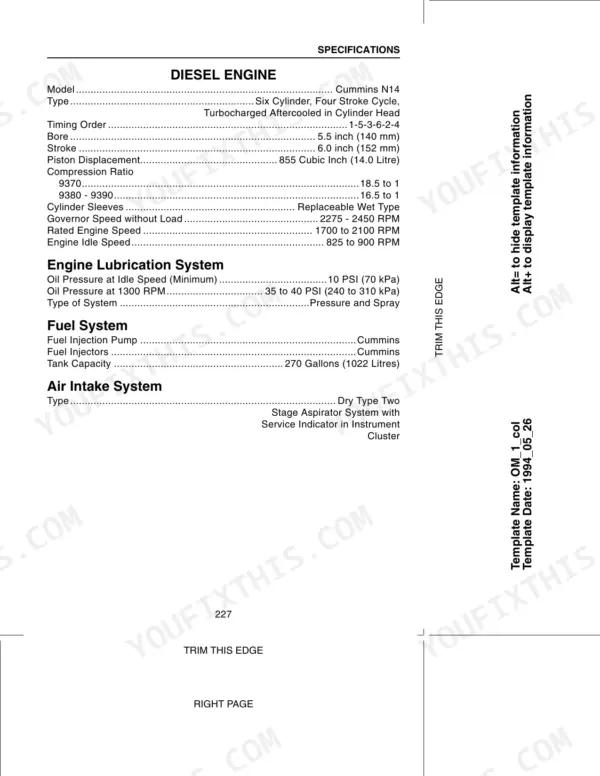
The machine requires specific fluids and has defined capacities. For example, the Engine Oil capacity with filter is 10.2 U.S. Gallons (38.6 Litres), and the Cooling System capacity is 18.3 U.S. Gallons (69.0 Litres). The Hydraulic System with filter holds 18 Gallons (68.1 Litres), and the Fuel Tank capacity is 270 U.S. Gallons (1022 Litres). The Master Cylinder Brake requires 1 quart (0.946 Litres) of SAE J1703 (Dot 3) fluid. p. 174
How to troubleshoot engine won't start?
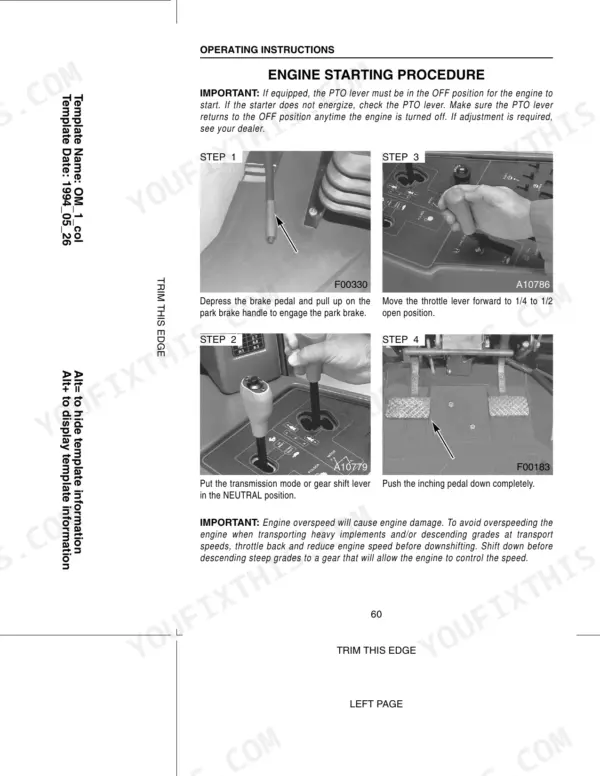
If the engine does not start within 15 seconds, use the ether start-aid for improved starting in cold ambient temperatures. If the starter motor does not energize, check the PTO lever to ensure it is in the OFF position. If the engine will not start within 30 seconds, permit the starter motor to cool at least 2 minutes before engaging the starter again. Additionally, diagnostic codes like E70 and E71 indicate open circuits in transmission shift solenoids, which can prevent starting if the mode lever neutral safety switch or inching pedal switch are affected. p. 67
What are the hydraulic system specifications?
The hydraulic system for standard models (9370 - 9380) is a Closed Center, Load Sensing, Pressure Compensating System. High Output systems feature a Dual Circuit-Combination Closed Center, Load Sensing, Pressure Compensating and Open Center System. Standard system pump capacity at couplers (at 2000 PSI - 2100 RPM) is 27 GPM (102.2 L/min) for Powershift and 30 GPM (113.6 L/min) for Synchroshift. The maximum system pressure is 2900 PSI (197 Bar). p. 235
What torque specifications are listed?
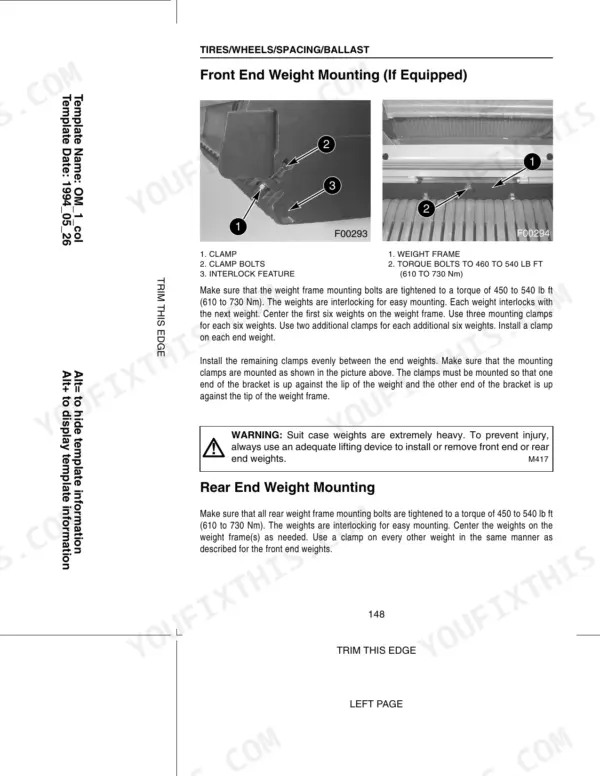
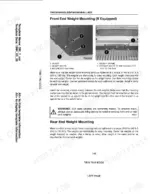
Several torque specifications are listed for critical components. Wheel Disc to Planetary Hub Bolts (Dry) require 510 to 590 lb ft (692 to 800 Nm). Clevis assembly retaining bolts should be tightened to 540 to 610 lb ft (732 to 827 Nm). For front end weight mounting, the weight frame mounting bolts require 450 to 540 lb ft (610 to 730 Nm). p. 142
What format is this Case IH 9370 manual in?
A 248-page Operator Manual in searchable PDF format, available the moment you complete checkout. View on computer, tablet, or phone, with no shipping wait.
Am I free to print this Case IH 9370 Operator Manual?
Yes, print as many copies as you want, and there are no restrictions. Many mechanics print the section they need and bring it to the shop floor.



Reviews
There are no reviews yet.