


Part of the Case Operator Manuals.
This 52-page Case VAIW-3, VAIW-4 (Vaiw Tractors) Operator Manual (OEM #RI-221) puts the factory-approved daily routine right in your hands for your tractor. Open it and you get the full lubrication chart, cold-weather starting drill, and a troubleshooting section that walks you through hard starts, misfires, overheating, and excessive smoke without guesswork. You also get every fluid capacity, service interval, and dashboard check the operator's supposed to run before the engine ever turns over. Set breaker points at .020 inch, keep clutch pedal free-play between 1-1/2 and 2 inches, and service the front wheel bearings every 250 hours; those aren't shop-manual estimates, they're the numbers Case printed for this tractor. No more flipping through a beat-up paper copy trying to find the lubrication page before your shift starts. Bookmarked for quick jumps between sections, and readable right off your phone out at the tractor.
What's Inside This Case VAIW-3, VAIW-4 Operator Manual
| System | Pages | Key Topics |
|---|---|---|
| Specifications | 9-10 | Engine, Approximate Capacities, General Dimensions, Road Speeds at 1800 R.P.M. |
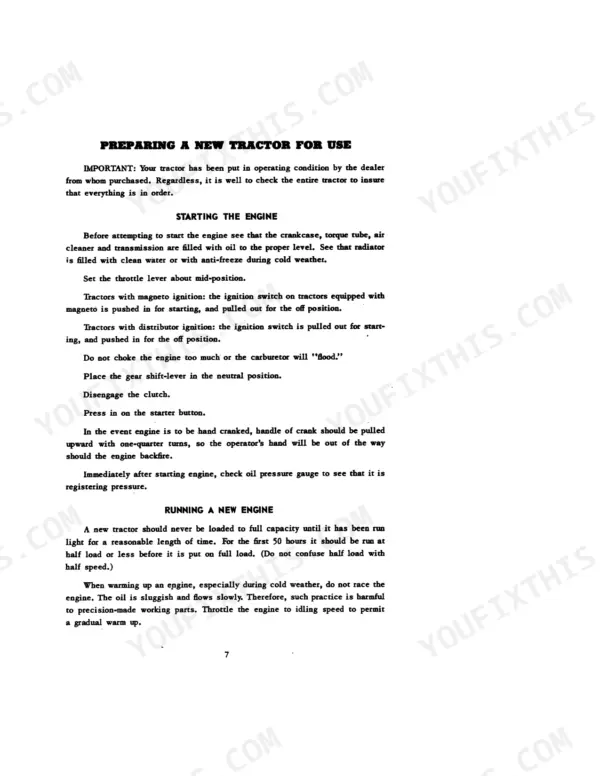
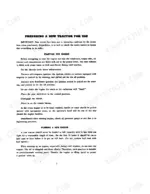
| Preparing a New Tractor for Use | 11-12 | Engine Start Procedure, Engine Warm-Up, Fluid Level Checks, Ignition System Check, Clutch Operation, Oil Pressure Verification |
| Serial Number | 13-14 | Tractor Serial Number, Instrument Panel Location, Engine Serial Number, Engine Block Location |
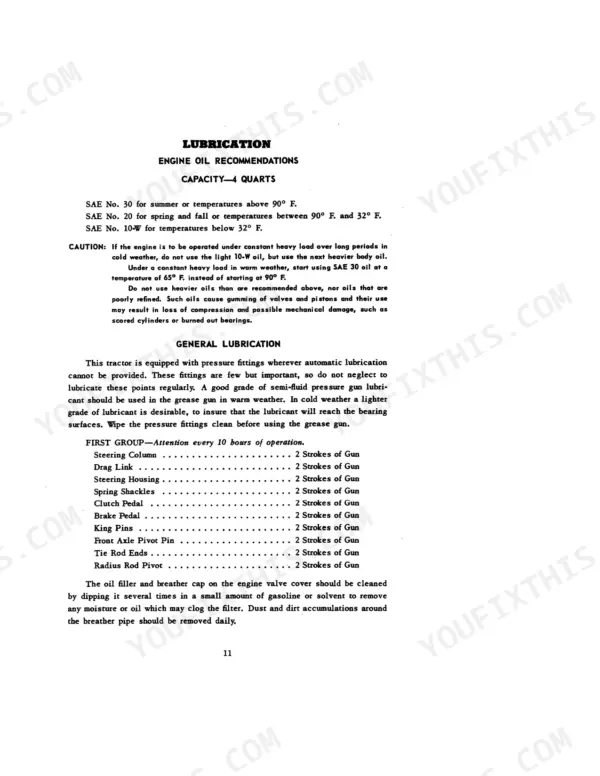
| Lubrication | 15-17 | Engine Oil Recommendations, General Lubrication, Pressure Fittings, Steering Column, Drag Link, Breather Cap |
| Crankcase Oil | 18 | Bayonet Gauge, Low-Pour Point Oil, Oil Quality, Crankcase Drain, Engine Oil Recommendations, Oil Viscosity |
| Cooling System | 19-20 | Cooling Solution Circulation, System Capacity, Cleaning Procedure, Fan Belt Adjustment, Winter Operation, Anti-Freeze Types |
| Air Cleaner and Inlet Connections | 21-22 | Daily Inspection, Oil Cup Cleaning, Air Cleaner Connections, Oil Filter Type, Filtering Element Replacement, Inlet Tube |
| Fuel System | 23-25 | Fuel Quality, Fuel Tank Capacity, Octane Rating, Carburetor Type, Carburetor Adjustment, Fuel Filter |
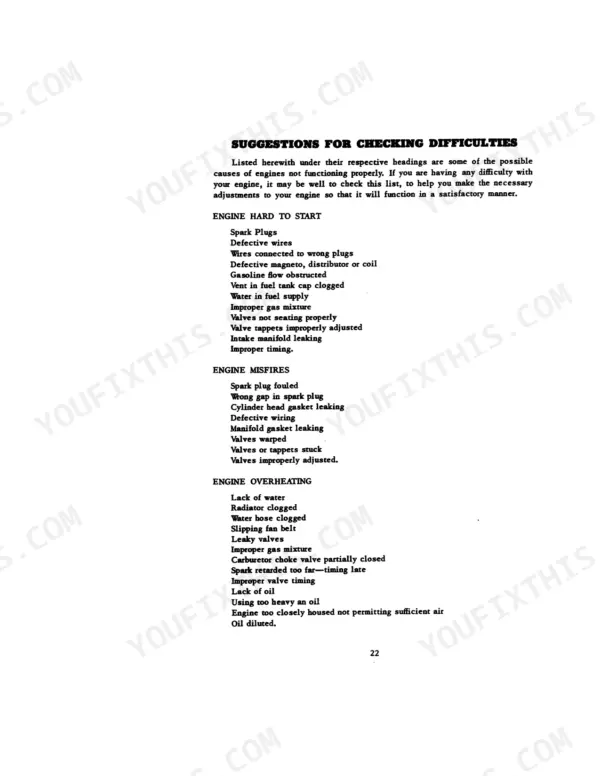
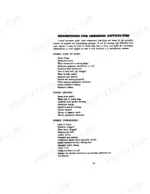
| Suggestions for Checking Difficulties | 26-27 | Engine Hard to Start, Engine Misfires, Engine Overheating, Lack of Power, Engine Knocks, Excessive Smoke From Exhaust |
| Ignition | 28-34 | Distributor, Lubrication, Cleaning, Breaker Points, Timing the Distributor, Magneto |
| Starting and Lighting | 35-36 | Lubrication, Starting Motor, Generator, Fuse |
| Governor | 37-38 | Governor Linkage, Adjustment, No-Load Engine Speed, Full Load Speed |
| Engine Oil Pump | 39 | Pump Type, Oil Pressure, Oil Pump and Screen, Pressure Relief Valve |
| Valve Cover and Gasket | 40 | Valve Cover, Gasket, Valves, Rocker Arms, Adjusting Valve Clearance |
| Clutch | 41-42 | Adjustment, Free Pedal Movement, Clutch Release Bearing, Clutch Release Levers, Clutch Throw-Out Rod |
| Tractor Brakes | 43-44 | Brake Adjustment, Actuating Levers, Brake Control Rod, Brake Lining, Brake Equalization |
| Seat Frame Adjustment | 45 | Seat Cushions, Seat Frame Bolts, Seat Frame |
| Storing the Tractor | 46-52 | Fuel System, Cooling System, Lubricating System, Tires, Battery, Cleaning |
Quick Reference Specifications
| Specification | Value | Page |
|---|---|---|
| Engine Oil Pressure (Operating) | 10 to 14 pounds | p. 39 |
| Clutch Foot Pedal Free Movement | 1-1/2 to 2 inches | p. 42 |
| Front Wheel Bearings Service Interval | 250 hours | p. 17 |
| Breaker Points Gap | .020" | p. 29 |
| Generator Maximum Cold Output | approximately 12 amperes | p. 35 |
| Fuel Minimum Octane Rating | 65 octane | p. 23 |
Case VAIW-3, VAIW-4 Common Problems This Manual Covers
Case VAIW-3 tractor clutch slips under heavy load or gears grind when shifting
Check the clutch linkage adjustment. Measure the clutch foot pedal free movement as detailed on page 42. Adjust the clutch throw-out rod until you achieve exactly 1-1/2 to 2 inches of free play before the clutch begins to disengage. Test the pedal feel.
Manual Section: Clutch p. 42Engine oil pressure gauge reads low or drops suddenly during normal operating temperatures
Inspect the oil pressure gauge on the instrument panel while the engine is running. Verify the pressure relief valve maintains 10 to 14 pounds of operating pressure, as shown on page 39. Drain the crankcase and inspect the oil pump screen for plugging if pressure remains low.
Manual Section: Engine Oil Pump p. 39Engine misfires, runs rough at idle, or lacks power when pulling an implement
Remove the distributor cap and inspect the breaker points for pitting or excessive wear. Adjust the gap to exactly .020" using a feeler gauge, referencing the ignition procedures on page 29. Verify you are using fresh fuel with a minimum rating of 65 octane.
Manual Section: Ignition p. 29Front wheels wobble, wander on the road, or make a grinding noise during operation
Remove the front wheel hubs and clean the bearings thoroughly. Repack the wheel bearings with a good grade of fibre grease. Repeat this maintenance interval every 250 hours of operation to prevent premature bearing failure, following the lubrication schedule on page 17.
Manual Section: Lubrication p. 17Frequently Asked Questions
What are the recommended service intervals for various components?
Service intervals vary by component: attention is required every 10 hours for the steering column, drag link, steering housing, spring shackles, clutch pedal, brake pedal, king pins, front axle pivot pin, tie rod ends, and radius rod pivot. The torque tube and governor linkage require attention every 60 hours, while the generator and distributor need lubrication every 200 hours. Front wheel bearings and transmission fluid level should be checked every 250 hours, and breaker points should be inspected every 500 hours. p. 15
What fluids and capacities does this machine require?
The engine crankcase requires 4 U.S. quarts of oil (SAE No. 30 above 90° F, SAE No. 20 between 90° F and 32° F, SAE No. 10-W below 32° F). The cooling system has a capacity of 13 U.S. quarts, and the main fuel tank holds approximately 9-1/4 U.S. gallons. The transmission, differential, and axle housing require 5-1/2 U.S. gallons, and the torque tube needs 7 pints of SAE No. 90 oil. p. 9
How to troubleshoot if the engine won't start?
If the engine is hard to start, check for issues such as faulty spark plugs, defective or incorrectly connected wires, or a defective magneto, distributor, or coil. Other potential causes include obstructed gasoline flow, a clogged fuel tank cap vent, water in the fuel supply, an improper gas mixture, valves not seating properly, improperly adjusted valve tappets, an intake manifold leak, or improper timing. p. 26
What are the valve clearance specifications?
The proper valve clearance for both intake and exhaust valves is .014 inch. This measurement should be taken when the engine is cold and the valve is completely closed. Adjustments are made by loosening the lock nut on the rocker arm and turning the adjusting screw until the correct clearance is achieved with a feeler gauge. p. 40
Do I get instant access to this Case VAIW-3 Operator Manual?
Immediate download of the complete 52-page searchable Operator Manual (10 MB). Access it on any device, from a laptop at your desk to a phone in the field.
Is this Case VAIW-3 Operator Manual printable?
Yes. Print individual pages or full chapters for your own shop use, on letter or A4 paper.






Reviews
There are no reviews yet.